
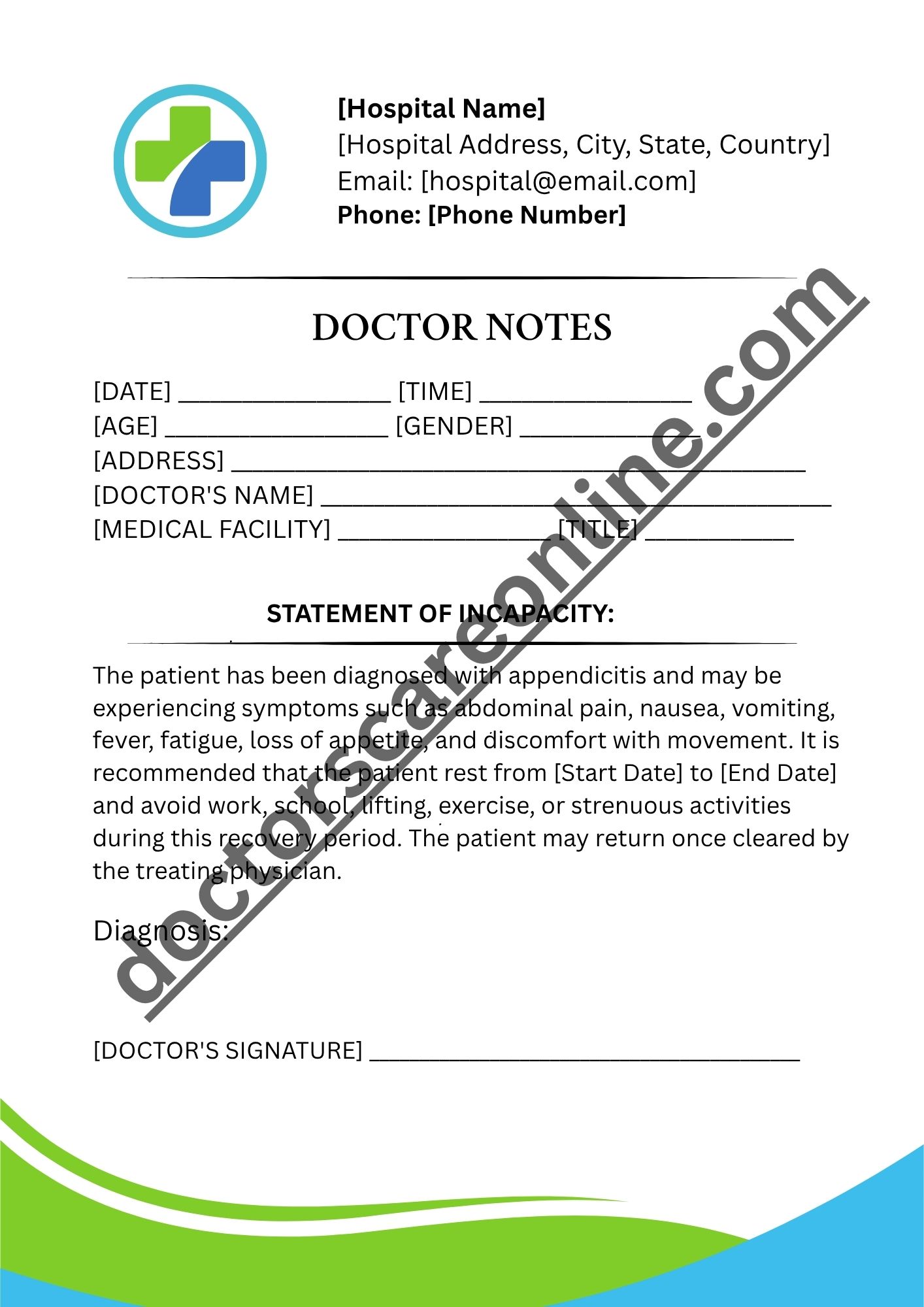
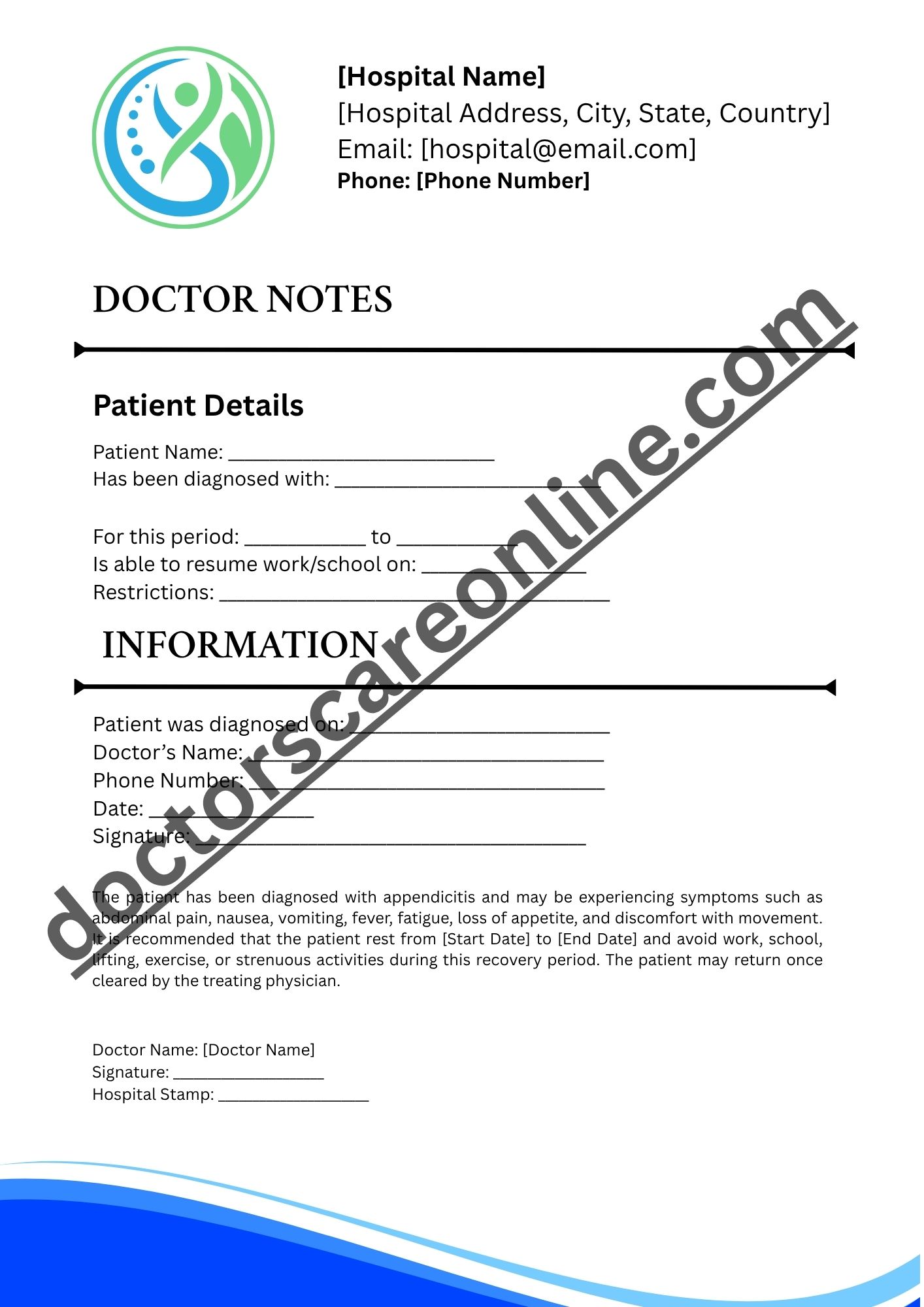
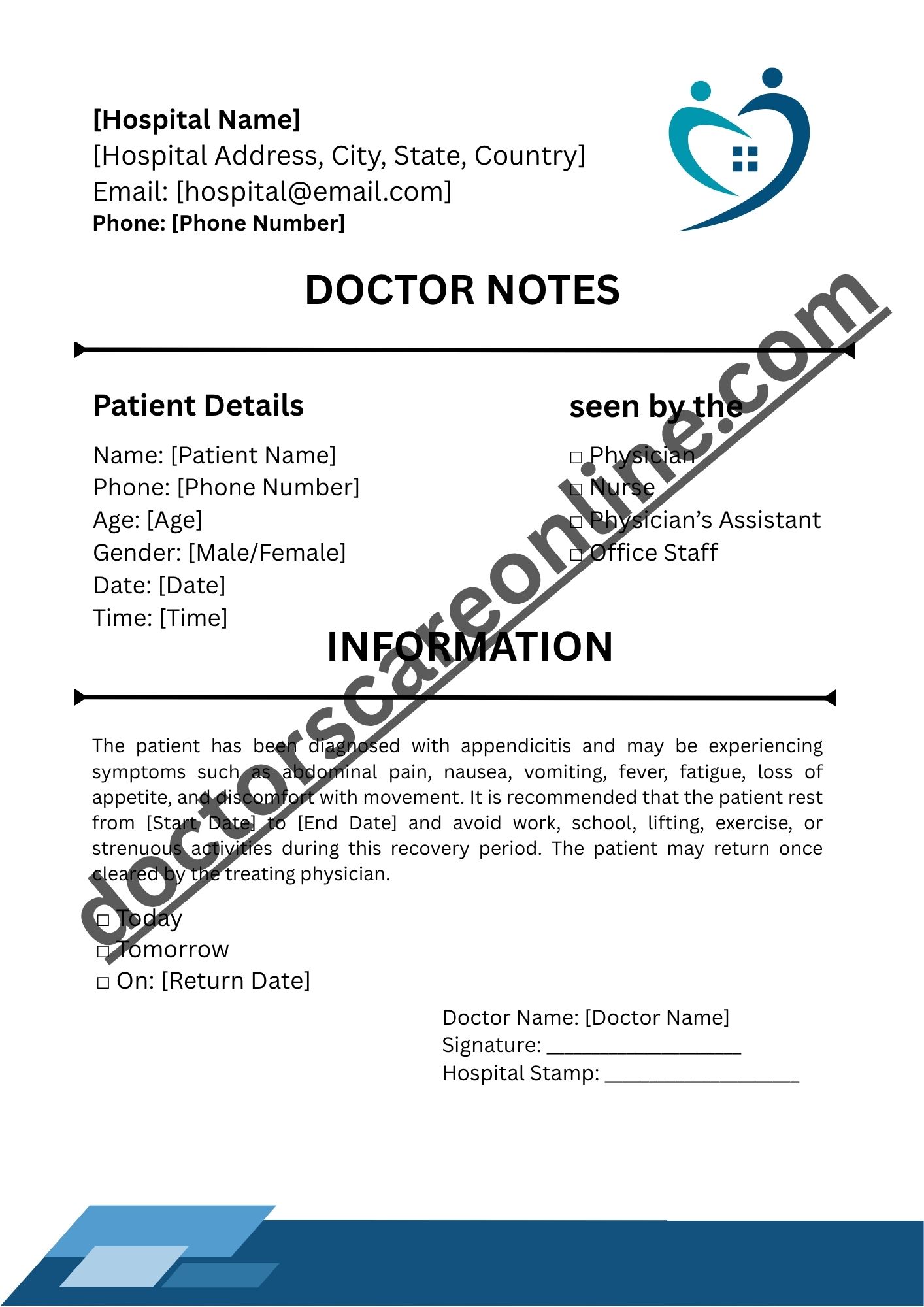
A Doctor’s Note for Appendicitis is a medical document issued by a licensed physician, surgeon, or other qualified healthcare provider after diagnosing or treating appendicitis. It serves as proof that the patient required medical care and may need temporary leave from work, school, or other commitments.
The note can be used for various purposes, including:
- Requesting sick leave from an employer
- Excusing absences from school or college
- Supporting medical leave policies
- Providing documentation for insurance or workplace requirements
- Confirming recovery restrictions after surgery
Every doctor’s note is based on the patient’s individual medical condition. Some people only need a few days of rest after evaluation, while others recovering from surgery may require a longer period before returning to normal activities.
Doctor’s Note for Appendicitis
Appendicitis occurs when the appendix, a small pouch attached to the large intestine, becomes inflamed. If left untreated, the appendix can rupture, leading to a serious infection inside the abdomen. Because of this risk, appendicitis is considered a medical emergency that often requires immediate evaluation.
Doctors commonly diagnose appendicitis through a physical examination, blood tests, imaging studies such as an ultrasound or CT scan, and a review of the patient’s symptoms.
Types of Appendicitis-
1. Acute Appendicitis
Acute appendicitis develops suddenly and usually requires emergency treatment. Symptoms often worsen within 24 to 48 hours and commonly lead to surgery.
2. Chronic Appendicitis
Although much less common, chronic appendicitis causes recurring abdominal pain over an extended period. It may be more difficult to diagnose and still requires medical evaluation.
Common Symptoms That May Require Medical Leave
People with appendicitis often find it impossible to continue daily activities because the pain can become severe very quickly.
Common symptoms include:
- Sudden pain around the belly button that moves to the lower right side of the abdomen
- Severe abdominal tenderness
- Pain that worsens while walking, coughing, or moving
- Fever or chills
- Nausea and vomiting
- Loss of appetite
- Bloating or abdominal swelling
- Constipation or diarrhea
- Difficulty standing upright due to pain
- General weakness and fatigue
These symptoms should never be ignored. Anyone experiencing severe abdominal pain should seek immediate medical attention rather than attempting to continue working or attending school.
When Can a Doctor Provide a Medical Note?
A healthcare provider may issue a doctor’s note whenever appendicitis or suspected appendicitis prevents a patient from safely performing their normal responsibilities.
Common situations include:
Emergency Room Visit
Patients who visit the emergency department because of severe abdominal pain may receive documentation confirming that they required emergency medical evaluation.
Confirmed Appendicitis Diagnosis
Once appendicitis is diagnosed, the treating physician may recommend immediate leave from work or school until treatment is completed.
Hospital Admission
Patients admitted to the hospital often receive medical documentation covering the admission period and expected recovery time.
Before Surgery
If surgery is scheduled shortly after diagnosis, a doctor may provide a note explaining why the patient cannot continue normal activities before the procedure.
After Appendix Removal Surgery
Following an appendectomy, most patients require several days or weeks of recovery,depending on the type of surgery performed and their overall health.
Follow-Up Appointments
Recovery does not always end after leaving the hospital. Doctors may issue updated medical notes during follow-up visits if additional healing time is necessary.
What Information Is Usually Included in a Doctor’s note for appendicitis?
Although the format varies between healthcare providers, most doctors’ notes contain similar information.
Typical details include:
- Patient’s full name
- Date of examination or treatment
- Dates covered by the medical leave
- Recommendation to remain off work or school
- Date the patient may return, if known
- Temporary activity restrictions
- Follow-up appointment recommendations
- Healthcare provider’s name
- Medical facility or clinic information
- Doctor’s signature or authorized authentication
For privacy reasons, the note may not always mention the exact diagnosis unless the patient chooses to disclose it or specific documentation is required.
Does a Doctor’s Note Mention Appendicitis Specifically?
Not always.
Many healthcare providers focus on confirming that the patient is medically unable to work or attend school without identifying the exact medical condition. This approach helps protect patient privacy while still providing the necessary documentation.
However, in some situations, the diagnosis may be included, such as:
- When required by certain insurance claims
- If the patient requests that it be listed
- When specific medical documentation is needed for workplace or educational accommodations
- If local regulations or organizational policies require additional information
Patients who have privacy concerns can discuss the contents of the doctor’s note with their healthcare provider before it is issued.
How Long Is Medical Leave Usually Recommended?
The amount of time a person needs away from work or school depends on the severity of appendicitis, the type of treatment received, and how well they recover. Some patients return to light activities within a few days, while others may need several weeks before resuming physically demanding tasks.
Healthcare providers determine the recommended leave based on factors such as the patient’s overall health, whether surgery was performed, and if any complications occurred during treatment.
| Condition | Typical Medical Leave |
|---|---|
| Emergency evaluation without surgery | 1–3 days |
| Mild appendicitis under observation | 2–5 days |
| Laparoscopic appendectomy | 1–2 weeks |
| Open appendectomy | 2–4 weeks |
| Complicated appendicitis with infection | Several weeks, depending on recovery |
| Physically demanding occupations | Additional recovery time may be recommended |
Note: Recovery times vary from person to person. Always follow the advice provided by your treating healthcare professional rather than relying on general timelines.
Appendectomy Recovery Timeline
An appendectomy is one of the most common emergency surgeries. Recovery generally progresses over several weeks, although healing speed depends on the individual and the type of procedure performed.
First 24 Hours
Immediately after surgery, patients are monitored in the hospital while the effects of anesthesia wear off. Medical staff check vital signs, manage pain, and encourage gentle movement when appropriate to reduce the risk of complications.
During this period, patients may experience:
- Mild abdominal discomfort
- Fatigue
- Temporary nausea
- Limited mobility
- Small surgical dressings over the incision sites
Days 2–7
After discharge, most people recover at home. Walking short distances is usually encouraged because it helps improve circulation and supports healing. However, strenuous activity should still be avoided.
Patients should focus on:
- Taking prescribed medications
- Drinking enough fluids
- Eating light, nutritious meals
- Keeping surgical wounds clean and dry
- Getting adequate rest
- Following discharge instructions carefully
Week 2
Many patients begin feeling significantly better during the second week, particularly after laparoscopic surgery. Light household activities and desk-based work may become possible if approved by the treating physician.
However, heavy lifting, sports, and intense physical activity should still be postponed until cleared by a healthcare provider.
Weeks 3–4
Most individuals continuto regainng strength during this stage. People with office jobs often return to their normal routine, while those with physically demanding occupations may still require work restrictions.
Doctors may schedule a follow-up appointment to evaluate healing before removing any remaining activity limitations.
Appendicitis: Do’s and Don’ts
Do’s
- Seek immediate medical attention for severe abdominal pain.
- Follow your doctor’s advice.
- Get surgery if medically recommended.
- Rest and recover as advised.
- Drink fluids if your doctor allows.
Don’ts
- Don’t ignore worsening abdominal pain.
- Don’t eat or drink if surgery may be needed until advised by medical staff.
- Don’t take laxatives or use enemas.
- Don’t apply heat to the abdomen.
- Don’t delay emergency care.
Can You Return to Work Immediately?
Returning to work too soon can delay healing and increase the risk of complications. A healthcare provider considers both the patient’s recovery and the physical demands of their job before recommending a return-to-work date.
Office Employees
Individuals who primarily work at a desk may return sooner if they feel comfortable sitting for extended periods and no longer require prescription pain medication that affects their concentration.
Teachers and Administrative Staff
Teachers often spend long periods standing or moving throughout the day. Depending on recovery, a gradual return may be recommended, especially after surgery.
Healthcare Workers
Nurses, caregivers, and hospital staff frequently lift patients and remain physically active during shifts. Additional recovery time may be necessary before safely returning to these duties.
Drivers
Professional drivers and delivery workers should avoid returning until they can move comfortably, react quickly, and are no longer taking medications that may impair alertness.
Construction and Warehouse Workers
Jobs involving heavy lifting, climbing, bending, or operating machinery usually require a longer recovery period. Returning before complete healing could increase the risk of injury or surgical complications.
Remote Workers
People working from home may be able to resume light duties earlier if they can work comfortably without interfering with recovery. Even so, regular breaks and avoiding prolonged sitting are important.
When Can Students Return to School?
Students recovering from appendicitis may need several days or weeks away from school,depending on the severity of their condition and whether surgery was performed.
Healthcare providers consider several factors before recommending a return, including pain levels, mobility, energy, and the ability to participate in classroom activities.
Many schools accept a doctor’s note to excuse medically necessary absences and help students continue their education during recovery.
Students may receive accommodations such as:
- Excused absences
- Additional time to complete assignments
- Make-up examinations
- Reduced physical activity
- Temporary exemption from sports or physical education classes
- Flexible attendance during recovery
Parents should communicate with the school administration if extended recovery affects attendance.
Activity Restrictions After Appendix Surgery
Although patients often begin feeling better within a short time, internal healing continues for several weeks. Following activity restrictions helps reduce the risk of reopening surgical wounds or developing complications.
Doctors commonly advise patients to avoid:
- Heavy lifting
- Running
- Weight training
- Contact sports
- Intense exercise
- Swimming until the incision has healed
- Driving while taking prescription pain medication
- Strenuous household chores
- Climbing ladders or performing physically demanding tasks
Activities that are often encouraged include:
- Short walks
- Gentle stretching if approved
- Light daily activities
- Gradually increasing movement as recovery progresses
Patients should only resume vigorous exercise after receiving medical clearance.
Work Restrictions That May Be Mentioned in a Doctor’s Note
In some situations, a patient is well enough to return to work but still requires temporary restrictions. Instead of recommending complete leave, the healthcare provider may specify work limitations that support a safe recovery.
Examples of temporary restrictions include:
- No lifting above a specified weight limit
- Avoid prolonged standing
- No repetitive bending or twisting
- Reduced working hours
- Light-duty assignments
- Work from home, when possible
- Frequent rest breaks
- Avoid operating heavy machinery until medically cleared
These restrictions are intended to protect the patient’s health while allowing a gradual return to normal responsibilities.
How to Book an Online Appointment for an Appendicitis Doctor’s Note (Work or School)
If you have symptoms of appendicitis or you’re recovering after treatment, you may be able to book an online appointment with a licensed healthcare provider for follow-up care or to request a doctor’s note, depending on your condition and local telehealth regulations.
Step 1: Choose a Trusted Healthcare Provider
Schedule an appointment through:
- Your primary care doctor’s online portal
- A hospital’s telehealth service
- A licensed urgent care clinic
- Your health insurance’s virtual care platform
- An approved telemedicine provider in your area
If you have severe abdominal pain, fever, persistent vomiting, or symptoms of suspected appendicitis, do not wait for an online consultation. Seek immediate emergency medical care.
Step 2: Select a Video or Phone Consultation
When booking your appointment, choose the appropriate consultation type if available:
- Follow-up after appendectomy
- Recovery assessment
- Return-to-work evaluation
- Return-to-school clearance
- Medical certificate or doctor’s note request
Step 3: Complete Your Medical Information
You may be asked to provide details such as:
- Your full name and date of birth
- Current symptoms or recovery status
- Date of surgery or hospital visit (if applicable)
- Current medications
- Previous medical records or discharge summary (if available)
Providing accurate information helps the healthcare provider assess your condition.
Step 4: Attend the Online Consultation
During the appointment, the healthcare provider may ask about:
- Your current pain level
- Healing of the surgical incision
- Fever or signs of infection
- Ability to walk, sit, or perform daily activities
- Type of work or school activities you need to return to
- Whether you still have activity restrictions
Answer all questions honestly so the provider can make an appropriate medical recommendation.
Step 5: Request a Doctor’s Note
If the healthcare provider determines that medical leave or work restrictions are appropriate, you can request a doctor’s note for:
- Workplace sick leave
- Return-to-work clearance
- School or college absence
- University attendance records
- Activity restrictions during recovery
The provider will decide whether issuing a note is medically appropriate based on your condition and applicable regulations.
Step 6: Receive Your Medical Documentation
If approved, the doctor’s note is usually sent electronically through:
- A secure patient portal
- Email (where permitted)
- A downloadable PDF
- The healthcare provider’s mobile app
Keep a copy for your records before submitting it to your employer or educational institution.
How Long Is a Doctor’s Note for Appendicitis Valid?
A doctor’s note for appendicitis does not have a fixed expiration date. Its validity depends on the medical leave period recommended by the healthcare provider and the policies of your employer, school, or college.
Most doctors’ notes clearly mention the dates during which the patient is medically excused from work or classes. Once that period ends, the note is generally no longer valid unless the healthcare provider issues an extension.
| Situation | Typical Validity |
|---|---|
| Emergency room evaluation | 1–3 days |
| Observation without surgery | 2–5 days |
| Laparoscopic appendectomy | 1–2 weeks |
| Open appendectomy | 2–4 weeks |
| Complicated appendicitis | Several weeks, depending on recovery |
| Follow-up extension | As recommended by the healthcare provider |
Important: These are general recovery ranges. The actual duration of your doctor’s note depends on your individual condition and your healthcare provider’s medical judgment.
Possible Complications That May Extend Medical Leave
Most people recover without major problems after appendicitis treatment or an appendectomy. However, some patients may experience complications that require additional medical care and a longer recovery period. If complications develop, your healthcare provider may recommend extending your medical leave until it is safe to return to work, school, or other daily activities.
Possible complications include:
Surgical Site Infection
An infection around the incision can cause redness, swelling, warmth, pain, or drainage. Antibiotics or additional wound care may be needed before normal activities can resume.
Ruptured Appendix
If the appendix bursts before surgery, bacteria can spread into the abdominal cavity, leading to a more serious infection. Recovery from a ruptured appendix is usually longer than recovery from uncomplicated appendicitis.
Abdominal Abscess
Some patients develop a pocket of infection (abscess) after surgery. Treatment may involve antibiotics, drainage, or additional follow-up appointments.
Delayed Wound Healing
People with diabetes, weakened immune systems, or other health conditions may heal more slowly, requiring additional rest and monitoring.
Persistent Pain
Mild discomfort is expected during recovery, but pain that continues or worsens should be evaluated by a healthcare provider.
Digestive Problems
Temporary constipation, bloating, or changes in bowel habits may occur after surgery. These symptoms usually improve as the body heals, but should be discussed with a doctor if they persist.
Warning Signs During Recovery
While gradual improvement is expected after appendicitis treatment, certain symptoms may indicate a complication that requires prompt medical attention.
Contact your healthcare provider or seek emergency medical care if you experience:
- A fever higher than 101°F (38.3°C)
- Increasing abdominal pain instead of gradual improvement
- Redness, swelling, or warmth around the surgical incision
- Pus or foul-smelling drainage from the wound
- Persistent nausea or repeated vomiting
- Difficulty eating or drinking
- Heavy bleeding from the incision
- Severe abdominal swelling
- Difficulty breathing or chest pain
- Fainting or severe dizziness
Early medical evaluation can help prevent complications from becoming more serious.
Tips for Faster Recovery After Appendix Surgery
Although recovery time varies, following your healthcare provider’s instructions can support healing and reduce the risk of complications.
Get Plenty of Rest
Your body needs time to recover after surgery. Avoid overexertion during the first few weeks.
Take Medications as Prescribed
Complete all prescribed antibiotics and use pain medications only as directed by your healthcare provider.
Stay Hydrated
Drink plenty of water unless your healthcare provider advises otherwise. Good hydration supports overall recovery.
Eat a Balanced Diet
Choose nutritious foods that are easy to digest during the first few days. Include fruits, vegetables, lean proteins, and whole grains as tolerated.
Walk Short Distances
Light walking helps improve circulation, supports bowel function, and lowers the risk of blood clots. Increase activity gradually based on your doctor’s advice.
Protect the Surgical Incision
Keep the incision clean and dry, follow wound care instructions, and avoid scratching or placing unnecessary pressure on the area.
Avoid Heavy Lifting
Do not lift heavy objects until your healthcare provider confirms it is safe to do so.
Attend Follow-Up Appointments
Follow-up visits allow your healthcare provider to monitor healing and determine when you can safely return to work, school, exercise, or other activities.
Common Mistakes to Avoid During Recovery
Recovering too quickly or ignoring medical advice can delay healing and increase the risk of complications.
Avoid these common mistakes:
- Returning to work before receiving medical clearance
- Lifting heavy objects too soon
- Skipping prescribed medications
- Ignoring signs of infection
- Missing follow-up appointments
- Driving while taking prescription pain medication
- Resuming strenuous exercise before healing is complete
- Smoking during recovery, as it may slow wound healing
- Not drinking enough fluids
- Neglecting proper wound care
Following your treatment plan can help support a smoother recovery.
Treatment for Appendicitis
Treatment for appendicitis depends on the severity of the condition and whether the appendix has ruptured. Common treatment options include:
- Medical Evaluation: Physical examination, blood tests, urine tests, and imaging (ultrasound, CT scan, or MRI) to confirm the diagnosis.
- Antibiotics: Used to treat infection, especially before surgery or in selected cases of uncomplicated appendicitis.
- Laparoscopic Appendectomy: Minimally invasive surgery using small incisions; offers faster recovery and less pain.
- Open Appendectomy: Recommended for ruptured appendicitis or severe infection; recovery usually takes longer.
- Hospital Care: May include IV fluids, pain management, antibiotics, and monitoring until the patient is stable.
- Pain Relief: Prescription or over-the-counter medications may be recommended to manage discomfort during recovery.
- Home Recovery: Rest, stay hydrated, eat a balanced diet, avoid heavy lifting, keep the incision clean, and follow all medical instructions.
- Follow-Up Appointments: Regular check-ups help monitor healing, remove stitches if needed, and determine when it is safe to return to work, school, or normal activities.
Important: Suspected appendicitis requires immediate medicaattention’s. Do not attempt to self-treat severe abdominal pain at home, as delaying treatment can lead to serious complications.
FAQs
1. Can I get a doctor’s note for appendicitis?
Yes. A licensed healthcare provider can issue a doctor’s note if appendicitis or its treatment prevents you from attending work, school, or other responsibilities. The note usually confirms that you were medically evaluated and specifies the recommended leave period or any temporary activity restrictions.
2. How many days off work do you need after appendix surgery?
Recovery time depends on the type of surgery and your overall health. Many people return to desk jobs within 1–2 weeks after a laparoscopic appendectomy, while those who have an open appendectomy or physically demanding jobs may need 2–4 weeks or longer. Your healthcare provider will determine when it is safe to return.
3. Does a doctor’s note for appendicitis mention the diagnosis?
Not always. Many doctors’ notes simply state that the patient is medically unable to work or attend school without identifying the specific condition. If required for insurance, workplace policies, or with the patient’s consent, the diagnosis of appendicitis may be included.
4. Can I get a doctor’s note for appendicitis without surgery?
Yes. If a healthcare provider evaluates you for suspected appendicitis, recommends observation, or treats the condition without surgery, they may still issue a doctor’s note if your medical condition requires time away from work or school.
5. Can my employer or school verify my appendicitis doctor’s note?
Yes. Employers and schools may verify that the doctor’s note is authentic, but they generally should not receive confidential medical information without your permission. Verification typically confirms that the document was issued by a licensed healthcare provider and covers the approved medical leave period.
Related Post-




Reviews
There are no reviews yet.