

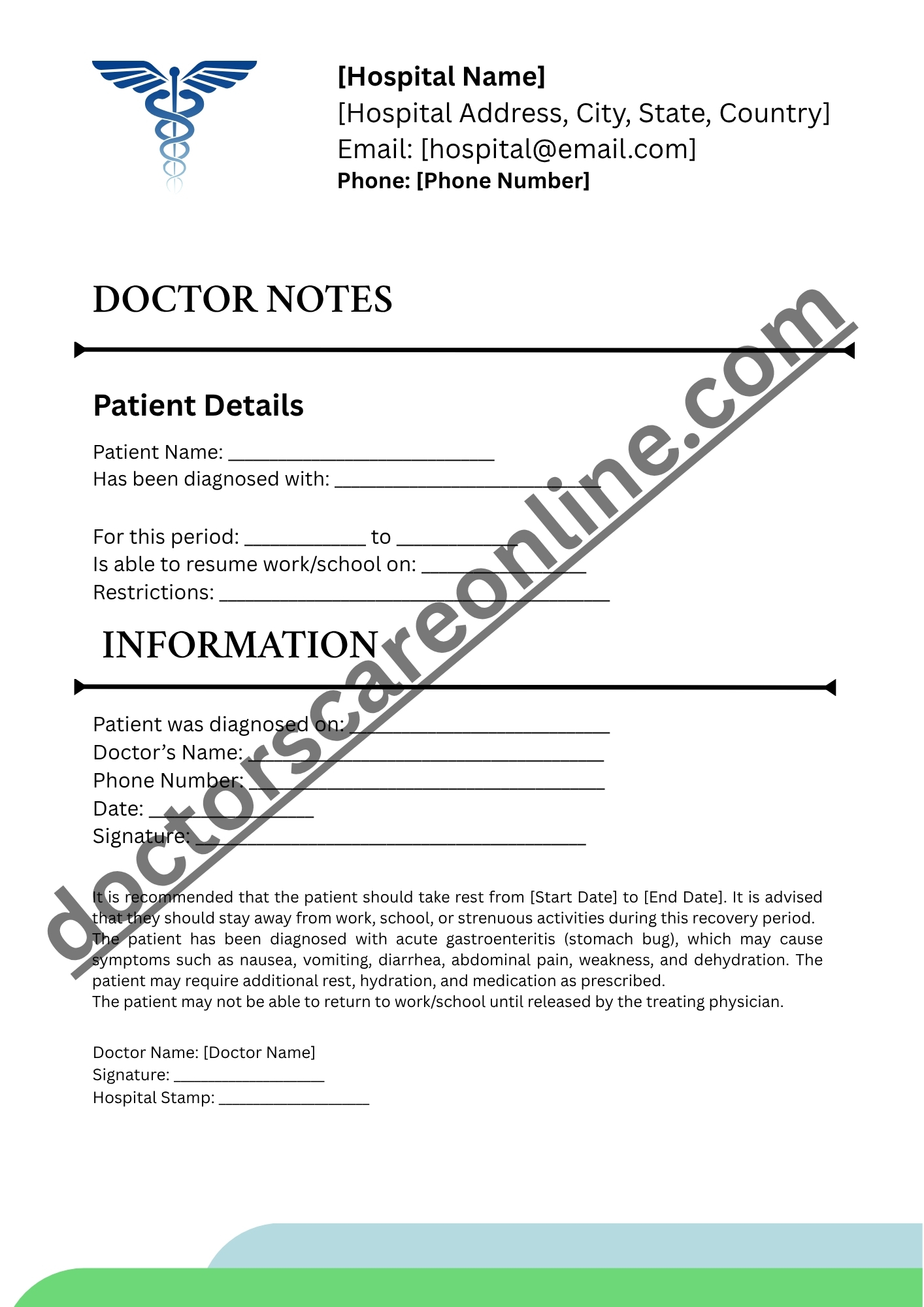
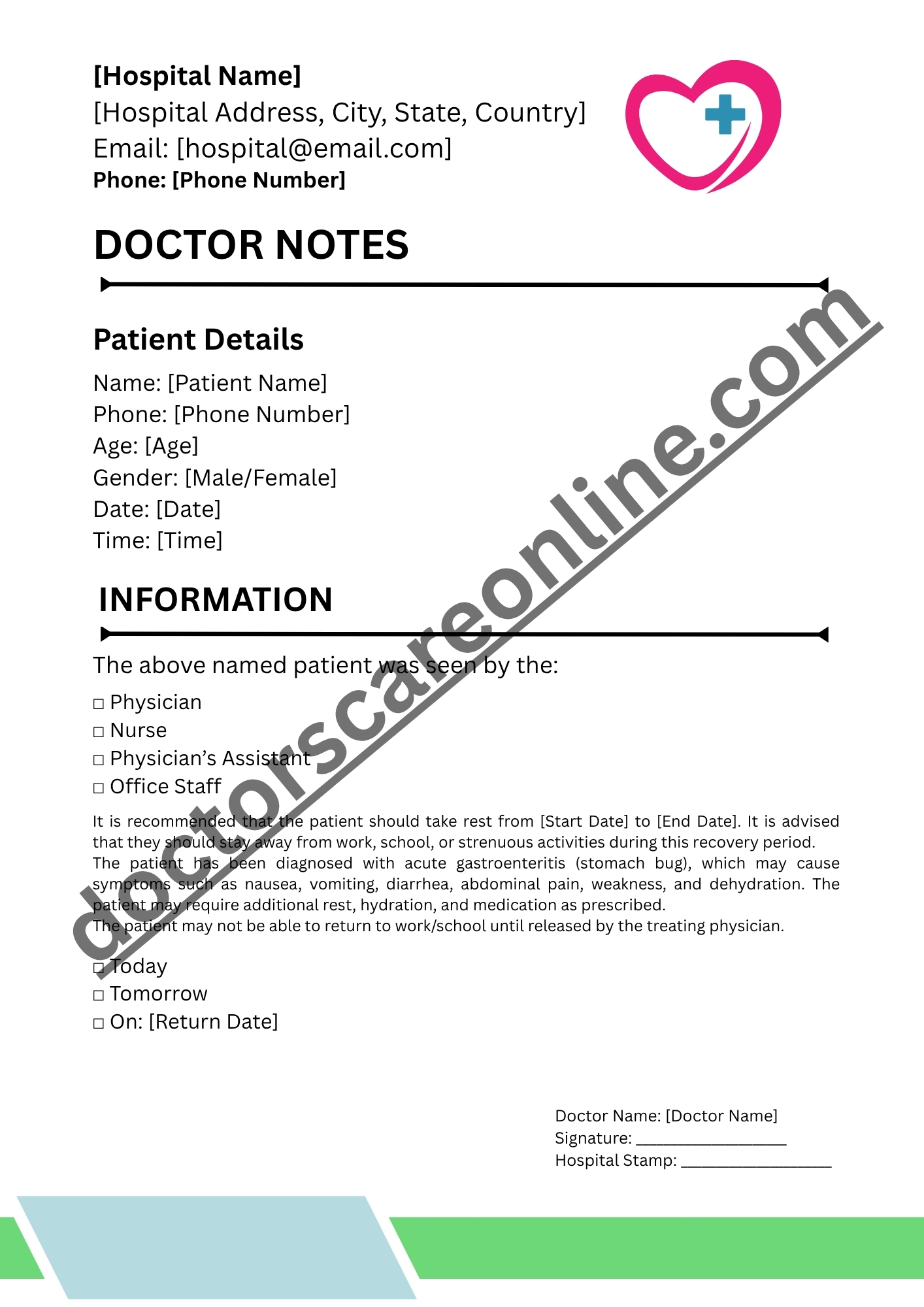
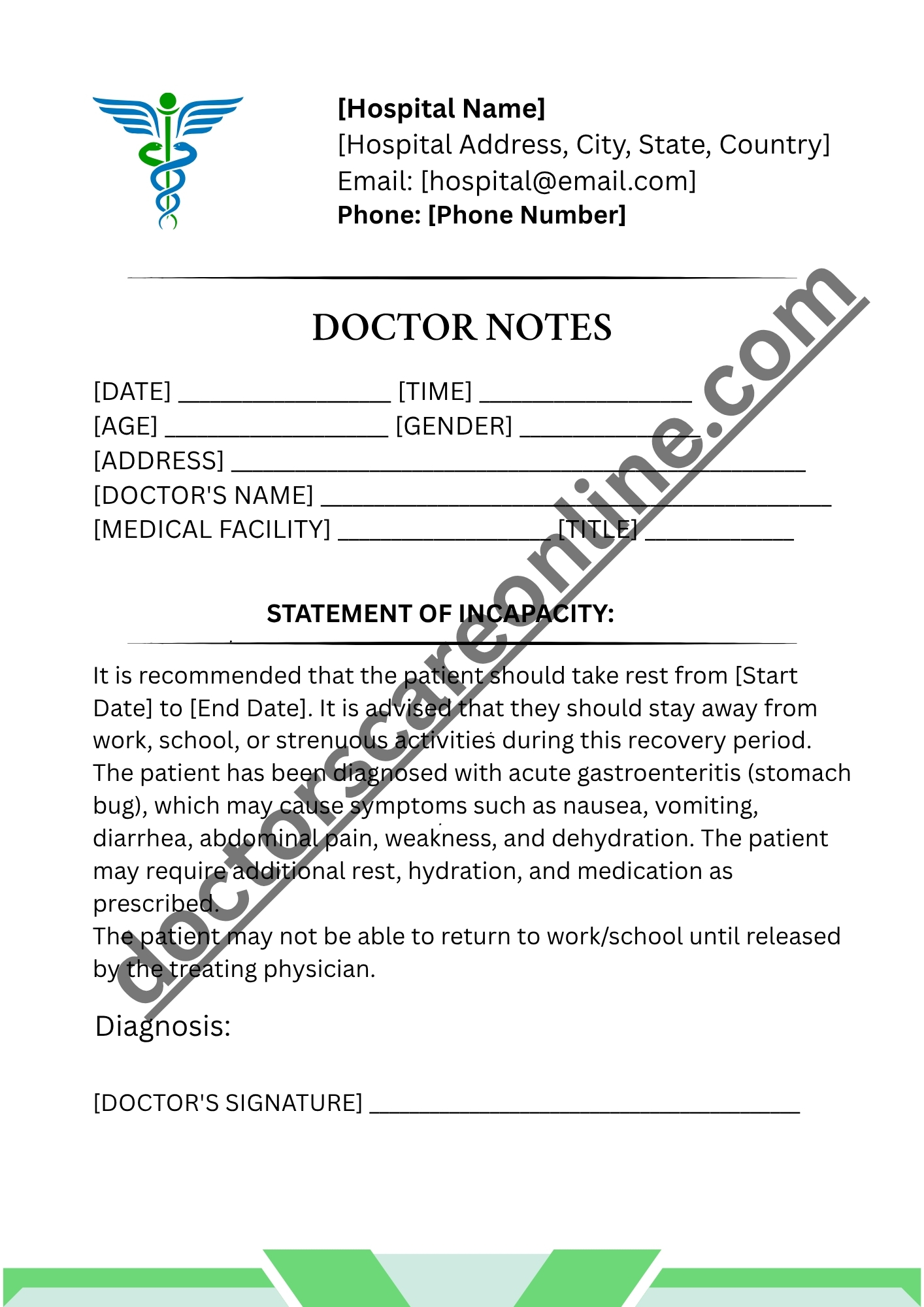
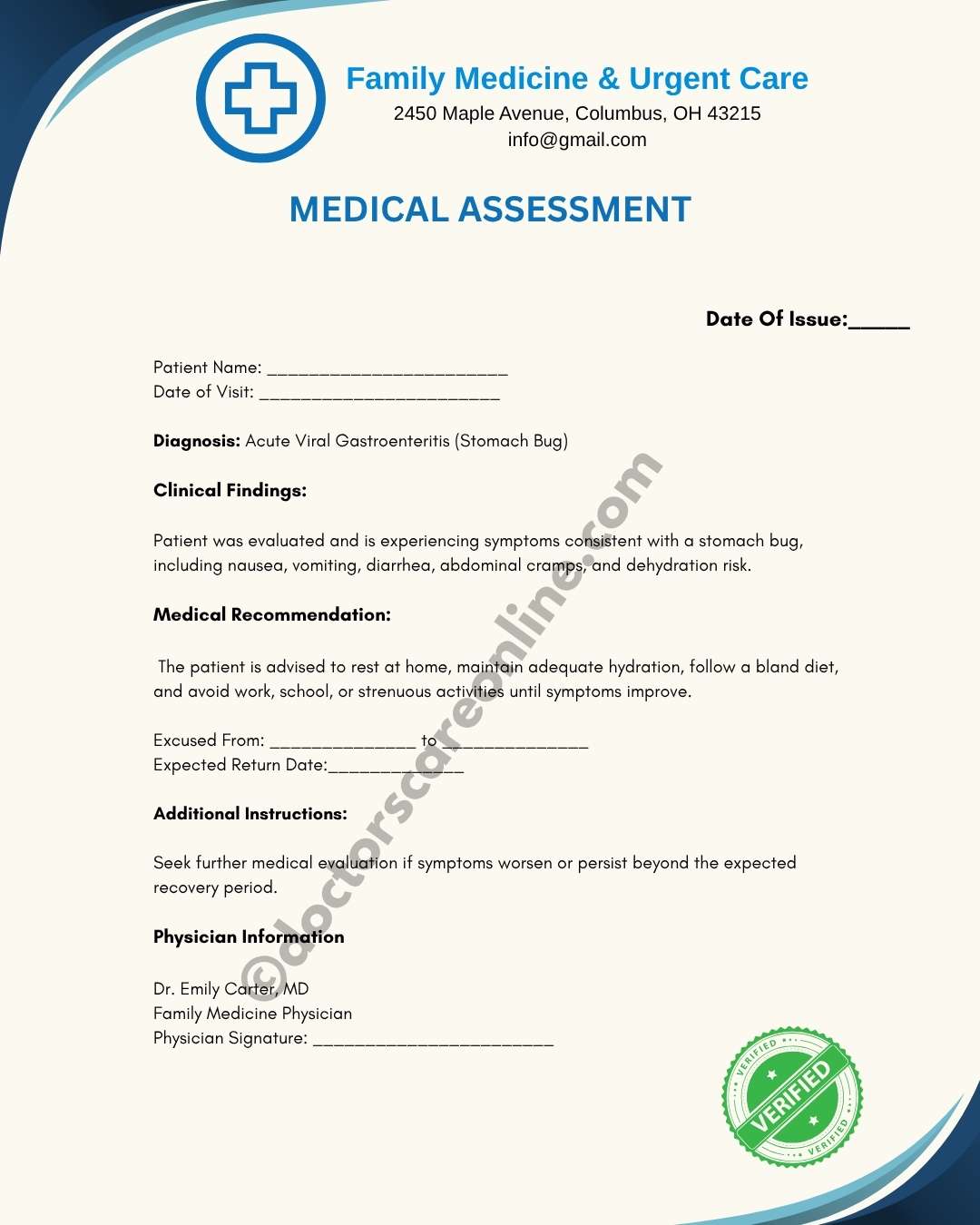
A Doctor’s Note for a Stomach Bug is a medical document provided by a healthcare professional after evaluating symptoms such as diarrhea, vomiting, nausea, stomach cramps, or dehydration. Many employers, schools, and colleges may ask for this note when an illness prevents someone from attending work or classes. It confirms that the person was examined by a medical provider and may include recommendations for rest, temporary activity restrictions, or a safe return date.
A stomach bug, also known as viral gastroenteritis, is a common illness that affects the stomach and intestines. While most cases improve within a few days with proper hydration and rest, some people may experience more severe symptoms that require medical attention. This guide explains when you may need a doctor’s note for a stomach bug, what information it typically includes, how healthcare providers assess the condition, treatment and recovery tips, and when it is important to seek further medical care.
When Do You Need a Doctor’s Note for a Stomach Bug?
A doctor’s note may be needed when your symptoms make it difficult or unsafe to attend work, school, or other daily activities. It confirms that a healthcare provider has evaluated your condition and may recommend rest or temporary activity restrictions.
You may need a doctor’s note if:
- You miss work because of vomiting or diarrhea.
- Your employer requires medical proof after a sick leave.
- You are absent from school or college for several days.
- You work in food service, healthcare, or childcare,where illness can spread easily.
- Your symptoms are severe or last longer than expected.
- A healthcare provider advises you to stay home until you recover.
Symptoms of a Stomach Bug (Adults and Children)
| Adults | Children |
|---|---|
| Frequent diarrhea | Loose or watery stools |
| Vomiting | Vomiting |
| Nausea | Nausea or refusing to eat |
| Stomach cramps | Stomach pain or cramps |
| Mild fever | Fever |
| Headache | Irritability or fussiness |
| Weakness and tiredness | Sleepiness or low energy |
| Loss of appetite | Poor feeding or reduced appetite |
| Dehydration | Dry mouth, fewer wet diapers, or crying without tears |
Common Causes of a Stomach Bug
A stomach bug can develop from different types of infections or contaminated food and drinks.
| Cause | Description |
|---|---|
| Viral Infection | The most common cause. Viruses such as norovirus and rotavirus spread easily from person to person. |
| Bacterial Infection | Bacteria from contaminated food or water can cause stomach infections. |
| Food Poisoning | Eating spoiled or undercooked food may lead to sudden stomach illness. |
| Contaminated Water | Drinking unsafe water can introduce harmful germs into the digestive system. |
| Poor Hygiene | Not washing hands properly increases the risk of infection. |
How Doctors Diagnose a Stomach Bug
In most cases, doctors can diagnose a stomach bug by reviewing your symptoms and medical history.
They may:
- Ask when your symptoms started.
- Discuss recent meals, travel, or contact with sick people.
- Check your temperature and vital signs.
- Look for signs of dehydration.
- Examine your abdomen for tenderness.
- Recommend stool or blood tests only if symptoms are severe, persistent, or unusual.
What Information Is Included in a Doctor’s Note for a
Stomach Bug?
A doctor’s note usually contains basic medical information without sharing unnecessary personal details.
It may include:
- Date of the medical visit
- Confirmation that you were examined
- Recommended rest period
- Work or school restrictions (if needed)
- Expected return date
- Healthcare provider’s name and signature
How Long Is a Doctor’s Note for a Stomach Bug Valid for School & Workspace
There is no fixed expiration date for a doctor’s note. Its validity depends on your healthcare provider’s recommendation and your employer’s or school’s attendance policy.
| Situation | Typical Validity | Important Information |
|---|---|---|
| Mild Stomach Bug | 1–3 days | Common when symptoms improve quickly with rest and hydration. The healthcare provider determines the recommended leave. |
| Moderate Stomach Bug | 3–7 days | May be recommended if vomiting, diarrhea, fever, or dehydration lasts longer. |
| Severe Illness or Complications | More than 7 days (if medically necessary) | Additional recovery time or a follow-up appointment may be required before returning to work or school. |
| Workplace Validity | Valid for the dates written on the doctor’s note | Employers generally accept the note for the approved leave period. Company sick leave policies may vary. |
| School Validity | Valid for the dates listed by the healthcare provider | Schools usually accept the note for the documented absence period. Attendance requirements differ by school. |
| If Recovery Takes Longer | An updated doctor’s note may be required | If symptoms continue beyond the expected recovery date, a follow-up medical evaluation may be needed to extend the leave. |
Keep in mind:
- A doctor’s note is generally valid for the recovery period stated by the healthcare provider.
- Some employers or schools may ask for an updated note if your illness lasts longer than originally expected.
- If your symptoms continue after the return date, schedule a follow-up appointment to receive further medical advice or an extended doctor’s note if necessary.
- Always follow your workplace or school’s attendance and sick leave policies, as documentation requirements can vary.
Important: A doctor’s note does not guarantee paid sick leave. It serves as medical documentation confirming that a healthcare provider evaluated your condition and recommended time away from work or school.
How to Book an Online Appointment for a Doctor’s Note for
Stomach Bug
If your stomach bug symptoms are mild or moderate, you may be able to consult a healthcare provider through an online telehealth service. After the consultation, the provider may issue a doctor’s note if it is medically appropriate.
Follow these simple steps:
- Choose a trusted telehealth provider or your regular healthcare clinic.
- Create an account and enter your basic personal details.
- Select a virtual consultation and choose an available appointment time.
- Describe your symptoms accurately, including when they started and how severe they are.
- Attend the video or phone consultation with the healthcare provider.
- Follow the doctor’s advice regarding treatment, rest, and hydration.
- Request a doctor’s note if you need documentation for work or school.
- Download or receive the note by email or through the patient portal, if the provider determines it is appropriate.
Tip: Be honest about your symptoms. A healthcare provider will only issue a doctor’s note if it is medically justified after evaluating your condition.
How Long Should You Stay Home with a Stomach Bug?
Most people should stay home until they are feeling better and are less likely to spread the illness.
In general:
- Wait until vomiting has stopped.
- Diarrhea should be improving.
- The fever should be gone without medication.
- You should be able to eat and drink normally.
- Follow your healthcare provider’s advice before returning to work or school.
Stomach Bug Recovery Time: How Long Does It Take to Recover?
Recovery from a stomach bug depends on the cause of the infection, the severity of symptoms, your age, and your overall health. Most people begin to feel better within a few days with proper rest and hydration. However, recovery may take longer if dehydration develops or if the infection is more severe.
| Severity | Typical Recovery Time | What to Expect |
|---|---|---|
| Mild Stomach Bug | 1–3 days | Mild diarrhea, nausea, or stomach discomfort usually improves with rest, fluids, and a light diet. |
| Moderate Stomach Bug | 3–5 days | Vomiting and diarrhea gradually decrease, and your appetite and energy begin to return. |
| Severe Stomach Bug | 5–7 days or longer | Recovery may take more time, especially if dehydration or a bacterial infection requires medical treatment. |
Stomach Bug Treatment Options: How Is It Treated?
Treatment focuses on preventing dehydration and helping the body recover.
- Drink plenty of fluids.
- Use oral rehydration solutions (ORS) if recommended.
- Get enough rest.
- Eat light, easy-to-digest foods.
- Take medicines only as advised by a healthcare provider.
- Follow up if symptoms worsen or do not improve.
Home Remedies for a Stomach Bug
These simple steps may help you feel better while recovering.
- Drink small sips of water throughout the day.
- Get plenty of sleep.
- Eat bland foods in small portions.
- Wash your hands frequently.
- Avoid alcohol and smoking.
- Slowly return to your regular diet as you improve.
Best Foods to Eat During Stomach Bug Recovery
Choose foods that are gentle on your stomach.
- Bananas
- White rice
- Applesauce
- Toast
- Plain crackers
- Boiled potatoes
- Oatmeal
- Plain soup or broth
- Yogurt (if tolerated)
- Cooked vegetables
Foods to Avoid During Stomach Bug Recovery
Some foods may make symptoms worse while your stomach is healing.
- Spicy foods
- Fried foods
- Greasy meals
- Dairy products (if they worsen symptoms)
- Sugary drinks
- Caffeinated beverages
- Alcohol
- Raw vegetables
- Highly processed foods
When Should You Go to the Emergency Room?
Seek emergency medical care if you experience:
- Severe dehydration
- Blood in vomit or stool
- High fever that does not improve
- Severe stomach pain
- Difficulty staying awake or confusion
- Continuous vomiting
- Fainting or dizziness
- Trouble drinking fluids
Is a Stomach Bug Contagious?
Yes. Many stomach bugs spread easily through close contact with infected people or contaminated food, water, or surfaces.
To reduce the risk of spreading the infection:
- Wash your hands with soap and water.
- Stay home while you are sick.
- Clean commonly touched surfaces.
- Do not prepare food for others until you recover.
- Avoid sharing utensils, towels, or drinks.
Can You Go to Work with a Stomach Bug?
It is usually best to stay home if you have vomiting, diarrhea, or a fever.
Returning to work too soon may:
- Spread the illness to coworkers.
- Slow your recovery.
- Increase the risk of dehydration.
People who work in healthcare, childcare, or food service should follow workplace health guidelines before returning.
Can You Go to School with a Stomach Bug?
Children and students should stay home until they are well enough to participate in normal activities.
A return to school is generally recommended when:
- Vomiting has stopped.
- Diarrhea is improving.
- Fever has resolved.
- They are eating and drinking normally.
Some schools may request a doctor’s note after several days of absence.
Sick Leave for a Stomach Bug
If your symptoms prevent you from working, you may be eligible for sick leave according to your employer’s attendance policy.
A doctor’s note can help:
- Confirm your illness.
- Support your leave request.
- Recommend the appropriate recovery period.
- Document your return-to-work date if required.
Dehydration Signs to Watch For
Dehydration is one of the most common complications of a stomach bug.
Adults
- Extreme thirst
- Dry mouth
- Dark yellow urine
- Dizziness
- Fatigue
- Urinating less often
Children
- Dry lips and mouth
- Crying without tears
- Fewer wet diapers
- Sunken eyes
- Sleepiness
- Unusual irritability
If dehydration becomes severe or symptoms continue despite drinking fluids, seek medical care as soon as possible.
FAQs
1. Can I call off work for a stomach bug?
Yes, if you have symptoms such as vomiting, diarrhea, fever, or severe stomach cramps, it is generally appropriate to stay home. A stomach bug doctor’s note may be required by your employer if you miss multiple workdays or if your company has a sick leave policy. Staying home also helps prevent the spread of viral gastroenteritis, especially in workplaces where close contact with others is common.
2. What will doctors give you for a stomach bug?
Treatment depends on the severity of your symptoms. Most cases of viral gastroenteritis improve with rest, hydration, and an oral rehydration solution. A healthcare provider may recommend anti-nausea medication or other supportive treatments if needed. If your condition requires time off, the doctor may also issue a doctor’s note for gastroenteritis or a medical certificate for stomach illness after evaluating your condition.
3. How can you prove you have a stomach bug?
The best way to document your illness is through a medical evaluation by a licensed healthcare provider. After examining your symptoms, the provider may issue a work excuse for a stomach bug or a sick note for a stomach virus if medically appropriate. In most cases, laboratory tests are not necessary unless symptoms are severe or last longer than expected.
4. Can I get a doctor’s note for a stomach bug without going to the clinic?
In many areas, you may be able to receive a stomach bug doctor’s note through a telehealth appointment if the healthcare provider can properly assess your symptoms. Whether a virtual doctor’s note for gastroenteritis is accepted depends on your employer’s or school’s attendance policy and local healthcare regulations.
5. How long should I stay home with a stomach bug?
Most people recover from a stomach virus within 1 to 3 days, although some cases may take longer. Healthcare providers often recommend returning to work or school only after vomiting has stopped and diarrhea has improved, following local public health guidance. If your symptoms continue or dehydration develops, seek medical care before returning to normal activities.
Medical Disclaimer
This article is intended for informational and educational purposes only and should not be considered medical advice, diagnosis, or treatment. Always consult a licensed healthcare provider regarding your symptoms or before making healthcare decisions. Seek immediate emergency medical care if you experience severe dehydration, persistent vomiting, bloody stools, severe abdominal pain, confusion, fainting, difficulty breathing, or any other concerning symptoms. A doctor’s note is issued only after an appropriate medical evaluation and when clinically justified.
Related Post





Reviews
There are no reviews yet.