Doctors Note for Panic Attack | Mental Health Note

Sale!

Doctors Note for Panic Attack | Mental Health Note

Original price was: $21.00.Current price is: $19.90.

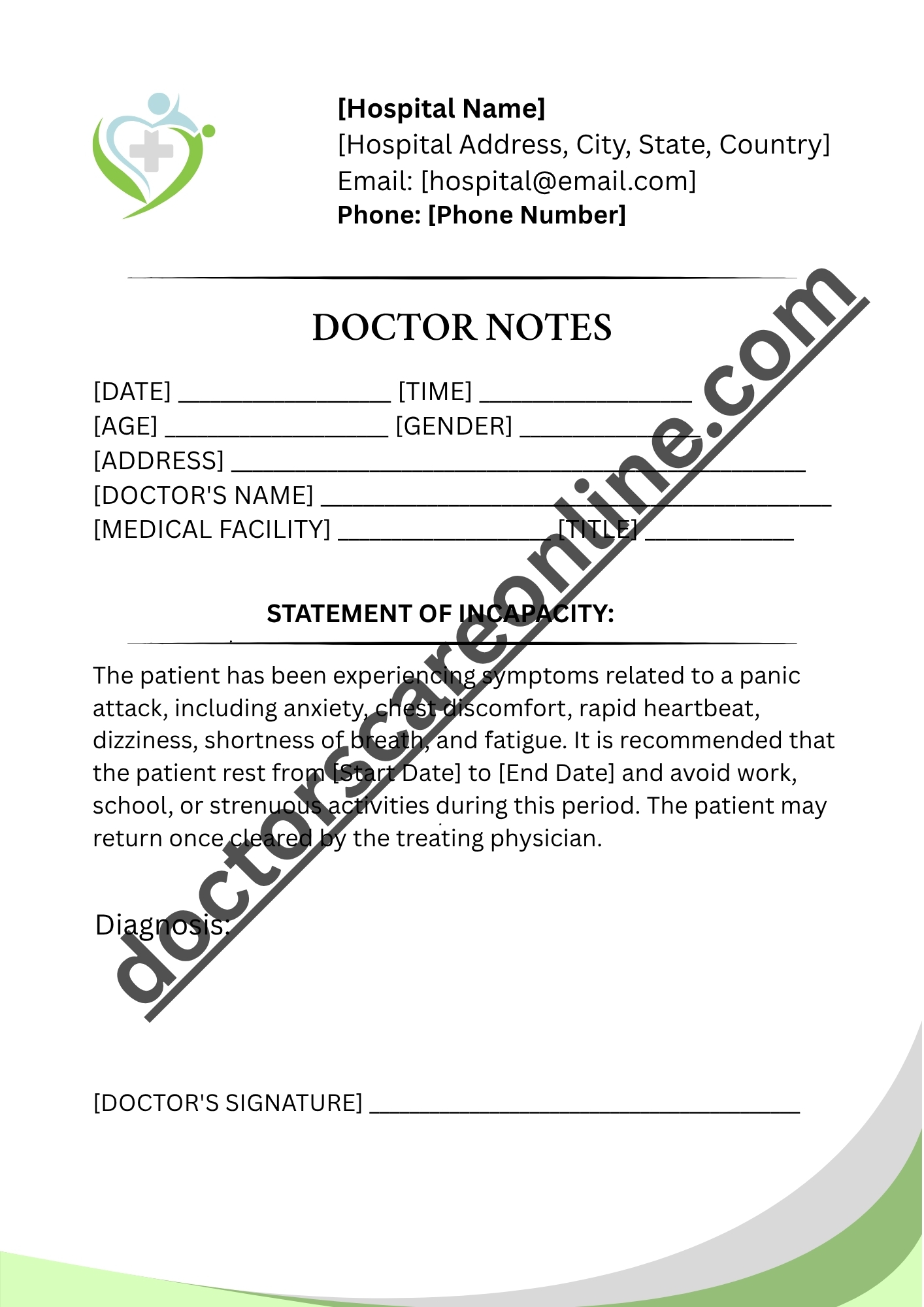
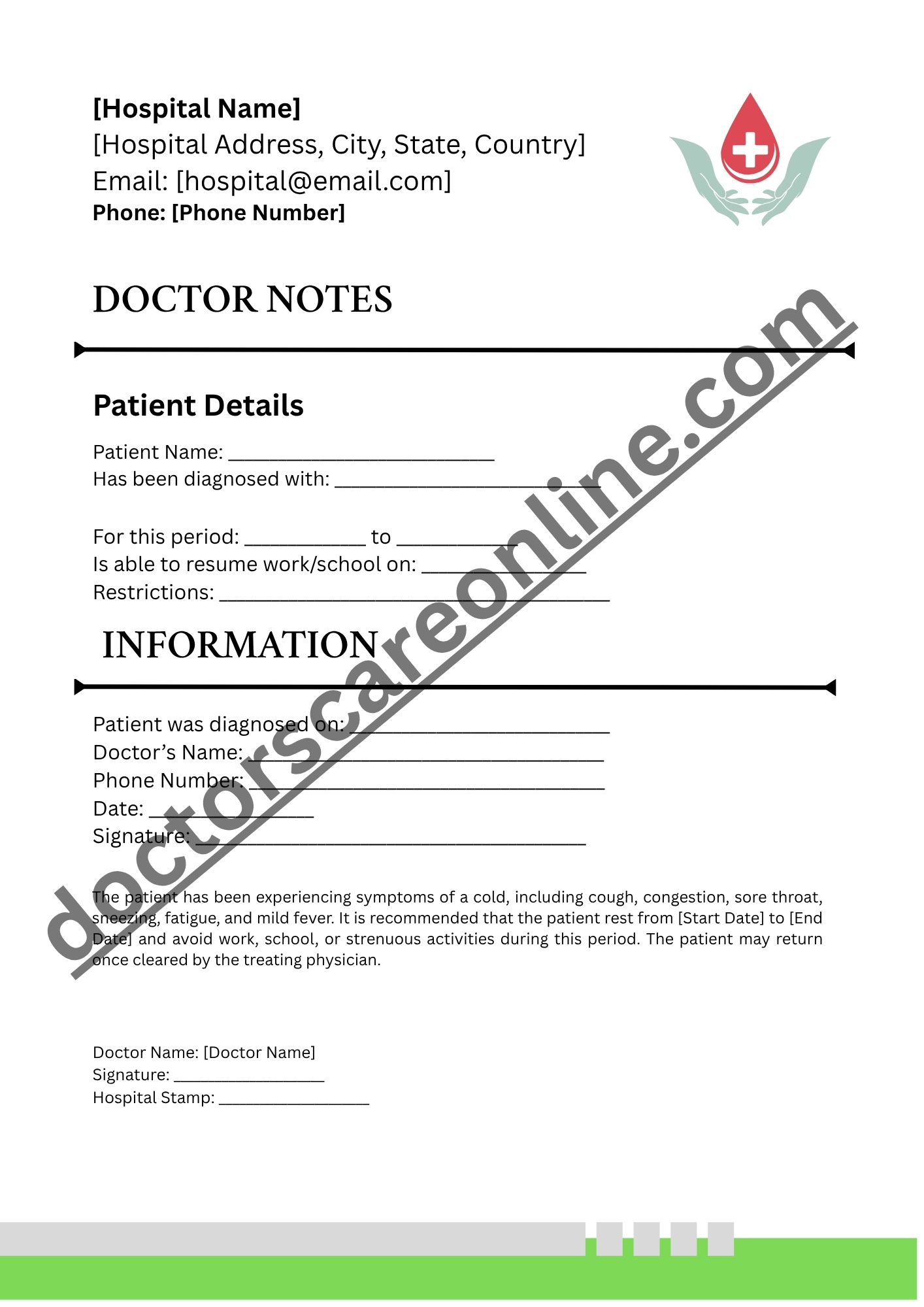
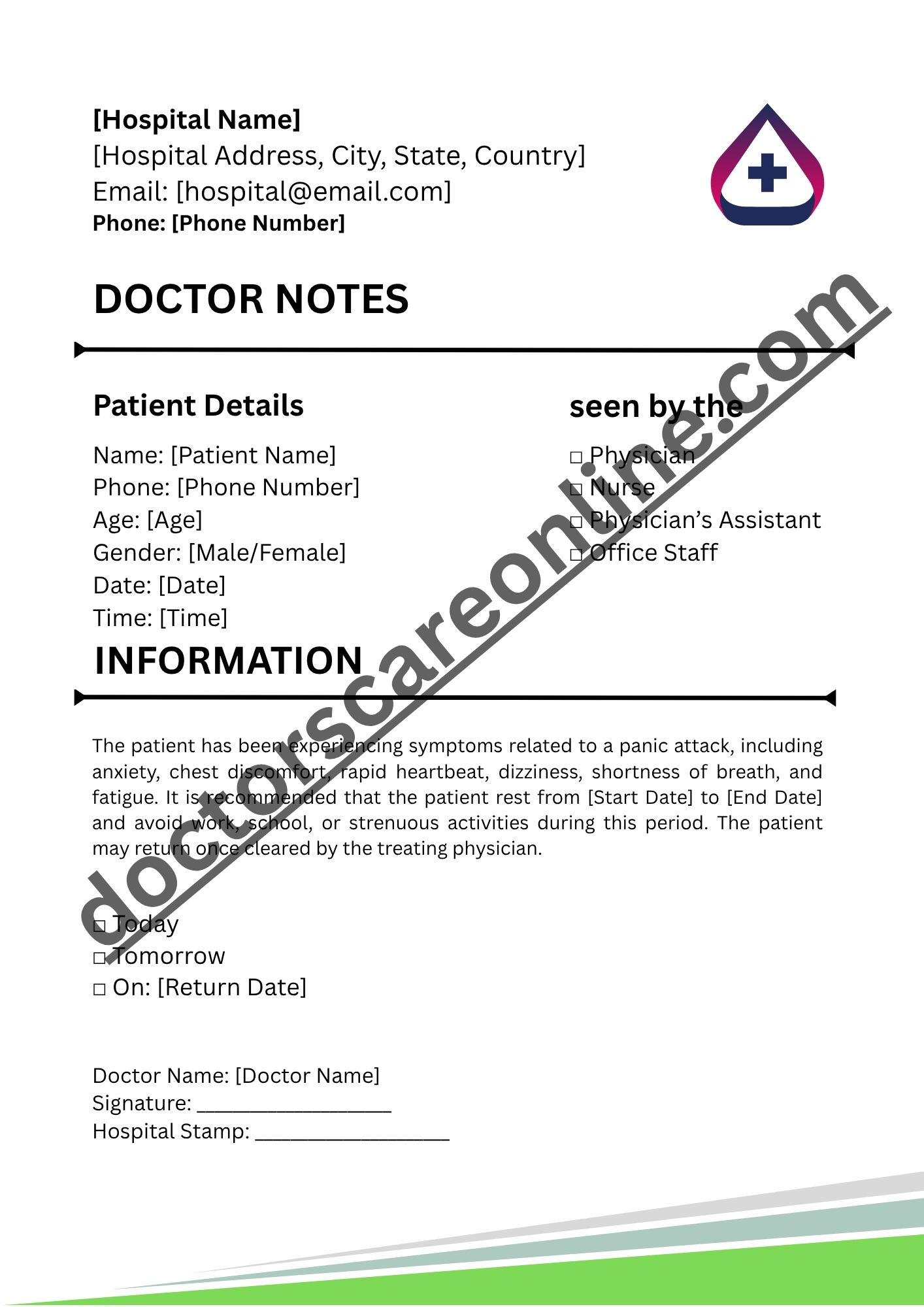
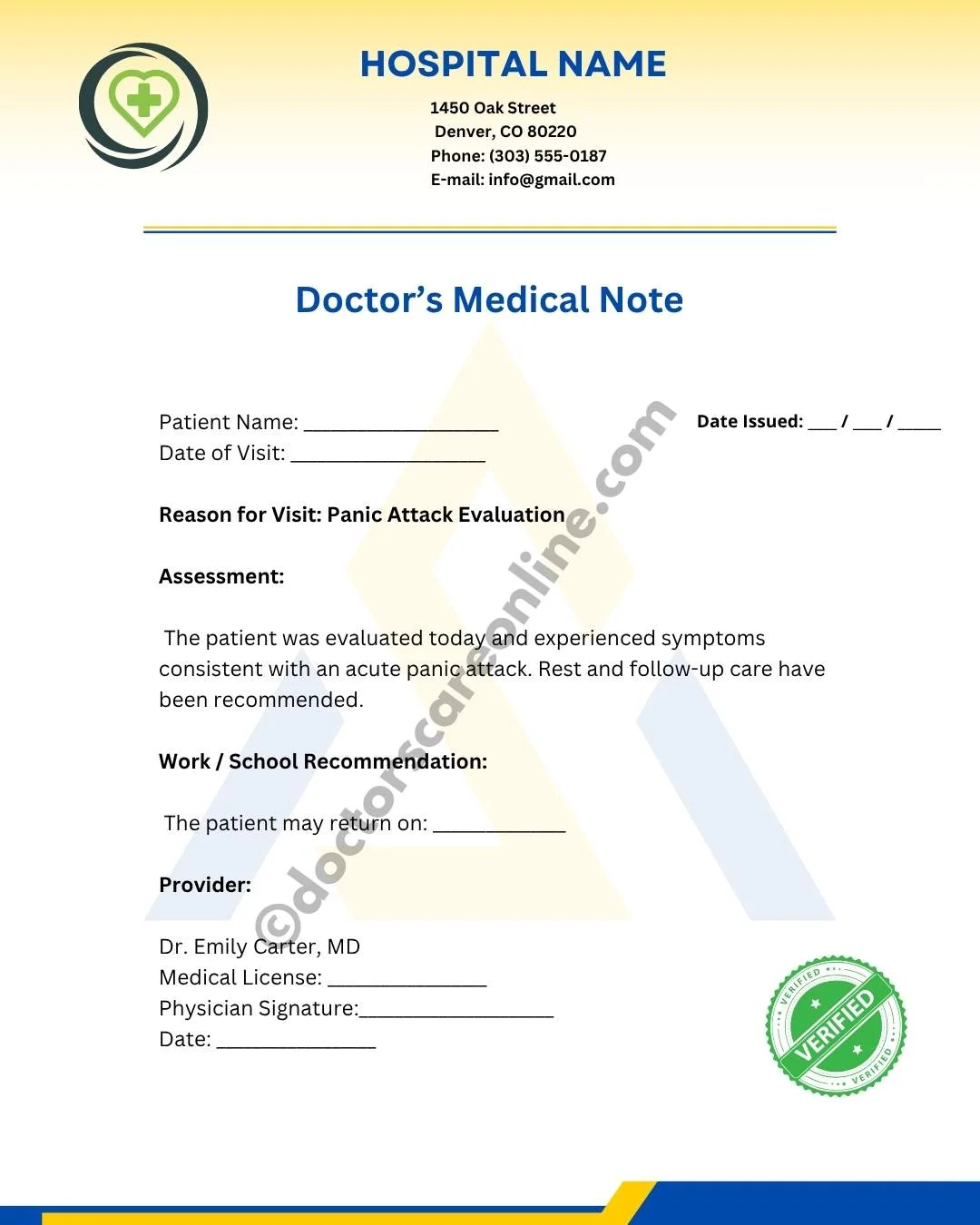
Doctors Note Panic Attack refers to a medical form, which acknowledges that a patient had a panic attack or extreme anxiety episode that could not be managed without medical intervention.

A Doctor’s Note for a Panic Attack is an official medical document provided by a qualified healthcare professional after evaluating a person’s symptoms and health condition. It confirms that the individual received medical attention and may require time away from work, school, college, or other responsibilities to recover.

For panic attacks, a doctor’s note may be needed when symptoms such as intense fear, rapid heartbeat, difficulty breathing, dizziness, or emotional distress affect daily activities. The note does not always include private medical details but may mention the need for rest, follow-up care, or temporary adjustments.

This document helps employers, schools, and institutions verify that the absence or request for support is based on a legitimate medical evaluation. It can also support workplace accommodations, attendance exemptions, or academic assistance when recommended by a healthcare provider.

Common Symptoms of a Panic Attack

A panic attack can cause sudden and intense feelings of fear, anxiety, or discomfort, even when there is no immediate danger. Symptoms can vary from person to person but often include both physical and emotional changes.

Physical Symptoms:

  • Rapid heartbeat or pounding heart
  • Shortness of breath or feeling unable to breathe normally
  • Chest tightness or discomfort
  • Sweating or chills
  • Shaking or trembling
  • Dizziness or feeling lightheaded
  • Nausea or stomach discomfort
  • Tingling or numbness in hands, feet, or face
  • Feeling hot or cold suddenly

Emotional Symptoms:

  • Intense fear or a sense of losing control
  • Feeling detached from reality or surroundings
  • Fear of dying or something bad happening
  • Sudden overwhelming anxiety
  • Difficulty thinking clearly during the episode

Panic attacks usually reach their peak within minutes and may leave a person feeling tired, stressed, or emotionally drained afterward. If symptoms are severe, frequent, or interfere with daily life, consulting a healthcare professional is recommended.

What Can Trigger a Panic Attack?

Panic attacks can happen suddenly, but certain situations, thoughts, or physical conditions may increase the likelihood of experiencing one. Triggers can be different for each person and may not always be obvious.

Common panic attack triggers include:

  • High stress or emotional pressure: Major life changes, work stress, relationship problems, or overwhelming responsibilities can trigger intense anxiety.
  • Fear or traumatic experiences: Past trauma, frightening events, or reminders of stressful situations may lead to panic symptoms.
  • Health concerns: Worry about physical symptoms or having a serious illness can sometimes trigger panic.
  • Crowded or unfamiliar places: Some people experience panic attacks in busy environments, public transportation, or places where they feel unable to leave easily.
  • Lifestyle factors: Lack of sleep, excessive caffeine, alcohol use, dehydration, or skipping meals may contribute to panic symptoms.
  • Major changes: Moving, financial stress, loss of a loved one, or significant personal changes can increase anxiety levels.
  • Certain thoughts or fears: Negative thinking patterns or fear of another panic attack can become a trigger.

Identifying personal triggers with the help of a healthcare professional can help manage and reduce future panic attacks.

Who Should Seek Medical Attention for a Panic Attack?

Not everyone who experiences a panic attack needs emergency care, but medical attention is recommended when symptoms are severe, frequent, or affecting daily life. A healthcare professional can help identify the cause of symptoms and suggest appropriate treatment or support.

You should consider seeking medical attention if you:

  • Experience frequent or recurring panic attacks that interfere with work, school, relationships, or daily activities.
  • Have intense symptoms such as chest pain, severe shortness of breath, fainting, or confusion.
  • Avoid certain places or activities because of fear of having another panic attack.
  • Feel unable to manage anxiety, stress, or panic symptoms on your own.
  • Notice panic attacks are becoming more severe or happening without clear triggers.
  • Need documentation, such as a doctor’s note for a panic attack, for work, school, or other responsibilities.
  • Experience ongoing anxiety, depression, or thoughts of self-harm.

A doctor or mental health professional can evaluate your symptoms, rule out other medical conditions, and provide guidance on treatment options. If symptoms feel life-threatening or involve thoughts of harming yourself, seek immediate emergency medical help.

How Healthcare Providers Assess a Panic Attack

Healthcare providers assess a panic attack by reviewing your symptoms, medical history, and overall health to determine whether the episode is related to a panic attack or another medical condition. Because panic attack symptoms can resemble heart, lung, or thyroid problems, a thorough evaluation is important.

During the assessment, a healthcare provider may:

  • Discuss your symptoms, including when they started, how long they lasted, and how often they occur.
  • Ask about triggers, such as stress, traumatic events, caffeine use, or recent life changes.
  • Review your medical and mental health history, including any previous anxiety or panic disorders.
  • Perform a physical examination to check for signs of other health conditions.
  • Recommend tests if needed, such as blood tests, an electrocardiogram (ECG), or other evaluations to rule out medical causes.
  • Evaluate the impact on daily life, including work, school, sleep, and relationships.

Based on the assessment, the provider may diagnose a panic attack or another condition, recommend treatment, schedule follow-up care, and, if medically appropriate, provide a doctor’s note for a panic attack to support time away from work or school.

What Information Is Included in a Panic Attack Doctor’s Note?

A doctor’s note for a panic attack generally includes:

  • Patient’s name
  • Date of the medical evaluation
  • Healthcare provider’s name and clinic details
  • Confirmation that the patient was medically evaluated
  • Recommended leave from work or school (if needed)
  • Return-to-work or return-to-school date (when applicable)
  • Any temporary activity restrictions or accommodations
  • Doctor’s signature or official stamp

Note: To protect patient privacy, the note usually does not disclose the specific diagnosis or detailed medical information unless the patient authorizes it or it is required by law.

How to Get a Doctor’s Note for a Panic Attack

Getting a doctor’s note for a panic attack is a straightforward process. Follow these steps:

  1. Schedule an appointment with a doctor or licensed mental health professional.
  2. Explain your symptoms, including when the panic attack occurred and how it affected you.
  3. Complete the medical evaluation, which may include discussing your medical history and current condition.
  4. Follow the provider’s recommendations for treatment or recovery.
  5. Request a doctor’s note if you need documentation for work, school, or college.
  6. Submit the note to your employer or educational institution as required.

A doctor will only issue a note if it is medically appropriate based on their professional evaluation.

Can You Get a Doctor’s Note Online for a Panic Attack?

  • Yes, many licensed healthcare providers offer online doctor’s notes through telehealth consultations.
  • Schedule a virtual appointment with a licensed doctor or mental health professional.
  • Discuss your panic attack symptoms, medical history, and current condition.
  • The provider will determine whether a doctor’s note is medically appropriate.
  • If approved, the note may be sent electronically by email or through a secure patient portal.
  • If your symptoms require immediate or in-person care, you may be referred to a clinic or hospital instead.
  • Always use a licensed and reputable telehealth provider to ensure the note is valid for work or school,

How Long Is a Doctor’s Note for a Panic Attack Valid?

The length of time a doctor’s note for a panic attack is valid depends on your symptoms, the healthcare provider’s recommendation, and your employer’s or school’s policy. Mild cases may require only a short absence, while recurring or severe symptoms may need a longer recovery period.

Purpose Typical Validity
Office / Workplace 1–3 days for a single panic attack. Up to 1–2 weeks if symptoms are severe or recurring and recommended by the doctor.
School Usually 1–3 school days, depending on the doctor’s advice and school attendance policy.
College / University Generally 1–5 days. Longer leave may require additional medical documentation.
Work From Home (WFH) Typically 3–14 days, if the healthcare provider recommends temporary remote work instead of office attendance.

Important: These are general timeframes, not fixed rules. The actual validity of a doctor’s note is determined by the healthcare provider based on your medical evaluation and the policies of your workplace, school, or college. If you need more time to recover, a follow-up visit and an updated doctor’s note may be required.

Returning to Work or School After a Panic Attack

Returning to your normal routine after a panic attack should be based on your recovery and your healthcare provider’s advice. Many people can resume work or school once their symptoms have improved, while others may need additional time or temporary accommodations.

Before Returning

  • Make sure your panic attack symptoms are under control.
  • Follow your healthcare provider’s treatment or recovery plan.
  • Get enough rest and prioritize good sleep.
  • Continue taking prescribed medications, if applicable.

At Work or School

  • Return gradually if recommended by your healthcare provider.
  • Inform your employer, teacher, or school administrator if temporary accommodations are needed.
  • Take short breaks if you begin feeling overwhelmed.
  • Practice stress-management techniques, such as deep breathing or mindfulness.

If Symptoms Return

  • Contact your healthcare provider if panic attacks become frequent or worsen.
  • Request a follow-up appointment if additional recovery time is needed.
  • Obtain an updated doctor’s note for a panic attack if your workplace or school requires extended leave or accommodations.

Tip: Don’t rush back before you’re ready. A gradual return with proper medical support can help reduce stress and improve long-term recovery.

Treatment Options After a Panic Attack

Treatment after a panic attack focuses on reducing symptoms, preventing future episodes, and improving overall mental well-being. Your healthcare provider will recommend the most appropriate treatment based on your condition.

  • Psychotherapy (Talk Therapy): Cognitive Behavioral Therapy (CBT) is commonly used to help identify and manage panic triggers.
  • Medications: A doctor may prescribe anti-anxiety medications or antidepressants if they are medically appropriate.
  • Breathing and Relaxation Techniques: Deep breathing, meditation, and mindfulness exercises can help manage anxiety.
  • Lifestyle Changes: Regular exercise, adequate sleep, a balanced diet, and limiting caffeine and alcohol may reduce the risk of future panic attacks.
  • Stress Management: Learning healthy coping strategies and identifying personal triggers can help prevent recurring episodes.
  • Follow-Up Care: Regular appointments with a healthcare provider or mental health professional can monitor progress and adjust treatment if needed.

Note: Always follow your healthcare provider’s advice and avoid starting or stopping any medication without medical guidance.

Workplace Rights and Panic Attack Documentation

If a panic attack affects your ability to work, you may need medical documentation to explain your absence or request temporary workplace support. Understanding your workplace rights can help you communicate with your employer while protecting your medical privacy.

When You May Need Documentation

  • To verify a sick leave or medical absence.
  • To request temporary work accommodations.
  • To support a return-to-work plan after recovery.
  • To extend medical leave if additional recovery time is needed.

What a Doctor’s Note Can Confirm

  • You were medically evaluated by a licensed healthcare provider.
  • A temporary leave from work is medically recommended.
  • Any work restrictions or accommodations, if applicable.
  • The expected return-to-work date (when appropriate).

Employee Rights

  • Your medical information should remain confidential.
  • Employers generally only need documentation confirming your fitness for work or the need for leave—not detailed medical records.
  • If your condition requires ongoing support, your employer may request updated medical documentation in accordance with company policies and applicable laws.

Tips for Employees

  • Submit your doctor’s note as soon as possible.
  • Follow your company’s sick leave or HR procedures.
  • Keep a copy of all medical documents for your records.
  • Contact HR if you need temporary accommodations or an extended leave.

Note: Workplace policies and employee rights vary by country, state, and employer. Always check your organization’s leave policy and applicable employment laws.

Related Post

Reviews

There are no reviews yet.

Be the first to review “Doctors Note for Panic Attack | Mental Health Note”

Your email address will not be published. Required fields are marked *

Doctors Note panic attackDoctors Note for Panic Attack | Mental Health Note
Original price was: $21.00.Current price is: $19.90.