

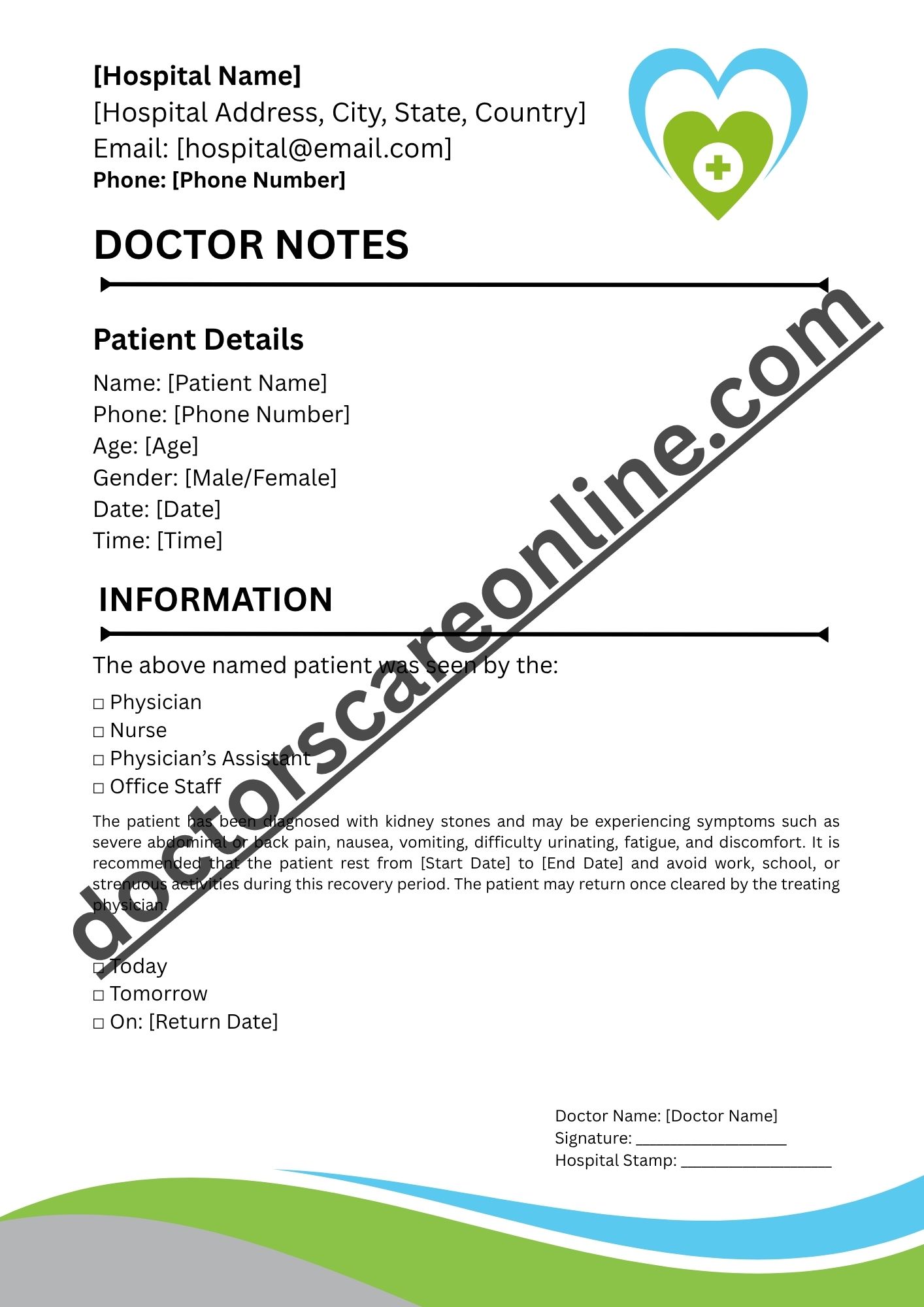
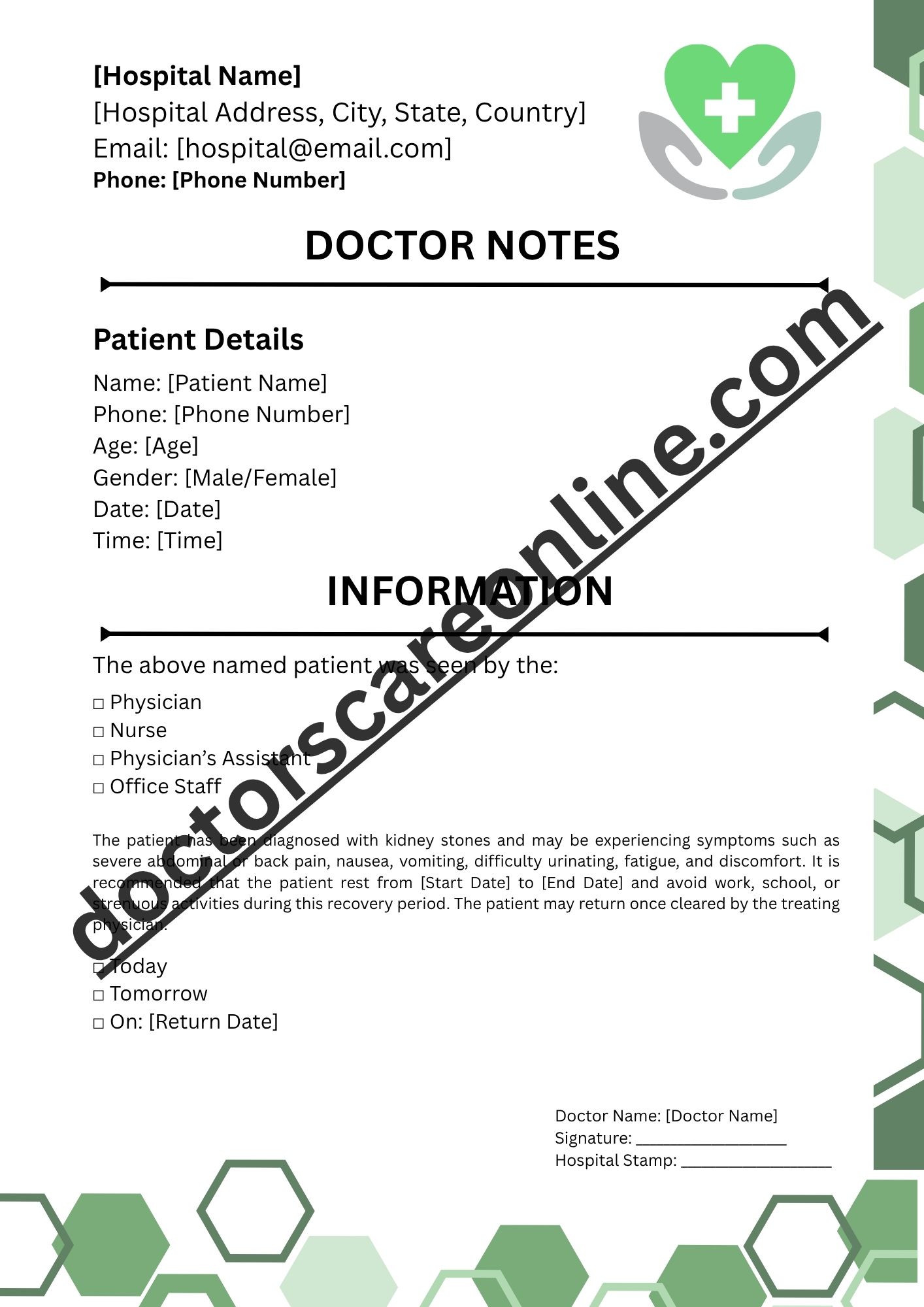
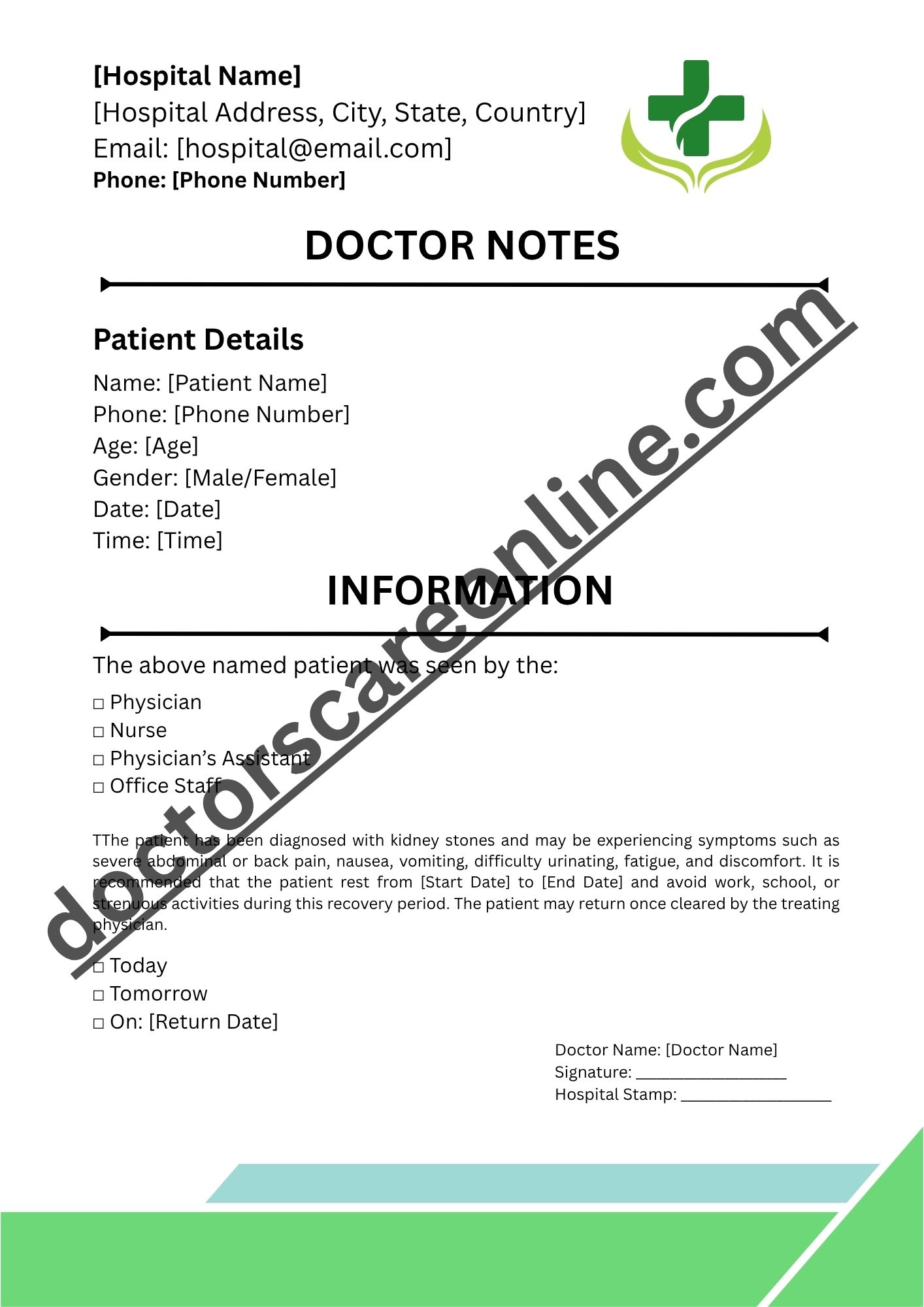
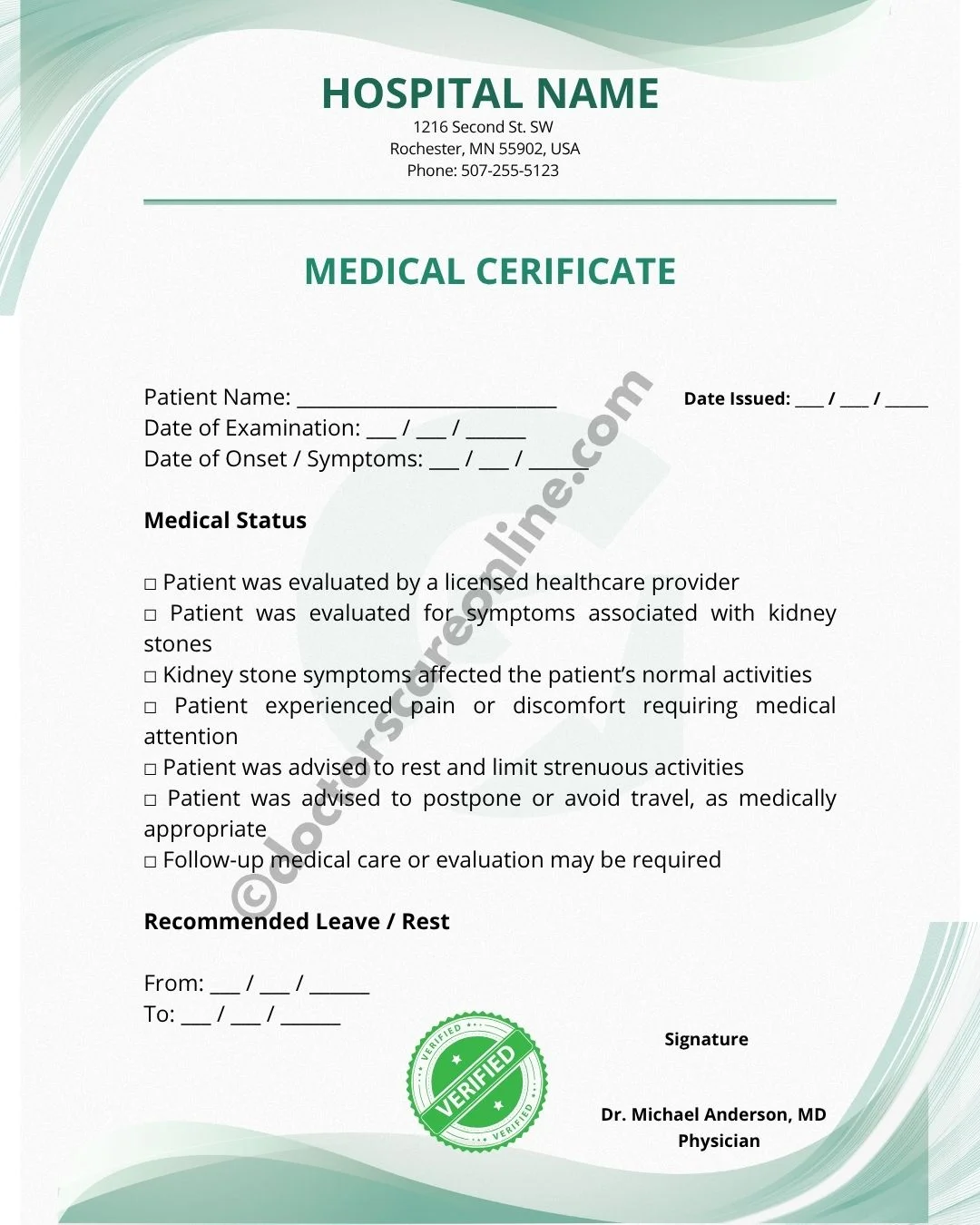
A Doctor’s note for kidney stones is an official medical document issued by a licensed healthcare provider after evaluating your condition. It verifies that you were seen for kidney stone symptoms or treatment and may recommend rest, work restrictions, or time away from school or other responsibilities.
The note is based on your medical examination and reflects your provider’s professional opinion. It may be requested by employers, schools, colleges, or other organizations when you are unable to attend because of severe kidney stone pain or medical treatment.
A doctor’s note may be provided after:
- Visiting a primary care doctor
- An urgent care appointment
- An emergency room visit
- Seeing a urologist
- Kidney stone surgery or another medical procedure
- A follow-up appointment during recovery
Although every doctor’s note is different, it usually focuses on your ability to safely return to normal activities rather than sharing unnecessary medical details.
When Do You Need a Doctor’s Note for Kidney Stones?
You may need a doctor’s note for kidney stones if severe pain, treatment, or recovery prevents you from attending work, school, or daily activities. The note confirms that you were evaluated by a healthcare provider and may recommend rest, medical leave, or temporary activity restrictions.
Common situations where you may need a doctor’s note:
- Severe kidney stone pain that makes it difficult to work or study
- An emergency room or urgent care visit
- Time off after kidney stone treatment or surgery
- Recovery with temporary work or lifting restrictions
- Follow-up medical appointments
- Employer or school requiring proof of your medical absence
A kidney stone doctor’s note helps support sick leave requests and provides official medical documentation for your absence. The recommended recovery period depends on your symptoms, treatment, and your healthcare provider’s advice.
What Information Is Included in a Kidney Stone Doctor’s Note?
A kidney stone doctor’s note provides basic medical information to verify that you were examined by a healthcare provider. The exact details may vary depending on your condition and workplace or school requirements, but most notes include the following information:
- The patient’s name is used to identify the individual receiving medical care.
- Date of the medical visit or examination.
- Confirmation of evaluation or treatment for kidney stones.
- Recommended rest period or medical leave, if needed.
- Work or activity restrictions, such as avoiding heavy lifting or strenuous tasks.
- Expected return-to-work or school date, when appropriate.
- Follow-up appointment instructions, if additional care is required.
- Healthcare provider’s name, signature, and contact information to verify the document.
A doctor’s note for kidney stones usually focuses on your ability to safely return to normal activities rather than sharing detailed medical information. It provides the necessary medical documentation to support work absences, school leave, or other official requirements while protecting your privacy.
Common Symptoms of Kidney Stones
The symptoms of kidney stones can vary depending on the size and location of the stone. Some people have mild discomfort, while others experience severe pain that requires immediate medical attention.
- Severe pain in the back, side, lower abdomen, or groin.
- Sharp or cramping pain that comes in waves and changes in intensity.
- Pain or burning during urination.
- Blood in the urine, which may appear pink, red, or brown.
- Frequent urge to urinate or passing small amounts of urine.
- Cloudy or foul-smelling urine.
- Nausea and vomiting are caused by intense pain.
- Fever and chills, which may indicate an infection.
- Difficulty passing urine if the stone blocks the urinary tract.
- Restlessness due to severe pain and discomfort.
Note: Seek immediate medical attention if you experience severe pain, a high fever, persistent vomiting, or are unable to urinate, as these may require emergency treatment.
What Causes Kidney Stones? Common Risk Factors and Triggers
Kidney stones develop when minerals and salts in the urine become highly concentrated and form hard crystals. While anyone can develop kidney stones, certain habits, health conditions, and dietary choices can increase the risk.
Lifestyle Factors
- Not drinking enough water
- Frequent dehydration, especially in hot weather
- Lack of regular physical activity
Diet-Related Triggers
- Eating too much salt (sodium)
- High intake of animal protein, such as red meat and seafood
- Consuming large amounts of oxalate-rich foods like spinach, nuts, and chocolate
- Drinking too many sugary beverages
Medical Risk Factors
- Family history of kidney stones
- Previous kidney stones
- Obesity or excess body weight
- Urinary tract infections (UTIs)
- Gout or other metabolic disorders
- Digestive diseases that affect nutrient absorption
Medications and Supplements
- Taking high doses of calcium supplements without medical advice
- Excessive vitamin C supplements
- Certain medications can increase stone formation
Prevention Tip: Drinking plenty of water, eating a balanced diet, reducing salt intake, and maintaining a healthy weight are some of the most effective ways to lower the risk of kidney stones.
How Healthcare Providers Diagnose Kidney Stones
Healthcare providers use a combination of your symptoms, medical history, physical examination, and diagnostic tests to confirm the presence of kidney stones. The goal is to determine the size, location, and type of stone so the most appropriate treatment can be recommended.
Medical History and Physical Examination
Your healthcare provider will ask about your symptoms, previous kidney stones, family history, diet, and overall health. They may also examine your abdomen and back to check for tenderness or pain.
Urine Test
A urine sample can help detect blood, crystals, bacteria, or signs of infection. It may also identify minerals that increase the risk of kidney stone formation.
Blood Test
Blood tests measure kidney function and check levels of calcium, uric acid, and other substances that may contribute to kidney stones.
Imaging Tests
Imaging helps locate the kidney stone and determine its size.
- CT Scan: The most accurate test for detecting kidney stones.
- Ultrasound: Commonly used, especially for pregnant women and children.
- X-ray: May identify certain types of kidney stones, but not all.
Additional Testing
If you pass a kidney stone, your healthcare provider may recommend analyzing it to determine its composition. This information helps identify the cause and reduce the risk of future kidney stones.
Note: Early diagnosis allows healthcare providers to choose the most effective treatment and helps prevent complications such as infection or urinary blockage.
How Long Is a Doctor’s Note Valid for Kidney Stones for School, Workplace?
The validity of a doctor’s note for kidney stones depends on the severity of your symptoms, the treatment you receive, and the recovery period recommended by your healthcare provider. There is no standard validity period—the note is valid for the dates and restrictions mentioned by the doctor.
| Purpose | Typical Validity |
|---|---|
| Workplace | Usually 2–5 days for mild kidney stones and 1–3 weeks if surgery or additional treatment is required. |
| School/College | Valid for the recovery period advised by the healthcare provider, generally 2–7 days for uncomplicated cases. |
| Medical Leave | May be extended if pain continues, complications develop, or further procedures are needed. |
| Insurance or Leave Claims | Can be used as supporting medical documentation during the approved treatment and recovery period. |
Note: Always return to work or school on the date recommended by your healthcare provider. If symptoms such as severe pain or complications continue, schedule a follow-up visit for a revised doctor’s note.
Can You Get a Doctor’s Note Online for Kidney Stones?
Yes, in many cases, you can obtain a doctor’s note for kidney stones through a licensed telehealth provider after completing a virtual medical consultation. During the appointment, the healthcare provider will review your symptoms, medical history, and determine whether your condition requires rest, work restrictions, or additional treatment.
If medically appropriate, the provider may issue a doctor’s note that can typically be downloaded from the patient portal or sent by email. However, online healthcare providers only issue medical documentation when it is clinically justified. If your symptoms suggest a serious condition—such as severe urinary blockage, infection, or uncontrolled pain—you may be advised to seek immediate in-person medical care or visit the emergency department.
How to Book an Online Appointment for a Doctor’s Note for Kidney Stones
If kidney stone pain prevents you from attending work, school, or college, you can arrange an online consultation with a licensed healthcare provider.
Step 1: Select a Trusted Telehealth Service
- Choose a reputable online healthcare platform that offers virtual doctor consultations.
- Confirm that medical certificates or doctor’s notes are available when medically appropriate.
Step 2: Register Your Details
- Create an account with your basic personal and contact information.
- Add your medical history if the platform requests it.
Step 3: Book Your Consultation
- Choose General Physician, Primary Care, or Urgent Care.
- Select an available appointment time that suits you.
Step 4: Discuss Your Symptoms
Tell the doctor about:
- Severe side or lower back pain
- Pain while urinating
- Blood in the urine
- Nausea or vomiting
- Fever or chills (if present)
- Previous history of kidney stones
- Any medications you are taking
Step 5: Complete the Online Consultation
- Attend the video or phone appointment.
- Answer the doctor’s questions so they can evaluate your condition and recommend treatment.
Step 6: Ask for a Doctor’s Note
If your symptoms make it difficult to attend work, school, or college, request a doctor’s note. The provider will issue one only if your condition justifies medical leave.
Step 7: Receive Your Medical Certificate
- Your doctor’s note is typically delivered through:
- Patient portal
- Telehealth application
- Download the document and submit it to your employer or educational institution as required.
Kidney Stone Treatment Options: Medications, Procedures, and Home Care
Treatment for kidney stones depends on the size, location, type of stone, symptoms, and overall health. Small kidney stones may pass naturally with proper care, while larger stones may require medications or medical procedures.
Medications
- Pain relievers help manage discomfort caused by kidney stone pain.
- Alpha-blockers may help relax the urinary tract and make it easier to pass a stone.
- Antibiotics may be prescribed if a urinary tract infection is present.
- Other medications may be recommended to prevent future kidney stone formation based on the stone type.
Medical Procedures
- Shock Wave Lithotripsy (SWL): Uses sound waves to break kidney stones into smaller pieces that can pass through urine.
- Ureteroscopy: A small scope is used to locate and remove or break the stone.
- Percutaneous Nephrolithotomy (PCNL): A procedure used for larger stones where the stone is removed through a small incision.
- Kidney stone surgery: May be recommended when stones are too large, blocked, or causing complications.
Home Care and Recovery Tips
- Drink plenty of water to help flush out small stones.
- Follow prescribed medications as directed.
- Use pain management methods recommended by your healthcare provider.
- Avoid foods or drinks that may increase the risk of future kidney stones.
- Attend follow-up appointments to monitor recovery.
Preventing Future Kidney Stones
- Drinking enough fluids every day.
- Reducing salt intake.
- Maintaining a balanced diet.
- Limiting foods that may contribute to stone formation based on medical advice.
- Following a regular checkup,s if you have a history of kidney stones.
The right kidney stone treatment depends on your specific condition. Following your healthcare provider’s advice can help manage symptoms, support recovery, and reduce the chance of developing kidney stones again.
Kidney Stone Recovery Timeline: How Long Does Recovery Take?
The kidney stone recovery timeline depends on factors such as the size of the stone, treatment method, overall health, and whether any complications occur. Small stones may pass naturally within a few days, while larger stones or surgical treatments may require more recovery time.
| Recovery Stage | Expected Recovery Time | What to Expect |
|---|---|---|
| Passing a Small Kidney Stone | A few days to several weeks | Small stones may pass naturally with proper hydration, pain management, and medical guidance. |
| After Pain Relief Begins | 1–3 days | Pain and discomfort usually improve once the stone moves or passes. |
| After Medication Treatment | Several days to a few weeks | Recovery depends on how quickly the stone passes and how your body responds to treatment. |
| After Shock Wave Lithotripsy (SWL) | Around 1–2 weeks | Most people return to normal activities within a few days, but passing stone fragments may take longer. |
| After Ureteroscopy | About 1–2 weeks | Mild discomfort may continue after the procedure while the urinary tract heals. |
| After Kidney Stone Surgery (PCNL) | 2–4 weeks or longer | Larger stones may require more recovery time and follow-up care. |
Factors That Affect Kidney Stone Recovery Time
- Size of the kidney stone – Larger stones usually take longer to pass or require additional treatment.
- Location of the stone – Stones closer to the urinary tract opening may pass more easily.
- Treatment method – Recovery varies between medication, procedures, and surgery.
- Overall health condition – Existing medical conditions may affect healing time.
- Complications – Infections or urinary blockage can increase recovery time.
Tips for Faster Recovery
- Drink plenty of water as recommended by your healthcare provider.
- Take prescribed medications properly.
- Avoid heavy lifting and strenuous activities until cleared.
- Follow a kidney-friendly diet plan.
- Attend follow-up appointments to monitor recovery.
- Watch for warning signs such as fever, worsening pain, or difficulty urinating.
Most people recover fully from kidney stones with proper treatment and follow-up care. However, your healthcare provider can give the most accurate kidney stone recovery timeline based on your specific condition and treatment plan.
When Should You Take Sick Leave for Kidney Stones?
You may need sick leave for kidney stones when symptoms or treatment affect your ability to work or complete daily activities.
- Severe kidney stone pain that limits normal activities.
- Nausea, vomiting, or weakness caused by symptoms.
- Doctor visits, emergency care, or medical procedures.
- Recovery after kidney stone treatment or surgery.
- Physical work that may worsen pain or delay healing.
- The healthcare provider recommends rest or activity restrictions.
A doctor’s note for kidney stones can help support your sick leave request and provide medical documentation for your absence.
How Long Can a Doctor Excuse You From Work for Kidney Stones?
The time a doctor may excuse you from work for kidney stones varies from person to person. It depends on your pain level, treatment, recovery speed, and type of job.
Estimated Time Away From Work:
1. Small Kidney Stones
- May require 1–3 days of rest if symptoms improve quickly.
- Some people can return to work once pain is controlled.
2. After Kidney Stone Treatment
- Recovery may take several days to 1–2 weeks, depending on the procedure and healing process.
3. After Kidney Stone Surgery
- A longer recovery period may be needed, often 2–4 weeks, depending on the surgery and job requirements.
4. Physically Demanding Work
- Jobs involving heavy lifting or physical activity may require additional recovery time.
The final decision depends on your healthcare provider’s evaluation. A doctor’s note for kidney stones can mention your recommended leave period, work restrictions, and expected return date.
When Is It Safe to Return to Work or School After Kidney Stones?
Returning to work or school after kidney stones depends on the severity of symptoms, the size of the stone, the type of treatment received, and how quickly the body recovers. Many people can return to normal activities once their pain is controlled and they can perform daily tasks comfortably.
A healthcare provider may recommend waiting until you are feeling better, especially if you recently had a kidney stone procedure or are experiencing ongoing symptoms.
You may be ready to return to work or school when:
- Kidney stone pain is manageable and does not interfere with normal activities.
- You can move comfortably without severe back, side, or abdominal pain.
- You are able to stay hydrated and take regular bathroom breaks when needed.
- You are not experiencing serious symptoms such as fever, chills, or severe nausea.
- You can focus and complete daily responsibilities without significant discomfort.
- Your healthcare provider has cleared you to return, especially after surgery or treatment.
Return Timeline After Kidney Stones
The recovery time can vary depending on your condition:
- Small kidney stones that pass naturally: Many people may return to work or school within a few days once symptoms improve.
- After medication treatment: Return time depends on pain levels and how your body responds to treatment.
- After procedures such as lithotripsy or ureteroscopy: Recovery may take several days to a few weeks.
- After kidney stone surgery: A longer recovery period may be needed before returning to regular activities.
Returning to Work After Kidney Stone Treatment
Your return may depend on the type of job you do:
- Desk or office work: You may return sooner if pain is controlled and you feel comfortable sitting for long periods.
- Physical or heavy labor jobs: You may need additional recovery time, especially if lifting or strenuous activity is involved.
- Jobs requiring long periods without bathroom access: You may need temporary adjustments to maintain hydration and prevent discomfort.
Kidney Stone Emergency Symptoms: When to Seek Immediate Medical Care
Most kidney stones can be treated with proper medical care, but some symptoms may indicate a serious problem that requires immediate attention. Seek emergency medical care if kidney stone symptoms become severe or are linked with possible infection or blockage.
Seek Immediate Medical Help If You Experience:
- Severe or unbearable pain in the back, side, or lower abdomen that does not improve.
- Fever and chills, which may indicate a kidney or urinary infection.
- Persistent nausea and vomiting that prevents you from keeping fluids down.
- Difficulty urinating or inability to pass urine.
- Heavy blood in the urine or noticeable changes in urine color.
- Signs of infection, such as weakness, confusion, or feeling very unwell.
- Pain with worsening symptoms despite taking prescribed medication.
Emergency Care Is Especially Important If:
- The kidney stone blocks urine flow.
- You have symptoms of infection along with kidney stone pain.
- Pain becomes too severe to manage at home.
Getting timely medical care can help prevent complications and ensure proper kidney stone treatment and recovery.
Tips for Faster Kidney Stone Recovery and Pain Relief
Following the right care steps can help reduce discomfort and support a smoother kidney stone recovery. Recovery time depends on the stone size, treatment, and your overall health.
Helpful Tips for Recovery:
- Drink plenty of water to stay hydrated and help pass small stones.
- Take prescribed medicines to manage pain and support recovery.
- Get enough rest and avoid heavy activities until you feel better.
- Use a warm compress to reduce discomfort.
- Follow a healthy diet to prevent future kidney stones.
- Attend follow-up visits to monitor healing.
- Seek medical care if symptoms worsen or new problems appear.
Making healthy lifestyle changes and following your doctor’s advice can help with kidney stone pain relief and reduce the chances of developing stones again.
Medical Documentation for Employers, Insurance Claims, and Leave Requests
When dealing with kidney stones, proper medical documentation can make it easier to manage workplace leave, insurance requirements, and other official needs. A healthcare provider’s note helps confirm that you received medical evaluation and treatment.
1. For Employer Leave Requests
- A doctor’s note can confirm the need for time away from work.
- It may mention the recommended rest period or return-to-work date.
- It can support requests for sick leave or medical accommodations.
2. For Insurance Purposes
- Medical records can help verify diagnosis and treatment received.
- Documents may support claims related to doctor visits, procedures, or hospital care.
- Treatment details and bills may be required by insurance providers.
3. For Workplace Restrictions
- Your healthcare provider may recommend temporary limitations.
- Restrictions may include avoiding heavy lifting, long standing hours, or strenuous activities.
- These guidelines help ensure a safe return to work.
4. Important Documents You May Need
- Doctor’s note or medical certificate
- Visit or discharge summary
- Test reports (if required)
- Treatment records
- Follow-up appointment details
Keeping accurate medical documentation can help protect your rights, support your recovery, and make communication with employers or insurance providers easier.
Work Restrictions After Kidney Stones
Depending on your symptoms, treatment, and occupation, your healthcare provider may recommend temporary work restrictions while you recover from kidney stones. These restrictions help reduce discomfort, prevent complications, and support safe healing.
Common work restrictions may include:
- Avoid heavy lifting or carrying heavy objects.
- Limit strenuous physical activity.
- Take regular hydration breaks throughout the day.
- Avoid prolonged standing or excessive walking if pain continues.
- Take bathroom breaks as needed without delay.
- Avoid operating heavy machinery if taking prescription pain medication.
- Work shortened shifts or perform light-duty tasks when available.
Your healthcare provider will determine the appropriate restrictions based on your medical condition and job responsibilities.
FAQs
1. Can I get a doctor’s note for kidney stones?
Yes, you can get a doctor’s note for kidney stones after being evaluated by a healthcare provider. The note may confirm your medical visit, recommended rest period, work restrictions, or return-to-work date depending on your condition.
2. What is the short note of kidney stones?
Kidney stones are hard deposits made of minerals and salts that form inside the kidneys. They can cause severe pain, discomfort while urinating, nausea, and other symptoms. Treatment depends on the stone size and may include medication, hydration, or medical procedures.
3. Can you miss work for a kidney stone?
Yes, kidney stones can require time away from work, especially if you have severe pain, medical appointments, treatment, or recovery needs. A doctor may recommend sick leave based on your symptoms and job responsibilities.
4. Can a kidney stone affect eGFR?
Yes, kidney stones can sometimes affect eGFR (estimated glomerular filtration rate) if they cause urine blockage, infection, or stress on kidney function. Small stones usually do not cause long-term changes, but repeated or severe cases may require medical monitoring.
Medical Disclaimer: This information is provided for educational purposes only and should not be considered medical advice, diagnosis, or treatment. Always consult a licensed healthcare provider for evaluation of kidney stone symptoms, treatment recommendations, or questions about your health. Seek immediate medical attention if you experience severe pain, fever, persistent vomiting, inability to urinate, or other emergency symptoms. A doctor’s note is issued only after a healthcare provider determines that medical leave or activity restrictions are clinically appropriate.
Related Post-





Reviews
There are no reviews yet.