
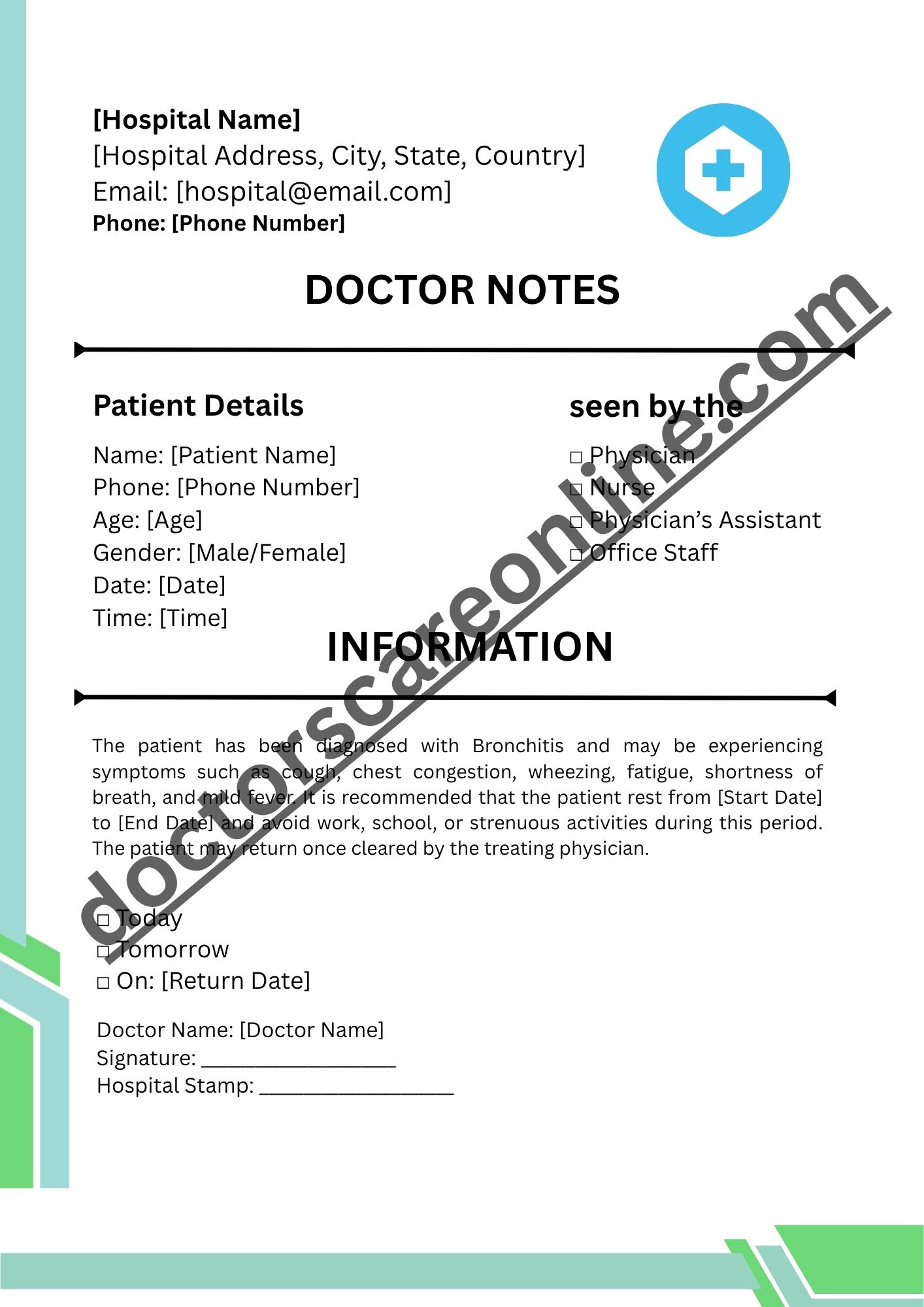
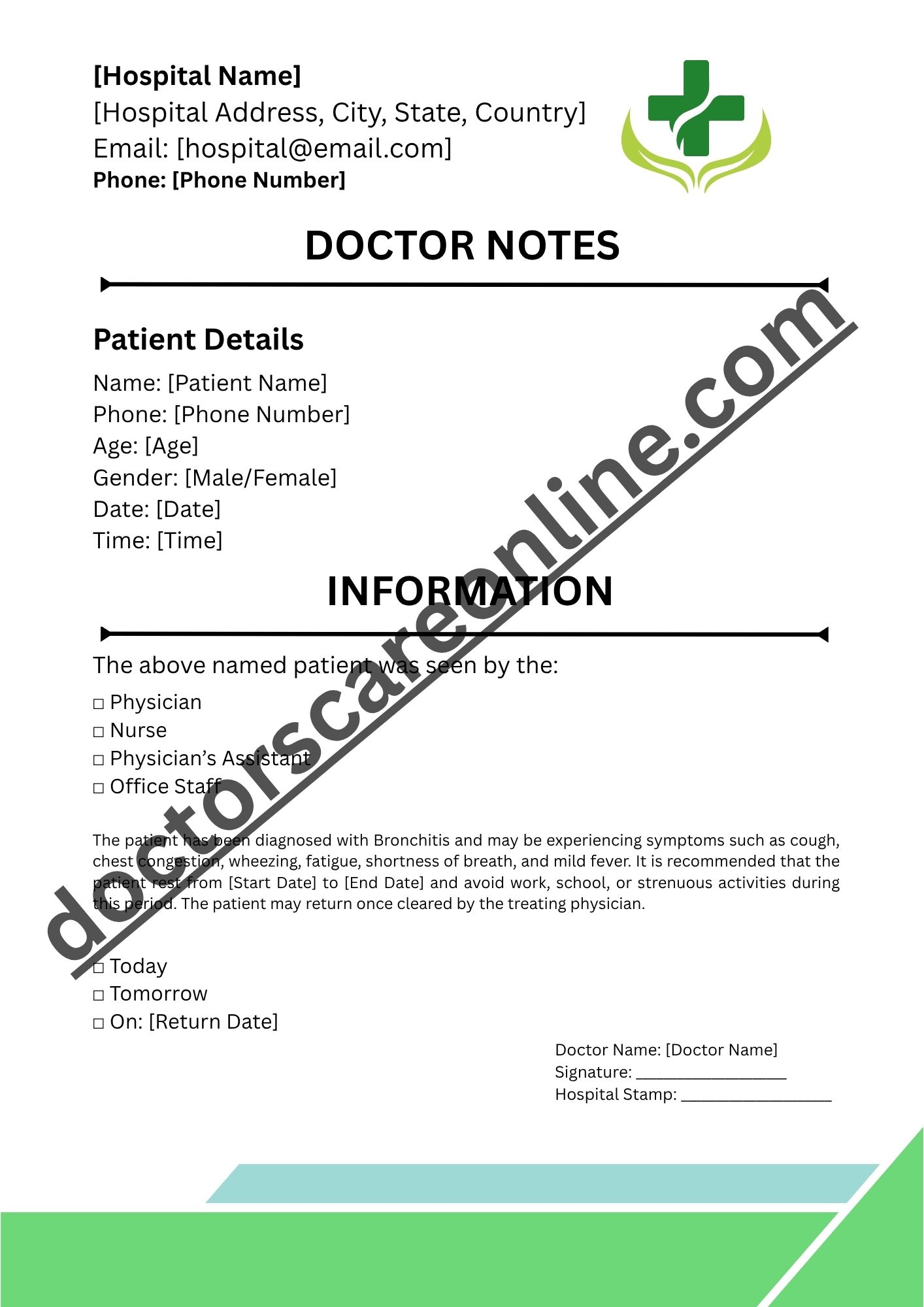
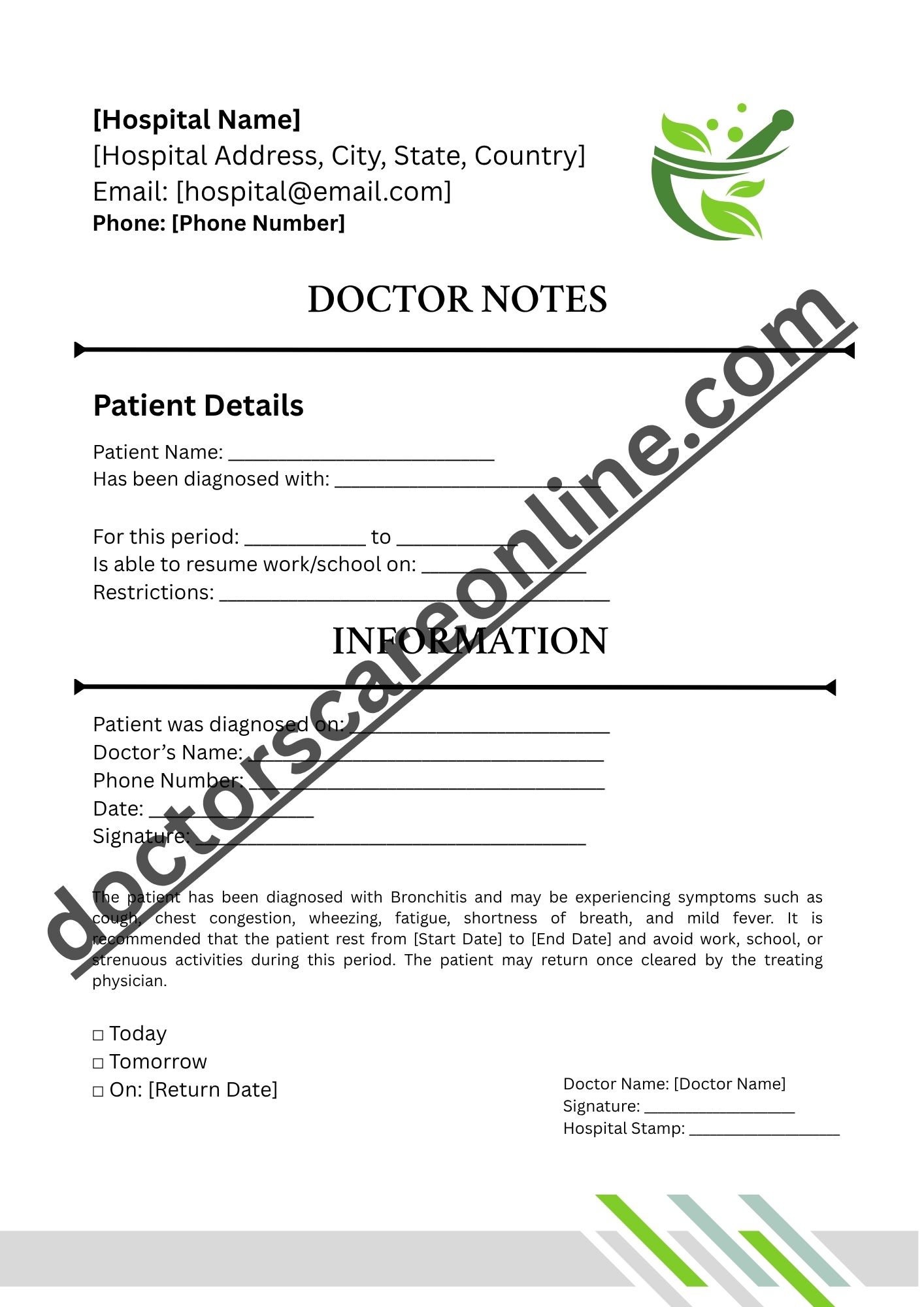
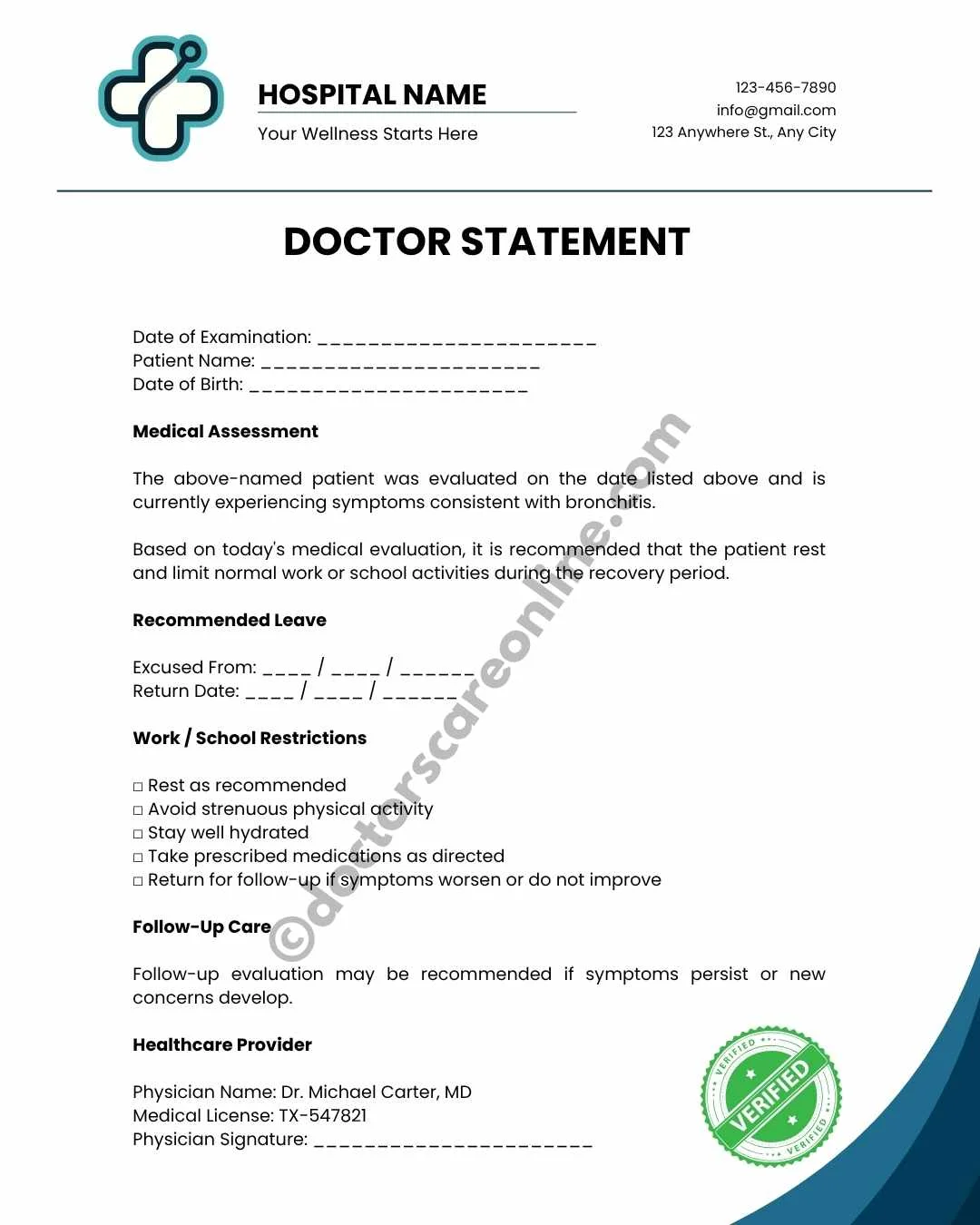
A doctor’s note for bronchitis is a written statement from a medical professional that confirms a patient was examined and may require medical leave due to bronchitis symptoms.
This document is commonly used as:
- Proof of a medical consultation
- A request for sick leave from work
- A school or college absence excuse
- Documentation for workplace attendance records
- Support for extended recovery time when symptoms are severe
The note usually does not include unnecessary private medical details. Instead, it generally provides essential information such as the patient’s name, consultation date, recommended rest period, and return-to-activity guidance.
A bronchitis sick note may be issued after an in-person appointment, urgent care visit, or online telehealth consultation, depending on the healthcare provider’s evaluation process.
What Is Bronchitis?
Bronchitis is a respiratory condition that occurs when the lining of the bronchial tubes becomes irritated and inflamed. These tubes carry air between the nose, mouth, and lungs. When they become swollen, breathing may become uncomfortable and mucus production can increase.
The condition is commonly associated with:
- Frequent coughing
- Chest tightness
- Increased mucus
- Breathing difficulties
- Tiredness
- Mild fever or body aches
Bronchitis can affect people of different ages, but symptoms and recovery time may vary depending on overall health, immune system strength, and the type of bronchitis.
Types of Bronchitis
Acute Bronchitis
Acute bronchitis is the most common type and usually develops after a cold, flu, or other respiratory infection. It is often temporary and improves within a few weeks with proper care.
Common causes include:
- Viral infections
- Exposure to smoke
- Air pollution
- Dust or chemical irritants
Chronic Bronchitis
Chronic bronchitis is a long-term condition where coughing and mucus production continue for extended periods. It is often associated with repeated airway irritation and is commonly seen in people with long-term smoking exposure.
People with chronic bronchitis may require ongoing medical care and regular monitoring.
Signs That You May Need a Doctor’s Note for Bronchitis
Not everyone with bronchitis needs medical documentation, but a doctor’s note may be helpful when symptoms affect daily activities or prevent you from working or attending school.
You may need a medical certificate for bronchitis if you experience:
Persistent Cough
A cough that continues for several days or becomes severe can make it difficult to sleep, work, or concentrate.
Chest Congestion
Mucus buildup and chest discomfort may interfere with normal breathing and physical activities.
Fever and Body Weakness
Fever, tiredness, and body aches can indicate that your body needs time to recover.
Shortness of Breath
Breathing difficulties or wheezing may require medical evaluation before returning to regular activities.
Severe Fatigue
Extreme tiredness can reduce your ability to complete work, school, or daily tasks.
Symptoms That Are Getting Worse
If symptoms continue to worsen instead of improving, a healthcare provider may recommend additional rest and treatment.
Who Usually Needs a Bronchitis Medical Excuse?
A bronchitis doctor’s note may be requested by different groups of people who need official documentation for their absence.
Employees
Workers may need a doctor’s note to:
- Explain missed workdays
- Request medical leave
- Follow workplace attendance policies
- Receive approval for extended sick leave
School Students
Students may require a medical excuse for:
- Missing classes
- Postponed assignments
- Attendance records
- Returning after illness
College Students
College students may use a bronchitis medical note for:
- Class absences
- Exam accommodations
- Assignment extensions
- Health-related leave requests
Teachers and Healthcare Workers
People working in environments with close contact may need medical documentation before returning to prevent spreading illness.
Travelers
Some travelers may require medical proof for:
- Travel changes
- Insurance claims
- Cancellation requests
When Will a Doctor Issue a Bronchitis Note?
A doctor usually provides a bronchitis note after reviewing symptoms and determining that medical leave or activity restrictions are appropriate.
The evaluation may include:
Medical History Review
The healthcare provider may ask about:
- How long symptoms have been present
- Previous respiratory conditions
- Current medications
- Smoking history
- Recent infections
Symptom Assessment
The doctor may check:
- Severity of cough
- Breathing problems
- Fever
- Chest discomfort
- Mucus changes
Physical Examination
The provider may listen to the lungs and check breathing patterns to understand the severity of the condition.
Additional Testing (If Needed)
In some cases, doctors may recommend:
- Chest X-ray
- Oxygen level test
- Flu or COVID testing
- Other respiratory evaluations
After assessment, the doctor may provide a bronchitis leave letter with recommended recovery instructions.
What Information Is Included in a Bronchitis Doctor’s Note?
A professional doctor’s excuse for bronchitis generally contains basic medical and administrative details.
| Information Included | Details |
|---|---|
| Patient Name | Name of the person receiving medical care |
| Medical Visit Date | Date of consultation or examination |
| Health Condition | General reason for absence (if required) |
| Recommended Rest Period | Number of days advised for recovery |
| Return Date | Expected date to resume work or school |
| Doctor Information | Healthcare provider’s details |
| Signature/Authorization | Confirmation from the medical provider |
A doctor’s note is designed to verify that a person received medical care and may need time to recover. The exact format can differ depending on the healthcare provider, workplace rules, or educational institution requirements.
Can You Get a Doctor’s Note Online for Bronchitis?
Yes. Many licensed telehealth providers offer online medical consultations for respiratory illnesses, including bronchitis. During the virtual appointment, the healthcare provider reviews your symptoms, medical history, and overall condition to determine the most appropriate treatment plan.
If the provider believes medical leave is medically necessary, they may issue a digital doctor’s note for bronchitis that can often be shared with an employer, school, or college.
The decision to issue a doctor’s note always depends on the provider’s professional medical judgment and applicable healthcare regulations.
How to Book an Online Doctor Appointment for Bronchitis?
Follow these steps to request a bronchitis doctor’s excuse online:
Step 1: Choose a Licensed Telehealth Provider
- Select a trusted online healthcare service.
- Check that the provider offers virtual consultations.
Step 2: Schedule a Medical Appointment
- Select a suitable appointment time.
- Provide basic health information and symptoms.
Step 3: Complete the Online Consultation
During the appointment, discuss:
- Duration of cough
- Fever or chills
- Breathing difficulty
- Chest pain or tightness
- Mucus production
- Previous health conditions
Step 4: Receive Medical Advice
The healthcare provider may suggest:
- Rest recommendations
- Treatment options
- Medication if needed
- Additional testing (if required)
Step 5: Receive the Doctor’s Note
If medically appropriate, the provider may issue a digital medical certificate for bronchitis that can be shared with an employer, school, or college.
Why Choose an Online Consultation for Bronchitis?
An online medical consultation allows you to speak with a licensed healthcare provider from home without visiting a clinic for an initial evaluation. This can be a convenient option for people experiencing mild to moderate respiratory symptoms.
Depending on the provider and your medical needs, an online consultation may offer:
- Convenient virtual appointments
- Licensed healthcare professionals
- Private and secure consultations
- Personalized medical evaluation
- Treatment recommendations
- Digital medical documentation when medically appropriate
- Follow-up care if needed
A doctor’s note is only issued when the healthcare provider determines that medical leave is medically appropriate after completing the evaluation.
How Long Is a Bronchitis Doctor’s Note Valid?
The validity of a bronchitis sick note depends on the patient’s symptoms, recovery progress, and the requirements of the workplace or educational institution.
There is no fixed validity period for every patient because bronchitis severity can vary.
| Situation | Common Duration Mentioned |
|---|---|
| Mild acute bronchitis | 1–3 days of rest may be recommended |
| Moderate bronchitis symptoms | 3–7 days may be advised |
| Severe symptoms | Longer recovery time may be required |
| Chronic bronchitis flare-up | Duration depends on medical evaluation |
A doctor’s note usually mentions the recommended rest period and the expected return date. Employers and schools may also have their own policies about how long they accept medical documentation.
Can You Go to Work or School With Bronchitis?
Whether you should attend work or school with bronchitis depends on your symptoms and overall condition.
You may need to stay home if you have:
- Frequent uncontrollable coughing
- Fever
- Extreme tiredness
- Breathing difficulties
- Difficulty completing daily activities
- Risk of spreading an underlying infection
Returning to work or school may be easier when:
- Fever has improved
- Energy levels have returned
- Cough symptoms are manageable
- A healthcare provider confirms that returning is appropriate
Following medical advice helps prevent complications and supports faster recovery.
How Doctors Diagnose Bronchitis
Doctors diagnose bronchitis by evaluating symptoms, medical history, and lung health. The goal is to determine whether symptoms are caused by bronchitis or another respiratory condition.
Medical History Review
A doctor may ask about:
- How long the cough has lasted
- Changes in mucus
- Previous respiratory problems
- Exposure to smoke or pollutants
- Recent illnesses
Physical Examination
During an examination, a healthcare provider may:
- Listen to lung sounds
- Check breathing patterns
- Measure temperature
- Assess oxygen levels
Diagnostic Tests (When Needed)
Most cases of acute bronchitis do not require extensive testing, but doctors may suggest additional tests if symptoms are severe.
Possible tests include:
| Test | Purpose |
|---|---|
| Chest X-ray | Helps rule out pneumonia or other lung conditions |
| Pulse Oximetry | Measures oxygen levels |
| Flu/COVID Test | Checks for viral infections |
| Sputum Test | Examines mucus for possible infections |
Common Treatments for Bronchitis
Treatment for bronchitis depends on whether the condition is caused by a virus, bacteria, or long-term airway irritation.
Rest and Recovery
Getting enough rest helps the body fight infection and recover from inflammation.
Staying Hydrated
Drinking plenty of fluids may help:
- Thin mucus
- Reduce throat irritation
- Make coughing more comfortable
Cough Relief Medicines
Doctors may recommend medicines to manage:
- Persistent cough
- Chest discomfort
- Sleep problems caused by coughing
Inhalers or Bronchodilators
Some patients with wheezing or breathing problems may be prescribed inhalers to help open airways.
Antibiotics (When Required)
Most acute bronchitis cases are caused by viruses and do not improve with antibiotics. Doctors may prescribe antibiotics only when there is a suspected bacterial infection or another medical reason.
Managing Underlying Conditions
People with chronic bronchitis may require long-term treatment plans, including regular monitoring and lifestyle changes.
Home Care Tips That Help Bronchitis Recovery
Recovering from bronchitis usually requires proper rest, hydration, and supportive care. While treatment depends on the cause and severity of symptoms, certain home care methods can help reduce discomfort and support the healing process.
Get Enough Rest
- Allow your body enough time to recover and fight inflammation.
- Avoid strenuous activities that may worsen fatigue or breathing discomfort.
- Maintain a proper sleep schedule to support immune function.
Stay Hydrated
- Drink plenty of water throughout the day.
- Warm fluids such as herbal tea or soup may help soothe throat irritation.
- Proper hydration can help loosen mucus and make coughing more comfortable.
Use a Humidifier
- A humidifier can add moisture to the air and may reduce throat and airway irritation.
- Keep the humidifier clean to prevent the growth of bacteria or mold.
Avoid Smoke and Air Irritants
- Stay away from cigarette smoke, vaping, strong perfumes, and chemical fumes.
- Avoid polluted areas whenever possible.
- These irritants can worsen coughing and delay recovery.
Try Warm Steam or Breathing Moist Air
- Warm, moist air may help relieve chest congestion and throat dryness.
- Avoid very hot steam that may cause burns.
Follow Doctor’s Instructions
- Take prescribed medications as directed.
- Complete any recommended treatment plan.
- Attend follow-up appointments if symptoms do not improve.
Foods That Support Bronchitis Recovery
Eating a balanced diet can support your immune system during recovery. Certain foods may help maintain energy levels and keep the body hydrated.
Warm Soups and Broths
- Provide fluids and nutrients during illness.
- May help soothe throat irritation.
- Easy to consume when appetite is low.
Fruits Rich in Vitamins
Examples include:
- Oranges
- Berries
- Kiwi
- Apples
These foods provide vitamins and antioxidants that support overall health.
Ginger and Turmeric
- Ginger may help soothe throat discomfort.
- Turmeric contains compounds with anti-inflammatory properties.
- They can be added to warm drinks or meals.
Protein-Rich Foods
Include:
- Eggs
- Fish
- Chicken
- Beans
- Lentils
- Yogurt
Protein helps support body repair and recovery.
Herbal Teas
- Warm herbal drinks may provide comfort during coughing.
- Options such as ginger tea or chamomile tea can help keep you hydrated.
Healthy Fluids
- Water
- Coconut water
- Clear soups
- Warm lemon water
Staying hydrated is important during respiratory infections.
Foods and Drinks to Avoid During Bronchitis Recovery
Some foods and habits may increase irritation or make symptoms feel worse.
Smoking and Tobacco Products
- Smoking can irritate airways and slow recovery.
- Avoid both active and secondhand smoke exposure.
Alcohol
- Alcohol may contribute to dehydration.
- It can interfere with recovery and affect certain medications.
Excessively Processed Foods
Limit foods such as:
- Packaged snacks
- Fast foods
- High-sugar foods
These may provide fewer nutrients needed during recovery.
Foods That Trigger Irritation
Some people may experience more discomfort from:
- Very spicy foods
- Very cold beverages
- Foods that increase acid reflux
Too Much Caffeine
- Excess caffeine may contribute to dehydration.
- Limit coffee and energy drinks if they worsen symptoms.
Recovery Timeline for Bronchitis
Recovery time depends on whether bronchitis is acute or chronic, the person’s health condition, and how well symptoms respond to treatment.
| Recovery Period | What You May Experience |
|---|---|
| First Few Days | Cough, chest congestion, tiredness, and discomfort may be more noticeable. Rest and hydration are important. |
| 1 Week | Fever and body aches may improve, but coughing may continue. |
| 2–3 Weeks | Many people start feeling better, although a mild cough may remain. |
| 3–4 Weeks or More | A lingering cough may continue in some cases as airways recover. |
| Long-Term Cases | Chronic bronchitis may require ongoing medical management and monitoring. |
A cough lasting several weeks does not always mean the infection is still active, but persistent or worsening symptoms should be checked by a healthcare provider.
Warning Signs That Need Immediate Medical Attention
While many bronchitis cases improve with proper care, certain symptoms may require urgent medical evaluation.
Seek medical help if you experience:
- Severe difficulty breathing
- Chest pain or pressure
- Blue-colored lips or fingertips
- Coughing up blood
- High or persistent fever
- Confusion or extreme weakness
- Symptoms that suddenly become worse
- Low oxygen levels
People with asthma, COPD, older adults, young children, or those with weakened immune systems may need medical attention sooner.
FAQs
1. Should I take off work for bronchitis?
Yes, you may need to take time off work if bronchitis symptoms are affecting your ability to perform daily activities. Taking rest can help your body recover and may prevent symptoms from becoming worse.
You should consider staying home if you have:
- Severe coughing that affects your work
- Fever or body weakness
- Breathing difficulties
- Chest discomfort
- Extreme fatigue
- Difficulty concentrating on tasks
A healthcare provider can determine whether you need medical leave and provide a doctor’s note for bronchitis if required.
2. What is the note of bronchitis?
A bronchitis doctor’s note is an official medical document provided by a licensed healthcare provider after evaluating your symptoms. It confirms that you were medically assessed and may need time away from work, school, or other responsibilities.
A bronchitis note may include:
- Patient’s name
- Date of medical evaluation
- Recommended recovery period
- Return-to-work or school date
- Healthcare provider’s information
- Doctor’s authorization or signature
3. How do doctors confirm bronchitis?
Doctors confirm bronchitis by reviewing your symptoms, medical history, and performing a physical examination. They usually check for signs of airway inflammation and breathing problems.
The diagnosis may include:
- Discussing cough duration and severity
- Checking mucus production
- Listening to lung sounds with a stethoscope
- Measuring oxygen levels
- Reviewing fever and other symptoms
In some cases, doctors may recommend additional tests such as:
- Chest X-ray to rule out pneumonia
- Flu or COVID testing
- Sputum test
- Lung function tests (especially for chronic symptoms)
4. Can bronchitis go away without treatment?
Yes, many cases of acute bronchitis improve on their own with proper rest, hydration, and supportive care. However, medical advice may be needed if symptoms become severe, last for a long time, or include breathing difficulties, chest pain, or high fever.
5. What Is Stage 1 Bronchitis?
Stage 1 bronchitis generally refers to the early stage of bronchitis, when the airways begin to become irritated and inflamed. During this stage, symptoms are usually mild and may improve with proper care and rest.
Common symptoms of early-stage bronchitis may include:
- Mild or persistent cough
- Throat irritation
- Small amounts of mucus production
- Tiredness or low energy
- Mild chest discomfort or heaviness
- Low-grade fever in some cases
During this stage, doctors may recommend supportive care such as:
- Getting enough rest
- Drinking plenty of fluids
- Avoiding smoke and air irritants
- Using prescribed medications if needed
Early medical attention can help monitor symptoms and prevent the condition from becoming more serious, especially in people with existing lung conditions or weakened immunity.
Related Post-




Reviews
There are no reviews yet.