
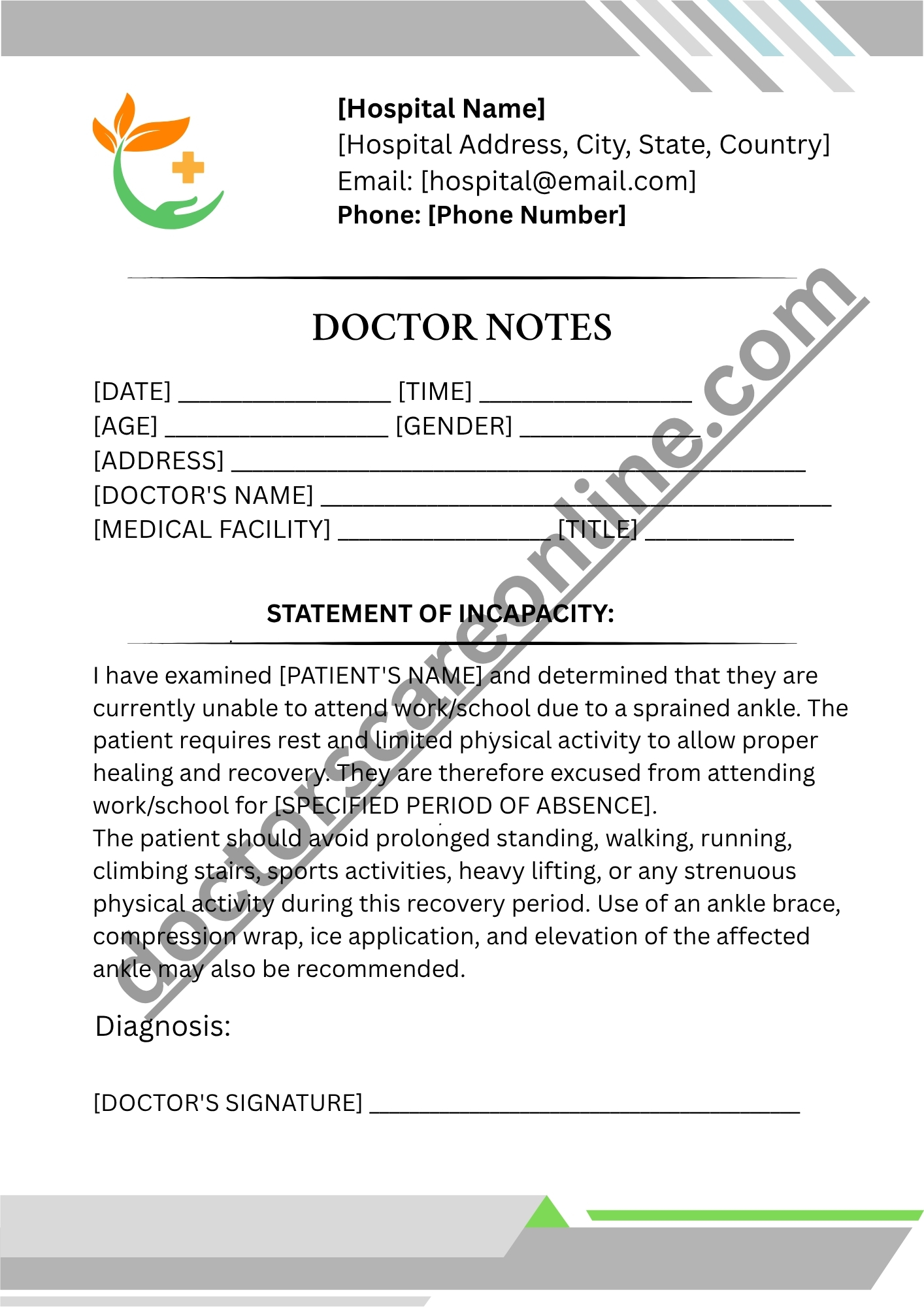
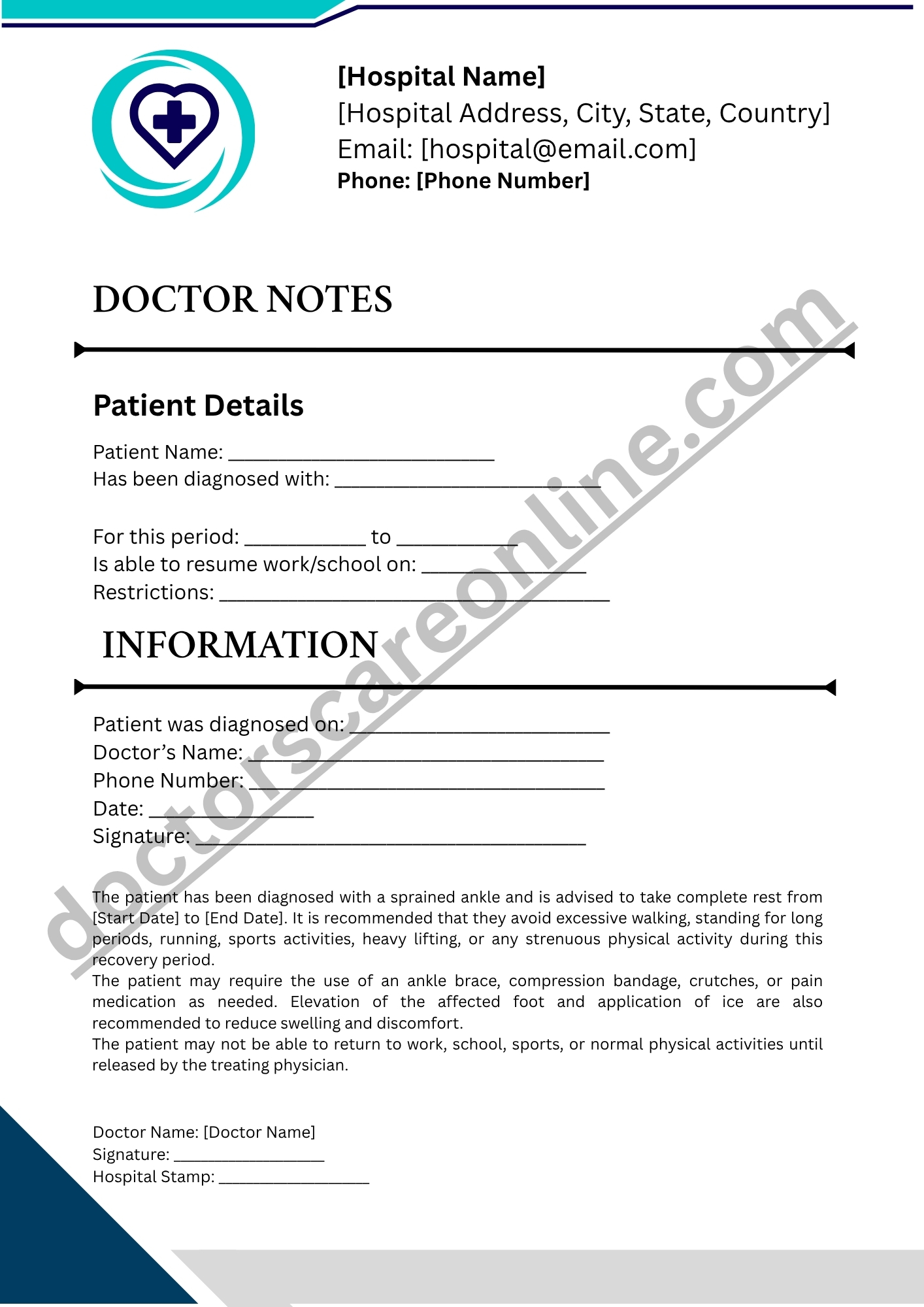
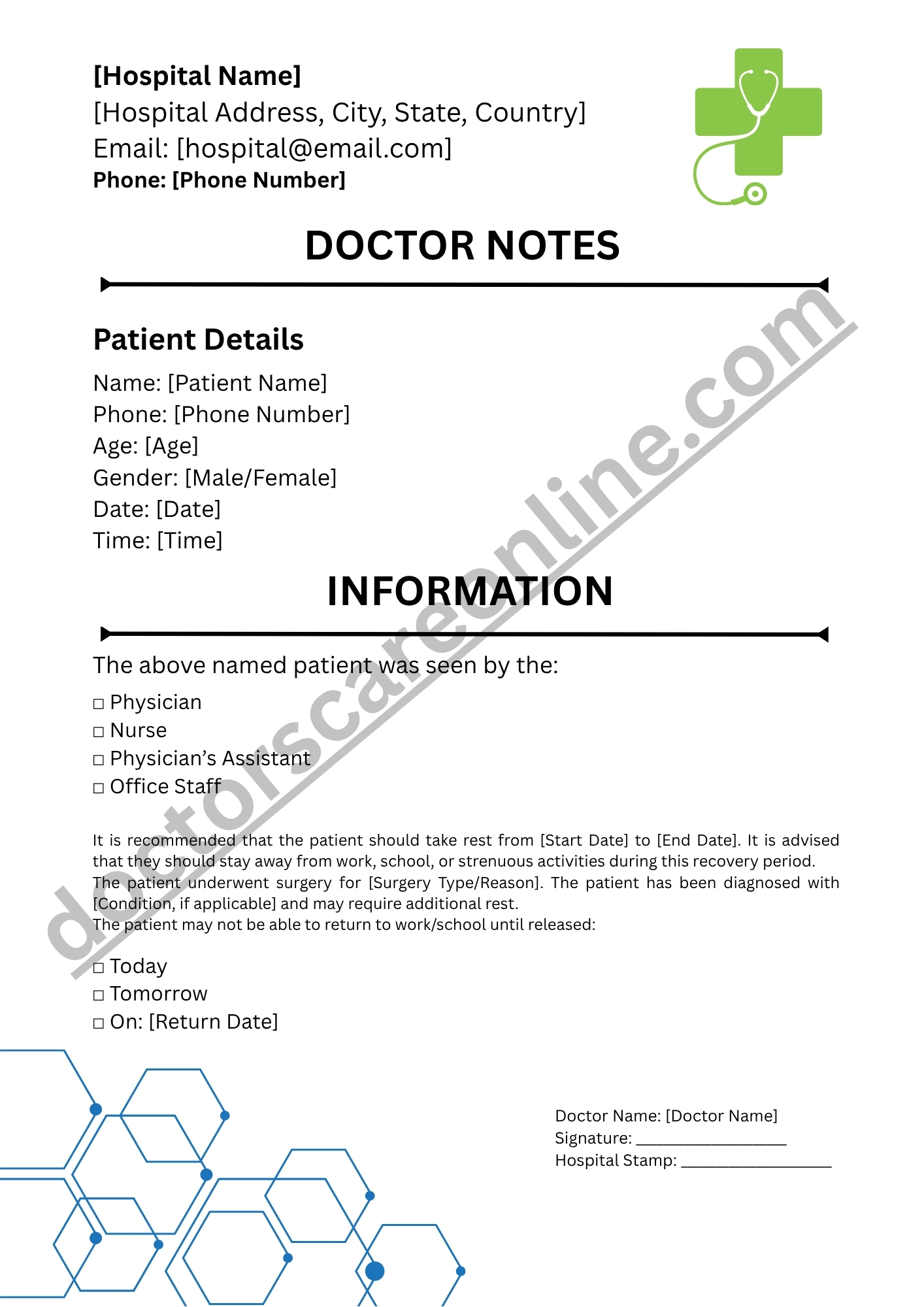
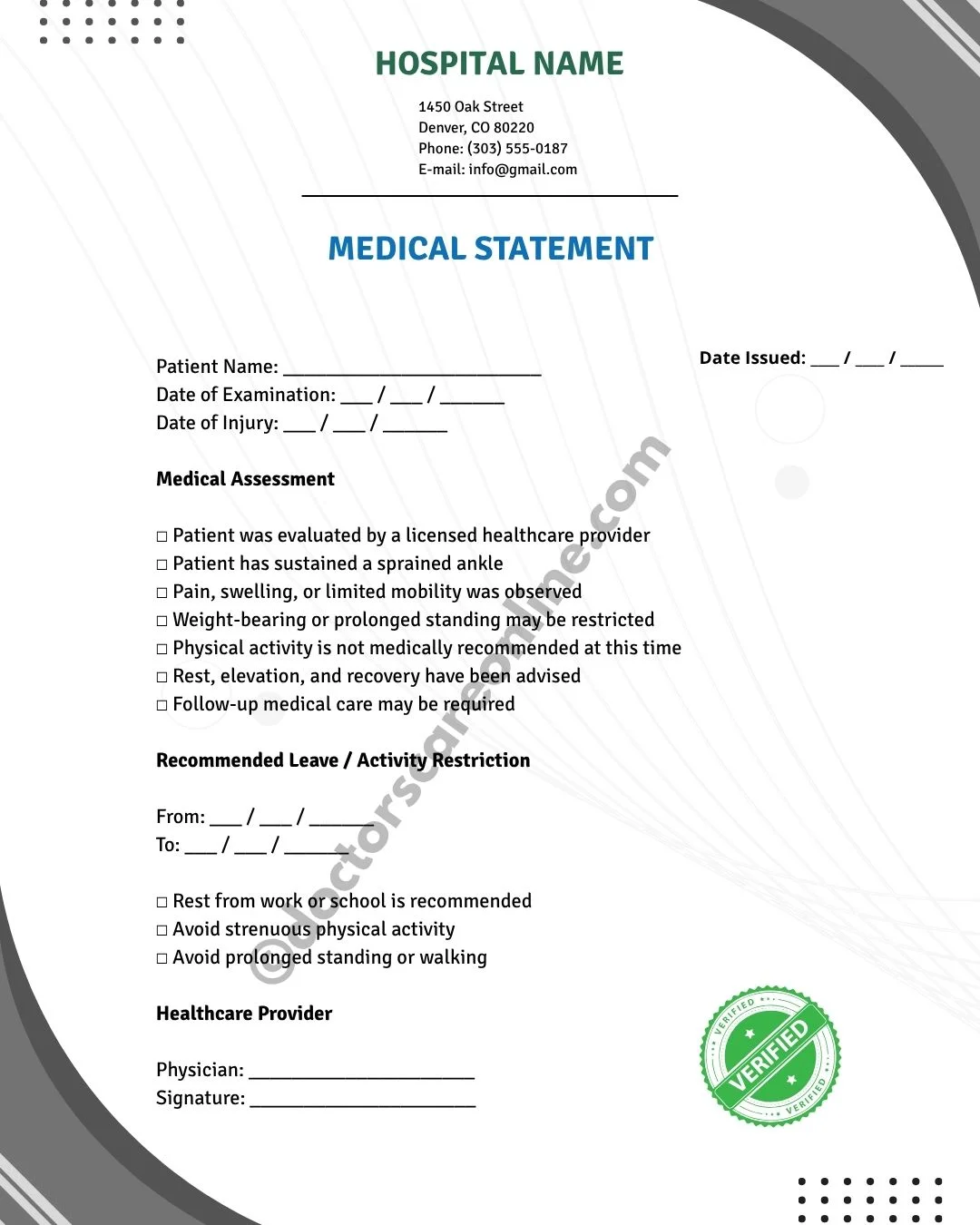
A Doctors Note for a Sprained Ankle is an official medical document provided after a healthcare provider evaluates your ankle injury. It confirms that you have been examined and may recommend time away from work, school, or physical activities while your ankle heals.
This document is commonly used when an employer, school, or organization requires proof of your medical condition. Depending on your situation, it may also support insurance claims or explain temporary activity restrictions.
Doctors Note for Sprained Ankle
A sprained ankle happens when one or more ligaments that support the ankle are stretched or torn. Ligaments are strong bands of tissue that keep the bones connected and help stabilize the joint.
Sprains often occur when the foot twists or rolls unexpectedly during walking, running, sports, or stepping on an uneven surface. The severity of the injury can range from a mild stretch to a complete ligament tear.
Common Symptoms of a Sprained Ankle
The symptoms of a sprained ankle can vary depending on the severity of the injury. Common signs include:
- Pain when moving or putting weight on the ankle
- Swelling around the joint
- Bruising or skin discoloration
- Difficulty walking normally
- Limited ankle movement
- Tenderness when touching the injured area
- Feeling that the ankle is unstable
When Should You See a Doctor?
Although mild ankle sprains often improve with home care, medical evaluation is recommended if symptoms are severe or do not improve.
You should see a doctor if you have:
- Severe or worsening pain
- Difficulty or inability to walk
- Significant swelling or bruising
- A popping sound at the time of injury
- Suspected broken bone
- Symptoms that continue for several days without improvement
- Numbness or changes in skin color
How Is a Sprained Ankle Diagnosed?
A healthcare provider will examine your ankle to determine the severity of the injury. The diagnosis usually includes:
- A physical examination to check swelling, tenderness, and movement
- Questions about how the injury happened
- Evaluation of your ability to bear weight
- X-rays if a fracture is suspected
- An MRI in severe cases to assess ligament damage
These tests help create an appropriate treatment and recovery plan.
Can Telehealth Diagnose a Sprained Ankle?
Yes, telehealth can be a convenient way to receive an initial evaluation for a sprained ankle, especially when symptoms are mild to moderate. During a virtual consultation, a licensed healthcare provider will ask about how the injury occurred, your pain level, swelling, ability to bear weight, and range of motion. They may also ask you to move your ankle on camera to assess your condition.
However, telehealth has limitations. If your provider suspects a fracture, severe ligament tear, dislocation, or circulation problem, they will recommend an in-person examination and imaging tests such as an X-ray or MRI.
If medically appropriate, the provider may issue a doctor’s note for a sprained ankle, recommend home treatment, prescribe medications when appropriate, or advise temporary work or school restrictions.
How to Book an Online Appointment for a Sprained Ankle
If you’ve injured your ankle and need a doctor’s note, you can book an online appointment with a licensed healthcare provider in just a few minutes.
Step 1: Choose a Trusted Telehealth Provider
- Visit a reputable telemedicine platform or your healthcare provider’s website.
- Sign in or create a new account.
Step 2: Select the Right Appointment Type
- Choose General Physician, Primary Care, Urgent Care, or Orthopedic Consultation based on your symptoms.
- Pick a suitable date and time.
Step 3: Enter Your Personal Information
Provide basic details such as:
- Full name
- Date of birth
- Contact information
- Medical history (if requested)
Step 4: Describe Your Ankle Injury
Share details about:
- How the injury happened
- Pain level
- Swelling or bruising
- Difficulty walking or bearing weight
- Any previous ankle injuries
Step 5: Attend the Virtual Consultation
- Join the video or phone appointment at the scheduled time.
- Answer the doctor’s questions and, if possible, show the injured ankle on camera.
Step 6: Follow the Doctor’s Advice
The doctor may recommend:
- Rest, Ice, Compression, and Elevation (RICE)
- Pain relief medication
- An ankle brace or crutches
- An in-person examination or X-ray if a fracture is suspected
Step 7: Receive Your Doctor’s Note
If medically appropriate, the healthcare provider may issue a doctor’s note that includes:
- Diagnosis
- Recommended rest period
- Work or school restrictions
- Return-to-work or return-to-school date
Tip: If you have severe swelling, intense pain, a visible deformity, or cannot put any weight on your ankle, seek immediate in-person medical care instead of relying only on an online consultation.
How Long Is a Sprained Ankle Doctor’s Note Valid for Work, School, or College?
The validity of a doctor’s note for a sprained ankle depends on the severity of the injury, recovery progress, and the policies of the workplace, school, or college. A doctor usually mentions the recommended rest period, activity restrictions, and expected return date on the note.
| Situation | Common Validity Period |
|---|---|
| Mild Sprained Ankle (Grade 1) | Usually 1–7 days of work or activity restrictions, depending on pain and mobility. |
| Moderate Sprained Ankle (Grade 2) | Often 1–3 weeks of modified duties, reduced activity, or medical leave. |
| Severe Sprained Ankle (Grade 3) | May require 3–8 weeks or longer of restrictions and follow-up care. |
| Office Employees | Many people can return earlier with adjustments such as limited walking, avoiding stairs, or remote work. |
| Physical Jobs | Workers who stand, lift, climb, or walk frequently may need a longer recovery period. |
| School Students | Notes are commonly used to excuse absences for a few days to several weeks depending on injury severity. |
| College Students | A doctor’s note may support attendance exemptions, assignment extensions, exam accommodations, or activity restrictions. |
What Does a Doctor’s Note for a Sprained Ankle Include?
A doctor’s note generally contains important medical information needed for work or school documentation.
It may include:
- Patient’s name
- Date of medical evaluation
- Confirmation of the ankle injury
- Recommended recovery period
- Temporary work or school restrictions
- Suggested return date
- Healthcare provider’s signature or authorization
The exact details may vary depending on the medical evaluation and individual circumstances.
Work Restrictions for a Sprained Ankle
A doctor’s note for a sprained ankle may include temporary work restrictions to protect the injured ankle and support proper healing. The restrictions depend on the severity of the sprained ankle and the physical demands of your job.
Common work restrictions for a sprained ankle include:
- Avoid prolonged standing
- No heavy lifting or carrying
- Limit walking or climbing stairs
- No running or strenuous physical activities
- Desk or light-duty work, if available
- Remote work may be recommended when appropriate
- Use an ankle brace, walking boot, or crutches if advised by your healthcare provider
Following these restrictions can help prevent further injury and support a safe sprained ankle recovery before returning to normal work duties.
School Restrictions for Students
Students with a sprained ankle may receive temporary accommodations to support healing and reduce strain on the injured ankle.
Possible school restrictions include:
- Excuse from physical education classes
- No participation in sports
- Reduced walking between classrooms
- Elevator access where available
- Extra time to move between classes
- Permission to rest the injured ankle during the school day
How Long Can a Doctor Excuse You From Work for a Sprained Ankle?
The amount of time away from work depends on the severity of the ankle sprain and the physical demands of your job.
General recovery estimates include:
- Grade 1 (Mild): A few days to one week
- Grade 2 (Moderate): One to three weeks
- Grade 3 (Severe): Several weeks or longer
Recovery time may vary based on age, overall health, and how closely treatment recommendations are followed.
Sprained Ankle Recovery Timeline
Every ankle heals differently, but recovery generally follows these stages.
| Sprain Severity | Typical Time Off Work | Work Restrictions |
|---|---|---|
| Grade 1 (Mild) | 1–5 days | Light duties, avoid prolonged standing or excessive walking. |
| Grade 2 (Moderate) | 1–3 weeks | Limited walking, no heavy lifting, and modified work activities. |
| Grade 3 (Severe) | 3–8 weeks or longer | Extended leave or restricted duties until the ankle heals. |
Following medical advice and rehabilitation exercises can support a smoother recovery.
Treatment for a Sprained Ankle
Treatment focuses on reducing pain, controlling swelling, and restoring ankle function.
Common treatment options include:
- Rest to avoid additional injury
- Ice packs to reduce swelling
- Compression with an elastic bandage
- Elevation above heart level
- Over-the-counter pain relief (when appropriate)
- Ankle brace or walking boot
- Physical therapy for strengthening and mobility
Treatment recommendations depend on the severity of the injury.
When Can You Return to Work or School After a Sprained Ankle?
Returning to work or school after a sprained ankle depends on your recovery, the severity of the injury, and your daily responsibilities. A healthcare provider may recommend returning once you can safely perform your normal activities without causing further injury. Your doctor’s note for a sprained ankle may also include a return date and any temporary work or school restrictions.
Signs You’re Ready to Return
You may be able to return to work or school when:
- You can walk with little or no pain.
- Swelling and bruising have significantly improved.
- Your ankle has regained good strength and flexibility.
- You can stand or move comfortably for daily activities.
- Your healthcare provider clears you to return, if needed.
Returning to Work
Your doctor’s note for a sprained ankle may recommend modified duties before you return to your regular job. Depending on your recovery, these accommodations may include:
- Desk work instead of physically demanding tasks
- Limited standing or walking
- No heavy lifting
- Remote work, if available
- Scheduled rest breaks to avoid overloading the injured ankle
People with jobs that involve prolonged standing, climbing, or lifting may need a longer sprained ankle recovery time before returning.
Returning to School
Students can usually return to school once they are able to move around safely. However, temporary restrictions may still be necessary, such as:
- Excuse from physical education (PE) classes
- No sports or extracurricular physical activities
- Reduced walking between classrooms
- Elevator access, where available
- Permission to rest the ankle during the school day
Can You Walk on a Sprained Ankle?
Whether you can walk on a sprained ankle depends on the severity of the injury. A mild sprain may allow limited walking, while a moderate or severe sprain often requires rest and avoiding weight on the injured ankle. Walking too soon can delay sprained ankle recovery and increase the risk of further injury.
You may be able to walk if:
- Pain is mild and manageable
- Swelling has started to decrease
- You can bear weight without significant discomfort
- Your healthcare provider recommends gradual walking
Avoid walking if you have:
- Severe pain when standing
- Inability to bear weight
- Significant swelling or instability
- Suspected fracture or severe ligament injury
If you’re unsure, follow the advice in your doctor’s note for a sprained ankle and use an ankle brace, walking boot, or crutches if recommended. Gradually return to normal walking only as your ankle heals.
How to Prevent Future Ankle Sprains
When Should You Go to the Emergency Room?
Seek emergency medical care if your injury appears serious or involves symptoms that require immediate attention.
Go to the emergency room if you experience:
- A visible bone deformity
- Severe swelling immediately after the injury
- Complete inability to move the foot
- Loss of feeling or numbness
- The foot becomes cold or changes color
- Heavy bleeding associated with the injury
- Severe pain that does not improve
Prompt medical evaluation can help identify fractures, severe ligament damage, or other conditions that require urgent treatment.
Can Urgent Care Provide a Doctor’s Note for a Sprained Ankle?
Yes. Most urgent care clinics can evaluate a sprained ankle, recommend treatment, and provide a doctor’s note when medically appropriate.
During your visit, the healthcare provider may:
- Examine the injured ankle
- Assess pain, swelling, and stability
- Order an X-ray if a fracture is suspected
- Recommend treatment such as the RICE method, an ankle brace, or pain relief
- Provide work or school restrictions based on your condition
- Schedule follow-up care if necessary
Urgent care is often a good option for ankle injuries that require prompt medical attention but are not life-threatening.
FAQs
1. Can I Get a Doctor’s Note for a Sprained Ankle?
Yes. If a healthcare provider evaluates your sprained ankle and determines that you need time to recover or temporary activity restrictions, they may provide a doctor’s note for a sprained ankle. The note can be used for work, school, or other official purposes.
2. Can You Get a Sick Note for a Sprained Ankle?
Yes. A sick note for a sprained ankle may be issued if your injury prevents you from safely performing your job or attending school. The note may recommend rest, modified duties, or a temporary leave based on your condition.
3. What Will a Doctor Do for a Sprained Ankle?
A doctor will examine your sprained ankle, ask how the injury occurred, and check for pain, swelling, and stability. If needed, they may order an X-ray or other imaging to rule out a fracture. They may also recommend rest, ice, compression, elevation (RICE), an ankle brace, pain relief, physical therapy, and provide a doctor’s note for a sprained ankle if appropriate.
4. Can I Call Off Work for a Sprained Ankle?
Yes, if your sprained ankle makes it difficult or unsafe to perform your job, you may need to take time off. If your employer requires documentation, a doctor’s note for a sprained ankle can confirm your medical condition and any recommended work restrictions or recovery period.
5. What to Have Ready Before a Telehealth Appointment
Preparing in advance can help your virtual consultation go more smoothly.
You may be asked to have:
- A government-issued photo ID
- Health insurance information (if applicable)
- A list of current medications
- Details about how the injury occurred
- Previous medical records or ankle imaging (if available)
- A well-lit area where you can show your injured ankle during the video consultation
Medical Disclaimer: This information is provided for educational purposes only and should not be considered medical advice, diagnosis, or treatment. Always consult a qualified healthcare provider for evaluation of your specific condition. If you experience severe pain, significant swelling, inability to bear weight, numbness, a visible deformity, or changes in skin color, seek immediate medical attention or visit the nearest emergency department.
Related Post





Reviews
There are no reviews yet.