

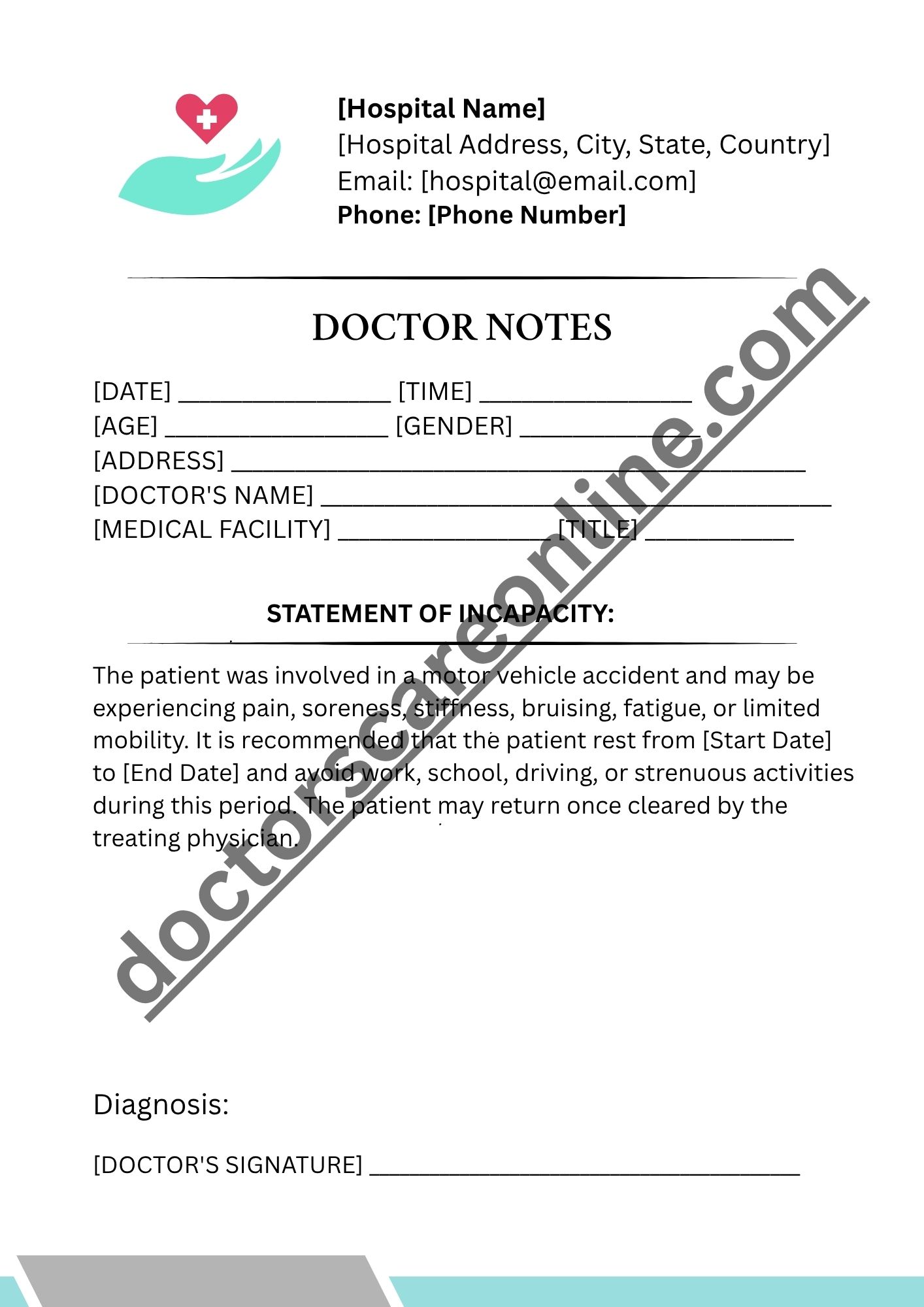
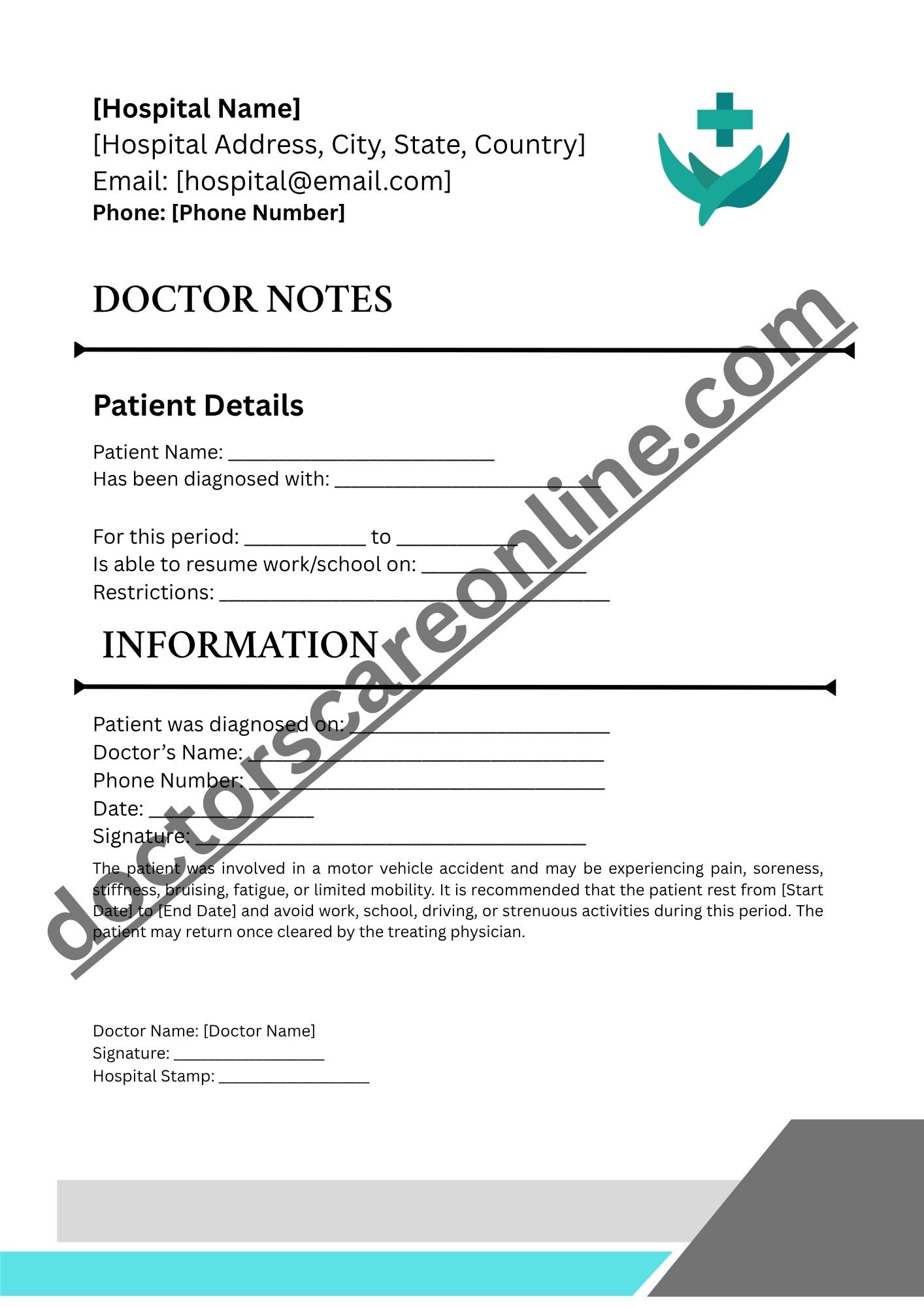
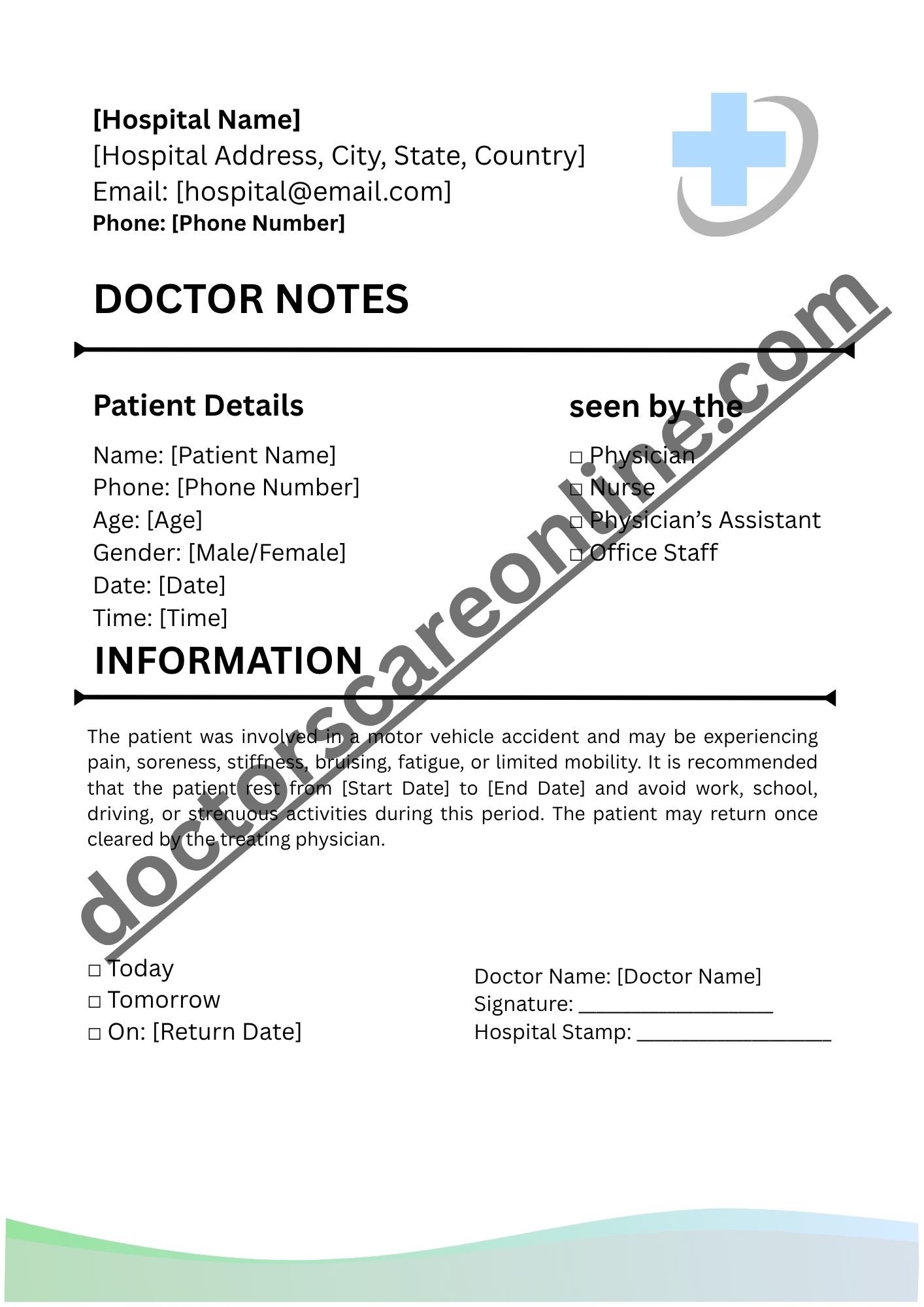
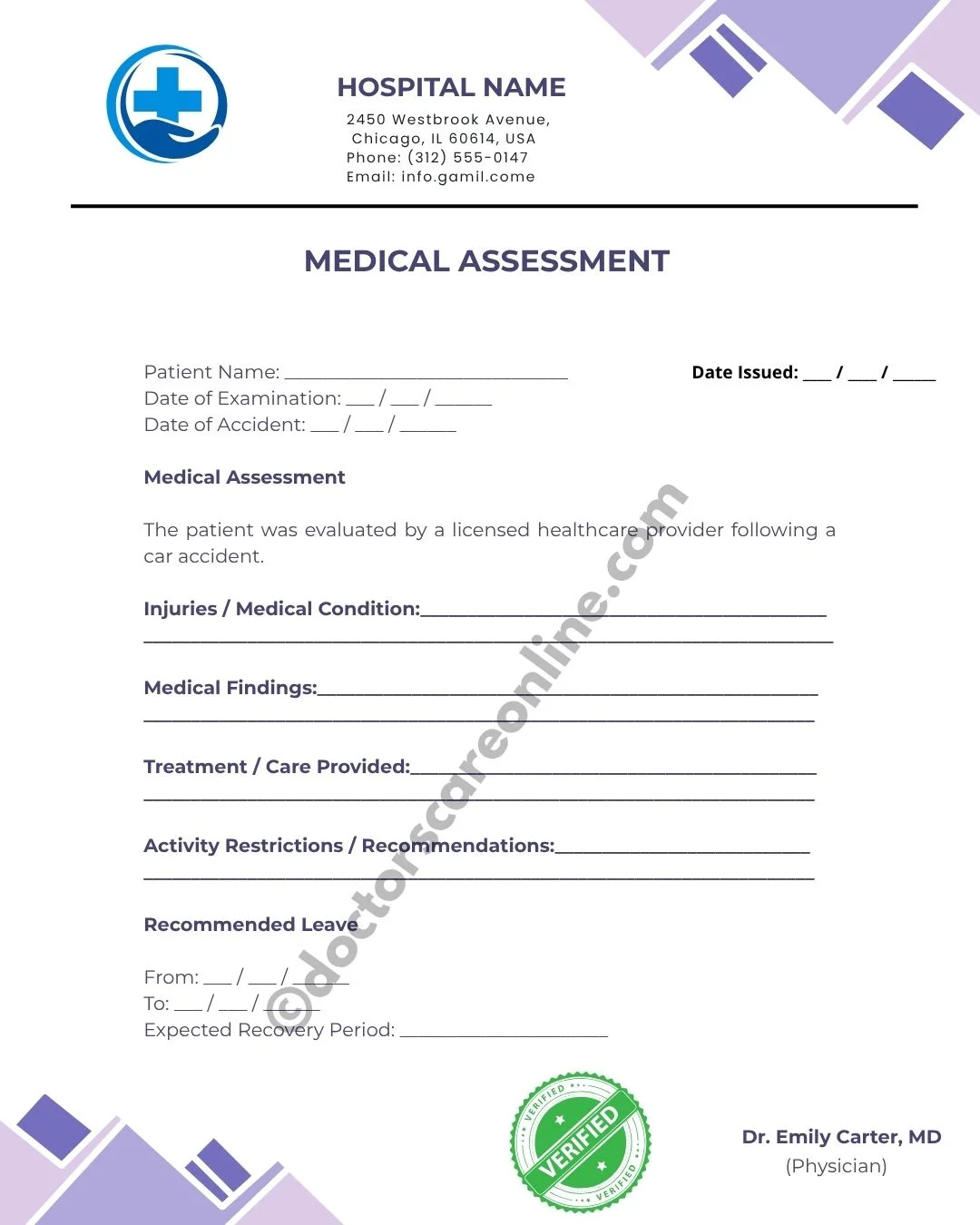
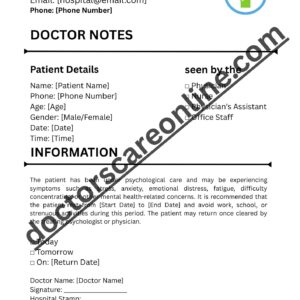
A Doctor’s Note for a Car Accident is an official document issued by a licensed healthcare provider after examining someone involved in a motor vehicle collision. It confirms that the patient received medical care and outlines the provider’s professional recommendations regarding treatment, recovery, and activity restrictions.
This medical note after a car accident is commonly used to verify injuries, explain medical absences from work or school, and document recovery instructions. Depending on the nature of the injury, the provider may recommend rest, physical therapy, medications, follow-up appointments, or temporary work restrictions.
Why You May Need a Doctor’s Note After a Car Accident
After a car accident, your injuries may temporarily affect your ability to work, study, drive, or perform everyday tasks. A doctor’s note for a car accident provides official medical documentation confirming your condition, treatment recommendations, and any temporary restrictions. It helps employers, schools, and other organizations understand your recovery needs while supporting a safe return to normal activities.
Workplace Leave Verification
If your injuries prevent you from working, your employer may request a doctor’s note. It explains:
- Why are you unable to work?
- How many days of rest are recommended?
- Whether you can return to light-duty work.
- Any temporary work restrictions?
School or College Absence
Students recovering from accident-related injuries may need medical documentation to excuse their absence. A doctor’s note can help:
- Verify missed classes.
- Request assignment extensions.
- Support exam rescheduling.
- Explain temporary physical limitations.
Personal Medical Records
Keeping a copy of your doctor’s note helps you:
- Track your recovery progress.
- Share information with other healthcare providers.
- Maintain organized medical records.
- Prepare for future follow-up appointments if needed.
Common Injuries That May Require a Doctor’s Note
After a car accident, injuries can range from mild muscle soreness to more serious conditions that require ongoing treatment. Even if symptoms seem minor at first, a medical evaluation can help identify hidden injuries and provide the necessary doctor’s note for a car accident if work, school, or daily activities are affected.
Whiplash
A whiplash injury occurs when the neck is suddenly forced back and forth during a collision.
Common symptoms include:
- Neck pain and stiffness
- Limited range of motion
- Headaches
- Shoulder or upper back pain
- Muscle tenderness
Back Injuries
Back injuries are common after car accidents and may involve muscles, ligaments, or the spine.
Common symptoms include:
- Lower or upper back pain
- Muscle spasms
- Pain while bending or lifting
- Difficulty standing or sitting
- Reduced flexibility
Concussion or Mild Head Injury
A concussion is a type of brain injury caused by a sudden impact to the head.
Common symptoms include:
- Headache
- Dizziness
- Confusion
- Nausea
- Sensitivity to light or noise
Fractures (Broken Bones)
Broken bones may occur due to the force of the collision and often require immediate medical treatment.
Common symptoms include:
- Severe pain
- Swelling
- Bruising
- Difficulty moving the injured area
- Visible deformity in some cases
Sprains and Strains
Sprains affect ligaments, while strains involve muscles or tendons.
Common symptoms include:
- Pain during movement
- Swelling
- Bruising
- Muscle weakness
- Limited mobility
Shoulder Injuries
Shoulder injuries may result from seat belt pressure or the impact of the accident.
Common symptoms include:
- Shoulder pain
- Difficulty lifting the arm
- Swelling
- Bruising
- Limited range of motion
Knee and Leg Injuries
The knees and legs can strike the dashboard or other parts of the vehicle during a crash.
Common symptoms include:
- Knee pain
- Swelling
- Difficulty walking
- Joint stiffness
- Bruising
Symptoms That May Appear After a Car Accident
Not all injuries show symptoms immediately after a car accident. In many cases, the body’s adrenaline response can temporarily mask pain, causing certain symptoms to appear hours or even days later. Paying attention to delayed symptoms and seeking medical evaluation can help ensure timely treatment and proper recovery.
Neck Pain and Stiffness
Neck pain is one of the most common symptoms after a collision and may indicate whiplash or other soft tissue injuries.
Common signs include:
- Difficulty turning the head
- Muscle stiffness
- Pain that worsens with movement
- Shoulder discomfort
- Neck tenderness
Back Pain
Back pain may develop gradually after an accident and can affect the upper, middle, or lower back.
Common signs include:
- Persistent soreness
- Muscle spasms
- Pain while standing or sitting
- Difficulty bending
- Reduced flexibility
Headaches
Headaches may occur due to whiplash, muscle tension, or a head injury following the accident.
Common signs include:
- Mild to severe headaches
- Pressure around the head
- Pain behind the eyes
- Increased discomfort with movement
- Sensitivity to light
Dizziness or Balance Problems
Feeling dizzy after a car accident may indicate a head, neck, or inner ear injury.
Common signs include:
- Lightheadedness
- Loss of balance
- Feeling faint
- Difficulty walking steadily
- Vertigo
Shoulder Pain
Shoulder pain is often caused by seat belt impact or muscle strain during a collision.
Common signs include:
- Pain when lifting the arm
- Swelling
- Bruising
- Stiffness
- Limited shoulder movement
Chest Pain
Chest discomfort can result from seat belts, airbags, or the force of the accident.
Common signs include:
- Chest soreness
- Bruising
- Pain when taking deep breaths
- Tenderness
- Discomfort during movement
When Should You See a Doctor After a Car Accident?
It is recommended to see a doctor as soon as possible after a car accident, even if you feel fine. Some injuries, such as whiplash, concussions, or internal injuries, may not show symptoms immediately. A medical evaluation can help identify hidden injuries, begin appropriate treatment, and provide a doctor’s note for a car accident if needed for work, school, or insurance purposes.
You should see a doctor if you experience:
- Persistent neck, back, or shoulder pain
- Severe or worsening headaches
- Dizziness or loss of balance
- Numbness or tingling in the arms or legs
- Difficulty moving any part of your body
- Swelling, bruising, or severe pain
- Chest pain or difficulty breathing
- Abdominal pain or tenderness
- Blurred vision or confusion
- Anxiety, stress, or emotional changes after the accident
Seek Immediate Emergency Medical Care If You Have:
- Heavy or uncontrollable bleeding
- Suspected broken bones
- Severe chest pain
- Trouble breathing
- Seizures
- Loss of consciousness
- Signs of a spinal injury
- Severe head injury
- Inability to move your arms or legs
- Sudden weakness or numbness on one side of the body
How Long Is a Doctor’s Note Valid After a Car Accident?
The validity of a doctor’s note for a car accident depends on the severity of the injury, the treatment plan, and your healthcare provider’s recommendation. There is no fixed validity period—the note is generally valid for the dates specified by the doctor.
| Purpose | Typical Validity |
|---|---|
| Workplace | 1–7 days for minor injuries; 2–6 weeks or longer for moderate to severe injuries, depending on recovery. |
| School/College | Valid for the recovery period recommended by the doctor, typically 1–14 days for minor injuries, or longer if needed. |
| Insurance Claims | Valid as supporting medical documentation for the treatment period and recovery timeline. |
| Court or Legal Purposes | May be used as medical evidence throughout a legal claim, but updated medical records may be required during ongoing treatment. |
How to Book an Online Appointment for a Doctor’s Note After a Car Accident
If you’ve been involved in a car accident and need a doctor’s note for work, school, or insurance purposes, you can book an online medical appointment by following these steps:
Step 1: Choose a Licensed Telehealth Provider
- Visit a trusted telehealth website or mobile app.
- Ensure the provider offers virtual consultations and can issue a doctor’s note if medically appropriate.
Step 2: Create an Account
- Sign up using your name, email address, and phone number.
- Complete your basic medical profile if requested.
Step 3: Schedule an Appointment
- Select General Medicine, Urgent Care, or Post-Accident Consultation.
- Choose your preferred date and time.
Step 4: Explain Your Accident and Symptoms
During the consultation, tell the doctor about:
- The date and cause of the accident
- Pain or injuries (neck, back, shoulder, head, etc.)
- Bruising, swelling, or limited movement
- Any treatment you’ve already received
- Whether you need a doctor’s note for work, school, or insurance
Step 5: Attend the Virtual Consultation
- Join the video or phone appointment at the scheduled time.
- Answer the doctor’s questions honestly so they can assess your condition.
Step 6: Request a Doctor’s Note
If your injuries prevent you from attending work or school, ask the doctor if you qualify for a doctor’s note. It will only be issued if medically justified.
Step 7: Receive and Download Your Doctor’s Note
- The note is usually sent via:
- Patient portal
- Telehealth app
- Download the document and submit it to your employer, school, insurance company, or other organization if required.
Important: If you have severe pain, difficulty breathing, heavy bleeding, loss of consciousness, or a suspected broken bone, seek immediate emergency medical care instead of booking an online consultation. Online appointments are best suited for minor injuries or follow-up evaluations.
Types of Medical Documentation After a Car Accident
After a car accident, you may receive different types of medical documentation depending on your injuries and treatment. These documents help record your medical condition and may be used for work, school, insurance, or follow-up care.
Doctor’s Note
- Confirms you received medical care
- Recommends rest or activity restrictions
- Includes return-to-work or school guidance
Medical Certificate
- Verifies your medical condition
- States fitness for work or daily activities
- Specifies recovery period
Medical Records
- Documents diagnosis and treatment
- Includes examination findings
- Records follow-up care
Emergency Room (ER) Report
- Summarizes emergency treatment
- Lists injuries and test results
- Includes discharge instructions
Diagnostic Test Reports
- X-rays
- CT scans
- MRI reports
- Other imaging or laboratory results
Prescription Records
- Lists prescribed medications
- Includes dosage and treatment instructions
Physical Therapy Records
- Documents rehabilitation sessions
- Tracks recovery progress
- Recommends therapeutic exercises
Return-to-Work or School Note
- Confirms you are fit to return
- May include temporary work or activity restrictions
Follow-Up Visit Records
- Monitors healing progress
- Updates treatment recommendations
- Records ongoing medical care
How a Doctor’s Note Can Help After a Car Accident
A doctor’s note provides official medical documentation after a car accident. It helps verify your injuries, supports your recovery, and may be required for work, school, or insurance purposes.
- Verifies Medical Treatment – Confirms that you were examined by a licensed healthcare provider after the accident.
- Supports Work Leave – Helps justify time off from work and explains any temporary work restrictions.
- Assists with Insurance Claims – Documents your injuries, medical evaluation, and recommended treatment.
- Supports School or College Absences – Provides proof of medical absence and may help with academic accommodations.
- Guides Your Recovery – Includes recommendations such as rest, medications, follow-up visits, or physical therapy.
- Recommends Activity Restrictions – Advises against heavy lifting, driving, or other activities that may delay healing.
- Tracks Medical Progress – Creates an official record of your injuries and recovery for future reference.
- Supports Workplace Accommodations – May recommend modified duties or a gradual return to work.
- Helps with Follow-Up Care – Makes it easier for other healthcare providers to understand your treatment history.
- Maintains Accurate Medical Records – Keeps important medical documentation organized throughout your recovery.
Returning to Work After a Car Accident
Returning to work after a car accident depends on the type of injury, your recovery progress, and your healthcare provider’s recommendations. A doctor’s note can help determine when it is safe to resume work and whether any temporary restrictions are needed.
Before Returning to Work
Make sure you:
- Complete your medical evaluation
- Follow your treatment plan
- Attend follow-up appointments
- Receive clearance from your healthcare provider
You May Return to Work If You Can:
- Perform your job safely
- Move comfortably without severe pain
- Complete daily work tasks
- Follow your doctor’s recommendations
Recovery Timeline After a Car Accident
Recovery after a car accident varies depending on the type and severity of the injury. While minor injuries may heal within a few weeks, more serious injuries can require months of treatment and rehabilitation. Following your healthcare provider’s advice can help support a safe and steady recovery.
Immediately After the Accident
Focus on getting a medical evaluation and managing any immediate injuries.
During this stage:
- Seek medical attention
- Follow emergency treatment instructions
- Rest and avoid strenuous activities
- Monitor for delayed symptoms
First Week
Pain, stiffness, and swelling may become more noticeable during the first few days.
You may need to:
- Take prescribed medications
- Apply ice or heat as recommended
- Attend follow-up appointments
- Limit physical activity
Weeks 2–6
Many mild to moderate injuries begin to improve with proper care.
Recovery may include:
- Gradually returning to daily activities
- Starting physical therapy if recommended
- Managing pain and inflammation
- Following activity restrictions
One to Three Months
Individuals with more serious injuries may continue treatment during this period.
Recovery may involve:
- Ongoing rehabilitation
- Regular medical check-ups
- Strength and mobility exercises
- Returning to work with modified duties, if advised
Car Accident Recovery and Physical Therapy
Recovery after a car accident depends on the type and severity of your injuries. In some cases, a healthcare provider may recommend physical therapy to reduce pain, improve mobility, and restore strength. Starting rehabilitation at the right time can support a smoother and safer recovery.
Benefits of Physical Therapy
Physical therapy can help:
- Reduce pain and stiffness
- Improve flexibility and range of motion
- Restore muscle strength
- Improve balance and coordination
- Support faster recovery
- Reduce the risk of long-term complications
Common Conditions Treated with Physical Therapy
Your healthcare provider may recommend therapy for:
- Whiplash
- Neck and back injuries
- Sprains and strains
- Shoulder injuries
- Joint pain
- Soft tissue injuries
Medical Documentation for Insurance Purposes
Medical documentation plays an important role in insurance-related communication after a car accident. It provides a clear record of your injuries, medical evaluation, and treatment, helping demonstrate that you received appropriate care following the accident.
Documents That May Be Required
Insurance providers may request:
- Doctor’s note
- Medical certificate
- Emergency room (ER) records
- Diagnostic test reports (X-rays, MRI, CT scans)
- Prescription records
- Physical therapy records
- Follow-up visit documentation
Related Post




Reviews
There are no reviews yet.