Doctors Note for Stomach Virus | Sick Leave Proof

Sale!

Doctors Note for Stomach Virus | Sick Leave Proof

Original price was: $21.00.Current price is: $19.90.

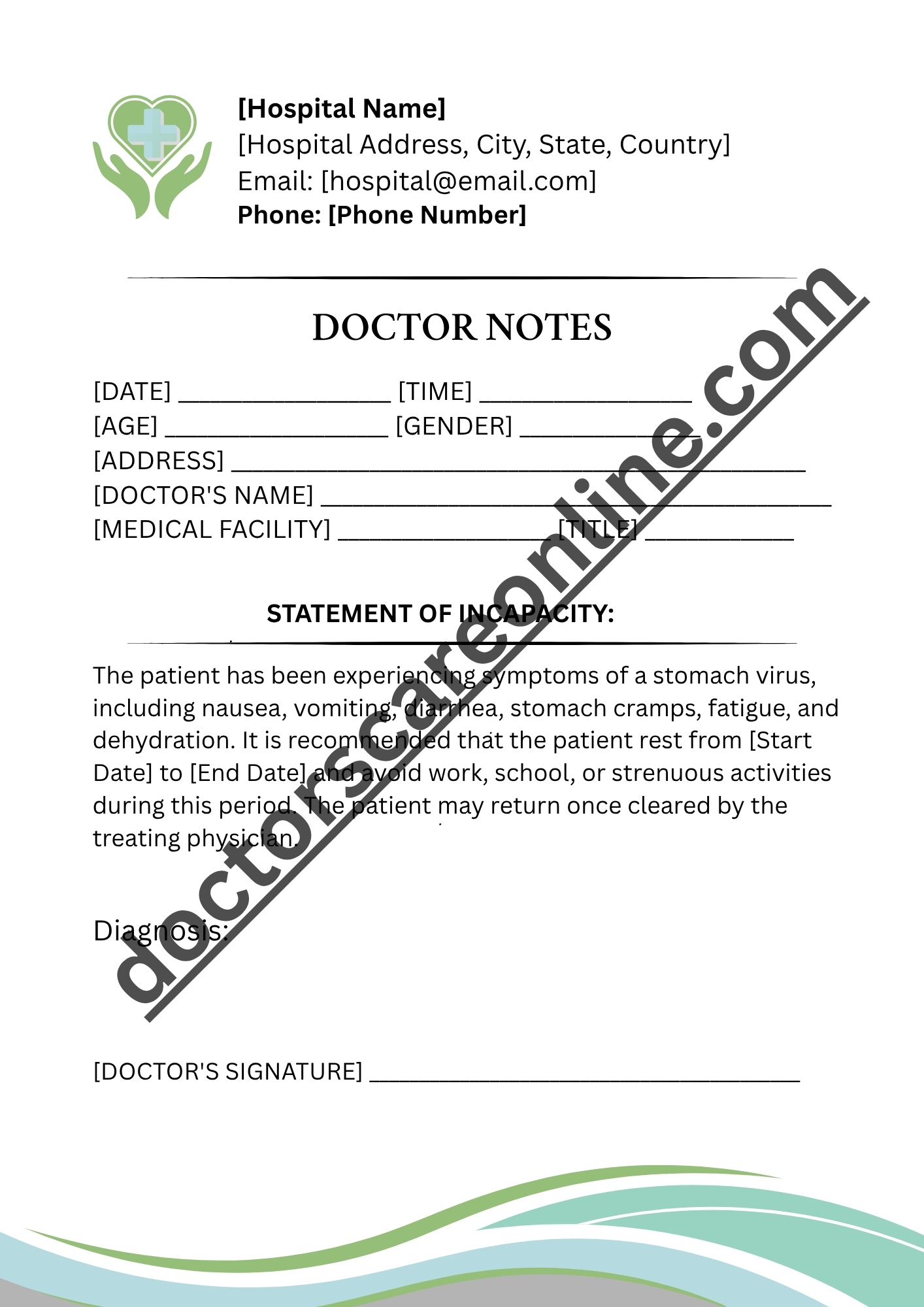
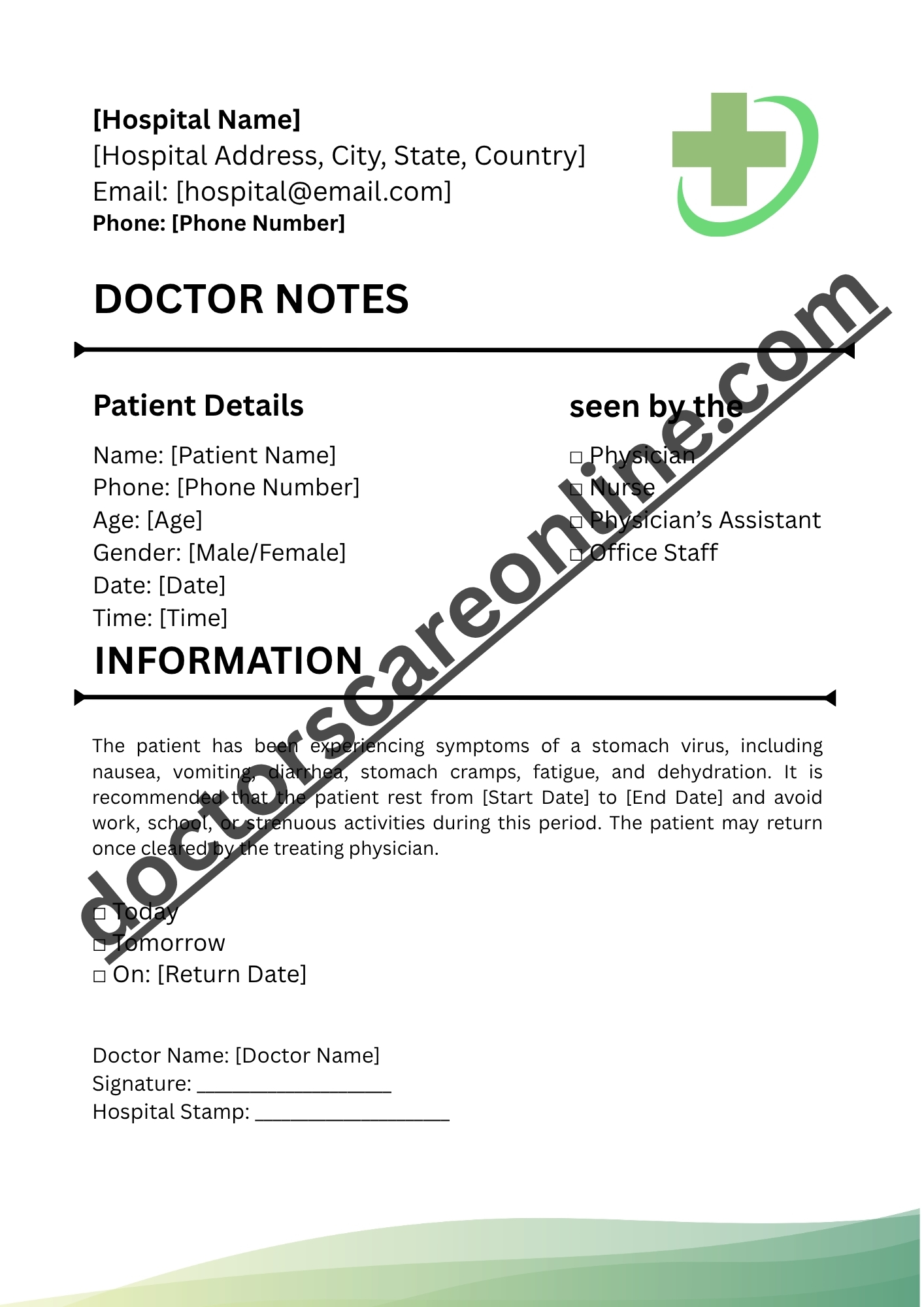
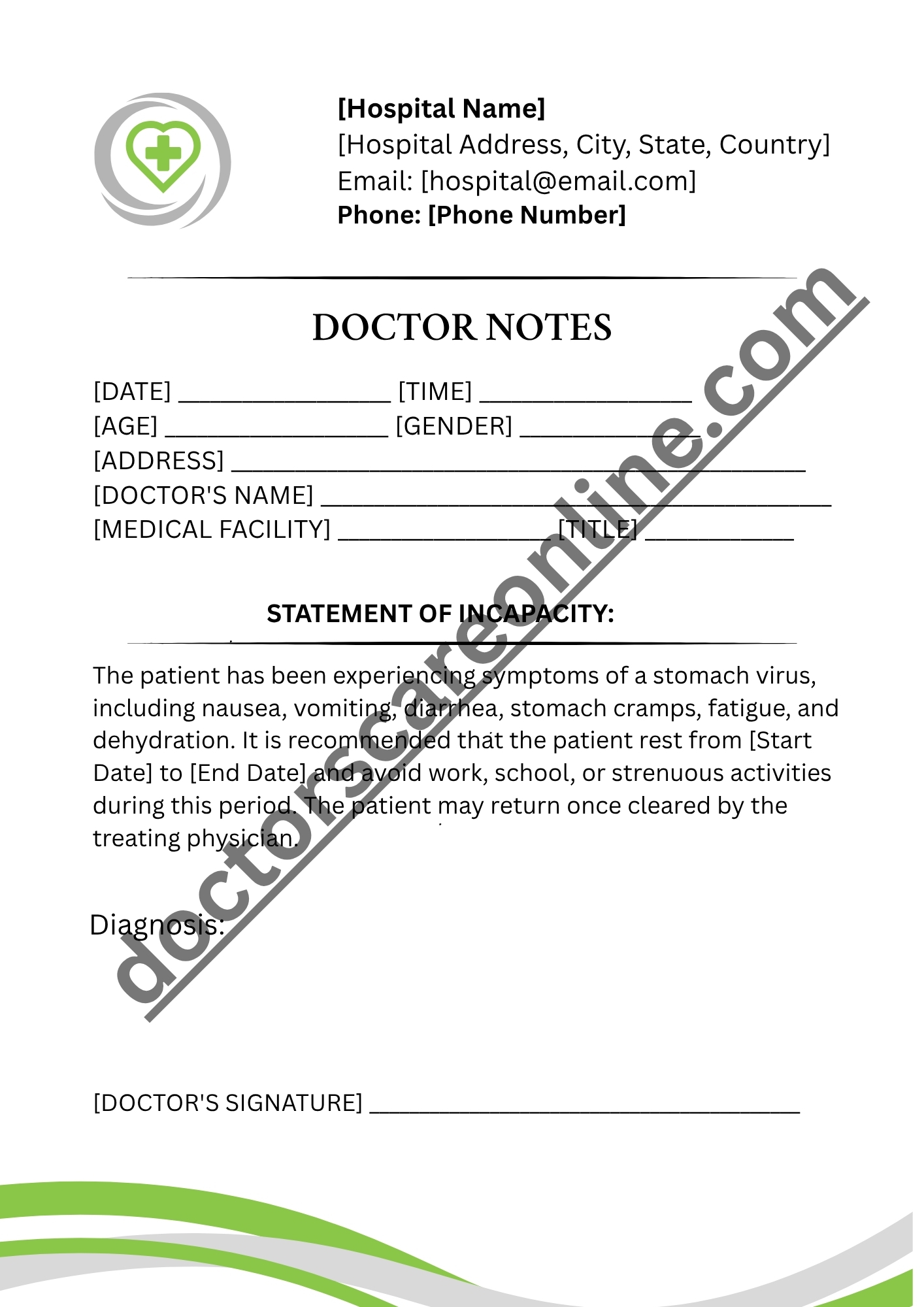
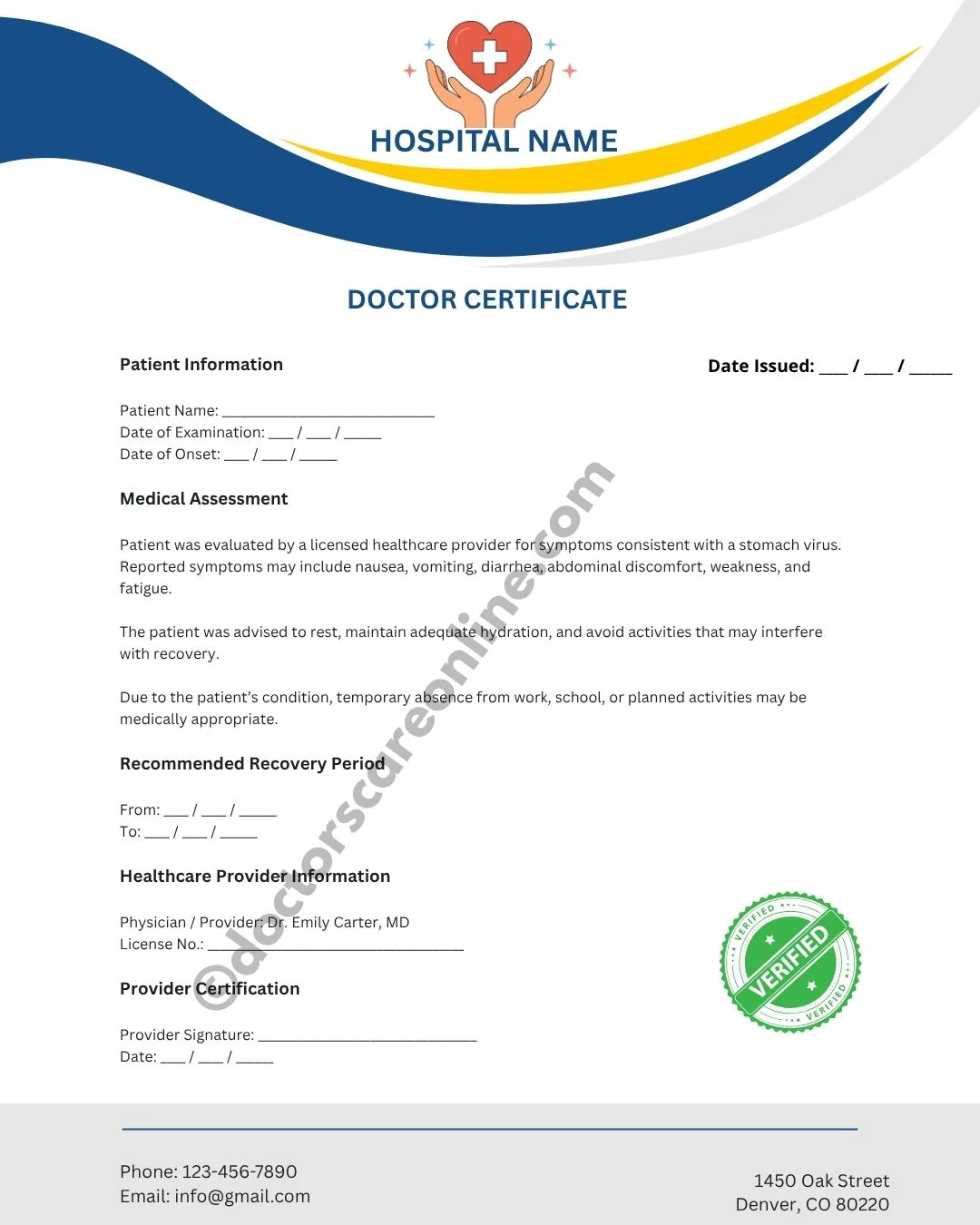
Doctor’s Note for Stomach Virus, which confirms the patient was diagnosed with viral gastroenteritis, also known as a stomach virus.

A doctor’s note for a stomach virus is a medical document provided by a licensed healthcare provider after evaluating a patient with symptoms of viral gastroenteritis. It confirms that the patient is experiencing a contagious illness that may require rest, treatment, and temporary absence from work, school, college, or other daily activities. Depending on the severity of symptoms, the note may also include the recommended recovery period, work restrictions, return-to-work date, and follow-up instructions.

A stomach virus can spread quickly through close contact, contaminated food or water, or touching infected surfaces. Because of its contagious nature, many employers, schools, and educational institutions require a doctor’s note to verify the illness and ensure that the person returns only after it is safe to do so.

Whether you need a doctor’s note for work, school, college, daycare, or travel purposes, this guide explains everything you need to know, including eligibility, symptoms, diagnosis, treatment, recovery time, online consultation options, and sample medical notes.

Common Situations Where a Doctor’s Note for Stomach Virus May Be Needed

Situation Why a Doctor’s Note May Be Required
Workplace To approve sick leave and document the reason for absence.
School To excuse missed classes and maintain attendance records.
College or University To request excused absences, assignment extensions, or exam rescheduling.
Daycare To confirm that a child has recovered before returning.
Food Service Jobs To ensure employees are no longer contagious before handling food.
Healthcare Jobs To protect vulnerable patients from infection.
Travel Insurance To support trip cancellation or interruption claims due to illness.
Sports Activities To receive medical clearance before returning to physical activity.

Early Signs of a Stomach Virus

The early signs of a stomach virus (viral gastroenteritis) usually appear within 12 to 48 hours after exposure. Common symptoms include:

  • Nausea or a feeling of sickness in the stomach
  • Mild stomach cramps or abdominal discomfort
  • Loss of appetite and reduced interest in food
  • Vomiting, which may start suddenly
  • Watery diarrhea or frequent loose stools
  • Low-grade fever in some people
  • Fatigue or unusual tiredness
  • Headache caused by dehydration or illness
  • Muscle aches or general body soreness
  • Bloating or a feeling of fullness in the stomach
  • Chills that may occur with fever
  • Increased thirst due to fluid loss
  • Dry mouth or other early signs of mild dehydration

When to See a Doctor

Seek medical attention if you experience:

  • Vomiting that lasts longer than 24–48 hours
  • Severe dehydration (dry mouth, dizziness, dark urine, or little urination)
  • A fever above 102°F (38.9°C)
  • Blood in your vomit or stool
  • Severe or persistent abdominal pain
  • Inability to keep fluids down
  • Symptoms that continue for more than 2–3 days without improvement

Tip: At the first sign of a stomach virus, start drinking small amounts of water or an oral rehydration solution to help prevent dehydration. Rest, avoid heavy or greasy foods, and stay home to reduce the risk of spreading the virus to others.

How Long Is a Stomach Virus Contagious?

A stomach virus (viral gastroenteritis) is usually most contagious while you have symptoms, especially during episodes of vomiting and diarrhea. However, you can still spread the virus before symptoms begin and for several days after you feel better.

General Timeline

  • Before symptoms: Some viruses can spread 1–2 days before symptoms appear.
  • During illness: This is the most contagious period, particularly if you have vomiting or diarrhea.
  • After symptoms stop: You may continue to spread the virus for 2–3 days, and in some cases (such as norovirus), up to 2 weeks or longer.
  • Children and people with weakened immune systems may remain contagious for a longer period.

How to Book an Online Doctor’s Appointment for a School, College, or Office Doctor’s Note

If you need a doctor’s note for a stomach virus, you can schedule an online appointment with a licensed healthcare provider in just a few steps.

Step 1: Choose a Trusted Telehealth Provider

  • Visit a reputable telehealth website or mobile app.
  • Ensure the provider offers virtual consultations and can issue medical certificates or doctor’s notes if medically appropriate.

Step 2: Create an Account

  • Register using your name, email address, and phone number.
  • Complete your basic profile and medical information if requested.

Step 3: Select the Appointment Type

  • Choose General Consultation, Primary Care, or Urgent Care.
  • Pick a convenient date and time for your virtual visit.

Step 4: Describe Your Symptoms

Tell the doctor about symptoms such as:

  • Vomiting
  • Diarrhea
  • Nausea
  • Stomach cramps
  • Fever
  • Dehydration
  • When your symptoms started
  • Any medications you’ve already taken

Step 5: Attend the Video or Phone Consultation

  • Join the appointment using your smartphone, tablet, or computer.
  • Answer the doctor’s questions honestly so they can assess your condition.

Step 6: Request a Doctor’s Note

If your condition prevents you from attending work, school, or college, ask whether you qualify for a doctor’s note. The healthcare provider will issue one only if it is medically appropriate.

Step 7: Download or Receive Your Doctor’s Note

  • The doctor’s note is usually sent through:
    • Email
    • A secure patient portal
    • The telehealth app
  • Download the document and submit it to your employer, school, or college according to their attendance or leave policy.

Note: A doctor’s note is issued at the healthcare provider’s professional discretion. Completing an online consultation does not guarantee that a medical note will be provided.

How Long Is a Doctor’s Note Valid for Work and School?

The validity of a doctor’s note for a stomach virus depends on your healthcare provider’s recommendation and your employer’s or school’s attendance policy. Most notes are valid only for the recovery period specified by the doctor.

Purpose Typical Validity
Workplace Usually 1–3 days for mild cases and up to 5–7 days if symptoms are severe or recovery takes longer.
School Generally valid until the student has recovered and is symptom-free for 24–48 hours or until the return date mentioned by the doctor.
College/University Valid for the period of absence recommended by the healthcare provider. Additional documentation may be required for extended absences.

What Information Is Included in a Stomach Virus Doctor’s Note?

A doctor’s note for a stomach virus contains essential medical information that verifies your illness and explains why you were unable to attend work, school, or college. While the format may vary by healthcare provider, most doctors’ notes include the following details:

Information Purpose
Patient’s Name Identifies the individual receiving medical care.
Date of Medical Visit Shows when the patient was examined by the healthcare provider.
Medical Condition May state viral gastroenteritis, stomach virus, or simply confirm that the patient was evaluated for a medical illness.
Recommended Rest Period Specifies how many days the patient should stay home to recover.
Work or School Restrictions List any temporary restrictions, such as avoiding work, school, strenuous activities, or food handling.
Return-to-Work or School Date Indicates the date when the patient may safely return, if medically appropriate.
Follow-Up Instructions Advises whether a follow-up appointment is needed if symptoms continue or worsen.
Healthcare Provider’s Name Identifies the licensed doctor or healthcare professional who issued the note.
Clinic or Hospital Information Includes the medical facility’s name, address, and contact details.
Doctor’s Signature Confirms that the document is officially issued by a licensed healthcare provider.

Typical Recovery Timeline for a Stomach Virus

Recovery from a stomach virus (viral gastroenteritis) varies depending on the virus, your overall health, and how well you stay hydrated. Most healthy adults recover within 1 to 3 days, although some people may take up to a week to feel completely back to normal.

Timeline What to Expect
Day 1 Nausea, vomiting, diarrhea, stomach cramps, and possible fever begin.
Day 2 Vomiting may improve, but diarrhea and fatigue often continue.
Day 3 Symptoms usually start to ease, and appetite gradually returns.
Days 4–5 Most people recover and can slowly resume normal activities.
Up to 1 Week Energy levels return to normal, though mild tiredness may linger.
After 1 Week If symptoms persist or worsen, consult a healthcare provider.

Tip: Stay hydrated, get plenty of rest, and return to work or school only after being free from vomiting and diarrhea for 24–48 hours.

Return-to-Work Guidelines After a Stomach Virus

Before returning to work, make sure you:

  • Fever-free for at least 24 hours (without medication)
  • No vomiting for 24–48 hours
  • No diarrhea for 24–48 hours
  • Normally hydrated and able to eat and drink
  • Energy has returned to perform your job safely

Return-to-Work Advice by Occupation

Occupation Recommendation
Office Workers Return after being symptom-free for 24–48 hours.
Restaurant Staff Wait 48 hours after the last vomiting or diarrhea episode before handling food.
Nurses Return only when fully recovered and follow workplace infection-control policies.
Teachers Return after being symptom-free for 24–48 hours to protect students.
Factory Workers Return when symptoms are gone,and you feel physically fit for work.

How Doctors Diagnose a Stomach Virus

Doctors usually diagnose a stomach virus (viral gastroenteritis) based on your symptoms and a physical examination. In most cases, additional tests are not needed unless the illness is severe or lasts longer than expected.

Common Diagnosis Methods

  • Review of symptoms such as vomiting, diarrhea, nausea, stomach cramps, and fever.
  • Physical examination to check for dehydration and abdominal tenderness.
  • Medical history, including recent travel, food intake, or contact with someone who was sick.
  • Stool test if symptoms are severe, prolonged, oorif blood is present in the stool.
  • Blood tests may be ordered to check for dehydration, electrolyte imbalance, or to rule out other conditions.

Note: Most mild cases of a stomach virus can be diagnosed without laboratory tests and improve with rest, fluids, and supportive care.

Treatment Options Recommended by Doctors

There is no specific cure for most stomach viruses. Treatment focuses on relieving symptoms, preventing dehydration, and helping the body recover naturally.

Treatment Purpose
Oral Rehydration Solution (ORS) Replaces lost fluids and electrolytes.
Plenty of Fluids Prevents dehydration caused by vomiting and diarrhea.
Rest Helps the body recover more quickly.
Anti-Nausea Medication May be prescribed to reduce vomiting if needed.
Fever & Pain Relievers Used to manage fever or body aches when appropriate.
IV Fluids Recommended for severe dehydration or inability to keep fluids down.
Bland Diet (BRAT Diet) Easy-to-digest foods like bananas, rice, applesauce, and toast support recovery.

Note: Antibiotics are not effective for viral gastroenteritis because the illness is caused by a virus, not bacteria. Always follow your healthcare provider’s treatment recommendations.

Foods to Eat While Recovering From a Stomach Virus

During recovery, choose bland, easy-to-digest foods that are gentle on your stomach.

  • Bananas – Rich in potassium and easy to digest.
  • White rice – Helps firm stools and provides energy.
  • Applesauce – Gentle on the stomach and easy to tolerate.
  • Plain toast – A simple carbohydrate that’s easy to digest.
  • Plain crackers – Can help settle nausea and provide quick energy.
  • Boiled potatoes – Soft, filling, and easy on the digestive system.
  • Clear broth or chicken soup – Replaces fluids and helps prevent dehydration.
  • Oatmeal – Soft, nutritious, and easy to digest.
  • Plain yogurt – May help restore healthy gut bacteria after symptoms improve.
  • Oral Rehydration Solution (ORS) – Replaces lost fluids and electrolytes.

Tip: Eat small, frequent meals and drink plenty of fluids. Gradually return to your regular diet as you start feeling better.

Foods and Drinks to Avoid

While recovering from a stomach virus, avoid foods and drinks that can irritate your stomach or make symptoms worse.

  • Fried and greasy foods – Difficult to digest and may worsen nausea.
  • Spicy foods – Can irritate the stomach and intestines.
  • Dairy products – Milk, cheese, and ice cream may be harder to digest temporarily.
  • Caffeinated drinks – Coffee, energy drinks, and strong tea can increase dehydration.
  • Alcohol – Can worsen dehydration and delay recovery.
  • Sugary drinks – Soda and fruit juices may make diarrhea worse.
  • Fatty or processed foods – Can be difficult for the digestive system to handle.
  • Raw vegetables – High in fiber and may cause bloating or stomach discomfort.
  • Citrus fruits – Oranges, lemons, and grapefruits may irritate the stomach.
  • Highly seasoned or fast foods – Can trigger digestive upset during recovery.

Tip: Once your symptoms improve, gradually reintroduce these foods into your diet instead of eating them all at once.

Signs You Should Go to the Emergency Room

Seek emergency medical care if you experience any of the following:

Related Post

Reviews

There are no reviews yet.

Be the first to review “Doctors Note for Stomach Virus | Sick Leave Proof”

Your email address will not be published. Required fields are marked *

Doctor's Note for stomach virusDoctors Note for Stomach Virus | Sick Leave Proof
Original price was: $21.00.Current price is: $19.90.