
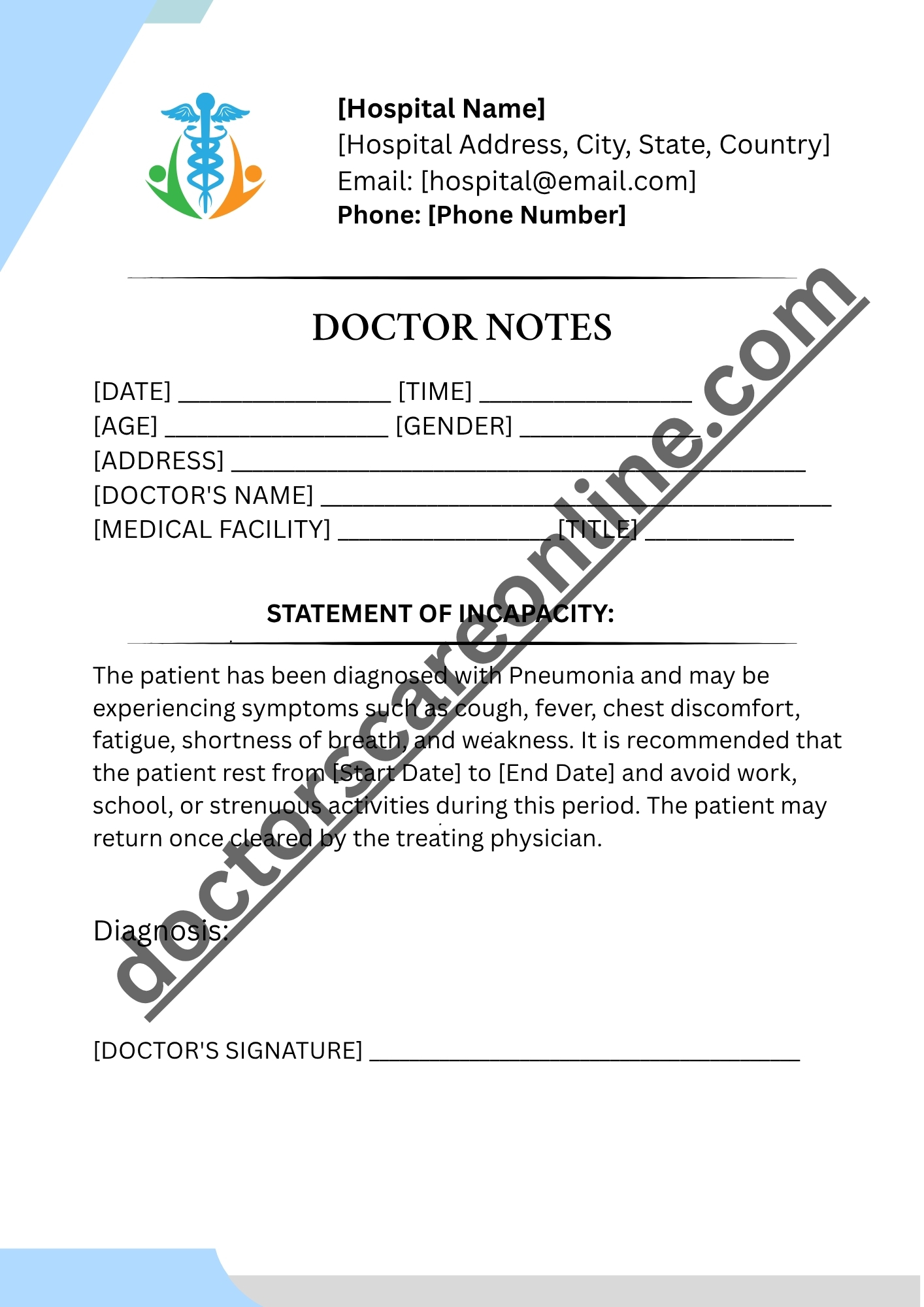
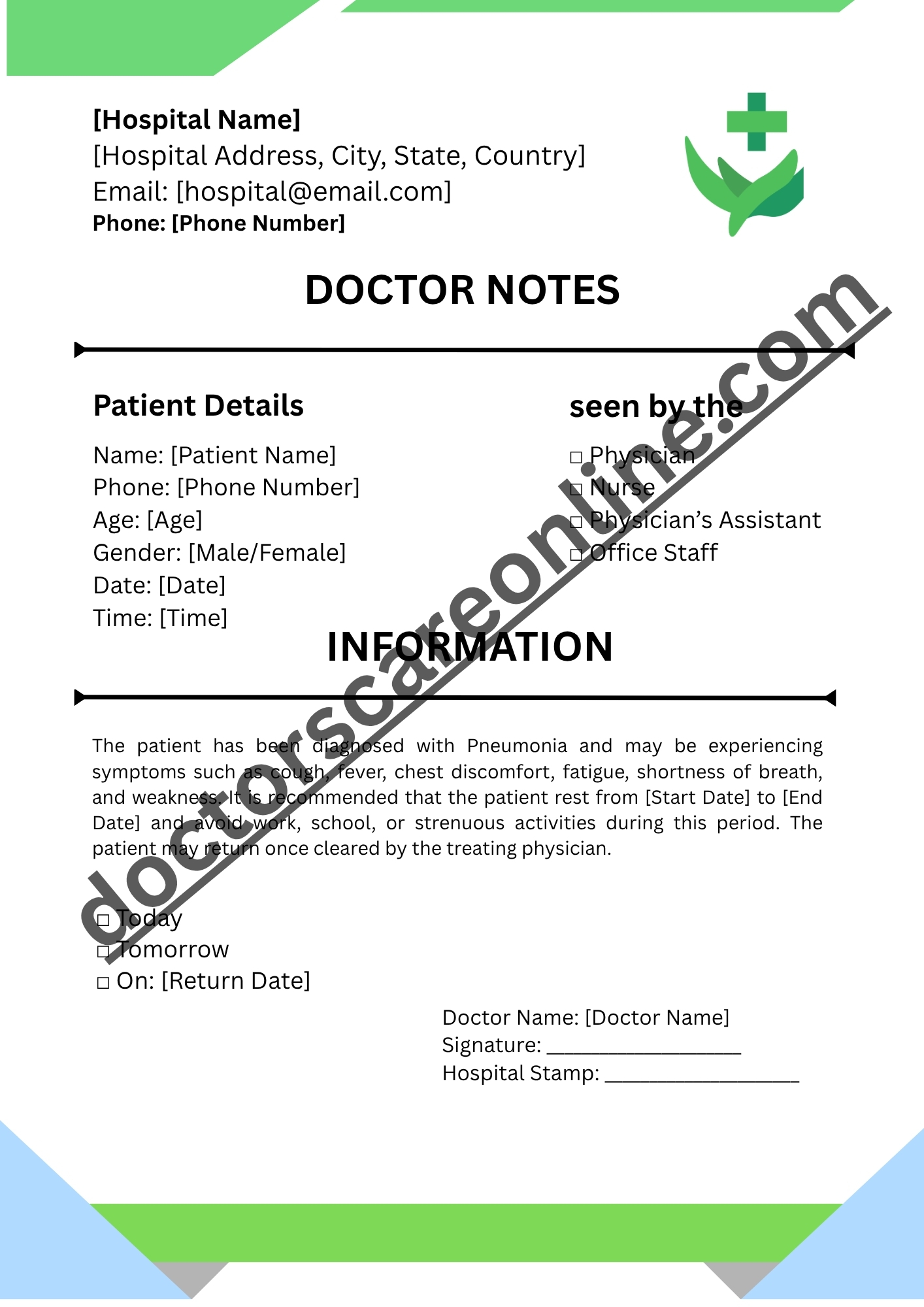
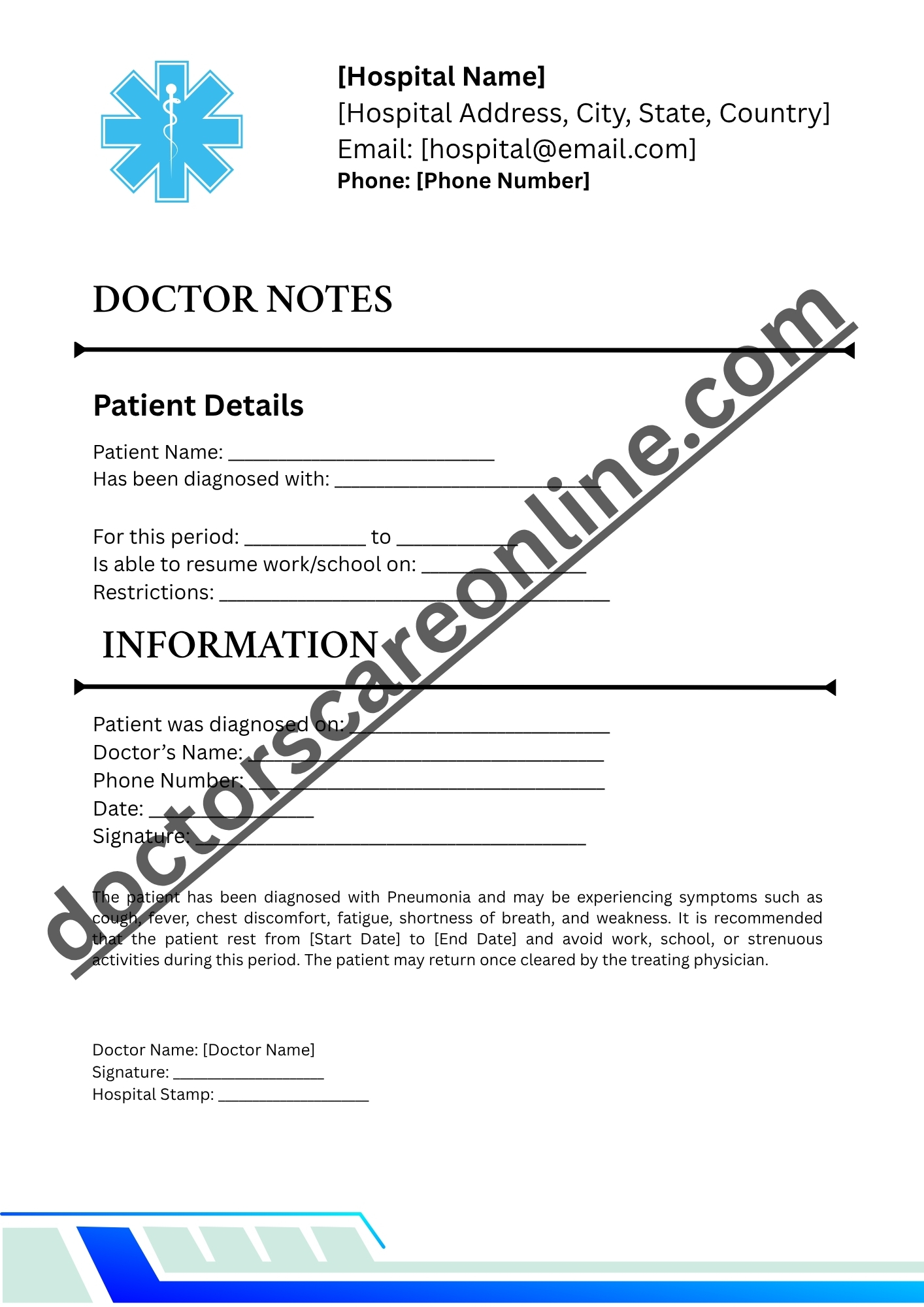
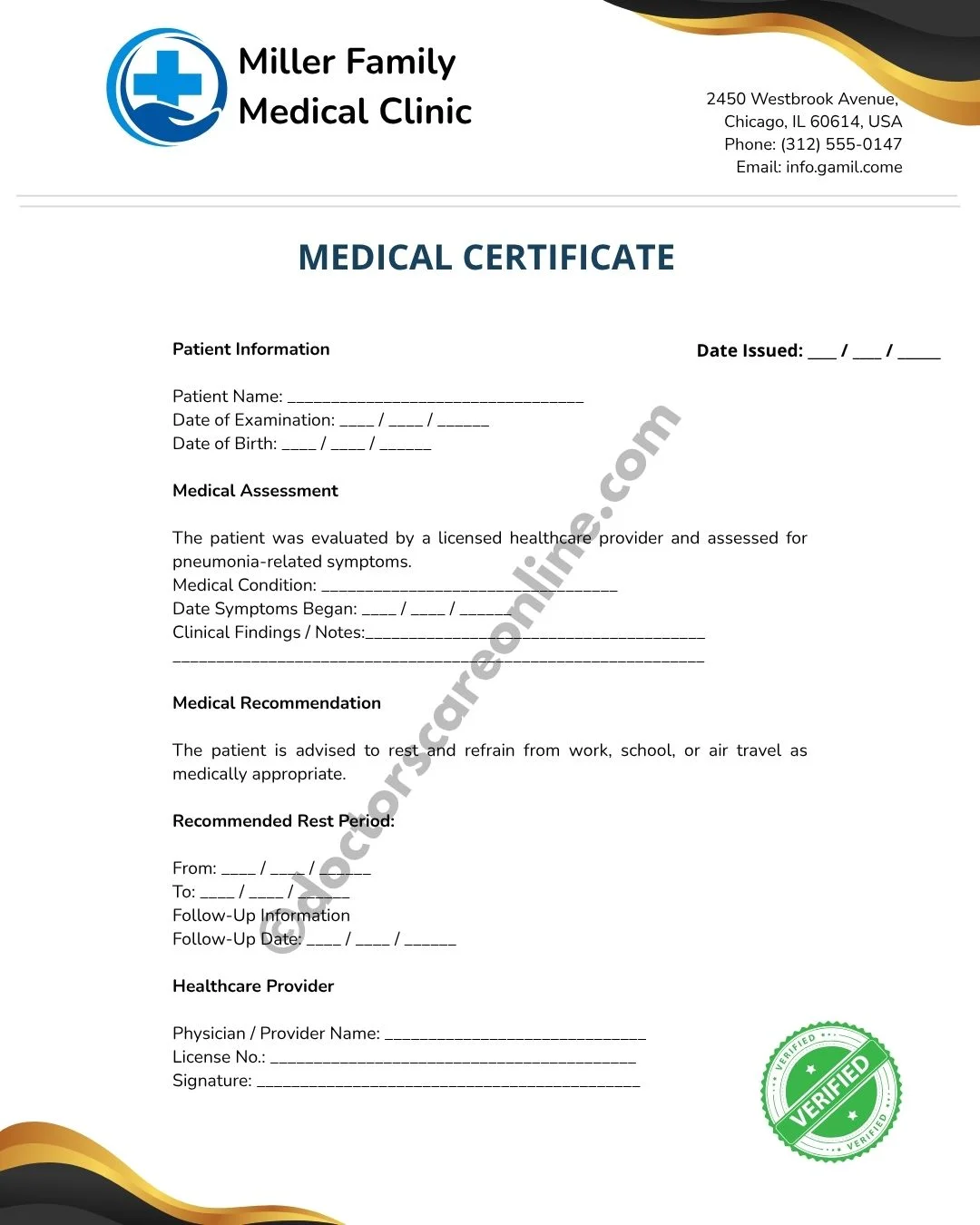
A doctor’s note for pneumonia is a written medical certificate issued by a licensed physician or qualified healthcare provider confirming that a patient has been evaluated for pneumonia and needs time to recover. Depending on the severity of the illness, the note may recommend staying away from work, school, sports, or other activities until the patient is medically fit to return.
Unlike a simple absence letter written by a patient, a doctor’s note is considered an official medical document because it is based on a professional medical examination.
Purpose of a Pneumonia Doctor’s Note
A doctor’s note serves several important purposes, including:
- Confirms that a medical evaluation has been completed.
- Explains that the absence is due to a legitimate health condition.
- Recommends an appropriate recovery period.
- Provides return-to-work or return-to-school guidance.
- Lists temporary activity restrictions when necessary.
- Helps employers and schools maintain accurate attendance records.
Medical Confirmation
Pneumonia affects the lungs and may reduce the body’s ability to receive enough oxygen, making normal daily activities difficult. After evaluating the patient through physical examinations and, when necessary, diagnostic tests such as chest X-rays or blood tests, the doctor may certify that rest and medical treatment are required.
Leave Verification
Many workplaces and educational institutions require medical documentation when an absence lasts more than one or two days. A doctor’s note helps verify that the leave is medically necessary and provides an estimated date for returning once recovery has progressed.
What Is Pneumonia?
Pneumonia is an infection that causes inflammation in one or both lungs. During the infection, the tiny air sacs inside the lungs (alveoli) can fill with fluid or pus, making it harder for oxygen to move into the bloodstream. This often leads to symptoms such as coughing, fever, chest discomfort, and shortness of breath.
Although pneumonia can affect people of any age, it is generally more serious in:
- Older adults (65 years and above)
- Infants and young children
- Pregnant individuals
- People with weakened immune systems
- Individuals with chronic heart or lung diseases
- Smokers
Some people recover within a couple of weeks, while others especially those with severe infections may require hospitalization and a much longer recovery period.
When Do You Need a Doctor’s Note for Pneumonia?
You may need a doctor’s note for pneumonia in the following situations:
- Work Leave: To verify your medical absence and support sick leave requests.
- School Absence: To excuse missed classes and comply with school attendance policies.
- College or University Leave: For excused absences, assignment extensions, or missed exams.
- Travel Cancellation: To provide proof of illness when requesting refunds, rescheduling, or travel insurance claims.
- Insurance Claims: To support health, disability, or travel insurance documentation.
- Sports Participation: To obtain medical clearance before returning to sports or physical activities.
- Return-to-Work Clearance: When your employer requires confirmation that you are medically fit to resume your job after recovering from pneumonia.
Common Symptoms of Pneumonia
Pneumonia symptoms can range from mild to severe depending on the cause of the infection, your age, and overall health. Common symptoms include:
- Fever: A high body temperature, often accompanied by sweating.
- Chills: Shivering or feeling cold even in a warm environment.
- Persistent Cough: A cough that may produce yellow, green, or bloody mucus.
- Chest Pain: Sharp pain that worsens when breathing deeply or coughing.
- Shortness of Breath: Difficulty breathing or feeling breathless during normal activities.
- Fatigue: Extreme tiredness and lack of energy.
- Rapid Breathing: Breathing faster than usual due to reduced lung function.
- Confusion (Older Adults): Sudden confusion or changes in mental alertness, especially in seniors.
- Loss of Appetite: Reduced desire to eat because of illness and weakness.
Seek immediate medical attention if you experience severe breathing difficulty, blue lips or fingertips, persistent chest pain, or confusion.
Causes of Pneumonia
Pneumonia can develop when bacteria, viruses, fungi, or other substances infect or irritate the lungs. The most common causes include:
- Bacterial Infection: The most common cause of pneumonia, often treated with antibiotics.
- Viral Infection: Viruses such as influenza (flu), RSV, or COVID-19 can lead to pneumonia.
- Fungal Infection: More common in people with weakened immune systems or certain environmental exposures.
- Aspiration Pneumonia: Occurs when food, liquids, saliva, or stomach contents accidentally enter the lungs, causing infection.
Types of Pneumonia
Different types of pneumonia are classified based on how and where the infection develops. Understanding the type of pneumonia helps doctors choose the most appropriate treatment.
- Community-Acquired Pneumonia (CAP)
- The most common type of pneumonia.
- Develops outside hospitals or healthcare facilities.
- Usually caused by bacteria, viruses, or fungi.
- Hospital-Acquired Pneumonia (HAP)
- Occurs 48 hours or more after hospital admission.
- Often affects patients receiving treatment for another illness.
- May involve antibiotic-resistant bacteria, making it more difficult to treat.
- Ventilator-Associated Pneumonia (VAP)
- Develops in patients using a mechanical ventilator.
- Typically occurs in intensive care units (ICUs).
- Requires prompt medical treatment due to the higher risk of complications.
- Walking Pneumonia
- A mild form of pneumonia, commonly caused by Mycoplasma pneumoniae.
- Symptoms develop gradually and are usually less severe.
- Many people can continue daily activities despite the infection.
- Aspiration Pneumonia
- Occurs when food, liquids, saliva, or stomach contents enter the lungs.
- More common in people with swallowing problems or neurological disorders.
- Can lead to serious lung infection if left untreated.
How Doctors Diagnose Pneumonia
Doctors diagnose pneumonia using one or more of the following tests:
- Medical History
- Review your symptoms and medical history.
- Physical Examination
- Listen to your lungs for abnormal breathing sounds.
- Chest X-ray
- Confirms the presence of a lung infection.
- Blood Tests
- Check for signs of infection.
- Pulse Oximeter
- Measures oxygen levels in your blood.
- CT Scan
- Provides detailed lung images if needed.
- Sputum Culture
- Identifies the germ causing the infection to guide treatment.
What Information Is Included in a Pneumonia Doctor’s Note?
A doctor’s note for pneumonia typically includes the following information:
Patient Information
- Full name of the patient
- Date of birth or age (if required)
Medical Evaluation
- Date of examination
- Diagnosis or medical condition (if appropriate)
Leave Recommendation
- Recommended sick leave or recovery period
- Expected return-to-work or school date
Activity Restrictions
- Temporary work, school, or physical activity restrictions
- Additional recovery instructions, if needed
Healthcare Provider Information
- Doctor’s name
- Signature
- Clinic or hospital name
- Contact information
- Date the note was issued
Note: The information included in a doctor’s note may vary depending on the healthcare provider, employer or school requirements, and local privacy laws.
How Many Days Off Work Is Recommended for Pneumonia?
The amount of time off work depends on the severity of pneumonia, your overall health, and the type of work you do. Your doctor will recommend a recovery period based on your condition.
| Severity | Recommended Time Off |
|---|---|
| Mild Pneumonia | 5–7 days (or until symptoms improve) |
| Walking Pneumonia | 1–2 weeks |
| Moderate Pneumonia | 2–3 weeks |
| Severe Pneumonia | 3–6 weeks or longer |
| Hospitalized Patients | Several weeks, depending on recovery |
Note: Recovery time varies for each person. Always return to work only after your healthcare provider confirms that it is safe to do so, especially if your job involves physical labor or close contact with others.
How Long Does Recovery Take?
Recovery from pneumonia varies depending on the severity of the infection, your age, overall health, and how well you respond to treatment. While some people recover within a couple of weeks, others may need several weeks to regain their normal energy levels.
| Recovery Stage | What to Expect |
|---|---|
| Week 1 | Fever begins to improve, but cough and fatigue may continue. |
| Week 2 | Breathing becomes easier, and energy levels gradually improve. |
| Weeks 3–4 | Most daily activities can be resumed, although a mild cough may persist. |
| Weeks 6–8 | Most people make a full recovery, especially after severe pneumonia. |
Follow-Up Care
- Take all prescribed medications as directed.
- Attend follow-up appointments if recommended.
- Seek medical advice if symptoms worsen or return.
Note: Recovery may take longer for older adults, people with chronic medical conditions, or those who were hospitalized due to pneumonia.
Can You Go to Work With Pneumonia?
In most cases, you should not go to work while recovering from pneumonia. Rest is an essential part of recovery, and returning too soon may slow the healing process or increase the risk of complications.
- Rest Is Important
- Your body needs time to fight the infection and heal.
- Adequate rest can help speed up recovery.
- Risk of Complications
- Working too early may worsen symptoms such as fatigue, cough, and shortness of breath.
- It can also delay your overall recovery.
- Contagious Concerns
- Some types of pneumonia, especially those caused by viruses or bacteria, may be contagious in the early stages.
- Staying home helps reduce the risk of spreading the infection to others.
- Follow Your Doctor’s Advice
- Return to work only when your healthcare provider confirms it is safe.
- If needed, your doctor may recommend temporary work restrictions or light-duty tasks.
Can a Doctor Refuse to Issue a Sick Note?
Yes. A doctor may refuse to issue a sick note if it is not medically necessary.
- Medical Evaluation: Your condition is assessed before a decision is made.
- Approved If Needed: A sick note may be issued if pneumonia requires rest or time away from work or school.
- May Be Refused: If you are medically fit to return or there is no valid medical reason for leave.
Note: A doctor’s note is issued based on medical judgment, not on request alone.
Can You Get a Doctor’s Note for Pneumonia Online?
Yes, in many cases, you can get a doctor’s note for pneumonia online through a licensed telehealth provider after a medical evaluation.
- Telehealth Consultation: Schedule a virtual appointment with a licensed healthcare provider.
- Medical Assessment: The doctor reviews your symptoms and medical history to determine if a doctor’s note is appropriate.
- Online Doctor’s Note: If medically justified, the provider may issue a digital doctor’s note with recommended leave and recovery instructions.
Note: Online doctor’s notes are only issued after a proper medical evaluation and may not be suitable for severe pneumonia that requires an in-person examination or additional tests.
Is an Online Doctor’s Note for Pneumonia Valid for Work, School, or College?
Yes, an online doctor’s note for pneumonia may be valid for work, school, or college, but acceptance depends on the organization’s policies and local requirements.
- Workplace Requirements
- Many employers accept telehealth doctor’s notes from licensed healthcare providers.
- Some workplaces may have specific rules about medical documentation or verification.
- School Requirements
- Schools may accept online medical notes for excused absences.
- Requirements can vary based on attendance policies and the length of absence.
- College or University Requirements
- Colleges may accept digital doctor’s notes for missed classes, exams, or assignment extensions.
- Some institutions may request additional medical documentation for longer absences.
- Important Factors
- The note should be issued by a licensed medical professional.
- It should include required details such as examination date, recommended leave period, and provider information.
- Always check your employer or institution’s policy before submitting an online doctor’s note.
Can Employers Verify a Doctor’s Note?
Yes, employers can verify a doctor’s note to confirm its authenticity.
- Verification Process
- May contact the healthcare provider to confirm the note.
- Privacy Considerations
- Cannot usually request private medical details without permission.
- Employer Rights
- Can request valid medical documentation according to workplace policies.
Can You Work From Home With Pneumonia?
- Some people with mild pneumonia may be able to work remotely if their healthcare provider agrees and their symptoms are manageable.
- However, many patients experience fatigue, coughing, fever, or breathing difficulties that make working difficult. Taking adequate rest often supports a faster recovery.
- If your symptoms interfere with concentration or daily tasks, your doctor may recommend complete medical leave instead of remote work.
Can Schools Accept a Pneumonia Doctor’s Note?
Yes, schools generally accept a doctor’s note for pneumonia as proof of a medically required absence.
- Attendance Policies
- Schools may require a doctor’s note for extended absences due to illness.
- Medical Documentation
- The note helps verify that the student was evaluated and needed time to recover.
- Return-to-School Requirements
- Some schools may require medical clearance before returning, especially after severe pneumonia.
Returning to Work After Pneumonia
Returning to work after pneumonia depends on your recovery progress, symptom improvement, and doctor’s advice.
Recovery Assessment
- Ensure fever, breathing problems, and severe fatigue have improved.
- Follow your doctor’s recommendation before returning.
Fitness for Work
- You should be able to perform normal activities without worsening symptoms.
- A doctor’s clearance may be needed for severe cases or certain jobs.
Light-Duty Recommendations
- Start with reduced workload if needed.
- Avoid heavy physical tasks until your strength returns.
- Take regular breaks and increase activity gradually.
When Should You See a Doctor Immediately?
Seek immediate medical attention if you experience severe or worsening pneumonia symptoms, such as:
- High Fever: Fever that does not improve or becomes severe.
- Difficulty Breathing: Severe shortness of breath or trouble breathing.
- Chest Pain: Persistent or intense chest pain, especially while breathing.
- Blue Lips or Fingertips: A sign of low oxygen levels.
- Confusion: Sudden confusion, extreme drowsiness, or changes in awareness.
- Persistent Symptoms: Symptoms that worsen or do not improve despite treatment.
Pneumonia Treatment Options
Treatment for pneumonia depends on the cause, severity of infection, and overall health condition. Common treatment options include:
Antibiotics
- Used to treat bacterial pneumonia.
- Should be taken as prescribed by the doctor.
Antiviral Medication
- May be used for certain types of viral pneumonia.
- Helps manage infections caused by specific viruses.
Antifungal Medication
- Used when pneumonia is caused by fungal infections.
- More common in people with weakened immune systems.
Fever Reducers
- Help reduce fever, body aches, and discomfort.
- Improve comfort during recovery.
Rest and Recovery
- Allows the body to fight infection and heal.
- Helps reduce fatigue and weakness.
Hydration
- Drinking enough fluids helps prevent dehydration.
- May help loosen mucus and support recovery.
Oxygen Therapy
- Used when oxygen levels are low.
- Helps improve breathing in severe cases.
Hospitalization
- May be required for severe pneumonia.
- Needed when there are breathing difficulties, low oxygen levels, or complications.
How to Prevent Pneumonia
Pneumonia cannot always be completely prevented, but following healthy habits can reduce the risk of developing a lung infection.
Vaccination
- Get recommended pneumonia vaccines to lower the risk of certain types of pneumonia.
- Stay updated with other recommended vaccines that protect against respiratory infections.
Hand Hygiene
- Wash your hands regularly with soap and water.
- Use hand sanitizer when soap and water are not available.
Avoid Smoking
- Avoid smoking and exposure to secondhand smoke.
- Smoking can weaken lung defenses and increase the risk of pneumonia.
Maintain a Healthy Lifestyle
- Eat a balanced diet to support the immune system.
- Get regular physical activity as advised.
- Manage existing health conditions properly.
Flu Vaccine
- Get an annual flu vaccine to reduce the risk of influenza-related pneumonia.
- Preventing flu infections can help protect lung health.
COVID-19 Precautions
- Follow recommended precautions during outbreaks.
- Practice good respiratory hygiene and avoid close contact with people who are sick.
Risks of Ignoring Pneumonia
Ignoring pneumonia or delaying medical treatment can increase the risk of serious complications.
Worsening Infection
- Pneumonia may become more severe over time.
- Symptoms such as fever, cough, and breathing difficulties can worsen.
Hospitalization
- Severe cases may require hospital treatment.
- Patients may need oxygen support or stronger medications.
Lung Damage
- Untreated pneumonia can affect lung function.
- It may lead to long-term breathing problems.
Respiratory Failure
- Severe pneumonia can reduce oxygen levels in the body.
- Emergency medical care may be required.
Sepsis
- The infection can spread into the bloodstream.
- Sepsis is a life-threatening condition that needs immediate treatment.
FAQs
1. Do You Miss Work for Pneumonia?
Yes, pneumonia often requires time away from work, especially when symptoms like fever, cough, fatigue, or breathing problems make daily activities difficult. A doctor may recommend sick leave based on the severity of the infection and your recovery progress.
2. How to Document Pneumonia?
Pneumonia can be documented through a doctor’s evaluation, medical records, diagnostic tests such as a chest X-ray, and an official doctor’s note confirming the condition and recommended recovery period.
3. What Is Pneumonia in Short Notes?
Pneumonia is a lung infection that causes inflammation and fluid buildup in the air sacs of the lungs. It can be caused by bacteria, viruses, or fungi and may lead to symptoms such as cough, fever, chest pain, and shortness of breath.
4. What Are the 4 Danger Signs of Pneumonia?
The four major danger signs of pneumonia include severe difficulty breathing, blue lips or fingertips, confusion, and persistent chest pain or worsening symptoms. These signs require immediate medical attention.
5. Which Organ Is Most Affected by Pneumonia?
The lungs are the main organs affected by pneumonia. The infection causes inflammation in the lung air sacs, making it harder for the body to get enough oxygen.
Medical Disclaimer: This article is provided for educational and informational purposes only and should not be considered a substitute for professional medical advice, diagnosis, or treatment. Always consult a licensed healthcare provider regarding any medical condition or before making healthcare decisions. Never ignore or delay seeking medical attention because of information you have read on this page.
Related Post-




Reviews
There are no reviews yet.