
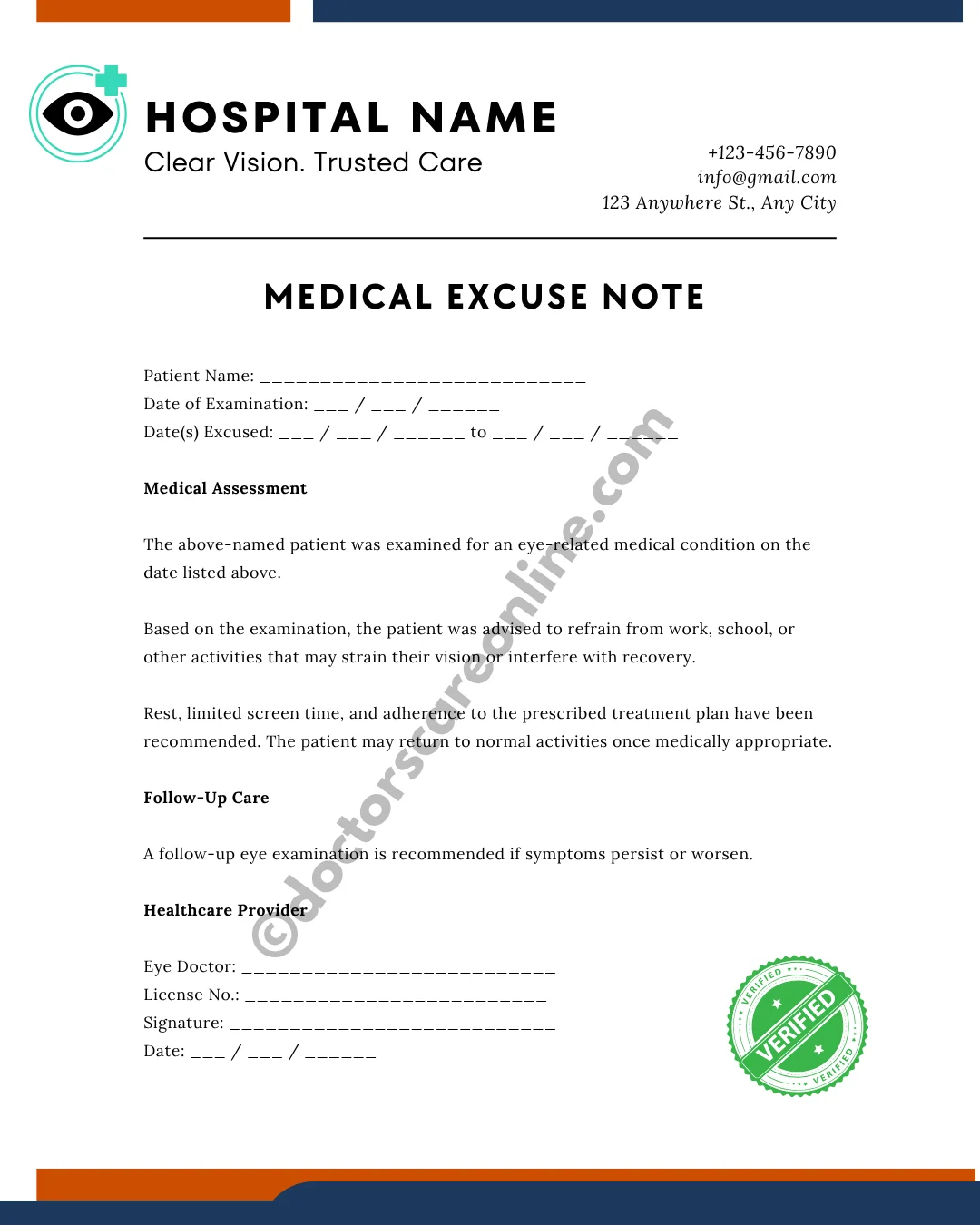
An Eye Doctor Excuse Note is an official medical document provided by a licensed eye care professional after examining a patient’s vision or eye health. It confirms that the patient attended a medical appointment and, if necessary, should take time away from work, school, or college because of an eye condition, injury, infection, or treatment.
An eye doctor may recommend temporary leave when vision problems make everyday activities unsafe or uncomfortable. In some cases, the note may also include work or school restrictions, such as limiting screen time, avoiding heavy physical activity, or refraining from driving until the eyes have recovered.
This document is commonly accepted by employers, educational institutions, and other organizations when a medical absence needs to be verified.
When Might You Need an Eye Doctor Excuse Note?
There are many situations where an eye doctor may recommend rest or temporary leave. An excuse note helps explain that your absence is medically necessary and supports your recovery.
Some of the most common reasons include:
- Eye infections such as pink eye (conjunctivitis)
- Eye injuries caused by accidents or foreign objects
- Sudden blurred or double vision
- Severe eye pain or irritation
- Red, swollen, or watery eyes
- Allergic reactions affecting the eyes
- Corneal scratches or abrasions
- Migraine attacks with vision disturbances
- Recovery after LASIK, cataract, or retinal procedures
- Temporary vision changes that make driving or working unsafe
- Light sensitivity after eye treatment
- Follow-up appointments after eye surgery
Depending on your diagnosis, the doctor may recommend taking one or more days off while your eyes heal.
Common Eye Conditions That Can Qualify for an Excuse Note
Not every eye problem requires time away from work or school, but several conditions can temporarily affect your vision, comfort, or ability to perform daily tasks safely.
Conjunctivitis (Pink Eye)
Pink eye is one of the most common reasons for an eye doctor’s excuse note. It can cause redness, itching, swelling, tearing, and discharge. If the infection is contagious, your doctor may advise staying home until the risk of spreading it has passed.
Common symptoms
- Red eyes
- Watery discharge
- Itching
- Burning sensation
- Crusting around the eyelids
Corneal Abrasion
A corneal abrasion is a scratch on the clear surface of the eye. Even a small scratch can cause significant discomfort and make it difficult to read, drive, or use digital screens.
Symptoms include
- Sharp eye pain
- Tearing
- Blurred vision
- Sensitivity to light
- Feeling that something is stuck in the eye
Dry Eye Syndrome
Dry eye occurs when the eyes do not produce enough tears or when tears evaporate too quickly. Severe cases can make prolonged computer use, reading, and driving uncomfortable.
Symptoms include
- Dryness
- Burning
- Eye fatigue
- Blurred vision after screen use
- Redness
Eye Allergies
Seasonal allergies, dust, pollen, and pet dander can trigger eye irritation. Severe allergic reactions may interfere with concentration and productivity, especially in outdoor or dusty environments.
Symptoms include
- Itching
- Redness
- Swelling
- Excessive tearing
- Puffy eyelids
Stye
A stye is a painful lump that develops near the edge of the eyelid due to a blocked oil gland or bacterial infection.
Symptoms include
- Eyelid swelling
- Tenderness
- Red bump
- Eye irritation
- Mild watering
Uveitis
Uveitis is inflammation inside the eye that can lead to vision problems if left untreated. It usually requires prompt medical treatment and follow-up care.
Symptoms include
- Eye pain
- Redness
- Blurred vision
- Floaters
- Sensitivity to bright light
Glaucoma Flare-Up
People with glaucoma may experience increased eye pressure that causes pain and temporary vision changes. During a flare-up, rest and immediate treatment may be necessary.
Symptoms include
- Severe headache
- Eye pain
- Blurred vision
- Rainbow-colored halos around lights
- Nausea
Cataracts
Although cataracts usually develop slowly, advanced cataracts can significantly affect daily activities, especially driving and reading. Surgery often requires short-term medical leave.
Symptoms include
- Cloudy vision
- Difficulty seeing at night
- Glare from lights
- Frequent prescription changes
Retinal Disorders
Problems such as retinal tears or retinal detachment require urgent treatment. Doctors often recommend avoiding strenuous activity during recovery.
Symptoms include
- Sudden flashes of light
- Floaters
- Shadow over vision
- Partial vision loss
Symptoms That May Require Time Away From Work or School
Certain symptoms can make working, studying, driving, or using digital devices difficult. If these symptoms interfere with your daily responsibilities, an eye doctor may recommend temporary leave.
Common symptoms include:
- Moderate to severe eye pain
- Blurred or distorted vision
- Temporary loss of vision
- Persistent redness
- Swollen eyelids
- Excessive tearing
- Burning or stinging sensation
- Sensitivity to sunlight or bright indoor lighting
- Difficulty focusing on books or computer screens
- Severe headaches related to eye strain
- Double vision
- Discomfort while wearing contact lenses
- Dizziness caused by vision changes
If your symptoms worsen or do not improve after treatment, your doctor may extend your recovery period and schedule a follow-up examination.
What Information Is Usually Included in an Eye Doctor Excuse Note?
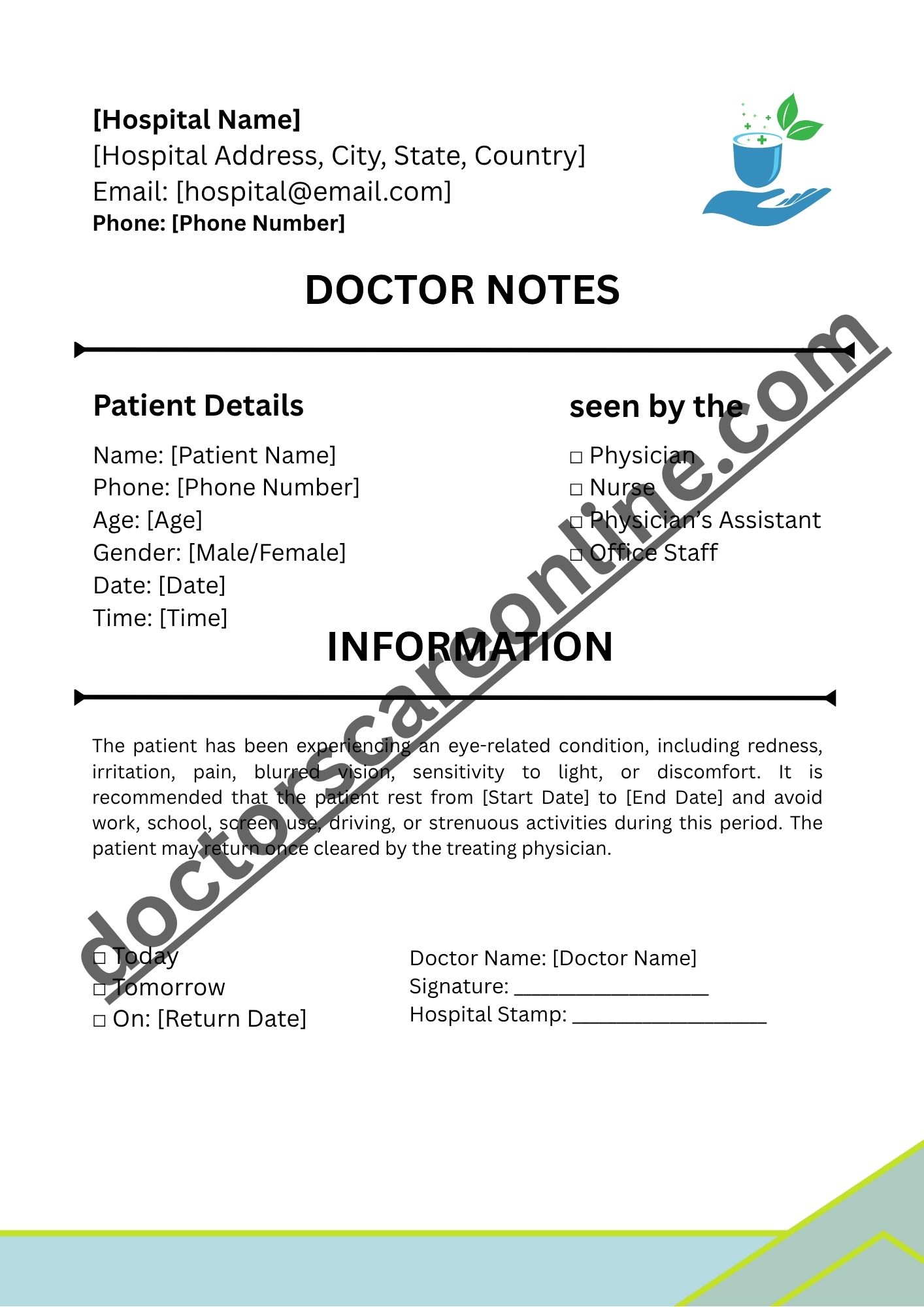
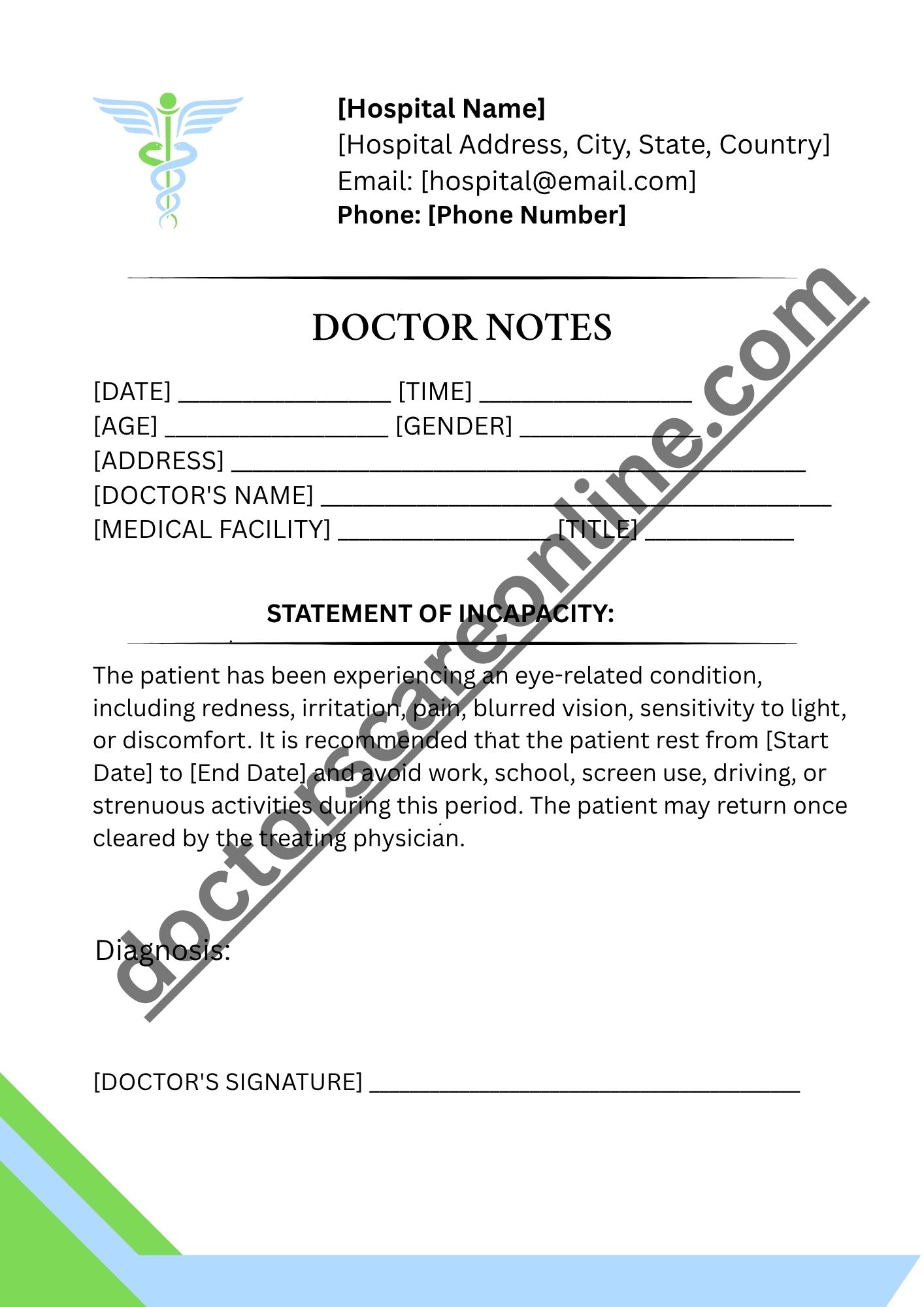
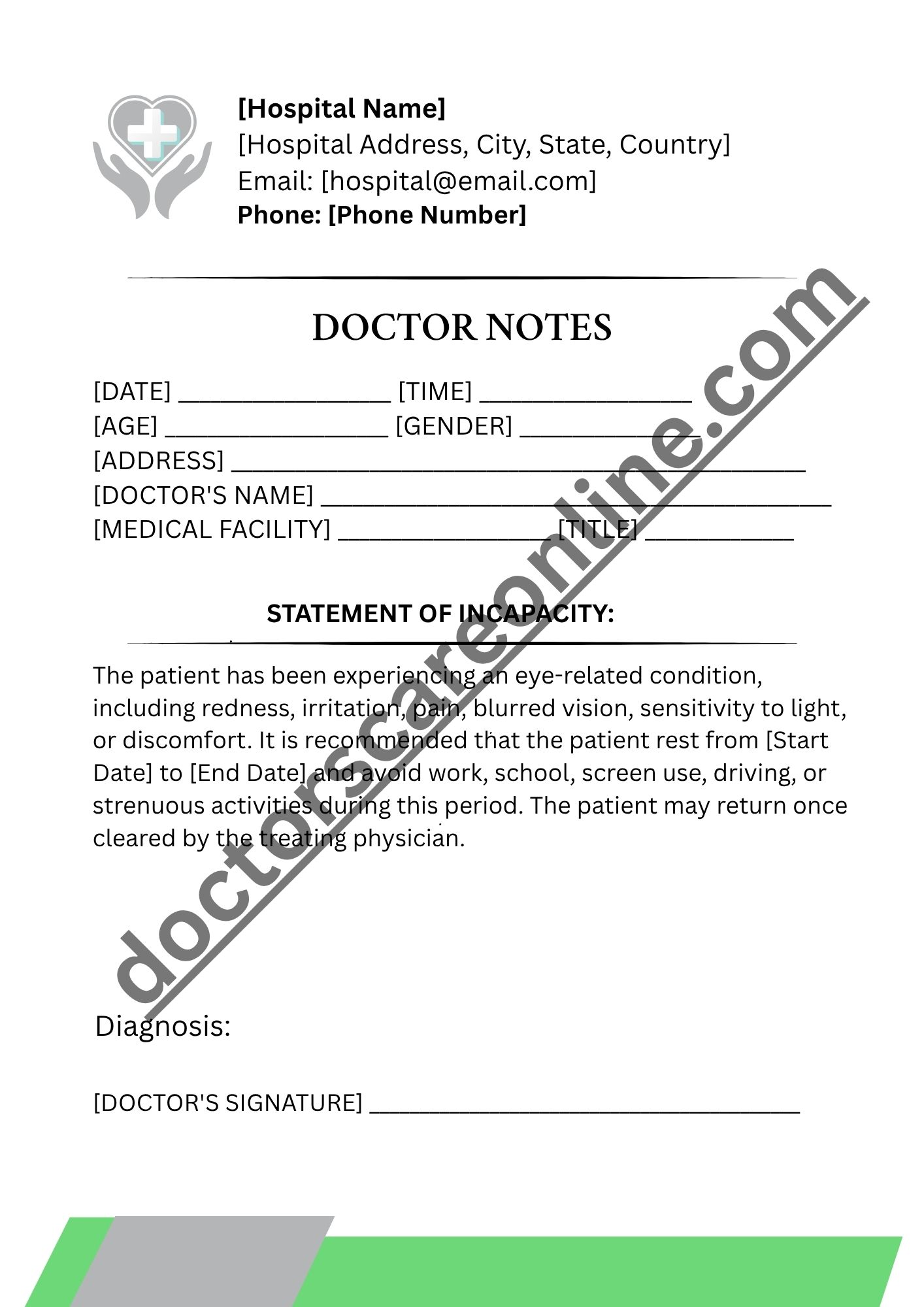
Although the format may vary between clinics, most eye doctor excuse notes contain similar information to verify your medical visit and recommended absence.
A typical note includes:
- Patient’s full name
- Date of examination
- Clinic or hospital name
- Name and credentials of the eye doctor
- Confirmation that the patient attended the appointment
- General medical recommendation (without revealing private health information unless authorized)
- Dates the patient should be excused from work or school
- Any temporary work or activity restrictions
- Follow-up appointment recommendations, if needed
- Doctor’s signature
- Clinic contact information
Some employers or schools may ask for additional documentation if an extended leave is recommended.
Eye Conditions Recovery Time
The amount of time you may need away from work or school depends on the type of eye condition, its severity, and your doctor’s treatment plan. Some minor issues improve within a day or two, while surgery or serious eye injuries may require a longer recovery period.
| Eye Condition | Typical Recovery Time | Time Off May Be Needed |
|---|---|---|
| Pink Eye (Conjunctivitis) | 3–7 days | 1–5 days |
| Corneal Abrasion | 1–5 days | 1–3 days |
| Dry Eye Syndrome | Ongoing management | Usually not required unless symptoms are severe |
| Eye Allergies | 1–7 days | Rarely, unless symptoms interfere with vision |
| Stye | 5–10 days | 1–2 days if swelling is significant |
| Uveitis | Several weeks | As advised by the eye specialist |
| Glaucoma Flare-Up | Varies by treatment | 1–7 days or longer |
| Cataract Surgery | 1–4 weeks | 2–7 days for most office jobs |
| LASIK Surgery | A few days to 1 week | 1–3 days |
| Retinal Surgery | Several weeks | Based on the surgeon’s recommendation |
Note: Recovery times vary from person to person. Always follow your eye doctor’s advice instead of relying on general timelines.
How to Book an Online Eye Doctor Appointment for an Excuse Note
If you need an Eye Doctor Excuse Note for work, school, or college, many healthcare providers offer online appointment scheduling. While not every eye condition can be diagnosed virtually, an online consultation may be suitable for mild symptoms or follow-up care. If the doctor determines that medical leave is necessary, they may provide an official excuse note.
Step 1: Choose a Licensed Eye Care Provider
Look for a licensed ophthalmologist, optometrist, eye clinic, or telehealth service that offers online consultations. Make sure the provider is authorized to issue medical documentation if required.
Step 2: Book Your Appointment
Visit the clinic’s website or patient portal, choose an available date and time, and complete the appointment booking by entering your personal details and the reason for your visit.
Step 3: Describe Your Eye Symptoms
Before the consultation, provide accurate information about your symptoms, such as:
- Red or irritated eyes
- Eye pain
- Blurred or double vision
- Swelling
- Light sensitivity
- Recent eye injury
- Recovery after eye surgery
Some clinics may also ask you to upload photos of your eyes.
Step 4: Attend the Online Consultation
Join the video or phone appointment at the scheduled time. The eye doctor will discuss your symptoms, review your medical history, and decide whether your condition can be managed remotely or if you need an in-person examination.
Step 5: Request an Eye Doctor Excuse Note
If your condition prevents you from attending work, school, or college, ask the doctor whether they can issue an official excuse note. If medically appropriate, the note may include:
- Confirmation of your medical evaluation
- Recommended leave dates
- Return-to-work or return-to-school guidance
- Temporary activity restrictions (if applicable)
Step 6: Receive Your Excuse Note
If approved, the doctor will usually send the excuse note electronically through:
- A secure patient portal
- A downloadable PDF document
You can print the note or submit the digital copy to your employer, school, or college according to their requirements.
Step 7: Follow Your Treatment Plan
Take any prescribed medications, follow the doctor’s recovery instructions, and attend any recommended follow-up appointments. If your symptoms continue or worsen, you may need another evaluation and an updated excuse note.
How Long Is an Eye Doctor Excuse Note Valid?
The validity of an Eye Doctor Excuse Note depends on your diagnosis, the doctor’s recommendation, and the attendance policies of your employer, school, or college. No fixed validity period applies to every situation. The note is generally valid only for the dates or recovery period specified by the eye doctor.
| Situation | Typical Validity | Additional Information |
|---|---|---|
| Office or Workplace | 1–7 days | Most employers accept the leave period recommended by the eye doctor. Longer leave may require a follow-up note. |
| School Students | 1–5 days | Schools usually accept the note for the dates mentioned by the doctor. Extended absences may require additional documentation. |
| College or University | 1–7 days | Colleges generally honor the doctor’s recommended recovery period and may allow makeup classes or exams. |
| After Routine Eye Examination | Same day | If only a routine exam was performed, the note usually covers the appointment day unless the doctor advises additional rest. |
| Pink Eye (Conjunctivitis) | 3–7 days | Students or employees may be advised to stay home until the infection is no longer contagious. |
| Corneal Abrasion (Eye Scratch) | 1–5 days | Recovery depends on the severity of the injury and the doctor’s evaluation. |
| LASIK Surgery | 1–3 days | Many people return to desk jobs within a few days, but recovery varies. |
| Cataract Surgery | 2–7 days | Some patients may need additional recovery time depending on the type of work they perform. |
| Retinal Surgery or Serious Eye Conditions | Several weeks | A follow-up examination is often required before returning to normal activities. |
Can an Eye Doctor Recommend Work Restrictions?
Yes. An eye doctor can recommend temporary work restrictions if your vision or eye condition affects your ability to perform your job safely. These recommendations are meant to support healing and reduce the risk of complications.
Depending on your condition, the doctor may advise:
- Limit computer or laptop use
- Avoid prolonged screen exposure
- Take frequent visual breaks
- Wear protective eyewear at work
- Avoid driving until vision improves
- Stay away from dusty or smoky environments
- Avoid heavy lifting after eye surgery
- Do not wear contact lenses for a specified period
- Reduce exposure to bright lights
- Work from home if screen time and lighting can be better managed
Employers often accommodate these temporary restrictions when supported by a medical note.
Eye Doctor Excuse Note for Office Employees
Office employees spend a significant portion of their day using computers, tablets, and other digital devices. Eye conditions that cause blurred vision, discomfort, or light sensitivity can make desk work difficult and reduce productivity.
An eye doctor may recommend a short leave or temporary work adjustments if you experience:
- Severe digital eye strain
- Blurred vision while using a computer
- Eye infections
- Recovery after LASIK or cataract surgery
- Eye injuries
- Migraine-related vision disturbances
The note may also include recommendations such as reduced screen time, flexible work hours, additional rest breaks, or temporary remote work until symptoms improve.
Need an Eye Doctor Excuse Note?
If your eye condition is affecting your ability to work, attend school, or complete daily activities, you can schedule an online consultation with a licensed eye care provider. When medically appropriate, the provider may issue an official Eye Doctor Excuse Note following your evaluation.
Our platform offers:
- Licensed healthcare providers
- Convenient online appointments
- Secure telehealth consultations
- Digital PDF medical documentation
- Same-day appointments (subject to availability)
- HIPAA-compliant patient privacy
- Follow-up care recommendations when needed
Please note: An Eye Doctor Excuse Note is issued only after a clinical evaluation and when medically appropriate. The decision to provide medical documentation is based solely on the healthcare provider’s professional judgment.
Eye Doctor Excuse Note for School and College Students
Students may need an excuse note when an eye condition prevents them from attending classes, completing assignments, or participating in examinations. Vision problems can make reading, writing, and using digital learning platforms challenging.
An eye doctor’s note may help explain absences due to:
- Eye infections
- Vision-related headaches
- Eye injuries
- Post-surgical recovery
- Routine eye procedures requiring rest
- Temporary vision impairment
Schools and colleges may also allow students to reschedule exams, submit assignments later, or receive attendance consideration based on the doctor’s recommendation.
Eye Doctor Excuse Note After Vision-Related Procedures
Many eye procedures require patients to rest for a short period before returning to their normal routine. During recovery, your vision may remain blurry, your eyes may be sensitive to light, or you may need to avoid strenuous activities.
Common procedures that may require an excuse note include:
- LASIK Surgery: Patients are often advised to rest their eyes, avoid rubbing them, and limit screen use for the first few days.
- Cataract Surgery: Recovery usually includes avoiding heavy lifting, bending, swimming, and dusty environments while the eye heals.
- Retinal Surgery: This procedure may require a longer recovery period and special positioning instructions, depending on the type of surgery performed.
- Intravitreal Eye Injections: Some patients experience temporary discomfort, redness, or blurred vision after injections and may benefit from taking the rest of the day off.
- Minor Eye Procedures: Procedures such as eyelid cyst removal or foreign object removal may require short-term rest before returning to work or school.
How Long Is an Eye Doctor Excuse Note Usually Valid?
The validity of an eye doctor’s excuse note depends on the diagnosis, treatment received, workplace policies, and educational institution requirements.
| Situation | Typical Validity |
|---|---|
| Routine Eye Examination | Same day only |
| Minor Eye Infection | 1–3 days |
| Pink Eye (Conjunctivitis) | 3–5 days or until no longer contagious |
| Corneal Abrasion | 1–5 days |
| Eye Injury | As recommended by the doctor |
| LASIK Recovery | 1–3 days |
| Cataract Surgery Recovery | 2–7 days for office work |
| Retinal Surgery Recovery | Several weeks if medically required |
| School or College Absence | Based on the doctor’s recommendation |
| Extended Medical Leave | Requires follow-up evaluation and updated documentation |
If additional recovery time is necessary, your eye doctor may provide an updated excuse note after a follow-up examination.
Can You Get an Eye Doctor Excuse Note Online?
Yes, in many cases you can obtain an eye doctor excuse note through a telehealth consultation, especially for follow-up care, mild eye infections, allergies, or non-emergency concerns. However, serious eye injuries or sudden vision loss usually require an in-person examination.
Step 1: Schedule a Virtual Eye Consultation
Choose a licensed eye care provider or a telehealth service that offers online eye consultations. Select a convenient appointment time and complete the registration process.
Step 2: Share Your Symptoms
Explain your symptoms in detail, including when they started, whether one or both eyes are affected, and any changes in your vision. You may also be asked to upload clear photos of your eyes.
Step 3: Attend the Online Consultation
During the video appointment, the doctor will review your symptoms, discuss your medical history, and determine whether your condition can be safely evaluated online or requires an in-person visit.
Step 4: Receive Medical Advice
If appropriate, the doctor may recommend medications, eye care instructions, follow-up appointments, or lifestyle adjustments to support your recovery.
Step 5: Request an Excuse Note
If your condition justifies time away from work or school, ask the doctor whether they can provide an official medical excuse note. Many clinics can issue a digital copy after the consultation.
Step 6: Download or Print Your Note
The excuse note is often sent through a secure patient portal or by email. You can download, print, or forward it to your employer, school, or college as required.
Step 7: Follow the Recommended Care Plan
Use medications exactly as prescribed, attend follow-up appointments if needed, and return to work or school only when your eye doctor confirms it is safe to do so.
Eye Treatment Options
The treatment recommended by your eye doctor depends on the cause and severity of your condition.
- Prescription Eye Drops: Eye drops are commonly used to treat bacterial infections, allergies, inflammation, dry eyes, and elevated eye pressure. It is important to use them exactly as directed.
- Oral Medications: Certain eye conditions may require oral antibiotics, antiviral medications, pain relievers, or anti-inflammatory drugs to control symptoms and promote healing.
- Artificial Tears: Lubricating eye drops can relieve discomfort caused by dry eyes, prolonged screen use, environmental irritation, or contact lens wear.
- Protective Eyewear: Safety glasses, protective goggles, or UV-blocking sunglasses may be recommended to prevent further injury and protect sensitive eyes during recovery.
- Contact Lens Adjustments: Your doctor may advise temporarily stopping contact lens use until your eyes have healed or switching to a different type of lens that is more comfortable.
- Surgical Treatment: Conditions such as cataracts, retinal disorders, glaucoma, or severe eye injuries may require surgical procedures to restore or protect vision.
- Follow-Up Care: Some eye conditions require regular monitoring to ensure proper healing. Attending follow-up appointments is an important part of the recovery process.
Tips for Faster Eye Recovery
Following your doctor’s instructions can help your eyes heal more comfortably and reduce the risk of complications.
Here are some practical recovery tips:
- Use all prescribed medications on schedule.
- Wash your hands before touching your eyes.
- Avoid rubbing or scratching your eyes.
- Get enough sleep to support healing.
- Wear sunglasses outdoors to reduce light sensitivity.
- Limit screen time during the first few days of recovery.
- Follow the recommended schedule for follow-up appointments.
- Stay hydrated throughout the day.
- Eat foods rich in vitamins A, C, and omega-3 fatty acids.
- Wear protective eyewear if advised by your doctor.
Activities to Avoid While Your Eyes Heal
Certain activities can delay healing or increase the risk of complications. Your doctor may recommend avoiding the following until your eyes have fully recovered:
- Driving if your vision is blurry
- Using computers or mobile devices for long periods
- Swimming or using hot tubs
- Wearing contact lenses before approval
- Applying eye makeup
- Rubbing your eyes
- Heavy lifting or strenuous exercise after surgery
- Working in dusty, smoky, or chemical-filled environments
- Exposure to bright sunlight without protective sunglasses
When Should You Seek Immediate Eye Care?
Although many eye conditions improve with treatment, some symptoms require urgent medical attention.
Seek emergency eye care if you experience:
- Sudden loss of vision
- Severe eye pain
- A chemical splash in the eye
- A foreign object that cannot be removed safely
- Sudden flashes of light
- A large number of new floaters
- A dark curtain or shadow across your vision
- Heavy bleeding from the eye
- Serious eye trauma
- Rapid swelling around the eye
- Persistent double vision
- Severe redness accompanied by vision loss
Prompt treatment can help prevent permanent vision damage.
Does Insurance Cover Eye Visits and Medical Excuse Notes?
Insurance coverage varies depending on your health plan and the reason for your visit.
In many cases:
- Routine eye exams may be covered under vision insurance.
- Medical eye conditions are often covered by health insurance.
- Emergency eye treatment may qualify for medical benefits.
- Surgical procedures may require prior authorization.
- Follow-up appointments may have separate coverage rules.
- Some clinics charge a small administrative fee for completing work or school forms.
Check with your insurance provider before your appointment to understand your benefits and any out-of-pocket costs.
Eye Doctor Excuse Note vs. Vision Prescription
Although both documents are provided during an eye care visit, they serve different purposes.
| Eye Doctor Excuse Note | Vision Prescription |
|---|---|
| Confirms your medical visit | Specifies your lens prescription |
| Supports absence from work or school | Used to purchase glasses or contact lenses |
| May include activity restrictions | Does not excuse absences |
| Includes recommended recovery period | Focuses only on vision correction |
| Intended for employers or educational institutions | Intended for optical retailers and eye care providers |
Understanding the difference helps ensure you request the correct document for your specific needs.
FAQs
1. Can an eye doctor give you a medical excuse note?
Yes. An ophthalmologist or optometrist may issue an excuse note if your eye condition, injury, or treatment requires time away from work, school, or other responsibilities.
2. How many days off work can an eye doctor recommend?
The recommended time off depends on your diagnosis. Minor conditions may require one or two days, while surgery or serious eye injuries may require a longer recovery period.
3. Is an eye doctor excuse note accepted by employers?
Most employers accept a legitimate excuse note issued by a licensed eye care professional, although individual workplace policies may vary.
4. Can I attend school with pink eye?
If your pink eye is contagious, your doctor may recommend staying home until the risk of spreading the infection has passed.
5. Can an optometrist write an excuse note?
Yes. Many optometrists can provide medical excuse notes after evaluating your condition, depending on local regulations and the nature of your visit.
Related Post-


Reviews
There are no reviews yet.