
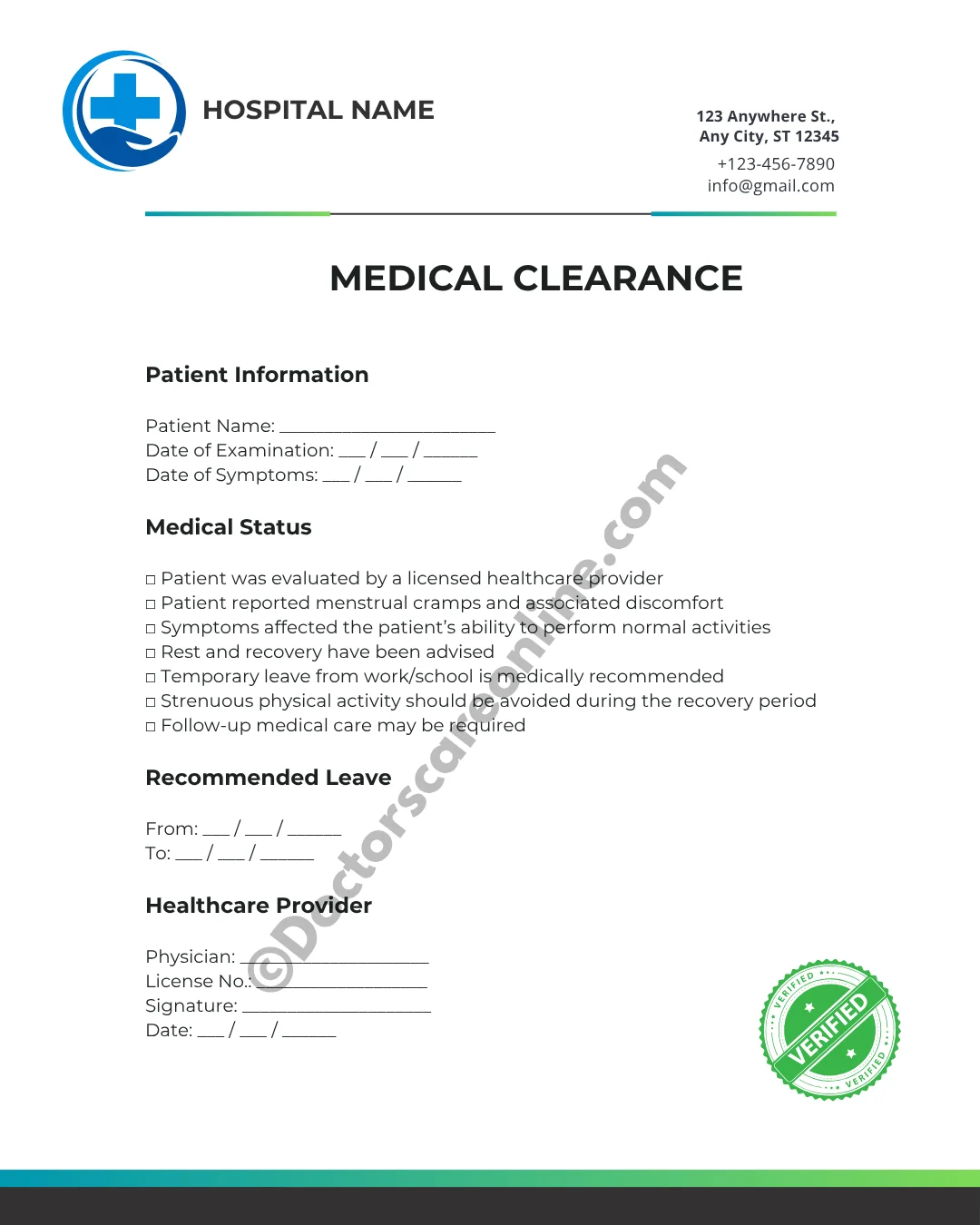
A doctor’s note for menstrual cramps is a medical certificate issued by a licensed healthcare provider after evaluating symptoms related to painful menstruation. The purpose of the note is to verify that the patient experienced symptoms significant enough to require medical attention or temporary time away from work, school, college, or other responsibilities.
Unlike a self-written excuse, this document confirms that a medical professional assessed your condition and determined whether rest, treatment, or temporary activity restrictions were appropriate. Depending on the severity of your symptoms, the note may recommend a short recovery period before returning to normal activities.
Doctors generally issue these notes when menstrual pain significantly affects daily functioning rather than for routine discomfort that can be managed without medical care.
A doctor’s note may be used for:
- Verifying absence from work
- Supporting sick leave requests
- Excusing missed school or college classes
- Providing documentation for missed examinations
- Requesting temporary workplace accommodations
- Confirming a medical consultation for attendance records
The document usually does not need to describe the exact diagnosis unless the patient chooses to disclose additional medical details or specific documentation is legally required.
Why Someone May Need a Doctor’s Note for Period Cramps
A doctor’s note for period cramps may be needed when menstrual pain is severe enough to affect a person’s ability to work, attend school, or carry out daily activities. It provides official medical documentation confirming that a licensed healthcare provider evaluated the condition and recommended time off or temporary accommodations.
Here are the most common reasons someone may need a doctor’s note for period cramps:
- To take sick leave from work due to severe menstrual pain.
- To receive an excused absence from school, college, or university.
- To support missed exams or assignment deadlines caused by painful periods.
- To verify symptoms such as heavy bleeding, nausea, vomiting, dizziness, or extreme fatigue.
- To request workplace accommodations, including remote work or modified duties.
- To comply with employer or school attendance policies that require medical documentation.
- To document treatment for conditions like endometriosis, adenomyosis, uterine fibroids, or severe dysmenorrhea.
- To support medical leave, insurance, or travel-related claims, when applicable.
- To establish an official medical record for recurring or chronic menstrual health issues.
A doctor’s note helps ensure that absences related to severe period cramps are properly documented while supporting workplace, educational, or administrative requirements.
Common reasons for requesting a doctor’s note include
Missing Work Due to Severe Pain
Employees whose jobs require standing, lifting, operating machinery, customer interaction, or long hours of concentration may be unable to work comfortably during episodes of severe menstrual pain. A doctor’s note provides official documentation supporting the absence.
School or College Attendance Requirements
Many schools, colleges, and universities require medical documentation after multiple absences or when important classes, practical sessions, or examinations are missed because of illness.
Exam Rescheduling
If intense menstrual cramps prevent a student from attending a scheduled examination, a healthcare provider’s note may support requests for alternative testing arrangements where institutional policies allow.
Temporary Work Adjustments
Instead of recommending complete leave, a healthcare provider may advise temporary adjustments such as:
- Working from home
- Reduced physical activity
- Flexible scheduling
- Additional rest breaks
- Limited lifting or prolonged standing
Recurrent Pain Affecting Performance
People who experience severe menstrual pain every month may seek medical evaluation not only to obtain documentation but also to identify possible underlying medical conditions that require treatment.
When to Seek Urgent Medical Care for Menstrual Pain
Most menstrual cramps can be managed with appropriate medical care and self-care. However, some symptoms require prompt medical evaluation rather than simply requesting documentation for work or school.
Seek urgent medical attention if you experience:
- Sudden or extremely severe pelvic or abdominal pain
- Fainting or repeated near-fainting
- Very heavy menstrual bleeding accompanied by weakness or dizziness
- High fever with pelvic pain
- Persistent vomiting or inability to keep fluids down
- Severe pain that is significantly different from your usual menstrual cramps
- Severe pain with unusual vaginal discharge
- Possible pregnancy accompanied by significant pelvic pain or bleeding
- Rapidly worsening symptoms
If symptoms are severe or potentially life-threatening, emergency medical care should take priority over obtaining a doctor’s note.
Common Symptoms a Healthcare Provider May Evaluate
When assessing menstrual cramps, a healthcare provider considers more than the level of pain. They evaluate the overall pattern of symptoms, how they affect daily life, and whether they may be related to another medical condition.
Understanding the full symptom picture helps determine appropriate treatment and whether temporary leave is medically necessary.
Lower Abdominal Cramping
Cramping pain in the lower abdomen is the hallmark symptom of menstrual cramps. The discomfort may range from mild aching to severe spasms that interfere with normal activities.
Pelvic Pressure
Some patients describe a sensation of pressure, heaviness, or deep pelvic discomfort rather than sharp pain.
Lower Back Pain
Pain may spread from the pelvis into the lower back, making prolonged sitting, bending, or lifting uncomfortable.
Pain Radiating Into the Legs
Menstrual pain sometimes extends into the thighs or upper legs due to shared nerve pathways.
Fatigue
The body may feel unusually tired during painful menstrual periods, especially when sleep is disrupted by cramping.
Headache
Hormonal fluctuations during menstruation may trigger headaches or worsen existing migraines in some individuals.
Digestive Symptoms
Some people experience gastrointestinal symptoms such as:
- Nausea
- Vomiting
- Diarrhea
- Constipation
- Loss of appetite
These symptoms can contribute to dehydration and increase overall discomfort.
Bloating
Abdominal bloating commonly occurs before or during menstruation and may add to feelings of pressure or discomfort.
Difficulty Concentrating
Persistent pain may reduce focus, productivity, memory, and the ability to participate effectively in work or academic activities.
During the evaluation, the healthcare provider may also ask:
- When did the pain begin?
- How severe is the pain on a scale of 1 to 10?
- Does the pain occur every menstrual cycle?
- What medications have already been tried?
- Is the bleeding heavier than usual?
- Are there any associated symptoms such as fever or fainting?
Medical Conditions That Can Cause Severe Menstrual Pain
While many people experience primary dysmenorrhea, severe or worsening menstrual pain may sometimes result from an underlying medical condition. Identifying the cause is important because treatment depends on the specific diagnosis.
Primary Dysmenorrhea
Primary dysmenorrhea refers to menstrual cramps that occur without another pelvic disease. They are usually caused by natural hormone-like substances called prostaglandins, which trigger uterine muscle contractions during menstruation.
Symptoms often begin in adolescence and may improve with age.
Secondary Dysmenorrhea
Secondary dysmenorrhea develops because of another medical condition affecting the reproductive organs. Pain often becomes more severe over time and may occur outside the menstrual period.
Endometriosis
Endometriosis occurs when tissue similar to the uterine lining grows outside the uterus. It may cause:
- Severe menstrual cramps
- Chronic pelvic pain
- Pain during intercourse
- Painful bowel movements
- Difficulty becoming pregnant
Adenomyosis
In adenomyosis, tissue from the uterine lining grows into the muscular wall of the uterus, often leading to:
- Heavy menstrual bleeding
- Painful periods
- Enlarged uterus
- Pelvic pressure
Uterine Fibroids
Fibroids are non-cancerous growths within or around the uterus that may contribute to:
- Heavy bleeding
- Pelvic discomfort
- Frequent urination
- Painful menstrual cycles
Ovarian Cysts
Some ovarian cysts remain symptom-free, while others may cause pelvic pain that becomes more noticeable during menstruation.
Pelvic Inflammatory Disease (PID)
PID is an infection affecting the female reproductive organs and may cause:
- Lower abdominal pain
- Fever
- Abnormal vaginal discharge
- Pain during intercourse
- Painful periods
Prompt medical treatment is important to reduce the risk of complications.
How Doctors Diagnose Severe Menstrual Cramps
When menstrual pain significantly affects daily life or differs from previous cycles, healthcare providers perform a careful evaluation to determine whether the cramps are typical or related to another medical condition.
The diagnostic process usually begins with a detailed discussion before any tests are recommended.
Reviewing Your Medical History
The healthcare provider may ask about:
- Age when periods began
- Length of menstrual cycles
- Duration of pain
- Pain severity
- Previous pregnancies
- Current medications
- Existing medical conditions
- Family history of gynecological disorders
Discussing Menstrual Patterns
Understanding your menstrual cycle helps identify whether symptoms suggest primary dysmenorrhea or another condition.
Questions may include:
- When does the pain start?
- Does it begin before bleeding?
- How many days does it last?
- Has the pain become worse over time?
- Are periods unusually heavy?
Physical Examination
A general physical examination helps assess your overall health and identify signs that may require additional investigation.
Pelvic Examination
Depending on your age, symptoms, medical history, and clinical judgment, the healthcare provider may recommend a pelvic examination to evaluate the uterus, ovaries, and surrounding structures.
Ultrasound Imaging
Pelvic ultrasound is commonly used to detect conditions such as:
- Fibroids
- Ovarian cysts
- Adenomyosis
- Other structural abnormalities
Laboratory Tests
Blood tests may be ordered if heavy bleeding raises concerns about anemia or if infection is suspected.
Pregnancy Testing
If pregnancy is possible, a pregnancy test may be recommended because pregnancy-related complications can also cause pelvic pain.
Developing a Treatment Plan
After reviewing all findings, the healthcare provider determines whether the symptoms are consistent with routine menstrual cramps or require additional testing, specialist referral, medication, or temporary medical leave. If the pain significantly limits your ability to work or attend school, a doctor’s note may be provided as part of your care plan.
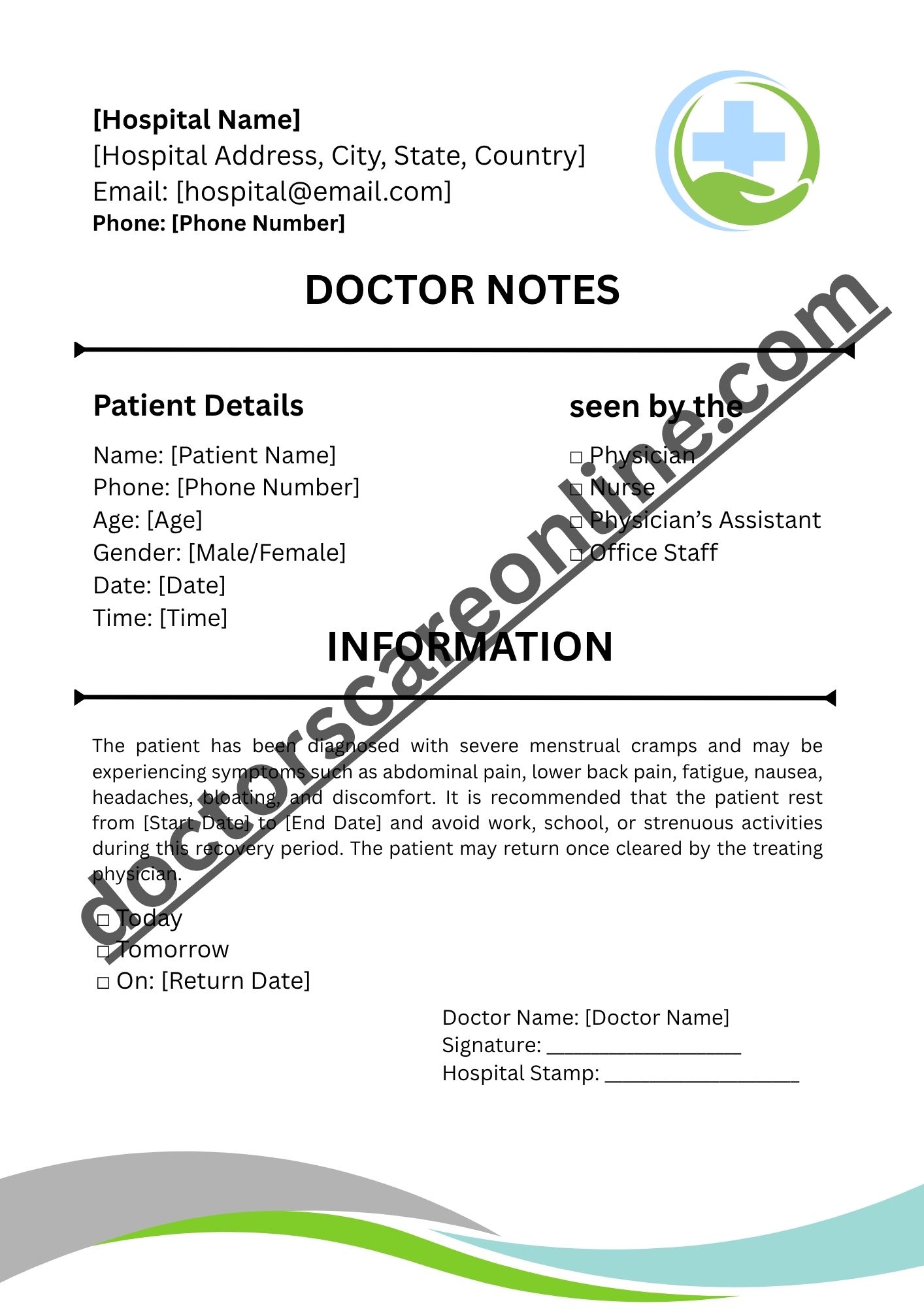
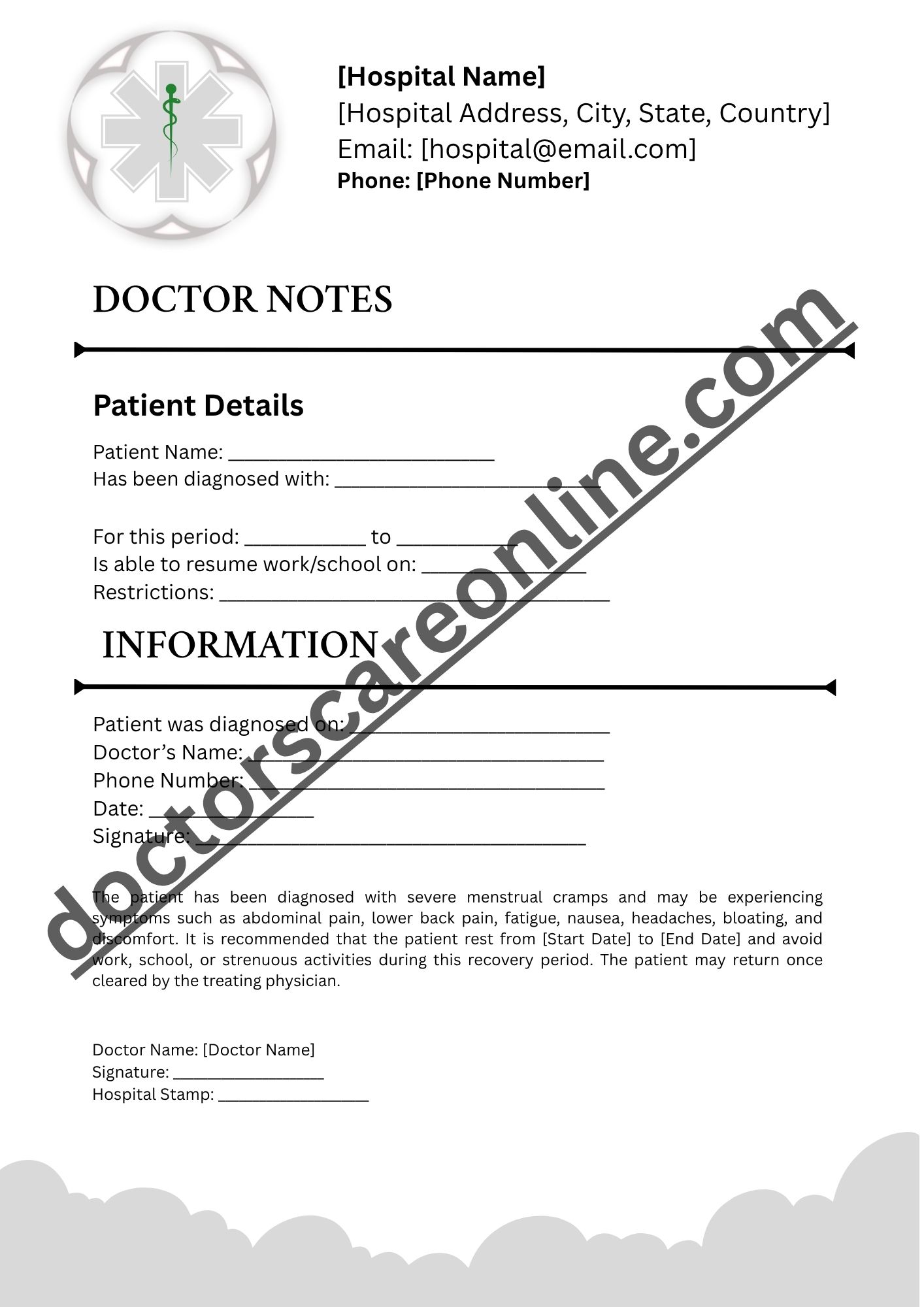
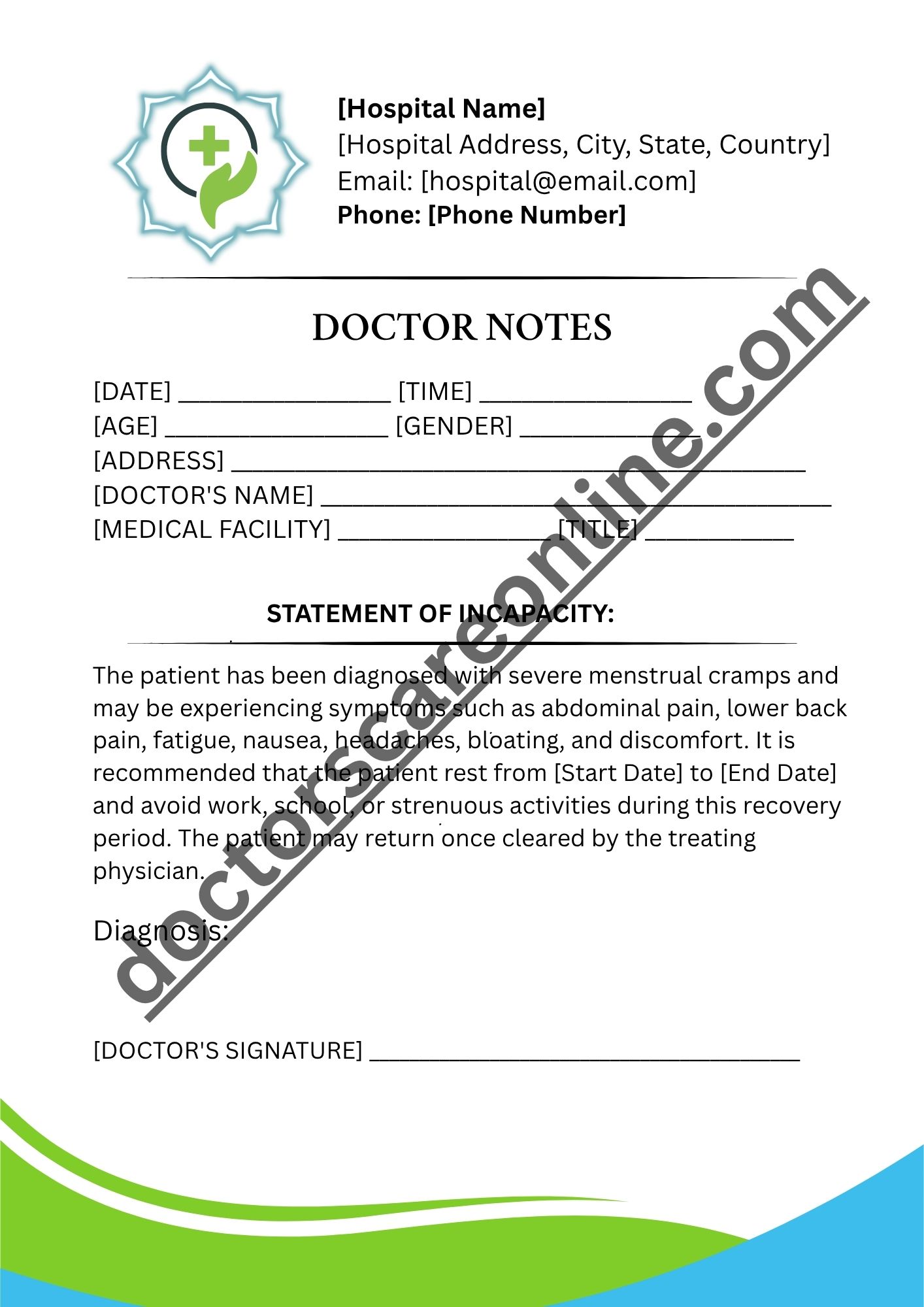
Information Usually Included in a Doctor’s Note
Although the exact format may vary between healthcare providers, a doctor’s note for menstrual cramps commonly includes the following information:
- Patient’s full name
- Date of the medical consultation or examination
- Confirmation that the patient was evaluated by a licensed healthcare provider
- Statement indicating the patient was medically unable to attend work, school, or college (if applicable)
- Recommended leave or recovery period
- Expected return-to-work or return-to-school date
- Any temporary work, school, or physical activity restrictions (if needed)
- Instructions for follow-up care or a re-evaluation (if required)
- Healthcare provider’s name and professional designation
- Clinic, hospital, or medical practice name
- Doctor’s signature (handwritten or electronic)
- Date the note was issued
- Clinic contact information for verification (when appropriate)
- Official clinic stamp or seal, if required by the healthcare facility
To protect patient privacy, most doctor’s notes do not include detailed medical information or specify that the absence was due to menstrual cramps unless it is necessary or the patient requests it.
Choosing the Right Type of Medical Care
| Care Option | When It May Be Appropriate | Medical Evaluation | Documentation |
|---|---|---|---|
| Primary care provider | Recurring or persistent menstrual pain | Yes | May be provided when medically appropriate |
| Gynecologist | Severe, recurring, or unexplained menstrual pain | Yes | May be provided when medically appropriate |
| Urgent care | Sudden or unusually severe symptoms | Yes | Depends on clinical assessment |
| Online healthcare consultation | Non-emergency symptoms suitable for virtual care | Yes | May be provided when medically appropriate |
| Emergency care | Severe symptoms or potentially serious complications | Yes | Determined by the treating facility |
Can You Get a Doctor’s Note on the First Day of Your Period?
Yes. If menstrual cramps become severe on the first day of your period, you can seek medical care immediately.
Healthcare providers understand that symptoms often begin suddenly and may rapidly interfere with work, school, or normal activities.
Same-Day Medical Evaluation
Many patients visit a healthcare provider as soon as symptoms become difficult to manage.
During the appointment, the provider may:
- Review your symptoms
- Ask about your menstrual history
- Examine if needed
- Recommend treatment
- Determine whether temporary leave is medically appropriate
Walk-In Clinics
Walk-in clinics may provide convenient care when symptoms develop unexpectedly and you cannot wait for a scheduled appointment.
These clinics can often evaluate common menstrual concerns and issue medical documentation when appropriate.
Urgent Care Centers
Urgent care facilities may be suitable if severe menstrual pain occurs outside normal office hours or requires prompt medical assessment.
They can also evaluate symptoms that might indicate a more serious condition requiring additional treatment.
Primary Care Providers
Patients with recurring painful periods often benefit from seeing their regular healthcare provider because they already understand the patient’s medical history.
This continuity can help guide long-term treatment if symptoms occur every month.
How to Book an Online Appointment for a Doctor’s Note (Work, School, or College)
An online medical consultation can be a convenient option when menstrual pain makes it difficult to travel to a clinic. During a telehealth appointment, a licensed healthcare provider can review your symptoms, medical history, and how the pain is affecting your daily activities.
Online Consultation Process
- Book a medical appointment: Select an available licensed healthcare provider and choose a suitable consultation time.
- Describe your symptoms: Explain when your menstrual pain started, how severe it is, and whether you have symptoms such as heavy bleeding, nausea, vomiting, dizziness, or fatigue.
- Complete the consultation: Answer the provider’s questions and provide relevant medical information or records when requested.
- Receive medical advice: The provider may recommend treatment, self-care, follow-up evaluation, or additional testing depending on your symptoms.
- Request documentation if appropriate: If the provider determines that medical leave or temporary restrictions are justified, they may provide a doctor’s note.
- Use the documentation: Submit the medical documentation according to your employer’s, school’s, or college’s requirements.
A medical note is only provided when medically appropriate after a healthcare evaluation. Online consultation does not guarantee that a doctor’s note will be issued or that a particular organization will accept it.
Before Your Virtual Consultation
- Keep a list of your current symptoms and when they started.
- Note the first day of your current menstrual period.
- Record your pain level (for example, on a scale of 1–10).
- Mention any medications or home remedies you’ve already tried.
- Have a valid photo ID ready if identity verification is required.
- Ensure you have a stable internet connection and a quiet place for the consultation.
Important: An online doctor can only provide a medical note if, after evaluating your condition, they determine that it is medically justified. If you have severe bleeding, fainting, high fever, or sudden intense pelvic pain, seek immediate in-person medical care instead of relying on a virtual consultation.
Doctor’s Note Validity for Work, School, and College
| Situation | Typical Validity Period | Additional Information |
|---|---|---|
| Mild menstrual cramps | Up to 1 day | Suitable when symptoms improve with rest and treatment. |
| Moderate menstrual cramps | 1–2 days | Recommended if pain temporarily affects work or school attendance. |
| Severe menstrual cramps | 2–3 days | May be advised when symptoms significantly limit daily activities. |
| Menstrual cramps caused by an underlying condition | As determined by the doctor | The leave period depends on the diagnosis, treatment plan, and recovery progress. |
| Return to work after recovery | On the date mentioned in the doctor’s note | Employees should return according to the healthcare provider’s recommendation. |
| Return to school or college | On the date specified in the medical note | Students should follow the return date approved by the healthcare provider. |
| If symptoms continue beyond the approved leave | A new or updated doctor’s note may be required | A follow-up medical evaluation may be necessary to extend the leave period. |
| Employer, school, or college requests updated documentation | Valid until the documented leave expires | Institutions may ask for an updated note if additional recovery time is needed. |
Note: The validity of a doctor’s note is based on the dates recommended by the healthcare provider. Employers, schools, and colleges may also have their own attendance or sick leave policies regarding when medical documentation is required.
Treatment Options That May Be Recommended
Treatment for menstrual cramps depends on symptom severity, medical history, and whether an underlying condition is present. Healthcare providers aim to reduce pain, improve daily functioning, and prevent recurring symptoms from interfering with work, education, or quality of life.
Nonsteroidal Anti-Inflammatory Drugs (NSAIDs)
NSAIDs are commonly recommended because they reduce the production of prostaglandins, the substances responsible for uterine contractions and menstrual pain.
They often work best when started early in the menstrual cycle, as advised by a healthcare provider.
Other Pain Relief Medications
If NSAIDs are not appropriate, alternative pain-relieving medications may be recommended based on the patient’s health history and individual needs.
Patients should always follow dosing instructions provided by their healthcare professional.
Heat Therapy
Applying gentle heat to the lower abdomen or lower back may help relax uterine muscles and reduce cramping.
Many patients find heating pads or warm compresses helpful when used alongside other treatments.
Hormonal Therapy
For individuals with recurring severe menstrual pain, hormonal treatments may be recommended to reduce ovulation and regulate menstrual cycles.
Treatment options vary depending on age, medical history, reproductive goals, and underlying conditions.
Lifestyle Modifications
Healthcare providers may also recommend supportive lifestyle changes such as:
- Regular physical activity between menstrual cycles
- Adequate hydration
- Nutritious meals
- Stress management
- Sufficient sleep
These measures may improve overall menstrual health over time.
Home Remedies That May Help Reduce Menstrual Pain
Many people can ease mild to moderate menstrual cramps with simple self-care measures at home. While these remedies may not eliminate the pain completely, they can help reduce discomfort and improve daily functioning.
- Apply a heating pad or hot water bottle to the lower abdomen to relax the uterine muscles.
- Drink plenty of water to stay hydrated and help reduce bloating.
- Engage in light physical activity, such as walking or gentle stretching, to improve blood circulation.
- Practice yoga or deep breathing exercises to relax muscles and relieve stress.
- Take a warm bath to soothe abdominal and lower back pain.
- Eat a balanced diet rich in fruits, vegetables, whole grains, and magnesium-rich foods.
- Limit caffeine, alcohol, and salty foods, which may worsen bloating and discomfort.
- Get enough sleep and rest to help your body recover during your menstrual cycle.
- Gently massage your lower abdomen using light circular motions to ease muscle tension.
- Drink herbal teas, such as ginger or chamomile tea, which may provide temporary relief for some individuals.
Note: If menstrual pain is severe, keeps getting worse, or does not improve with home remedies or over-the-counter pain medication, consult a healthcare provider. Persistent or intense cramps may be a sign of an underlying condition that requires medical evaluation.
Workplace Accommodations That May Be Suggested
Not everyone with menstrual cramps requires time off from work. In some cases, temporary workplace accommodations can help employees continue working safely and comfortably while recovering from painful symptoms.
The specific adjustments depend on the employee’s job duties, symptom severity, and workplace policies.
- Flexible work schedule to adjust start and finish times during severe menstrual cramps.
- Work-from-home (remote work) option when job duties can be performed remotely.
- Reduced physical duties, such as avoiding heavy lifting, prolonged standing, or strenuous tasks.
- Additional rest breaks to manage pain, stretch, or use heat therapy.
- Easy access to restroom facilities for managing heavy menstrual bleeding comfortably.
- Temporary seating arrangements or the option to alternate between sitting and standing.
- Modified workload or lighter duties until symptoms improve.
- Flexible attendance policies to accommodate medical appointments or recovery time.
- Permission to use pain management aids, such as a heating pad or hot water bottle, where workplace policies allow.
- Supportive return-to-work plan if symptoms require a short period of medical leave.
Note: Workplace accommodations vary by employer, job responsibilities, and company policies. A doctor’s note may be required to support requests for temporary adjustments.
School and College Attendance During Severe Period Pain
Severe menstrual cramps can make it difficult for students to attend classes, participate in laboratory sessions, complete practical training, or sit through lengthy examinations. When symptoms interfere with education, medical documentation may help explain the absence and support academic accommodations.
- Excused absences from classes with a valid doctor’s note for severe menstrual cramps.
- Extra time for missed assignments or coursework during the recovery period.
- Exam rescheduling or makeup tests if symptoms prevent attendance on the scheduled date.
- Temporary exemption from physical education, sports, or other strenuous activities until medically fit.
- The attendance policy is supported by submitting medical documentation within the institution’s required timeframe.
- Communication with teachers, professors, or academic advisors to arrange missed classes, coursework, or assessments.
- Extension for project or assignment deadlines, where permitted by school or college policies.
- Access to student support services for additional academic assistance during recovery.
Note: Academic accommodations vary by school, college, or university. Students should review their institution’s attendance and medical leave policies and submit documentation promptly.
Can Menstrual Cramps Qualify for Sick Leave?
Yes. If menstrual cramps are severe enough to prevent someone from performing their job safely or effectively, they may qualify for sick leave depending on their employer’s policies and applicable employment laws.
A doctor’s note may be requested to verify the medical reason for the absence.
Sick Leave Eligibility Depends on Several Factors
Whether sick leave is approved often depends on:
- The severity of symptoms
- The employee’s job responsibilities
- Company attendance policies
- Available paid or unpaid sick leave
- Medical documentation requirements
Paid Sick Leave
Employees with available paid sick leave may be able to use those benefits if their employer recognizes menstrual cramps as a medically supported absence.
Unpaid Medical Leave
If paid leave is unavailable, some employees may qualify for unpaid medical leave depending on workplace policies or local labor regulations.
Short-Term Workplace Accommodations
In situations where complete leave is unnecessary, employers may approve temporary adjustments such as:
- Remote work
- Flexible scheduling
- Modified duties
- Reduced physical activity
Medical Documentation
Employers may request a doctor’s note if:
- The absence extends beyond the company’s documentation threshold.
- Multiple consecutive workdays are missed.
- Workplace policy requires verification for medical leave.
- Temporary work restrictions are recommended.
Always Review Your Employer’s Policy
Attendance and sick leave requirements vary between organizations. Employees should review their company’s handbook or speak with the human resources department to understand documentation requirements before submitting a doctor’s note.
Situations Where a Doctor May Not Issue a Medical Note
A healthcare provider will only issue a doctor’s note when it is medically appropriate. Simply requesting documentation does not guarantee that a medical certificate will be provided.
Each decision is based on the patient’s symptoms, examination findings, and professional medical judgment.
- Mild Symptoms: If menstrual cramps are mild and do not significantly interfere with normal activities, a doctor may recommend self-care instead of medical leave.
- No Functional Limitations: If the patient is able to safely attend work, school, or college despite experiencing some discomfort, formal medical documentation may not be necessary.
- No Medical Evaluation: A doctor’s note generally requires an actual medical assessment. Healthcare providers cannot accurately certify a condition without evaluating the patient’s symptoms.
- Non-Medical Reasons for Absence: Medical notes are intended to document genuine health-related conditions and are not issued solely to excuse personal, social, or non-medical absences.
- Incomplete Medical Information: If a healthcare provider cannot determine the severity or cause of symptoms due to insufficient information, additional evaluation may be recommended before any documentation is issued.
- Symptoms Do Not Support Medical Leave: After examining the patient, the doctor may conclude that the condition does not require absence from work or school. In such cases, treatment recommendations may still be provided without issuing a medical leave certificate.
FAQs
1. Can I get a doctor’s note for menstrual cramps?
Yes. If your menstrual cramps are severe enough to interfere with work, school, or daily activities, a licensed healthcare provider may evaluate your symptoms and issue a doctor’s note recommending time off or temporary accommodations.
2. How do I professionally say I have period cramps?
You can simply say, “I’m experiencing a medical condition that is affecting my ability to work today,” or “I’m experiencing severe menstrual pain and have been advised to rest.” If required, you can provide a doctor’s note without sharing unnecessary medical details.
3. Is period pain an excuse to miss work?
Yes, severe period pain can be a valid reason to miss work if it significantly affects your ability to perform your job. Some employers may request a doctor’s note, depending on their sick leave policy.
4. How many days off can a doctor give for menstrual cramps?
The length of leave depends on the severity of your symptoms and your healthcare provider’s assessment. Many people are advised to rest for one to three days, although longer leave may be recommended if an underlying medical condition is diagnosed.
5. Can I get a doctor’s note for menstrual cramps online?
Yes. Many telehealth and online healthcare providers can assess your symptoms through a virtual consultation and, if medically appropriate, issue a digital doctor’s note that may be accepted by employers, schools, or colleges.
Related Post-


Reviews
There are no reviews yet.