
An upset stomach can cause nausea, vomiting, abdominal discomfort, bloating, indigestion, diarrhea, or other digestive symptoms that make it difficult to work, attend school, travel, exercise, or complete normal daily activities. If your symptoms interfere with your responsibilities, a licensed healthcare provider can evaluate your condition and determine whether temporary rest or medical leave is appropriate.
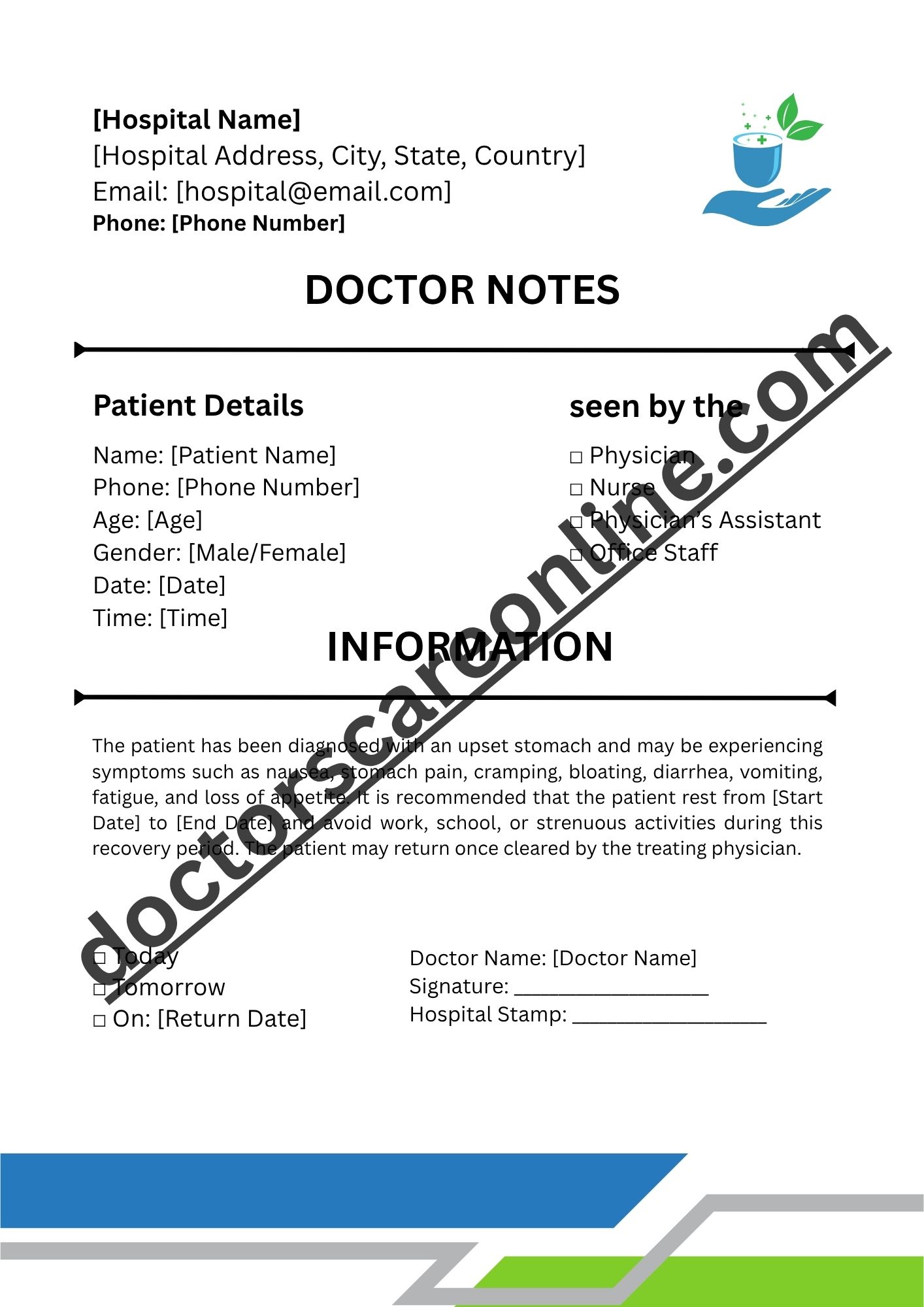
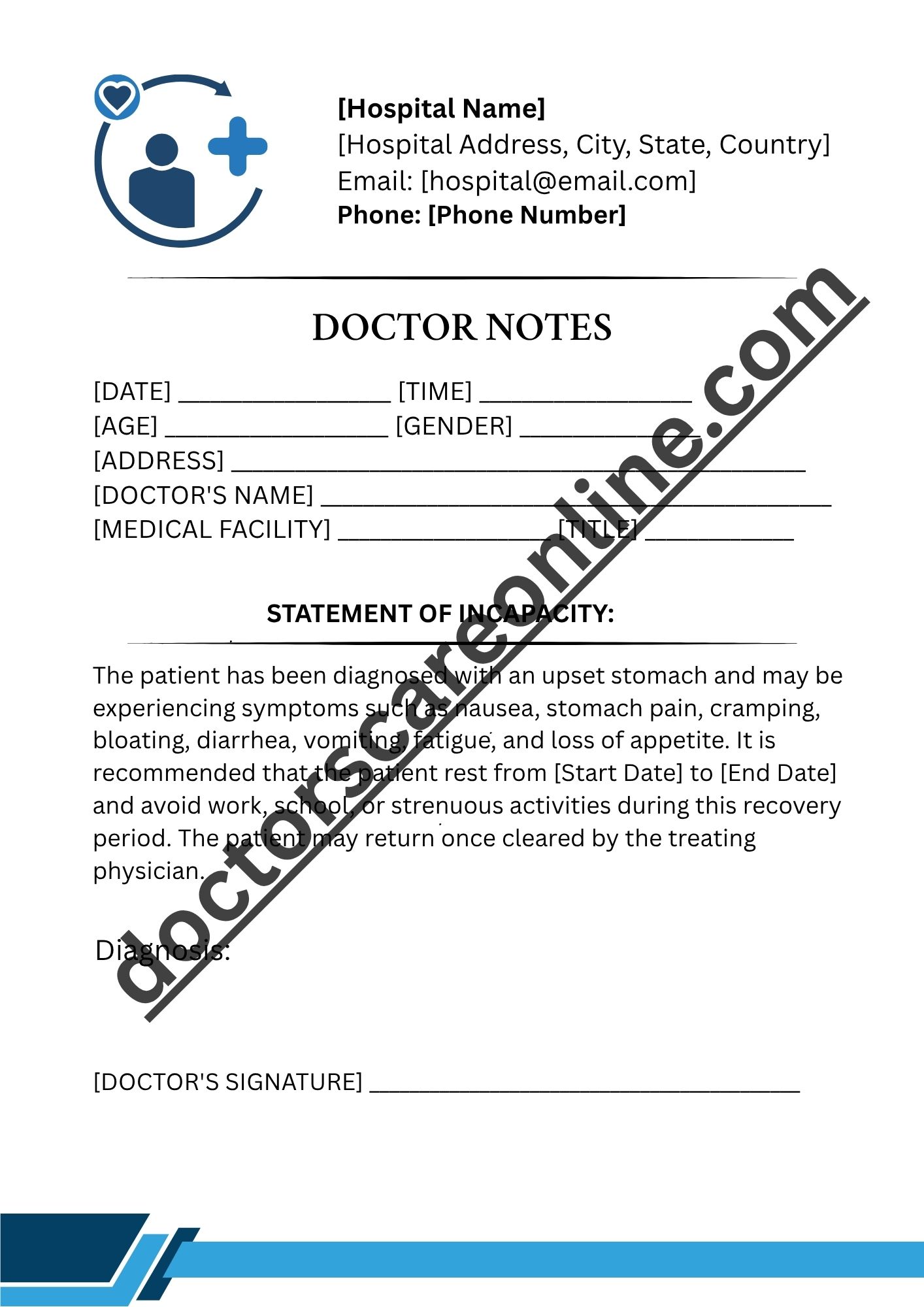
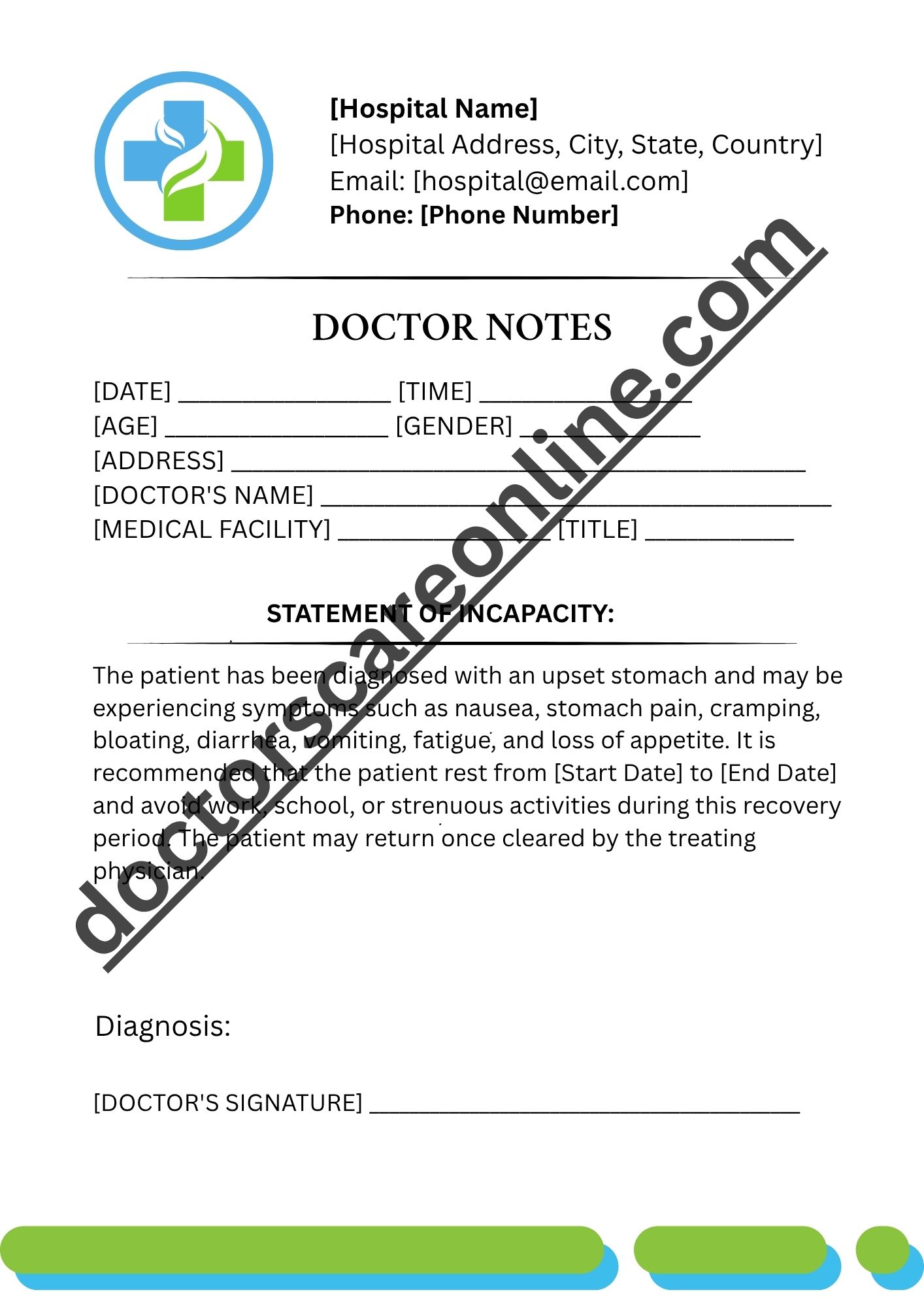
A doctor’s note for upset stomach is medical documentation provided by a qualified healthcare professional after an appropriate medical evaluation or consultation. Depending on your symptoms and the provider’s clinical judgment, the documentation may confirm that you were medically evaluated and may recommend time away from work, school, or other activities.
If you need medical documentation for an upset stomach, you can arrange a consultation with a licensed healthcare provider. Depending on your symptoms and local requirements, this may be available through an in-person appointment or an appropriate telehealth consultation.
Who May Need a Doctor’s Note for an Upset Stomach?
A medical note may be relevant when digestive symptoms prevent someone from safely or effectively performing normal responsibilities.
Common situations include:
- Missing work because of vomiting or diarrhea
- Taking sick leave because of severe stomach discomfort
- Missing school or college classes
- Recovering from a gastrointestinal illness
- Needing temporary activity restrictions
- Working in a setting where active gastrointestinal symptoms may create additional concerns
- Needing documentation for an absence
- Returning to work or school after an illness
- Providing medical documentation when specifically required by an organization’s policy
Whether a doctor’s note is required depends on the employer, school, college, airline, insurer, or other organization. Their policies may differ, so check the relevant requirements before submitting medical documentation.
Common Causes of an Upset Stomach
An upset stomach can have many possible causes. The appropriate treatment depends on what is causing the symptoms.
- Indigestion: Indigestion can cause upper-abdominal discomfort, bloating, nausea, belching, and early fullness. It may occur occasionally or repeatedly.
- Overeating: Eating a large meal quickly may lead to uncomfortable fullness, bloating, or indigestion.
- Fatty or Greasy Foods: Some people find that high-fat or greasy foods worsen digestive symptoms. Dietary triggers can vary from person to person. NIDDK notes that fatty or greasy foods, caffeine, carbonated drinks, and certain other foods may aggravate symptoms in people with functional dyspepsia.
- Food Intolerance: Food intolerances can cause symptoms such as bloating, gas, abdominal discomfort, or diarrhea after eating particular foods. Lactose intolerance, for example, can be managed by reducing or avoiding lactose-containing foods when appropriate.
- Gastrointestinal Infection: Viral or bacterial infections can cause vomiting, diarrhea, abdominal cramps, nausea, and sometimes fever. Some infections are contagious, making appropriate hygiene and staying home when medically advised particularly important.
- Food Poisoning: Foodborne illness may cause nausea, vomiting, diarrhea, abdominal pain, and other symptoms. Severe vomiting, prolonged diarrhea, blood in the stool, severe abdominal pain, high fever, or dehydration can require medical attention.
- Acid Reflux or GERD: Acid reflux can cause heartburn, regurgitation, nausea, and other symptoms. Persistent symptoms or symptoms associated with bleeding, difficulty swallowing, unexplained weight loss, or frequent vomiting should be medically evaluated.
- Gastritis: Gastritis involves inflammation of the stomach lining and can have several possible causes. A healthcare provider can determine whether further testing or treatment is necessary.
- Medication Side Effects: Some medications can contribute to indigestion or stomach discomfort. NIDDK lists certain antibiotics, NSAIDs, iron supplements, corticosteroids, and other medicines among possible contributors.
- Irritable Bowel Syndrome: IBS can cause recurring abdominal pain and changes in bowel habits, including diarrhea, constipation, or both. Recurrent symptoms should be discussed with a healthcare provider.
- Stress and Gut-Brain Interaction: Stress can influence digestive symptoms in some people. Functional dyspepsia is one example of a disorder involving interaction between the gut and brain.
Because similar symptoms can occur with many different conditions, persistent or severe digestive problems should not be self-diagnosed solely as an “upset stomach.”
When Should You See a Doctor for an Upset Stomach?
Mild digestive discomfort may improve with rest and appropriate self-care. However, some symptoms require medical evaluation.
Seek medical advice promptly if you experience:
- Severe or persistent abdominal pain
- Frequent or repeated vomiting
- Inability to keep liquids down
- Blood in vomit
- Black or tar-like stools
- Bloody stools
- Severe diarrhea
- Signs of dehydration
- High fever
- Severe weakness or confusion
- Unexplained weight loss
- Persistent loss of appetite
- Difficulty swallowing
- Symptoms that repeatedly return
- Symptoms that do not improve as expected
NIDDK specifically identifies frequent vomiting, bloody vomit, severe and constant abdominal pain, black tar-like stools, unexplained weight loss, and other warning signs as reasons to seek medical attention for indigestion.
Diarrhea can also cause dehydration. Warning signs include extreme thirst, dry mouth, reduced urination, dark urine, tiredness, dizziness, or lightheadedness.
If symptoms are severe or appear to represent an emergency, seek urgent medical care rather than relying on an online consultation or requesting documentation first.
When Might a Doctor Recommend Time Off Work or School?
An upset stomach does not automatically require sick leave. A healthcare provider considers the patient’s symptoms, overall health, occupation or school responsibilities, and ability to safely perform normal activities.
A provider may recommend temporary rest or absence when symptoms significantly interfere with daily responsibilities.
- Frequent Vomiting: Repeated vomiting can make it difficult to stay hydrated, concentrate, drive safely, or perform physically demanding work.
- Diarrhea: Frequent diarrhea can make it difficult to remain at work or school. If an infectious illness is suspected, staying home may also help reduce transmission.
- Significant Abdominal Discomfort: Persistent or moderate-to-severe abdominal discomfort may interfere with movement, concentration, sleep, or normal work activities.
- Dehydration: Vomiting or diarrhea can result in fluid loss. Symptoms such as dizziness, unusual tiredness, dark urine, dry mouth, and reduced urination may indicate dehydration.
- Suspected Contagious Illness: If a healthcare provider suspects an infectious gastrointestinal illness, they may recommend staying home while symptoms are active and following appropriate infection-control guidance.
- Physically Demanding Work: People whose jobs require heavy lifting, driving, operating equipment, prolonged standing, or other physically demanding activities may need temporary restrictions depending on their symptoms.
- Food Service, Healthcare, Childcare, or Similar Work: Some illnesses can create additional concerns in jobs involving food handling, healthcare, childcare, or close contact with vulnerable people. The appropriate return-to-work timing should follow medical advice and applicable workplace or public-health requirements.
How to Get an Online Doctor’s Note for an Upset Stomach
Getting an online doctor’s note should involve a real consultation with a licensed healthcare provider. The provider evaluates your symptoms and decides whether medical documentation is appropriate.
Step 1: Choose a Telehealth Service
Select a reputable telehealth platform that connects you with a licensed healthcare professional who is authorized to practice in your location.
Step 2: Book an Online Consultation
Schedule a virtual appointment using your phone, tablet, or computer. Depending on the service and your symptoms, the consultation may involve video, audio, or another approved telehealth method.
Step 3: Provide Your Medical Information
Share accurate information about your condition, including:
- When your upset stomach started
- Nausea, vomiting, diarrhea, or stomach pain
- Any fever or dehydration symptoms
- Recent food or travel history, when relevant
- Current medications
- Existing medical conditions
- How your symptoms are affecting work or school
Step 4: Complete the Medical Evaluation
The healthcare provider reviews your symptoms and medical history and determines whether your condition can be appropriately evaluated through telehealth. If an in-person examination or testing is necessary, the provider may recommend an in-person visit.
Step 5: Discuss Your Work or School Requirements
Tell the provider why you need medical documentation and whether your employer, school, or other organization has specific requirements for a doctor’s note.
Step 6: Let the Provider Make the Decision
If the healthcare professional determines that medical leave or documentation is medically appropriate, they may issue a doctor’s note. A note is not guaranteed simply because it has been requested.
Step 7: Receive Your Medical Documentation
When approved, the provider may provide the doctor’s note digitally. It may include the consultation date, provider information, recommended absence period, and appropriate return-to-work or school guidance.
Step 8: Follow the Medical Advice
Follow the provider’s recommendations for hydration, diet, medication, rest, follow-up care, or further evaluation. If your symptoms become severe or worsen, seek appropriate medical care rather than relying solely on the online consultation.
Important: Avoid websites that offer a doctor’s note without a genuine medical evaluation. Legitimate telehealth documentation should be based on an actual consultation and the healthcare provider’s professional judgment.
What Information Is Usually Included in a Doctor’s Note?
A doctor’s note generally contains only information necessary for its intended purpose.
| Information | Purpose |
|---|---|
| Patient’s name | Identifies the person evaluated |
| Consultation date | Records when the medical evaluation occurred |
| Healthcare provider name | Identifies the treating professional |
| Provider credentials | Establishes professional identity |
| Clinic or practice information | Identifies the healthcare facility or practice |
| Medical evaluation confirmation | Confirms that the patient was evaluated |
| Recommended leave dates | Documents medically recommended absence when applicable |
| Return-to-work or school guidance | Provides appropriate activity guidance |
| Restrictions | Identifies temporary limitations, if medically necessary |
| Provider signature/authentication | Helps authenticate the document |
| Contact information | Allows verification where appropriate |
A medical note does not necessarily need to disclose a detailed diagnosis. The amount of medical information shared should be consistent with the purpose of the documentation, applicable privacy requirements, and the patient’s circumstances.
Does a Doctor’s Note Have a Fixed Validity Period?
There is no universal number of days that applies to every doctor’s note for an upset stomach.
The recommended absence period depends on:
- The underlying cause
- Symptom severity
- Recovery progress
- The patient’s overall health
- Type of work or school activity
- Infection-control considerations
- The healthcare provider’s clinical judgment
- Employer or school requirements
For example, someone with mild indigestion may need little or no time away from normal activities, while someone experiencing significant vomiting, diarrhea, dehydration, or an infectious illness may require more recovery time.
A provider should determine the appropriate leave or return-to-activity period rather than using a predetermined duration.
If symptoms continue after the period originally recommended, contact a healthcare professional for further advice rather than extending the documentation yourself.
How Long Does an Upset Stomach Usually Last?
Recovery time varies substantially because “upset stomach” describes symptoms rather than one specific disease.
| Possible Cause | General Pattern |
| Mild indigestion | May improve within hours or a short period |
| Overeating | Often improves as digestion progresses |
| Food intolerance | May improve after avoiding the triggering food |
| Mild gastrointestinal infection | Often resolves over several days, depending on the infection |
| Food poisoning | Duration varies according to the cause |
| Medication-related irritation | May improve when the underlying issue is appropriately addressed |
| IBS symptoms | Can fluctuate and vary between individuals |
| Persistent digestive condition | May require ongoing evaluation and treatment |
These are general patterns, not guaranteed recovery times. Persistent, worsening, or recurrent symptoms should be evaluated by a healthcare professional.
What Should You Eat During Recovery?
There is no single diet that is appropriate for everyone with an upset stomach. Food tolerance varies depending on the cause and severity of symptoms.
If you can eat comfortably, consider smaller portions of foods that you personally tolerate well.
Potential options may include:
- Plain rice
- Oatmeal or other simple cooked cereals
- Toast
- Bananas
- Soft cooked vegetables
- Plain potatoes
- Clear soups or broth
- Plain noodles
- Eggs, if tolerated
- Lean poultry, if tolerated
- Mild fish, if tolerated
The goal is not to follow an unnecessarily restrictive diet but to stay hydrated, obtain adequate nutrition, and avoid foods that clearly worsen your symptoms.
For indigestion, NIDDK recommends discussing individual dietary triggers with a healthcare professional because foods that aggravate symptoms can vary between people.
Foods and Drinks That May Worsen Symptoms
Some people find that particular foods and drinks make digestive symptoms worse.
Potential triggers include:
- Fatty or greasy foods
- Very spicy foods
- Large meals
- Alcohol
- Caffeinated beverages
- Carbonated drinks
- Foods that personally trigger intolerance
- Very rich foods
- Excessively sugary foods
NIDDK notes that carbonated drinks, caffeine, fatty or greasy foods, and certain other foods can aggravate symptoms in some people with functional dyspepsia.
Rather than avoiding large categories of food indefinitely, identify your personal triggers and discuss persistent food-related symptoms with a healthcare professional.
How to Stay Hydrated
Hydration is particularly important when vomiting or diarrhea causes fluid loss.
Helpful practices may include:
- Taking small, frequent sips of fluid
- Drinking water regularly
- Using an appropriate oral rehydration solution when recommended
- Monitoring urine output
- Paying attention to dizziness, excessive thirst, dry mouth, or unusual weakness
If you cannot keep fluids down or develop significant signs of dehydration, seek medical advice promptly. Dehydration can be a serious complication of diarrhea and vomiting.
Can an Employer or School Verify a Doctor’s Note?
An employer, school, college, or other organization may have a process for verifying medical documentation.
Depending on its policy and applicable privacy rules, verification may involve checking:
- Whether the healthcare provider exists
- Whether the document appears authentic
- The consultation date
- The recommended absence period
- The provider’s signature or electronic authentication
- Official clinic contact information
Organizations should follow applicable privacy and employment or education requirements when handling health information.
Before requesting documentation, check whether your employer or school has specific requirements for:
- Doctor’s notes
- Medical certificates
- Digital signatures
- Provider credentials
- Dates of absence
- Return-to-work documentation
- Electronic submissions
A medical note does not guarantee that an employer, school, airline, insurer, or other organization will accept it. Acceptance depends on that organization’s rules.
Frequently Asked Questions
1. How can I get a doctor’s note for an upset stomach?
Schedule a consultation with a licensed healthcare provider and describe your symptoms accurately. The provider will evaluate your condition and determine whether medical leave or documentation is appropriate. If approved, the provider can issue documentation according to their professional process.
2. Can I get a doctor’s note online for an upset stomach?
In some cases, a licensed healthcare provider may evaluate digestive symptoms through telehealth and determine that an online consultation is appropriate. However, severe symptoms or situations requiring a physical examination, testing, or urgent treatment may require an in-person visit.
3. Is an upset stomach a valid reason to miss work?
It can be. Vomiting, frequent diarrhea, significant abdominal pain, dehydration, or an infectious illness may make it difficult or unsafe to work. Whether medical leave is appropriate is determined by the healthcare provider based on the individual situation.
4. Can I get a doctor’s note for diarrhea?
A healthcare provider may provide documentation for diarrhea when the symptoms have been medically evaluated and the provider determines that leave or restrictions are appropriate. Persistent or severe diarrhea may require medical assessment because dehydration and other complications can occur.
5. Can I get a doctor’s note for vomiting?
A provider may issue documentation when vomiting has been evaluated and medical leave is considered appropriate. Frequent vomiting or an inability to keep fluids down can require prompt medical attention.
6. Can I Get a Doctor’s Note for Stomach Pain, Diarrhea, or Vomiting?
A healthcare provider may issue medical documentation for symptoms such as stomach pain, diarrhea, nausea, or vomiting if the provider evaluates the patient and determines that documentation is medically appropriate.
Related documentation searches may include:
- Doctor’s note for stomach pain
- Doctor’s note for diarrhea
- Doctor’s note for vomiting
- Doctor’s note for nausea
- Sick note for stomach illness
- Medical certificate for gastrointestinal illness
- Doctor’s note for food poisoning
- Doctor’s note for stomach flu
- Medical note for digestive problems
The terminology may vary, but the underlying principle remains the same: medical documentation should be based on an appropriate professional evaluation.
Medical Disclaimer: The information on this page is provided for general educational purposes and is not a substitute for professional medical advice, diagnosis, or treatment. An upset stomach can have many possible causes, and symptoms that appear mild may sometimes indicate a condition requiring medical evaluation. A doctor’s note, sick note, or medical certificate should be issued only by an appropriately licensed healthcare professional following an appropriate evaluation and according to applicable professional requirements. Documentation is not guaranteed and should never be obtained through false, misleading, or fabricated information.
Why Choose a Licensed Healthcare Evaluation?
Medical documentation is most useful when it is based on a genuine healthcare evaluation.
A responsible medical-documentation process should:
- Connect patients with appropriately licensed healthcare professionals
- Require an appropriate medical consultation
- Allow the provider to determine whether documentation is justified
- Avoid guaranteeing approval or leave
- Protect patient information
- Provide documentation that accurately reflects the provider’s assessment
- Encourage in-person care when telehealth is not appropriate
- Clearly explain that organizational acceptance may vary
The goal is not simply to obtain a piece of paper. The goal is to ensure that any medical documentation accurately represents a legitimate healthcare evaluation and the provider’s professional recommendation.




Reviews
There are no reviews yet.