
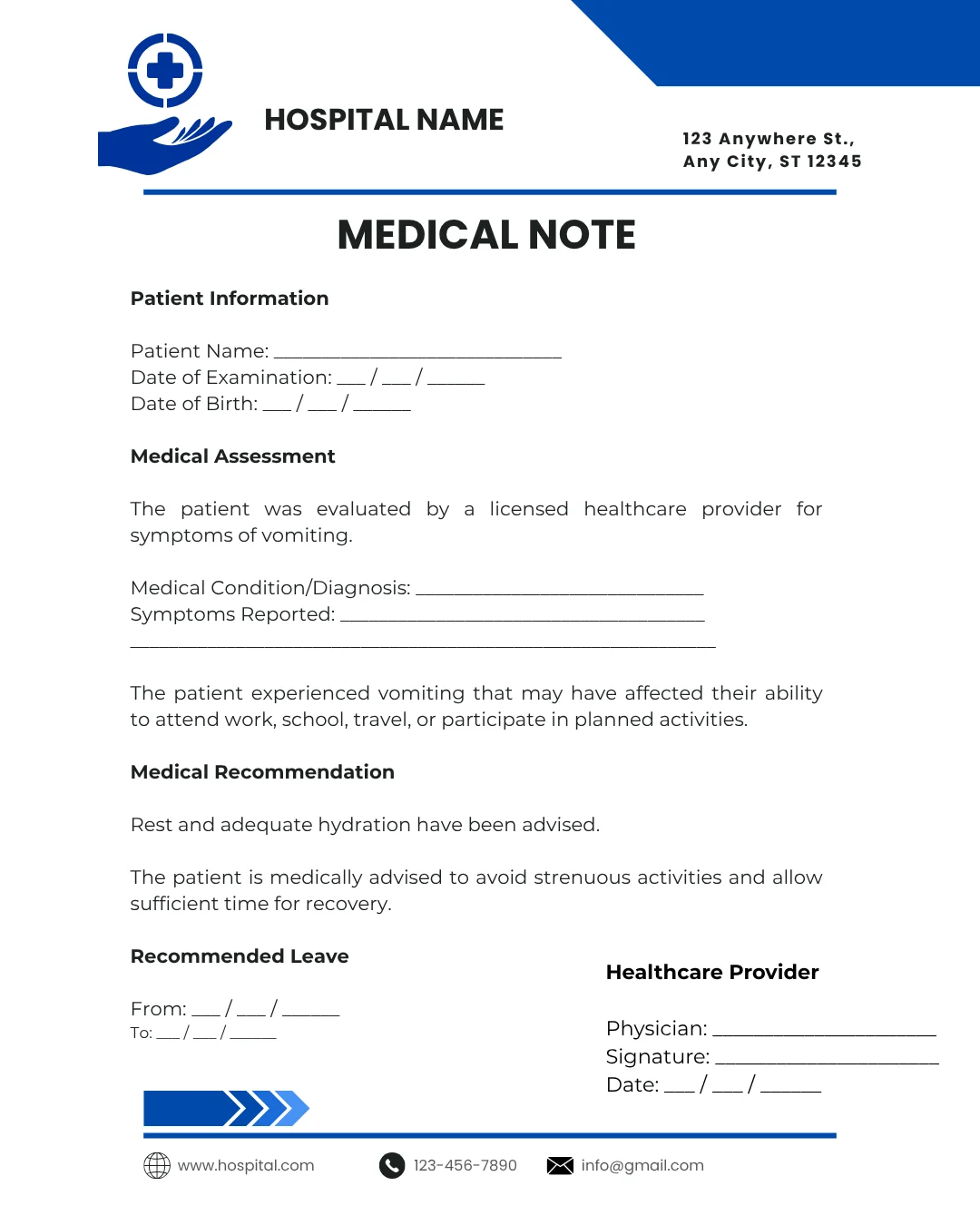
A doctor’s note for vomiting is a medical document provided by a licensed healthcare professional after assessing a patient experiencing vomiting or related symptoms such as nausea, dehydration, stomach pain, or fever. The note verifies that the individual received medical attention and may need temporary leave from work, school, college, or other responsibilities while recovering.
Unlike a simple self-reported sick day, a doctor’s note offers official confirmation that a healthcare provider evaluated the illness and determined whether rest or treatment was medically appropriate.
Depending on the situation, the note may be requested for:
- Workplace sick leave
- School or college absences
- Missed examinations
- Internship attendance
- Travel cancellations
- Insurance or administrative purposes
The note generally focuses on the individual’s ability to resume normal activities rather than providing detailed personal medical information.
When Can You Ask a Doctor for a Vomiting Sick Note?
Not every episode of vomiting requires medical leave, but there are situations where obtaining a doctor’s note is reasonable and often necessary.
- Persistent Vomiting: If vomiting continues for several hours or repeatedly occurs throughout the day, a doctor may recommend staying home to prevent dehydration and allow recovery.
- Foodborne Illness: Vomiting caused by contaminated food often requires medical assessment, especially if accompanied by diarrhea, fever, or abdominal cramps.
- Viral Stomach Infection: Illnesses such as viral gastroenteritis can spread easily. A healthcare provider may advise remaining away from work or school until the risk of transmitting the infection has decreased.
- Medication Side Effects: Certain antibiotics, chemotherapy drugs, pain medications, or other prescriptions may trigger vomiting. A physician can determine whether temporary leave is appropriate while adjusting treatment.
- Pregnancy-Related Morning Sickness: Severe nausea and vomiting during pregnancy, including hyperemesis gravidarum, may interfere with daily activities and sometimes justify medical leave.
- Migraine Episodes: Some migraine attacks include severe nausea and vomiting, making it unsafe or impractical to attend work or classes.
- Chronic Digestive Conditions: People with gastrointestinal disorders such as gastritis, peptic ulcers, or inflammatory bowel disease may occasionally experience vomiting severe enough to require medical documentation.
Tests a Doctor May Recommend
Most cases of vomiting do not require extensive testing. However, investigations may be recommended if symptoms are severe, persistent, or associated with warning signs.
Possible tests include:
- Blood Tests: To check for infection, electrolyte imbalance, dehydration, or organ function.
- Urine Test: Used to evaluate hydration status, infection, or pregnancy.
- Stool Examination: Recommended when food poisoning, bacterial infection, or parasites are suspected.
- Pregnancy Test: Performed when pregnancy-related nausea or vomiting is possible.
- Electrolyte Assessment: Repeated vomiting may reduce sodium, potassium, and other important minerals.
- Imaging Studies: Ultrasound or CT scans may be ordered if doctors suspect appendicitis, gallbladder disease, bowel obstruction, or other abdominal conditions.
- Endoscopy: In persistent or recurring cases, a specialist may examine the upper digestive tract to identify ulcers or stomach disorders.
What Information Is Usually Included in a Doctors Note for Vomiting?
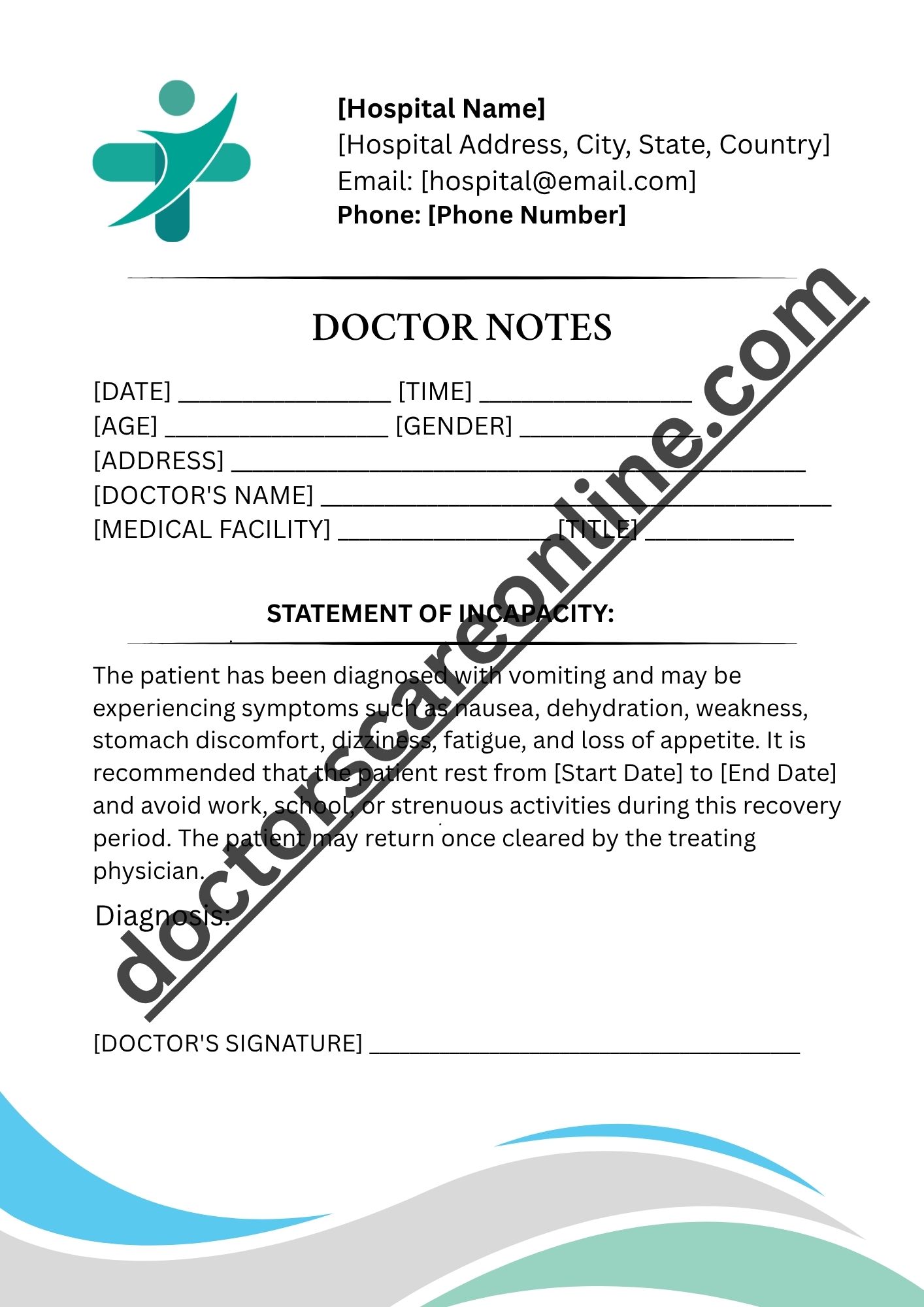
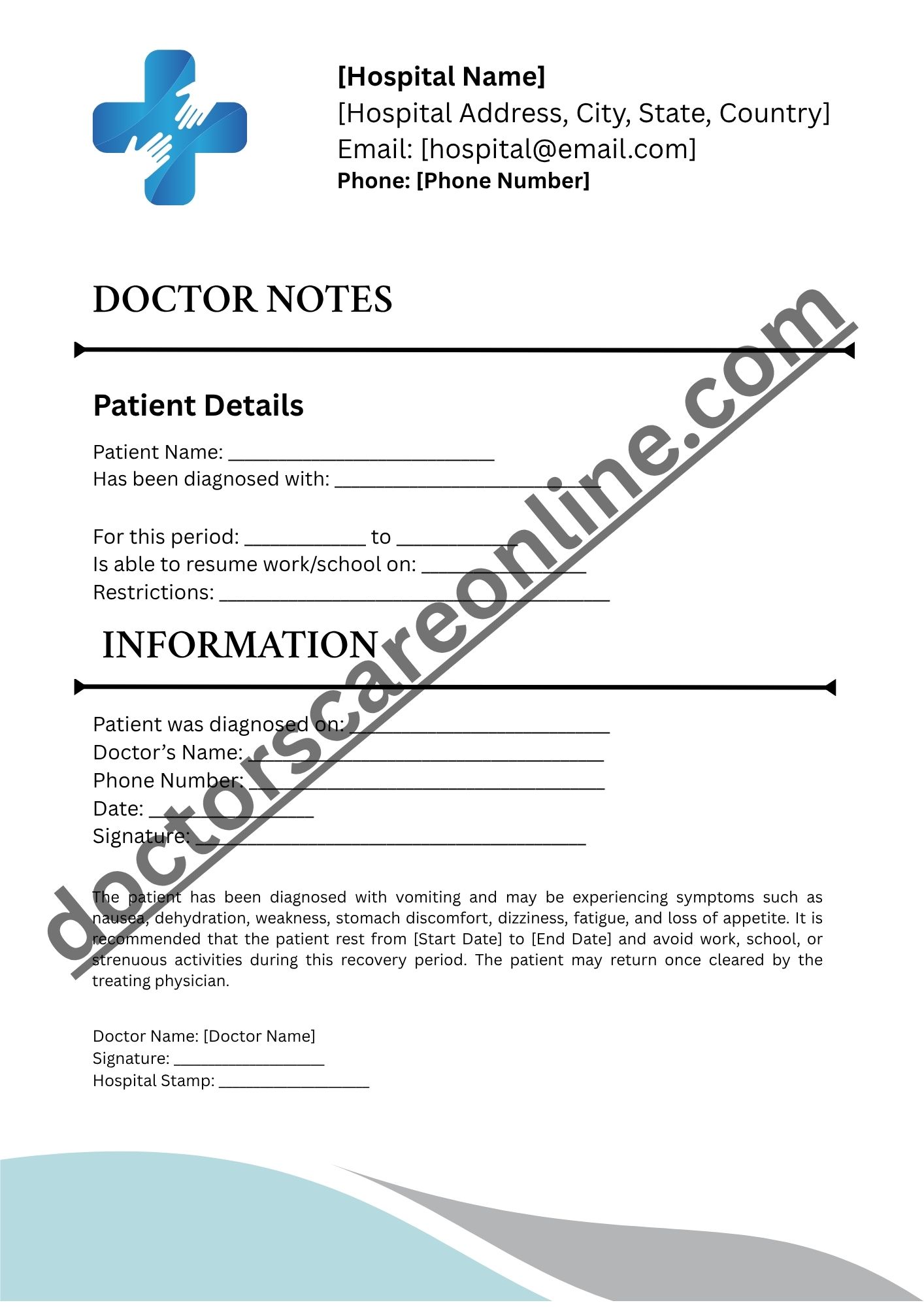
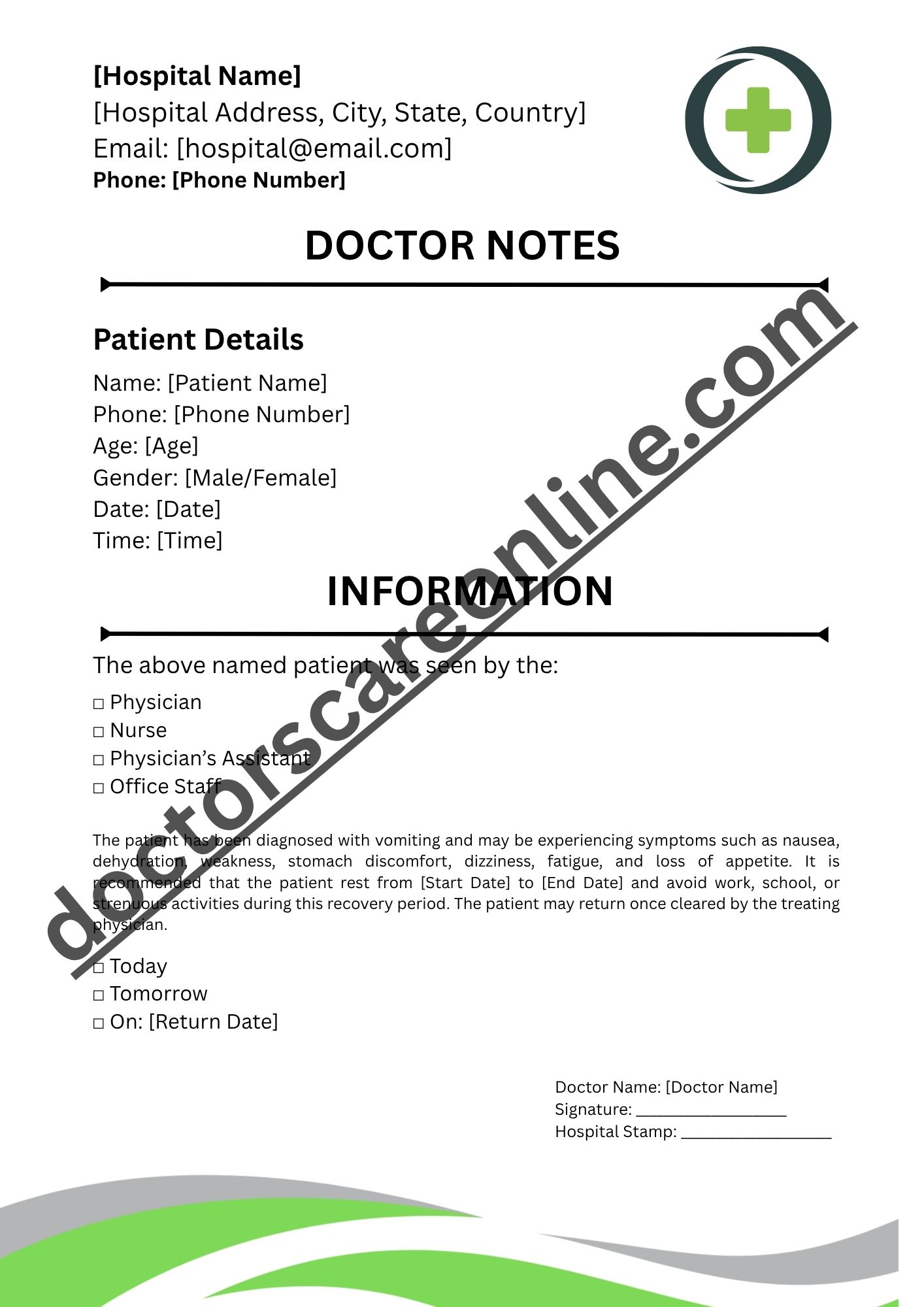
A doctor’s note for vomiting is designed to confirm that a licensed healthcare provider evaluated your condition and determined whether time away from work, school, or other responsibilities was medically necessary. While the exact format varies by clinic or healthcare system, most legitimate medical notes contain similar essential details.
A typical doctor’s note may include:
- Patient’s full name
- Date of the medical appointment
- Date the note was issued
- Confirmation that the patient was medically evaluated
- Recommended period of rest or medical leave
- Return-to-work or return-to-school date (if appropriate)
- Any temporary activity restrictions, if needed
- Healthcare provider’s name and professional credentials
- Clinic or hospital name
- Provider’s signature (handwritten or electronic)
To protect patient privacy, many doctors avoid listing the exact diagnosis unless the patient requests it or the employer or institution specifically requires it.
How Long Can a Doctor Excuse You From Work or School for Vomiting?
The recommended recovery period depends on the cause of the vomiting, the severity of symptoms, and how quickly the patient improves. A doctor will evaluate your overall health before deciding how much time away from daily activities is appropriate.
| Condition | Typical Recovery Time |
|---|---|
| Mild stomach irritation | 1 day |
| Food poisoning | 1–3 days |
| Viral gastroenteritis | 2–4 days |
| Vomiting with dehydration | 2–5 days |
| Medication-related vomiting | Depends on treatment adjustment |
| Pregnancy-related vomiting | Individual assessment |
| Hospital-treated illness | Based on doctor’s advice |
Recovery periods vary from person to person. Some individuals feel well within 24 hours, while others may need several additional days before returning safely to work or school.
Can You Get a Doctor’s Note for Just One Day of Vomiting?
Yes. If vomiting prevented you from attending work or school for a single day, a healthcare provider may issue a doctor’s note after evaluating your symptoms.
Whether a one-day medical excuse is provided depends on factors such as:
- How severe the vomiting was
- Whether dehydration occurred
- If additional symptoms were present
- Your overall medical condition
- The doctor’s clinical assessment
Some employers only request documentation after multiple missed workdays, while others require a medical note even for a single absence. School and college attendance policies also vary.
How to Book an Online Doctor’s Appointment for a School or College Sick Note
If you’re unable to attend school or college because of vomiting, you may be able to schedule an online doctor’s appointment to discuss your symptoms and request a medical excuse, depending on the telehealth services available in your area.
Choose a Licensed Telehealth Provider
Select a reputable telemedicine platform or healthcare provider that offers virtual consultations with licensed doctors. Make sure the service is accepted in your country or region.
Schedule an Appointment
Book an available appointment by selecting a convenient date and time. Many telehealth providers offer same-day or next-day consultations for common illnesses.
Complete Your Medical Information
Before the consultation, you may be asked to provide:
- Your full name and age
- Contact details
- Current symptoms
- When the vomiting started
- Any fever, diarrhea, or stomach pain
- Current medications
- Relevant medical history
Attend the Virtual Consultation
During the video or phone appointment, the doctor will ask questions about your symptoms, assess your condition, and determine whether an online evaluation is appropriate or if you need an in-person examination.
Request a School or College Sick Note
If the healthcare provider determines that your illness justifies an absence, they may issue a medical note confirming that you were evaluated and recommending time away from school or college. The note is typically sent electronically through email or the patient portal.
Submit the Note to Your School or College
Download or print the doctor’s note (if needed) and submit it according to your school’s or college’s attendance policy. Some institutions accept digital copies, while others may request a printed version.
Note: Online doctor’s notes are generally suitable for mild illnesses. If you’re experiencing severe dehydration, persistent vomiting, blood in your vomit, severe abdominal pain, or other emergency symptoms, seek immediate in-person medical care rather than relying on a virtual consultation.
Should You Stay Home if You’re Vomiting?
In many cases, yes. Vomiting may be caused by infections that can spread to others, particularly when accompanied by diarrhea or fever.
Remaining at home allows you to:
- Rest and recover
- Prevent dehydration
- Reduce the risk of infecting coworkers or classmates
- Monitor symptoms
- Receive treatment if your condition worsens
Returning too soon can delay recovery and may expose others to contagious viruses, especially in workplaces with close contact.
When Is It Safe to Return to Work or School After Vomiting?
There is no single rule that applies to everyone. The decision depends on the cause of the illness, your symptoms, and your doctor’s recommendations.
In general, many healthcare providers recommend returning only after:
- Vomiting has completely stopped
- You can keep food and fluids down without difficulty
- Fever has resolved (if one was present)
- Your energy level has improved
- Signs of dehydration have disappeared
- You can safely perform your normal activities
For contagious stomach illnesses, many public health recommendations advise remaining home until at least 24 hours after the last episode of vomiting, although your healthcare provider may recommend a longer recovery period depending on the diagnosis.
If your job involves preparing food, providing healthcare, or caring for vulnerable individuals, additional workplace guidelines may apply before returning.
What If Your Employer or School Does Not Accept the Doctor’s Note?
Employers, schools, colleges, airlines, insurance companies, and other organizations may have their own requirements for medical documentation. Before submitting a doctor’s note, check whether they require specific information, a particular format, an original signature, a provider’s license details, or documentation from a specific type of healthcare professional.
If a note is rejected, contact the organization to understand what additional documentation is required. Do not alter or modify a medical document yourself. If necessary, contact the healthcare provider who evaluated you to determine whether additional legitimate documentation can be provided.
Home Care Tips While Recovering From Vomiting
Recovering from vomiting usually involves giving your stomach time to settle while preventing dehydration. Although many mild cases improve within a day or two, following a few simple self-care measures can help you feel better and support a quicker recovery.
Here are some practical tips:
- Sip small amounts of water throughout the day instead of drinking large amounts at once.
- Use oral rehydration solutions or electrolyte drinks if recommended by your healthcare provider.
- Rest as much as possible and avoid strenuous physical activity.
- Begin eating bland, easy-to-digest foods once vomiting has stopped.
- Avoid alcohol, smoking, and heavy meals until you feel better.
- Take prescribed or over-the-counter medications only as directed by a healthcare professional.
- Monitor your symptoms and seek medical advice if vomiting continues or worsens.
Best Foods and Drinks After Vomiting
Once you’re able to keep fluids down, gradually reintroduce light foods that are gentle on the stomach. Eating too much too soon may trigger nausea again.
Some good options include:
Fluids
- Water
- Oral rehydration solution
- Clear broth
- Coconut water
- Electrolyte drinks
- Ice chips
Easy-to-Digest Foods
- Bananas
- Plain rice
- Applesauce
- Toast
- Plain crackers
- Oatmeal
- Boiled potatoes
- Plain noodles
Start with small portions and slowly return to your regular diet as your appetite improves.
Foods and Drinks to Avoid Until You Recover
Certain foods can irritate the stomach and make nausea or vomiting worse. It’s best to avoid them until you’re fully recovered.
These include:
- Fried foods
- Spicy meals
- Fatty or greasy foods
- Alcohol
- Caffeinated drinks
- Carbonated beverages
- Highly sugary foods
- Large dairy servings (if they worsen symptoms)
Choosing lighter meals for a day or two can help your digestive system recover more comfortably.
Signs You May Be Becoming Dehydrated
Vomiting can cause your body to lose fluids and important electrolytes. Recognizing dehydration early is important, especially for children, older adults, and people with ongoing medical conditions.
Watch for signs such as:
- Dry mouth or lips
- Feeling very thirsty
- Dark yellow urine
- Urinating less often
- Dizziness or lightheadedness
- Weakness
- Rapid heartbeat
- Sunken eyes
- Headache
If dehydration becomes severe or you’re unable to keep fluids down, seek medical attention promptly.
When Vomiting Becomes a Medical Emergency
While most episodes of vomiting improve without complications, some symptoms require immediate medical care.
Seek emergency medical attention if you experience:
- Vomiting blood or material that looks like coffee grounds
- Severe dehydration
- Persistent vomiting lasting more than 24–48 hours
- Severe abdominal pain
- High fever with vomiting
- Confusion or difficulty staying awake
- Chest pain
- Difficulty breathing
- Signs of a head injury followed by vomiting
- Inability to keep any fluids down for an extended period
Prompt treatment can help prevent serious complications.
Can a Doctor Refuse to Issue a Sick Note?
Yes. A doctor is not required to issue a medical note simply because one is requested. They will make a decision based on their professional assessment of your condition.
A doctor may decline to provide a sick note if:
- There is no medical reason for taking leave.
- Your symptoms are mild and do not limit normal activities.
- You request documentation without a medical evaluation.
- The information provided does not support the need for time off.
Healthcare providers are responsible for issuing accurate medical documentation based on clinical findings.
Tips to Prevent Vomiting in the Future
While vomiting cannot always be prevented, healthy habits can lower the risk of many common causes.
Some preventive measures include:
- Wash your hands regularly, especially before eating.
- Eat freshly prepared and properly stored food.
- Drink safe, clean water.
- Avoid overeating or eating spoiled food.
- Limit alcohol consumption.
- Take medications exactly as prescribed.
- Stay hydrated during hot weather or illness.
- Manage motion sickness with preventive measures if needed.
- Avoid known food allergies or personal triggers.
If vomiting occurs frequently without an obvious cause, schedule a medical evaluation to identify the underlying problem.
Common Mistakes People Make While Recovering From Vomiting
Many people start feeling better after vomiting stops but return to normal activities too quickly. This can delay recovery or cause symptoms to return.
Common mistakes include:
- Eating large meals immediately after vomiting
- Drinking sugary or caffeinated beverages too soon
- Ignoring signs of dehydration
- Returning to work or school before fully recovering
- Skipping prescribed medications
- Self-medicating without medical advice
- Continuing strenuous exercise before regaining strength
Taking time to recover fully can help prevent further illness and reduce the risk of complications.
FAQs
1. What is a short note on vomiting?
Vomiting is the forceful expulsion of stomach contents through the mouth. It is a symptom rather than a disease and can be caused by viral infections, food poisoning, pregnancy, motion sickness, medication side effects, or digestive disorders. Most mild cases improve with rest and hydration, but persistent vomiting should be evaluated by a healthcare provider.
2. Do I need a doctor’s note for vomiting?
A doctor’s note may be required if vomiting causes you to miss work, school, or college and your employer or institution requests medical documentation. After evaluating your symptoms, a healthcare provider can determine whether a medical excuse is appropriate.
3. How do you request leave for vomiting?
Inform your employer, school, or college as soon as possible that you are unable to attend due to vomiting. If required, seek medical evaluation and provide a doctor’s note confirming your illness and the recommended recovery period.
4. How long should I stay home after vomiting?
You should stay home until the vomiting has completely stopped and you can eat and drink without difficulty. If your vomiting is caused by a contagious illness, many healthcare providers recommend remaining home for at least 24 hours after the last episode of vomiting, or as advised by your doctor.
5. Can I get an online doctor’s note for vomiting?
Yes. Many licensed telehealth providers offer virtual consultations for mild cases of vomiting. If the doctor determines that medical leave is necessary, they may issue a digital doctor’s note. However, severe symptoms such as dehydration, persistent vomiting, or severe abdominal pain usually require an in-person medical evaluation.
Medical Disclaimer
This article is intended for general educational purposes and should not be used as a substitute for professional medical diagnosis, treatment, or advice. Vomiting can have many possible causes, and the appropriate treatment or recovery period depends on the individual’s symptoms and medical history.
A doctor’s note should only be issued by a qualified healthcare professional after an appropriate medical assessment. The healthcare provider determines whether medical leave or other documentation is medically appropriate.
Related Post-


Reviews
There are no reviews yet.