

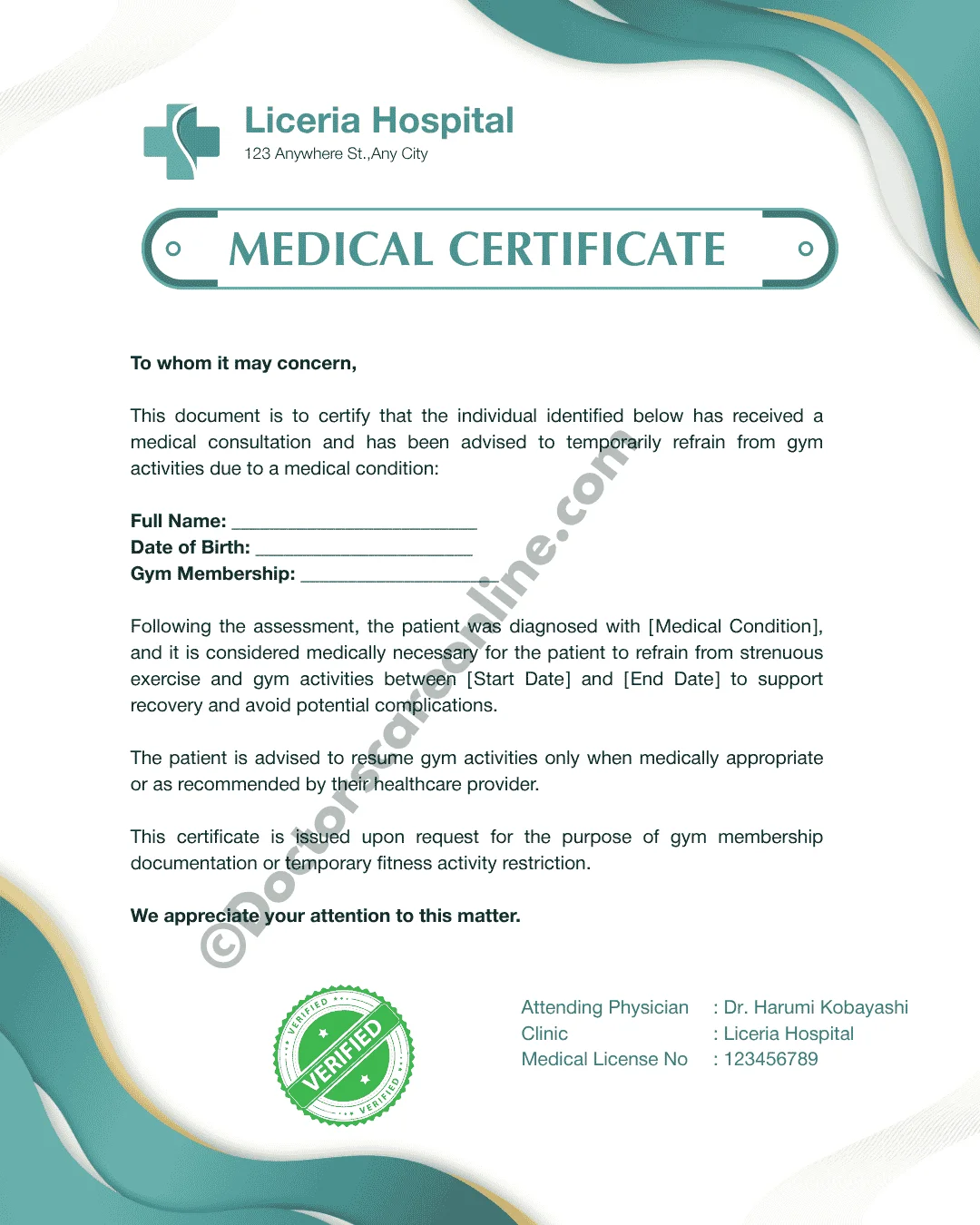
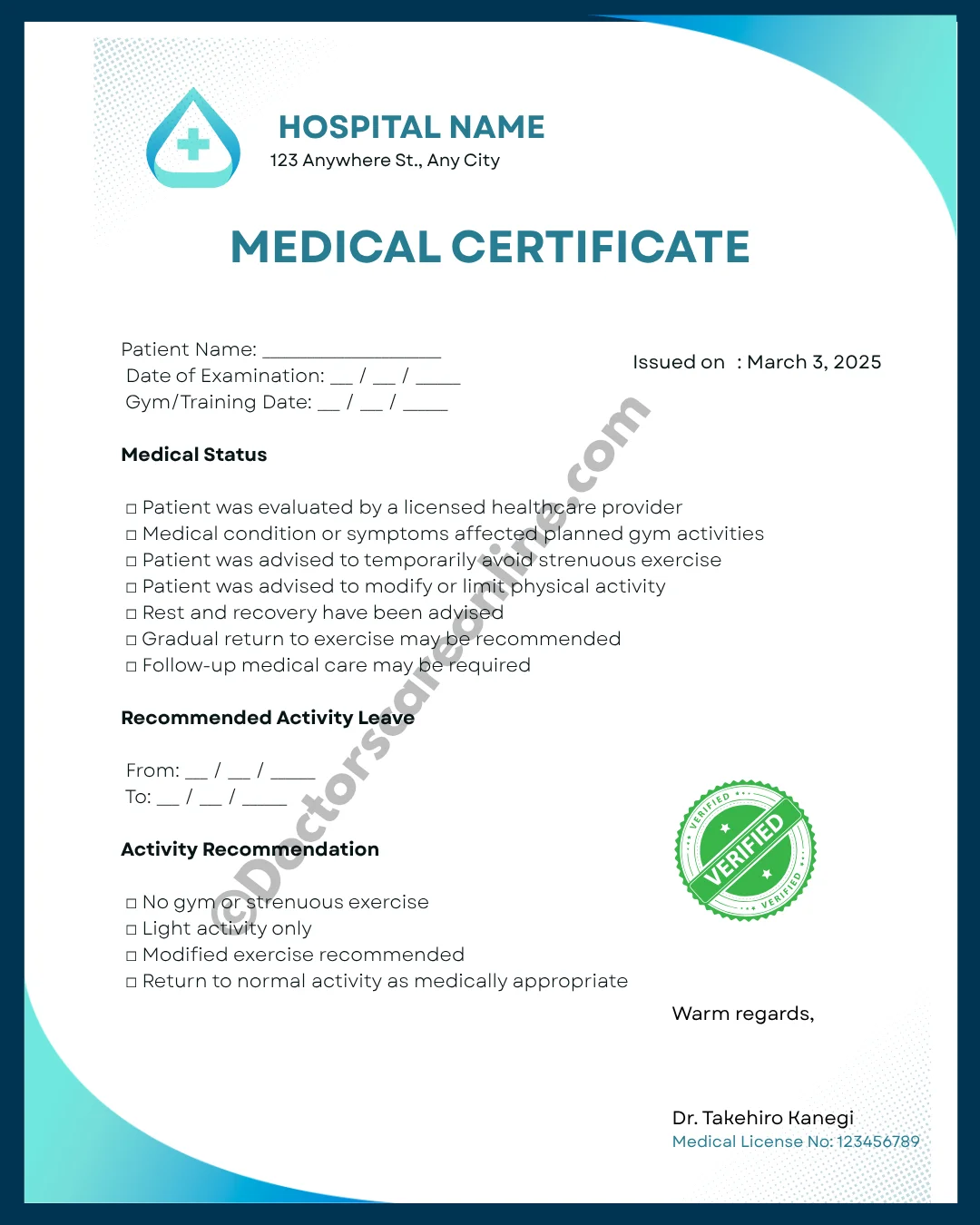
A Doctors Note for Gym is medical documentation provided by a qualified healthcare professional after evaluating a person’s health condition and determining whether they should temporarily avoid exercise or physical activity. Depending on the situation, a doctor may recommend rest, restrict certain workouts, or provide a return-to-gym clearance when the individual is medically ready to resume exercise.
A gym sick note may be useful when an illness, injury, medical procedure, or other health condition prevents someone from safely participating in workouts. It may be requested by a gym, fitness center, sports facility, personal trainer, or membership provider when documentation is needed to explain an absence or support a temporary exercise restriction.
A legitimate medical note should be based on an appropriate healthcare evaluation and should contain only the information necessary for the intended purpose.
Types of Doctors Note for Gym
Depending on the reason for missing workouts or limiting physical activity, a Doctors Note for Gym may cover:
- Gym Absence Note – Excuses a temporary absence from gym sessions due to illness or recovery.
- Exercise Restriction Note – Recommends avoiding certain exercises or strenuous activities.
- Medical Leave Note – Documents the need for a temporary break from gym activities.
- Injury-Related Gym Note – Supports time away from exercise while recovering from an injury.
- Post-Surgery Gym Note – Indicates when physical activity should be paused after a procedure.
- Illness Recovery Note – Documents the need to rest while recovering from an illness.
- Physical Therapy Gym Note – May recommend modified workouts while completing rehabilitation.
- Return-to-Gym Note – Documents medical clearance to resume physical activity when appropriate.
- Temporary Gym Excuse Note – Covers a short-term break from gym activities when medically appropriate.
- Workout Modification Note – Recommends modified exercises or reduced intensity during recovery.
What Information Is Included in a Doctor’s Note for Gym?
The exact format varies between healthcare providers and organizations, but a legitimate medical certificate for gym absence may include:
- Patient’s full name
- Date of medical evaluation
- Date the documentation was issued
- Confirmation that the patient was medically evaluated
- Recommended period of exercise restriction, when appropriate
- Recommended activity limitations
- Expected return-to-activity date, if clinically appropriate
- Healthcare professional’s name and credentials
- Clinic or healthcare facility information
- Provider signature or appropriate authentication
A diagnosis does not always need to be included. Healthcare providers generally disclose only information that is necessary and appropriate for the intended purpose, subject to applicable privacy requirements.
What Is a Gym Sick Note?
A gym sick note is medical documentation confirming that a healthcare professional evaluated an individual and determined that temporary restrictions from exercise may be appropriate.
Depending on the circumstances, the documentation may recommend:
- Temporary suspension of gym activities
- Avoiding strenuous exercise
- Limiting specific movements
- Reducing exercise intensity
- Avoiding heavy lifting
- Taking time away from the gym
- Gradually returning to physical activity
- Obtaining medical clearance before resuming workouts
The exact recommendation depends on the individual’s condition and the healthcare professional’s clinical assessment.
Common Reasons for a Medical Excuse From the Gym
- Illness or Infection: Fever, flu-like symptoms, gastrointestinal illness, or other infections can make exercise difficult and may increase the risk of dehydration or worsening symptoms. Rest may be recommended until recovery.
- Muscle or Joint Injury: Sprains, strains, tendon injuries, and joint problems may require temporary exercise restrictions. A doctor or other qualified healthcare professional may recommend avoiding movements that could delay healing.
- Back Pain: Acute or severe back pain may interfere with lifting, bending, running, or other gym activities. Depending on the cause, temporary modification or restriction of exercise may be appropriate.
- Recovery After Surgery: Some procedures require a period of restricted physical activity. A medical professional can provide guidance regarding lifting, stretching, cardiovascular exercise, and when normal activity may resume.
- Respiratory Illness: Breathing difficulties, significant respiratory infections, or other conditions affecting exercise tolerance may require temporary rest and medical assessment.
- Migraine: A severe migraine can make exercise uncomfortable or impractical, particularly when accompanied by nausea, vomiting, dizziness, or sensitivity to light.
- Pregnancy-Related Restrictions: Some pregnancies involve medical circumstances in which certain types of exercise need to be modified or temporarily avoided. Exercise recommendations should be individualized by the person’s healthcare provider.
Doctor’s Note for Exercise Restrictions
A doctor may recommend specific physical activity restrictions rather than complete gym absence.
For example, restrictions could include:
- No heavy lifting
- Avoid high-impact exercise
- Avoid running temporarily
- Avoid contact sports
- Limit strenuous cardiovascular activity
- Avoid exercises involving an injured body part
- Use lower-intensity activity only
- Follow a gradual return-to-exercise program
This approach may allow someone to remain active while avoiding activities that could interfere with recovery.
How Long Can a Doctor Excuse You From the Gym?
There is no universal duration for a gym medical excuse. The appropriate period depends on the underlying condition, severity of symptoms, treatment, recovery progress, and type of physical activity involved.
| Situation | Possible Activity Guidance |
|---|---|
| Mild illness | Temporary rest until symptoms improve |
| Fever or infection | Avoid strenuous exercise while unwell |
| Muscle strain | Activity modification based on severity |
| Sprain or joint injury | Restrict movements that aggravate the injury |
| Post-surgical recovery | Follow the treating clinician’s restrictions |
| Severe illness | Individual medical assessment |
| Chronic condition | Personalized exercise recommendations |
These are general examples rather than fixed medical timelines. A healthcare professional should determine when exercise can safely resume.
How to Get a Doctor’s Note for Gym Online
For appropriate non-emergency conditions, a telehealth consultation may be an option for discussing symptoms with a licensed healthcare professional.
1. Schedule an Online Medical Consultation
Choose a legitimate telehealth service that connects patients with qualified healthcare professionals.
2. Explain Your Symptoms
Tell the healthcare professional why you have been unable to exercise. Relevant information may include:
- When symptoms started
- Current symptoms
- Severity of symptoms
- Any recent injury
- Current medications
- Existing medical conditions
- Recent surgery or medical procedures
- The type of exercise you normally perform
3. Complete the Medical Assessment
The healthcare professional will determine whether your condition can appropriately be evaluated through telehealth or whether an in-person examination is necessary.
4. Receive Medical Documentation if Appropriate
If the healthcare professional determines that an exercise restriction or gym absence is medically justified, they may provide appropriate documentation.
5. Submit the Documentation
If your gym or fitness facility requires proof, provide the note according to its membership or medical documentation policy.
Telehealth is not appropriate for every medical situation. Serious injuries, severe symptoms, or emergencies may require in-person evaluation.
What Should You Tell a Doctor When Requesting a Gym Medical Note?
Be honest and specific about your symptoms and physical limitations. Instead of simply requesting a note, explain why you cannot safely exercise.
You may want to discuss:
- What symptoms you are experiencing
- How long you have had them
- Whether symptoms occur during physical activity
- Whether you recently experienced an injury
- What exercises you normally perform
- Whether movement makes the condition worse
- Any medications or treatments you are using
- Whether another healthcare professional has already evaluated you
Accurate information allows the healthcare professional to make an appropriate clinical decision.
When Should You Avoid Going to the Gym?
You should consider avoiding strenuous exercise when you are experiencing significant symptoms such as:
- Fever
- Severe weakness
- Dizziness
- Difficulty breathing
- Persistent vomiting
- Significant diarrhea
- Severe muscle or joint pain
- Chest pain
- Fainting
- A significant acute injury
- Symptoms that worsen with exercise
Continuing intense exercise despite significant illness or injury may increase the risk of complications or delay recovery.
When Can You Return to the Gym After an Illness or Injury?
Returning to exercise should depend on your symptoms, recovery, and healthcare professional’s advice.
Before resuming normal workouts, consider whether:
- Your major symptoms have resolved
- You can perform normal daily activities comfortably
- You are adequately hydrated
- You have regained your usual energy
- Pain or swelling has improved
- You can move the affected area safely
- Your healthcare provider has cleared you when medical clearance is required
After an injury or significant illness, a gradual return to exercise may be safer than immediately returning to your previous workout intensity.
Return-to-Gym Medical Clearance
Some gyms, sports facilities, employers, schools, or organized athletic programs may request medical clearance for exercise after an injury, illness, surgery, or other health event.
A return-to-gym note may confirm that a healthcare professional has evaluated the individual and determined whether they can:
- Resume normal exercise
- Return with restrictions
- Gradually increase activity
- Avoid particular exercises
- Follow additional medical recommendations
The organization requesting clearance may have specific requirements, so check its policy before arranging documentation.
Doctor’s Note vs. Self-Reported Gym Absence
A personal explanation for missing a workout is different from formal medical documentation.
| Self-Reported Absence | Doctor’s Note |
| Based on the individual’s explanation | Based on healthcare evaluation |
| May not require medical documentation | Provides formal medical documentation |
| May be sufficient for some gym policies | May be requested for specific membership situations |
| Does not represent a clinical assessment | Confirms that a healthcare professional assessed the individual |
Gym policies differ, so check with your fitness facility to determine whether a medical note is actually required.
Can a Doctor Refuse to Provide a Gym Sick Note?
Yes. A healthcare professional is not required to provide medical documentation simply because a patient requests it.
A provider may decline if:
- There is no medical basis for an exercise restriction
- The symptoms do not justify the requested absence
- An appropriate medical assessment has not occurred
- The requested dates are not supported by the clinical information
- An in-person examination is necessary
- The requested documentation would not accurately represent the provider’s findings
Medical documentation should reflect the healthcare professional’s actual clinical assessment.
Can a Gym Require a Medical Certificate?
Some fitness centers or membership providers may request medical documentation under specific circumstances, but requirements vary.
Before obtaining a note, check whether your gym requires:
- A specific medical certificate format
- Provider information
- Dates of restricted activity
- Return-to-exercise clearance
- Original or electronic authentication
- Additional medical documentation
Do not alter a medical document yourself. If additional information is legitimately required, contact the healthcare provider who performed the evaluation.
FAQs
1. Can I get a doctor’s note for missing the gym?
Yes. A licensed healthcare professional may provide a doctor’s note for gym absence if a medical evaluation shows that illness, injury, or another health condition makes exercise inappropriate. The provider determines whether medical documentation is medically justified.
2. Can I get a doctor’s note for the gym online?
For some non-emergency conditions, you may be able to have a telehealth consultation with a licensed healthcare professional. If the provider determines that you should avoid exercise and that documentation is appropriate, they may issue a medical note.
3. What can a doctor write on a gym sick note?
A gym sick note may confirm that you were medically evaluated and recommend temporary rest, exercise restrictions, or a specific period away from physical activity. It may also include a return-to-gym date when clinically appropriate.
4. Can a doctor excuse me from the gym for one day?
Yes. A healthcare professional may provide documentation for a short period of exercise restriction when a medical evaluation supports the need for temporary rest.
For example, someone experiencing an acute illness may need to skip the gym for a day or several days. Whether documentation is provided depends on the individual’s symptoms, medical circumstances, and the healthcare professional’s assessment.
5. Do I need a doctor’s note to cancel or freeze my gym membership?
It depends on the gym’s membership agreement and policies. Some fitness centers may request medical documentation when a member wants to pause, freeze, or cancel a membership because of an illness or injury. Check your gym’s requirements before requesting a medical certificate.
Medical Disclaimer
This article is provided for general educational and informational purposes only and does not replace professional medical advice, diagnosis, or treatment.
A doctor’s note for gym use should only be issued following an appropriate medical evaluation by a qualified healthcare professional. Exercise restrictions and return-to-activity recommendations depend on the individual’s health condition, symptoms, medical history, and recovery.
Related Post ——



Reviews
There are no reviews yet.