

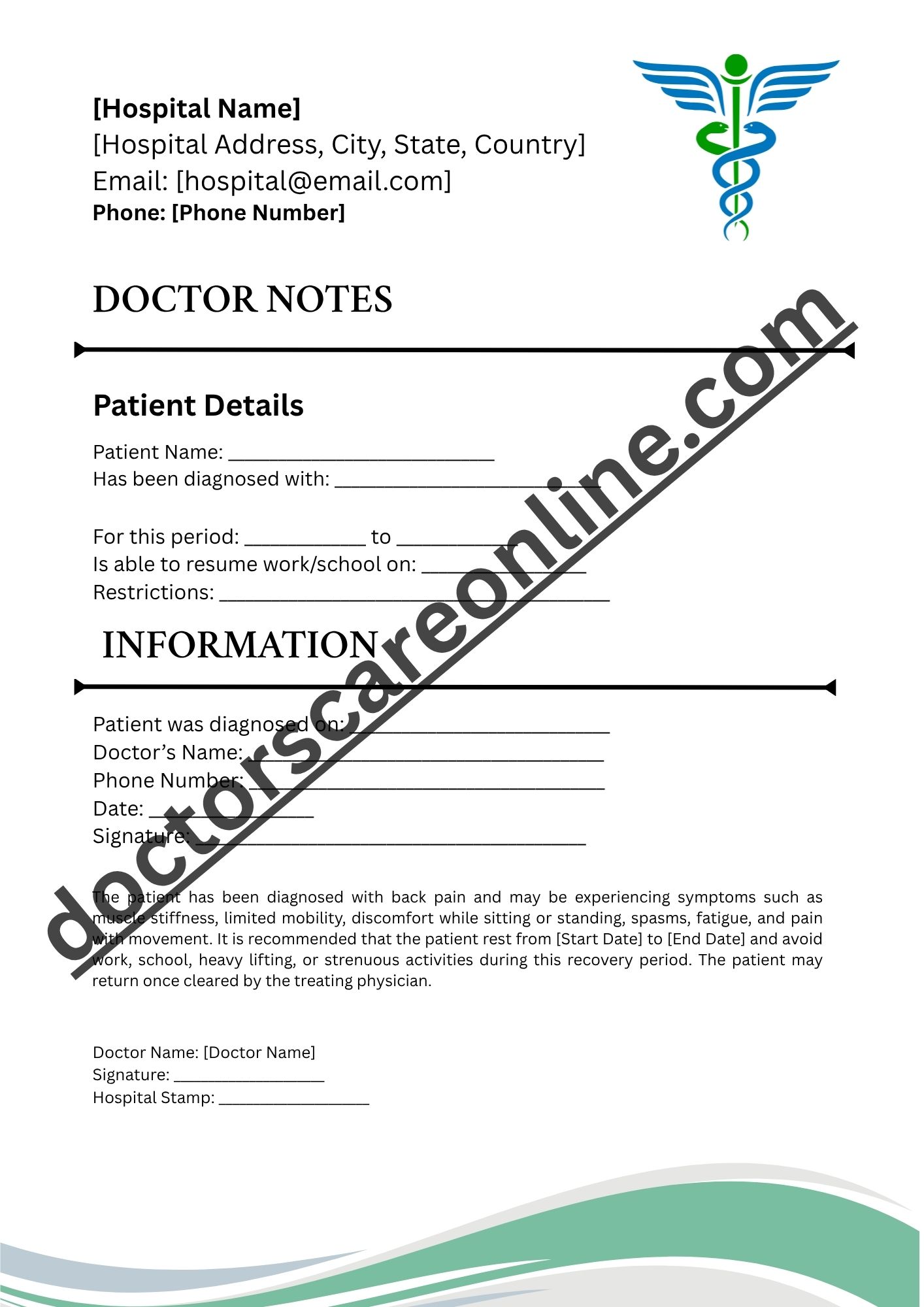
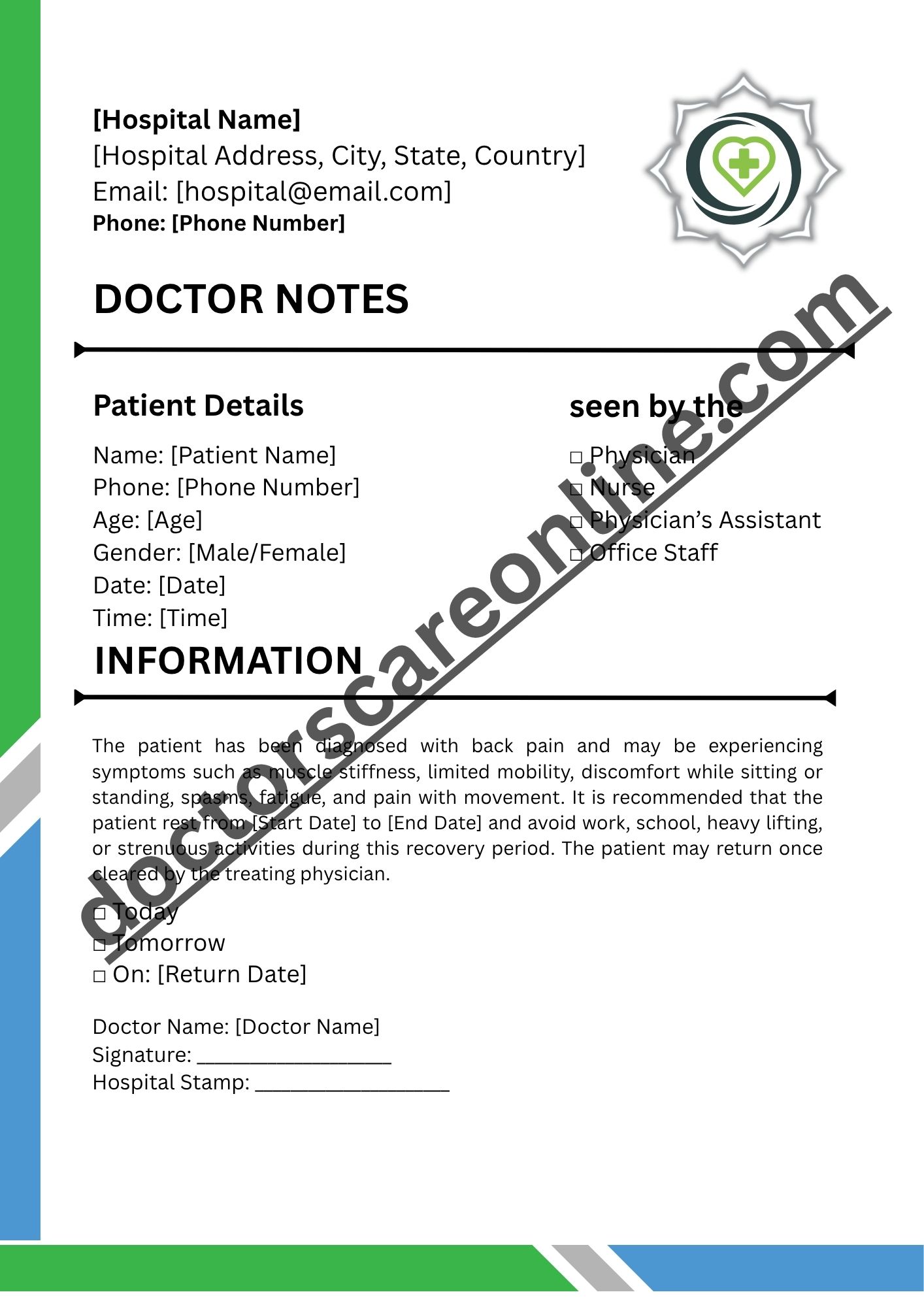
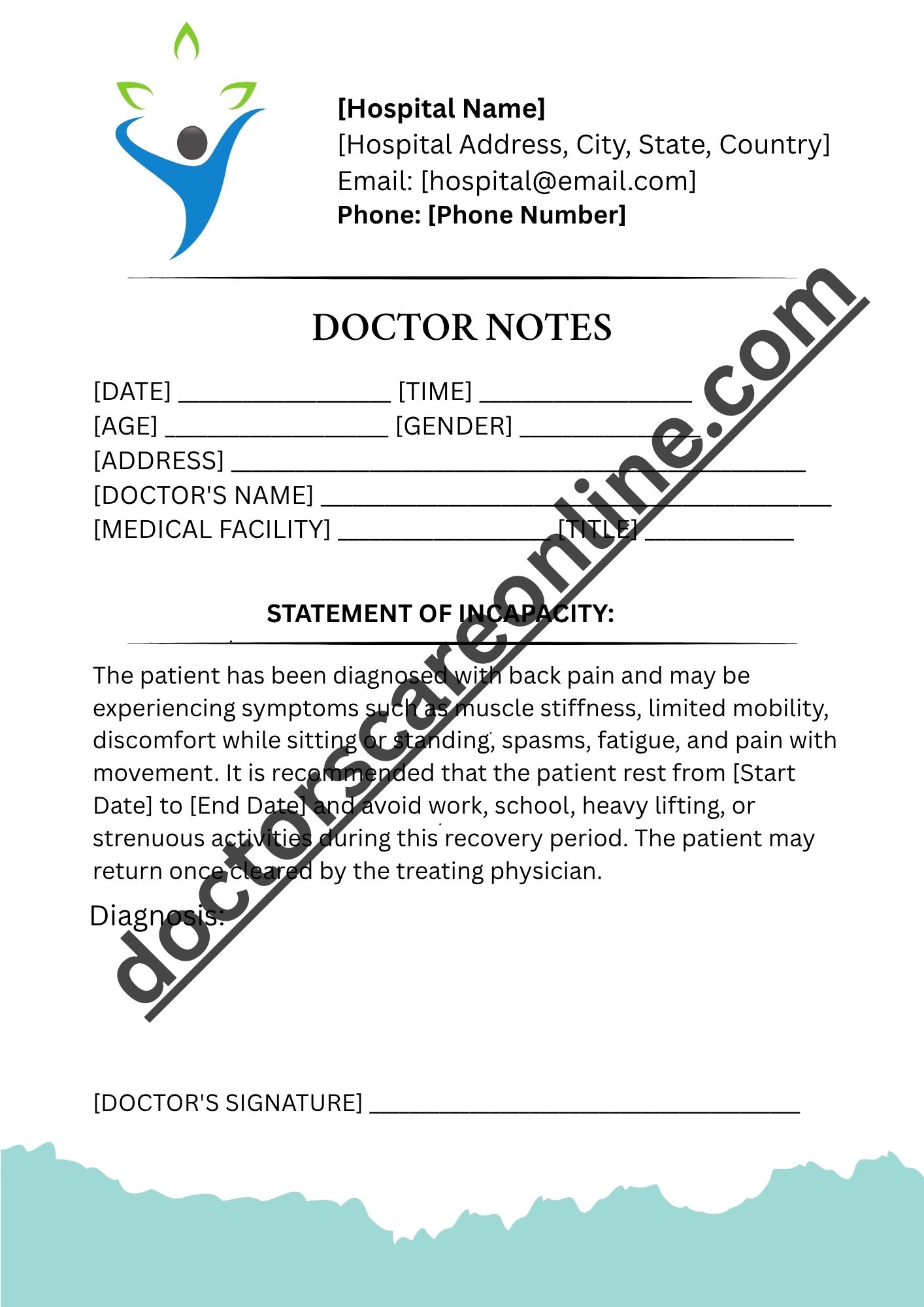
A doctor’s note for back pain is an official medical document provided by a licensed healthcare provider after evaluating your condition. It serves as written confirmation that your back pain has been assessed by a medical professional and that your symptoms may temporarily affect your ability to perform normal daily activities, attend school, or complete work safely.
Unlike a personal explanation or self-reported illness, a doctor’s note provides formal medical documentation that employers, educational institutions, and organizations can use when reviewing absence requests or workplace accommodations.
The purpose of the note is not only to confirm your medical visit but also to communicate any necessary recovery recommendations. Depending on your diagnosis and symptoms, your healthcare provider may recommend:
- Taking a few days off from work or school
- Returning with temporary work restrictions
- Avoiding heavy lifting or repetitive movements
- Working reduced hours or light-duty assignments
- Scheduling a follow-up examination before returning to normal activities
A doctor’s note does not always include your exact diagnosis. In many cases, it simply confirms that medical evaluation was performed and outlines any activity limitations or recommended recovery period while protecting your medical privacy.
Why You Might Need a Doctor’s Note for Back Pain
Back pain affects everyone differently. While some people recover within a day or two, others may experience pain severe enough to interfere with their ability to work, study, or perform routine tasks. A doctor’s note helps explain these temporary limitations through professional medical documentation.
You may need a doctor’s note if:
- Your employer requires medical proof after taking sick leave.
- Your school or college requests documentation for an excused absence.
- You need temporary work restrictions because your job involves physical labor.
- Your healthcare provider recommends staying home to prevent further injury.
- You are requesting workplace accommodations during recovery.
- You need documentation for insurance, disability claims, or workers’ compensation (where applicable).
Having proper documentation can make it easier to communicate your medical situation while ensuring your recovery is supported appropriately.
Common Reasons People Request a Doctor’s Note for Back Pain
People may need a doctor’s note for back pain when their symptoms make it difficult or unsafe to carry out work, school, or everyday responsibilities. A healthcare provider evaluates the condition and may provide medical documentation if rest, treatment, or temporary activity restrictions are necessary.
- Acute Muscle Strain: Sudden muscle or ligament strain caused by lifting heavy objects, awkward movements, or overexertion that limits normal mobility.
- Lower Back Pain From Prolonged Sitting: Pain and stiffness resulting from long hours of sitting, poor posture, or an ergonomically incorrect workstation.
- Sciatica: Pain caused by irritation or compression of the sciatic nerve, often radiating from the lower back into the hips, buttocks, and legs.
- Herniated or Bulging Disc: A spinal disc pressing on nearby nerves, leading to persistent back pain, numbness, tingling, or muscle weakness.
- Workplace Injury: Back injuries sustained while performing physically demanding tasks, repetitive lifting, bending, or prolonged standing at work.
- Sports or Exercise-Related Injury: Muscle strains, ligament injuries, or spinal stress caused by athletic activities, weightlifting, or intense physical exercise.
- Chronic Back Pain Flare-Ups: Temporary worsening of ongoing back conditions that significantly affect movement, productivity, and daily activities.
- Recovery After Back Surgery: Healing after spinal surgery or medical procedures may require time away from work or school and temporary physical restrictions.
- Pregnancy-Related Back Pain: Increased strain on the lower back during pregnancy that may require modified duties or short-term medical leave.
- Motor Vehicle Accident Injuries: Back pain following a car accident or other traumatic incident that requires medical evaluation and recovery time.
- Slip, Trip, or Fall Accidents: Injuries caused by falls that may result in muscle damage, spinal strain, or reduced mobility.
- Recurring Spinal Conditions: Conditions such as degenerative disc disease, spinal arthritis, or spinal stenosis that periodically cause severe pain and functional limitations.
- Difficulty Performing Job Duties: When back pain prevents an individual from safely lifting, standing, walking, driving, or completing essential work responsibilities.
- Need for Temporary Work Restrictions: A doctor may recommend light-duty work, lifting restrictions, reduced hours, or work-from-home arrangements during recovery.
- Medical Documentation for School or College: Students experiencing severe back pain may require an official doctor’s note to excuse absences, reschedule exams, or receive academic accommodations.
Signs That Back Pain May Require Medical Attention
If your back pain is severe, persistent, or accompanied by other concerning symptoms, it’s important to seek medical evaluation. The following signs may indicate that professional medical care is needed:
- Pain That Lasts More Than a Few Days: Back pain that doesn’t improve with rest or continues to worsen after several days should be assessed by a healthcare provider.
- Difficulty Standing or Walking: If pain affects your ability to stand upright, walk comfortably, or perform everyday activities, medical attention may be necessary.
- Pain That Travels Down the Leg: Pain radiating from the lower back into one or both legs may indicate conditions such as sciatica or a herniated disc, especially if accompanied by tingling or numbness.
- Muscle Weakness or Numbness: Persistent numbness, tingling, or weakness in the legs, feet, or toes can be a sign of nerve compression and should not be ignored.
- Severe Pain After an Accident: Back pain following a fall, car accident, sports injury, or other trauma should be evaluated to rule out fractures or spinal injuries.
- Fever Along With Back Pain: A high fever combined with back pain may indicate an infection or another serious medical condition requiring prompt treatment.
- Loss of Bladder or Bowel Control: Sudden loss of bladder or bowel control along with back pain is a medical emergency and requires immediate emergency care.
- Pain That Wakes You Up at Night: Persistent pain that disrupts your sleep or worsens during the night may need further medical investigation.
- Unexplained Weight Loss With Back Pain: Significant weight loss accompanied by ongoing back pain should be evaluated to identify any underlying health conditions.
How Long Is a Doctor’s Note for Back Pain Valid?
A doctor’s note does not have a fixed validity period. Its validity depends on the dates and recommendations mentioned by the healthcare provider and the policies of your school, college, or employer.
| Situation | Typical Validity | What You May Need to Do |
|---|---|---|
| School or College Absence | Valid for the leave dates mentioned in the doctor’s note. | Submit the note to the school administration. If you need more recovery time, provide an updated note after a follow-up visit. |
| Office or Workplace Leave | Valid until the return-to-work date or leave period specified by the healthcare provider. | Inform your employer and submit the doctor’s note according to company policy. |
| Extended Recovery | A new doctor’s note is usually required if your recovery takes longer than expected. | Visit your healthcare provider for a re-evaluation and updated medical documentation. |
| Light-Duty or Work Restrictions | Valid for the restriction period mentioned in the note. | Follow the recommended work limitations until your doctor clears you for normal duties. |
| Return to Work or School | The note remains valid until the approved return date. | Resume normal activities or submit a fitness-for-duty note if requested by your employer or institution. |
What Information Is Included in a Doctor’s Note for Back Pain?
A doctor’s note for back pain confirms that you were evaluated by a licensed healthcare provider and may need time off or temporary work restrictions. The exact details may vary, but most notes include the following information:
- Patient’s Name: Identifies the individual receiving medical care.
- Date of Examination: The date the medical evaluation was performed.
- Medical Confirmation: Confirms that the patient was examined for back pain.
- Recommended Leave: Specifies the period of absence from work or school, if needed.
- Work Restrictions: Lists temporary limitations such as avoiding heavy lifting or prolonged standing.
- Return-to-Work Date: Indicates when the patient can safely resume normal activities.
- Follow-Up Instructions: Advises whether another medical visit is required.
- Doctor’s Signature & Clinic Details: Verifies the authenticity of the medical document.
Note: A doctor’s note usually focuses on work limitations and recovery recommendations rather than revealing your exact medical diagnosis.
How Long Can a Doctor Excuse You for Back Pain?
The amount of time a doctor may recommend depends on the cause of your back pain, the severity of your symptoms, and the type of work you do.
- Mild muscle strain: 1–3 days
- Moderate back pain: 3–7 days
- Acute lower back pain: 1–2 weeks
- Sciatica or herniated disc: Several weeks (depending on recovery)
- After back surgery: Recovery may take several weeks or longer
Your healthcare provider will determine the appropriate leave based on your condition and progress.
Can You Get a Same-Day Doctor’s Note for Back Pain?
Yes. If your back pain requires medical attention, many healthcare providers can issue a same-day doctor’s note after evaluating your condition.
You may obtain one from:
- Primary care physician
- Urgent care clinic
- Walk-in medical center
- Emergency room (for serious injuries)
- Telehealth provider (where available)
The provider will assess your symptoms and decide whether medical leave or work restrictions are necessary.
Back Pain at Work: When Is a Medical Note Necessary?
A doctor’s note may be needed if your back pain prevents you from safely performing your job or if your employer requires medical documentation.
Common situations include:
- Unable to lift or carry heavy objects
- Difficulty standing or sitting for long periods
- Pain that affects daily work performance
- Recovery after a workplace injury or surgery
- Need for light-duty work or temporary restrictions
- Employer requests proof of a medical absence
Related Post-





Reviews
There are no reviews yet.