
Yes, you may be able to get a doctor’s note from a virtual visit if a licensed healthcare provider evaluates your situation and determines that medical documentation is appropriate. A virtual appointment can allow you to discuss your symptoms, medical concerns, treatment needs, or recovery with a healthcare professional without traveling to a traditional office.
After reviewing your condition, the provider can decide whether a medical note, work excuse, school absence note, return-to-work recommendation, or another form of documentation is appropriate. However, receiving a doctor’s note is not automatic. The healthcare provider must make an independent clinical decision based on the information available during the consultation.
Telehealth is used for many types of healthcare services, including primary care, urgent care, behavioral health, and follow-up appointments. HHS also notes that providers may send patients information and documents after a telehealth appointment, including through a patient portal.
Related Doctor Note :—
You can also visit:
What Is a Doctor’s Note From a Virtual Visit?
A doctor’s note from a virtual visit is medical documentation issued by a healthcare professional following a remote consultation.
Depending on the circumstances, the documentation may address:
- A medical condition or symptoms evaluated during the visit
- The need for temporary rest or activity restrictions
- Recommended time away from work or school
- A return-to-work or return-to-school date
- Work-related limitations
- Follow-up care recommendations
- Other information that the healthcare provider considers medically appropriate
The exact information included depends on the purpose of the document, the provider’s clinical assessment, and the requirements of the organization receiving it.
A legitimate virtual doctor’s note should be connected to an actual healthcare encounter rather than being created simply because someone requests documentation.
How Does a Virtual Doctor’s Appointment Work?
A virtual appointment generally allows you to communicate with a healthcare provider through video, telephone, or another approved telehealth method.
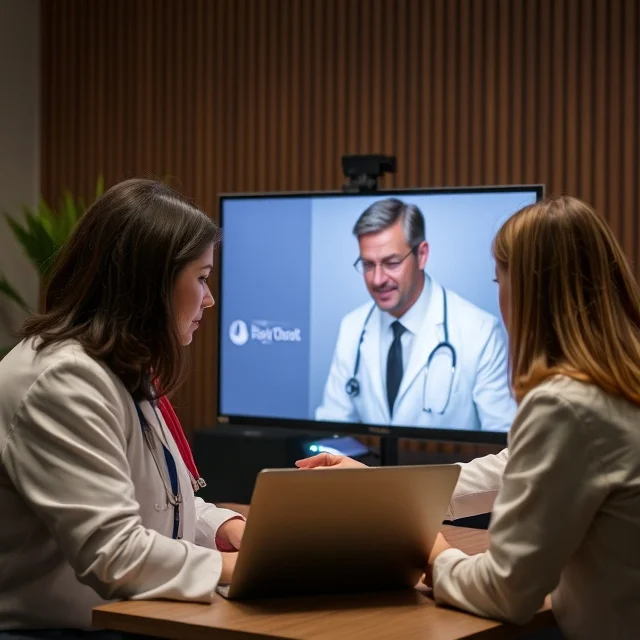
HHS describes synchronous telehealth as live interaction between a patient and provider, including video or audio visits.
A typical process may include:
- Book an online appointment
Select an available healthcare provider and choose a suitable appointment time. - Complete the required information
You may be asked to provide your symptoms, medical history, medications, allergies, and other relevant details. - Attend the virtual consultation
Meet with the provider through the platform or communication method provided for your appointment. - Discuss your health concern
Explain what you are experiencing, when the symptoms began, how they affect you, and any relevant medical history. - Follow the provider’s evaluation
The provider may ask questions, visually assess certain symptoms, review information you provide, or determine whether an in-person examination or additional testing is necessary. - Receive the provider’s decision
If documentation is medically appropriate, the provider may issue the relevant note according to their professional judgment. - Access your documentation
Depending on the healthcare service, documents may be delivered through a patient portal or another secure method. HHS states that providers may send patients information after a telehealth visit, including PDF documents.
When Can a Virtual Visit Support a Doctor’s Note?
A virtual consultation can be useful when your health concern can reasonably be evaluated remotely and the provider believes documentation is warranted.
Examples can include situations involving:
- Cold or flu-like symptoms
- Fever
- Cough or sore throat
- Gastrointestinal symptoms
- Headaches
- Minor illnesses
- Certain injuries
- Follow-up care
- Mental health concerns
- Recovery recommendations
- Temporary work or school restrictions
The suitability of telehealth depends on the individual situation. HHS explains that some conditions can be assessed through on-demand telehealth, while providers may also determine that a patient needs in-person care.
A virtual appointment therefore provides an opportunity for professional evaluation, rather than serving as an automatic way to obtain documentation.
What Information Should You Give the Virtual Doctor?
Accurate information helps the healthcare provider understand your situation and make an appropriate clinical decision.
Before your appointment, consider preparing:
- Your main symptoms
- When your symptoms started
- Whether they are improving or worsening
- Current medications
- Known allergies
- Relevant medical history
- Recent temperature or other measurements, when applicable
- Questions you want to ask
- Any workplace, school, or other documentation requirements you already know about
HHS recommends preparing information such as current medications, symptoms, concerns, allergies, and measurements that may be relevant to the appointment.
Be honest and specific. Do not exaggerate symptoms or leave out important medical information simply to obtain a particular type or length of medical leave.
Can a Virtual Doctor Give a Work Excuse?
A virtual doctor may provide work-related documentation when the provider evaluates the patient and determines that time away from work or specific restrictions are medically appropriate.
Depending on the situation, documentation could address:
- Temporary absence from work
- A recommended recovery period
- Modified duties
- Limited physical activity
- Working from home
- A return-to-work date
- Follow-up requirements
The exact wording and duration are determined by the healthcare professional. An employer may also have its own documentation requirements, so it is useful to check the workplace policy before your appointment.
A doctor’s note does not automatically guarantee that an employer will approve every requested arrangement. The employer’s policies and applicable laws can affect how documentation is handled.
Can You Get a School Excuse Note Through Telehealth?
In some circumstances, a healthcare provider may issue documentation for a school absence after a virtual consultation.
This may apply when a student has a medical condition that reasonably requires time away from classes or school activities.
Parents, guardians, adult students, or caregivers should check the school’s requirements because some institutions may request specific information, dates, provider details, or other documentation.
The provider should only document what is supported by the consultation and their professional assessment.
Is a Virtual Doctor’s Note the Same as an In-Person Doctor’s Note?
A virtual consultation and an in-person appointment are different methods of providing healthcare, but both can involve clinical assessment and medical documentation.
The important distinction is whether the provider can appropriately evaluate the patient’s condition through the selected method.
Some situations can be managed through telehealth, while others require physical examination, diagnostic testing, imaging, emergency evaluation, or other in-person services.
HHS guidance specifically recognizes that telehealth can be integrated with in-person care and that some care requires an in-person visit.
Therefore, a virtual doctor’s note should be viewed as documentation associated with a genuine remote healthcare encounter—not as a replacement for every type of medical examination.
How to Prepare for a Virtual Visit for Medical Documentation
Good preparation can make the consultation more efficient and help you communicate your health concerns clearly.
1. Choose a Private Location: Use a quiet, private area where you can speak openly. HHS recommends choosing an appropriate private environment for telehealth appointments.
2. Check Your Device: Make sure your phone, tablet, or computer has sufficient battery power, internet access, a functioning microphone, and a working camera when video is required.
3. Prepare Your Medical Information: Have relevant medication information, allergies, previous diagnoses, and symptom details available.
4. Know Your Documentation Requirements: If the note is intended for an employer, school, airline, gym, or another organization, review its requirements beforehand.
5. Attend the Appointment Yourself: The provider needs accurate information from the patient to conduct an appropriate consultation. Do not provide misleading information or attempt to have someone else participate as the patient.
6. Ask Questions: If you do not understand the provider’s recommendation, ask for clarification before ending the appointment.
What If the Doctor Says You Need an In-Person Visit?
A virtual healthcare provider may determine that your symptoms cannot be adequately assessed remotely.
For example, a provider may recommend an in-person appointment when a physical examination, testing, imaging, vital-sign assessment, or urgent treatment is needed.
This is an important part of responsible telemedicine. HHS guidance states that providers can use telehealth to assess a patient’s needs and determine whether another type of care is required.
If an in-person evaluation is recommended, follow that advice rather than trying to obtain documentation without completing the recommended medical assessment.
How Long Does It Take to Receive a Doctor’s Note After a Virtual Visit?
There is no universal delivery time for a medical note.
If the provider determines that documentation is appropriate, it may be made available during or after the appointment depending on the healthcare service’s workflow.
Some providers make documents available through a patient portal. HHS notes that post-visit information may be provided electronically, including as PDF documents.
If you need documentation by a specific deadline, ask the provider or healthcare service about the expected delivery process before completing your appointment.
Are Virtual Doctor Visits Private?
Healthcare providers and telehealth services should take appropriate steps to protect patient health information.
HHS states that telehealth appointments are subject to privacy protections and recommends using secure communication methods, private locations, and appropriate safeguards for health information.
Patients can also take practical precautions by:
- Using a private room
- Avoiding public Wi-Fi for sensitive health information
- Using a secure patient portal when available
- Keeping devices protected with passwords
- Confirming that they are communicating with a legitimate healthcare provider
- Avoiding unnecessary recording of the consultation
Privacy practices can vary by provider and platform, so review the service’s privacy information before sharing sensitive medical details.
Can You Request a Specific Number of Days Off?
You can explain how much time you believe you need or tell the provider about your work or school requirements, but you should not expect a provider to approve a specific number of days automatically.
The healthcare professional determines whether time away from work or school is medically appropriate and what duration or restrictions should be documented.
For example, you may explain that your employer requires documentation for an absence of several days. The provider can then assess your condition and determine what, if anything, should be recommended.
This distinction helps keep medical documentation based on clinical judgment rather than on a predetermined request.
How an Online Doctor Consultation Can Help With Documentation
An online doctor consultation can be convenient when traveling to a clinic is difficult or when the health concern is suitable for remote evaluation.
HHS identifies convenience, timely access, and the ability to connect with healthcare professionals remotely among the potential benefits of on-demand telehealth.
For a patient seeking documentation, the process can combine:
Online appointment → Medical history and symptom discussion → Provider evaluation → Clinical decision → Appropriate documentation
This approach keeps the medical consultation at the center of the process.
What Should You Look for in an Online Doctor Service?
Before booking an online medical consultation, consider whether the service clearly explains:
- Who provides the medical consultation
- How the appointment is conducted
- What information patients need to provide
- How medical records and documents are handled
- How follow-up care works
- What happens if an in-person evaluation is necessary
- How patient information is protected
- Whether additional services or fees may apply
A legitimate healthcare service should not promise that every patient will receive a particular diagnosis, prescription, medical restriction, or doctor’s note before evaluation.
Can an Online Doctor’s Note Be Used Anywhere?
Not necessarily.
Whether a medical note is accepted depends on the organization receiving it and its documentation policy.
For example, an employer, school, university, airline, insurance company, gym, or government organization may have different requirements.
Some organizations may require:
- A specific form
- A particular date range
- Provider credentials
- A physical examination
- Additional medical records
- A specific type of certification
Before relying on documentation, check the recipient’s current requirements.
Why a Real Medical Consultation Matters
A doctor’s note is medical documentation, so the information should be based on an actual healthcare evaluation.
During a telehealth encounter, providers may document the consultation in the patient’s medical record. HHS guidance specifically identifies encounter documentation as part of telehealth clinical practice.
This creates an important distinction between:
- Legitimate medical documentation: A healthcare professional evaluates the patient and determines what documentation is appropriate.
- Unsupported documentation: A document is created without an appropriate healthcare evaluation or contains information that was not established by the provider.
Patients should use healthcare services that prioritize clinical assessment, accurate records, privacy, and appropriate follow-up.
How to Request a Doctor’s Note During a Virtual Appointment
If you believe you may need medical documentation, simply tell the healthcare provider why you need it.
For example, explain:
- What symptoms or health issue you are experiencing
- How the condition is affecting your daily activities
- Whether you missed work or school
- When the absence occurred or is expected to occur
- What documentation the receiving organization requires
The provider can then decide whether a note is clinically appropriate and what information it should contain.
You do not need to diagnose yourself before the appointment. Your role is to provide accurate information; the provider’s role is to evaluate your condition and make the appropriate clinical decision.
Frequently Asked Questions
1. Can a virtual doctor write a note for a previous absence?
A provider may have specific policies regarding documentation for a past absence. Whether they can document a previous date depends on their evaluation, available medical information, and professional judgment. Ask the provider directly rather than assuming retrospective documentation will be issued.
2. Can I use a virtual doctor’s note for jury duty?
It depends on the court or jurisdiction handling the jury service. Courts can establish their own medical documentation requirements, so check the instructions provided with your jury summons before arranging healthcare documentation.
3. Can a virtual doctor’s note be submitted electronically?
In many situations, medical documentation can be delivered electronically, such as through a secure patient portal. Whether electronic submission is accepted depends on the organization requesting the documentation.
4. Can a virtual visit provide documentation for an accommodation request?
Potentially, depending on the nature of the request and the provider’s assessment. Accommodation processes may require specific information about functional limitations rather than simply confirmation of an appointment, so check the receiving organization’s requirements.
5. What happens if my employer rejects a virtual doctor’s note?
Ask the employer what specific documentation is missing or what format is required. If additional medical information is needed, contact the healthcare provider to determine whether they can appropriately provide clarification or additional documentation.
Medical Disclaimer: This article is for general educational and informational purposes only and does not constitute medical advice, diagnosis, or treatment. A virtual healthcare appointment does not guarantee that a patient will receive a doctor’s note, medical excuse, prescription, diagnosis, or any particular treatment.
Only a qualified healthcare professional who evaluates the patient can determine whether medical documentation is appropriate. Telehealth may not be suitable for every medical condition, and some symptoms require an in-person examination or urgent medical care.