
High blood pressure, also called hypertension, does not always mean you need to miss work. Many people with hypertension have no noticeable symptoms and can continue their normal activities while following a treatment and monitoring plan from their healthcare professional. However, there are situations in which taking time off work may be appropriate, particularly when blood pressure is significantly elevated, symptoms are interfering with your ability to work safely, or a clinician recommends rest or temporary work restrictions.
Whether you should work, take a sick day, work reduced hours, or remain off work for several days depends on your blood pressure readings, symptoms, medical history, job duties, and your healthcare provider’s assessment.
Related Doctor Note :—
You can also visit:
Can High Blood Pressure Be a Reason to Take Time Off Work?
Yes, high blood pressure can sometimes be a legitimate reason to take time away from work, but the diagnosis alone does not automatically mean that you need leave.
For example, someone with well-controlled hypertension who feels well may be able to perform their usual job. In contrast, a person experiencing concerning symptoms, very high blood pressure readings, medication-related problems, or another health issue associated with hypertension may need medical evaluation before returning to normal duties.
A healthcare professional can assess your situation and determine whether you need:
- No work restriction
- A short period of sick leave
- Reduced or modified duties
- Additional monitoring
- A follow-up appointment
- Urgent or emergency medical care
If your employer requires documentation for an absence, a medical professional can determine whether medical documentation is appropriate after evaluating your condition.
When Should You Consider Staying Home From Work?
The decision to stay home should be based on more than one blood pressure reading whenever possible. Your symptoms and overall health matter too.
Taking time away from work may be reasonable when you are feeling unwell and your symptoms make it difficult to concentrate, perform physical tasks, commute safely, or complete your normal responsibilities.
Situations that may warrant contacting a healthcare professional include:
- Repeatedly elevated blood pressure readings
- Significant headache or unusual discomfort
- Dizziness or weakness
- Difficulty concentrating
- Symptoms that interfere with normal work activities
- A recent change in blood pressure medication
- Side effects that affect your ability to function
- A healthcare professional has advised you to rest or limit certain activities
- Your job involves strenuous physical activity and you have been advised to avoid it temporarily
Your occupation also matters. Someone working at a desk may have different temporary limitations from someone operating machinery, driving commercially, working at heights, or performing strenuous physical labor.
What Blood Pressure Reading Is Too High to Work?
There is no single blood pressure number that automatically determines whether you should take a sick day.
For adults, the American Heart Association classifies readings of 140/90 mm Hg or higher as stage 2 hypertension. A reading above 180/120 mm Hg falls into the severe hypertension range and requires prompt medical attention.
If you obtain a reading above 180/120 mm Hg, sit quietly and repeat the measurement after at least one minute. If it remains that high, contact a healthcare professional promptly.
The situation becomes an emergency when a reading above 180/120 mm Hg occurs together with symptoms such as:
- Chest pain
- Shortness of breath
- Back pain
- Numbness
- Weakness
- Vision changes
- Difficulty speaking
These symptoms can indicate a hypertensive emergency. Call 911 or your local emergency service rather than trying to manage the situation by simply taking a day off work.
Why Work May Feel Harder When Your Blood Pressure Is Uncontrolled
High blood pressure itself frequently causes no symptoms, which is why a person may have hypertension without feeling sick.
When someone does feel unwell, however, symptoms or another underlying condition may make normal work more difficult. Work-related stress can also affect overall well-being, while lifestyle factors such as poor sleep, physical inactivity, smoking, and dietary habits can influence blood pressure management.
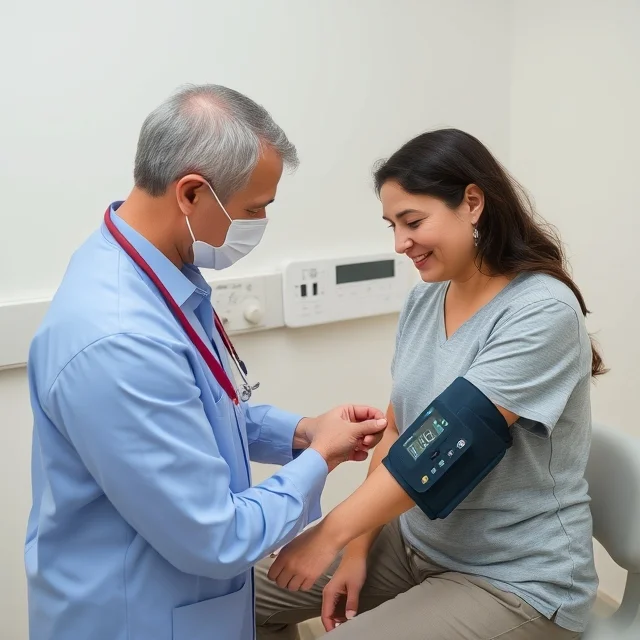
This does not mean that every stressful workday causes a dangerous rise in blood pressure. Instead, persistent symptoms or poorly controlled hypertension should be discussed with a healthcare professional rather than assumed to be caused solely by work.
How to Check Your Blood Pressure Before Deciding About Work
If you have a home blood pressure monitor, taking a careful reading can give your healthcare professional useful information.
For more meaningful measurements:
- Sit quietly before taking the measurement.
- Keep your arm supported appropriately.
- Follow the instructions supplied with your monitor.
- Take a second reading when the first result is unexpectedly high.
- Record the readings along with the date and approximate time.
- Share the readings with your healthcare professional.
A single higher-than-usual reading does not necessarily establish a diagnosis. Healthcare professionals generally use repeated measurements to determine whether someone has persistent hypertension.
Should You Take a Sick Day or Work From Home?
Working from home can sometimes reduce commuting demands or make it easier to follow a monitoring schedule, but it is not automatically a substitute for medical care.
If you feel capable of performing your job safely and your healthcare professional has not advised you to stop working, remote work may be an option depending on your employer’s policies.
Taking a complete sick day may be more appropriate when symptoms are affecting your ability to concentrate, when you need a medical appointment, or when a clinician recommends temporary rest or work restrictions.
For jobs involving driving, heavy machinery, climbing, physically demanding tasks, or safety-sensitive responsibilities, symptoms that affect alertness, balance, vision, or concentration deserve particular attention.
What Can a Doctor Evaluate During an Online Consultation?
An online medical consultation can be useful for discussing your blood pressure readings, symptoms, medications, work responsibilities, and concerns about whether you should remain at work.
Depending on your circumstances, a licensed healthcare professional may:
- Review your reported blood pressure readings
- Ask about symptoms and when they began
- Review relevant medications
- Discuss possible medication side effects
- Ask about your work duties
- Determine whether an in-person assessment is needed
- Recommend monitoring or follow-up
- Discuss whether temporary work restrictions are appropriate
- Provide medical documentation when clinically appropriate
An online consultation should not be used to bypass necessary emergency care. If you have symptoms suggesting a hypertensive emergency, seek emergency medical attention immediately rather than waiting for a routine telehealth appointment.
Can a Doctor Provide a Doctor’s Note for High Blood Pressure?
A doctor may provide medical documentation when, after evaluating you, they determine that your health condition warrants time away from work or another workplace accommodation.
The documentation may depend on the clinical assessment and applicable workplace requirements. It may indicate that you were evaluated and may include medically appropriate information concerning an absence or restriction.
A doctor’s note is not simply proof that a person has a particular blood pressure number. A healthcare professional decides whether documentation is medically justified based on the complete situation.
For an online doctor consultation, be prepared to provide accurate information about your symptoms, recent readings, medications, relevant medical history, and the type of work you perform.
How Long Should You Stay Off Work With High Blood Pressure?
There is no universal number of days that applies to everyone with hypertension.
Some people may not need any time away from work. Others may require a short absence while they receive medical evaluation, adjust to treatment, recover from symptoms, or address another health problem.
The appropriate duration depends on the clinical assessment and whether you can safely perform your job.
If your healthcare professional recommends a specific return-to-work date or temporary restriction, follow that guidance and arrange follow-up if your symptoms continue.
Managing High Blood Pressure While Working
Long-term blood pressure management generally involves more than occasional rest from work. Depending on your individual circumstances, a healthcare professional may recommend lifestyle changes and, when appropriate, medication.
Evidence-based approaches can include:
- Following a heart-healthy eating pattern
- Limiting sodium and alcohol when advised
- Staying physically active within your healthcare professional’s recommendations
- Maintaining a healthy weight when appropriate
- Avoiding tobacco
- Managing stress
- Getting adequate, good-quality sleep
- Taking prescribed medication as directed
- Monitoring blood pressure as recommended
The CDC notes that lifestyle changes can help many people manage blood pressure, while some people also need medication.
Do not stop, skip, double, or change your blood pressure medication because of a single reading unless your healthcare professional tells you to do so.
When High Blood Pressure Requires Immediate Medical Attention
Do not treat a potentially dangerous blood pressure reading as an ordinary workplace absence.
If your blood pressure is above 180/120 mm Hg, repeat the measurement after at least one minute. If it remains elevated, contact a healthcare professional promptly. If the high reading occurs with chest pain, shortness of breath, back pain, numbness, weakness, vision changes, difficulty speaking, or another new concerning symptom, call 911 or your local emergency service immediately.
Emergency symptoms should take priority over obtaining a doctor’s note, contacting your employer, or arranging routine online care.
How to Request a Doctor’s Note Through an Online Appointment
If you believe your blood pressure symptoms are affecting your ability to work, an online doctor consultation can provide an opportunity to discuss your situation with a licensed healthcare professional.
A typical process may include:
- Book an online medical appointment with an appropriate healthcare professional.
- Describe your symptoms and concerns accurately during the consultation.
- Provide recent blood pressure readings if you have them.
- Explain your work requirements and how your symptoms are affecting your ability to perform them.
- Follow the clinician’s medical recommendations.
- Request appropriate documentation if the clinician determines that a doctor’s note or work restriction is medically justified.
- Follow any recommended follow-up care before returning to normal duties.
The important distinction is that medical documentation should follow a genuine healthcare evaluation rather than being purchased without clinical assessment.
What Should an Employer’s Medical Note Include?
The exact requirements vary by employer, location, and workplace policy. A healthcare provider may include information such as the date of evaluation, relevant work restriction or absence period, and other information that is medically appropriate and permitted by applicable privacy rules.
You may want to check your employer’s sick-leave policy before your appointment so you understand what type of documentation is required.
Avoid sharing unnecessary medical details with an employer if they are not required. Your healthcare provider can advise you about what information is appropriate for the documentation.
High Blood Pressure and Return to Work
Returning to work should depend on your health status and any instructions from your healthcare professional.
If your symptoms have resolved and your clinician has not identified a reason for continued restriction, you may be able to resume normal duties. If you still have symptoms, your blood pressure remains poorly controlled, or your job presents specific safety concerns, additional evaluation may be appropriate.
A gradual return, modified duties, or temporary restrictions may sometimes be considered when medically appropriate.
Frequently Asked Questions
1. Can stress at work temporarily raise blood pressure?
Yes. Stress can contribute to temporary changes in blood pressure, but repeated high readings should not automatically be attributed to workplace stress. Persistent elevation should be discussed with a healthcare professional.
2. Can I exercise at work if I have hypertension?
Many people with controlled hypertension can remain physically active, but the appropriate level of activity depends on their health and treatment plan. If you have symptoms or have been advised to restrict physical activity, follow your clinician’s instructions.
3. Can high blood pressure make you fail a workplace health screening?
A high reading during a workplace screening does not by itself establish a permanent diagnosis or automatically determine your employment status. Additional measurements or medical evaluation may be needed.
4. Can I take over-the-counter medicine when I have high blood pressure?
Some over-the-counter medicines can affect blood pressure or interact with prescription medications. Ask a pharmacist or healthcare professional whether a specific product is appropriate for you before taking it.
5. Does high blood pressure qualify for long-term workplace accommodations?
It depends on the individual’s medical condition, functional limitations, job requirements, and applicable workplace or disability laws. A qualified healthcare professional can document medically supported restrictions when appropriate.
Medical Disclaimer: This article is for general educational purposes only and does not provide medical advice, diagnosis, or treatment. High blood pressure can sometimes occur without symptoms, while very high blood pressure accompanied by concerning symptoms can be a medical emergency. Your blood pressure readings, symptoms, medical history, medications, pregnancy status when applicable, and work duties should be evaluated by a qualified healthcare professional. Do not delay emergency care to obtain a doctor’s note. If you have a blood pressure reading above 180/120 mm Hg together with chest pain, shortness of breath, weakness, numbness, vision changes, difficulty speaking, or other emergency symptoms, call 911 or your local emergency service.