
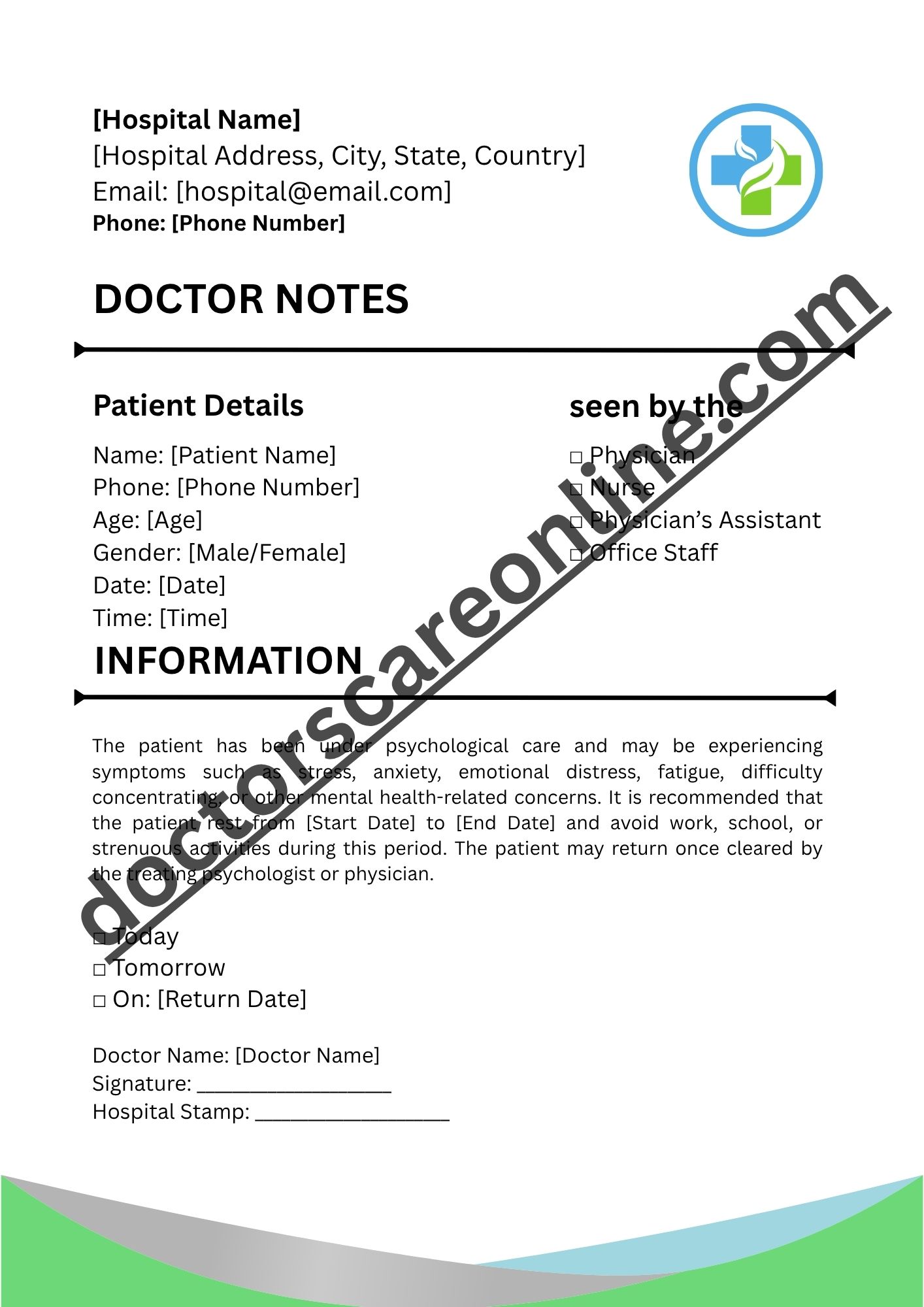
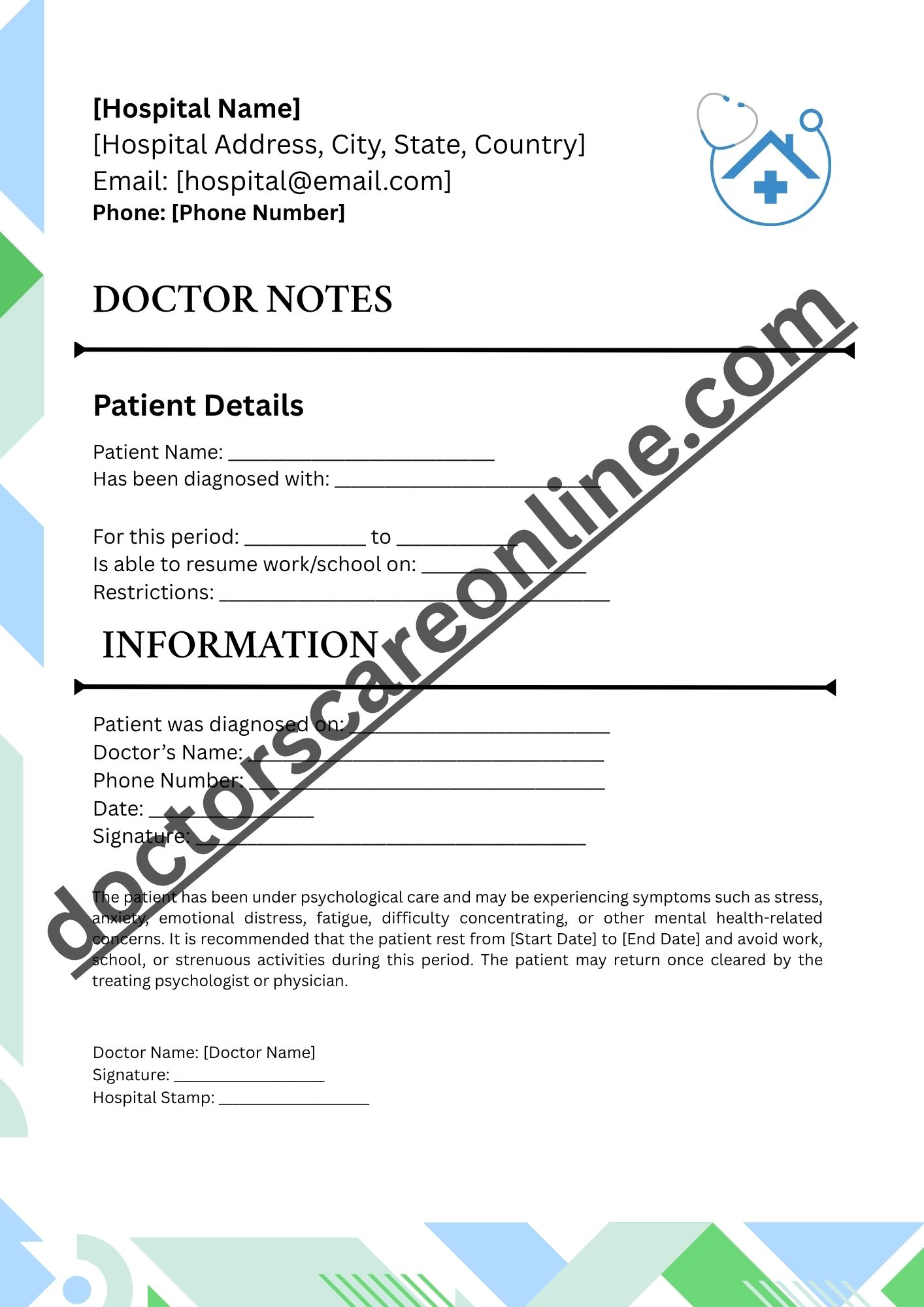
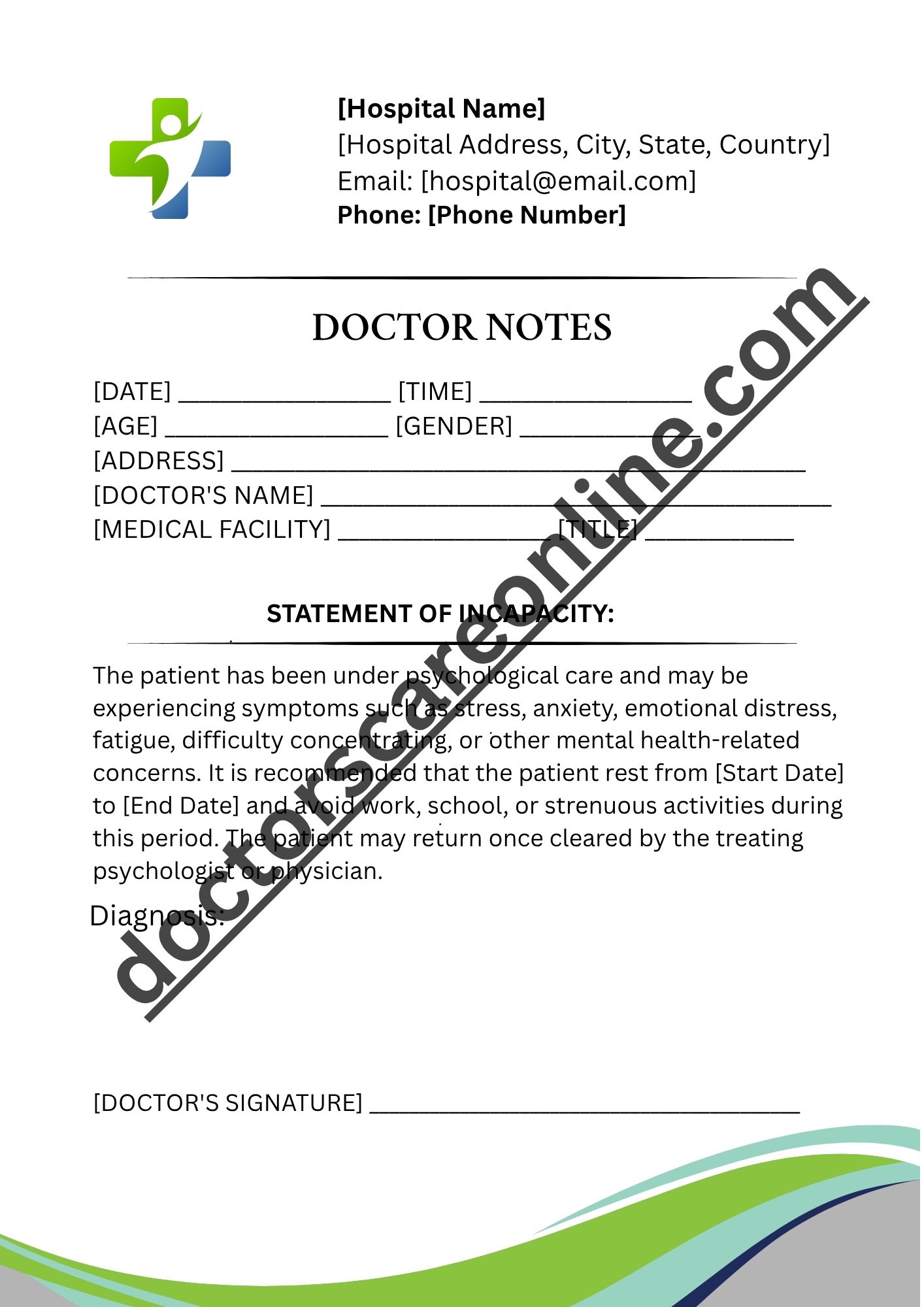
A Psychiatrist Excuse Note is an official medical document issued by a licensed psychiatrist after evaluating a person’s mental health. It confirms that the individual was unable to attend work, school, college, or another responsibility because of a mental health condition or psychiatric treatment. Depending on the situation, the note may also recommend time off, temporary work restrictions, or a gradual return to normal activities.
Unlike a general doctor’s note, a psychiatrist excuse note is specifically related to emotional, psychological, or behavioral health. It is commonly provided after an in-person or telepsychiatry consultation when the psychiatrist believes that taking leave is medically appropriate.
The note is designed to verify the need for absence while protecting the patient’s privacy. In most cases, it does not disclose the exact diagnosis unless the patient chooses to share that information or additional documentation is legally required.
Why Someone May Need a Psychiatrist Excuse Note
Mental health conditions can affect concentration, decision-making, emotional stability, sleep, and overall daily functioning. When symptoms become severe enough to interfere with work, education, or other responsibilities, a psychiatrist may recommend temporary leave to focus on treatment and recovery.
A psychiatrist’s excuse note can be useful in many situations, including:
- Taking sick leave from work because of anxiety, depression, or another mental health condition.
- Missing school or college during a period of emotional distress or psychiatric treatment.
- Recovering after a mental health crisis or hospitalization.
- Attending therapy sessions, psychiatric evaluations, or medication follow-up appointments.
- Requesting temporary workplace accommodations or reduced responsibilities.
- Supporting applications for medical leave programs when additional documentation is required.
Having an official medical note helps explain the absence in a professional manner and provides reassurance that the leave is based on a legitimate medical evaluation.
How Long Is a psychiatrist’s excuse note valid for the workplace and school?
The validity of a psychiatrist excuse note depends on the duration of leave recommended by the psychiatrist and the attendance or medical leave policies of your workplace, school, or college. In most cases, the note is valid only for the dates mentioned in the document. If additional time off is needed, you may be required to undergo a follow-up evaluation and obtain an updated excuse note.
- There is no fixed validity period for a psychiatrist excuse note.
- Office/Employer: The note is usually valid only for the leave dates specified by the psychiatrist.
- School/College/University: It is generally accepted for the specific days of absence mentioned in the note.
- Short-term leave: Commonly covers 1–3 days or up to 1–2 weeks, depending on the individual’s condition.
- Extended leave: May last several weeks if medically necessary, but follow-up appointments and updated documentation are often required.
- If you need additional time off, you will usually need a new or revised psychiatrist excuse note.
- A follow-up evaluation may be necessary before the psychiatrist extends your leave.
- The note may include an expected return-to-work or return-to-school date, unless further medical assessment is needed.
- The final acceptance of the excuse note depends on your employer’s or educational institution’s attendance and leave policies.
How to Book an Online Appointment for a Psychiatrist Excuse Note
If you need a psychiatrist excuse note for work, school, or college, you can often book an online consultation with a licensed psychiatrist through a telehealth platform. During the appointment, the psychiatrist will assess your symptoms and determine whether medical leave or an excuse note is appropriate.
- Choose a trusted telehealth platform or hospital that offers online psychiatric consultations.
- Book an appointment by selecting an available date and time that fits your schedule.
- Complete the registration form with your basic personal and medical information.
- Join the video or phone consultation at the scheduled time and discuss your symptoms honestly.
- Undergo a mental health evaluation so the psychiatrist can determine whether an excuse note is medically justified.
- Request a psychiatrist excuse note if you need documentation for your employer, school, or college.
- Receive the note electronically through email or the provider’s secure patient portal, if approved.
- Submit the excuse note to your HR department, manager, school office, or college administration according to their attendance or leave policy.
Note: A psychiatrist will issue an excuse note only if, after evaluating your condition, they determine that medical leave or temporary accommodations are clinically necessary.
When Is a Psychiatrist Excuse Note Required?
A psychiatrist excuse note may be requested whenever a mental health condition prevents someone from meeting their normal responsibilities. While not every absence requires documentation, many employers, schools, colleges, and universities ask for medical verification if the absence lasts beyond their standard attendance policy.
Common situations where a psychiatrist excuse note may be required include:
- Missing multiple workdays because of severe anxiety, depression, or another psychiatric condition.
- Taking medical leave for mental health treatment.
- Recovering after inpatient or outpatient psychiatric care.
- Requesting extensions for academic assignments or examinations due to mental health concerns.
- Returning to work after a period of psychiatric treatment.
- Supporting workplace accommodation requests for ongoing mental health needs.
The exact requirements vary depending on the organization and local laws, so it’s always a good idea to review the relevant attendance or leave policies.
Who Usually Requests This Type of Medical Documentation?
Several organizations may ask for a psychiatrist excuse note when an absence is related to mental health. Their goal is generally to confirm that the leave was medically necessary rather than to learn private details about the individual’s condition.
You may be asked to provide a psychiatrist excuse note by:
- Employers and human resources (HR) departments.
- Schools, colleges, and universities.
- Professional training programs or certification boards.
- Internship or residency supervisors.
- Insurance providers processing certain medical or disability claims.
- Government agencies or legal authorities when mental health documentation is relevant to a specific request.
In most situations, these organizations require confirmation of your fitness for leave or return to normal activities—not a full explanation of your mental health diagnosis.
Mental Health Conditions That May Require an Excuse Note
A psychiatrist may issue an excuse note if a mental health condition significantly affects your ability to work, attend school, or carry out daily responsibilities. The recommendation is based on a professional evaluation and the severity of your symptoms.
Depression
- Persistent sadness or low mood.
- Loss of interest in daily activities.
- Fatigue and low energy levels.
- Difficulty concentrating or making decisions.
- Reduced productivity at work or school.
Generalized Anxiety Disorder (GAD)
- Excessive and ongoing worry.
- Restlessness or feeling constantly on edge.
- Trouble focusing on tasks.
- Physical symptoms such as muscle tension or headaches.
- Difficulty managing workplace or academic responsibilities.
Panic Disorder
- Recurrent panic attacks.
- Sudden episodes of intense fear or anxiety.
- Chest pain, dizziness, or shortness of breath.
- Fear of experiencing another panic attack.
- Difficulty attending work, school, or public places.
Post-Traumatic Stress Disorder (PTSD)
- Flashbacks or distressing memories.
- Frequent nightmares.
- Emotional distress after trauma reminders.
- Hypervigilance or feeling constantly alert.
- Difficulty concentrating or maintaining daily routines.
Bipolar Disorder
- Episodes of depression or mania.
- Mood swings that affect daily functioning.
- Changes in energy levels and sleep patterns.
- Impaired judgment during manic episodes.
- Difficulty maintaining consistent work or academic performance.
Obsessive-Compulsive Disorder (OCD)
- Intrusive or unwanted thoughts.
- Repetitive behaviors or rituals.
- Difficulty completing daily tasks.
- Increased anxiety when routines are interrupted.
- Reduced productivity due to compulsive behaviors.
Attention-Deficit/Hyperactivity Disorder (ADHD)
- Trouble staying focused.
- Difficulty organizing tasks.
- Poor time management.
- Easily distracted at work or school.
- Challenges meeting deadlines.
Adjustment Disorder
- Emotional distress after a major life event.
- Difficulty adapting to significant changes.
- Increased anxiety or sadness.
- Problems concentrating.
- Temporary decline in work or academic performance.
Burnout and Chronic Work-Related Stress
- Emotional and physical exhaustion.
- Feeling overwhelmed by work demands.
- Reduced motivation.
- Difficulty concentrating.
- Increased stress affecting daily performance.
Insomnia Related to Mental Health
- Difficulty falling asleep.
- Frequent waking during the night.
- Poor sleep quality.
- Daytime fatigue.
- Reduced focus and productivity.
Social Anxiety Disorder
- Fear of social or workplace interactions.
- Anxiety during meetings or presentations.
- Avoidance of group activities.
- Difficulty participating in classes.
- Reduced confidence in professional or academic settings.
Eating Disorders
- Unhealthy eating behaviors.
- Significant weight changes.
- Physical weakness or fatigue.
- Difficulty concentrating.
- Need for ongoing medical and psychological treatment.
Psychotic Disorders
- Hallucinations or delusions.
- Confused or disorganized thinking.
- Difficulty distinguishing reality.
- Problems performing everyday activities.
- May require immediate psychiatric care and temporary leave.
Substance Use Disorders
- Dependence on alcohol or drugs.
- Difficulty performing daily responsibilities.
- Need for rehabilitation or psychiatric treatment.
- Temporary leave during recovery.
- Ongoing medical supervision.
Other Clinically Diagnosed Mental Health Conditions
- Conditions that significantly affect daily functioning.
- Symptoms that interfere with work, school, or personal responsibilities.
- Situations requiring psychiatric treatment or medication adjustments.
- Cases where temporary medical leave supports recovery.
- Determined on an individual basis after a psychiatric evaluation.
Situations Where You May Need a Psychiatrist Excuse Note
A psychiatrist excuse note may be required when a mental health condition temporarily affects your ability to work, study, or manage daily responsibilities. Here are some common situations where you may need one:
Missing Work
- Mental health symptoms affecting job performance.
- Short-term sick leave.
- Recovery after a mental health episode.
School or College Absence
- Missing classes due to psychiatric treatment.
- Assignment or exam extensions.
- Medical leave from studies.
Mental Health Crisis Recovery
- Recovery after hospitalization.
- Severe anxiety or depression episodes.
- Emotional stabilization before returning.
Psychiatric Appointments
- Initial psychiatric evaluation.
- Follow-up visits.
- Medication review appointments.
Medication Adjustment
- Starting new medication.
- Managing side effects.
- Treatment monitoring.
Workplace Accommodations
- Flexible work hours.
- Remote work recommendation.
- Reduced workload or modified duties.
Returning to Work or School
- Medical clearance to return.
- Temporary work or study restrictions.
- Gradual return plan.
Extended Medical Leave
- Supporting a leave application.
- Ongoing psychiatric treatment.
- Additional recovery time if needed.
Note: A psychiatrist excuse note is issued only after a licensed psychiatrist determines that medical leave or temporary accommodations are medically necessary.
Returning to Work After Psychiatric Treatment
Returning to work after psychiatric treatment should be based on your psychiatrist’s medical advice and your overall recovery progress. Before resuming your regular duties, your healthcare provider may recommend certain precautions or workplace adjustments to support a safe and successful transition.
- Obtain Medical Clearance: Return to work only after your psychiatrist confirms that you are medically fit to resume your duties.
- Submit Your Excuse Note: Provide your employer with a psychiatrist excuse note if medical documentation is required.
- Follow Recommended Work Restrictions: Comply with any temporary restrictions, such as reduced hours, lighter duties, or remote work, if advised.
- Consider a Gradual Return: If recommended, ease back into your routine through a phased return-to-work plan.
- Continue Your Treatment: Keep attending follow-up appointments and follow your prescribed therapy or medication plan.
- Communicate With Your Employer: Inform your manager or HR department if additional accommodations or recovery time become necessary.
- Monitor Your Mental Health: Pay attention to your emotional well-being and seek medical advice if symptoms return or worsen.
Tip: Returning to work too soon may slow your recovery. Always follow your psychiatrist’s recommendations to ensure a healthy and sustainable return to your workplace.
Requesting Reduced Work Hours or Temporary Accommodations
Recovery does not always require complete time away from work. In some cases, a psychiatrist may recommend temporary adjustments that allow the individual to continue working while managing their mental health.
Examples of accommodations may include:
- Reduced working hours
- Flexible scheduling
- Remote or hybrid work
- Additional rest breaks
- Temporary workload adjustments
- Reduced exposure to high-stress tasks
These recommendations help balance recovery with ongoing professional responsibilities.
Recovering After a Mental Health Crisis or Hospitalization
Recovering from a mental health crisis or psychiatric hospitalization often takes time, and returning to your daily routine should be guided by your psychiatrist’s recommendations. An excuse note may be provided to support your recovery and explain your temporary absence from work, school, or college.
- Take Time to Recover: Focus on your mental and emotional well-being before returning to regular responsibilities.
- Follow Your Treatment Plan: Continue prescribed medications, therapy sessions, and follow-up appointments.
- Obtain a Psychiatrist Excuse Note: Use official medical documentation to explain your absence if required by your employer or educational institution.
- Return When Medically Ready: Resume work or studies only after your psychiatrist confirms that it is safe to do so.
- Request Temporary Accommodations: If needed, discuss flexible hours, reduced workload, or academic support during your recovery.
- Attend Regular Follow-Up Visits: Ongoing evaluations help monitor your progress and determine whether additional leave or adjustments are necessary.
- Prioritize Long-Term Recovery: Maintain healthy routines, manage stress, and seek support from family, friends, or mental health professionals to reduce the risk of relapse.
What Information Is Included in a Psychiatrist Excuse Note?
Although the format may vary between healthcare providers, most psychiatrist excuse notes contain similar information. The purpose is to verify that the patient was medically evaluated while protecting their personal health information.
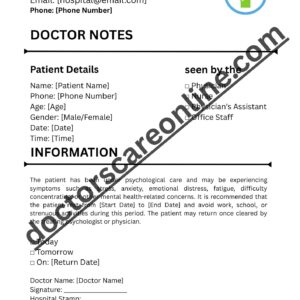
A typical psychiatrist excuse note may include the following details:
- Patient’s name
- Consultation date
- Dates of recommended leave
- Return-to-work or school date (if applicable)
- Reason for medical leave (without detailed diagnosis)
- Work or academic restrictions (if any)
- Psychiatrist’s name and credentials
- Clinic or hospital name
- Signature or electronic authentication
- Date the note was issued
- Contact information for verification (if required)
Note: A psychiatrist excuse note typically confirms the need for medical leave without revealing detailed information about the patient’s diagnosis, therapy sessions, or treatment plan unless the patient provides consent or disclosure is legally required.
Healthcare Provider Information
The document generally includes:
- Psychiatrist’s name
- Professional qualifications
- Clinic or hospital name
- Contact information
- Signature or electronic authentication
These details help verify the authenticity of the medical documentation.
Can a Therapist, Psychologist, or Counselor Provide an Excuse Note?
A therapist, psychologist, or counselor may be able to provide mental health documentation, but whether it is accepted as an official excuse note depends on their professional license, local regulations, and the requirements of your employer or school.
Psychiatrist
- A psychiatrist is a medical doctor who specializes in mental health.
- They can diagnose mental health conditions and provide medical documentation.
- Their excuse notes are commonly accepted for work, school, and medical leave purposes.
- They can also recommend treatment, medication, and workplace accommodations.
Psychologist
- A licensed psychologist can evaluate and treat many mental health conditions.
- They may provide documentation about therapy, assessments, or recommended accommodations.
- Acceptance of their notes depends on employer or school policies.
- In most places, psychologists cannot prescribe medication.
Therapist or Counselor
- Therapists and counselors provide mental health support and counseling services.
- They may confirm that a person is receiving therapy or mental health care.
- Their documentation may be accepted for certain school or workplace needs.
- Some organizations may require a note specifically from a medical doctor or psychiatrist.
Psychiatric Nurse Practitioner
- Psychiatric nurse practitioners can diagnose and treat mental health conditions in many regions.
- They may provide medical documentation and treatment recommendations.
- Their notes may be accepted depending on local laws and organizational policies.
Does a Psychiatrist Excuse Note Reveal Your Diagnosis?
In most cases, no. A standard psychiatrist excuse note is intended to verify that you were medically evaluated and that time away from work or school is recommended. It usually does not include your specific psychiatric diagnosis.
Mental health information is considered highly confidential. Unless you give written permission or disclosure is required by law, the psychiatrist typically limits the information shared to what is necessary for the employer or educational institution.
For example, the note may simply state that:
- You were evaluated by a licensed psychiatrist.
- Medical leave is recommended.
- You are expected to return on a specific date or after further evaluation.
This approach helps protect your privacy while still providing the documentation required for your absence.
Understanding Medical Privacy and Confidentiality
Mental health records receive strong privacy protection in many healthcare systems. Psychiatrists are responsible for maintaining the confidentiality of their patients and only sharing information that is legally permitted or medically necessary.
Unless additional authorization is provided, your employer or school generally receives only limited information related to your ability to attend work or classes—not the details of your treatment sessions.
Confidential information typically includes:
- Psychiatric diagnosis
- Therapy discussions
- Medication details
- Personal history
- Psychological assessments
- Treatment plans
Patients should always feel comfortable asking their psychiatrist what information will appear in the excuse note before it is issued.
Psychiatrist Excuse Note for Medical Leave Programs
Some employees need more than a short absence and may apply for formal medical leave through their employer.
Depending on workplace policies and local employment laws, a psychiatrist may provide supporting documentation confirming that:
- The employee is receiving treatment.
- Medical leave is clinically appropriate.
- Temporary work restrictions are recommended.
- Follow-up evaluations will determine readiness to return.
Additional medical certification forms may also be required for extended leave programs.
Reasons a Psychiatrist May Decline to Issue an Excuse Note
A psychiatrist has a professional and ethical responsibility to issue medical documentation only when it is clinically justified.
They may decide not to provide an excuse note if:
- Your condition does not require medical leave.
- There is insufficient information to support the request.
- A full psychiatric evaluation has not been completed.
- The requested dates cannot be medically verified.
- The documentation would be inaccurate or misleading.
- The request conflicts with professional or legal standards.
If a psychiatrist is unable to issue an excuse note, they may recommend additional evaluation, follow-up appointments, or other treatment options depending on your situation.
Common Mistakes to Avoid When Using a Psychiatrist Excuse Note
Avoiding common mistakes can help ensure that your psychiatrist excuse note is accepted smoothly by your employer, school, or college while protecting your privacy.
- Waiting Too Long to Seek Help: Delaying a psychiatric consultation may make it harder to explain previous absences or receive timely documentation.
- Requesting a Note Without an Evaluation: A psychiatrist must assess your condition before providing a valid excuse note.
- Providing Inaccurate Information: Always share your symptoms and situation honestly during the consultation.
- Changing or Editing the Note: Do not modify dates, signatures, or medical information on an official document.
- Ignoring Submission Deadlines: Submit the excuse note within your employer’s or school’s required timeframe.
- Sharing Too Much Personal Information: Provide only the necessary documentation and avoid disclosing private medical details unnecessarily.
- Skipping Follow-Up Appointments: Regular follow-ups may be needed to monitor recovery and update medical recommendations.
- Using an Unverified Provider: Ensure the psychiatrist or mental health professional is properly licensed.
- Not Checking Organization Policies: Review your workplace or school requirements before submitting the note.
- Failing to Keep a Copy: Always save a personal copy of your medical documentation for future reference.
Psychiatrist Excuse Note vs Other Medical Notes
Understanding the differences between various types of medical documentation can help you request the correct document for your situation.
| Document | Primary Purpose | Who Usually Issues It |
|---|---|---|
| Psychiatrist Excuse Note | Verifies absence related to mental health conditions or psychiatric treatment | Licensed Psychiatrist |
| General Doctor’s Note | Confirms absence due to physical illness or injury | Primary Care Physician or Medical Doctor |
| Medical Certificate | Provides broader medical certification for work, travel, insurance, or legal purposes | Licensed Healthcare Provider |
| Return-to-Work Letter | Confirms that an individual is medically fit to resume work | Treating Healthcare Provider |
| Psychologist’s Letter | Documents psychological evaluation, therapy attendance, or recommended accommodations | Licensed Psychologist |
The appropriate document depends on the reason for your absence and the requirements of your employer, school, or organization.

Reviews
There are no reviews yet.