

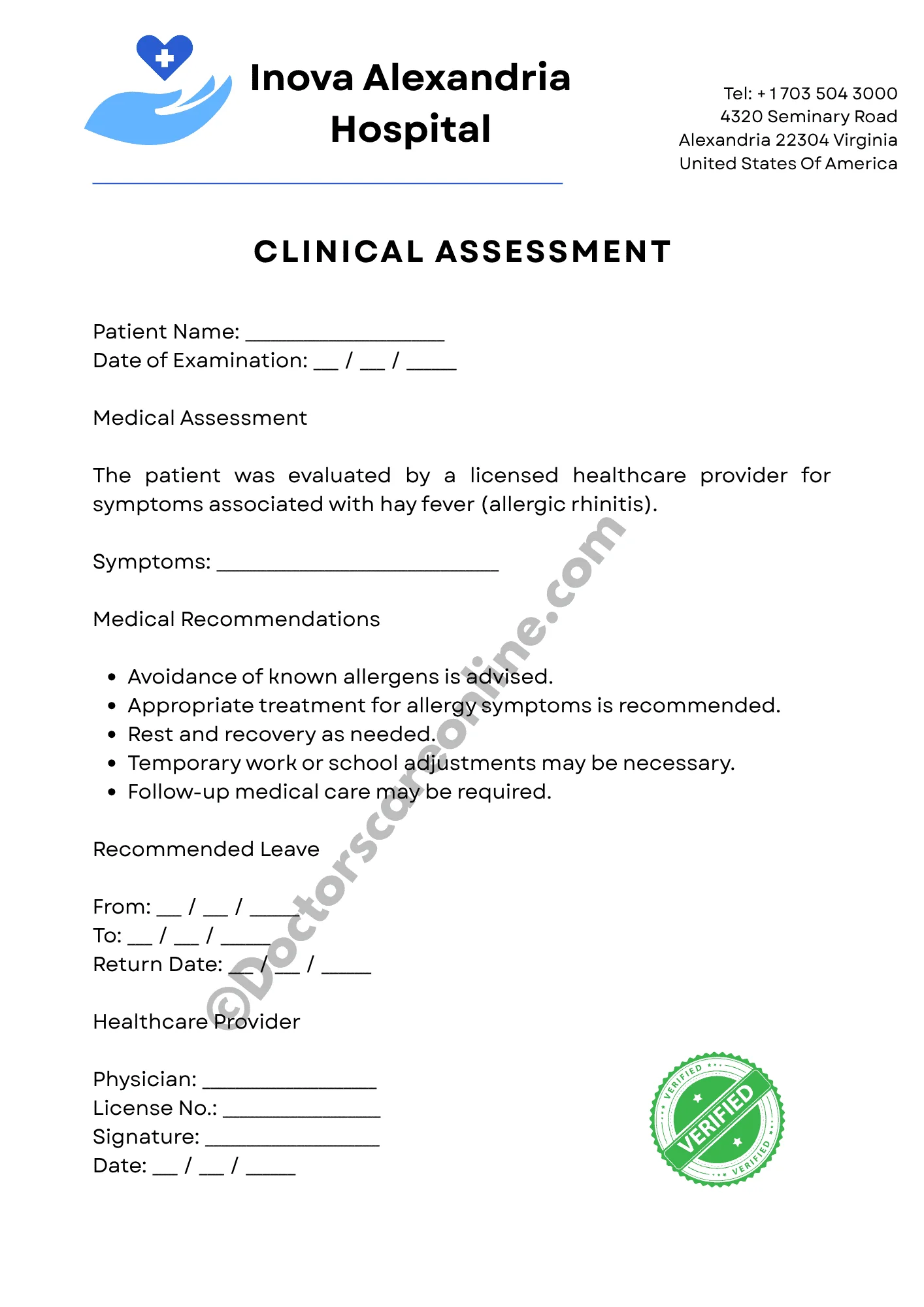
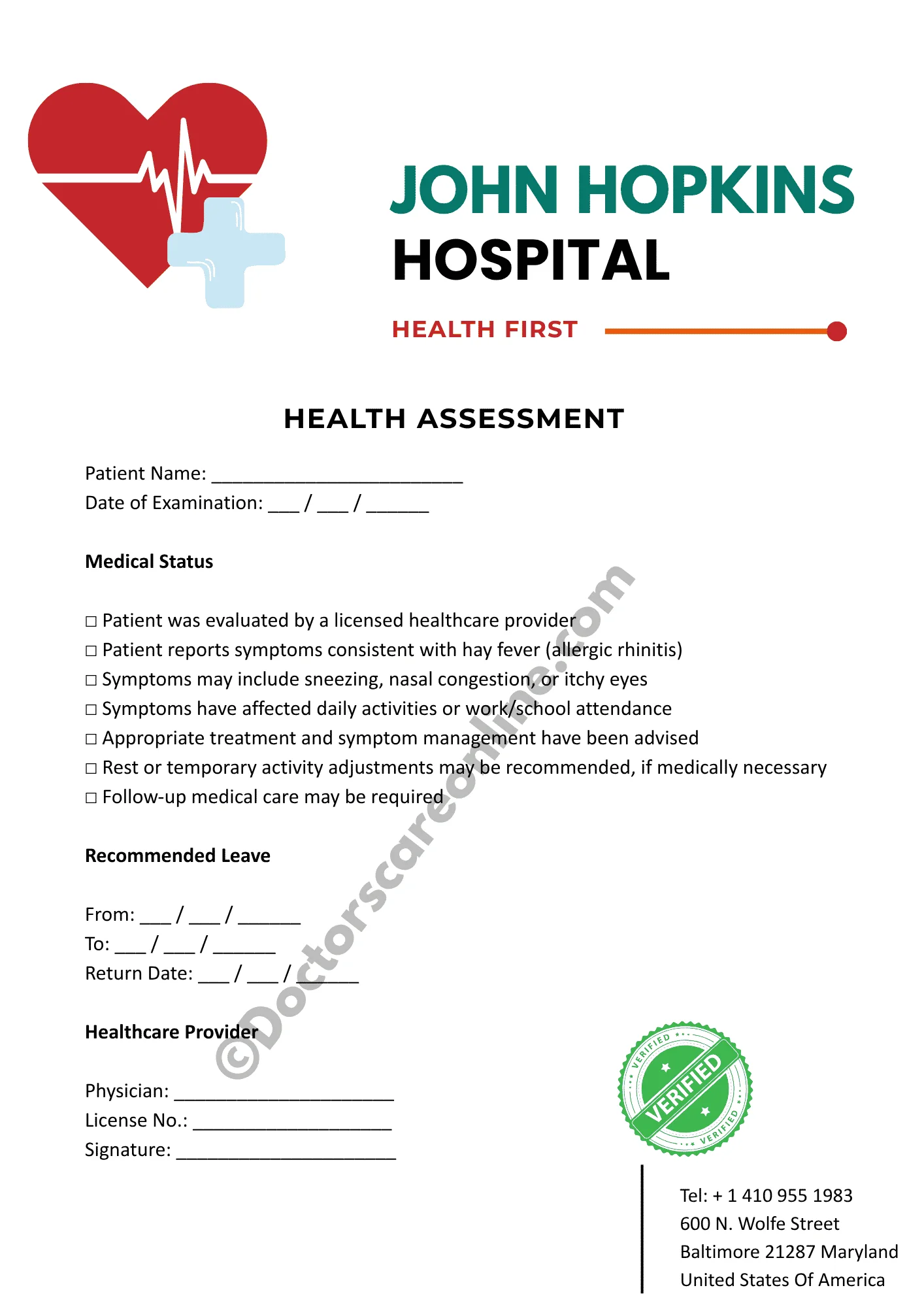
A doctor’s note for hay fever is medical documentation issued by a licensed healthcare professional after an appropriate evaluation. It may confirm that you were assessed and, when medically justified, document recommended absence dates, activity limitations, or a return-to-work or school date.
Hay fever, also called allergic rhinitis, is an allergic condition that can cause sneezing, an itchy or runny nose, nasal congestion, watery or irritated eyes, and fatigue. Symptoms may become more noticeable during periods of increased exposure to allergens such as pollen.
Related Doctor Note :——
You can also visit:
- Online Doctor’s Note for Viral Fever
- Doctors Note for Fever
- Online Doctor’s Note for Common Cold
- Doctors Note for Cold
- 6 Months of Unlimited Doctor’s Notes
If a healthcare provider determines that your symptoms temporarily affect your ability to work, attend school, or perform certain responsibilities, medical documentation may help communicate the provider’s recommendation.
Depending on the situation, a note may document:
- The date of medical evaluation
- Confirmation that you were evaluated
- Recommended absence dates
- Temporary activity limitations
- Work or school restrictions
- Recommended return date
- Follow-up requirements, when applicable
- Healthcare provider information and signature
A doctor’s note should contain information supported by the provider’s clinical assessment. It should not be altered after issuance.
When Hay Fever May Interfere With Work or School
Hay fever does not affect everyone in the same way. Some people have mild seasonal symptoms, while others experience persistent congestion, frequent sneezing, itchy eyes, fatigue, or difficulty concentrating.
Symptoms may become particularly disruptive when your responsibilities require:
- Prolonged concentration
- Frequent communication with customers or coworkers
- Outdoor work
- Driving or operating equipment
- Physical activity
- Classroom attendance
- Presentations, examinations, or other academic activities
- Exposure to pollen or other environmental allergens
If symptoms are interfering with your ability to perform your normal responsibilities safely or effectively, a healthcare evaluation can help determine the appropriate next steps.
A medical note should reflect the healthcare provider’s actual assessment rather than simply documenting a requested number of days away.
Common Hay Fever Symptoms
Hay fever symptoms are usually related to the nose, eyes, throat, and upper airways. Common symptoms include:
- Repeated sneezing
- Runny nose
- Stuffy or congested nose
- Itchy nose
- Itchy or watery eyes
- Red or irritated eyes
- Itchy throat or roof of the mouth
- Postnasal drainage
- Cough associated with drainage
- Fatigue
- Difficulty concentrating because of persistent symptoms
Hay fever symptoms can overlap with other respiratory conditions. A healthcare professional can consider your symptom pattern, medical history, and possible triggers when determining whether allergic rhinitis is a likely explanation.
What Causes Hay Fever?
Hay fever occurs when the immune system reacts to allergens, commonly airborne substances such as pollen. Depending on the individual, symptoms may be associated with tree pollen, grass pollen, weed pollen, or other environmental allergens.
Possible triggers include:
- Tree pollen
- Grass pollen
- Weed pollen
- Outdoor environmental allergens
- Indoor allergens that can contribute to allergic symptoms
- Seasonal changes that increase exposure to specific allergens
Keeping track of when symptoms occur and what you were exposed to may help your healthcare provider identify possible patterns.
Seasonal Allergies vs. Other Conditions
Not every runny or congested nose is caused by hay fever. Symptoms can sometimes resemble a common cold, nonallergic rhinitis, sinus problems, or other respiratory conditions.
For example, nonallergic rhinitis can also cause congestion, sneezing, runny nose, and postnasal drainage, but it is not caused by an allergy. Healthcare providers may use your symptoms, history, physical examination, and, when appropriate, allergy testing to help distinguish between possible causes.
This distinction matters because treatment and medical recommendations can differ depending on the underlying cause.
When Should You Consider a Medical Evaluation?
Consider speaking with a healthcare professional when hay fever symptoms are persistent, significantly affecting your daily routine, interfering with work or school, or not improving with measures you normally use to control seasonal allergies.
A medical evaluation may be particularly useful when:
- Symptoms are severe or persistent.
- Nasal congestion makes normal activities difficult.
- Eye symptoms are interfering with work or studying.
- Symptoms are affecting sleep or concentration.
- You are unsure whether your symptoms are caused by allergies.
- Symptoms are not responding adequately to your usual treatment.
- You are experiencing troublesome medication side effects.
- You need medical documentation for an absence or temporary limitation.
Mayo Clinic notes that people with allergy symptoms may undergo a clinical assessment and, when appropriate, skin or blood testing to identify specific allergens.
How a Healthcare Provider Evaluates Hay Fever
During an appointment, the healthcare provider may ask about your symptoms, when they began, possible triggers, previous allergy history, medications, and how the symptoms affect your daily activities.
Depending on the situation, evaluation may include:
- Review of your medical history
- Discussion of symptom timing and severity
- Review of potential environmental triggers
- Physical examination
- Examination of the nose, throat, and eyes
- Assessment of other possible causes
- Allergy testing when clinically appropriate
Skin-prick testing and blood testing for allergen-specific immune responses may be used in some cases.
The provider determines whether additional testing or an in-person assessment is necessary.
Hay Fever Treatment and Symptom Management
Treatment depends on the individual’s symptoms, triggers, medical history, age, and other factors. Common approaches include reducing exposure to known allergens and using appropriate medications.
Healthcare professionals may recommend:
- Allergen avoidance strategies
- Saline nasal rinses or sprays
- Antihistamines
- Nasal corticosteroid sprays
- Antihistamine nasal sprays
- Allergy eye drops
- Other prescription or nonprescription treatments when appropriate
- Allergy immunotherapy for selected patients
Nasal corticosteroids and antihistamines are among the treatments used for hay fever, while immunotherapy may be considered for some people whose allergies remain troublesome despite other approaches.
Medication selection should take into account individual health circumstances. If you are unsure which treatment is appropriate, speak with a healthcare professional or pharmacist rather than changing medication on your own.
Doctor’s Note for Hay Fever for Work
Employers may have different policies regarding medical documentation and sick leave. If hay fever symptoms prevent you from safely or effectively performing your normal responsibilities, a healthcare provider can assess whether time away from work or temporary modifications are medically appropriate.
Depending on your job, recommendations may involve:
- Temporary time away from work
- Modified duties
- Reduced exposure to known environmental triggers where feasible
- Temporary schedule adjustments
- A follow-up evaluation before resuming unrestricted duties
Your employer may have its own requirements for submitting medical documentation, so review your workplace policy and provide only the documentation requested.
Doctor’s Note for Hay Fever for School or College
Students with significant allergy symptoms may find it difficult to attend classes, complete assignments, participate in examinations, or concentrate during lessons.
If your symptoms require an absence, a healthcare provider may determine whether medical documentation is appropriate.
Your school or college may have specific requirements regarding:
- Excused absences
- Missed examinations
- Assignment deadlines
- Attendance records
- Medical documentation
- Academic accommodations
Because institutional policies differ, students should check the applicable attendance or student-support policy.
Can You Book an Online Appointment for Hay Fever?
In many situations, hay fever symptoms can be discussed through a telehealth appointment. Whether an online consultation is appropriate depends on the symptoms, clinical circumstances, provider availability, and applicable regulations.
An online healthcare appointment generally allows you to:
- Select an available licensed healthcare provider.
- Choose an appointment time.
- Register for an account or log in.
- Provide your relevant personal and medical information.
- Describe your allergy symptoms and how they affect your activities.
- Attend the consultation.
- Follow the provider’s medical recommendations.
- Receive documentation if the provider determines that it is medically appropriate and permitted.
Telehealth is not suitable for every medical situation. If your symptoms suggest a condition requiring an in-person examination or urgent treatment, the healthcare provider may recommend in-person care.
What to Prepare Before Your Online Hay Fever Appointment
Having relevant information ready can make the consultation more efficient.
Consider preparing:
- When your symptoms began
- Whether symptoms are seasonal or year-round
- Possible pollen or environmental triggers
- Previous allergy diagnoses
- Current medications and supplements
- Previous allergy treatments
- Medication reactions or allergies
- Whether symptoms affect sleep
- Whether symptoms interfere with work or school
- Any relevant medical conditions
- What type of documentation your employer or school requires
Be honest and specific when describing your symptoms. The provider uses the information you provide as part of the medical assessment.
Get a Medical Note After an Appropriate Evaluation
If you need documentation for hay fever, the appropriate process is to obtain a medical evaluation rather than simply requesting a predetermined type or duration of leave.
A healthcare provider may determine that a medical note is appropriate when your symptoms and clinical circumstances support it. The provider decides what documentation can be issued and what recommendations should be included.
A medical note is therefore not automatically guaranteed by booking an appointment or submitting a request.
Why Our Website Can Be Useful for Patients
Our platform is designed to make the process of connecting with healthcare services and understanding the documentation process more convenient.
Patients can use the website to:
- Explore the online appointment process.
- Provide relevant information before consultation.
- Connect with an appropriate healthcare service where available.
- Complete registration securely.
- Access their account after registration.
- Manage appointment-related information.
- Obtain medical documentation when a licensed provider determines it is appropriate.
Our service does not replace a healthcare provider’s clinical judgment. A medical note should only be issued following an appropriate evaluation and in accordance with applicable professional and legal requirements.
Registration, Login, Payment, or Website Support
If you experience a problem while registering or logging in, have a question about the appointment process, encounter a payment issue, or need help understanding how to use the website, you can contact our support team through the website chatbox.
The chatbox can be used for questions such as:
- Trouble creating an account
- Difficulty logging into an existing account
- Problems completing payment
- Questions about the appointment process
- Website navigation issues
- Questions about account-related information
- General service or technical concerns
Our support team can help with website and service-related questions. Medical diagnosis and treatment decisions remain the responsibility of the licensed healthcare professional conducting your consultation.
How to Protect Your Privacy
Medical information is sensitive, so patients should provide health information only through the appropriate secure channels provided by their healthcare service.
When using an online healthcare service:
- Use your own account.
- Keep login credentials private.
- Provide accurate information.
- Avoid sharing medical information through public comments or unsecured channels.
- Review the provider’s privacy policy and applicable terms.
- Contact support if you have concerns about your account or payment.
A healthcare provider determines what medical information needs to appear in documentation based on the circumstances and applicable requirements.
When Hay Fever Symptoms Need Prompt Medical Attention
Typical hay fever symptoms are generally different from a severe allergic reaction. However, some allergy-related symptoms can represent a medical emergency.
Seek emergency medical attention if you develop signs of a severe allergic reaction such as:
- Difficulty breathing
- Severe throat or tongue swelling
- Significant trouble swallowing
- Fainting or severe dizziness
- A rapidly developing severe allergic reaction involving multiple body systems
Severe allergic reactions can become life-threatening and require immediate treatment.
Do not rely on a routine online appointment or doctor’s note process when emergency medical care is needed.
Frequently Asked Questions
1. Is hay fever the same as seasonal allergies?
Hay fever is commonly used to describe allergic rhinitis caused by airborne allergens, often including seasonal pollen. The exact trigger can vary from person to person.
2. Can hay fever make you too tired to work?
Hay fever can be associated with fatigue, and persistent allergy symptoms may make concentration and normal activities more difficult. Whether symptoms justify time away from work depends on an individual medical assessment.
3. Can hay fever symptoms affect sleep?
Yes. Nasal congestion, sneezing, itching, and other allergy symptoms may interfere with comfortable sleep. If sleep disruption is persistent or significantly affects daily functioning, discussing it with a healthcare professional may be helpful.
4. Can an online doctor determine whether my symptoms are allergies?
A healthcare professional may be able to assess symptoms through telehealth, but the suitability of an online evaluation depends on the individual situation. The provider may recommend an in-person examination or allergy testing when necessary.
5. Should I stop taking allergy medicine before an appointment?
Do not stop prescribed or routinely used medication solely because you have an upcoming appointment. If allergy testing is being considered, ask the healthcare professional whether any medication could affect the test and whether any temporary adjustment is appropriate.
Medical Disclaimer: This content is provided for general educational and informational purposes only and does not replace professional medical advice, diagnosis, or treatment. A doctor’s note should only be issued by a licensed healthcare professional after an appropriate medical evaluation.
Medical documentation, treatment recommendations, telehealth availability, work or school leave, and documentation requirements may vary based on individual circumstances, employer or educational policies, provider practices, and applicable U.S. laws and regulations.
If you experience symptoms of a severe allergic reaction, including difficulty breathing, significant swelling of the throat or tongue, fainting, or rapidly worsening symptoms, seek emergency medical care immediately.




Reviews
There are no reviews yet.