
A Doctor’s Note for Morning Sickness is medical documentation that may be provided by a licensed healthcare professional after an appropriate evaluation. When medically justified, the documentation may confirm that the patient was evaluated and may recommend time away from work or school, modified duties, or other temporary restrictions.
Morning sickness is a common pregnancy-related symptom that can cause nausea, vomiting, food aversions, and difficulty maintaining normal daily activities. For some pregnant people, these symptoms can interfere with work, school, commuting, or other responsibilities.
Related Doctor Note :——
You can also visit:
- Doctors Note for Limited Work
- Doctors Sick Note for Work
- Online Doctor’s Note for Common Cold
- Doctor’s Note for Work From Home
- Unlimited Doctor’s Notes for 1 Year
When Might You Need a Doctor’s Note for Morning Sickness?
Pregnancy-related nausea may affect your ability to maintain your normal schedule. You might need medical documentation when:
- Morning sickness causes you to miss scheduled work.
- Symptoms make commuting difficult or unsafe.
- Frequent nausea or vomiting interferes with your job responsibilities.
- You need temporary modifications to your work schedule.
- Your employer requests documentation for a pregnancy-related absence.
- Pregnancy symptoms interfere with school or academic responsibilities.
- You need temporary restrictions because of prolonged standing, physical activity, or other workplace demands.
- A healthcare provider recommends time away from normal activities while your symptoms are evaluated or managed.
Whether documentation is appropriate depends on your individual circumstances and the healthcare provider’s assessment.
Morning Sickness Symptoms That Can Affect Daily Activities
Morning sickness does not necessarily occur only in the morning. Pregnancy-related nausea and vomiting can occur at different times of day and can vary considerably between individuals.
Symptoms may include:
- Nausea or an unsettled stomach
- Vomiting
- Food aversions
- Increased sensitivity to certain smells
- Reduced appetite
- Difficulty eating normally
- Difficulty maintaining normal hydration
- Fatigue associated with persistent symptoms
- Difficulty concentrating at work or school
- Needing additional breaks during the day
- Difficulty completing normal responsibilities when symptoms are severe
The severity and frequency of symptoms are important information for a healthcare provider when determining appropriate care.
Morning Sickness and Work: When Could Temporary Changes Help?
Certain jobs can become more difficult when pregnancy-related nausea is frequent. For example, repeated exposure to strong odors, long periods without access to food or fluids, extended standing, or a lengthy commute may make symptoms harder to manage.
Depending on the individual’s situation, a healthcare provider may consider recommendations such as:
- Temporary schedule adjustments
- Additional breaks
- Modified duties
- Reduced exposure to symptom triggers
- Remote work when appropriate and feasible
- Temporary leave from work
Any restriction should be based on the provider’s medical assessment rather than a predetermined number of days.
How an Online Medical Consultation for Morning Sickness Works
If your symptoms are suitable for telehealth, an online consultation can provide an opportunity to discuss your pregnancy-related symptoms with a licensed healthcare provider.
1. Select an Available Appointment
- Choose an available consultation time that fits your schedule.
2. Provide Your Information
- Enter the information requested during registration, including relevant personal and medical details.
3. Explain Your Pregnancy Symptoms
- Tell the healthcare provider when your nausea began, how frequently you experience symptoms, whether you are vomiting, and how the symptoms affect your daily activities.
4. Complete the Consultation
- The provider will review your symptoms and relevant medical history and determine whether your condition can be appropriately assessed through telehealth.
5. Follow the Provider’s Recommendations
- The healthcare professional may recommend self-care, further evaluation, an in-person appointment, treatment, activity modification, or other appropriate next steps.
6. Receive Medical Documentation When Appropriate
- If the provider determines that a doctor’s note is medically justified, appropriate documentation may be provided in accordance with applicable requirements and professional standards.
Information to Have Ready for Your Consultation
Preparing relevant information can make your consultation more useful. Consider having the following available:
- Approximate date your symptoms began
- How often nausea or vomiting occurs
- Whether you can keep food and fluids down
- Any noticeable triggers
- Your current stage of pregnancy, if known
- Medications or supplements you currently take
- Previous pregnancy-related complications, if relevant
- Other symptoms occurring with the nausea
- How symptoms affect work, school, commuting, or daily activities
- Any documentation requirements provided by your employer or school
Be honest and specific when describing your symptoms. Accurate information helps the healthcare provider determine the appropriate next steps.
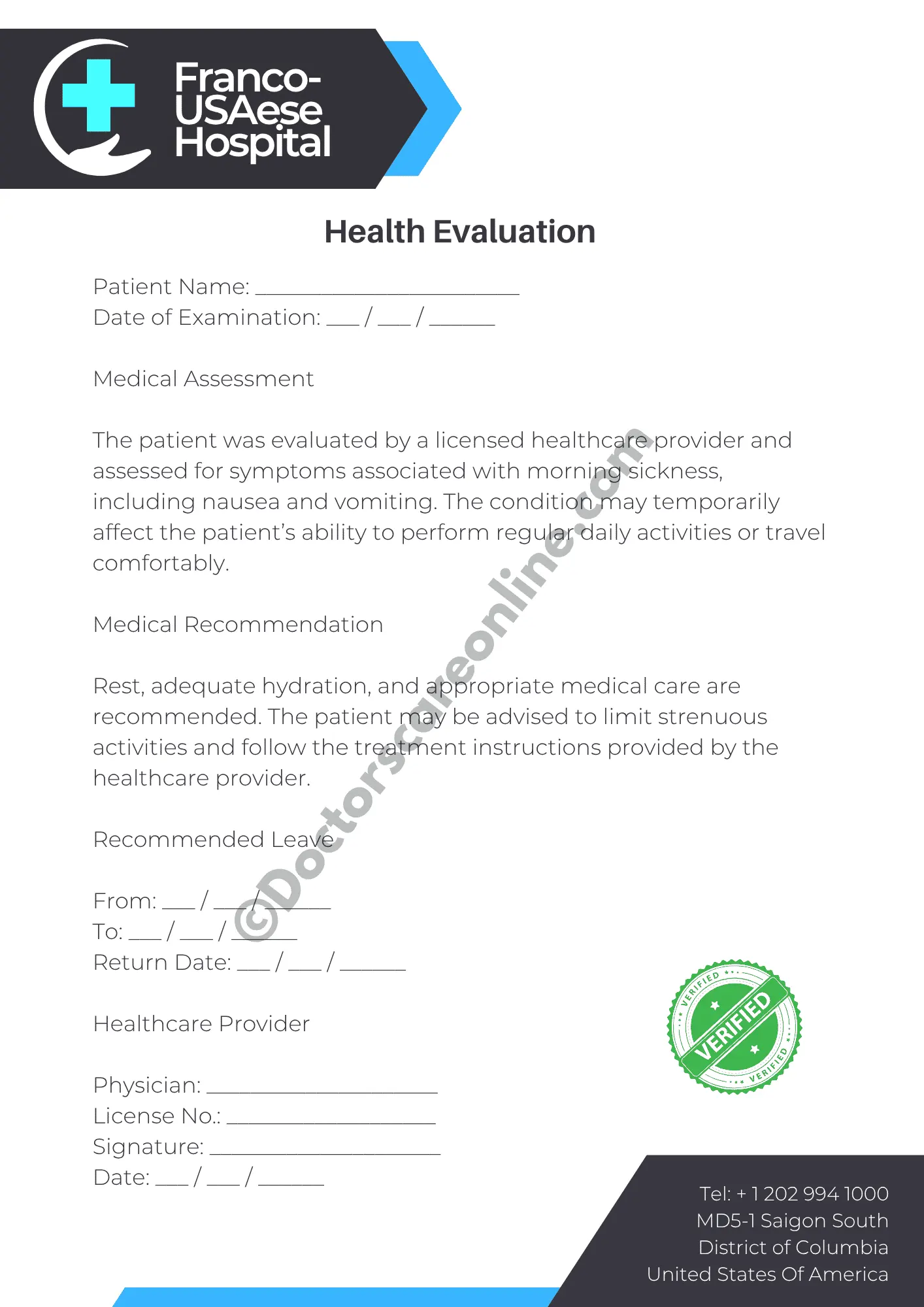
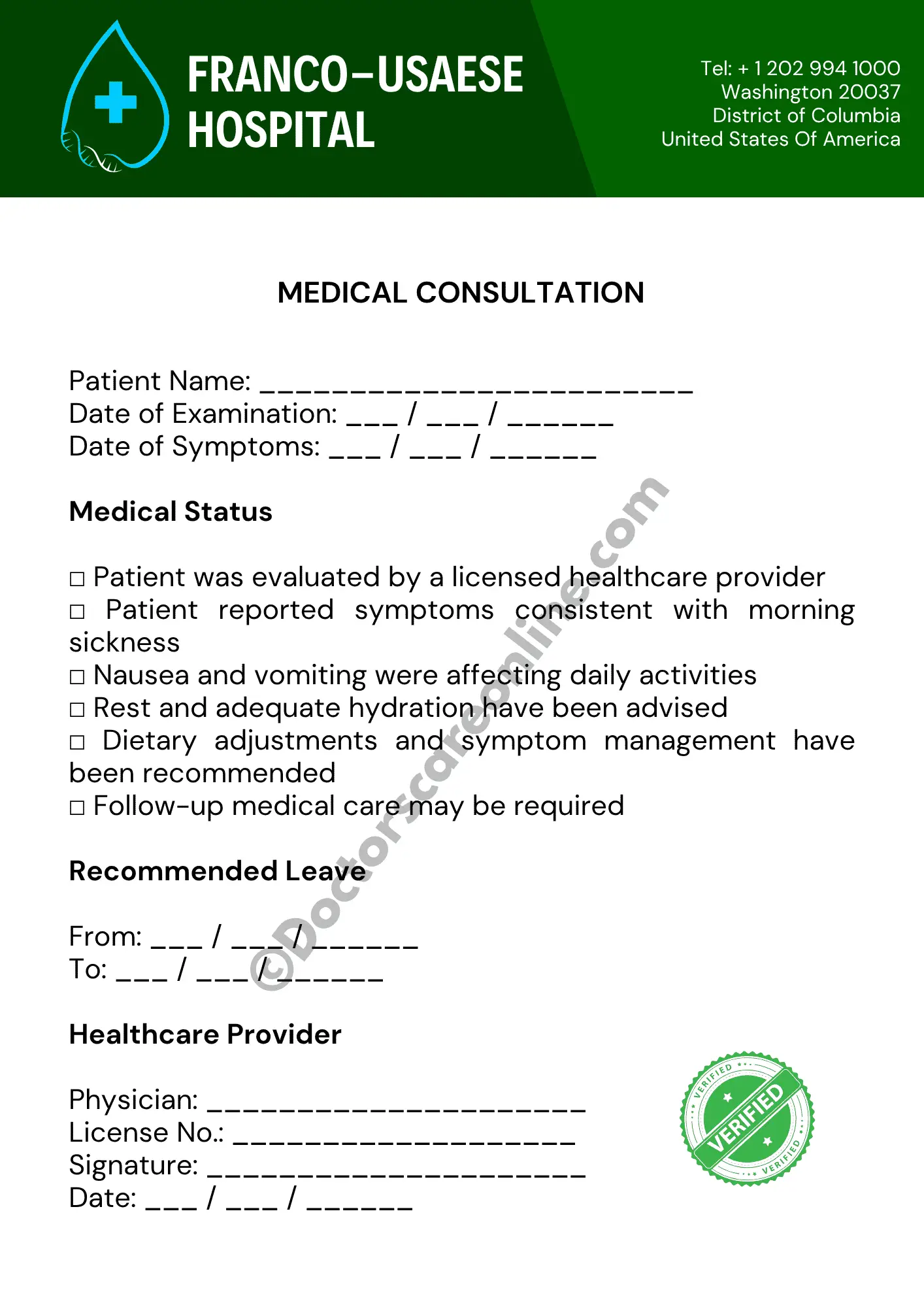
What May Be Included in an Online Medical Note?
The contents of medical documentation vary by provider and individual circumstances. When appropriate, documentation may include:
- Patient identification
- Date of medical evaluation
- Confirmation that a medical consultation occurred
- Recommended period of absence, when clinically appropriate
- Temporary activity or workplace restrictions
- Recommended return-to-work or return-to-school information
- Follow-up recommendations
- Healthcare provider information and signature, where applicable
A provider determines what information is appropriate to disclose. Employers and educational institutions may have their own documentation requirements.
How Long Can Morning Sickness Affect Work or School?
There is no universal number of days that a person should be excused because of morning sickness.
The appropriate recommendation depends on factors such as:
- Symptom severity
- Frequency of vomiting
- Ability to maintain food and fluid intake
- Pregnancy stage
- Type of work or school responsibilities
- Functional limitations
- Response to treatment or symptom-management strategies
- Other medical conditions or pregnancy-related concerns
A healthcare provider should determine whether time away, modified duties, or another arrangement is medically appropriate.
Severe Pregnancy-Related Nausea and Vomiting
Some people experience nausea and vomiting that is considerably more severe than typical morning sickness. Severe symptoms can interfere with hydration, nutrition, and normal functioning.
- Hyperemesis gravidarum is a condition involving severe nausea and vomiting during pregnancy and can be associated with dehydration and weight loss. It requires medical assessment rather than being treated simply as an ordinary workplace absence. NIDDK notes that severe pregnancy-related vomiting can contribute to dehydration and may require treatment.
If you are unable to keep fluids down, are urinating much less than usual, feel faint or unusually weak, or have other concerning symptoms, contact a healthcare professional promptly.
When Morning Sickness May Require Prompt Medical Care
Do not rely on an online appointment alone if you are experiencing potentially serious symptoms.
Seek prompt medical evaluation if you have signs that may indicate significant dehydration or another medical concern, such as:
- Very little or unusually dark urine
- Severe thirst or dry mouth
- Dizziness or fainting
- Inability to keep fluids down
- Persistent or severe vomiting
- Significant weakness
- Blood in vomit
- Severe abdominal pain
- Other concerning pregnancy symptoms
Severe vomiting and dehydration can require medical treatment, and people who cannot maintain adequate fluid intake should seek medical advice.
For an emergency or rapidly worsening condition, seek emergency medical care rather than waiting for a routine telehealth appointment.
How Our Online Medical Note Service Helps Users
Our service is designed to make the process of seeking appropriate medical documentation more convenient while keeping the healthcare evaluation at the center of the process.
Users can benefit from:
- Convenient online access to a medical consultation
- The ability to discuss symptoms from home
- A structured process for providing relevant health information
- Access to licensed healthcare professionals where services are available
- Clear communication about the consultation process
- Digital access to documentation when a provider determines it is appropriate
- Support when users have questions about registration, login, payment, or the ordering process
The purpose of the service is not to replace medical judgment. A healthcare provider evaluates the information provided and determines the appropriate medical advice and documentation.
Having Trouble With Registration, Login, or Payment?
If you experience an issue while using our website, you do not have to figure it out on your own.
You can use our website chatbox to ask questions or request assistance with issues such as:
- Creating or accessing your account
- Login problems
- Registration difficulties
- Payment-related questions
- Problems during checkout
- Questions about the consultation process
- General questions about using the website
Our support team can help guide you through website-related questions and explain the next steps where applicable.
For medical concerns, symptoms, diagnosis, treatment, or whether a medical note is appropriate, the appropriate healthcare professional should provide the medical guidance.
Why Users Can Rely on Our Process
Trust is especially important when seeking healthcare-related services online. Our process is designed around several principles:
- Healthcare Evaluation Comes First: Medical documentation should be connected to an appropriate healthcare evaluation. Users are not promised a note simply because they request one.
- Licensed Healthcare Professionals: Where applicable, consultations are conducted by licensed healthcare professionals who assess the information provided and determine appropriate next steps.
- Clear Process: The online process is structured so users know what to expect, from appointment selection through consultation and potential documentation.
- User Support: Website assistance is available through the chatbox for account, registration, login, payment, and service-related questions.
- Privacy-Conscious Communication: Users should provide only the information necessary for their consultation and follow the provider’s instructions regarding personal medical information.
- Appropriate Documentation: If a provider determines that documentation is medically appropriate, the content and recommendations should reflect the provider’s clinical assessment.
Morning Sickness Self-Care While Waiting for Medical Advice
For mild pregnancy-related nausea, your healthcare professional may discuss practical approaches that can make symptoms easier to manage. Individual recommendations should take your pregnancy and overall health into account.
Common strategies may include:
- Eating small meals throughout the day
- Keeping suitable foods available when nausea is strongest
- Drinking fluids regularly
- Avoiding smells or foods that trigger nausea
- Getting adequate rest
- Following pregnancy-specific advice from your healthcare provider
NIDDK provides pregnancy nutrition guidance that includes eating when morning nausea occurs and discussing pregnancy-related concerns with a healthcare professional.
Do not start, stop, or change medication or supplements during pregnancy without discussing them with your healthcare professional.
Returning to Work or School After Morning Sickness
Your return should reflect your symptoms and any recommendations provided by your healthcare professional.
Before resuming normal responsibilities, consider:
- Whether you can maintain adequate food and fluid intake
- Whether your symptoms interfere with concentration or normal activities
- Whether workplace or school duties could worsen your symptoms
- Whether temporary adjustments have been recommended
- Whether you need follow-up medical care
If your symptoms continue or become more severe, contact your healthcare provider rather than assuming that the original recommendation still applies.
Frequently Asked Questions
1. Is morning sickness a valid reason to miss work?
Pregnancy-related nausea and vomiting can affect a person’s ability to perform normal activities. Whether an absence is medically appropriate depends on the individual’s symptoms and healthcare provider’s assessment.
2. Can a telehealth provider diagnose morning sickness?
A healthcare provider may assess pregnancy-related nausea and vomiting through telehealth when the symptoms and circumstances can be appropriately evaluated remotely. An in-person examination may be recommended when additional assessment is necessary.
3. Can morning sickness qualify for workplace accommodations?
Depending on the individual’s medical circumstances and applicable workplace requirements, a healthcare provider may recommend temporary changes or restrictions. Employers determine how accommodations are handled under their applicable policies and laws.
4. What happens if my nausea is too severe for an online consultation?
If you are unable to keep fluids down, have signs of dehydration, feel faint, or have other concerning symptoms, you should seek prompt medical evaluation. Severe symptoms may require in-person care rather than a routine online consultation.
5. Can I contact support if I cannot complete my order?
Yes. If you experience problems with registration, login, payment, checkout, or another website-related issue, you can contact support through the site’s chatbox for assistance.
Medical Disclaimer: This page provides general educational information and is not a substitute for professional medical advice, diagnosis, or treatment. Pregnancy-related nausea and vomiting can have different causes and levels of severity. A licensed healthcare professional should evaluate symptoms and determine appropriate care.
A doctor’s note or medical documentation is not guaranteed simply because it is requested or purchased as a service. Documentation should be issued only when a healthcare provider determines that it is medically appropriate after an appropriate evaluation and as permitted by applicable laws and professional standards.



Reviews
There are no reviews yet.