
A Doctor’s Note for Muscle Strain is medical documentation that a licensed healthcare provider may provide after evaluating a muscle injury and determining that time away from work or school, modified duties, or temporary activity restrictions are medically appropriate.
A muscle strain, sometimes called a pulled muscle, occurs when a muscle or tendon is overstretched or torn. It can happen because of sudden movement, overuse, physical activity, falls, or lifting. Common symptoms include pain, swelling, bruising, muscle spasms, and difficulty moving the affected area.
Related Doctor Note : —–
- Doctor’s Note for 3 Days Off Work
- Doctor’s Note for Torn Muscle
- Doctor’s Note for Pulled Muscle
- Doctor’s Note for Missing Work
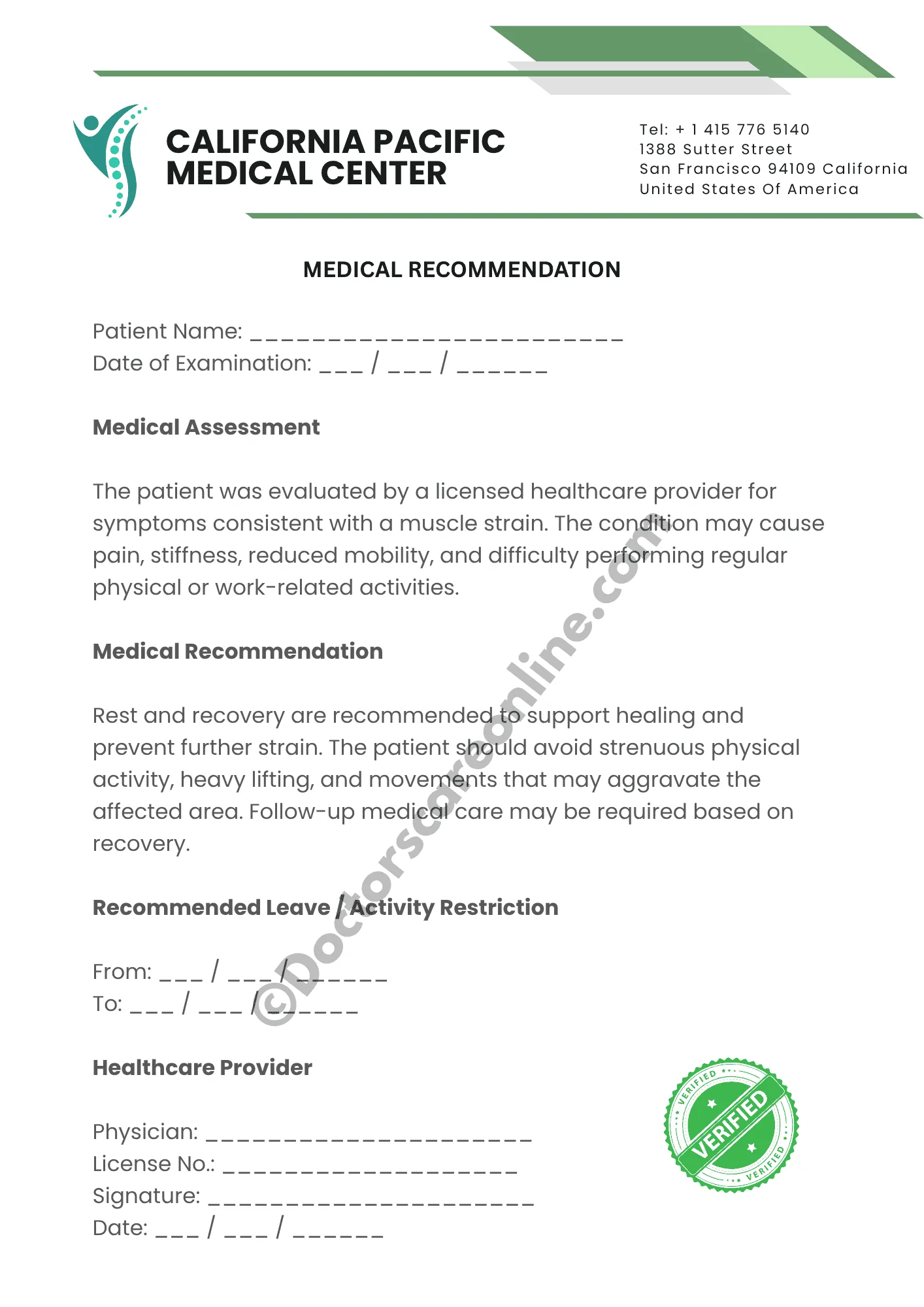
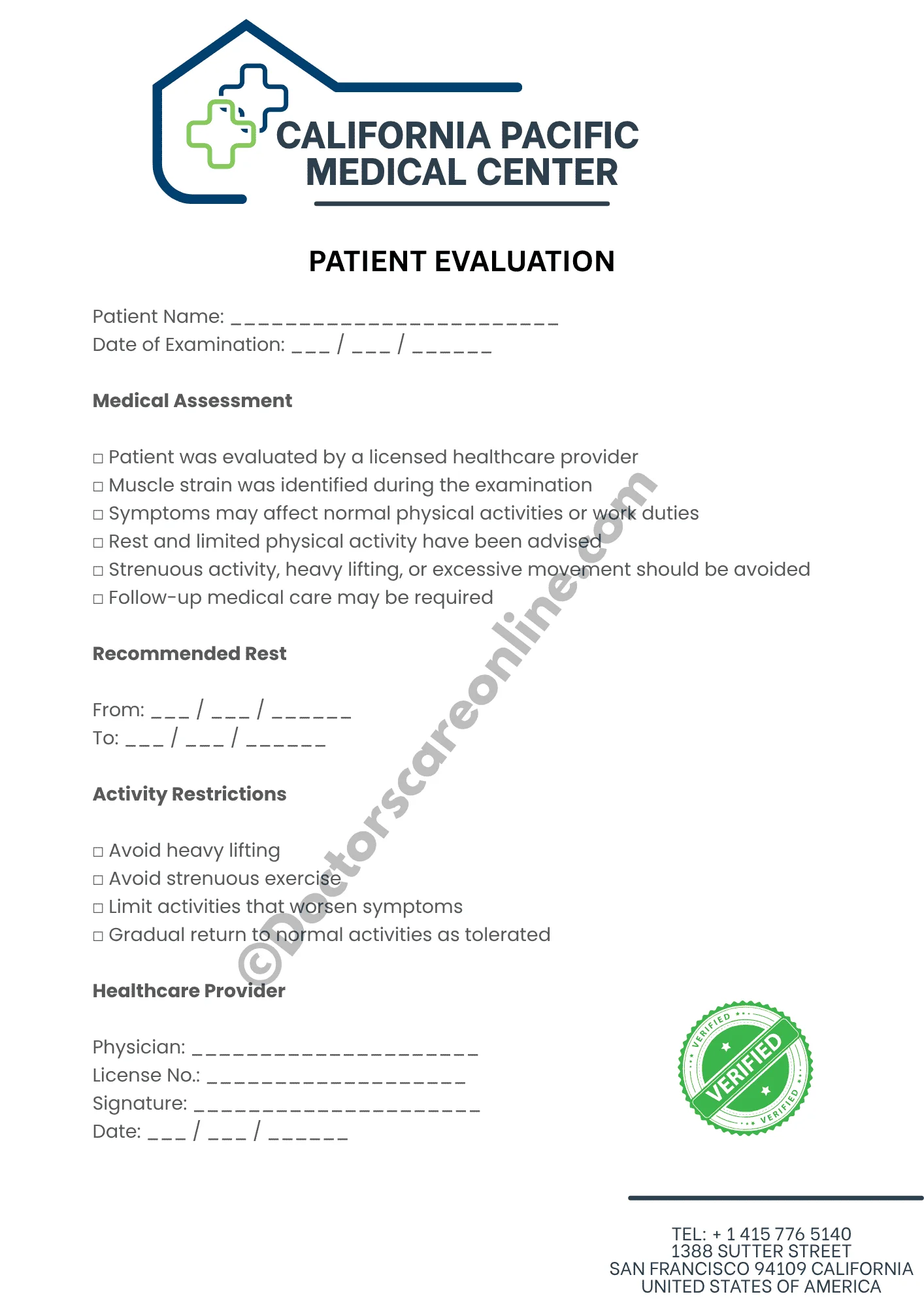
Printable Doctor’s Note for Muscle Strain Template
A doctor’s note for muscle strain is a formal medical document issued by a healthcare provider following an appropriate evaluation. It can document that you were medically assessed and may include recommendations concerning work, school, physical activity, or recovery.
The exact information depends on the provider and the purpose of the documentation. A note may include:
- Date of medical evaluation
- Recommended period away from work or school, when medically necessary
- Temporary physical restrictions
- Recommended return date, when appropriate
- Follow-up recommendations
- Healthcare provider and clinic information
- Provider’s signature or electronic authentication
The document should accurately reflect the healthcare provider’s assessment. A patient should never modify or add information to an issued medical document.
When Might You Need a Muscle Strain Doctor’s Note?
A doctor’s note may be useful when a muscle injury temporarily affects your ability to meet normal work, school, or physical responsibilities.
Common situations include:
- Missing work because of significant muscle pain
- Taking time away from school during recovery
- Working in a physically demanding occupation
- Needing temporary lifting restrictions
- Avoiding repetitive movements
- Requiring modified or light-duty responsibilities
- Recovering from a sports-related muscle injury
- Experiencing an injury after strenuous exercise
- Needing documentation for an absence according to an organization’s policy
Whether documentation is appropriate is determined by the healthcare provider after evaluating your circumstances.
Common Causes of Muscle Strain
Muscle strains can develop suddenly or gradually. Some injuries occur during a specific incident, while others develop after repeated stress on a muscle or tendon.
Potential causes include:
- Lifting a heavy object
- Sudden twisting or turning
- Overexertion during exercise
- Sports activities
- Repetitive physical movements
- Falling
- Poor flexibility
- Insufficient warm-up before physical activity
- Accidental injuries
- Overuse of a particular muscle group
The location and severity of symptoms can vary depending on which muscle or tendon has been affected.
Symptoms of a Pulled or Strained Muscle
Recognizing the symptoms can help you explain your condition accurately during a medical consultation.
Possible symptoms include:
- Localized muscle pain
- Tenderness
- Swelling
- Bruising or discoloration
- Muscle spasms
- Stiffness
- Reduced range of motion
- Difficulty using the affected muscle
- Pain that becomes worse with movement
A healthcare provider can determine whether your symptoms are consistent with a muscle strain or whether another condition needs to be considered.
Muscle Strain vs. Sprain: What Is the Difference?
A muscle strain affects a muscle or tendon, while a sprain involves a ligament around a joint.
For example, a pulled hamstring is a muscle strain, whereas an injured ankle ligament may be a sprain. Both injuries can cause pain, swelling, and difficulty moving, but they involve different tissues.
Understanding this distinction can help you describe your symptoms more accurately when speaking with a healthcare provider.
When Should You Seek Medical Care for a Muscle Strain?
Many minor strains can improve with appropriate self-care, but some injuries require professional evaluation.
Contact a healthcare provider if:
- Pain is severe or worsening
- Swelling is substantial or increasing
- You have significant difficulty moving the affected area
- You cannot use the injured muscle normally
- Symptoms continue without improvement
- The injury occurred during a significant accident
- You are unsure whether the injury is a strain
- You need an assessment for work or school restrictions
MedlinePlus recommends seeking medical help when a strain causes substantial swelling, prevents movement, or becomes progressively more swollen. MedlinePlus
When Is a Muscle Injury an Emergency?
Some circumstances require urgent medical attention rather than waiting for a routine online appointment.
Seek emergency care when an injury involves serious trauma, uncontrolled bleeding, inability to move the affected body part, severe or rapidly worsening symptoms, or other signs of a potentially serious injury. MedlinePlus specifically advises emergency care when a person cannot move the affected muscle or when the injury is bleeding.
If you believe you have a medical emergency, contact 911 or your local emergency service rather than relying on an online doctor’s note service.
How to Get a Doctor’s Note for Muscle Strain Online
If your symptoms are appropriate for telehealth, you may be able to discuss your muscle injury with a licensed healthcare provider online.
Step 1: Start an Online Appointment
- Select an available appointment and provide the information requested during registration.
Step 2: Describe Your Injury
- Explain when the injury occurred, which muscle is affected, what caused it, and how the symptoms are affecting your normal activities.
Step 3: Complete the Medical Evaluation
- The healthcare provider will review your symptoms and determine whether your condition can be appropriately assessed through telehealth or whether an in-person evaluation is needed.
Step 4: Discuss Work or School Limitations
- If your injury is affecting your responsibilities, explain the specific activities you cannot safely perform, such as lifting, standing, walking, bending, or repetitive movement.
Step 5: Receive Appropriate Medical Documentation
- If the provider determines that a doctor’s note is medically appropriate, they may issue documentation according to their clinical judgment and applicable requirements.
Telehealth can be useful for discussing many health concerns remotely, although some conditions require an in-person examination.
What Information Should You Provide During the Online Appointment?
Accurate information helps the healthcare provider understand the injury and determine the appropriate next step.
Before your appointment, consider having these details available:
- Date and approximate time of injury
- Activity that caused the injury
- Location of the affected muscle
- Severity and type of pain
- Swelling or bruising
- Difficulty moving the area
- Previous injuries involving the same muscle
- Current medications
- Existing medical conditions
- Type of work or school activity affected
- Any restrictions already recommended by another healthcare professional
Being specific about your daily limitations can help the provider understand how the injury affects your functioning.
What Can a Doctor’s Note for Muscle Strain Say?
The content depends on the provider’s evaluation and the documentation requirements of the organization receiving the note.
A note might indicate that the patient:
- Was medically evaluated
- Requires temporary absence from work or school
- Should avoid certain physical activities
- Needs temporary lifting restrictions
- May perform modified duties
- Should return for follow-up
- Can return to normal activities on a specified date, when clinically appropriate
A healthcare provider decides what information should be included. The documentation should not contain claims that were not established during the medical evaluation.
Muscle Strain Work Restrictions
A physically demanding job can be difficult to perform while recovering from a muscle injury.
Depending on the individual’s condition and occupation, a healthcare provider may recommend temporary limitations involving:
- Heavy lifting
- Repetitive movements
- Bending or twisting
- Prolonged standing
- Strenuous physical activity
- Certain sports or exercise
- Other movements that aggravate the injured area
Work restrictions should be individualized rather than based solely on the name of the injury.
Muscle Strain and School Absences
Students may also need medical documentation when a muscle injury interferes with attendance, physical education, sports, examinations, or other academic responsibilities.
If documentation is required, check the school’s policy to determine what information must be provided and when the documentation should be submitted.
A healthcare provider can determine whether an absence or activity restriction is medically appropriate based on the student’s condition.
Muscle Strain Recovery and Self-Care
Treatment and recovery depend on the severity and location of the injury. Initial care for many strains may include resting the affected muscle and using ice appropriately. As symptoms improve, gradual movement, stretching, exercise, or physical therapy may be recommended depending on the injury.
Follow the treatment plan provided by your healthcare professional rather than returning immediately to strenuous activity simply because the pain has decreased.
Avoid taking medication beyond recommended directions, and ask a healthcare professional or pharmacist if you are unsure whether a particular medicine is appropriate for you.
How Our Online Service Can Help
Our website is designed to make the process of seeking medical documentation more convenient for people who may need an online healthcare consultation.
Instead of trying to determine on your own whether you need a medical note, you can use the platform to connect with a healthcare provider for an appropriate evaluation.
Our service can help users:
- Request an online medical appointment
- Explain their symptoms and concerns
- Discuss how an injury is affecting work or school
- Receive professional medical guidance
- Determine whether online evaluation is appropriate
- Obtain medical documentation when a provider determines it is justified
The purpose of the service is to connect users with appropriate healthcare evaluation—not to guarantee that a doctor’s note will be issued.
Why Users Can Rely on Our Online Process
Choosing an online healthcare service involves more than convenience. Users should be able to understand what the service provides, how the appointment works, and what happens after the consultation.
- Our process is designed around medical evaluation rather than automatic documentation. A healthcare provider reviews the information provided and determines what care or documentation is appropriate based on the individual’s circumstances.
- Users also benefit from a straightforward online process that allows them to complete the required steps remotely where telehealth is available and appropriate.
- For telehealth, privacy and secure handling of health information are important considerations. HHS guidance notes that telehealth visits are subject to privacy protections and that patients should use secure connections and private environments when discussing health information online.
Need Help With Registration, Login, Payment, or Your Appointment?
If you experience a problem while using our website, you don’t have to figure it out alone.
You can use our website chatbox to ask questions or request assistance with issues such as:
- Creating or accessing your account
- Registering for an appointment
- Logging into your account
- Understanding the appointment process
- Payment-related questions
- Problems completing checkout
- Technical difficulties
- Questions about your appointment
- General service-related concerns
Our support team can help guide you through the website process and provide information about available options.
For medical questions or concerns about your symptoms, however, you should speak directly with a qualified healthcare provider rather than relying on customer support.
What to Expect From an Online Muscle Strain Consultation
Before the appointment, make sure you have a reliable internet connection, a suitable device, and a private location where you can discuss your health information comfortably. HHS recommends checking your technology and appointment details beforehand and preparing questions or relevant medical information for the visit.
During the consultation, the provider may ask about:
- How the injury happened
- Your symptoms
- The location of the pain
- Your ability to move the affected area
- Previous injuries
- Medications and relevant medical history
- Your work or school requirements
The provider may determine that telehealth is appropriate, recommend self-care or treatment, issue documentation when medically justified, or advise you to seek an in-person examination.
When an In-Person Visit May Be Necessary
Online healthcare is not appropriate for every injury.
A provider may recommend an in-person evaluation when the symptoms require a physical examination, diagnostic testing, imaging, hands-on assessment, or care that cannot safely be delivered through telehealth.
This is particularly important when the injury is severe, associated with major trauma, or involves significant loss of movement or other concerning symptoms.
Following a provider’s recommendation for in-person care is an important part of using telehealth safely.
How to Use Your Doctor’s Note
Once you receive legitimate medical documentation, review it carefully to make sure the information is accurate.
Follow the instructions provided by your employer, school, or other organization regarding submission.
Depending on the recipient’s policy, you may need to provide the document through an employee portal, student system, email, or another approved method.
Do not edit the document yourself. If something appears incorrect, contact the healthcare provider or appropriate support channel for clarification.
FAQs
1. Can I get a doctor’s note for a pulled muscle without missing work?
Whether you need documentation depends on your symptoms, job requirements, and workplace policy. A healthcare provider can assess your condition and determine whether restrictions or documentation are medically appropriate.
2. Can a muscle strain qualify for a work accommodation?
A muscle injury may result in temporary functional limitations, but whether an accommodation is appropriate depends on the individual’s medical circumstances, job duties, and applicable workplace requirements. A healthcare provider can document medically appropriate restrictions.
3. Can telehealth evaluate a muscle strain?
Some muscle injuries can be discussed and assessed through telehealth, while others require an in-person examination. The healthcare provider determines whether remote evaluation is suitable based on the symptoms and circumstances.
4. What happens if the provider cannot determine my injury online?
The provider may recommend an in-person appointment, urgent care, diagnostic testing, or another appropriate form of evaluation. Following that recommendation can help ensure the injury is properly assessed.
5. Can I ask the online doctor questions about my muscle injury?
Yes. An online medical consultation is an opportunity to discuss your symptoms, concerns, limitations, and questions with the healthcare provider. You should provide accurate information and ask for clarification whenever you do not understand a recommendation.
Medical Disclaimer: This content is provided for general educational and informational purposes only and does not replace professional medical advice, diagnosis, or treatment.
A doctor’s note should only be issued by an appropriately licensed healthcare provider following an appropriate medical evaluation. Whether a patient qualifies for medical leave, activity restrictions, modified duties, or documentation depends on the individual’s condition and the provider’s clinical judgment.
Telehealth availability and requirements can vary by state and circumstance. An online consultation may not be appropriate for every medical condition.


Reviews
There are no reviews yet.