
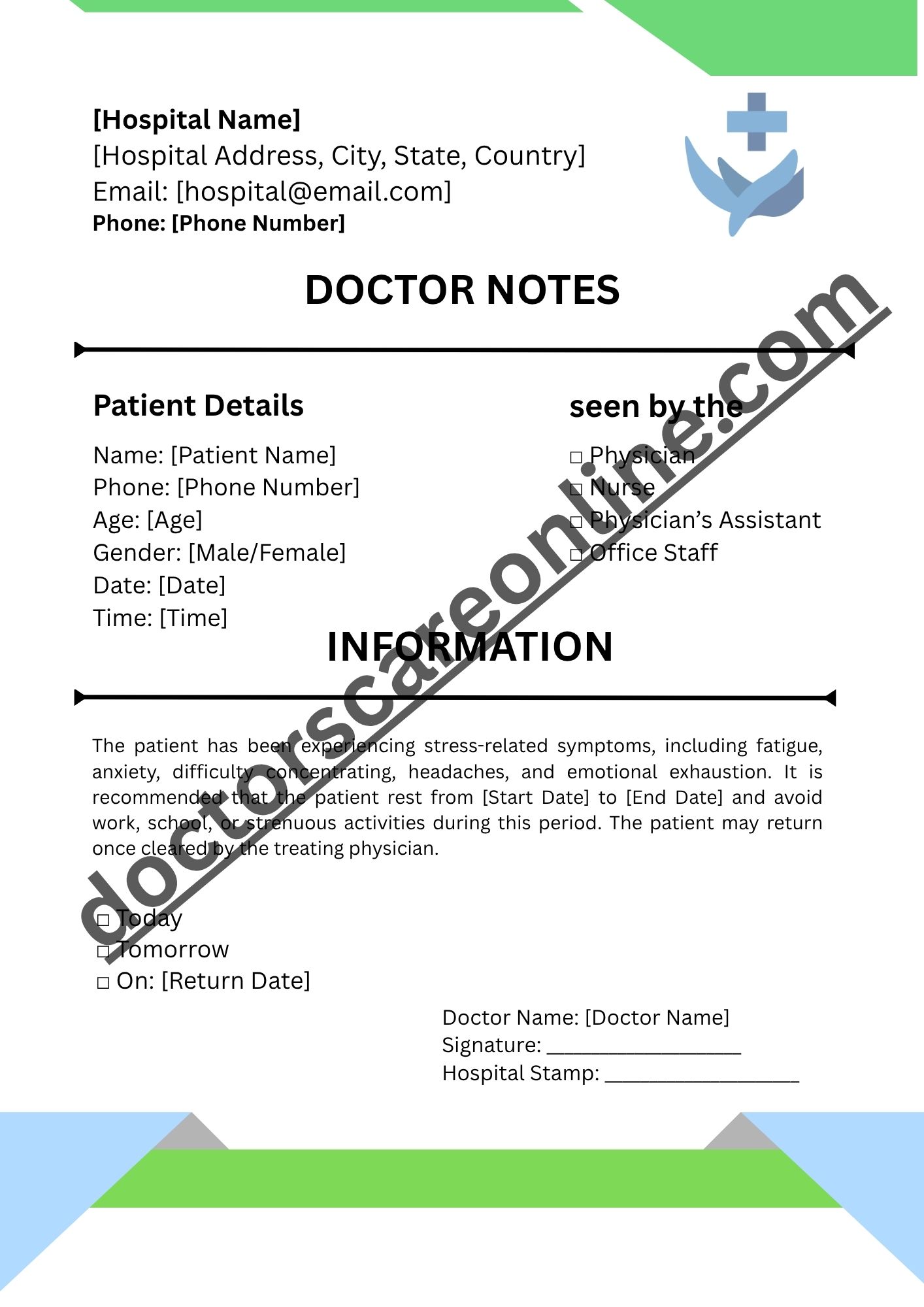
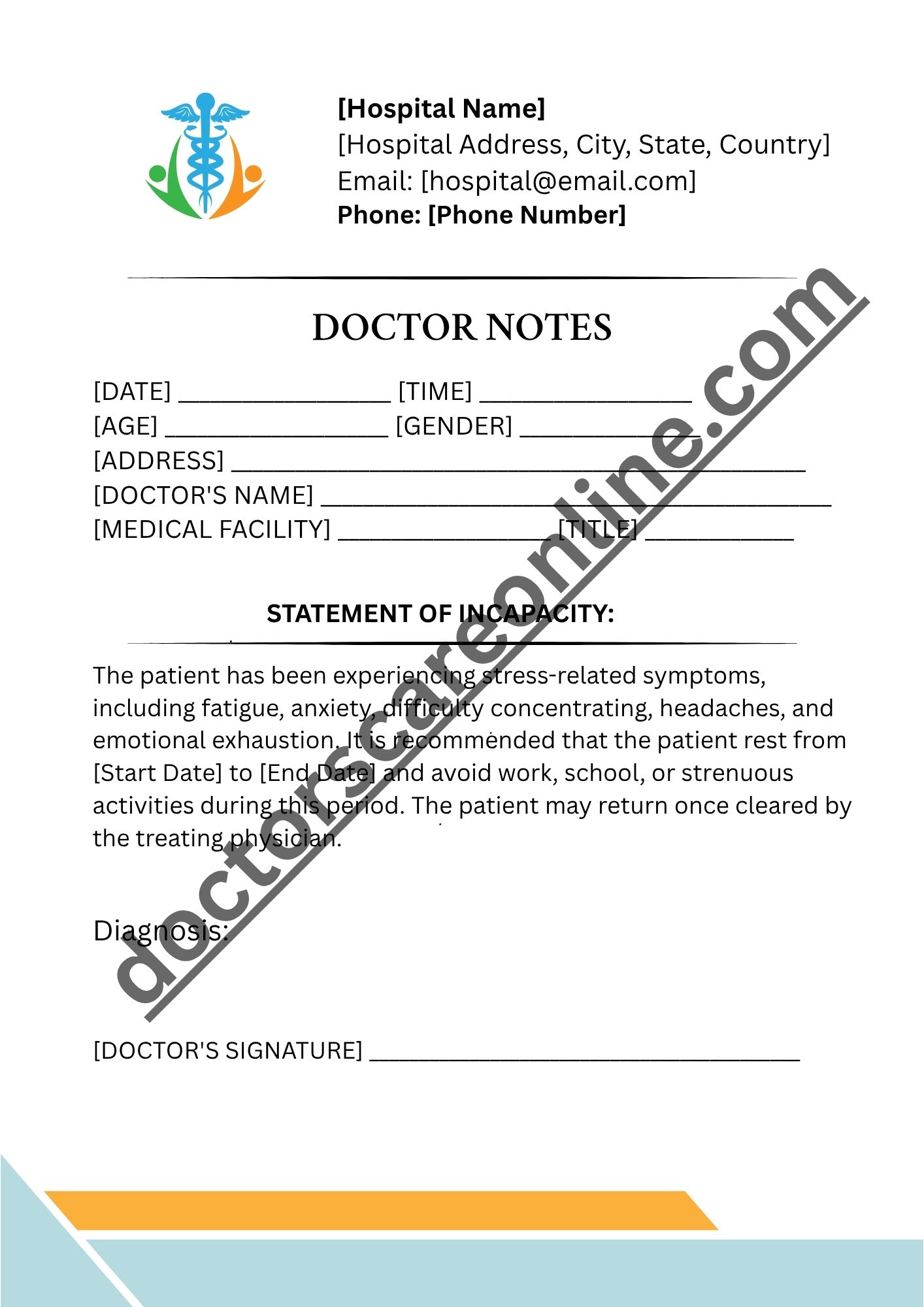
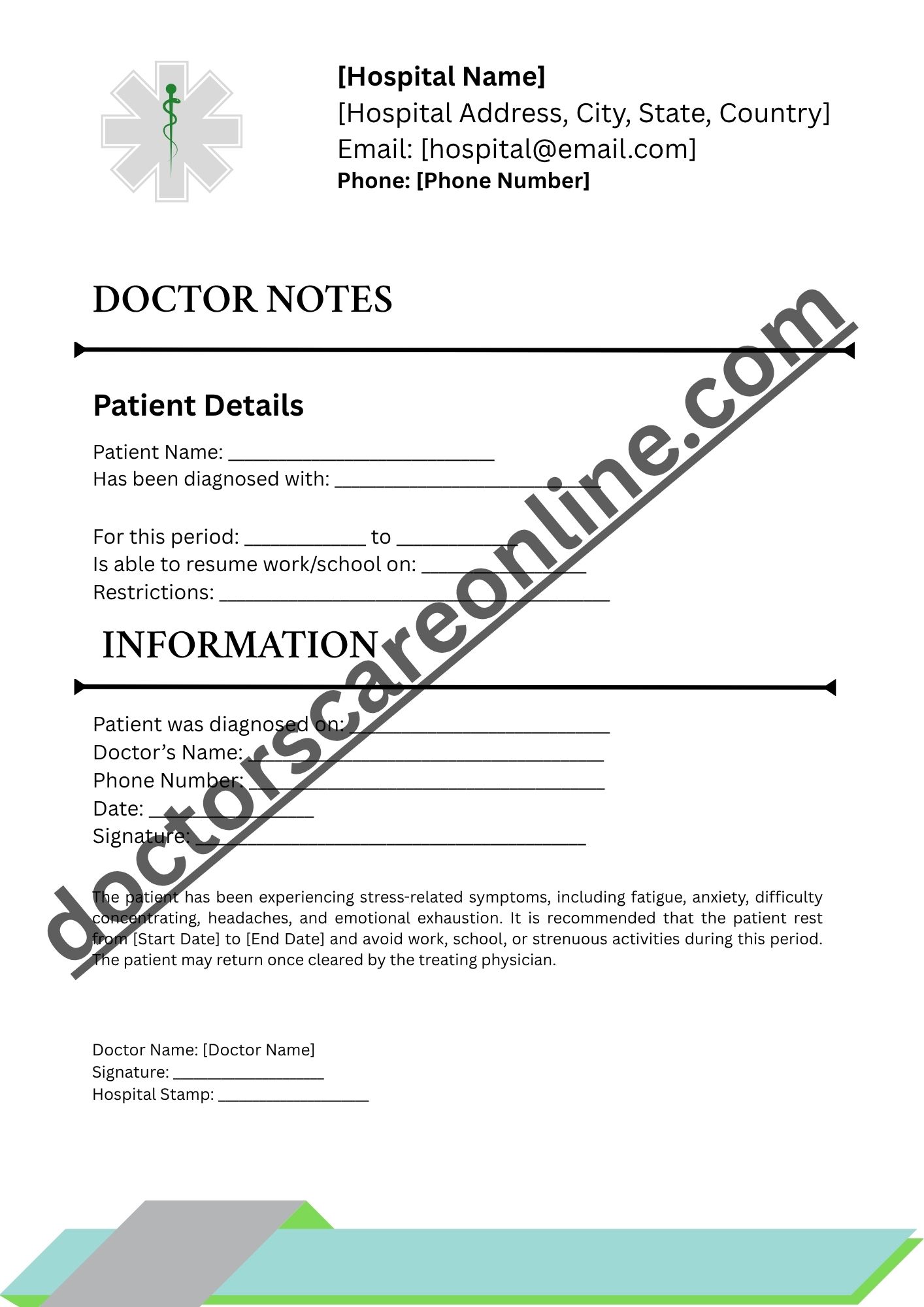
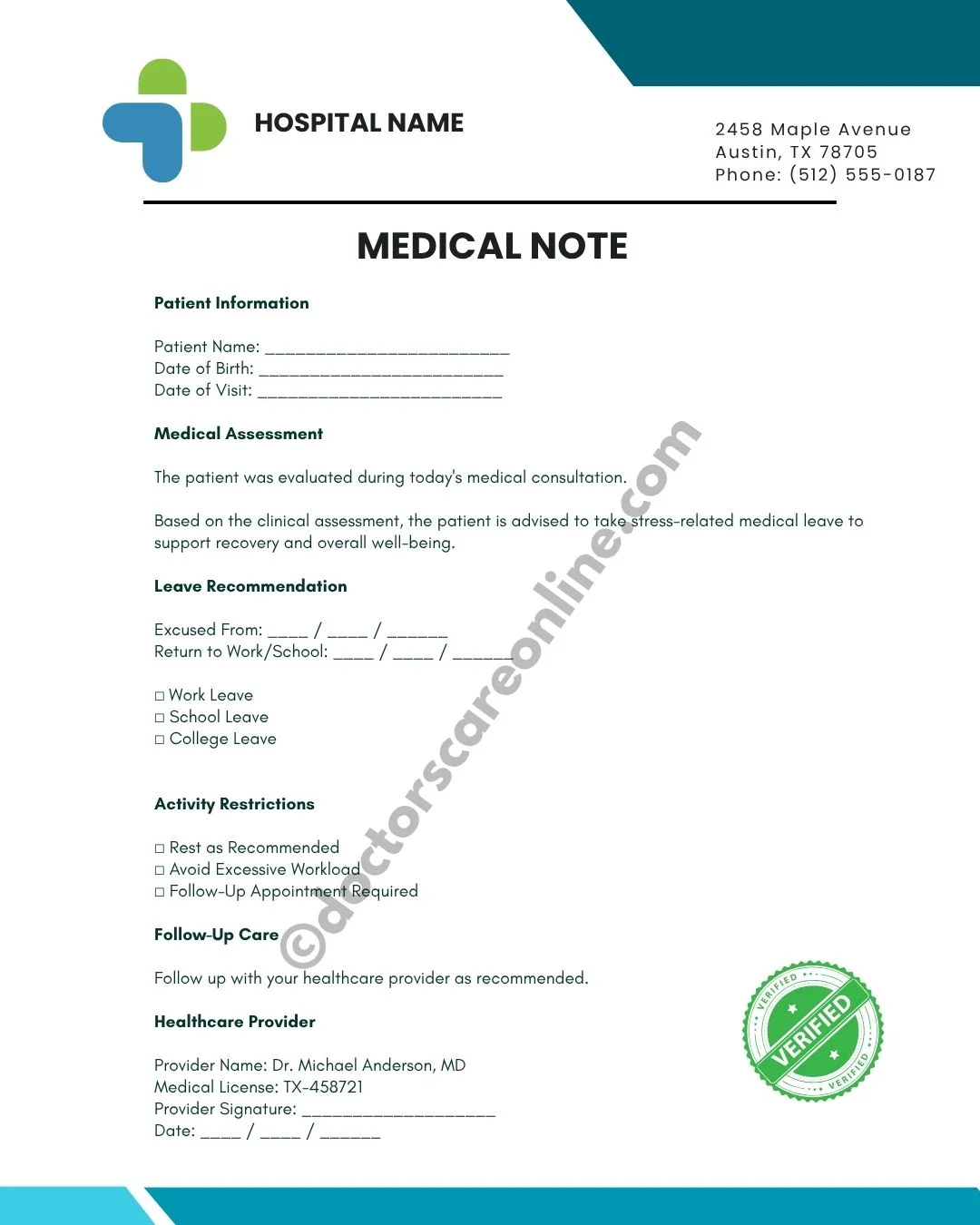
A doctor’s note for stress leave is an official medical document provided by a licensed healthcare professional after evaluating a person’s stress-related symptoms and overall health condition. This note confirms that an individual may need time away from work, school, or other responsibilities to focus on recovery and improve their well-being.
A stress leave note does not simply mention that a person feels stressed; it is issued after a doctor determines that stress is affecting daily activities, work performance, physical health, or emotional well-being.
The note may include the recommended time away, restrictions (if any), and guidance for returning to regular activities.
When Do You Need a Doctor’s Note for Stress Leave?
A doctor’s note for stress leave may be required when stress starts affecting your ability to perform normal tasks or maintain daily routines.
You may need a stress leave note if you experience:
- Extreme workplace pressure or burnout
- Difficulty concentrating on work or studies
- Emotional exhaustion
- Sleep problems caused by stress
- Physical symptoms related to stress
- Increased anxiety or feeling overwhelmed
- Reduced ability to complete daily responsibilities
Employers, schools, or colleges may also request medical documentation before approving extended leave.
Common Reasons Doctors Approve Stress Leave
Doctors may recommend stress leave when ongoing stress negatively impacts a person’s health and recovery.
Common reasons include:
- Workplace burnout: Continuous workload, long working hours, or job-related pressure
- Mental exhaustion: Feeling unable to manage daily responsibilities
- High levels of anxiety: Stress that interferes with normal activities
- Personal challenges: Situations affecting emotional health
- Poor sleep and fatigue: Stress-related sleep difficulties affecting performance
- Difficulty functioning: Problems managing work, school, or personal tasks
A doctor decides whether leave is appropriate based on individual symptoms and medical evaluation.
Symptoms That May Support a Stress Leave Request
Stress can affect both mental and physical health. Some common symptoms that may lead a doctor to recommend time off include:
- Constant tiredness or lack of energy
- Trouble sleeping or frequent waking
- Headaches or muscle tension
- Difficulty focusing or making decisions
- Feeling emotionally overwhelmed
- Irritability or mood changes
- Loss of motivation
- Changes in appetite
- Feeling unable to manage daily responsibilities
If these symptoms interfere with your normal routine, discussing them with a healthcare provider can help determine the right support.
How Does a Doctor Evaluate Stress Before Providing a Note?
Before providing a stress leave doctor’s note, a healthcare provider usually evaluates:
- Your current symptoms
- How long you have been experiencing stress
- How stress affects work, school, or personal life
- Sleep patterns and energy levels
- Physical symptoms related to stress
- Previous health concerns
- Your ability to continue normal activities
The doctor may also discuss treatment options, coping strategies, or follow-up care depending on your situation.
What Information Is Included in a Stress Leave Doctor’s Note?
A stress leave medical note generally includes basic medical documentation details.
| Information Included | Details |
|---|---|
| Patient Name | Person receiving medical evaluation |
| Date of Consultation | Date when doctor assessed the condition |
| Medical Provider Details | Doctor or clinic information |
| Leave Recommendation | Suggested time away from work/school |
| Restrictions (if required) | Any activity limitations |
| Return Guidance | Instructions regarding returning to responsibilities |
| Doctor Authorization | Signature or verification from healthcare provider |
A doctor usually does not need to provide detailed personal medical information to an employer unless required by law or patient consent.
How Long Can a Doctor Give Stress Leave For?
The duration of stress leave depends on the severity of symptoms, recovery progress, and medical assessment.
Stress leave may range from:
- A few days for short-term recovery
- Several weeks for burnout or severe stress
- Longer periods if ongoing treatment or recovery is required
A doctor may schedule follow-up appointments to review progress and decide whether additional leave is needed.
How to Get a Doctor’s Note for Stress Leave?
Follow these steps to request a stress leave note:
- Schedule a doctor appointment
Book an appointment with a licensed healthcare provider. - Explain your symptoms clearly
Discuss how stress is affecting your work, studies, sleep, and daily activities. - Complete the medical evaluation
The doctor will assess your condition and recommend appropriate support. - Discuss leave requirements
Explain whether the note is needed for work, school, college, or another purpose. - Receive the medical note
If approved, the doctor will provide documentation with necessary leave details.
How to Book an Online Doctor’s Appointment for a Stress Leave Note?
If you need a stress leave doctor’s note for your office, school, or college, you can book an online consultation with a licensed healthcare provider. During the virtual appointment, the doctor will review your symptoms, evaluate your condition, and provide medical documentation if a leave recommendation is appropriate.
Steps to Book an Online Stress Leave Consultation:
Step 1: Choose a Trusted Online Healthcare Service
- Select a reliable telehealth platform that connects you with licensed healthcare professionals.
- Make sure the service provides proper medical consultations and documentation.
Step 2: Create an Account and Select a Doctor
- Provide your basic details to create an account.
- Choose a doctor or healthcare provider experienced in evaluating stress, burnout, or mental health concerns.
Step 3: Schedule an Online Appointment
- Select an available date and time for your consultation.
- Choose a video call or virtual appointment option.
Step 4: Discuss Your Stress Symptoms
During the consultation, explain:
- How long you have been experiencing stress
- How stress is affecting your work, school, or college performance
- Sleep problems, anxiety, fatigue, or difficulty concentrating
- Why you need time away from your responsibilities
Step 5: Complete the Medical Evaluation
- The doctor will review your symptoms and overall health condition.
- Based on the evaluation, the doctor will decide whether stress leave documentation is medically appropriate.
Step 6: Receive Your Doctor’s Note
- If approved, the healthcare provider may issue a stress leave note with necessary details.
- You can submit the document to your employer, school administration, or college department.
How Long Is a Stress Leave Doctor’s Note Valid for Work, School, or College?
The validity of a stress leave doctor’s note depends on the leave period mentioned by the healthcare provider, workplace policies, and the requirements of the school or college.
Generally, a stress leave note may be valid for:
| Purpose | Validity Period |
|---|---|
| Office / Workplace | Usually valid for the specific number of days mentioned by the doctor (for example, a few days to several weeks). |
| School | Usually covers the absence period recommended by the doctor and may be accepted according to school attendance policies. |
| College / University | Generally valid for the dates mentioned in the medical note and may be used for attendance adjustments, extensions, or academic considerations. |
Stress Leave Rules for Employees
Stress leave rules can vary depending on location, employer policies, and employment laws.
Important points include:
- Some workplaces offer mental health-related leave options.
- Medical documentation may be required for longer absences.
- Employers generally need only necessary medical information.
- Employees may need clearance before returning to work.
Stress Leave for School and College Students
Students may need a stress leave note when mental or emotional stress affects attendance, exams, or academic performance.
A doctor’s note may help with:
- Attendance adjustments
- Academic accommodations
- Exam-related considerations
- Temporary leave approval
Students should check their school or college policies regarding medical documentation.
Returning to Work After Stress Leave
Returning to work after stress leave should be a gradual and well-planned process. Before resuming your duties, make sure you feel ready and follow any recommendations provided by your healthcare provider. A smooth transition can help reduce the risk of burnout and support long-term recovery.
Steps for Returning to Work After Stress Leave
1. Follow Your Doctor’s Advice
- Return to work only after your healthcare provider confirms you are ready.
- Follow any treatment plan or recovery recommendations.
2. Inform Your Employer
- Notify your manager or HR about your planned return date.
- Submit any required return-to-work documentation if requested.
3. Ease Back Into Your Routine
- Start by organizing your daily tasks.
- Focus on high-priority work before taking on additional responsibilities.
4. Discuss Workplace Adjustments
- If needed, talk to your employer about temporary workload adjustments or flexible working arrangements.
- Request reasonable support if it helps you transition back comfortably.
5. Continue Healthy Stress Management
- Take regular breaks during the workday.
- Maintain a healthy sleep schedule.
- Practice relaxation techniques or mindfulness.
- Stay physically active and eat balanced meals.
6. Attend Follow-Up Appointments
- Keep any scheduled follow-up visits with your healthcare provider.
- Discuss any ongoing symptoms or concerns during recovery.
Treatment and Recovery Plan During Stress Leave
The goal of stress leave is to give your mind and body time to recover while addressing the factors contributing to stress. Your treatment and recovery plan will depend on your symptoms, overall health, and your healthcare provider’s recommendations.
Common Treatment Options for Stress Leave
- Attend regular appointments with your healthcare provider.
- Speak with a licensed therapist or counselor if recommended.
- Learn healthy stress management and coping techniques.
- Follow any prescribed treatment or medication exactly as directed by your doctor.
- Address workplace or personal stressors that may be affecting your well-being.
Recovery Tips During Stress Leave
- Get 7–9 hours of quality sleep each night.
- Eat a balanced, nutritious diet and stay well hydrated.
- Engage in light physical activity, such as walking or stretching, if approved by your doctor.
- Practice relaxation techniques like deep breathing, meditation, or mindfulness.
- Limit activities that increase stress whenever possible.
- Stay connected with supportive family members or friends.
- Avoid alcohol, smoking, or other unhealthy coping habits.
When to Seek Immediate Medical Help for Severe Stress
While stress is common, severe stress can sometimes become a medical emergency. If your symptoms are intense, worsen suddenly, or affect your ability to stay safe or function normally, seek medical attention immediately.
Seek Immediate Medical Help If You Experience:
- Chest pain, difficulty breathing, or symptoms that could indicate a heart problem
- Severe panic attacks that do not improve
- Thoughts of self-harm or suicide
- Feeling hopeless or unable to cope with daily life
- Confusion, disorientation, or sudden changes in behavior
- Extreme anxiety that prevents you from eating, sleeping, or carrying out basic daily activities
- Uncontrollable shaking, dizziness, or fainting
- Sudden mood changes, aggression, or emotional distress that feels overwhelming
- Hallucinations or hearing or seeing things that are not there
- Any stress-related symptoms that rapidly become worse or cause concern
Common Mistakes to Avoid When Requesting Stress Leave
Requesting stress leave should be handled professionally and honestly. Avoiding these common mistakes can help make the process smoother and reduce delays in getting the support you need.
1. Waiting Too Long to Seek Help
Ignoring ongoing stress or burnout can make symptoms worse. If stress is affecting your health or daily performance, schedule a medical evaluation as soon as possible.
2. Not Explaining Your Symptoms Clearly
Be honest with your healthcare provider about how stress is affecting your work, sleep, mood, and daily activities. Clear communication helps the doctor make an informed assessment.
3. Assuming Leave Will Be Automatically Approved
A doctor will recommend stress leave only if it is medically appropriate after evaluating your condition. Approval is based on a professional medical assessment.
4. Delaying Notification to Your Employer or School
Inform your employer, school, or college as soon as you know you may need leave. Following the required reporting process can help avoid attendance or HR issues.
5. Missing Follow-Up Appointments
If your doctor recommends follow-up visits, attend them as scheduled. These appointments help monitor your recovery and determine whether additional leave or treatment is needed.
6. Returning Before You Are Ready
Going back to work or school too soon may slow your recovery and increase the risk of burnout. Follow your healthcare provider’s advice before resuming your normal responsibilities.
7. Ignoring Your Treatment Plan
Taking stress leave alone may not resolve the underlying problem. Follow your doctor’s recommendations, attend therapy or counseling if advised, and practice healthy stress management techniques.
8. Using False or Altered Medical Documents
Never submit a fake or modified doctor’s note. Providing inaccurate medical documentation may violate workplace or school policies and could lead to disciplinary action.
9. Not Understanding Your Leave Policy
Before requesting stress leave, review your employer’s HR policy or your school/college guidelines to understand the documentation, notice period, and leave requirements.
10. Failing to Prioritize Recovery
Use your stress leave to rest and recover rather than taking on additional work or unnecessary commitments. A proper recovery plan can help you return to your responsibilities feeling healthier and better prepared.
FAQs
1. Can a doctor write a note for stress leave?
Yes. A licensed healthcare provider can issue a doctor’s note for stress leave if, after evaluating your symptoms and overall health, they determine that time away from work, school, or college is medically appropriate. The note typically includes the recommended leave period and any necessary work or study restrictions.
2. How do I get a stress leave note from a doctor?
To get a stress leave note, schedule an appointment with a licensed healthcare provider and discuss your symptoms honestly. The doctor will assess how stress is affecting your daily life, work, or studies. If medical leave is appropriate, they may provide a doctor’s note with the recommended duration of leave.
3. How long can you be signed off work for stress?
The length of stress leave varies depending on the severity of your symptoms and your doctor’s medical assessment. Some people may need only a few days of rest, while others may require several weeks or longer. If recovery takes more time, your doctor may recommend follow-up appointments and extend the leave if medically necessary.
4. What should I tell my doctor to get stress leave?
Be honest and explain how stress is affecting your physical and mental well-being. Describe your symptoms, such as anxiety, exhaustion, sleep problems, difficulty concentrating, or feeling overwhelmed. Also, explain how these symptoms are impacting your work, school, or daily responsibilities so your doctor can make an informed medical decision.
5. Can I get a stress leave note online?
Yes. Many licensed healthcare providers offer online telehealth consultations where they can evaluate your symptoms. If the doctor determines that stress leave is medically appropriate, they may issue a doctor’s note electronically. However, whether an online doctor’s note is accepted depends on your employer’s, school’s, or college’s policies and local regulations.
6. Can a Stress Leave Doctor’s Note Be Extended?
Yes. A stress leave doctor’s note may be extended if your healthcare provider determines that additional recovery time is medically necessary.
During a follow-up appointment, the doctor may evaluate:
- Improvement in symptoms
- Ability to return to work or school
- Response to treatment
- Ongoing stress levels
- Any new medical concerns
If additional leave is appropriate, your healthcare provider may issue updated medical documentation with a revised leave period.
Related Post-



Reviews
There are no reviews yet.