
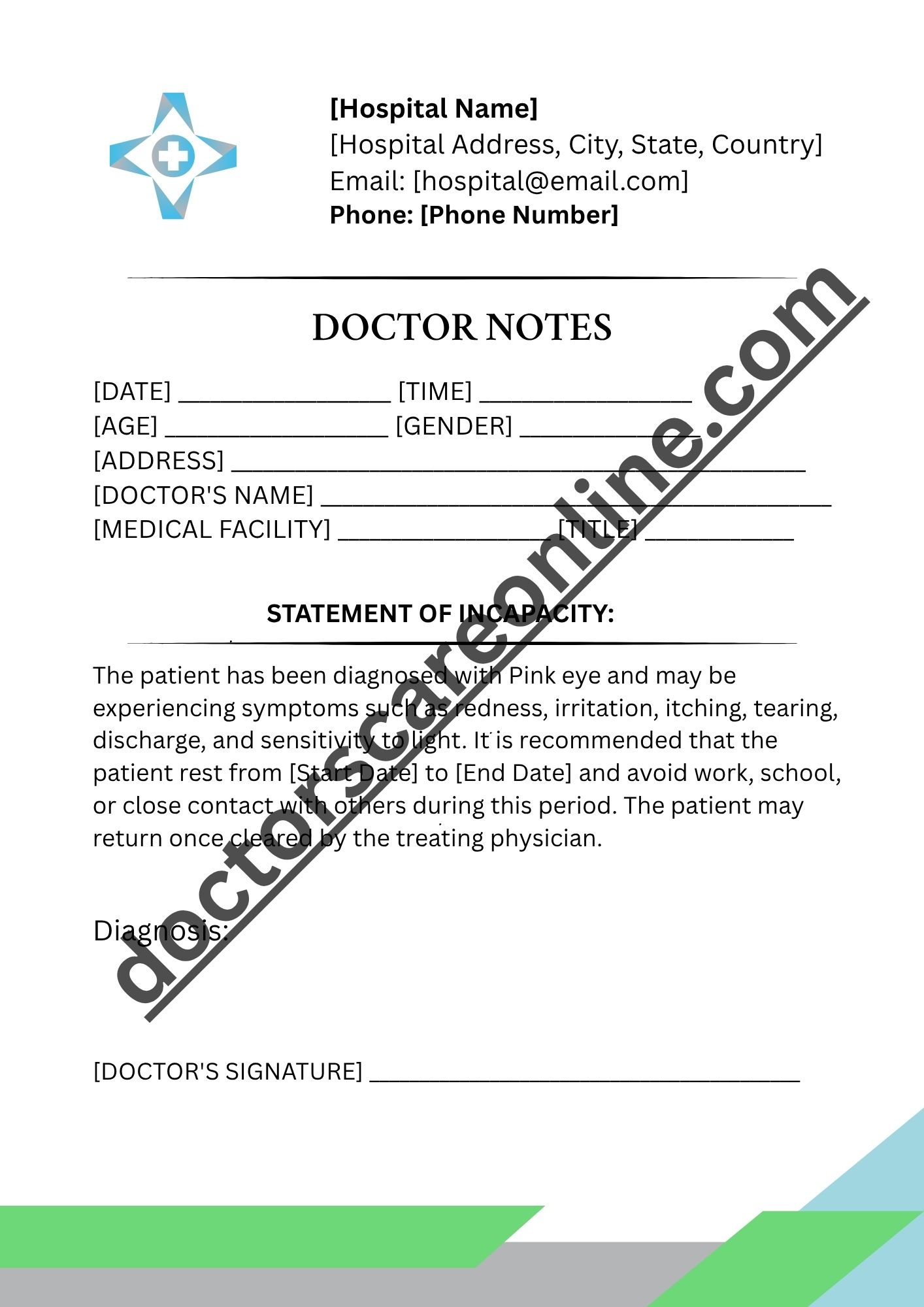
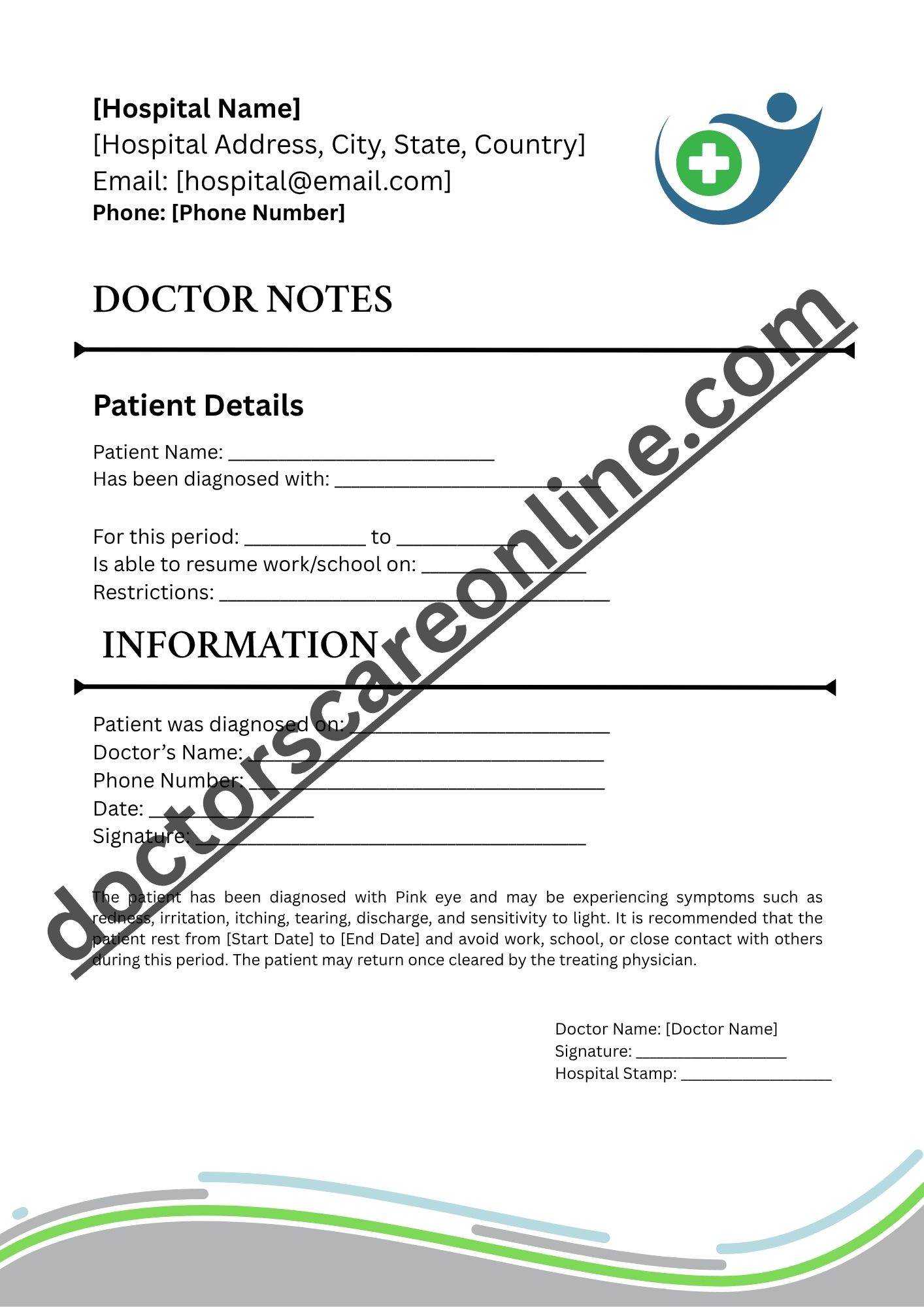
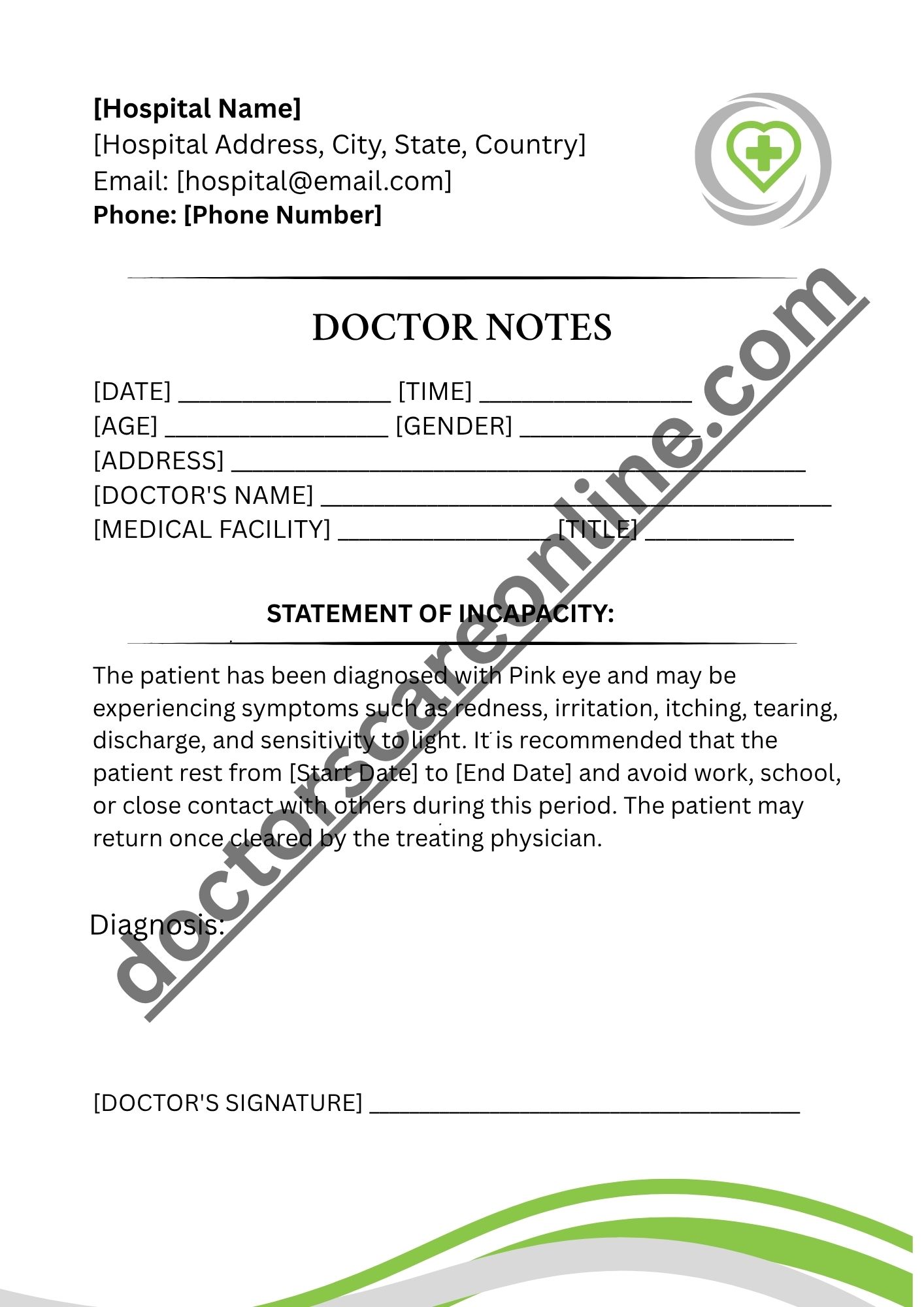
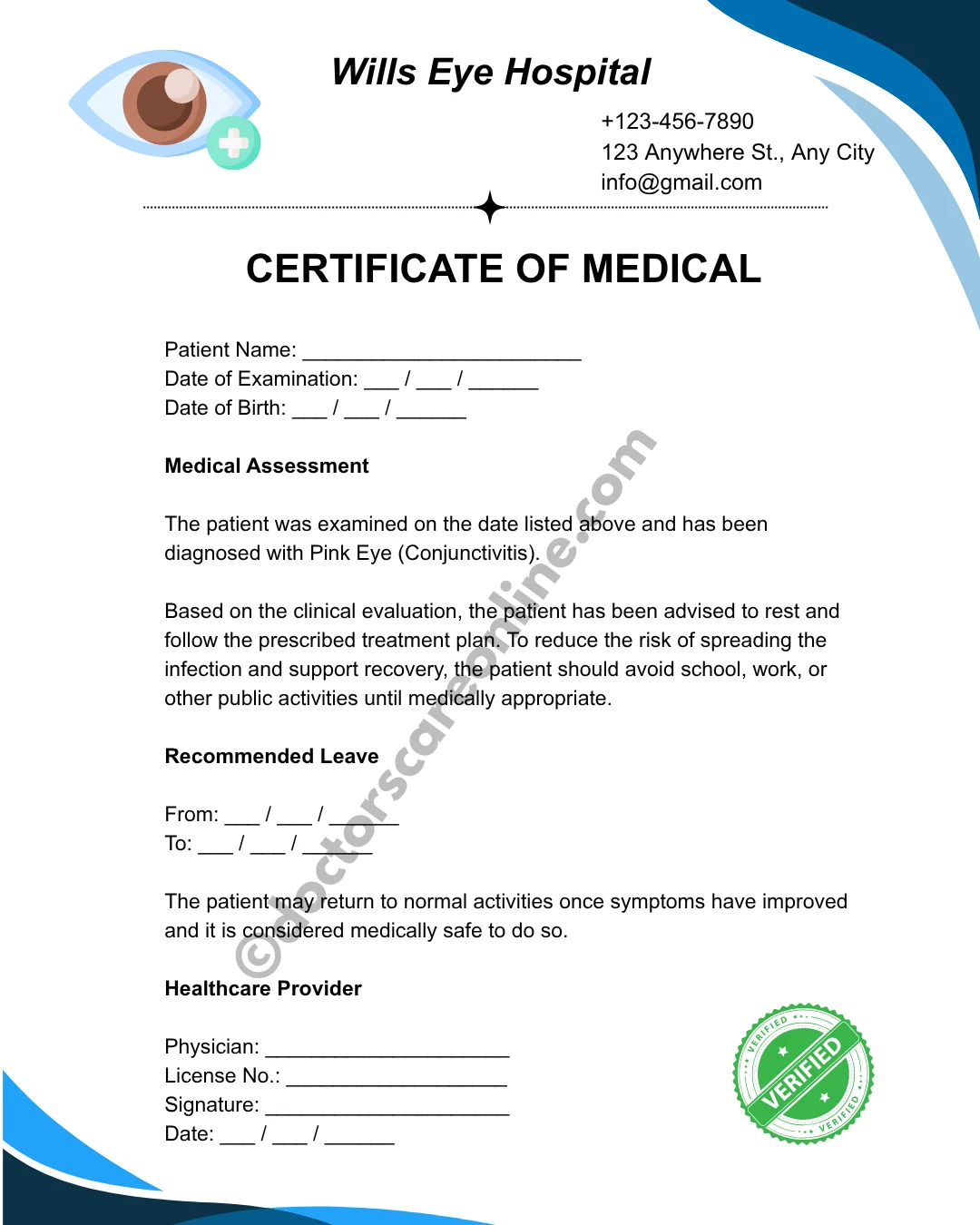
Doctors Note for Pink Eye – Pink eye, also known as conjunctivitis, is a common eye condition that can cause redness, itching, irritation, watery eyes, and discharge. Because pink eye can sometimes spread easily, people may need to take time away from work, school, or other activities until they recover. A doctor’s note for pink eye is an official medical document provided by a healthcare professional after evaluating your symptoms and confirming your condition.
It can help explain your absence and provide guidance on when you can safely return to your regular routine. Whether caused by a virus, bacteria, allergies, or irritation, getting proper medical advice can help manage symptoms and prevent spreading the infection to others. This guide covers everything you need to know about getting a doctor’s note for pink eye, including requirements, validity, and return-to-work or school recommendations.
What Causes Pink Eye (Conjunctivitis)?
Pink eye develops when the conjunctiva (the thin protective layer covering the white part of the eye and inner eyelids) becomes inflamed due to infection, allergies, or irritation. Common causes of pink eye include:
- Viral Infections
- Viruses are one of the most common causes of pink eye.
- It often occurs along with a cold, flu, or other respiratory infections.
- Viral conjunctivitis can spread easily through close contact or touching contaminated surfaces.
- Bacterial Infections
- Bacteria can cause inflammation and infection in the eye.
- It may lead to thick yellow or green eye discharge, redness, and swollen eyelids.
- Some cases may require prescription antibiotic eye drops from a healthcare provider.
- Allergic Reactions
- Exposure to allergens such as pollen, dust, pet dander, or mold can trigger pink eye.
- It commonly causes intense itching, watery eyes, and redness in both eyes.
- Allergic pink eye is not contagious and usually improves when the allergen is avoided.
- Chemical or Environmental Irritants
- Contact with smoke, chlorine, air pollution, cosmetics, or chemicals can irritate the eyes.
- Symptoms may include burning, redness, excessive tearing, and discomfort.
- Removing the irritant and rinsing the eyes can help reduce symptoms.
- Contact Lens-Related Issues
- Wearing dirty or improperly stored contact lenses can increase the risk of eye infections.
- Using lenses for longer than recommended may cause irritation and bacterial growth.
- Proper lens hygiene helps prevent pink eye and other eye problems.
Different Types of Pink Eye
Pink eye (conjunctivitis) can happen due to infections, allergies, or irritation. The type of pink eye helps determine whether it is contagious, what treatment may be needed, and how long recovery may take.
Viral Pink Eye
-
- It is caused by a virus and is the most common type of conjunctivitis.
- It often develops with a cold, flu, or other respiratory infections.
- It usually causes watery eyes, redness, irritation, and light sensitivity.
- It can spread easily through close contact and contaminated surfaces.
Bacterial Pink Eye
-
- It occurs when bacteria infect the conjunctiva of the eye.
- It may cause thick yellow or green discharge, eyelid crusting, redness, and swelling.
- A doctor may recommend antibiotic eye drops in some cases.
- It is contagious and can spread from one person to another.
Allergic Pink Eye
-
- It is caused by an allergic reaction to substances like pollen, dust, pet dander, or mold.
- It usually affects both eyes and causes itching, redness, and excessive tearing.
- It is not contagious because it does not result from an infection.
Chemical or Irritant Pink Eye
-
- It happens when the eyes are exposed to smoke, chlorine, chemicals, pollution, or other irritants.
- It may cause burning, redness, and watery eyes.
- Symptoms often improve after avoiding the irritant and properly cleaning the eyes.
How to Know If Your Pink Eye Is Contagious
Not every case of pink eye spreads to others. Knowing the signs of contagious conjunctivitis can help prevent infection among family members, coworkers, and classmates.
Signs That Your Pink Eye May Be Contagious
-
- Redness and irritation caused by a viral or bacterial infection.
- Thick yellow or green discharge from the eye.
- Symptoms that appear after being around someone with pink eye.
- Pink eye symptoms combined with cold, cough, sore throat, or fever.
- Infection that begins in one eye and later affects the other eye.
Pink Eye That Is Usually Not Contagious
-
- Allergic pink eye caused by pollen, dust, or other allergens.
- Eye irritation caused by chemicals, smoke, or environmental factors.
- Symptoms without signs of infection.
How Contagious Pink Eye Spreads
-
- Touching infected eye discharge and then touching surfaces or other people.
- Sharing towels, pillows, makeup, or personal items.
- Not washing hands after touching infected eyes.
Early Warning Signs You Should Never Ignore
Recognizing the early symptoms of pink eye can help you get proper care and prevent the condition from becoming worse.
Eye Redness
-
- The white part of the eye may become pink or red due to inflammation.
- Redness may appear in one or both eyes.
Itching and Eye Irritation
-
- A constant itchy, burning, or uncomfortable feeling may be an early sign.
- Rubbing the eyes can make symptoms worse.
Watery Eyes
-
- Excessive tearing is common, especially in viral and allergic pink eye.
- The eyes may feel irritated or sensitive.
Eye Discharge
-
- Clear discharge is commonly seen with viral or allergic causes.
- Thick yellow or green discharge may indicate bacterial infection.
Swollen Eyelids
-
- Inflammation can cause puffiness around the eyes.
- The eyelids may feel heavy or uncomfortable.
Sensitivity to Light
-
- Some people may experience discomfort when exposed to bright light.
Blurred Vision
-
- Temporary blurry vision may occur due to discharge or excessive watering.
When Is It Necessary to Visit a Doctor for Pink Eye?
Many mild cases of pink eye improve with proper care, but certain symptoms require medical attention to avoid complications.
Severe Eye Pain
-
- Strong or unusual eye pain should be evaluated by a healthcare provider.
Vision Problems
-
- Persistent blurry vision or difficulty seeing clearly requires medical advice.
Severe Redness or Swelling
-
- Excessive swelling around the eyes may indicate a more serious condition.
Symptoms Getting Worse
-
- If symptoms do not improve or become more severe after a few days, consult a doctor.
Heavy Eye Discharge
-
- Continuous thick discharge may require prescription treatment.
Fever or Increased Sensitivity to Light
-
- These symptoms may indicate a more serious infection.
Pink Eye in Newborns
-
- Babies with eye redness or discharge should receive medical evaluation.
Contact Lens Users With Pink Eye Symptoms
-
- Contact lens wearers should seek medical advice because they may have a higher risk of eye complications.
A healthcare provider can identify the cause of pink eye, suggest appropriate treatment, and provide a doctor’s note for pink eye if time away from work, school, or other activities is needed.
How Many Days Off Are Usually Recommended for Pink Eye?
The number of days you may need to take off due to pink eye depends on the type of conjunctivitis, severity of symptoms, and workplace or school policies. A healthcare provider can recommend the appropriate leave period after evaluating your condition.
- Viral Pink Eye
- Most cases improve within 5 to 7 days, but some may take up to 2 to 3 weeks to completely clear.
- Time away from work or school may be recommended while symptoms are severe or when the infection is highly contagious.
- Bacterial Pink Eye
- Many people start improving within 24 to 48 hours after starting antibiotic treatment if prescribed.
- A doctor may recommend staying home until discharge reduces and symptoms improve.
- Allergic Pink Eye
- It usually does not require time off because it is not contagious.
- People can continue normal activities once symptoms are manageable.
- Severe Pink Eye Cases
- If there is significant swelling, pain, vision problems, or complications, a doctor may suggest additional recovery time.
- The duration of leave may vary depending on individual health conditions.
Employers and schools may have their own rules about medical clearance, so it is important to follow both your doctor’s advice and the organization’s guidelines.
When Can You Safely Return to Work or School?
Returning to work or school after pink eye depends on whether the infection is contagious and whether your symptoms have improved. It is generally safer to return when you can manage daily activities without spreading the infection to others.
You may consider returning when:
- Symptoms Are Improving
- Eye redness, swelling, and irritation have noticeably reduced.
- Discharge from the eye has stopped or significantly decreased.
- You Feel Well Enough for Normal Activities
- You can comfortably read, work, study, or participate in daily tasks.
- You do not have severe discomfort or vision problems.
- Bacterial Pink Eye Has Been Evaluated
- If antibiotics are prescribed, many workplaces and schools allow return after symptoms improve and treatment has started, depending on their policy.
- Viral Pink Eye Is No Longer Spreading
- Since viral pink eye can remain contagious while symptoms are active, good hygiene and reduced contact with others are important.
- Your Doctor Has Provided Guidance
- A healthcare provider can advise when you are safe to return and may provide a doctor’s note for pink eye if required by your employer or school.
Before returning, continue practicing good hygiene, avoid touching your eyes, wash your hands frequently, and avoid sharing personal items.
Can You Be Denied Entry to School or Work With Pink Eye?
Yes, in some situations, schools, workplaces, or daycare centers may restrict entry for someone with pink eye, especially if they suspect the infection is contagious.
Reasons you may be asked to stay home include:
- Active Symptoms
- Severe redness, eye discharge, excessive tearing, or swelling may indicate an active infection.
- Risk of Spreading Infection
- Viral and bacterial pink eye can spread through close contact and contaminated surfaces.
- Workplace Safety Requirements
- Healthcare facilities, childcare centers, food service workplaces, and other public-facing jobs may have stricter health policies.
- School or Daycare Rules
- Some institutions may require a medical evaluation or doctor’s note before allowing a student to return.
- Lack of Medical Documentation
- If an organization requires proof of illness, you may need to provide a valid doctor’s note confirming your condition and return recommendations.
Policies vary between employers and schools, so it is best to check specific attendance requirements and follow medical advice before returning.
How to Book an Online Doctor’s Appointment for Pink Eye Note for Office, School, or College?
If you need a doctor’s note for pink eye for your workplace, school, or college, you can book an online consultation with a licensed healthcare provider. During the virtual appointment, the doctor will review your symptoms, ask about your eye condition, and provide medical advice. If appropriate, they may issue a digital medical note.
Steps to Book an Online Appointment:
- Choose a Trusted Telehealth Service
- Select a reliable online healthcare platform that provides virtual consultations with licensed doctors.
- Check whether the service provides digital doctor’s notes or medical certificates.
- Create an Account and Enter Your Details
- Register using your basic information.
- Provide details such as your name, age, contact information, and reason for consultation.
- Select an Eye Care or General Physician Appointment
- Choose a doctor who can evaluate eye-related symptoms.
- Mention that you need consultation for pink eye (conjunctivitis) and require medical documentation if advised.
- Describe Your Symptoms
- Provide information about symptoms such as:
- Eye redness
- Itching or irritation
- Eye discharge
- Swelling
- Watery eyes
- Duration of symptoms
- Provide information about symptoms such as:
- Attend the Online Consultation
- Connect with the doctor through video call or online chat.
- The doctor may ask questions about your symptoms and may review images of your eye if required.
- Receive Medical Advice and Doctor’s Note
- If the doctor confirms that a medical leave is needed, they may provide a digital doctor’s note.
- The note may include the consultation date, recommended rest period, and return-to-work or school guidance.
- Download and Submit the Note
- Save the digital copy provided by the healthcare provider.
- Submit it according to your office, school, or college requirements.
How Long Is a Pink Eye Doctor’s Note Valid for Office, School, or College?
The validity of a doctor’s note for pink eye depends on the recommendation given by the healthcare provider and the rules of your workplace, school, or college. No fixed validity period applies everywhere, as each organization may have its own attendance and medical documentation policies.
- For Office or Workplace
- A doctor’s note is generally valid for the specific dates mentioned by the healthcare provider.
- It usually covers the recommended sick leave period, such as the days you were advised to rest or avoid workplace exposure.
- Some employers may accept the note only if it is submitted within a specific timeframe after returning to work.
- For School or College
- The note usually applies to the period of absence mentioned by the doctor.
- Educational institutions may accept it as proof of illness for missed classes, assignments, exams, or attendance records.
- Some schools or colleges may have additional requirements, such as confirmation that the student is safe to return.
Pink Eye Recovery Timeline
| Type of Pink Eye | Average Recovery Time | Contagious |
|---|---|---|
| Viral Pink Eye | Usually 1–3 weeks | Yes |
| Bacterial Pink Eye | Often improves within a few days with appropriate treatment | Yes |
| Allergic Pink Eye | Continues until allergen exposure is controlled | No |
| Irritant Pink Eye | Usually improves within 1–2 days after removing the irritant | No |
Can Pink Eye Spread to Family Members?
Yes, some types of pink eye can spread to family members, especially viral and bacterial conjunctivitis. The infection can easily pass through close contact, shared items, or poor hygiene habits.
- Ways Pink Eye Can Spread at Home
- Touching infected eye discharge and then touching another person or shared surfaces.
- Sharing towels, pillows, blankets, makeup, or other personal items.
- Not washing hands after touching or cleaning infected eyes.
- Close contact with an infected family member.
- Who Is More Likely to Catch Pink Eye
- Young children and infants.
- Family members living in the same household.
- People with weakened immune systems.
- Anyone who frequently touches their face or eyes.
- Types That Usually Do Not Spread
- Allergic pink eye is not contagious because it is caused by an allergic reaction.
- Irritant-related pink eye caused by smoke, chemicals, or pollution does not spread to others.
Everyday Habits That Can Make Pink Eye Worse
Certain daily habits can increase irritation, delay recovery, or make symptoms more uncomfortable.
- Rubbing Your Eyes
- Rubbing can increase inflammation and spread infection from one eye to the other.
- It may also introduce more bacteria into the eye.
- Using Eye Makeup During Infection
- Mascara, eyeliner, and other cosmetics can irritate the eyes.
- Contaminated makeup products may cause reinfection.
- Wearing Contact Lenses
- Contact lenses can slow healing and increase irritation.
- Using old or unclean lenses may worsen symptoms.
- Poor Hand Hygiene
- Not washing hands regularly can allow germs to spread.
- Touching your eyes frequently can increase infection risk.
- Sharing Personal Items
- Towels, pillows, and eye products should not be shared during infection.
Best Ways to Protect Others From Catching Pink Eye
If you have contagious pink eye, following proper hygiene steps can reduce the risk of spreading it to others.
- Wash your hands frequently with soap and water.
- Avoid touching or rubbing your eyes.
- Do not share towels, pillows, cosmetics, or personal items.
- Clean surfaces such as phones, keyboards, and door handles regularly.
- Cover your mouth and nose when coughing or sneezing.
- Wash your hands after applying eye drops or cleaning eye discharge.
- Avoid close contact with others until symptoms improve.
Cleaning and Disinfecting Personal Items During Infection
Keeping personal items clean can help prevent the spread of pink eye and reduce the chance of reinfection.
- Towels and Bedding
- Wash towels, pillowcases, and bedsheets regularly using hot water when possible.
- Avoid sharing these items with family members.
- Makeup Products
- Throw away eye makeup used during an infection, especially mascara and eyeliner.
- Avoid using eye cosmetics until the infection has completely cleared.
- Contact Lens Supplies
- Clean or replace contact lens cases as recommended.
- Avoid wearing contact lenses until your doctor confirms it is safe.
- Frequently Touched Items
- Disinfect phones, glasses, keyboards, and other commonly used objects.
- Clean surfaces regularly to reduce germ transmission.
When Is Pink Eye Considered a Medical Emergency?
Most cases of pink eye are mild, but some symptoms may indicate a more serious eye problem requiring immediate medical attention.
Seek medical help if you experience:
- Severe Eye Pain
- Strong or worsening pain may indicate a serious eye condition.
- Sudden Vision Changes
- Blurred vision, loss of vision, or difficulty seeing clearly should be evaluated quickly.
- Extreme Light Sensitivity
- Severe discomfort in bright light may require medical assessment.
- Severe Eye Swelling
- Significant swelling around the eye area may indicate complications.
- Eye Injury or Chemical Exposure
- Immediate care may be needed after chemical contact or eye trauma.
- Symptoms in Newborn Babies
- Babies with eye redness or discharge require prompt medical evaluation.
- Symptoms That Keep Getting Worse
- If the condition does not improve or becomes severe, consult a healthcare provider.
Can You Drive or Use Screens With Pink Eye?
Whether you can drive or use screens with pink eye depends on the severity of your symptoms and how comfortable your eyes feel.
- Driving With Pink Eye
- Avoid driving if you have blurred vision, severe irritation, or light sensitivity.
- Eye discomfort can affect concentration and safe driving ability.
- Using Computers and Phones
- Screen use is usually possible if symptoms are mild.
- Take regular breaks to reduce eye strain.
- Reduce screen brightness if your eyes feel uncomfortable.
- When to Avoid Screens
- If screens increase pain, dryness, or irritation.
- If your vision becomes unclear.
- If your eyes need rest during recovery.
Common Mistakes People Make While Treating Pink Eye
Avoiding common mistakes can help your eyes heal faster and prevent spreading the infection.
- Touching or rubbing infected eyes frequently.
- Using someone else’s eye drops or medication.
- Continuing to wear contact lenses during infection.
- Using old eye makeup products.
- Stopping prescribed medication too early.
- Sharing towels or personal items.
- Ignoring worsening symptoms.
- Returning to work or school before symptoms improve.
Treatment Options for Pink Eye
Treatment depends on the underlying cause of conjunctivitis. A healthcare provider will recommend the most appropriate treatment after evaluating your symptoms.
Viral Pink Eye
- Usually improves on its own.
- Artificial tears may help reduce irritation.
- Cold compresses can provide relief.
- Good hand hygiene helps prevent spreading the infection.
Bacterial Pink Eye
- Some cases may require prescription antibiotic eye drops or ointment.
- Symptoms often begin improving within a few days after appropriate treatment.
- Follow the full treatment plan recommended by your healthcare provider.
Allergic Pink Eye
- Avoid known allergens whenever possible.
- Antihistamine or allergy eye drops may help reduce itching and redness.
- Cold compresses may relieve discomfort.
Irritant Pink Eye
- Remove or avoid the source of irritation.
- Rinse the eyes with clean water if appropriate.
- Artificial tears may help soothe irritation.
How Long Does Each Type of Pink Eye Usually Last?
The recovery time depends on the cause and severity of the infection.
| Type of Pink Eye | Average Duration |
|---|---|
| Viral Pink Eye | Usually 1–3 weeks |
| Bacterial Pink Eye | Often improves within a few days with proper treatment |
| Allergic Pink Eye | Can continue as long as exposure to allergens remains |
| Irritant Pink Eye | Usually improves after removing the irritant |
- Recovery time can vary depending on overall health and treatment.
- Following proper eye care can help reduce discomfort and prevent complications.
- A doctor can provide guidance based on your specific symptoms.
Can Pink Eye Come Back After Recovery?
Yes, pink eye can return after recovery, especially if you are exposed to the same infection or triggers again.
- Reasons Pink Eye May Return
- Exposure to infected people or contaminated surfaces.
- Using contaminated makeup or contact lens products.
- Poor hygiene habits.
- Untreated allergies causing repeated irritation.
- Reusing items that still contain germs.
- How to Reduce the Chance of Recurrence
- Replace old eye makeup products.
- Maintain proper contact lens hygiene.
- Wash hands regularly.
- Avoid touching your eyes unnecessarily.
How to Reduce the Risk of Getting Pink Eye Again
Simple prevention habits can help protect your eyes from future infections.
- Wash hands regularly, especially before touching your face.
- Avoid sharing towels, cosmetics, and personal items.
- Clean contact lenses properly.
- Replace eye makeup regularly.
- Avoid touching or rubbing your eyes.
- Manage allergies with proper medical advice.
- Keep frequently used surfaces clean.
- Avoid close contact with people who have contagious pink eye.
FAQs
1. Can I get a doctor’s note for pink eye online?
Yes, you may be able to get a doctor’s note through a licensed telehealth consultation if the healthcare provider determines that it is medically appropriate.
2. How many days should I stay home with pink eye?
The required time away depends on the type of pink eye, symptoms, and workplace or school policies. Your doctor can recommend the appropriate recovery period.
3. Is pink eye contagious?
Viral and bacterial pink eye are contagious, while allergic and irritant-related pink eye usually are not.
4. Can I go to work with pink eye?
You may need to stay home if symptoms are severe or if your condition is contagious. Follow your doctor’s advice and workplace rules.
5. Can children attend school with pink eye?
School policies vary. Some schools may require symptoms to improve or a doctor’s note before allowing a child to return.
Related Post-


Reviews
There are no reviews yet.