
A doctor’s note for psoriasis is medical documentation that may be provided by a licensed healthcare professional after evaluating a person’s symptoms and overall condition. Psoriasis is a chronic, immune-mediated skin condition that can cause raised, thickened, scaly patches, itching, burning, cracking, or other skin changes. It can affect areas such as the scalp, elbows, knees, lower back, palms, soles, nails, and other parts of the body.
For some people, a psoriasis flare can interfere with work, school, sleep, physical activity, or other everyday responsibilities. Depending on the individual’s symptoms and functional limitations, a healthcare provider may recommend temporary time away from work or school, modified duties, or other appropriate restrictions.
Related Doctor Note :—
You can also visit:
- Doctors Note for Hives
- Doctors Note for Chickenpox
- Doctor’s Note for ADHD
- 6 Months of Unlimited Doctor’s Notes
When a Doctor’s Note for Psoriasis May Be Needed
Psoriasis does not affect every person in the same way. A mild flare may have little effect on daily activities, while more extensive or uncomfortable symptoms may make certain responsibilities difficult.
Medical documentation may be relevant when psoriasis symptoms result in:
- Difficulty concentrating because of significant itching or discomfort
- Difficulty sleeping because of persistent symptoms
- Skin cracking, soreness, or bleeding that interferes with normal activities
- Difficulty performing duties that involve frequent movement or physical contact
- Symptoms affecting the hands or feet that interfere with manual tasks or walking
- A scalp flare that causes substantial discomfort during work or school
- A need for temporary changes to normal workplace duties
- A need for time away from work or school during a significant flare
- A need to attend medical appointments or follow-up care
- Symptoms associated with another condition that requires medical assessment
Whether a doctor’s note is appropriate depends on the healthcare provider’s assessment rather than the presence of psoriasis alone.
Psoriasis Symptoms That Can Affect Daily Activities
Psoriasis symptoms can vary according to the type of psoriasis, the body area involved, and the extent of the condition. Common signs include dry, thick, raised patches, scaling, itching, burning, cracked skin, and nail changes.
Depending on the individual, symptoms may include:
- Raised or thickened patches of skin
- Dry or scaly skin
- Itching or burning
- Skin that cracks or bleeds
- Nail pitting or discoloration
- Thickened or crumbling nails
- Nails separating from the nail bed
- Scalp scaling or irritation
- Painful or uncomfortable skin lesions
- Joint stiffness, swelling, or pain in people who develop psoriatic arthritis
If joint symptoms occur along with psoriasis, medical evaluation is important because psoriatic arthritis can affect the joints and may require specific treatment.
Types of Psoriasis a Healthcare Provider May Evaluate
Psoriasis can appear in different forms, and a person can sometimes have more than one type.
- Plaque Psoriasis: Plaque psoriasis is the most common form. It typically causes raised, thickened areas of skin that may be covered with scales.
- Scalp Psoriasis: Scalp psoriasis affects the scalp and may extend toward the forehead, neck, or ears. More substantial scaling can cause significant discomfort.
- Nail Psoriasis: Nail psoriasis may cause pitting, discoloration, crumbling, thickening, or separation of the nail from the nail bed.
- Inverse Psoriasis: This form commonly affects skin folds, such as the armpits or groin, where irritated skin can rub against other skin.
- Guttate Psoriasis: Guttate psoriasis can produce numerous small, drop-shaped lesions, often appearing on the trunk or limbs.
- Pustular Psoriasis: Pustular psoriasis causes pus-filled bumps surrounded by inflamed skin and requires appropriate medical assessment.
- Erythrodermic Psoriasis: This is an uncommon but potentially serious form involving extensive redness and peeling of the skin and requires urgent medical attention.
Psoriasis Flare-Ups and Work or School Responsibilities
Psoriasis symptoms can come and go, with periods of increased symptoms known as flares. Certain factors, including infections, stress, skin injuries, some medications, smoking, and other individual triggers, may contribute to psoriasis or worsening symptoms.
During a significant flare, a person may find it difficult to:
- Wear required uniforms or protective clothing
- Perform repetitive manual work
- Use their hands comfortably
- Stand or walk for extended periods
- Sleep adequately
- Concentrate on prolonged tasks
- Participate in physical activities
- Attend school or work comfortably
A healthcare provider can assess how symptoms are affecting the person’s ability to perform specific activities and determine whether medical documentation or temporary restrictions are appropriate.
Can Psoriasis Qualify for Temporary Work Restrictions?
In some circumstances, a healthcare provider may recommend temporary work modifications when psoriasis symptoms interfere with specific job functions.
Possible restrictions may depend on the person’s symptoms and occupation and could include:
- Limiting activities that irritate affected skin
- Temporarily modifying physically demanding tasks
- Allowing additional breaks when medically appropriate
- Adjusting duties involving prolonged standing or movement
- Avoiding activities that repeatedly injure affected skin
- Allowing time for medical appointments
- Temporarily modifying other duties that worsen symptoms
A healthcare provider determines whether restrictions are medically appropriate. Employers may have their own procedures for reviewing medical documentation and implementing workplace accommodations.
How Psoriasis Is Evaluated by a Healthcare Provider
A psoriasis evaluation generally begins with a review of symptoms and a physical examination. A dermatologist may examine the skin, scalp, and nails and ask about symptoms, family history, medications, recent illness, stress, and joint problems.
The provider may consider:
- Location and appearance of skin changes
- Duration and pattern of symptoms
- Severity and extent of affected skin
- Previous psoriasis diagnosis
- Family history
- Current medications
- Recent illnesses or infections
- Possible triggers
- Nail involvement
- Joint pain, swelling, or stiffness
In some cases, a small skin sample may be examined under a microscope when another skin condition needs to be ruled out.
Psoriasis and Conditions That May Look Similar
Not every itchy, scaly, or irritated skin condition is psoriasis. Some other dermatological conditions can produce similar symptoms, which is why self-diagnosis can be unreliable.
Depending on the presentation, a healthcare provider may consider other conditions such as:
- Eczema
- Seborrheic dermatitis
- Fungal skin infections
- Contact dermatitis
- Lichen planus
- Other inflammatory skin disorders
A healthcare professional can determine whether the symptoms are consistent with psoriasis and whether additional evaluation is necessary. The American Academy of Dermatology specifically notes that psoriasis can resemble other skin conditions and that diagnosis may require professional assessment.
Psoriasis Treatment and Medical Management
There is no single treatment that works for everyone with psoriasis. Treatment is selected according to factors such as the type and severity of psoriasis, affected body areas, other medical conditions, current medications, and the individual’s response to treatment.
Depending on the condition, a healthcare provider may consider:
- Prescription topical medications
- Other topical treatments
- Moisturizing and skin-care measures
- Phototherapy
- Oral medications
- Injectable biologic or biosimilar medicines
- Other systemic treatments
- Treatment for associated joint symptoms
Some people with mild psoriasis may use topical treatments, while people with more extensive or difficult-to-control disease may require phototherapy or systemic medication. Treatment decisions should be made with a qualified healthcare professional.
Everyday Skin Care During a Psoriasis Flare
Skin care can be an important part of managing psoriasis symptoms. Dermatology guidance recommends avoiding unnecessary skin injury and taking steps to reduce irritation.
Helpful habits may include:
- Keeping affected skin moisturized
- Using gentle skin-care products
- Avoiding unnecessary scratching
- Protecting the skin from cuts and other injuries
- Avoiding sunburn
- Following the treatment plan provided by your healthcare professional
- Identifying personal triggers when possible
- Contacting your provider if symptoms change significantly
Do not start, stop, or change prescription psoriasis treatment without discussing it with a qualified healthcare professional.
When Psoriasis Symptoms Need Prompt Medical Attention
Most psoriasis symptoms can be managed through appropriate medical care, but some situations require prompt assessment.
Contact a healthcare professional when:
- Symptoms are rapidly becoming worse
- Skin involvement is extensive
- Pain or discomfort becomes difficult to manage
- Cracked skin develops significant bleeding
- Signs of infection appear
- New or worsening joint swelling, stiffness, or pain occurs
- Symptoms interfere substantially with normal activities
- A prescribed treatment causes concerning side effects
Severe widespread redness or peeling, significant illness, or other rapidly developing symptoms require urgent medical evaluation.
How to Book an Online Doctor Consultation for Psoriasis
If online medical care is available in your location, you can generally begin by selecting an appropriate healthcare provider and requesting a consultation.
Step 1: Select a Healthcare Provider
- Choose a licensed healthcare professional who can evaluate dermatological concerns or direct you to an appropriate specialist when necessary.
Step 2: Register or Log In
- Create an account using the information requested by the platform or log in if you already have an account.
Step 3: Select an Appointment
- Choose an available consultation time that works for your schedule.
Step 4: Provide Your Medical Information
- Enter the requested information about your symptoms, medical history, medications, and reason for consultation.
Step 5: Complete the Consultation
Discuss your symptoms honestly and provide any relevant information requested by the healthcare provider.
Step 6: Follow the Provider’s Recommendation
- The provider may recommend treatment, follow-up care, an in-person evaluation, or additional testing depending on the circumstances.
Step 7: Receive Documentation When Medically Appropriate
- If the healthcare provider determines that a doctor’s note is appropriate after evaluating your condition, medical documentation may be provided in accordance with applicable requirements and professional standards.
A consultation does not guarantee that a doctor’s note will be issued. The healthcare provider makes that decision based on the medical assessment.
How Our Online Consultation Service Can Help
Our service is designed to make the process of accessing an online medical consultation more convenient for people who want to discuss their health concerns with a healthcare professional.
Depending on availability and applicable requirements, our platform can help you:
- Request an online medical consultation
- Provide information about your psoriasis symptoms
- Connect with an appropriate healthcare professional
- Discuss how symptoms may be affecting your daily activities
- Understand recommended next steps
- Obtain medical documentation if the provider determines that it is appropriate
Our service does not replace emergency medical care, and a doctor’s note is not issued automatically. Documentation is based on the healthcare professional’s evaluation and clinical judgment.
Why Patients Can Use Our Platform With Confidence
We aim to make the online consultation process clear, convenient, and straightforward.
- Our platform is useful because patients can access the consultation process online rather than needing to arrange every step in person. Users can provide their relevant information, select an available appointment, communicate with a healthcare professional, and receive guidance about appropriate next steps.
- We also recognize that technical or account-related questions can occur during the process. If you have an issue with registration, login, payment, appointment booking, or another website-related question, you can contact our chatbox support for assistance.
- Our customer support team can help with platform-related questions, while medical questions and clinical decisions remain the responsibility of the licensed healthcare professional conducting the consultation.
What to Do If You Have Registration, Login, or Payment Problems
If you experience a problem while using the website, you do not need to stop the process without assistance.
You can use our website’s chatbox to ask about:
- Creating or accessing your account
- Login difficulties
- Appointment-booking questions
- Payment-related issues
- Technical problems
- Questions about using the website
- General service-related concerns
For privacy and security, avoid sending passwords, full payment-card information, or other sensitive account credentials through chat.
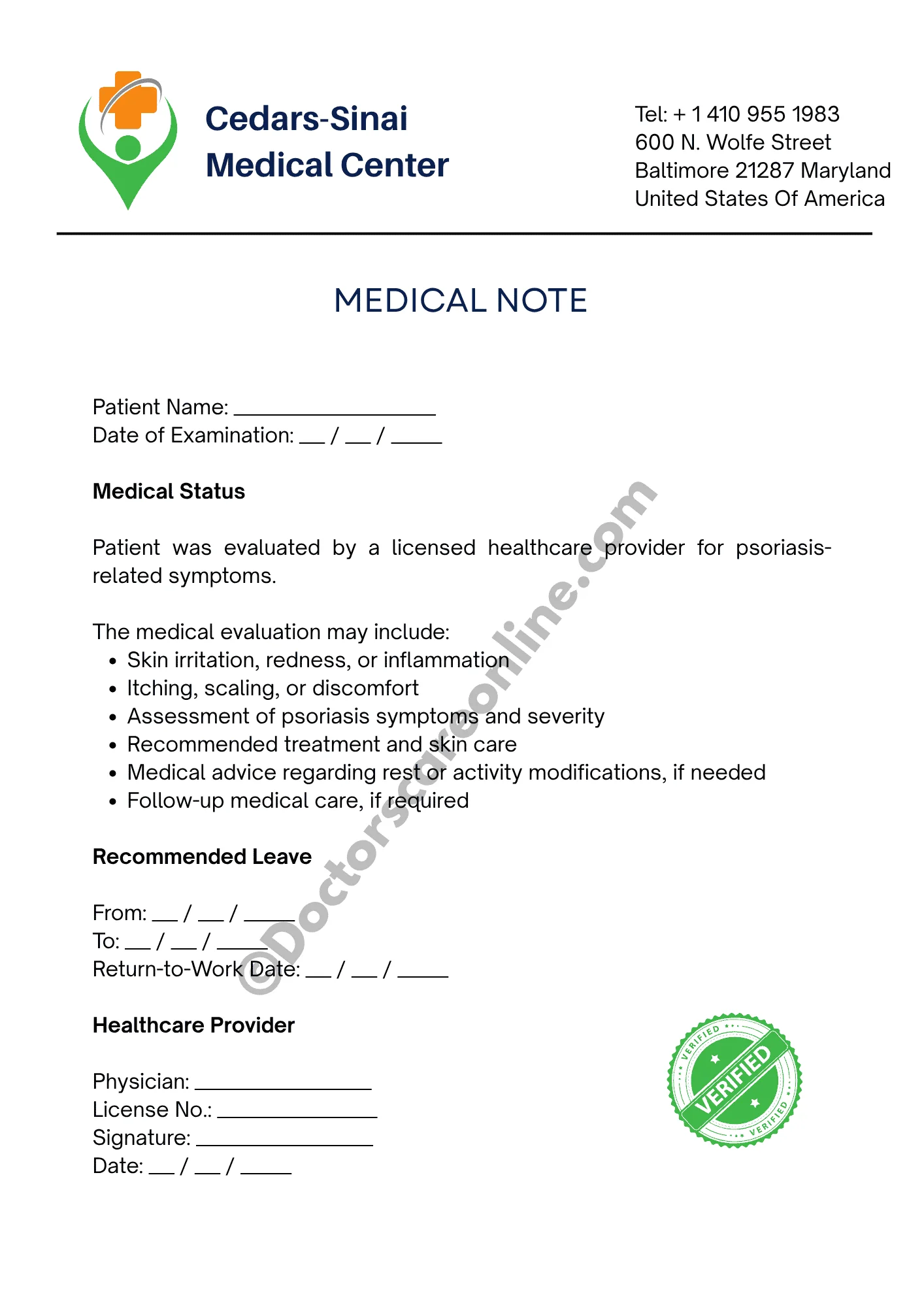
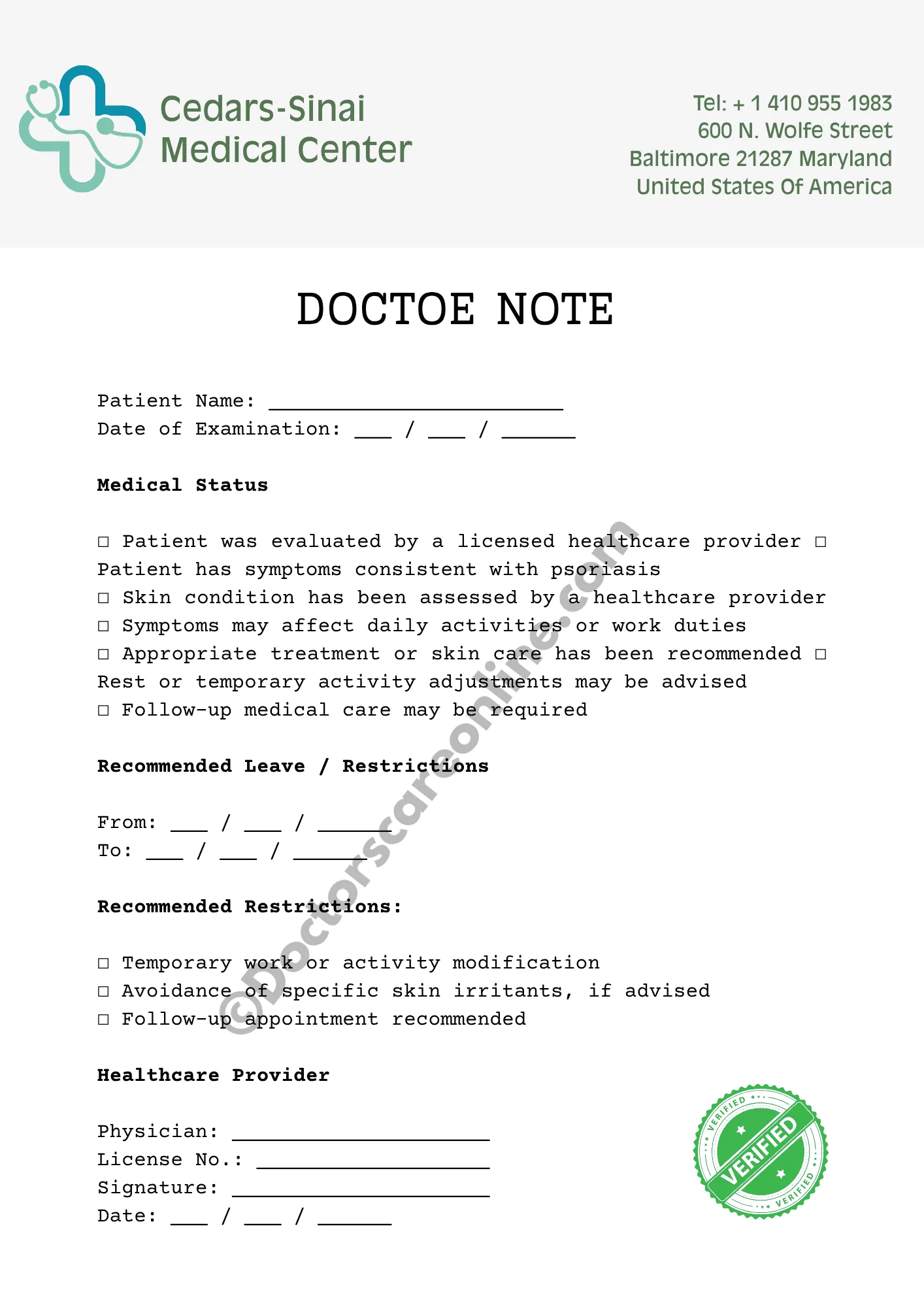
What a Psoriasis Doctor’s Note May Include
The content of medical documentation depends on the healthcare provider’s assessment and the requirements of the organization receiving the document.
When appropriate, documentation may include:
- Patient’s name
- Date of medical evaluation
- Confirmation that the patient was evaluated
- Recommended period of absence, when medically appropriate
- Temporary activity or work restrictions, when applicable
- Recommended return date, when determined by the provider
- Follow-up recommendations
- Healthcare provider information
- Provider signature or authentication
The exact medical information included should be determined by the healthcare provider. Patients should not alter or modify medical documentation after it has been issued.
Privacy and Medical Information
Medical information can be sensitive. During an online consultation, provide accurate information through the platform’s designated channels and review the website’s privacy practices before submitting personal or health information.
A medical note does not necessarily need to disclose every detail of a person’s medical history. What is included depends on the provider’s judgment, the purpose of the documentation, and applicable requirements.
Patients should also check whether their employer, school, insurer, or other organization has specific documentation requirements before submitting a medical note.
Psoriasis, Work, and Returning to Normal Activities
Returning to work or school after a psoriasis flare depends on the individual’s symptoms, job or academic responsibilities, treatment plan, and healthcare provider’s recommendations.
If temporary restrictions were recommended, follow them until the specified review or return date. If symptoms continue or worsen, contact your healthcare provider rather than changing restrictions independently.
People whose jobs involve physical activity, frequent hand use, prolonged standing, protective clothing, chemical exposure, or other potential skin irritants may need individualized guidance based on their work environment.
Medical Documentation for Employers and Schools
Different organizations can have different policies regarding medical documentation. Before requesting or submitting a doctor’s note, check whether the organization requires:
- A specific form
- A particular date range
- A healthcare provider’s signature
- Return-to-work information
- Functional restrictions
- Additional documentation
- Submission within a specific timeframe
Providing documentation that meets the organization’s stated requirements can help reduce administrative delays.
Important Limitations of Online Psoriasis Consultations
Telehealth can be useful for discussing certain health concerns, but it is not appropriate for every medical situation.
A healthcare provider may determine that an in-person examination is necessary when:
- The skin findings cannot be adequately assessed remotely
- A diagnosis remains uncertain
- A biopsy or other testing may be needed
- Symptoms suggest a potentially serious condition
- There are significant joint symptoms
- Treatment requires monitoring that cannot be completed online
The provider’s clinical judgment determines whether online evaluation is appropriate.
Frequently Asked Questions
1. Can psoriasis cause someone to miss work?
It can. A significant flare may interfere with comfort, sleep, concentration, movement, or specific job duties. Whether time away from work is medically appropriate depends on the individual’s condition and healthcare provider’s assessment.
2. Can psoriasis affect the joints as well as the skin?
Yes. Some people with psoriasis develop psoriatic arthritis, which can cause joint pain, swelling, or stiffness. New or persistent joint symptoms should be discussed with a healthcare professional.
3. Can a dermatologist diagnose psoriasis during an online appointment?
Some skin conditions may be evaluated through telehealth, but whether psoriasis can be diagnosed online depends on the presentation and the provider’s ability to assess the condition remotely. An in-person examination or additional testing may be recommended when necessary.
4. Is psoriasis contagious?
No. Psoriasis is not contagious and cannot be spread through ordinary contact such as shaking hands or sharing a swimming pool.
5. Can psoriasis affect sleep?
Yes. Symptoms such as itching and discomfort can interfere with sleep. If psoriasis is repeatedly disrupting your sleep, discuss this with a healthcare professional because treatment may help manage the underlying symptoms.
Medical Disclaimer: This information is provided for general educational purposes and does not replace professional medical advice, diagnosis, or treatment. Psoriasis can vary considerably from one person to another, and only a qualified healthcare professional can determine the appropriate diagnosis, treatment, work restrictions, or medical documentation for an individual patient.
A doctor’s note should be issued only after an appropriate medical evaluation and when the healthcare provider determines that documentation is medically appropriate. Online consultation availability and medical-documentation requirements may vary by state, provider, employer, school, and individual circumstances.



Reviews
There are no reviews yet.