

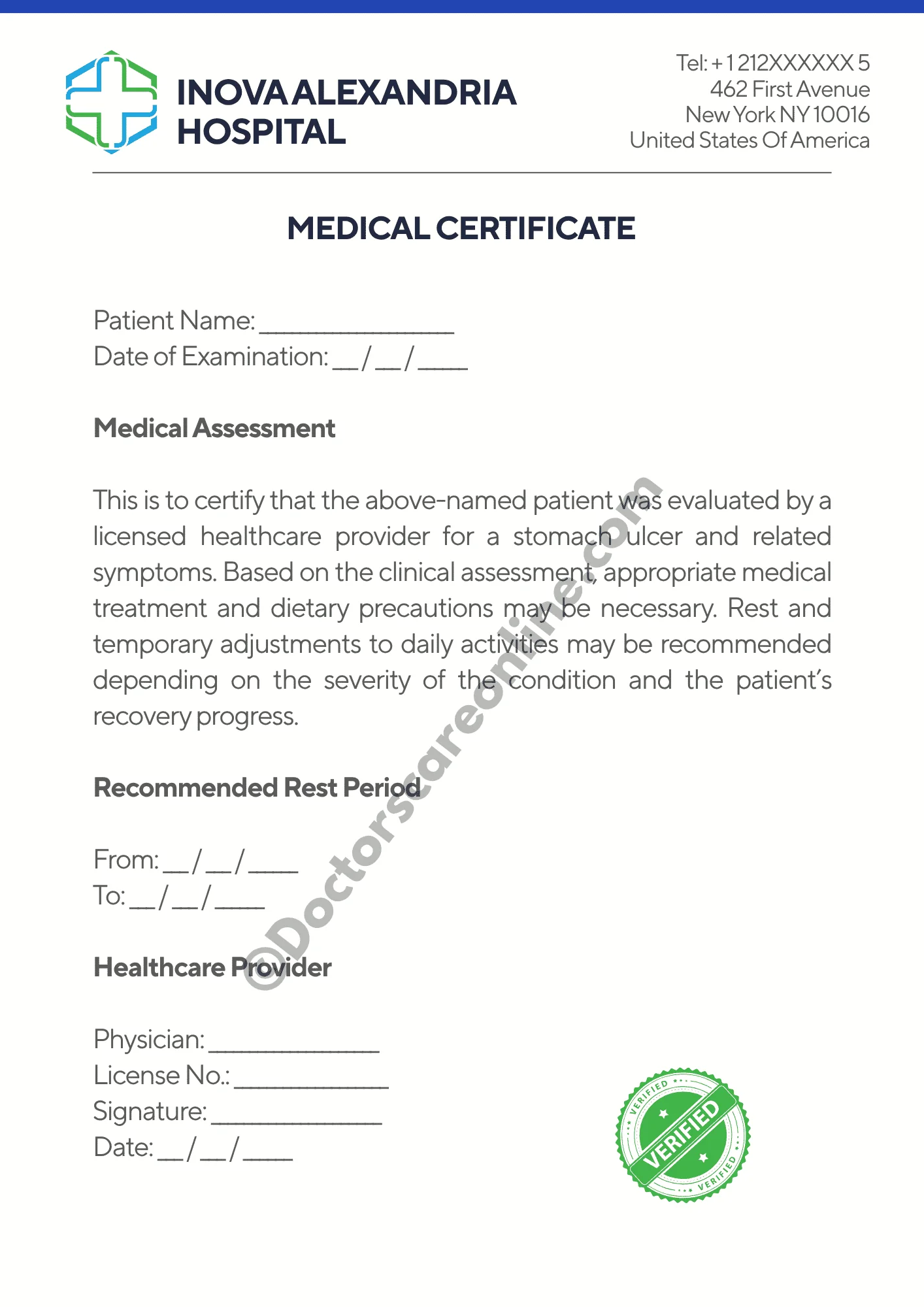
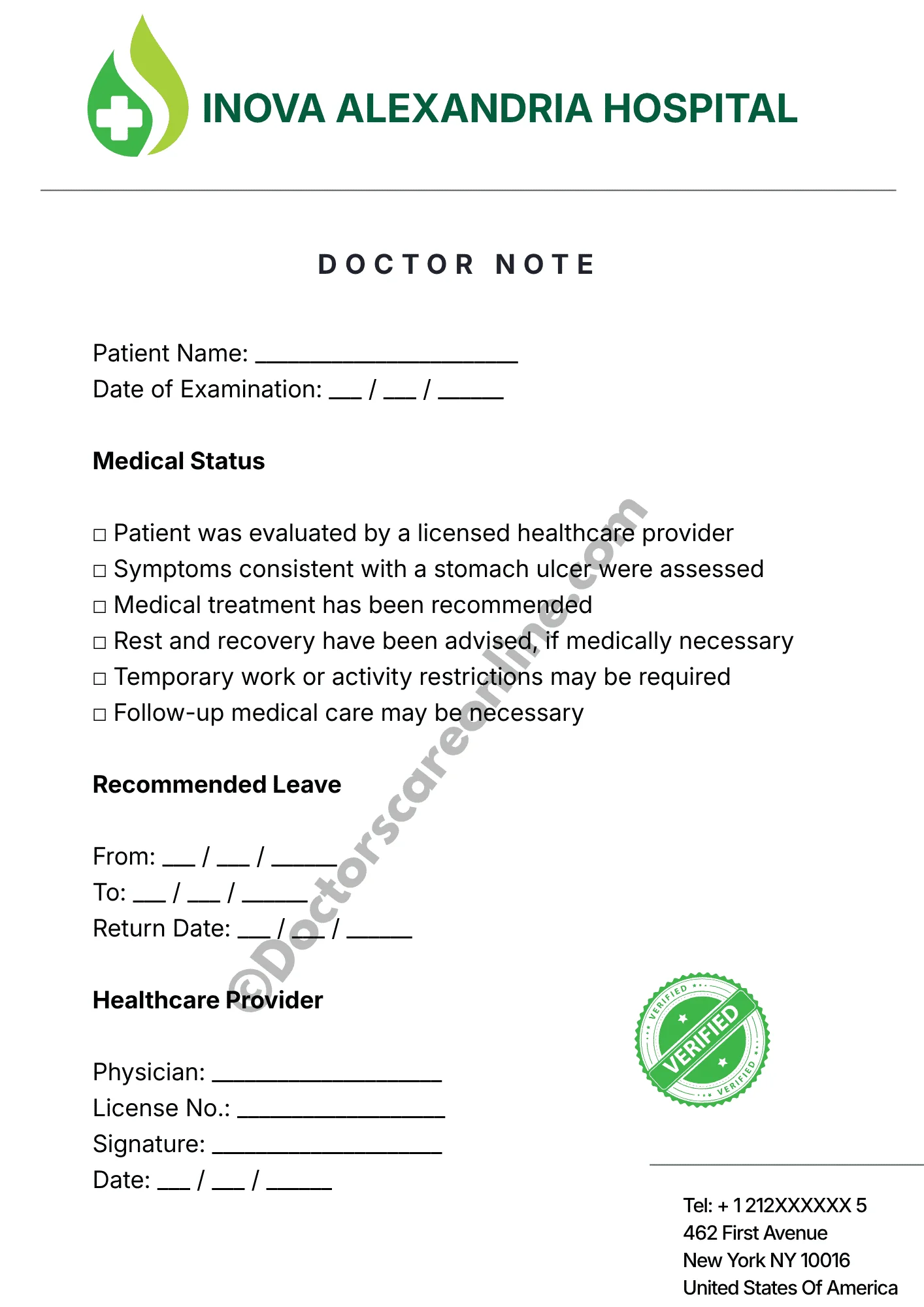
A Doctor’s Note for Stomach Ulcer can provide formal medical documentation when stomach ulcer symptoms affect your ability to work, attend school, or manage normal daily responsibilities. A licensed healthcare provider can evaluate your symptoms, medical history, and functional limitations and determine whether medical leave, temporary restrictions, or other documentation is medically appropriate.
For people in the United States who are dealing with stomach ulcer symptoms, peptic ulcer disease, abdominal discomfort, nausea, or digestive problems, an online medical consultation may provide a convenient way to discuss their concerns with a healthcare professional when telehealth is appropriate.
A medical note should never be based solely on a request for documentation. It should be issued only when a qualified healthcare provider has evaluated the patient and determines that documentation is appropriate.
Related Doctor Note :——
You can also visit:
- Doctor Note for Kidney Stones
- Doctors Note for Stomach Virus
- 6 Months of Unlimited Doctor’s Notes
- Unlimited Doctor’s Notes for 1 Year
Printable Doctor’s Note for a Stomach Ulcer
A doctor’s note for a stomach ulcer is medical documentation provided by a healthcare professional after an appropriate evaluation. Depending on the patient’s circumstances, it may confirm that the person was medically evaluated and may include recommendations concerning work, school, activity, or recovery.
A healthcare provider may determine that documentation is appropriate when ulcer symptoms interfere with:
- Performing regular job responsibilities
- Attending work or school
- Maintaining normal daily activities
- Participating in physically demanding tasks
- Concentrating or functioning comfortably during the day
- Following a recommended recovery plan
A medical note may focus on the patient’s functional limitations rather than unnecessarily disclose detailed medical information.
Understanding Stomach Ulcers and Peptic Ulcer Disease
A stomach ulcer, also called a gastric ulcer, is an open sore that develops in the lining of the stomach. Peptic ulcers can also occur in the duodenum, which is the first part of the small intestine. Together, these conditions are commonly referred to as peptic ulcer disease.
Common causes include:
- H. pylori infection: Infection with Helicobacter pylori is one of the major causes of peptic ulcers.
- NSAID use: Regular use of nonsteroidal anti-inflammatory drugs such as ibuprofen or naproxen can increase ulcer risk.
- Other medical factors: Less common causes may require additional medical investigation.
Contrary to common misconceptions, spicy foods and everyday stress do not cause peptic ulcers, although they may worsen symptoms for some people.
Common Stomach Ulcer Symptoms
Stomach ulcer symptoms can vary from person to person. Some people may have no noticeable symptoms until complications develop.
Possible symptoms include:
- Burning or dull pain in the upper abdomen
- Abdominal discomfort between meals
- Pain that may occur at night
- Feeling full sooner than usual
- Bloating
- Belching
- Nausea
- Vomiting
- Indigestion
- Heartburn
- Changes in appetite
The location, intensity, timing, and pattern of symptoms can help a healthcare provider determine what further evaluation may be appropriate.
When Stomach Ulcer Symptoms May Affect Work or School
A stomach ulcer can interfere with normal responsibilities when symptoms become persistent or difficult to manage.
A person may have difficulty:
- Completing a full workday because of recurring abdominal discomfort or nausea.
- Performing physical duties when symptoms are accompanied by weakness or significant discomfort.
- Maintaining concentration when pain or digestive symptoms are persistent.
- Attending school or classes when symptoms require medical evaluation or recovery time.
- Following normal schedules when symptoms require frequent medical appointments or treatment.
Whether time away from work or school is medically justified depends on the individual evaluation rather than the diagnosis alone.
Reasons Someone May Need Medical Documentation for a Stomach Ulcer
A healthcare provider may consider medical documentation when a patient’s symptoms or treatment temporarily affect normal responsibilities.
Common situations include:
- Requesting medically supported sick leave
- Documenting an absence from school or college
- Requesting temporary workplace accommodations
- Supporting modified duties during recovery
- Attending follow-up medical appointments
- Recovering from a significant flare of symptoms
- Managing treatment that temporarily interferes with normal activities
Employers and educational institutions may have their own documentation requirements, so patients should check the applicable policy before submitting a medical note.
What Information May Be Included in a Stomach Ulcer Doctor’s Note?
The exact content varies according to the healthcare provider, patient’s circumstances, and documentation requirements.
A medical note may include:
| Information | Purpose |
|---|---|
| Patient’s name | Identifies the individual evaluated |
| Date of evaluation | Confirms when medical assessment occurred |
| Medical confirmation | Indicates that the patient received an evaluation |
| Recommended absence | States medically recommended time away, when applicable |
| Activity restrictions | Describes relevant temporary limitations |
| Return date | Provides a recommended return date when appropriate |
| Follow-up instructions | Identifies whether additional evaluation may be needed |
| Provider information | Identifies the healthcare professional or practice |
| Signature or authentication | Helps verify the medical document |
The provider determines what information should be included. Patients should not alter or add information to a medical document after it has been issued.
How Doctors Evaluate Possible Stomach Ulcers
A healthcare provider may begin by reviewing symptoms and medical history and performing an appropriate physical examination. Additional testing may be recommended depending on the symptoms, suspected cause, and risk of complications.
Possible evaluation methods include:
- Review of abdominal symptoms and their duration
- Medical and family history
- Review of medications, particularly NSAIDs
- Physical examination
- Testing for H. pylori
- Blood testing when clinically appropriate
- Urea breath testing
- Stool testing
- Upper gastrointestinal evaluation
- Upper GI endoscopy when indicated
Not every patient needs every test. The healthcare provider determines which evaluation is appropriate based on the individual’s circumstances.
How Stomach Ulcers Are Treated
Treatment depends on the cause of the ulcer and the patient’s medical circumstances. Healthcare providers may use medication to help the ulcer heal while addressing the underlying cause.
Treatment may involve:
- Acid-reducing medication: Proton pump inhibitors and other acid-reducing medicines may be used to support ulcer healing.
- H. pylori treatment: When H. pylori is present, healthcare providers may prescribe a combination of medicines, commonly including antibiotics and acid suppression.
- Review of NSAID use: If NSAIDs contributed to the ulcer, a healthcare provider may recommend changing, reducing, or stopping the medication when medically appropriate.
- Additional treatment: Persistent or complicated ulcers may require further investigation or specialist care.
Patients should take prescribed medication exactly as directed and should not discontinue prescription treatment without discussing it with their healthcare provider.
Food, Diet, and Lifestyle Considerations
There is no single special diet proven to prevent or treat every peptic ulcer. NIDDK notes that diet and nutrition do not play a major role in causing, preventing, or treating peptic ulcers.
However, individual symptoms may be affected by certain foods, beverages, alcohol, smoking, or other lifestyle factors.
During medical evaluation, discuss:
- Foods or drinks that appear to worsen your symptoms
- Alcohol consumption
- Tobacco use
- Regular use of pain relievers
- Current prescription and over-the-counter medicines
- Vitamins or supplements
- Any previous ulcer diagnosis
Do not make major medication or dietary changes solely on the basis of online information. Discuss appropriate changes with a healthcare professional.
When Stomach Ulcer Symptoms Require Urgent Medical Attention
Some symptoms can indicate serious complications such as gastrointestinal bleeding or perforation and require urgent medical attention.
Seek urgent or emergency medical care if you experience:
- Vomiting blood
- Vomit that looks like coffee grounds
- Black or tarry stools
- Red or maroon blood in the stool
- Sudden, severe, or persistent abdominal pain
- Fainting or significant dizziness
- Rapid pulse or signs of shock
- Severe or rapidly worsening symptoms
An online doctor’s note service should not be used as a substitute for emergency treatment when serious symptoms are present.
Can You Get a Stomach Ulcer Doctor’s Note Online?
Depending on your location, symptoms, and the provider’s clinical judgment, you may be able to schedule a telehealth appointment for stomach ulcer symptoms.
During an online consultation, a healthcare provider may:
- Review your symptoms and medical history.
- Ask about the timing and severity of your symptoms.
- Review medications and relevant risk factors.
- Determine whether your condition can be appropriately assessed through telehealth.
- Recommend an in-person examination or testing when necessary.
- Provide medical advice based on the evaluation.
- Issue medical documentation if it is medically appropriate and permitted.
An online consultation does not guarantee that a doctor’s note will be issued. The healthcare provider makes that decision after evaluating the patient’s circumstances.
How Our Online Medical Note Service Can Help
Our platform is designed to make the process of connecting with healthcare services more convenient for users who need a medical evaluation and may require documentation.
A Convenient Online Process
Instead of spending time coordinating an appointment in person, eligible users can use our online process to:
- Start the appointment process online
- Provide relevant personal and symptom information
- Select an available consultation option
- Communicate with a healthcare provider
- Discuss their medical concerns
- Receive appropriate medical guidance
- Obtain documentation when medically justified
A Focus on Legitimate Medical Evaluation
A trustworthy medical documentation process should prioritize the healthcare evaluation rather than simply selling a document.
Our service is designed around the principle that:
- Medical information should be provided accurately.
- A healthcare provider should determine whether documentation is appropriate.
- Medical notes should reflect the provider’s evaluation.
- Users should follow applicable employer, school, and legal requirements.
- Serious symptoms should be directed to appropriate in-person or emergency care.
This approach helps users understand that a doctor’s note is medical documentation, not simply a product to purchase without an evaluation.
Why Our Website Can Be Useful and Trustworthy for Users
Choosing an online medical service can raise questions about legitimacy, privacy, appointments, payments, and documentation. Our goal is to make the process easier to understand and navigate.
Users can benefit from:
- Convenient online access: Start the appointment process without unnecessary in-person scheduling steps.
- Clear medical process: Users can understand what happens during an online consultation.
- Provider-led decisions: Medical documentation is based on the healthcare provider’s evaluation and clinical judgment.
- Transparent expectations: A doctor’s note is not guaranteed simply because it is requested.
- User support: Help is available when users experience account, registration, payment, or website-related problems.
- Easy communication: Users can ask questions before or during the process when assistance is needed.
The purpose of our platform is to connect users with an appropriate medical consultation process while making the experience easier to navigate.
Having Trouble With Registration, Login, Payment, or Your Order?
If you have a question or experience an issue while using our website, you do not have to figure everything out alone.
You can use our website chatbox to ask for assistance with common service-related issues, including:
- Registration problems
- Login difficulties
- Appointment-related questions
- Payment issues
- Checkout problems
- Questions about the online process
- Order-related concerns
- General website navigation
- Other service questions
When contacting support, avoid sharing unnecessary sensitive medical information in a general chat. If your question concerns an urgent medical symptom, seek appropriate medical care rather than waiting for customer support.
What to Have Ready Before Your Online Consultation
Preparing relevant information can make your consultation more productive.
Consider having the following available:
- Your symptom timeline – When the abdominal discomfort or other symptoms began.
- Symptom description – Location, severity, frequency, and anything that makes symptoms better or worse.
- Medication list – Prescription medicines, over-the-counter products, vitamins, and supplements.
- NSAID use – Whether you regularly use medicines such as ibuprofen or naproxen.
- Previous medical history – Previous ulcers, digestive conditions, H. pylori infection, or related treatment.
- Recent test results – Relevant laboratory or diagnostic reports, if available.
- Work or school requirements – Information about the documentation you may need.
Providing accurate information helps the healthcare provider make a more informed clinical assessment.
How Long Can a Doctor’s Note for a Stomach Ulcer Last?
There is no universal validity period for a stomach ulcer doctor’s note.
The recommended period can depend on:
- The patient’s symptoms
- Medical findings
- Treatment plan
- Functional limitations
- Recovery progress
- Type of work or school responsibilities
- Employer or school documentation requirements
- Healthcare provider’s clinical judgment
| Situation | What May Apply |
|---|---|
| Short-term absence | Documentation may cover the medically recommended absence period |
| Modified work | Restrictions may apply for a specified period |
| Follow-up required | Additional evaluation may be recommended |
| Continuing symptoms | Updated documentation may be needed after reassessment |
| Return to normal duties | The provider may recommend resuming activities when medically appropriate |
There is no guaranteed number of days that applies to everyone with a stomach ulcer.
Can a Stomach Ulcer Affect Your Ability to Work?
It can, depending on the severity of symptoms and the nature of the person’s job.
For example, significant symptoms may make it difficult to:
- Complete a normal work schedule
- Perform physically demanding duties
- Maintain concentration
- Attend meetings or scheduled activities
- Travel for work
- Maintain regular meal or medication schedules
- Complete tasks comfortably
A healthcare provider can assess whether temporary leave, modified duties, or other restrictions are medically appropriate.
Medical Documentation for School or College
Students with medically significant symptoms may sometimes need documentation for an absence, missed examination, assignment deadline, or other academic requirement.
The healthcare provider may document the medical evaluation and any recommended absence or restrictions when appropriate.
Students should also check their institution’s policy because requirements for medical documentation can vary between schools and programs.
Common Mistakes to Avoid When Requesting a Medical Note
To make the process clearer and safer, avoid:
- Providing inaccurate medical information
- Requesting documentation without undergoing the required evaluation
- Editing or altering a medical note
- Assuming a note guarantees paid sick leave
- Assuming every employer accepts the same documentation
- Waiting for customer support when experiencing a medical emergency
- Ignoring serious or worsening symptoms
- Stopping prescribed medication without medical advice
- Assuming an online consultation is appropriate for every medical situation
Medical documentation should accurately reflect a healthcare provider’s assessment.
Doctor’s Note for Stomach Ulcer: Key Takeaways
A stomach ulcer can affect work, school, and everyday activities when symptoms are significant. A doctor’s note for stomach ulcer may provide formal documentation when a licensed healthcare provider determines that medical leave, temporary restrictions, or other documentation is appropriate.
The most important points are:
- Stomach ulcers are a form of peptic ulcer disease.
- H. pylori infection and NSAID use are major causes.
- Symptoms can include upper abdominal pain, nausea, bloating, and early fullness.
- Some complications require urgent medical attention.
- Diagnosis may involve medical history, physical examination, H. pylori testing, and other diagnostic procedures.
- Treatment depends on the underlying cause.
- Telehealth may be appropriate for some situations but cannot replace emergency care.
- A doctor’s note should be issued following an appropriate medical evaluation.
- Documentation requirements vary by employer, school, and location.
- Users experiencing registration, login, payment, or website issues can contact support through the site’s chatbox.
Frequently Asked Questions
1. Can a stomach ulcer qualify for FMLA leave?
A medical condition may qualify for protected leave under applicable laws when the legal requirements are met, but eligibility depends on the employee, employer, medical circumstances, and applicable regulations. A healthcare provider may need to complete specific certification paperwork rather than providing only a standard doctor’s note.
2. Can a stomach ulcer cause fatigue or weakness?
It can, particularly when an ulcer causes complications such as bleeding or anemia. Fatigue, weakness, dizziness, or fainting alongside signs of gastrointestinal bleeding should receive prompt medical attention rather than being treated as a routine sick-leave issue.
3. Can I work with a stomach ulcer?
Some people may be able to continue working depending on their symptoms and job responsibilities. Others may need temporary leave or modified duties. A healthcare provider can assess your individual situation and recommend appropriate restrictions if medically necessary.
4. Can a stomach ulcer come back after treatment?
Yes. Recurrence can occur, particularly when the underlying cause has not been adequately addressed. For example, persistent H. pylori infection or continued use of ulcer-associated medicines may require further medical management. Follow-up with a healthcare professional can help determine why symptoms have returned.
5. Do I need a gastroenterologist for a stomach ulcer?
Not everyone needs to see a specialist immediately. A primary care provider or other qualified healthcare professional can evaluate symptoms and determine whether further testing or referral to a gastroenterologist is appropriate. Persistent, complicated, or difficult-to-diagnose cases may require specialist care.
Medical Disclaimer: This content is provided for general educational and informational purposes only and does not replace professional medical advice, diagnosis, or treatment. A doctor’s note should only be issued by a licensed healthcare provider after an appropriate medical evaluation. Medical documentation, treatment recommendations, work restrictions, and telehealth availability may vary based on individual circumstances, location, employer or school requirements, and applicable laws.





Reviews
There are no reviews yet.