
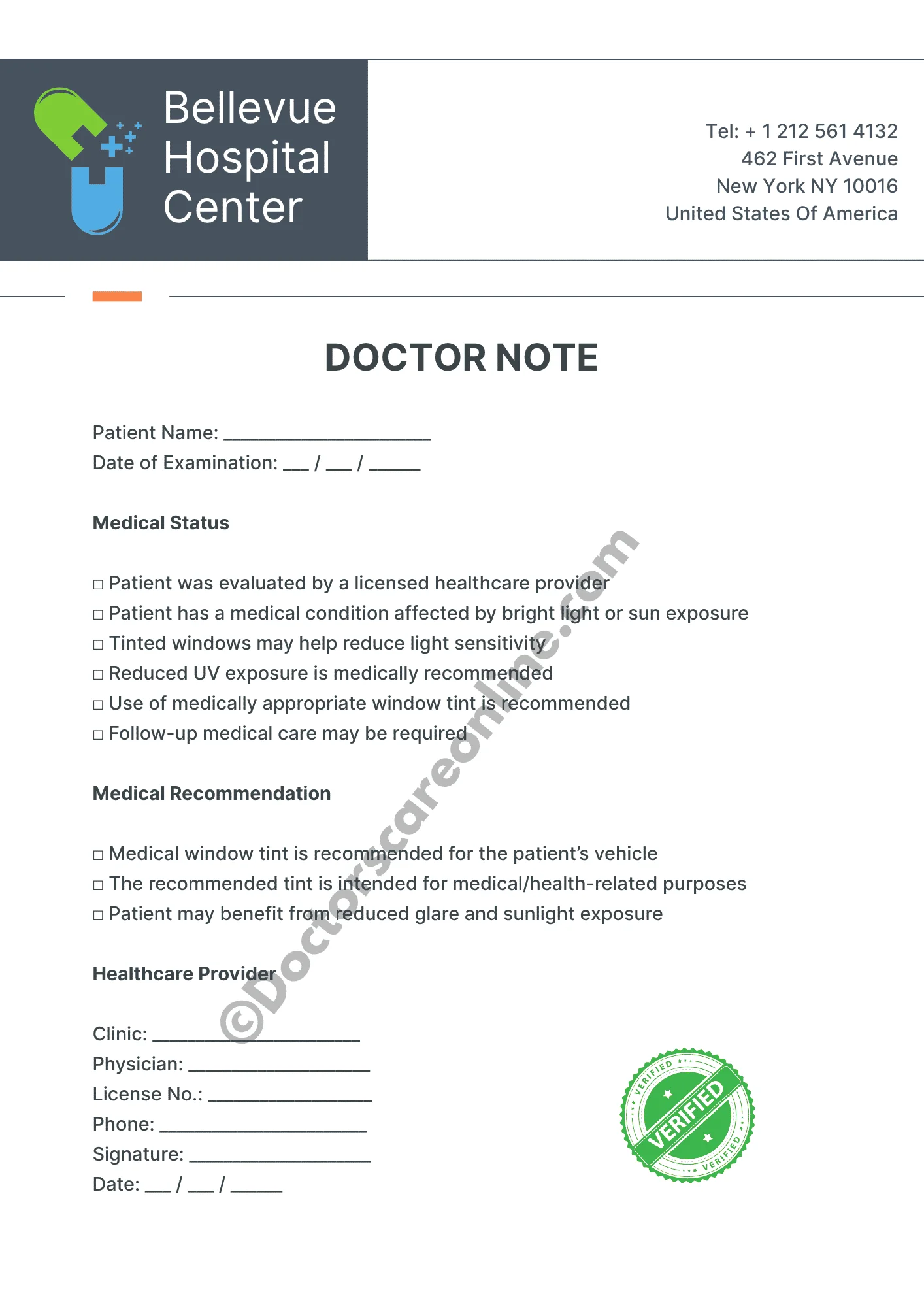
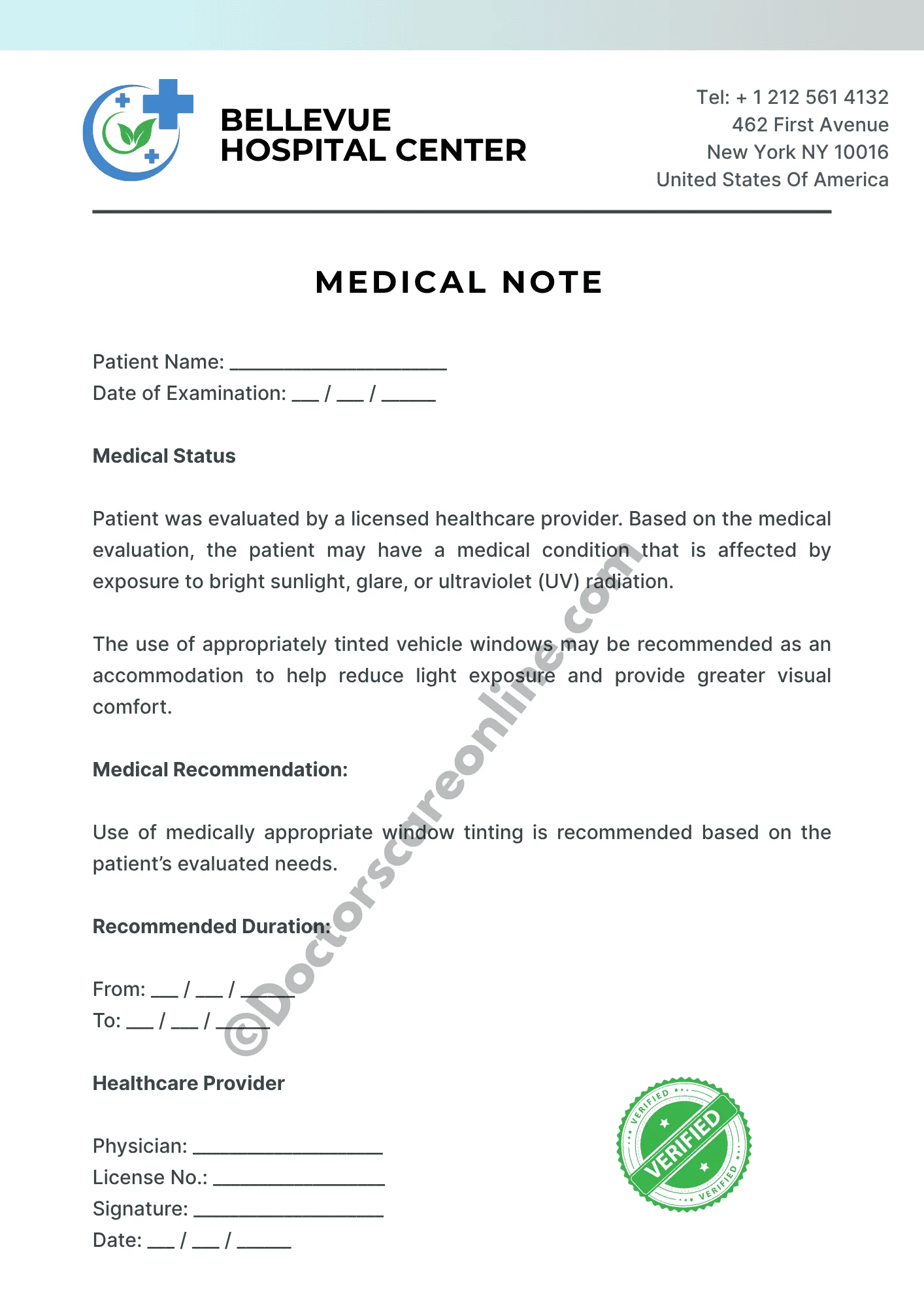
Doctor’s Note for Tinted Windows (Medical Window Tint) is a formal medical document issued by a licensed healthcare professional stating that an individual requires darker-than-standard vehicle window tint due to a medical condition. This is typically recommended for people with conditions that make them highly sensitive to sunlight or UV exposure. The note may be used to apply for a legal exemption under local motor vehicle laws. It usually includes the medical reason, suggested level of tint (if applicable), and duration of the requirement.
Certain medical conditions can cause significant discomfort or symptoms when a person is exposed to bright sunlight or intense light. A healthcare provider can evaluate the individual’s condition, determine whether light reduction is medically appropriate, and document the relevant medical need when justified.
Related Doctor Note :—
You can also visit:
- Doctor’s Note for Dark Tint
- Doctor’s Note for Light Sensitivity
- Eye Doctor Excuse Note
- 6 Months of Unlimited Doctor’s Notes
Why Someone May Need a Doctor’s Note for Tinted Windows
Some medical conditions can make prolonged exposure to bright sunlight or intense light uncomfortable or medically problematic. A healthcare provider may determine that reducing light exposure is appropriate as part of an individual’s overall management plan.
A medical evaluation may be relevant when a person experiences:
- Significant light sensitivity
- Symptoms that worsen with bright sunlight
- Increased discomfort from glare while traveling
- A condition involving photosensitivity
- Light-triggered headaches or migraines
- Certain dermatological conditions affected by UV exposure
- Eye-related sensitivity to intense light
- A diagnosed condition for which reduced light exposure has been recommended
The medical necessity must be determined by a qualified healthcare professional based on the patient’s individual circumstances.
Medical Conditions That May Involve Light Sensitivity
Light sensitivity, sometimes called photophobia, can occur for many different reasons. It is a symptom rather than a diagnosis by itself, so an appropriate medical evaluation is important.
Conditions that may involve increased sensitivity to light can include:
- Migraine: Some people with migraine experience heightened sensitivity to light during attacks. Bright sunlight, glare, or intense artificial lighting may aggravate symptoms.
- Photophobia: Photophobia refers to abnormal or increased sensitivity to light. A healthcare provider may evaluate the underlying reason for the symptom before recommending ways to reduce exposure.
- Certain Eye Conditions: Some eye conditions may cause discomfort when exposed to bright light. An eye-care professional may determine whether additional light protection is appropriate.
- Photosensitive Skin Conditions: Certain dermatological conditions or medications can increase sensitivity to sunlight. In these circumstances, a healthcare provider may recommend appropriate sun-protection measures.
- Autoimmune or Other Medical Conditions: Some medical conditions may involve increased sensitivity to ultraviolet exposure or sunlight. The appropriate protective measures depend on the diagnosis and individual medical circumstances.
- Light-Triggered Headaches: Bright sunlight or glare can contribute to headaches in some individuals. A healthcare provider can determine whether light reduction should form part of the person’s management plan.
Important: These examples do not automatically qualify someone for a tint exemption. Eligibility depends on the applicable law and the individual’s medical evaluation.
What a Doctor May Evaluate Before Providing Documentation
Before providing medical documentation, a healthcare provider may review information such as:
- Your symptoms and when they occur
- The severity and frequency of symptoms
- Your medical history
- Existing diagnoses
- Medications or treatments
- Whether sunlight or glare triggers or worsens symptoms
- Previous recommendations for light protection
- How symptoms affect driving or daily activities
- Whether alternative forms of protection are appropriate
The provider may also determine whether an in-person examination, specialist evaluation, or additional medical information is necessary.
A medical note should be based on an actual healthcare evaluation rather than simply a patient’s request for a specific document.
What Information May Be Included in a Tinted Window Medical Note?
The exact content depends on the healthcare provider and the requirements of the relevant authority. Medical documentation may include:
- Patient’s name
- Date of medical evaluation
- Confirmation that the patient was evaluated
- Relevant medical condition or medical need, when appropriate
- Explanation of the need for reduced light or UV exposure
- Recommended protective measures
- Healthcare provider’s name and professional credentials
- Provider’s signature
- Clinic or practice information
- Date of documentation
Some jurisdictions may require specific forms rather than a general doctor’s note. Patients should check the requirements of the authority handling the exemption request.
How to Request Medical Documentation for Tinted Windows
If you believe your medical condition requires reduced exposure to sunlight or intense light, the appropriate first step is a medical evaluation.
Step 1: Schedule a Medical Consultation
- Choose a licensed healthcare provider who can appropriately evaluate your symptoms and medical history.
Step 2: Explain Your Light-Sensitivity Symptoms
- Tell the provider when your symptoms occur, what triggers them, and whether sunlight, glare, or UV exposure makes them worse.
Step 3: Provide Relevant Medical Information
- Share previous diagnoses, treatment history, medications, specialist recommendations, and other information that may help the provider understand your condition.
Step 4: Discuss Your Driving Needs
- Explain how light sensitivity affects you while driving or traveling in a vehicle. This helps the provider understand the practical impact of your symptoms.
Step 5: Follow the Provider’s Clinical Recommendation
- The healthcare provider will determine whether reduced light exposure or another form of protection is medically appropriate.
Step 6: Check Your State Requirements
- Before installing tint or submitting documentation, review the current medical-exemption requirements of the relevant state or local authority.
Can You Get a Tinted Window Doctor’s Note Online?
In some circumstances, an online healthcare consultation may be appropriate for discussing symptoms and determining whether further medical evaluation is needed. Whether a provider can issue documentation through telehealth depends on the patient’s condition, the provider’s clinical judgment, applicable laws, and the documentation requirements of the relevant jurisdiction.
During an online consultation, you may be asked about:
- Your symptoms
- Your medical history
- Light or sunlight triggers
- Existing diagnoses
- Current treatment
- How the condition affects your daily activities
- Your reason for seeking medical documentation
If the provider determines that the situation can be appropriately assessed through telehealth and that documentation is medically justified, they may provide appropriate documentation where permitted.
Telehealth should not be presented as a guaranteed way to obtain a particular medical document.
How Our Website Helps With Your Medical Documentation Needs
Our website is designed to make the process of connecting with healthcare services and understanding documentation requirements more convenient.
Instead of trying to determine on your own whether your symptoms justify medical documentation, you can use the platform to access the appropriate healthcare consultation process and explain your situation to a licensed healthcare provider.
Our service is useful because it provides:
- A convenient way to request a healthcare consultation
- A straightforward online process
- Access to medical evaluation where telehealth is available
- Clear information about the documentation process
- A convenient way to communicate your symptoms
- Support when you have questions about using the website
- Assistance with account, registration, and payment-related issues
A medical document is provided only when a healthcare provider determines that it is medically appropriate. Our website does not replace a healthcare professional’s clinical judgment or guarantee approval of a state vehicle-tint exemption.
Having Trouble With Registration, Login, or Payment?
If you experience a problem while using our website, you do not have to figure it out on your own.
You can use our chatbox to ask questions or report issues related to:
- Creating an account
- Registering on the website
- Logging into your account
- Booking or accessing an appointment
- Payment-related problems
- Questions about the ordering process
- Website navigation
- Other service-related concerns
Our support team can help you understand the next steps and direct your question to the appropriate support channel when necessary.
For your security, avoid sharing passwords, full payment-card information, or other unnecessary sensitive information through chat.
Why Choose Our Online Medical Documentation Service?
Choosing a healthcare documentation service involves more than simply finding a document online. Users should be able to understand how the process works and what they can realistically expect.
Our approach focuses on:
- Medical Evaluation First: Documentation should follow an appropriate healthcare evaluation rather than being issued solely because a customer requests it.
- Clear Information: We explain the purpose of the documentation, the role of the healthcare provider, and the importance of checking applicable state requirements.
- Convenient Online Access: Where telehealth is available and clinically appropriate, an online consultation can make it easier to communicate with a healthcare provider without unnecessarily delaying care.
- User Support: Questions about registration, login, payments, appointments, or website use can be directed through the available support and chatbox options.
- Responsible Documentation: A healthcare provider determines whether medical documentation is appropriate. This helps prevent the impression that documentation or a government exemption is automatically guaranteed.
- Privacy Awareness: When using telehealth, patients should use a private location and secure device and avoid sharing sensitive health information over unsecured networks. HHS recommends privacy and security practices such as using private spaces, strong passwords, secure connections, and appropriate authentication.
Tinted Window Laws and Medical Exemptions
Window tint regulations are not identical across the United States. States may have different rules concerning:
- Visible light transmission
- Windshield tint
- Front-side windows
- Rear-side windows
- Reflective tint
- Medical exemptions
- Required medical certification
- Application procedures
- Exemption stickers or permits
- Vehicle inspection requirements
For this reason, you should not assume that a medical note alone allows darker window tint.
Before making a purchase or modifying your vehicle, check the current requirements published by the relevant state authority. If a formal exemption application is required, follow that agency’s instructions.
What If Your Medical Condition Does Not Qualify for a Tint Exemption?
A healthcare provider may determine that a tinted-window exemption is not medically necessary or that another form of protection would be more appropriate.
Depending on the circumstances, alternatives may include:
- UV-protective clothing
- Sunglasses recommended for your condition
- A vehicle sunshade when safely appropriate
- Adjusting driving times to reduce intense sunlight
- Other medically recommended protective measures
Your healthcare provider can help determine which options are appropriate for your individual situation.
What to Bring to Your Medical Consultation
Having relevant information available can make your consultation more productive.
Consider preparing:
- Your current symptoms
- The date your symptoms began
- Known medical diagnoses
- Current medications
- Previous treatment records, if relevant
- Specialist recommendations
- Information about sunlight or glare triggers
- Details about how symptoms affect driving
- Any state documentation requirements you have already identified
Do not exaggerate or misrepresent symptoms to obtain medical documentation. Give the healthcare provider accurate information so they can make an appropriate clinical assessment.
Can a Doctor’s Note Guarantee a Window Tint Exemption?
No. A doctor’s note is medical documentation and does not by itself guarantee approval of a vehicle-window tint exemption.
The final requirements and approval process may be controlled by a state or local government agency. The authority may require a specific application, medical certification, vehicle information, inspection, permit, sticker, or other documentation.
A healthcare provider can document a medically appropriate need when supported by their evaluation, but the relevant authority determines whether the legal exemption requirements have been satisfied.
Medical Documentation and Your Privacy
Medical documentation can contain sensitive personal information. Only provide the information that is reasonably necessary for your medical evaluation and documentation request.
When using telehealth services, HHS recommends taking practical steps to protect health information, including using a private location, securing your device, using strong passwords, and avoiding public Wi-Fi when discussing sensitive medical information.
The amount of medical information required on an exemption application may vary according to the relevant jurisdiction.
When to Seek Medical Care for Light Sensitivity
Do not use a vehicle tint exemption request as a substitute for medical care.
If light sensitivity is new, severe, persistent, or accompanied by other concerning symptoms, seek appropriate medical evaluation. Sudden vision changes, significant eye pain, severe headache, neurological symptoms, or other acute symptoms may require prompt medical attention.
Your healthcare provider can determine whether your symptoms require routine care, specialist assessment, urgent evaluation, or another course of action.
Frequently Asked Questions
1. Does a doctor’s note for tinted windows expire?
It may. The expiration or renewal requirements depend on the applicable state or local exemption rules. Check the authority’s current requirements before relying on older medical documentation.
2. Can I use a medical tint exemption in another state?
Not necessarily. A medical tint exemption issued under one jurisdiction’s rules may not automatically be recognized elsewhere. If you travel or relocate, check the applicable requirements.
3. Do I need to tell my doctor why I want darker car windows?
Yes. Explain the medical reason, your symptoms, and how sunlight or glare affects you. Your healthcare provider needs accurate information to determine whether reduced light exposure is medically appropriate.
4. Can a passenger qualify for a medical window tint exemption?
Possibly, depending on the applicable rules and the person’s medical circumstances. Some jurisdictions may have specific requirements concerning who must have the medical condition and how the exemption applies to the vehicle.
5. Can I install darker tint before my medical exemption is approved?
You should check the applicable state or local rules before installing tint. A pending medical request does not necessarily mean that a vehicle is legally permitted to use tint outside the standard limits.
Medical Disclaimer: This content is provided for general educational and informational purposes only and is not a substitute for professional medical advice, diagnosis, or treatment. A healthcare provider must independently evaluate each patient and determine whether medical documentation is appropriate.
A medical note does not automatically approve a window tint exemption. Vehicle tint laws, allowable tint levels, documentation requirements, and exemption procedures vary by jurisdiction. Patients should verify the current requirements with the appropriate state or local authority before installing or modifying vehicle window tint.

Reviews
There are no reviews yet.