
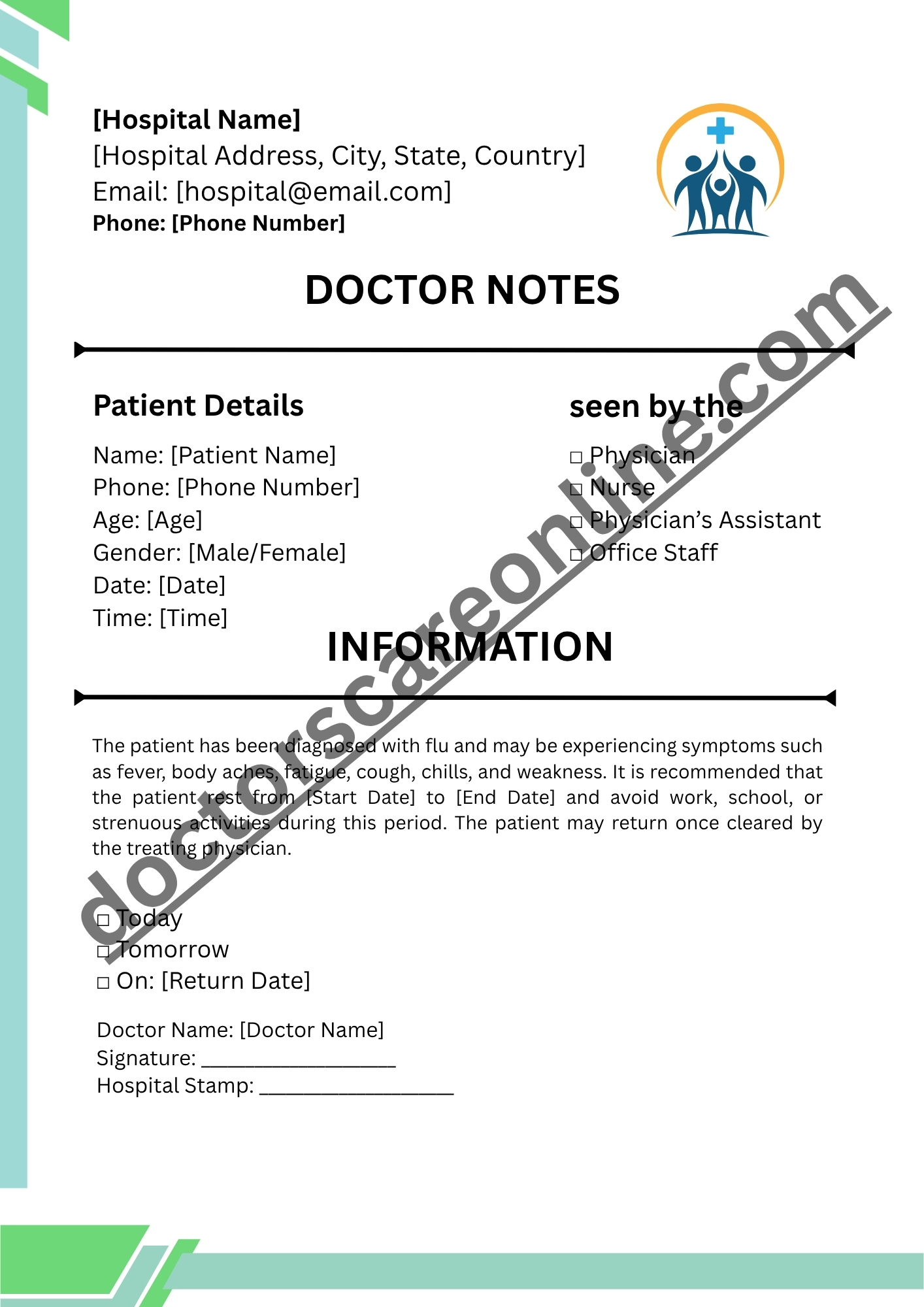
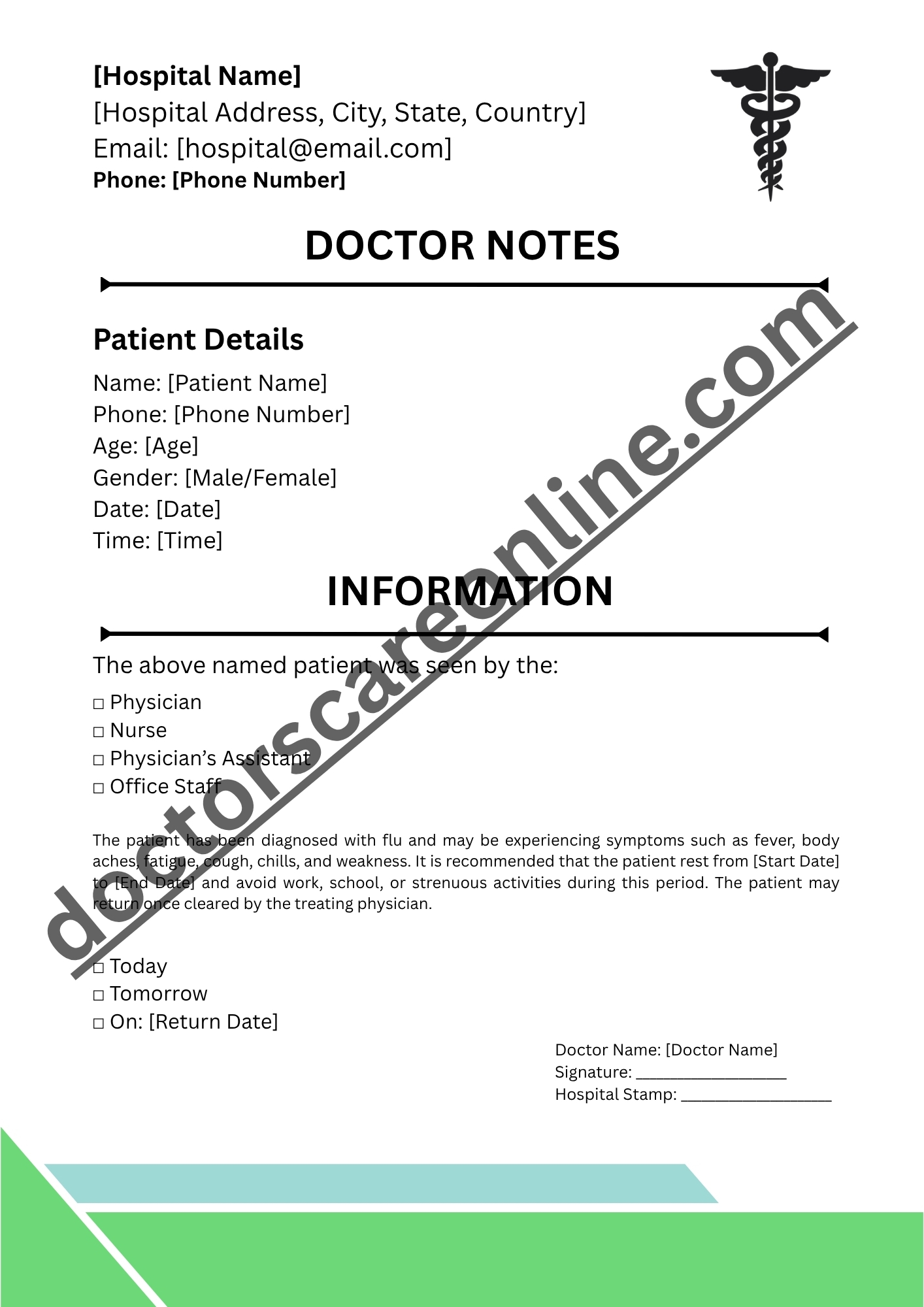
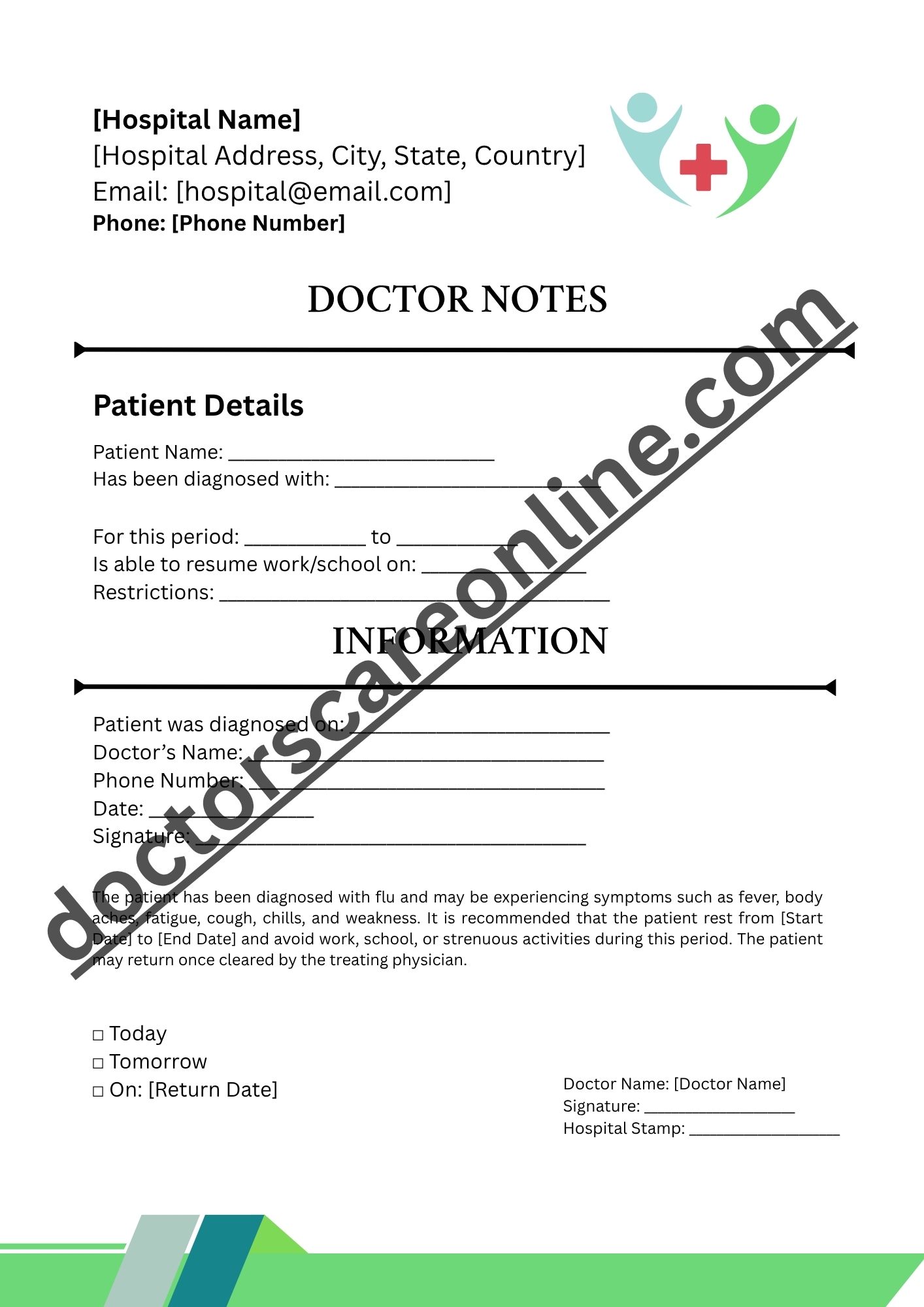
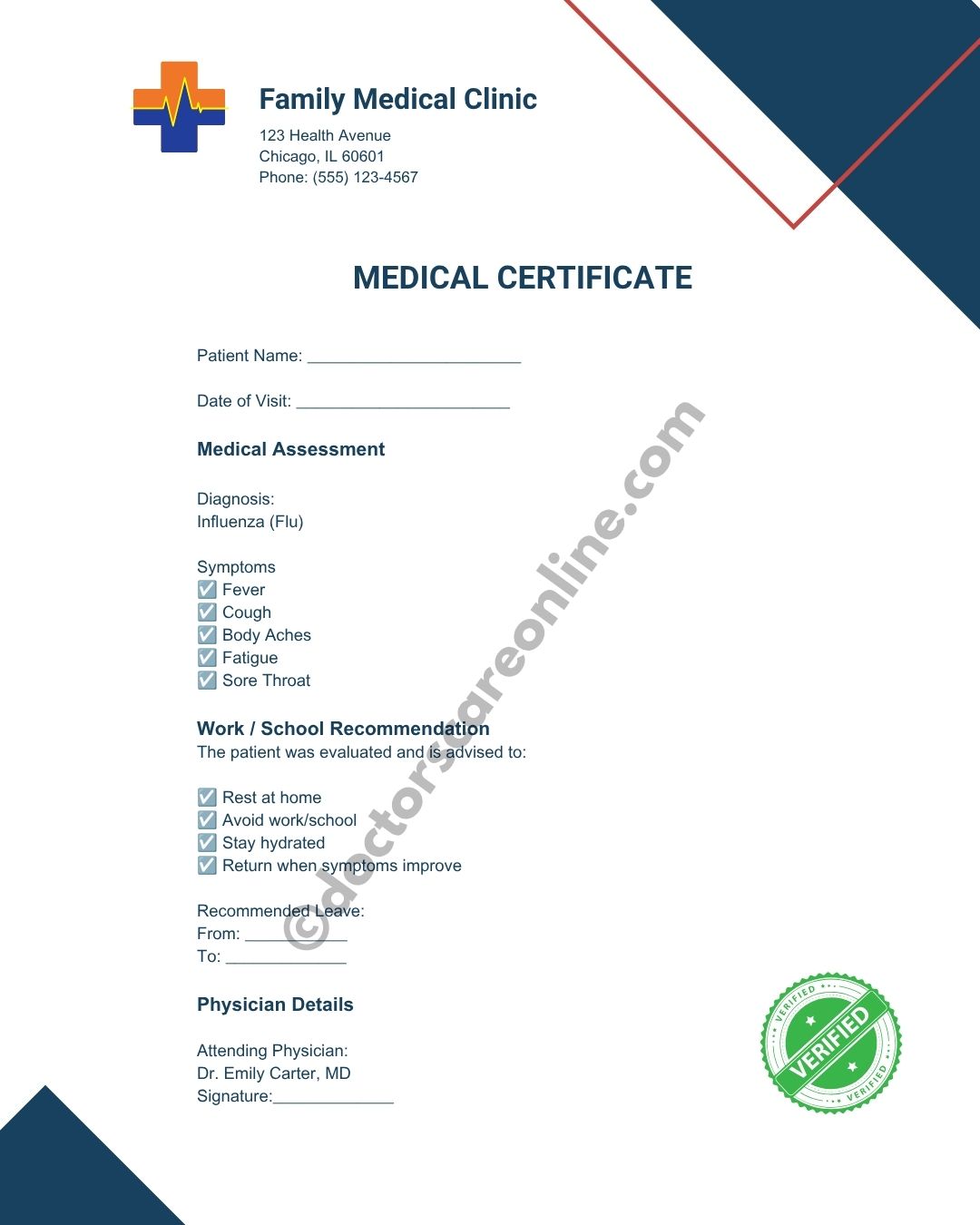
A Doctor’s Note for Flu is a formal medical document issued by a licensed healthcare provider after assessing a patient with influenza or flu-related symptoms. It serves as written confirmation that the individual is experiencing a medical condition that may require temporary leave from work, school, or college. This document is often requested to verify an absence, support a sick leave application, or comply with attendance policies established by employers and educational institutions.
Depending on the healthcare provider’s evaluation, the note may include the date of the medical visit, the recommended recovery period, the expected return-to-work or return-to-school date, and any temporary activity restrictions. However, detailed medical information is not always included to protect the patient’s privacy. Whether obtained through an in-person appointment or an approved telehealth consultation, a Doctor’s Note for Flu provides official medical documentation that helps individuals recover safely while meeting workplace or academic requirements and following organizational leave policies.
When Is a Doctor’s Note for Flu Issued?
A Doctor’s Note for Flu is issued when a healthcare provider confirms that flu symptoms are severe enough to require time away from work, school, or other daily activities. It provides official medical proof of illness and supports the need for temporary leave.
It is commonly issued when:
- You are diagnosed with Influenza A, Influenza B, or seasonal flu.
- Flu symptoms prevent you from working or attending school.
- Your employer or school requires medical proof of absence.
- You need an extended recovery period.
- A return-to-work or return-to-school clearance is required.
- The doctor recommends staying home to prevent spreading the flu.
Which Types of Flu Can a Doctor’s Note Be Issued For?
A Doctor’s Note for Flu can be issued for different types of influenza based on the doctor’s diagnosis, symptoms, and medical evaluation.
Influenza A
- The most common type of influenza virus.
- Often causes seasonal flu outbreaks.
- May lead to moderate or severe symptoms.
- A doctor’s note is commonly issued if the illness prevents normal daily activities.
Influenza B
- Usually spreads during the annual flu season.
- Can affect both children and adults.
- Symptoms are similar to Influenza A.
- A doctor’s note may be provided if medical leave is recommended.
Seasonal Influenza
- Refers to the flu viruses that circulate each year.
- Can cause fever, cough, body aches, and fatigue.
- A doctor’s note may be issued to support work or school absences during recovery.
Flu-Like Illness (ILI)
- Used when symptoms strongly suggest influenza, but laboratory testing has not confirmed the exact virus.
- A doctor may still issue a note based on the clinical examination and the patient’s condition.
Note: A doctor’s note does not always specify the exact type of influenza. In many cases, it simply confirms that the patient has a medical condition requiring rest and temporary leave.
Common Flu Symptoms
Flu symptoms usually appear suddenly and can range from mild to severe. Common symptoms include:
- High Fever – Often one of the first signs of the flu.
- Chills and Sweating – Feeling cold even when the body temperature is high.
- Dry Cough – A persistent cough that may last for several days.
- Sore Throat – Pain or irritation while swallowing.
- Runny or Stuffy Nose – Nasal congestion or a blocked nose.
- Body and Muscle Aches – Pain in the muscles and joints.
- Fatigue and Weakness – Feeling tired and lacking energy.
- Headache – Mild to severe head pain.
Note: Seek medical attention if symptoms become severe or do not improve after a few days.
What Is the Main Purpose of a Doctor’s Note for Flu?
The primary purpose of a Doctor’s Note for Flu is to provide official medical proof that a person has been diagnosed with the flu or a flu-like illness and requires time away from work, school, or other responsibilities to recover.
Its main purposes include:
- Verify the Illness: Confirms that a licensed healthcare provider has evaluated the patient.
- Support Sick Leave: Helps employees request approved medical leave from work.
- Justify School or College Absence: Provides proof of illness for excused absences.
- Recommend Recovery Time: Advises how long the patient should rest before returning to normal activities.
- Prevent the Spread of Flu: Encourage patients to stay home until they are no longer contagious.
- Meet Workplace or School Policies: Satisfies attendance and documentation requirements.
- Provide Return-to-Work or School Guidance: May include the recommended date to safely resume regular activities.
- Maintain Medical Records: Serves as official documentation of the patient’s medical visit and recommended leave.
Why Is a Doctor’s Note for Flu Important for Work, School, or College?
A Doctor’s Note for Flu is an important document that confirms your absence is due to a medical condition. It helps employers, schools, and colleges verify that you were unable to attend because of the flu and supports your request for approved leave.
For the Workplace
- Confirms your sick leave is medically justified.
- Helps employers maintain accurate attendance records.
- May be required for paid sick leave or extended leave.
- Supports a safe return to work after recovery.
For School
- Provides proof of illness for excused absences.
- Helps maintain attendance records.
- May allow students to complete missed assignments or tests.
- Supports a smooth return to class after recovery.
For College or University
- Verifies absences from lectures, labs, or examinations.
- May help students request assignment extensions.
- Can support applications for make-up exams.
- Ensures compliance with the institution’s attendance policy.
Does a Doctor’s Note for Flu Include the Patient’s Name and Visit Date?
Yes. A Doctor’s Note for Flu typically includes the patient’s name and the date of the medical visit. These details help identify the patient and confirm when the healthcare provider evaluated the illness.
Most flu doctor’s notes include:
- Patient’s Full Name – Identifies the person receiving the medical note.
- Date of Medical Visit – Shows when the patient was examined.
- Date the Note Was Issued – Indicates when the document was prepared.
- Recommended Leave Period – Specifies the dates the patient should remain off work or school.
- Return-to-Work or School Date – If applicable, indicates when the patient can safely resume normal activities.
Note: Including the patient’s name and visit date helps verify the authenticity of the doctor’s note and supports attendance or sick leave records.
Does a Doctor’s Note Mention the Flu Diagnosis or Just the Illness?
Whether a Doctor’s Note for Flu mentions the exact diagnosis depends on the doctor’s documentation practices and the level of medical information required.
If the Exact Diagnosis Is Mentioned
- The note may state Influenza A, Influenza B, or Seasonal Influenza.
- This usually happens when the diagnosis has been confirmed through a medical evaluation or testing.
- Some workplaces or institutions may request a specific diagnosis.
If Only the Illness Is Mentioned
- The note may simply state that the patient is medically unfit for work or school.
- It may recommend a period of rest without identifying the exact illness.
- This approach helps maintain the patient’s medical privacy.
Things to Know
- The amount of information included varies from one healthcare provider to another.
- Employers and schools generally need proof of medical leave, not detailed health information.
- Any diagnosis included in the note should be based on the doctor’s professional assessment.
What Is the Recommended Rest Period for the Flu?
The recommended rest period depends on the severity of your flu symptoms and your doctor’s medical evaluation. Most people recover within 3 to 7 days, but some may need additional time before returning to work or school.
| Condition | Recommended Rest Period |
|---|---|
| Mild Flu Symptoms | 3–5 days |
| Moderate Flu | 5–7 days |
| Severe Flu | 7–10 days or longer |
| Flu with Complications | As advised by the doctor |
| High-Risk Patients | Based on individual recovery |
How to Book an Online Appointment for a Flu Doctor’s Note
Booking an online appointment is simple and usually takes only a few minutes. Follow these steps:
- Choose a Licensed Telehealth Provider – Select a trusted online healthcare platform or clinic.
- Create an Account – Register using your name, email address, and phone number.
- Book an Appointment – Choose an available date and time for your virtual consultation.
- Provide Your Symptoms – Fill in basic details about your flu symptoms and medical history.
- Join the Online Consultation – Speak with the doctor through a video or phone call.
- Receive a Medical Evaluation – The doctor will assess your condition and determine whether a doctor’s note is appropriate.
- Get Your Doctor’s Note – If approved, the note is usually sent as a PDF by email or through the provider’s patient portal.
Tip: Keep a valid photo ID and your health insurance information (if applicable) ready before your appointment.
How Long Is a Doctor’s Note for Flu Valid?
The validity of a Doctor’s Note for Flu depends on the leave period recommended by the doctor and the attendance policy of your employer, school, or college. There is no fixed number of days that applies to every situation.
| Purpose | Typical Validity |
|---|---|
| Workplace | Valid for the leave period mentioned in the doctor’s note. |
| School | Accepted for the approved absence period stated by the doctor. |
| College/University | Valid until the recommended leave ends, subject to the institution’s attendance policy. |
| Extended Absence | A new or updated doctor’s note may be required if additional leave is needed. |
Flu Treatment Options
Most people recover from the flu with proper rest and supportive care. Depending on the severity of your symptoms, a doctor may recommend:
- Antiviral Medications – May help shorten the duration of the illness if started early.
- Fever and Pain Relievers – To reduce fever, headaches, and body aches.
- Plenty of Rest – Gives your immune system time to fight the infection.
- Stay Hydrated – Drink plenty of water, soups, and electrolyte-rich fluids.
- Warm Fluids – Herbal tea, warm water, or broth may help soothe a sore throat.
- Medical Evaluation – Recommended if symptoms worsen or complications develop.
Preventing the Flu
Taking simple precautions can lower your risk of getting or spreading the flu.
- Get the Annual Flu Vaccine – The best way to reduce the risk of influenza.
- Wash Your Hands Frequently – Use soap and water or an alcohol-based hand sanitizer.
- Cover Coughs and Sneezes – Use a tissue or your elbow to prevent spreading germs.
- Avoid Close Contact with Sick People – Especially during flu season.
- Clean Frequently Touched Surfaces – Disinfect phones, keyboards, and door handles regularly.
- Maintain a Healthy Lifestyle – Eat a balanced diet, stay hydrated, exercise regularly, and get enough sleep to support your immune system.
Who Can Issue a Doctor’s Note for Flu?
A flu doctor’s note should only be issued by a licensed healthcare professional after evaluating your condition. Depending on local regulations, this may include:
- Medical Doctors (MD)
- Doctors of Osteopathic Medicine (DO)
- Nurse Practitioners (NP)
- Physician Assistants (PA)
- Licensed telehealth physicians
The healthcare provider determines whether medical leave is appropriate based on your symptoms, examination, and clinical judgment.
Can a Doctor Include Restrictions in a Flu Doctor’s Note?
Yes. Depending on your condition, the doctor may include temporary medical restrictions such as:
- Avoid heavy physical work
- Take adequate rest
- Stay home until recovery
- Avoid sports or strenuous activities
- Drink plenty of fluids
- Follow prescribed medications
- Return for a follow-up if needed
Note: Restrictions vary based on the severity of the flu and the doctor’s medical assessment.
What Situations Can an Employer or School Ask for a Doctor’s Note?
An employer, school, or college may request a Doctor’s Note for Flu in the following situations:
- Multiple Days of Absence – When you are absent for several consecutive days.
- Company or School Policy – If medical documentation is required for sick leave.
- Extended Medical Leave – When additional recovery time is needed.
- Missed Exams or Important Classes – To verify the reason for the absence.
- Return-to-Work or School Clearance – Before allowing you to resume normal activities.
- Frequent Sick Leave – If repeated absences require medical verification.
Note: The exact requirements vary depending on the employer’s or educational institution’s attendance and leave policies.
You Get a Flu Doctors Note After an online consultation?
Yes. Many licensed healthcare providers can issue a Doctor’s Note for Flu after an online consultation if they determine that it is medically appropriate.
- Virtual Consultation – Discuss your flu symptoms with a licensed doctor through a video or phone appointment.
- Medical Evaluation – The doctor assesses your condition before issuing a note.
- Digital Doctor’s Note – The note is usually sent by email or through a secure patient portal.
- Accepted by Many Employers and Schools – Many organizations accept online doctor’s notes, but it is best to check their specific policy.
- Follow-Up May Be Required – If symptoms worsen or continue, the doctor may recommend another consultation.
FAQs
1. Can I Get a Doctor’s Note for Having the Flu?
Yes. A licensed healthcare provider can issue a doctor’s note for the flu after evaluating your symptoms. The note may be used to support sick leave from work, school, or college and usually includes the recommended recovery period.
2. How Do I Professionally Say I Have the Flu?
You can say:
- I have been diagnosed with the flu and need time to recover.
- I am experiencing flu symptoms and have been advised to take medical leave.
- I am currently recovering from the flu and will be away from work/school as recommended by my doctor.
3. How Do I Say I’m Sick with Flu?
Here are a few simple and professional ways to say it:
- I am sick with the flu.
- I have the flu and need to rest.
- I am experiencing flu symptoms and am unable to attend today.
- My doctor has advised me to stay home while I recover from the flu.
4. Is the Flu a Valid Reason to Call in Sick?
Yes. The flu is a valid medical reason to call in sick because it is a contagious illness that can make it difficult to perform daily activities and may spread to others.
- High fever and body aches can affect your ability to work or study.
- Staying home helps prevent the spread of the virus.
- Some employers or schools may ask for a doctor’s note if you are absent for multiple days.
5. How Long Should You Take Off Work with the Flu?
The amount of time off depends on the severity of your illness and your doctor’s advice.
- Mild flu: 3–5 days
- Typical flu: 5–7 days
- Severe flu: 7–10 days or longer
- Return to work only after you have been fever-free for at least 24 hours without fever-reducing medicine and your symptoms are improving. A doctor may recommend a longer recovery period if needed.
Medical Disclaimer
This content is for informational and educational purposes only and should not be considered medical advice, diagnosis, or treatment. Always consult a licensed healthcare provider regarding your symptoms or medical condition. Doctor’s notes are issued only after a professional medical evaluation when clinically appropriate.
Related Post


Reviews
There are no reviews yet.