
A Doctor’s Note for Mental Health is an official medical document provided by a licensed healthcare professional after assessing a person’s mental or emotional well-being. It confirms that the individual has been evaluated and may need time away from work, school, or other responsibilities due to a mental health condition.
The note does not usually disclose detailed medical information or your diagnosis unless you give permission or it is required by law or institutional policy. Instead, it typically states that a medical condition exists and recommends leave, modified duties, or other accommodations to support recovery.
People commonly request a mental health work excuse, stress leave certificate, or medical note for anxiety or depression when they are temporarily unable to perform their regular responsibilities because of emotional or psychological symptoms.
A mental health doctor’s note may be used for:
- Sick leave from work
- School or college absences
- University attendance exemptions
- Assignment or exam extensions
- Remote work requests
- Workplace accommodations
- Return-to-work clearance after recovery
- Medical documentation for HR or educational institutions
Common Mental Health Conditions That May Require a Doctor’s Note
A doctor’s note for mental health may be issued when a licensed healthcare provider determines that a mental health condition is affecting your ability to work, attend school, or carry out everyday activities. Below are some of the most common conditions that may require medical documentation.
Anxiety Disorders
- Excessive worry or constant nervousness
- Restlessness or feeling on edge
- Difficulty concentrating
- Physical symptoms such as a racing heart or sweating
- May require temporary leave during severe episodes
Depression
- Persistent sadness or low mood
- Loss of interest in daily activities
- Fatigue and low energy
- Trouble focusing or making decisions
- May affect work, school, or personal responsibilities
Panic Disorder
- Sudden and recurring panic attacks
- Chest pain or rapid heartbeat
- Shortness of breath or dizziness
- Fear of future panic attacks
- May require short-term medical leave
Work-Related Stress
- Ongoing workplace pressure
- Difficulty managing deadlines
- Emotional exhaustion
- Reduced productivity
- Increased irritability or frustration
Burnout
- Mental and physical exhaustion
- Feeling overwhelmed by work or studies
- Lack of motivation
- Reduced performance
- Difficulty recovering with normal rest
Post-Traumatic Stress Disorder (PTSD)
- Flashbacks or nightmares
- Anxiety after a traumatic event
- Avoiding reminders of the trauma
- Trouble sleeping
- Emotional distress affecting daily life
Obsessive-Compulsive Disorder (OCD)
- Intrusive or unwanted thoughts
- Repetitive behaviors or rituals
- Difficulty completing daily tasks
- Increased anxiety when routines are interrupted
- May interfere with work or education
Bipolar Disorder
- Episodes of depression
- Periods of unusually high energy or mood
- Changes in sleep patterns
- Difficulty maintaining daily routines
- Symptoms may require medical leave
Adjustment Disorder
- Emotional distress after major life changes
- Difficulty coping with stressful events
- Anxiety or sadness
- Trouble performing daily responsibilities
- Symptoms usually develop within a few months of the triggering event
Social Anxiety Disorder
- Fear of social situations
- Avoiding meetings or presentations
- Difficulty speaking in groups
- Anxiety before social interactions
- Can affect workplace or academic performance
Generalized Anxiety Disorder (GAD)
- Constant worry about everyday situations
- Muscle tension
- Fatigue
- Irritability
- Difficulty sleeping
Acute Stress Disorder
- Severe emotional distress after a traumatic event
- Feeling detached or numb
- Trouble concentrating
- Sleep disturbances
- May require immediate medical attention
Insomnia Related to Mental Health
- Difficulty falling asleep
- Frequent nighttime awakenings
- Poor-quality sleep
- Daytime fatigue
- Reduced concentration and productivity
Grief-Related Emotional Distress
- Intense sadness after losing a loved one
- Difficulty returning to normal routines
- Emotional overwhelm
- Sleep or appetite changes
- Temporary leave may help during recovery
Emotional Exhaustion
- Feeling mentally drained every day
- Difficulty managing emotions
- Lack of enthusiasm or motivation
- Reduced ability to focus
- Feeling unable to meet work or school demands
Note: Not everyone with these conditions will need a doctor’s note. A licensed healthcare provider will assess your symptoms and determine whether medical leave or workplace/school accommodations are appropriate.
Signs You May Need a Mental Health Doctor’s Note
Mental health symptoms can affect everyone differently. While occasional stress is normal, persistent emotional or psychological difficulties that interfere with work, school, or daily life may indicate that it’s time to seek professional support. A licensed healthcare provider can assess your condition and determine whether a mental health doctor’s note or temporary leave is appropriate.
Common signs include:
- Feeling overwhelmed most days
- Constant stress or emotional exhaustion
- Frequent anxiety or panic attacks
- Difficulty concentrating on tasks
- Loss of motivation or interest in daily activities
- Persistent sadness or hopelessness
- Trouble sleeping or sleeping excessively
- Increased irritability or mood changes
- Feeling mentally drained at work or school
- Difficulty completing everyday responsibilities
- Physical symptoms linked to stress, such as headaches or fatigue
- Avoiding social interactions or workplace responsibilities
If these symptoms continue for several days or weeks, or begin affecting your performance and well-being, scheduling an appointment with a healthcare provider is an important step toward getting the right support and treatment.
When Do You Need a Mental Health Doctor’s Note?
A doctor’s note for mental health may be required whenever a mental health condition prevents you from meeting your normal responsibilities. Many employers, schools, and colleges ask for medical documentation when an absence lasts beyond their attendance policy or when accommodations are requested.
For Work
You may need a doctor’s note if:
- You’re taking sick leave for anxiety, depression, or stress.
- Your employer requests medical documentation for an extended absence.
- You need temporary workplace accommodations.
- You require reduced hours or modified duties.
- You’re returning to work after a mental health leave.
For School
Students may need a medical note when:
- Missing several days of classes.
- Recovering from a mental health condition.
- Requesting excused absences.
- Seeking additional time for assignments.
- Returning to school after treatment.
For College or University
A doctor’s note can help support requests for:
- Excused absences
- Missed examinations
- Assignment deadline extensions
- Academic accommodations
- Temporary leave of absence
How to Get a Doctor’s Note for Mental Health
If your mental health symptoms are affecting your ability to work, study, or manage daily responsibilities, a licensed healthcare provider can evaluate your condition and determine whether a doctor’s note is appropriate. Follow these steps to obtain one.
Step 1: Schedule an Appointment
- Book an appointment with a primary care physician, psychiatrist, or another licensed mental health provider.
- Choose an in-person or telehealth consultation based on your preference.
- Select the earliest available appointment if your symptoms are affecting your daily life.
Step 2: Explain Your Symptoms Honestly
- Describe how you’ve been feeling emotionally and mentally.
- Mention when your symptoms started.
- Explain how they affect your work, school, or personal life.
- Share any physical symptoms, such as trouble sleeping, fatigue, or headaches.
Step 3: Complete a Mental Health Evaluation
- The provider will ask questions about your symptoms and medical history.
- You may discuss stress levels, mood changes, anxiety, or recent life events.
- The evaluation helps determine the most appropriate treatment plan.
Step 4: Discuss Your Need for Leave
- Explain why you need time away from work or school.
- Ask whether temporary leave or workplace accommodations would be beneficial.
- Inform the provider if your employer or school requires medical documentation.
Step 5: Receive Your Doctor’s Note
- If medically appropriate, the provider will issue a doctor’s note.
- The note may include the recommended leave period or any work restrictions.
- Most notes protect your privacy and do not include your diagnosis unless necessary.
Step 6: Submit the Note
- Provide the doctor’s note to your employer, HR department, school, or college.
- Keep a copy for your personal records.
- Follow any instructions regarding your return to work or school.
Can You Get a Mental Health Doctor’s Note Online?
Yes. Many licensed healthcare providers offer online mental health consultations through secure telehealth platforms. If the provider determines that medical leave is appropriate after evaluating your condition, they may issue a digital doctor’s note.
Step 1: Choose a Licensed Telehealth Provider
- Select a trusted online healthcare platform.
- Verify that licensed medical professionals provide consultations.
- Check whether digital doctor’s notes are available.
Step 2: Book an Online Appointment
- Choose a convenient date and time.
- Complete any required registration forms.
- Provide basic medical information before the consultation.
Step 3: Attend Your Virtual Consultation
- Join the video or phone appointment.
- Discuss your symptoms honestly.
- Explain how your mental health affects your daily responsibilities.
Step 4: Medical Assessment
- The provider will evaluate your condition.
- They may recommend therapy, medication, lifestyle changes, or temporary leave.
Step 5: Receive Your Digital Doctor’s Note
- If appropriate, the provider will prepare your doctor’s note.
- Many providers send it by email or through a secure patient portal.
- Download the document in PDF format if needed.
Step 6: Share the Note
- Submit the digital copy to your employer or educational institution.
- Save a copy for future reference.
Tip: Always use a licensed healthcare provider. Fake or purchased doctor’s notes can result in disciplinary action and may have legal consequences.
What Information Is Included in a Mental Health Doctor’s Note?
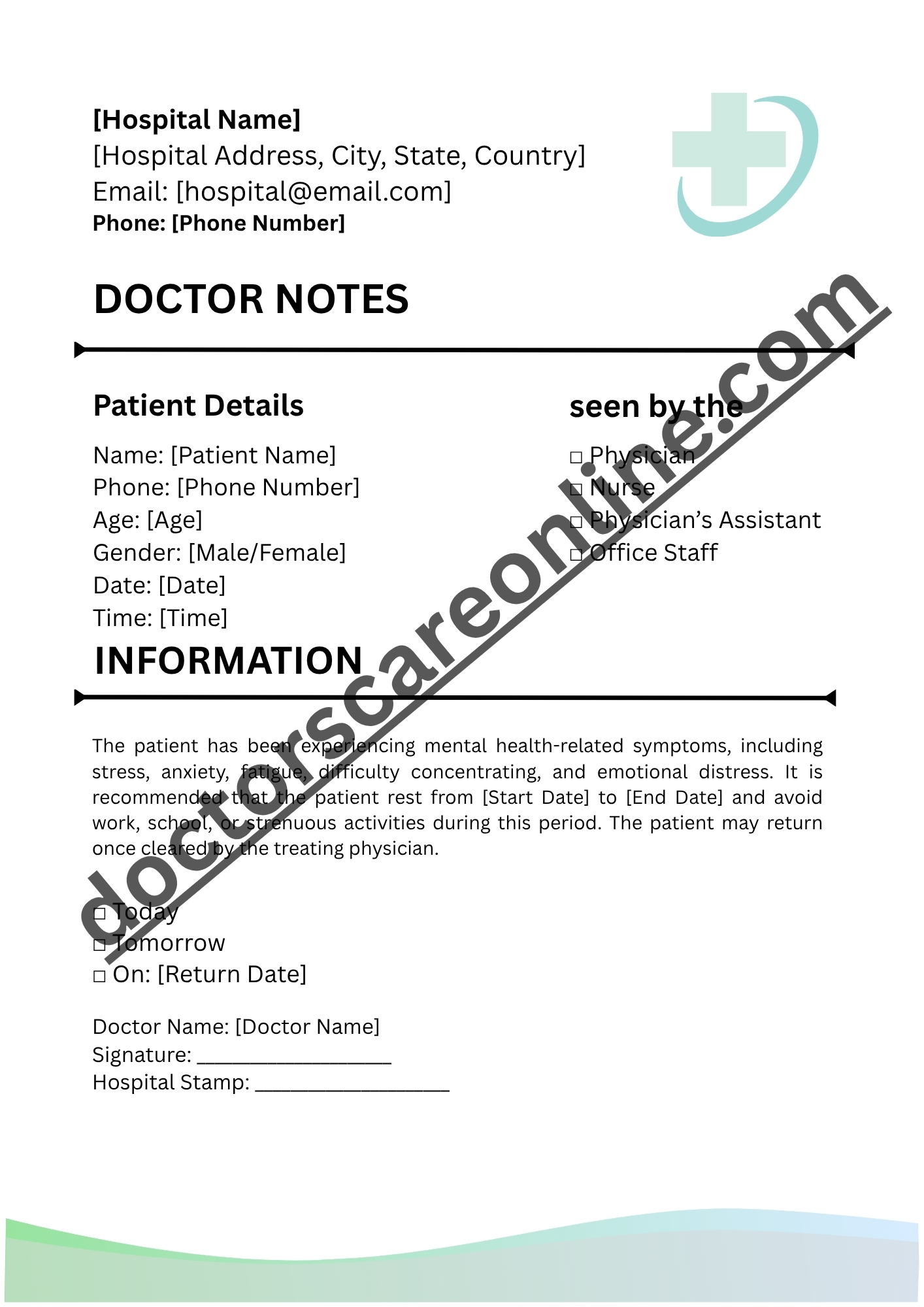
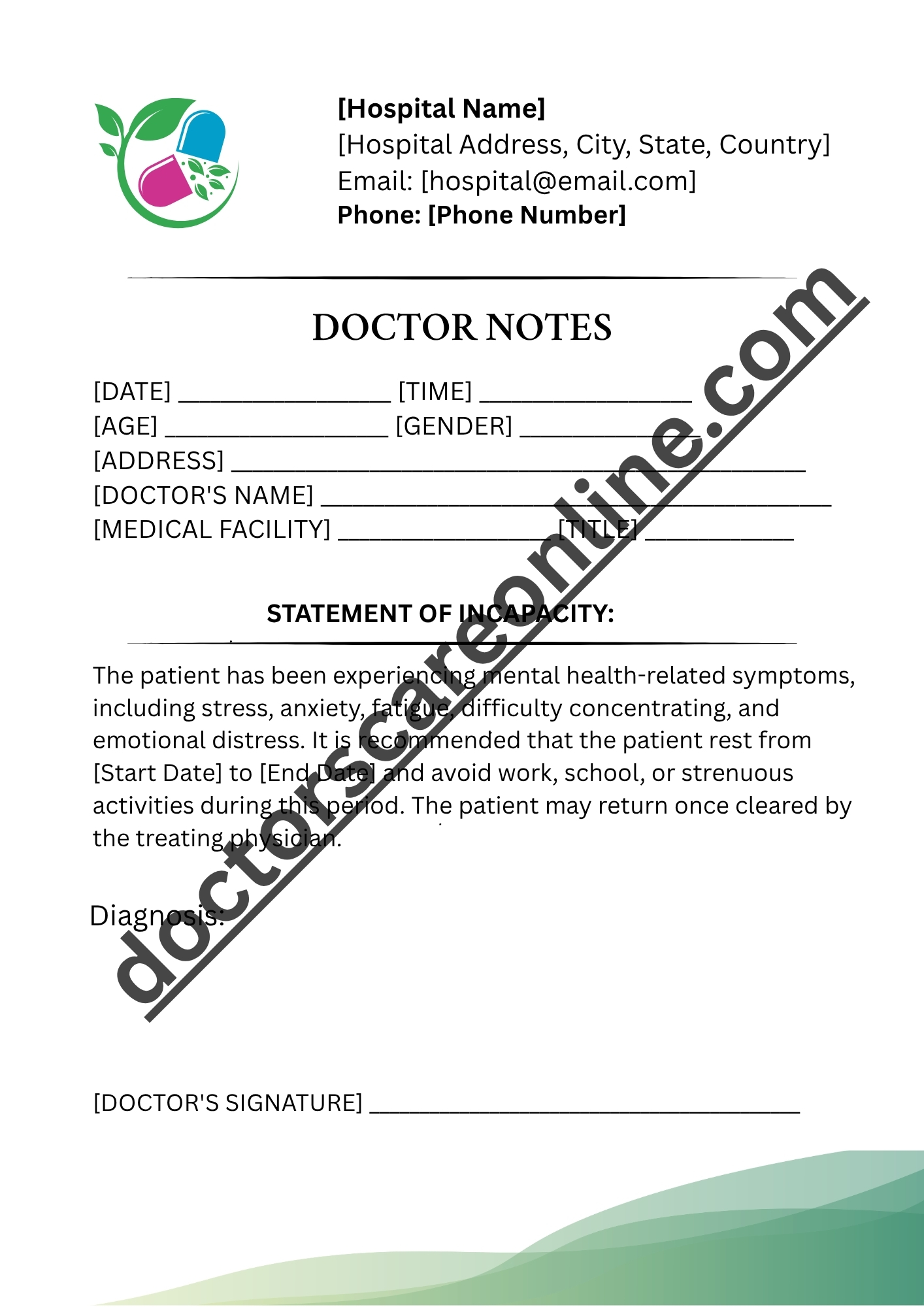
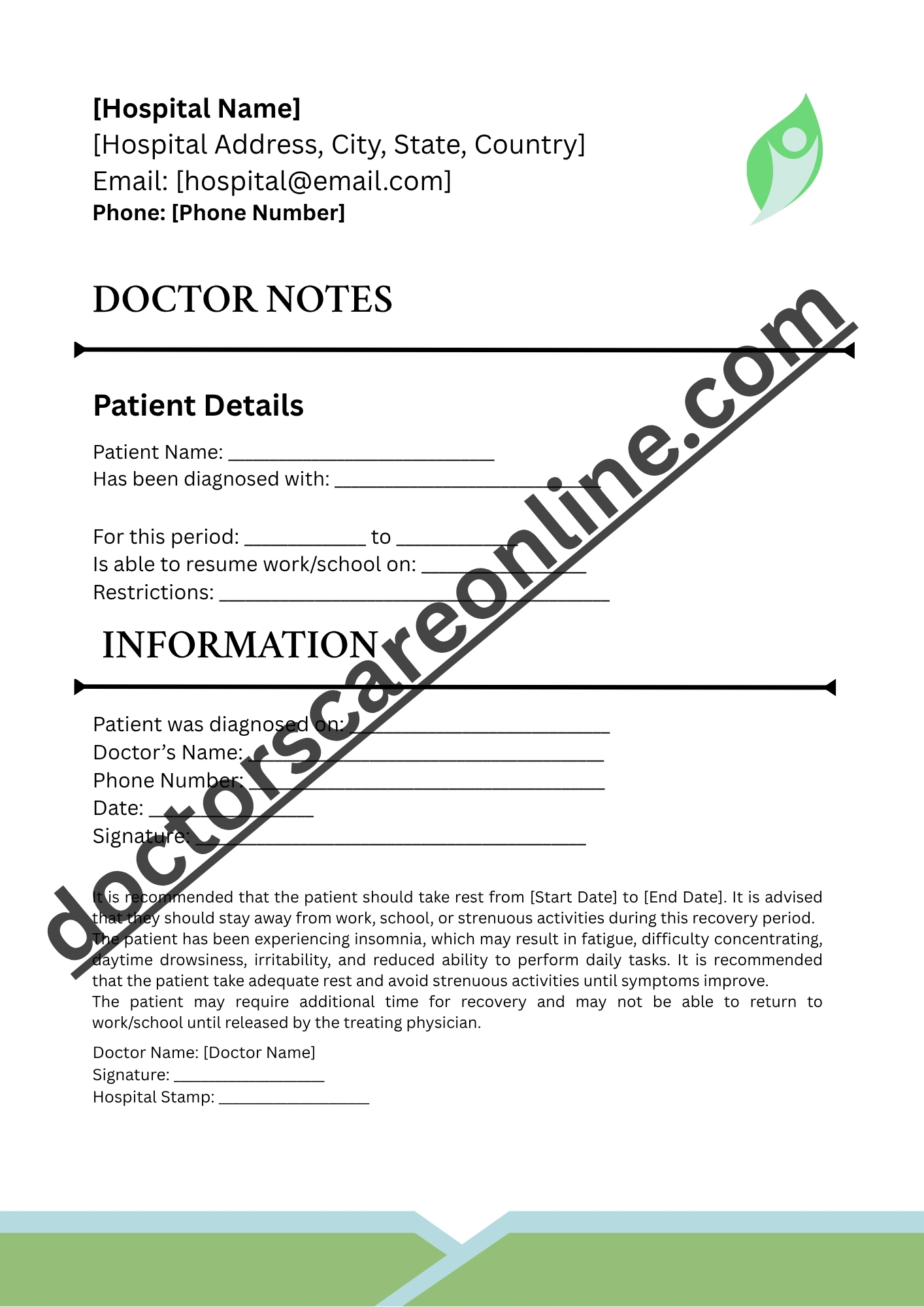
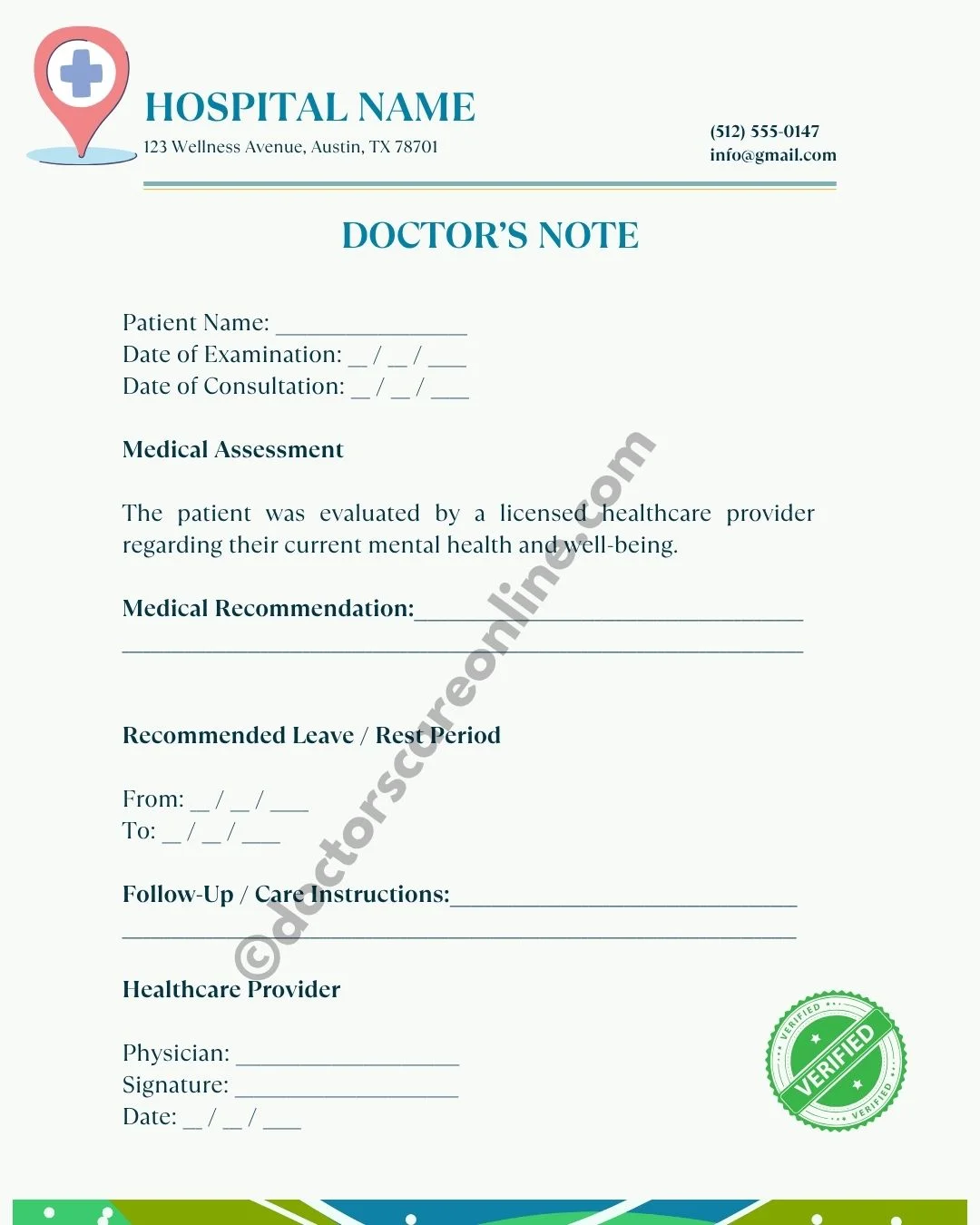
A legitimate doctor’s note contains only the information necessary to verify your medical leave while protecting your privacy.
A mental health doctor’s note typically includes:
- Patient’s full name
- Date of the medical appointment
- Date the note was issued
- Healthcare provider’s name
- Clinic or hospital name
- Medical recommendation for leave
- Recommended leave duration
- Return-to-work or return-to-school date (if applicable)
- Work or activity restrictions (if necessary)
- Healthcare provider’s signature
- Clinic contact information
Related Post-



Reviews
There are no reviews yet.