

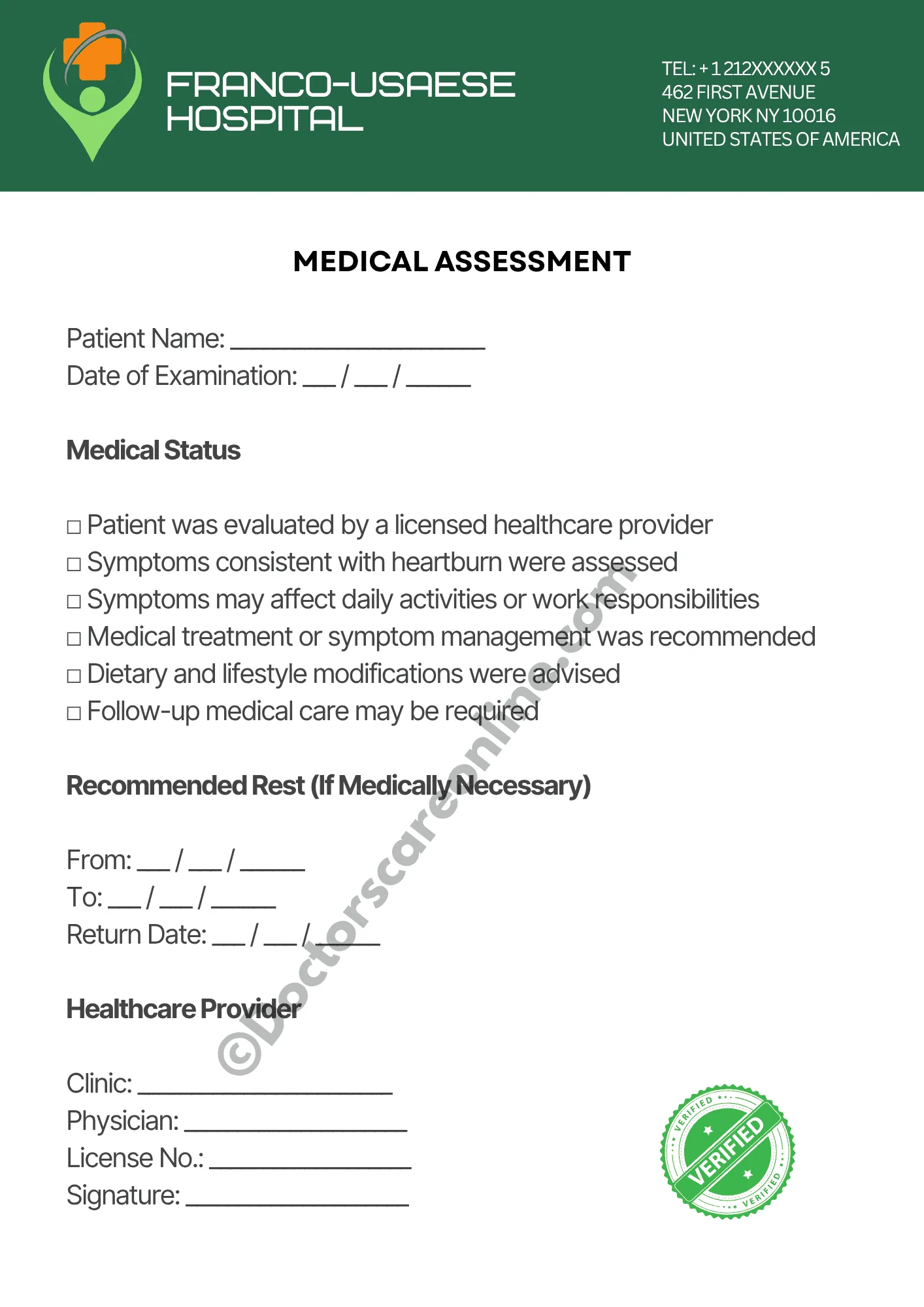
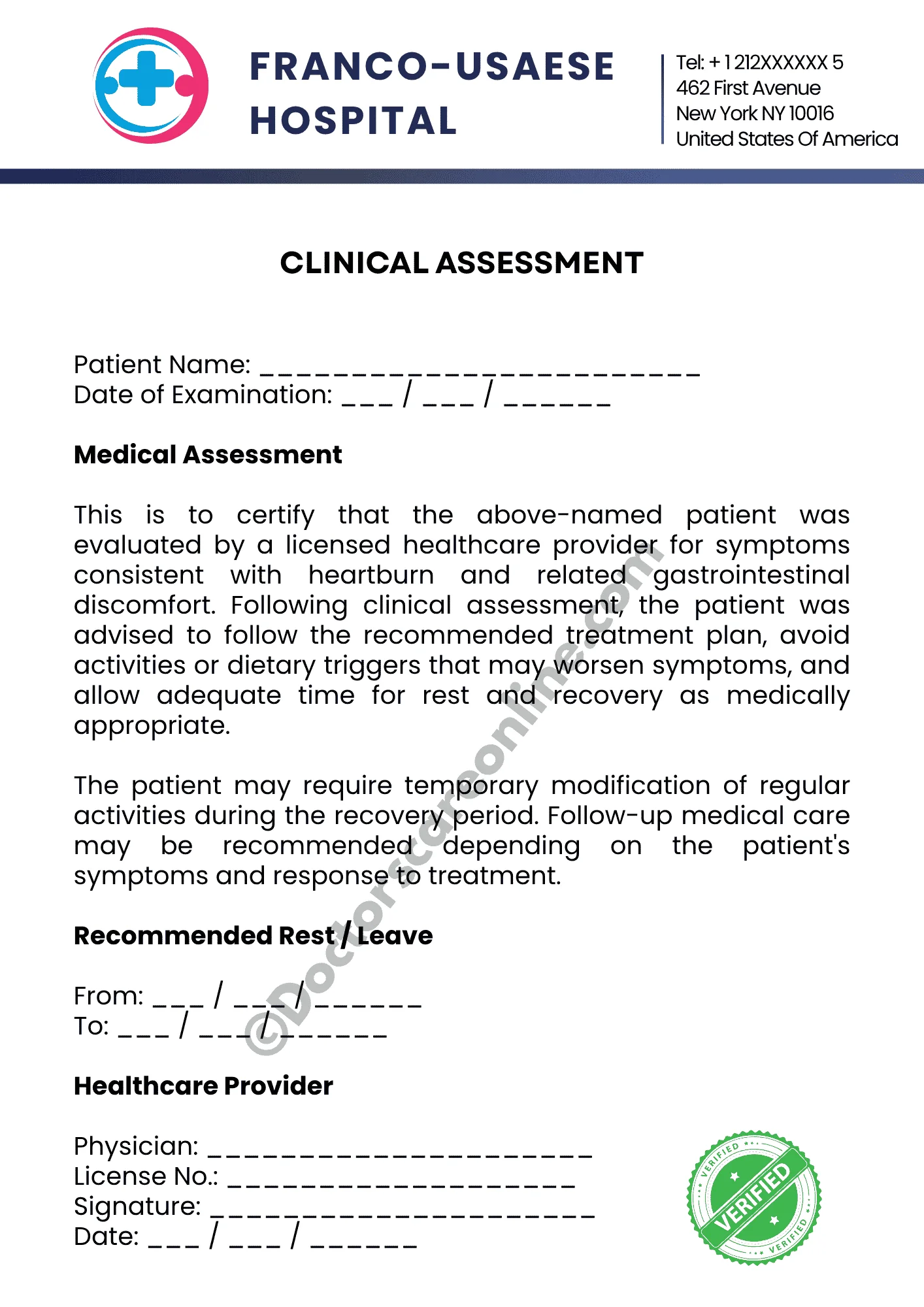
A Doctor’s Note for Heartburn is medical documentation that may be provided by a licensed healthcare professional after an appropriate evaluation. Depending on the individual’s symptoms and clinical assessment, documentation may address recommended time away from work or school, temporary activity limitations, or a return-to-work date when medically appropriate.
Heartburn is a common digestive symptom that can cause a burning sensation in the chest, often after eating or when lying down. It can sometimes be associated with acid reflux or gastroesophageal reflux disease (GERD). When symptoms interfere with work, school, sleep, travel, or normal daily activities, speaking with a healthcare professional can help determine the appropriate next steps.
For people in the United States who need convenient access to healthcare, an online doctor appointment for heartburn can provide an opportunity to discuss symptoms with a licensed healthcare professional from home. If the provider determines that the condition can be appropriately evaluated through telehealth and medical documentation is justified, a doctor’s note may be provided in accordance with applicable requirements and professional judgment.
Related Doctor Note :——
You can also visit:
- Online Doctors Note for Acid Reflux
- Doctors Note for Stomach Ulcer
- 6 Months of Unlimited Doctor’s Notes
- Unlimited Doctor’s Notes for 1 Year
Printable Doctor’s Note for Heartburn Template
A doctor’s note for heartburn is a medical document issued by a healthcare provider after evaluating a patient’s symptoms and circumstances.
The documentation may be relevant when heartburn or related symptoms temporarily affect your ability to:
- Perform normal work duties
- Attend school or college
- Travel or participate in scheduled activities
- Maintain a regular work schedule
- Complete physically demanding tasks
- Sleep adequately or function normally during the day
A healthcare provider decides whether documentation is medically appropriate. A doctor’s note should not be viewed as something that is automatically issued simply because a patient requests one.
What the Documentation May Address
Depending on the individual’s situation, a healthcare provider may document:
- The date of medical evaluation
- Recommended time away from work or school
- Temporary activity limitations
- A recommended return date
- Follow-up instructions
- Relevant work restrictions when medically necessary
The exact information included can vary according to the provider’s clinical judgment and the requirements of the organization receiving the documentation.
Why Might Someone Need a Doctor’s Note for Heartburn?
Occasional heartburn may be manageable with lifestyle measures or nonprescription treatment, but recurring or disruptive symptoms may warrant medical evaluation. Heartburn that occurs frequently, interferes with daily life, or does not improve with self-care should be discussed with a healthcare professional.
A person may need medical documentation when symptoms affect responsibilities such as:
- Work attendance: Symptoms may make it difficult to maintain a normal work schedule.
- School attendance: Persistent discomfort may interfere with classes, examinations, or other academic responsibilities.
- Work performance: Nighttime symptoms or discomfort may affect concentration and daytime functioning.
- Physical duties: Certain activities may become difficult when symptoms are severe or associated with other digestive problems.
- Recovery requirements: A healthcare provider may recommend temporary changes while evaluating persistent symptoms.
- Follow-up care: Additional evaluation may be necessary when symptoms continue despite initial treatment.
The need for documentation depends on the individual’s circumstances and the healthcare provider’s assessment.
Common Symptoms Associated With Heartburn and Acid Reflux
Heartburn typically causes a burning sensation behind the breastbone or in the center of the chest. Symptoms can become more noticeable after eating, when bending over, or while lying down. Acid or food may also move back toward the throat or mouth, creating an unpleasant taste.
Common Symptoms
- Burning chest discomfort
- Acidic or bitter taste in the mouth
- Regurgitation of stomach contents
- Symptoms that become worse after meals
- Discomfort when lying down
- Symptoms occurring at night
- Chest discomfort associated with reflux
- Difficulty or pain when swallowing
- Nausea in some individuals
- Chronic cough or hoarseness in some people with GERD
Not everyone experiences heartburn in the same way, and symptoms can overlap with other digestive or medical conditions.
Heartburn, Acid Reflux, and GERD: What’s the Difference?
These terms are related but do not mean exactly the same thing.
| Term | Meaning |
|---|---|
| Heartburn | A burning sensation or discomfort, commonly felt behind the breastbone |
| Acid Reflux | Occurs when stomach contents flow back into the esophagus |
| GER | Gastroesophageal reflux, referring to the backward movement of stomach contents into the esophagus |
| GERD | A more persistent form of reflux that causes repeated symptoms or complications |
GERD may involve recurring heartburn, regurgitation, swallowing difficulties, chest discomfort, cough, or hoarseness. A healthcare provider can determine whether symptoms are consistent with GER, GERD, or another condition.
What Can Trigger or Worsen Heartburn?
Heartburn symptoms can vary from person to person. Certain eating habits, body positions, and lifestyle factors may make reflux symptoms more noticeable.
Potential contributors include:
- Large or heavy meals
- Eating close to bedtime
- Lying down soon after eating
- Certain foods that trigger symptoms
- Smoking
- Excess body weight
- Some beverages or dietary choices
- Habits that increase reflux after meals
Keeping track of foods, timing, activities, and symptoms can help a healthcare provider understand possible patterns.
When Should You Talk to a Doctor About Heartburn?
Occasional symptoms may not require medical attention, but recurring or persistent heartburn should not simply be ignored.
Consider scheduling a medical evaluation if:
- Heartburn occurs frequently.
- Symptoms continue despite appropriate self-care.
- Symptoms interfere with sleep or daily activities.
- You have difficulty swallowing.
- You experience persistent nausea or vomiting.
- You have unexplained weight loss or difficulty eating.
- Symptoms are becoming more frequent or severe.
Frequent heartburn and symptoms that do not improve with over-the-counter measures may require professional evaluation.
How Is Heartburn Evaluated by a Healthcare Provider?
A healthcare provider generally begins by reviewing the patient’s symptoms, medical history, and response to previous treatments. In many cases, GER or GERD can initially be assessed from the clinical history and symptoms without immediate testing.
During an Evaluation, You May Be Asked About
- When your symptoms started
- How frequently they occur
- Whether symptoms follow meals
- Whether symptoms worsen while lying down
- Whether acid or food comes back into your throat
- Any swallowing difficulties
- Current medications
- Previous digestive conditions
- Lifestyle and dietary factors
- Whether over-the-counter treatment has helped
- Whether symptoms interfere with work or sleep
Additional Testing
Testing may be considered when symptoms suggest complications, another condition may be responsible, or symptoms do not improve with treatment.
Depending on the situation, a healthcare professional may recommend:
- Upper GI endoscopy
- Other diagnostic testing
- Referral to a gastroenterologist
The appropriate testing depends on the patient’s individual symptoms and medical history.
Can Heartburn Be Evaluated Through an Online Doctor Appointment?
In appropriate cases, an online medical appointment can allow a patient to discuss heartburn symptoms with a licensed healthcare professional without traveling to a clinic.
During a telehealth consultation, you can explain:
- Your symptoms and when they began
- How frequently they occur
- What seems to trigger them
- Whether they interfere with work or school
- Previous treatments you have tried
- Any additional symptoms
- Any relevant medical history
The provider determines whether your symptoms can be appropriately assessed through telehealth. Some situations require an in-person examination, testing, or urgent medical care.
When Online Care May Be Useful
An online consultation may be convenient when:
- You need to discuss recurring heartburn.
- You want professional guidance about persistent reflux symptoms.
- Symptoms are affecting your daily routine.
- You need to discuss possible work or school limitations.
- You want to determine whether further medical evaluation is necessary.
- You need medical documentation and the provider determines that it is appropriate.
Telehealth availability and medical-documentation rules can vary by location and individual circumstances.
How to Book an Online Doctor Appointment for Heartburn
Our online appointment process is designed to make it easier to connect with healthcare services from a convenient location.
Follow These Steps
- Visit the Website
Open the website and review the available online healthcare services. - Register or Log In
Create an account if you are a new user or log in if you already have an account. - Choose an Appointment
Select an available appointment option that fits your schedule. - Provide Your Information
Enter the requested personal and appointment details accurately. - Describe Your Heartburn Symptoms
Explain your symptoms, duration, frequency, triggers, and any relevant limitations. - Complete Payment When Required
Follow the available payment instructions shown during the booking process. - Attend Your Online Consultation
Connect with the licensed healthcare professional at your scheduled appointment time. - Follow the Provider’s Recommendations
The provider may recommend self-care, medication, additional evaluation, or an in-person visit depending on your condition. - Receive Documentation When Medically Appropriate
If the healthcare provider determines that a doctor’s note is appropriate after evaluation, documentation may be provided according to applicable requirements.
How Our Website Can Help You
Finding healthcare information and arranging an appointment can be stressful when you are already dealing with uncomfortable symptoms. Our website is designed to provide a convenient pathway for users seeking an online doctor appointment in the United States.
Why Users May Find Our Service Helpful
- Convenient online access: Start the appointment process from a location that is convenient for you.
- Professional evaluation: Your symptoms can be discussed with a healthcare professional through the appropriate appointment process.
- Simple appointment process: Registration and appointment booking are organized into straightforward steps.
- Documentation when appropriate: If a provider determines that documentation is medically justified, the appropriate medical documentation may be issued.
- Privacy-conscious approach: Medical information should be handled according to applicable privacy and healthcare requirements.
- Clear communication: Users can provide relevant information about their symptoms and concerns before or during the consultation.
Our service does not replace emergency medical care, and a medical note is not guaranteed merely because it is requested. A licensed healthcare professional makes the final clinical determination.
Need Help With Registration, Login, Payment, or Your Appointment?
If you experience a problem while using our website, you do not have to figure it out alone.
You Can Contact Our Chatbox for Help With
- Registration problems
- Login issues
- Appointment-booking questions
- Payment-related concerns
- Trouble navigating the website
- Questions about the appointment process
- General service-related queries
Simply use the chatbox on our website to ask your question or report an issue. Our support team can help guide you through the available process.
For medical emergencies, however, do not wait for website support. Contact emergency medical services immediately.
What Should You Have Ready Before an Online Heartburn Appointment?
Preparing relevant information can make your consultation more productive.
Helpful Information to Keep Available
| Information | Examples |
|---|---|
| Symptom duration | When the heartburn started |
| Frequency | Occasional, weekly, frequent, or daily |
| Timing | After meals, nighttime, morning |
| Triggers | Foods, beverages, lying down, other activities |
| Associated symptoms | Regurgitation, nausea, swallowing problems |
| Current medications | Prescription and nonprescription medicines |
| Previous treatment | Antacids or other treatments already tried |
| Medical history | Previous reflux or digestive conditions |
| Daily impact | Effect on work, school, sleep, or activities |
| Documentation needs | Employer, school, or other organizational requirements |
Accurate information allows the healthcare provider to make a more informed clinical assessment.
Treatment and Management Options for Heartburn
Treatment depends on the cause, frequency, severity, and individual circumstances.
A healthcare provider may recommend:
- Dietary and lifestyle adjustments
- Changes to meal timing
- Avoiding individual symptom triggers
- Position-related changes during sleep
- Antacids for certain mild symptoms
- H2 blockers
- Proton pump inhibitors (PPIs)
- Other medications when clinically appropriate
- Additional testing when symptoms persist
- Referral to a specialist when needed
NIDDK notes that treatment for GER and GERD may involve lifestyle changes, medicines, and in some cases procedures or surgery. Medication selection and duration should be discussed with a healthcare professional, particularly when symptoms are persistent or severe.
Important Medication Consideration
Over-the-counter medicines can help some people with mild heartburn, but they should not be used routinely for persistent or severe symptoms without discussing the situation with a healthcare professional.
Lifestyle Steps That May Help Manage Heartburn
Depending on your individual circumstances, a healthcare professional may recommend lifestyle adjustments such as:
- Identifying and avoiding personal food triggers
- Adjusting meal timing
- Avoiding lying down soon after eating
- Elevating the head and upper body during sleep when recommended
- Maintaining a healthy weight when appropriate
- Quitting smoking if you smoke
- Following the treatment plan provided by your healthcare professional
Lifestyle recommendations should be individualized rather than treated as a universal solution for everyone.
Heartburn and Work: When Could a Doctor’s Note Be Relevant?
Heartburn does not automatically require time away from work. However, persistent symptoms can sometimes interfere with sleep, concentration, comfort, or normal job responsibilities.
A healthcare provider may consider documentation when medically appropriate if symptoms are significantly affecting:
- Work attendance
- Concentration
- Sleep and daytime functioning
- Physical activities
- Regular working hours
- Ability to safely perform specific duties
If restrictions are medically necessary, the provider may describe appropriate limitations rather than simply recommending complete absence from work.
The exact requirements for accepting medical documentation are determined by the employer and applicable policies.
How Long Is a Doctor’s Note for Heartburn Valid?
There is no universal validity period for every doctor’s note.
The relevant period may depend on:
- The dates specified by the healthcare provider
- The recommended recovery period
- The patient’s follow-up needs
- Employer or school policies
- Applicable documentation requirements
| Situation | Possible Documentation Period |
|---|---|
| Short absence | Specific dates recommended by the provider |
| Temporary work restriction | Restriction period stated by the provider |
| Follow-up required | Until reassessment or another date specified |
| Extended symptoms | Updated documentation may be needed |
| Return to work | Date or conditions stated by the healthcare provider |
If symptoms continue beyond the period documented, the patient may need another evaluation rather than extending or changing the original document independently.
When a Heartburn Doctor’s Note May Not Be Appropriate
A doctor’s note should be based on a legitimate medical evaluation rather than simply a request for documentation.
A provider may determine that:
- Symptoms require emergency care instead of routine telehealth.
- An in-person examination is necessary.
- Additional testing is needed.
- The reported symptoms do not medically justify leave.
- No work or school restriction is clinically necessary.
- Another healthcare professional or specialist should evaluate the condition.
This approach helps ensure that medical documentation reflects the provider’s professional assessment.
How to Use Your Doctor’s Note Responsibly
Once medical documentation has been issued:
- Review the dates and restrictions for accuracy.
- Submit it through your employer or school’s required process.
- Follow any treatment or activity recommendations.
- Do not alter the medical document.
- Contact your healthcare provider if your symptoms change.
- Seek urgent care if serious or unexpected symptoms develop.
A doctor’s note supports communication between a patient and the organization requesting documentation; it does not replace appropriate medical treatment.
Frequently Asked Questions
1. Can a doctor write me a note for heartburn?
A licensed healthcare provider may provide medical documentation when, after evaluating your symptoms, they determine that a doctor’s note is medically appropriate. The decision depends on your individual condition and circumstances.
2. Can heartburn be serious enough to keep me home from work?
It can be, depending on the severity of symptoms and how they affect your ability to function. A healthcare provider can assess whether time away from work or temporary restrictions are medically appropriate.
3. Can a telehealth doctor diagnose GERD?
A healthcare provider may be able to evaluate symptoms suggestive of GERD through telehealth, but the appropriate diagnostic approach depends on the individual situation. In some cases, additional testing or an in-person evaluation may be necessary.
4. What happens if heartburn medicine is not helping?
Persistent symptoms despite treatment should be discussed with a healthcare professional. Further evaluation may be appropriate to determine whether GERD, a complication, or another condition is responsible.
5. Can heartburn feel like a heart attack?
Yes. Heartburn and heart-related chest discomfort can sometimes feel similar, making self-diagnosis unreliable. If chest pain is new, severe, unexplained, persistent, or accompanied by symptoms such as shortness of breath, sweating, dizziness, or pain spreading to the arm or jaw, seek emergency medical care rather than assuming it is heartburn.
A Doctor’s Note for Heartburn should only be issued by a licensed healthcare professional following an appropriate medical evaluation. Online appointments may not be suitable for every condition, and the healthcare provider may recommend in-person care, testing, or emergency treatment when necessary.





Reviews
There are no reviews yet.