
A Doctor’s Note for Work is an official medical document issued by a licensed healthcare provider after evaluating a patient’s medical condition. Also known as a work excuse note, medical excuse note, doctor’s excuse for work, or medical certificate for work, this document verifies that an employee was medically unable to perform their job duties and may require time off to recover. Employers often request a doctor’s note to confirm the legitimacy of a sick leave request, document extended absences, or determine when an employee can safely return to work.
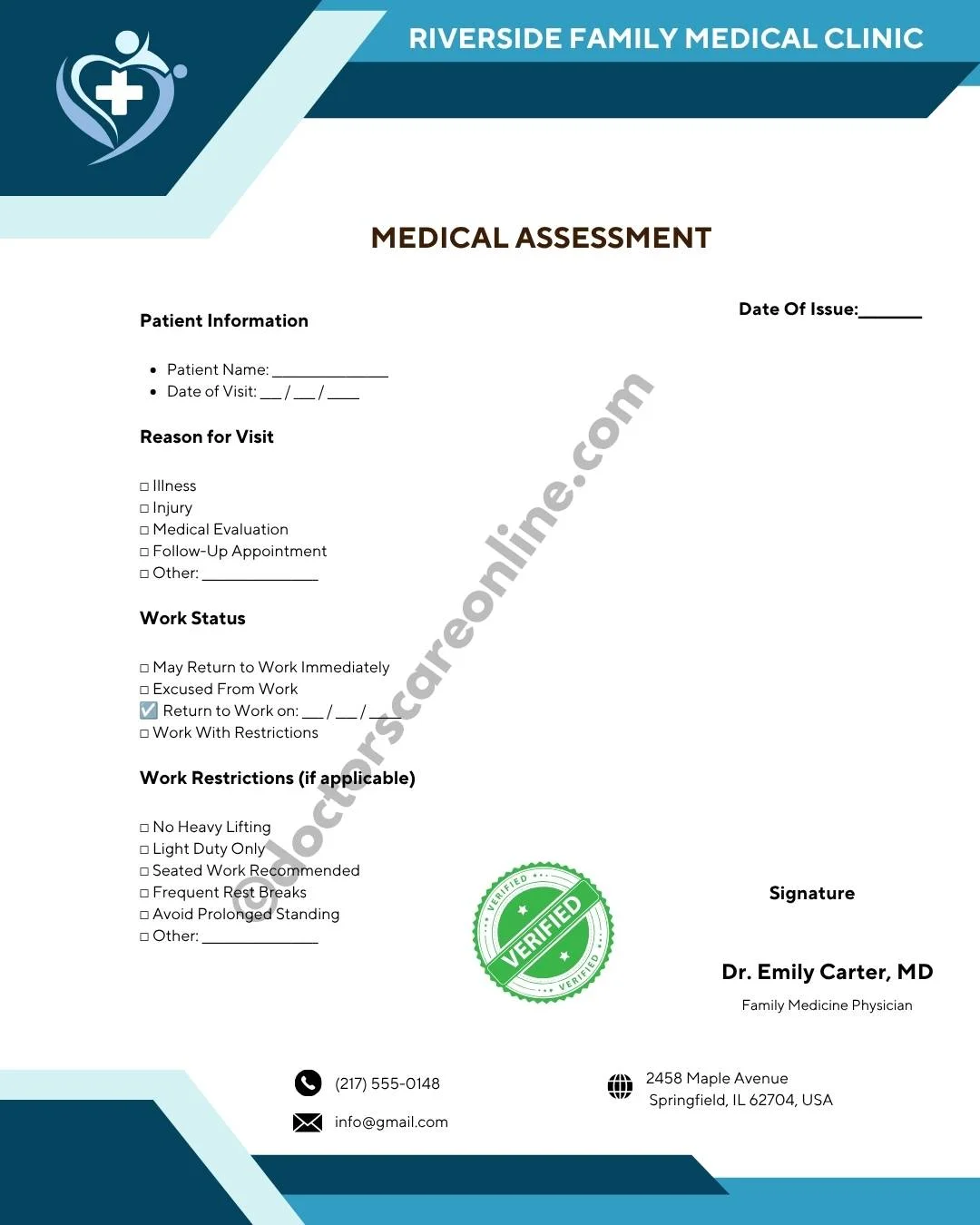
A doctor’s note typically includes the patient’s name, the date of the medical evaluation, the recommended leave period, any temporary work restrictions, and the anticipated return-to-work date. Depending on the healthcare provider’s professional judgment and applicable privacy laws, the note may or may not disclose the specific medical diagnosis.
A Doctor’s Note for Work may be required whenever a medical condition prevents an employee from safely performing their job responsibilities. Employers often request this documentation to verify sick leave, approve extended absences, or ensure employees are medically fit before returning to work.
A doctor’s note is commonly needed when:
- You are unable to work because of an illness or injury.
- Your employer requires medical documentation after several consecutive sick days.
- You need extended medical leave.
- You are recovering from surgery.
- A workplace injury requires time off.
- You have a contagious illness and should remain at home.
- Your healthcare provider recommends temporary work restrictions.
- Your employer requests return-to-work clearance.
- You require workplace accommodations because of a medical condition.
- Human Resources requests medical documentation for attendance records.
Common Reasons for Getting a Medical Note For Work
Healthcare providers may issue a work excuse note for many different medical situations.
Common reasons include:
Respiratory Illnesses
- Influenza (Flu)
- COVID-19
- Bronchitis
- Pneumonia
- Upper respiratory infections
Viral and Bacterial Infections
- Strep throat
- Gastroenteritis
- Food poisoning
- Ear infection
- Sinus infection
Mental Health Conditions
- Anxiety
- Depression
- Stress-related disorders
- Burnout
- Panic attacks
Women’s Health
- Pregnancy complications
- Morning sickness
- Menstrual disorders
- Postpartum recovery
Chronic Medical Conditions
- Migraine
- Asthma flare-ups
- Diabetes-related complications
- Hypertension complications
- Autoimmune disorders
Who Can Issue a Doctor’s Note for Work?
A Doctor’s Note for Work should only be issued by a licensed healthcare professional after conducting an appropriate medical evaluation. The healthcare provider determines whether medical leave is necessary based on the patient’s symptoms, medical history, physical examination, and clinical judgment.
Depending on local regulations, a work doctor’s note may be issued by:
- Medical Doctor (MD)
- Doctor of Osteopathic Medicine (DO)
- Nurse Practitioner (NP)
- Physician Assistant (PA)
- Licensed Telehealth Physician
- Occupational Health Physician
- Urgent Care Physician
The provider decides whether the employee is medically fit to work, requires temporary restrictions, or needs additional recovery time before returning to work.
What Information Does a Doctor’s Note for Work Include?
Although formats may vary, most medical excuse notes for work contain similar information.
| Information | Usually Included |
|---|---|
| Patient’s Full Name | ✓ |
| Date of Medical Visit | ✓ |
| Date Note Issued | ✓ |
| Medical Leave Dates | ✓ |
| Return-to-Work Date | ✓ (if appropriate) |
| Work Restrictions | Sometimes |
| Healthcare Provider Name | ✓ |
| Clinic Information | ✓ |
| Provider Signature | ✓ |
| Diagnosis | Optional |
To protect patient privacy, many doctor’s notes confirm only that medical leave is necessary without disclosing the exact diagnosis unless the patient consents or specific regulations require it.
Why Is a Doctor’s Note Important?
A medical certificate for work benefits both employees and employers by providing clear documentation of medically necessary absences.
For Employees
- Confirms legitimate sick leave.
- Supports workplace leave requests.
- Protects employment records.
- Helps request workplace accommodations.
- Documents recovery recommendations.
For Employers
- Verifies employee absences.
- Maintains attendance records.
- Supports compliance with workplace policies.
- Helps reduce workplace illness transmission.
- Assists in return-to-work planning.
For Human Resources
- Maintains employee documentation.
- Supports medical leave administration.
- Helps process workplace accommodations.
- Ensures compliance with organizational leave procedures.
Can You Get a Doctor’s Note Through Telehealth?
Yes. Many licensed healthcare providers can issue an online doctor’s note for work after a telehealth consultation when they determine that medical documentation is clinically appropriate.
Telehealth allows patients to consult a healthcare provider using secure video or phone appointments without visiting a clinic in person. During the consultation, the provider reviews symptoms, medical history, and any relevant health concerns before deciding whether medical leave is necessary.
Depending on the provider and local regulations, the doctor’s note may be delivered as a secure PDF through email or a patient portal.
How to Get an Online Doctor’s Note for Work
Obtaining a telehealth doctor’s note is generally a straightforward process.
Step 1: Choose a Licensed Healthcare Provider
Select a reputable clinic, primary care provider, urgent care service, or licensed telehealth platform.
Step 2: Schedule an Appointment
Choose an available appointment time that fits your schedule.
Step 3: Provide Medical Information
Share details about:
- Current symptoms
- Medical history
- Medications
- Workplace duties
- Duration of illness
Step 4: Complete the Consultation
A licensed healthcare professional evaluates your condition and determines whether medical leave is medically appropriate.
Step 5: Receive Your Doctor’s Note
If approved, your medical certificate for work is typically provided electronically through:
- Secure patient portal
- Encrypted email
- Downloadable PDF
Is an Online Doctor’s Note Accepted?
Many employers accept digital doctor’s notes issued by licensed healthcare providers. Acceptance depends on company policy and applicable employment regulations.
Digital medical documentation often includes:
- Provider name
- Practice information
- Medical evaluation date
- Recommended leave period
- Return-to-work recommendation (if applicable)
- Provider signature or electronic authentication
Employees should confirm their employer’s documentation requirements before submitting an online doctor’s note.
How Long Is a Doctor’s Note Valid?
The validity of a Doctor’s Note for Work depends on the healthcare provider’s recommendation and the employer’s attendance policy.
| Purpose | Typical Validity |
|---|---|
| One-day illness | Leave period listed on the note |
| Short-term sick leave | Until recommended return date |
| Extended medical leave | Duration approved by the provider |
| Return-to-work clearance | Until employee resumes work |
| Ongoing medical condition | Updated documentation may be required |
If additional recovery time is needed, the healthcare provider may issue an updated doctor’s note after re-evaluating the patient’s condition.
Can an Employer Reject a Doctor’s Note?
In many situations, employers accept valid medical documentation issued by licensed healthcare providers. However, an employer may request clarification or additional documentation if:
- Required information is missing.
- The document appears incomplete.
- The leave period needs clarification.
- Company policies require additional verification.
- Applicable employment laws permit further documentation.
Employees should communicate with Human Resources if questions arise regarding medical leave documentation.
Quick Tips for Employees
To make the leave process smoother:
- Notify your employer as soon as possible.
- Follow your company’s attendance policy.
- Attend scheduled medical appointments.
- Keep copies of medical documentation.
- Submit your doctor’s note promptly.
- Follow treatment recommendations.
- Return to work only when medically appropriate.
- Ask your employer if additional documentation is required.
Common Recovery Periods for Medical Leave
The amount of time an employee may need away from work depends on the type of illness, injury, treatment, and the healthcare provider’s professional assessment. Recovery times vary from person to person, and a doctor will recommend leave based on the individual’s medical condition and job responsibilities.
| Medical Condition | Typical Recovery Period* |
|---|---|
| Common Cold | 1–3 days |
| Seasonal Flu | 3–7 days |
| COVID-19 | As advised by the healthcare provider and current public health guidance |
| Gastroenteritis | 1–5 days |
| Food Poisoning | 1–3 days |
| Migraine | 1–2 days |
| Sprained Ankle | 2–6 weeks |
| Back Pain | A few days to several weeks |
| Minor Surgery | 1–3 weeks |
| Major Surgery | Several weeks to several months |
| Mental Health Recovery | Varies based on the individual’s condition and treatment plan |
Note: These recovery periods are general estimates and should not replace individualized medical advice. A licensed healthcare provider will determine the appropriate leave period based on the patient’s condition.
Workplace Accommodations After Medical Leave
Some employees may need temporary workplace accommodations after returning from a medical leave. These accommodations should be based on the healthcare provider’s recommendations and the employer’s policies.
Examples of temporary accommodations include:
- Reduced work hours
- Modified job duties
- Light-duty assignments
- Additional rest breaks
- Flexible scheduling
- Remote work (when appropriate)
Appropriate accommodations can support recovery while helping employees transition safely back to work.
Frequently Asked Questions
Q: Can I Get a Doctor’s Note for Work Online?
A: Yes. Many licensed healthcare providers offer telehealth consultations and may issue an online doctor’s note if they determine that medical leave is appropriate after evaluating your condition.
Q. Does a Doctor’s Note Always Include the Diagnosis?
A: No. Many doctor’s notes simply confirm that the employee is medically unable to work without identifying the specific medical condition. This helps protect patient privacy.
Q. Is a Digital Doctor’s Note Valid?
A: In many cases, yes. Digital doctor’s notes issued by licensed healthcare providers are accepted by many employers. Employees should verify their organization’s documentation requirements.
Q. How Long Is a Doctor’s Note Valid?
A: A doctor’s note is generally valid for the period of leave recommended by the healthcare provider. If additional recovery time is necessary, updated medical documentation may be required.
Q. Can a Doctor Refuse to Issue a Work Excuse Note?
A: Yes. A healthcare provider may decline to issue a doctor’s note if, after a medical evaluation, they determine that leave from work is not medically necessary.
Q. Can a Doctor’s Note Include Work Restrictions?
A: Yes. Instead of complete leave, a healthcare provider may recommend temporary restrictions such as light-duty work, avoiding heavy lifting, or limiting repetitive activities.
Q. Can Urgent Care Provide a Doctor’s Note?
A: Yes. Urgent care centers often issue doctor’s notes after evaluating patients with illnesses or injuries that temporarily prevent them from working.
Conclusion
A Doctor’s Note for Work is an important medical document that verifies an employee’s need for time away from work due to illness, injury, surgery, or another health-related condition. It helps employees request medically supported leave, assists employers with attendance documentation, and promotes a safe return to work when appropriate.
Whether obtained through an in-person visit or a licensed telehealth consultation, a doctor’s note provides professional medical documentation while protecting patient privacy. Employees should follow their healthcare provider’s recommendations, comply with workplace attendance policies, and return to work only when they are medically able to perform their job duties safely.
Medical Disclaimer
This article is provided for educational and informational purposes only and should not be considered medical, legal, or employment advice. It is not intended to diagnose, treat, cure, or prevent any medical condition. Always consult a licensed healthcare provider regarding your symptoms, medical condition, or ability to work. A Doctor’s Note for Work should only be issued after an appropriate medical evaluation by a qualified healthcare professional. Workplace leave requirements, sick leave policies, and documentation standards vary by employer and jurisdiction. Always follow your employer’s policies and applicable local laws.
Related Doctor’s Notes
You may also find these resources helpful:
Reviews
There are no reviews yet.