
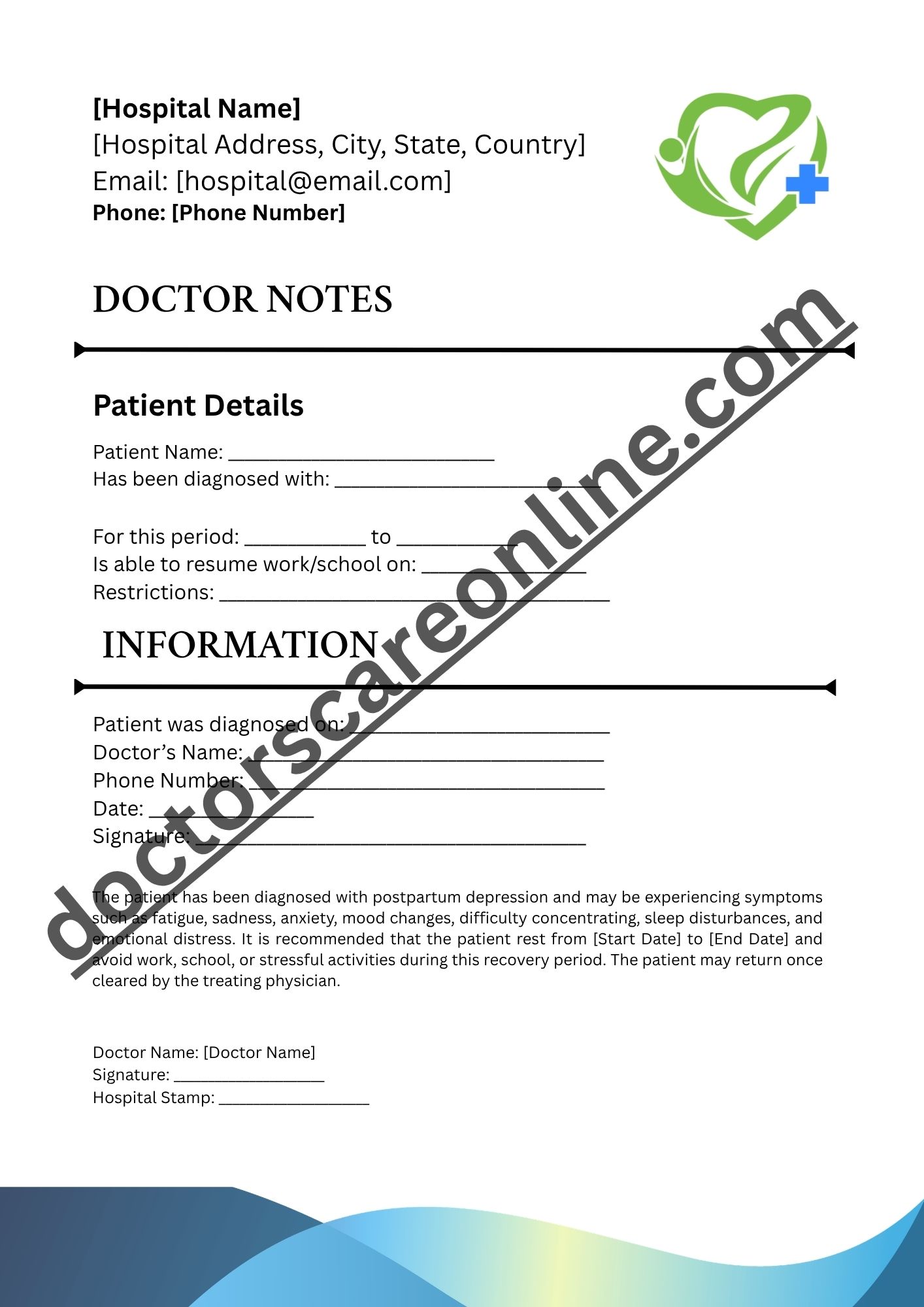
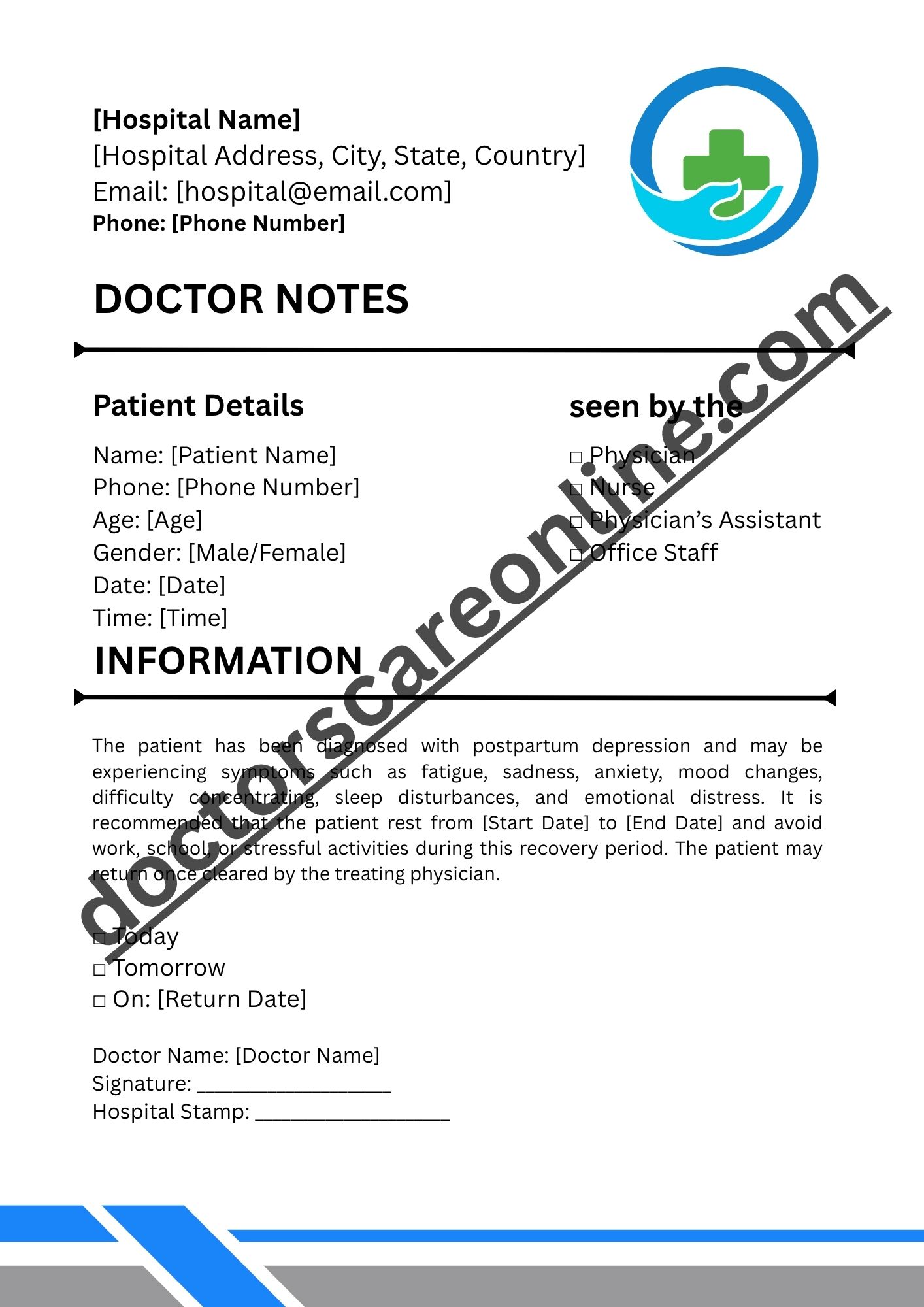
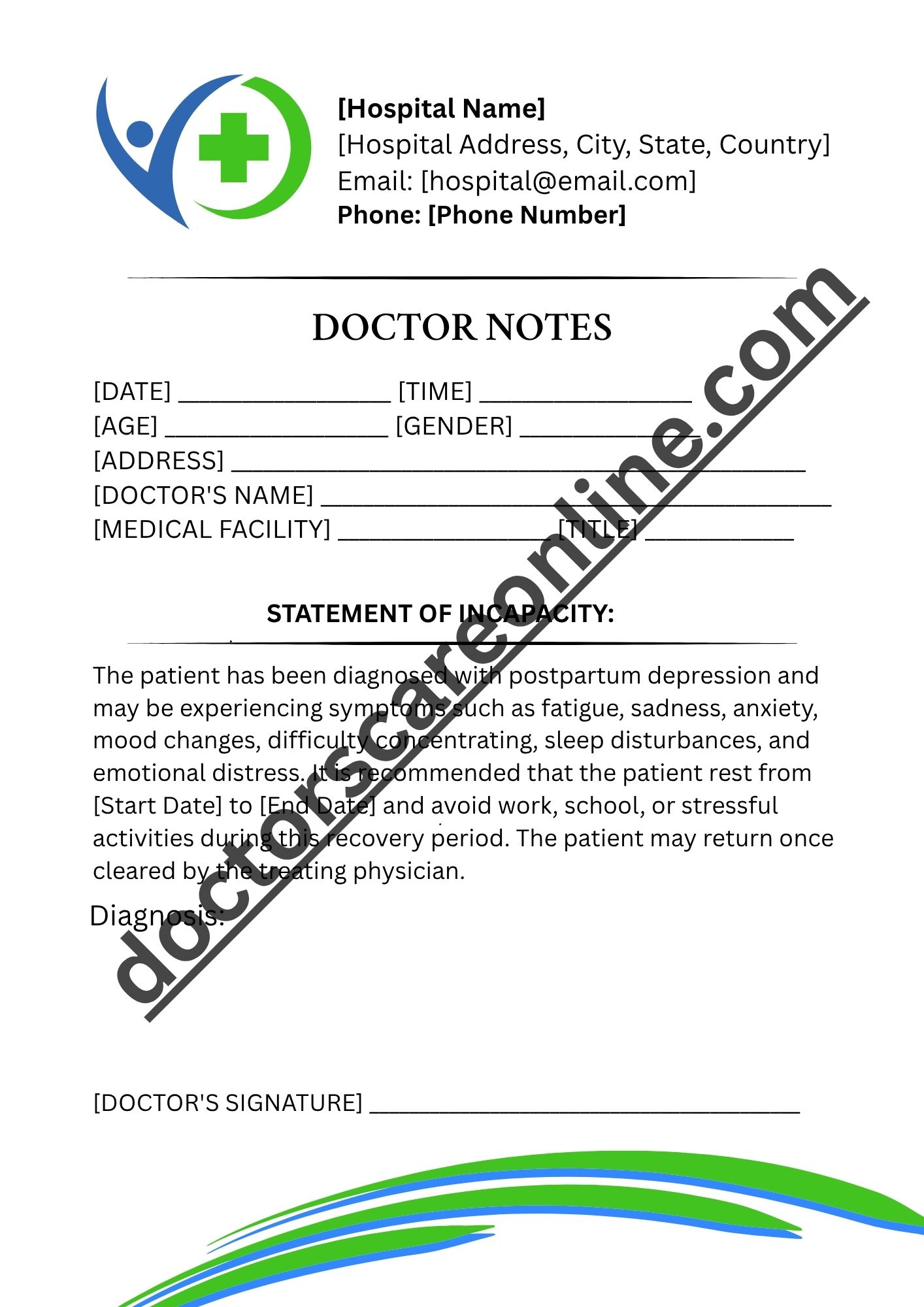
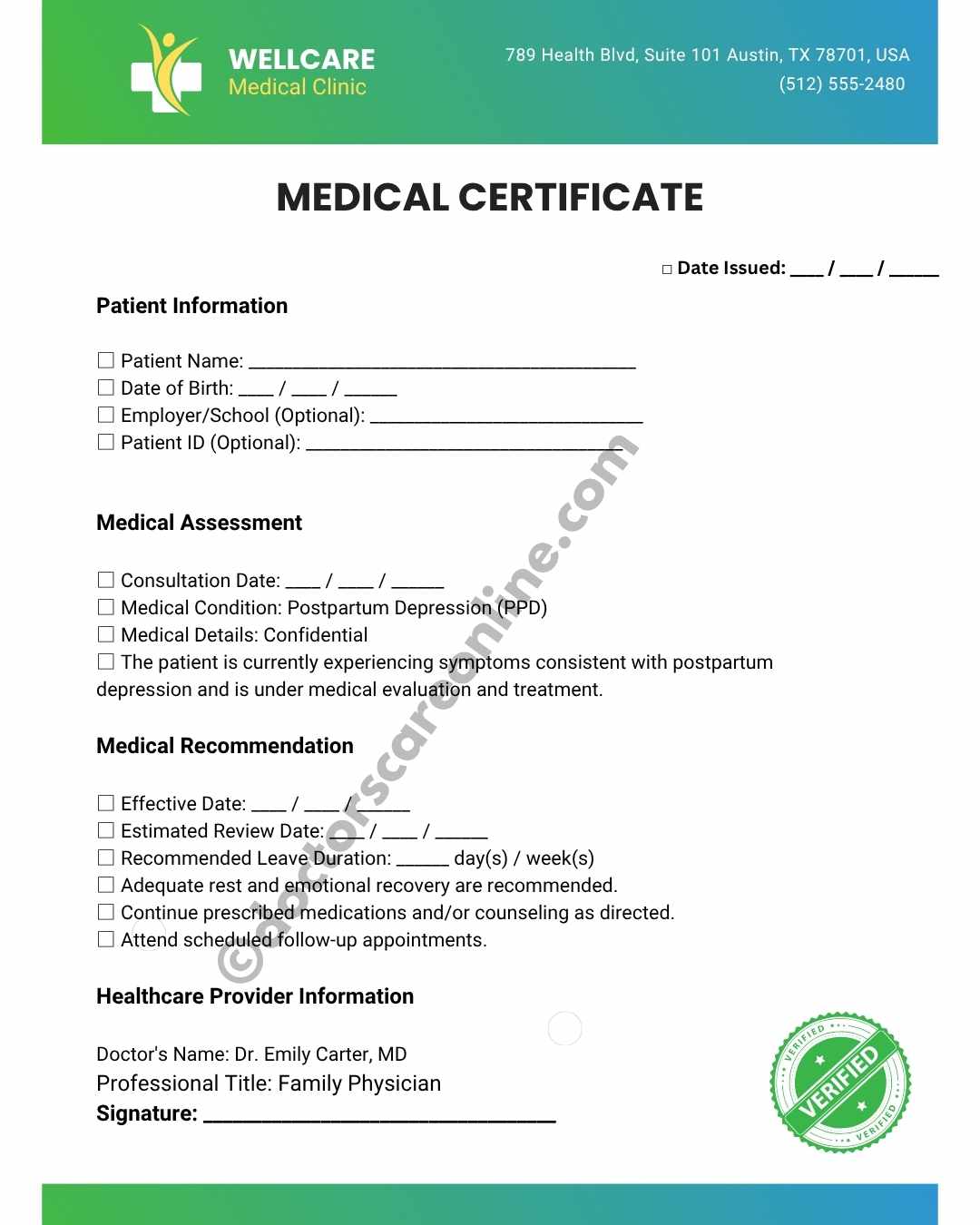
A Doctor’s Note for Postpartum Depression is a medical document issued by a licensed healthcare provider confirming that a patient is experiencing postpartum depression (PPD) and may require time away from work, school, or other responsibilities to receive treatment and recover. Also referred to as a postpartum depression doctor’s note, postpartum depression medical certificate, postpartum depression excuse note, postpartum depression sick note, maternal mental health doctor’s note, or physician note for postpartum depression, this document helps verify a legitimate medical condition while protecting the patient’s privacy.
Postpartum depression is a common mental health condition that can develop after childbirth. It may affect a person’s emotions, energy levels, sleep, concentration, and ability to bond with their newborn. Unlike the temporary “baby blues,” postpartum depression is more severe and typically requires professional evaluation and treatment. A healthcare provider may recommend medical leave, therapy, counseling, medication, or workplace accommodations depending on the individual’s symptoms and recovery needs.
Printable Doctors Note for Postpartum Depression
A printable doctor’s note for postpartum depression is designed to provide official medical documentation for patients experiencing postpartum depression after childbirth. It serves as a professional medical excuse note, work excuse, sick leave certificate, or medical leave document confirming that a licensed healthcare provider has evaluated the patient and recommends time away from regular responsibilities for treatment and recovery.
Depending on the severity of symptoms, treatment may include psychotherapy, Cognitive Behavioral Therapy (CBT), counseling, support groups, medication when appropriate, lifestyle modifications, family support, and regular follow-up appointments. Every recovery plan is individualized based on the patient’s medical evaluation and overall health.
Most doctor’s notes include only essential medical information, such as:
- Date of examination
- Confirmation of medical evaluation
- Recommended period of leave or work restrictions
- Return-to-work recommendations (if applicable)
- Healthcare provider’s signature and credentials
Confidential medical information is generally not disclosed unless authorized by the patient or required by law.
When Is a Postpartum Depression Medical Certificate Needed?
A healthcare provider may recommend a doctor’s note for postpartum depression when symptoms significantly interfere with daily functioning or the ability to safely perform work, school, or caregiving responsibilities.
Common situations include:
- Medical leave from work
- School or university absence
- Extended maternity leave
- Temporary workplace accommodations
- Reduced work schedule
- Insurance or disability documentation (where applicable)
- Return-to-work clearance after treatment
- Employer documentation for approved leave
Common Symptoms of Postpartum Depression
Symptoms can vary from person to person and may develop within weeks or months after childbirth.
Common symptoms include:
- Persistent sadness or depressed mood
- Frequent crying spells
- Anxiety or excessive worry
- Mood swings
- Irritability or frustration
- Fatigue or lack of energy
- Difficulty bonding with the baby
- Loss of interest in previously enjoyed activities
- Sleep disturbances or insomnia
- Sleeping excessively
- Changes in appetite
- Difficulty concentrating
- Feeling overwhelmed by daily tasks
- Feelings of guilt, shame, or hopelessness
- Low self-esteem
- Panic attacks
- Restlessness
- Lack of motivation
- Emotional numbness
- Withdrawal from family or friends
Treatment Options
Treatment depends on the severity of postpartum depression and the patient’s individual needs.
A healthcare provider may recommend:
- Individual counseling
- Cognitive Behavioral Therapy (CBT)
- Interpersonal Therapy (IPT)
- Support groups for new parents
- Family counseling
- Prescription medication when medically appropriate
- Stress management techniques
- Adequate sleep and nutrition
- Regular physical activity as recommended
- Scheduled follow-up appointments
- Community support resources
Many patients experience significant improvement with early diagnosis and appropriate treatment.
Things to Avoid During Postpartum Depression
While recovering, healthcare providers commonly advise patients to avoid:
- Ignoring emotional or mental health symptoms
- Isolating yourself from trusted family or friends
- Skipping counseling or therapy sessions
- Stopping prescribed medication without medical advice
- Excessive stress whenever possible
- Alcohol or recreational drug use
- Severe sleep deprivation
- Comparing your recovery to others
- Delaying professional medical treatment
- Missing follow-up appointments
Who Can Issue a Postpartum Depression Recovery Note?
Depending on local laws and healthcare regulations, a postpartum depression doctor’s note may be issued by a licensed:
- Obstetrician (OB-GYN)
- Primary Care Physician
- Psychiatrist
- Family Medicine Physician
- Women’s Health Specialist
- Licensed Mental Health Professional (where permitted)
- Nurse Practitioner or Physician Assistant (where authorized)
Emergency Warning Signs
Postpartum depression can become serious if left untreated.
Seek immediate medical attention or emergency care if symptoms include:
- Thoughts of self-harm
- Thoughts of harming the baby
- Hallucinations
- Delusions
- Extreme confusion
- Severe emotional distress
- Loss of touch with reality
These symptoms may indicate a medical emergency requiring immediate evaluation.
Frequently Asked Questions
Q: Can postpartum depression require medical leave?
A: Yes. If symptoms interfere with daily functioning or job performance, a healthcare provider may recommend temporary medical leave and provide a doctor’s note.
Q: Who can issue a postpartum depression doctor’s note?
Licensed healthcare professionals such as obstetricians, primary care physicians, psychiatrists, or other qualified medical providers may issue the documentation, depending on local regulations.
Q: How long does postpartum depression last?
A: Recovery varies for each individual. Some patients improve within a few months, while others may require longer-term treatment and follow-up care.
Q: Is postpartum depression treatable?
A: Yes. Most people improve with early diagnosis, therapy, counseling, medication when appropriate, strong family support, and ongoing medical care.
Q: Can I return to work while experiencing postpartum depression?
A: Many individuals can return to work once symptoms improve and their healthcare provider determines it is medically appropriate. Some patients may initially require reduced hours or workplace accommodations.
Q: Does postpartum depression qualify for sick leave?
A: In many situations, yes. Eligibility depends on medical evaluation, employer policies, workplace regulations, and applicable employment laws.
Q: Can postpartum depression affect bonding with my baby?
A: Yes. Some individuals experience difficulty bonding with their newborn during postpartum depression. Early treatment and family support often help strengthen parent-child attachment.
Q: Can postpartum depression return after future pregnancies?
A: Yes. Having postpartum depression once may increase the risk of experiencing it again after future pregnancies. Healthcare providers may recommend closer monitoring during and after subsequent pregnancies.
A Doctor’s Note for Postpartum Depression provides official medical documentation confirming that a patient requires time for treatment, recovery, and emotional well-being following childbirth. Whether used as a postpartum depression medical certificate, work excuse note, maternal mental health leave document, or physician’s sick note, it supports legitimate medical leave while protecting patient confidentiality. Early diagnosis, appropriate treatment, professional support, and regular follow-up care significantly improve recovery outcomes, allowing most individuals to safely return to their normal activities over time.
Medical Disclaimer
This content is provided for educational and informational purposes only and should not be considered medical, legal, or mental health advice. A doctor’s note for postpartum depression must only be issued by a licensed healthcare provider following an appropriate medical evaluation. Do not create, alter, or use fraudulent medical documentation. If you or someone you know is experiencing severe postpartum depression, thoughts of self-harm, thoughts of harming a baby, or any mental health emergency, seek immediate medical attention or contact your local emergency services. Always consult a qualified healthcare professional for diagnosis, treatment, and personalized medical guidance.
Related Post
Reviews
There are no reviews yet.