
A Doctor’s Note for ADHD is medical documentation that may be provided by a licensed healthcare professional after evaluating a person’s symptoms, functional limitations, or treatment needs. Depending on the individual’s circumstances, documentation may support a request for time away from work or school, temporary adjustments, or other appropriate accommodations.
Attention-deficit/hyperactivity disorder (ADHD) is a neurodevelopmental disorder associated with persistent patterns of inattention and/or hyperactivity and impulsivity that can interfere with daily functioning. ADHD can affect children, teenagers, and adults, and symptoms may present differently across age groups.
Related Doctor Note :—
You can also visit:
- Doctors Note for Kidney Stones
- Doctors Note for Medication on Flight
- Doctor’s Note for Work From Home
- Unlimited Doctor’s Notes for 1 Year
When a Doctor’s Note for ADHD May Be Helpful
ADHD symptoms can affect responsibilities at school, work, or home. When symptoms significantly interfere with normal activities, appropriate medical documentation may help explain a person’s need for temporary support or adjustments.
A healthcare provider may consider documentation when ADHD-related difficulties involve:
- Trouble maintaining attention during important tasks
- Difficulty organizing assignments or responsibilities
- Problems meeting deadlines or completing required activities
- Significant distractibility affecting work or school performance
- Difficulty managing schedules or appointments
- Impulsivity that interferes with normal responsibilities
- Restlessness that makes prolonged sitting or structured activities difficult
- A need for temporary academic or workplace adjustments
- An appointment, assessment, or treatment-related absence
- Functional difficulties associated with an existing ADHD diagnosis
The appropriate type of documentation depends on the person’s circumstances and the healthcare provider’s clinical assessment.
ADHD Symptoms That Can Affect Work and School
ADHD does not affect everyone in exactly the same way. Some individuals primarily experience difficulties with attention, while others experience hyperactivity and impulsivity or a combination of symptoms.
Common functional challenges can include:
- Inattention: Difficulty staying focused, following instructions, organizing tasks, remembering details, or completing projects.
- Hyperactivity: Restlessness, difficulty remaining still, or a strong need for movement or activity.
- Impulsivity: Acting or speaking without sufficient consideration, interrupting others, or difficulty waiting.
For adults, ADHD-related difficulties may appear as procrastination, poor time management, disorganization, difficulty completing large projects, forgetfulness, or challenges maintaining attention at work.
For children and teenagers, symptoms may interfere with classroom behavior, schoolwork, relationships, or other daily activities.
ADHD in Adults vs. Children
ADHD can be diagnosed during childhood or adulthood, although the diagnostic process considers whether symptoms were present during childhood. Adults may seek an evaluation after experiencing ongoing problems with organization, attention, time management, employment, relationships, or other responsibilities.
For adults, a healthcare provider may review current symptoms along with childhood history, previous school experiences, medical information, and other possible explanations for the symptoms. Sleep problems, anxiety, depression, learning difficulties, and other conditions can sometimes produce symptoms similar to ADHD and may need to be considered during an evaluation.
For children, evaluation may involve information from parents, teachers, or other adults who observe the child’s behavior in different settings.
How ADHD Is Evaluated by a Healthcare Provider
There is no single test that independently confirms ADHD. Diagnosis is a multi-step clinical process.
Depending on the individual, an evaluation may include:
- Discussion of current symptoms
- Medical and developmental history
- Mental health history
- Review of childhood behavior and experiences
- Standardized ADHD symptom questionnaires or rating scales
- Information from parents, teachers, family members, or partners when appropriate
- Assessment of how symptoms affect school, work, relationships, or daily activities
- Evaluation for other conditions that could explain or accompany the symptoms
For an ADHD diagnosis, providers consider the pattern, duration, setting, and functional impact of symptoms rather than relying on one symptom or questionnaire alone.
What a Doctor’s Note for ADHD May Document
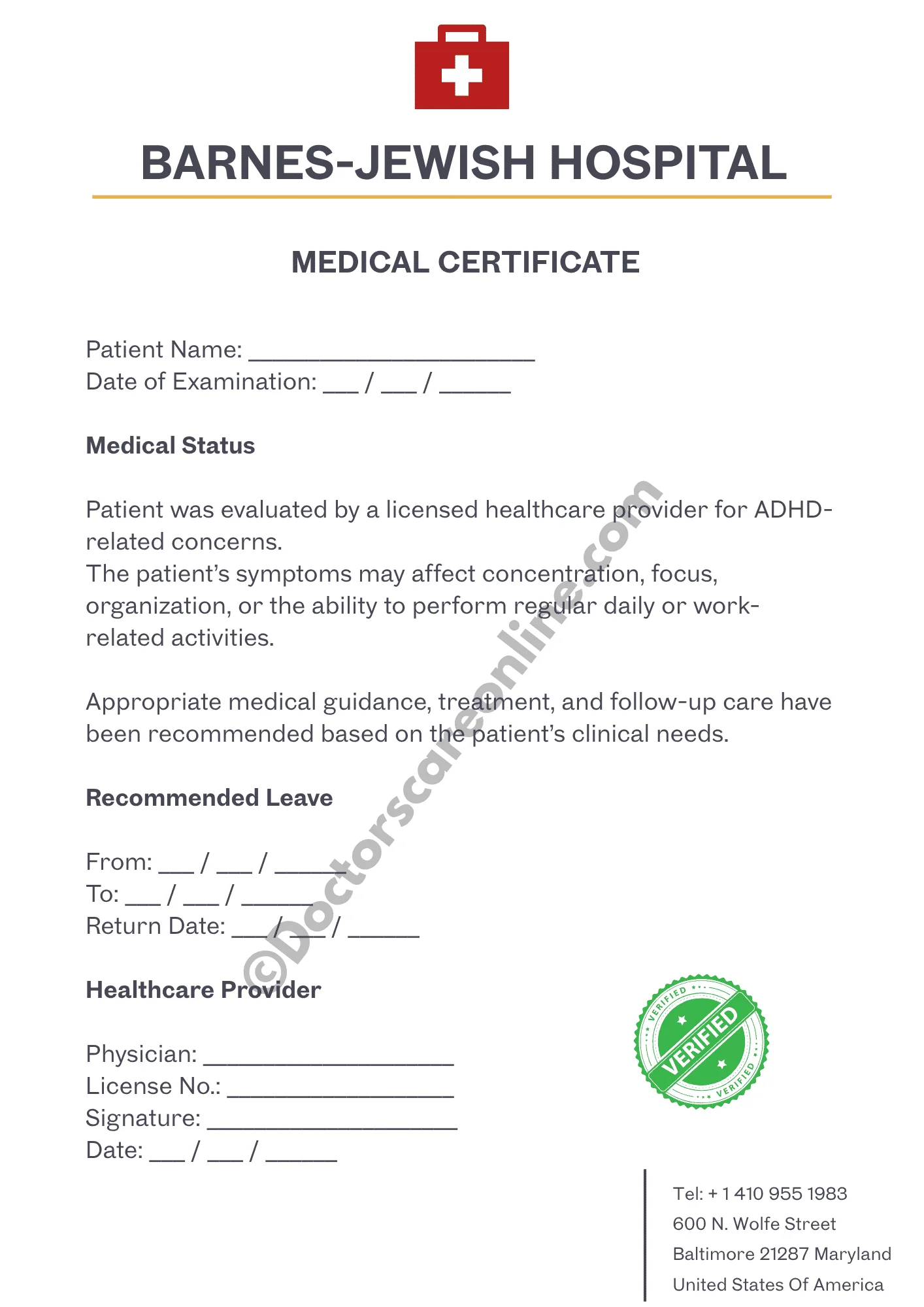
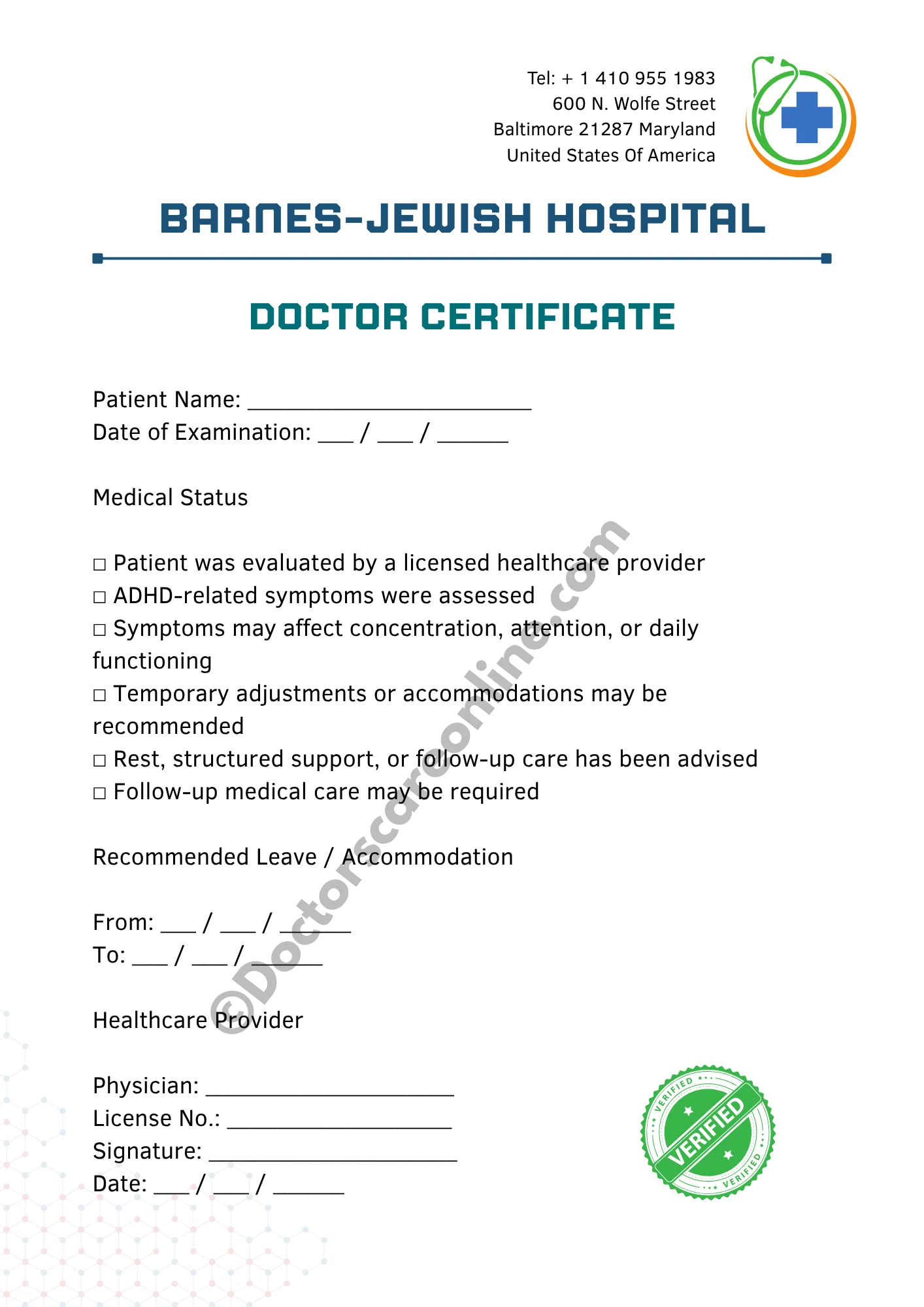
The contents of medical documentation depend on the provider’s assessment and the purpose of the note. A healthcare provider may include information such as:
- Patient’s name
- Date of medical evaluation
- Confirmation that the patient was evaluated
- Relevant functional limitations
- Recommended absence period, when medically appropriate
- Temporary workplace or academic restrictions
- Suggested accommodations, when appropriate
- Follow-up recommendations
- Anticipated return date, when applicable
- Healthcare provider’s name, credentials, signature, and professional information
A note does not necessarily need to disclose extensive private medical information. The amount of information provided may depend on the documentation requirements of the employer, school, organization, and applicable laws.
ADHD and Workplace Accommodations
Some adults experience ADHD-related difficulties that affect their ability to perform certain workplace tasks. Depending on the circumstances, a person may discuss reasonable workplace accommodations with their employer.
Potential adjustments can vary significantly according to the job and individual needs. Examples may include changes to the work environment, communication methods, scheduling, task organization, or other workplace processes.
A healthcare provider can explain medically relevant functional limitations and recommendations when appropriate. Employment accommodations are ultimately subject to applicable workplace policies and laws. NIMH notes that adults whose ADHD symptoms cause impairment at work may qualify for reasonable accommodations under the Americans with Disabilities Act (ADA).
ADHD and School or College Documentation
Students with ADHD may experience difficulties involving concentration, organization, assignment completion, testing, scheduling, or classroom participation.
When documentation is requested, a healthcare provider may provide appropriate medical information based on an evaluation. Schools and colleges may have their own procedures for disability services, academic accommodations, attendance documentation, and examination adjustments.
Students should check their institution’s requirements before requesting documentation so they understand what information may be needed.
How Online ADHD Medical Consultations Work
Online healthcare can provide a convenient way to discuss ADHD-related concerns with a licensed provider when telehealth is clinically appropriate and available in the patient’s location.
The process generally involves:
- Choose an available appointment: Select a suitable healthcare consultation based on the services offered.
- Create or access your account: Provide the required information through the secure booking process.
- Describe your concerns: Explain your symptoms, history, functional difficulties, and reason for seeking medical documentation.
- Attend the consultation: Speak with the healthcare provider during the scheduled appointment.
- Complete the clinical assessment: The provider determines whether your concerns can be appropriately evaluated through telehealth.
- Follow the provider’s recommendation: The provider may recommend further evaluation, treatment, an in-person visit, or other appropriate care.
- Receive documentation if medically appropriate: If the provider determines that a doctor’s note is justified, documentation may be provided in accordance with applicable requirements.
Telehealth can improve access to ADHD care for some adults by reducing barriers such as transportation, time, and provider availability.
What to Prepare Before an ADHD Consultation
Preparing relevant information can make your appointment more productive and help the healthcare provider understand your concerns.
Consider having the following information available:
- When your symptoms began or became noticeable
- Examples of attention, organization, hyperactivity, or impulsivity difficulties
- How symptoms affect your work, education, or daily activities
- Previous ADHD evaluations or diagnoses
- Current medications and supplements
- Relevant medical or mental health history
- Previous treatment or therapy
- Childhood school records or reports, when available
- Information from a parent, partner, teacher, or another person familiar with your behavior, when appropriate
- Specific documentation requirements from your employer or school
Providing complete and accurate information allows the provider to make a more informed clinical assessment.
ADHD Treatment and Ongoing Support
ADHD treatment is individualized. Depending on age, symptoms, medical history, and personal circumstances, treatment may involve medication, psychotherapy, behavioral interventions, parent training, school-based support, or a combination of approaches.
For adults, commonly used approaches include medication and psychotherapy such as cognitive behavioral therapy. Treatment plans can vary, and healthcare providers may adjust them according to response and side effects.
A doctor’s note is separate from ADHD treatment. Medical documentation may describe an individual’s functional limitations or recommended adjustments, while treatment focuses on managing symptoms and improving everyday functioning.
How Our Website Helps With ADHD Documentation
Our website is designed to make the process of connecting with healthcare services and understanding documentation requirements more convenient.
Users can access an organized online process for requesting an appointment and providing relevant information before speaking with a healthcare professional. The goal is to make the experience easier to navigate while keeping the focus on appropriate medical evaluation.
Our service is useful because:
- You can begin the process online from a convenient location.
- Appointment information can be provided before the consultation.
- You can explain why you need medical documentation.
- A licensed healthcare professional can evaluate your situation where services are available.
- Documentation is provided only when the healthcare professional determines it is medically appropriate.
- The process helps reduce unnecessary confusion around requesting medical documentation.
- Users can review the information they provide before completing their request.
A medical note is never guaranteed solely because a user requests or purchases a service. The healthcare provider makes the clinical decision after an appropriate evaluation.
Support for Registration, Login, Payment, and Other Questions
If you experience a problem while creating an account, logging in, completing payment, scheduling an appointment, or using the website, you can contact our chatbox support for assistance.
You can use the chatbox if you have questions about:
- Registration or account access
- Login problems
- Appointment scheduling
- Payment or checkout issues
- Website navigation
- General service questions
- Questions about the next step in the process
Our support team can help with website-related questions and guide you through the available process. Medical diagnosis, treatment decisions, and whether documentation is clinically appropriate remain the responsibility of the licensed healthcare professional.
Privacy and Responsible Medical Documentation
Medical information can be sensitive. Users should provide accurate information during the consultation and should avoid submitting unnecessary personal information through general support channels.
A doctor’s note should contain truthful information based on a legitimate healthcare evaluation. Users should never alter, fabricate, or misrepresent medical documentation.
Healthcare providers determine what medical information is appropriate to document, while employers, schools, insurers, and other organizations may have their own requirements for accepting medical documentation.
When ADHD Symptoms Need Further Medical Attention
Difficulty concentrating does not automatically mean someone has ADHD. Similar symptoms can occur with sleep disorders, anxiety, depression, learning difficulties, substance-related issues, and other medical or psychological conditions. A qualified healthcare provider can help determine whether ADHD or another condition may better explain the symptoms.
Seek prompt professional help when symptoms are significantly interfering with daily functioning, school, employment, relationships, or personal safety.
If someone is experiencing a mental health crisis, thoughts of self-harm, or an immediate safety concern, they should seek emergency assistance or contact an appropriate crisis service rather than relying on an online documentation service.
Why Choose a Licensed Healthcare Evaluation?
A healthcare evaluation provides an opportunity to discuss symptoms with a qualified professional rather than relying on an online checklist or self-diagnosis.
A licensed provider can consider the individual’s history, symptoms, functional impact, and possible alternative explanations before deciding what care or documentation is appropriate. This clinical process is particularly important because ADHD diagnosis requires more than simply identifying a few common symptoms.
For this reason, responsible medical-documentation services should prioritize clinical evaluation, accurate information, privacy, and appropriate documentation rather than promising a note before a healthcare professional has assessed the situation.
Frequently Asked Questions
Q: Can ADHD cause problems with attendance at work or school?
Yes. ADHD symptoms can interfere with organization, attention, task completion, time management, and other areas of daily functioning. Whether an absence or accommodation is medically appropriate depends on the individual’s circumstances and healthcare evaluation.
Q: Can a doctor’s note for ADHD be used for an accommodation request?
It may be used as supporting medical documentation when an employer, school, or other organization requests it. However, the specific documentation requirements and approval process depend on the organization and applicable rules.
Q: Is an ADHD diagnosis required before discussing ADHD-related symptoms with a provider?
No. A person can speak with a healthcare provider about symptoms or concerns without already having an ADHD diagnosis. The provider can determine whether further assessment or referral is appropriate.
Q: Can ADHD symptoms be mistaken for another condition?
Yes. Problems with concentration, restlessness, memory, or organization can occur with several other conditions, including sleep problems, anxiety, depression, and learning difficulties. A proper evaluation helps determine the possible cause.
Q: Can ADHD documentation be requested for a child?
Yes. Parents or guardians may seek an appropriate healthcare evaluation for a child when ADHD symptoms are affecting school, behavior, or daily functioning. A child’s evaluation may include information from parents, teachers, and other adults who observe the child in different settings.
Medical Disclaimer: This content is provided for general educational and informational purposes only and does not replace professional medical advice, diagnosis, or treatment. ADHD can only be appropriately diagnosed through an evaluation by a qualified healthcare professional. A doctor’s note or other medical documentation should be issued only when a licensed healthcare provider determines that it is medically appropriate.
Online consultations may not be suitable for every person or every situation. Availability of telehealth services, medical documentation, treatments, prescriptions, and accommodations may vary by state, provider, patient circumstances, and applicable laws and regulations.
If you have an urgent medical or mental health concern, seek appropriate emergency or immediate professional care rather than relying on an online documentation service.



Reviews
There are no reviews yet.