

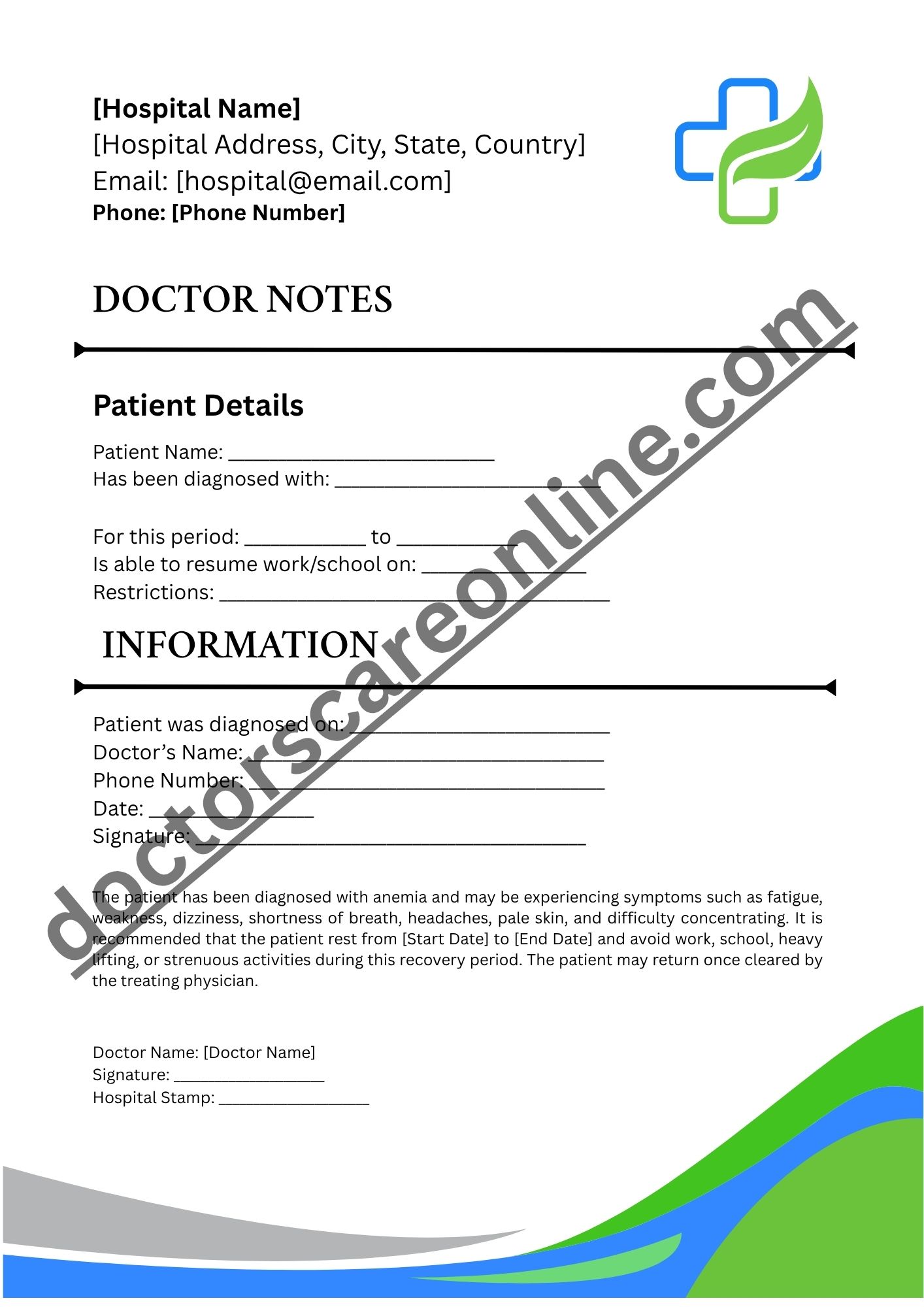
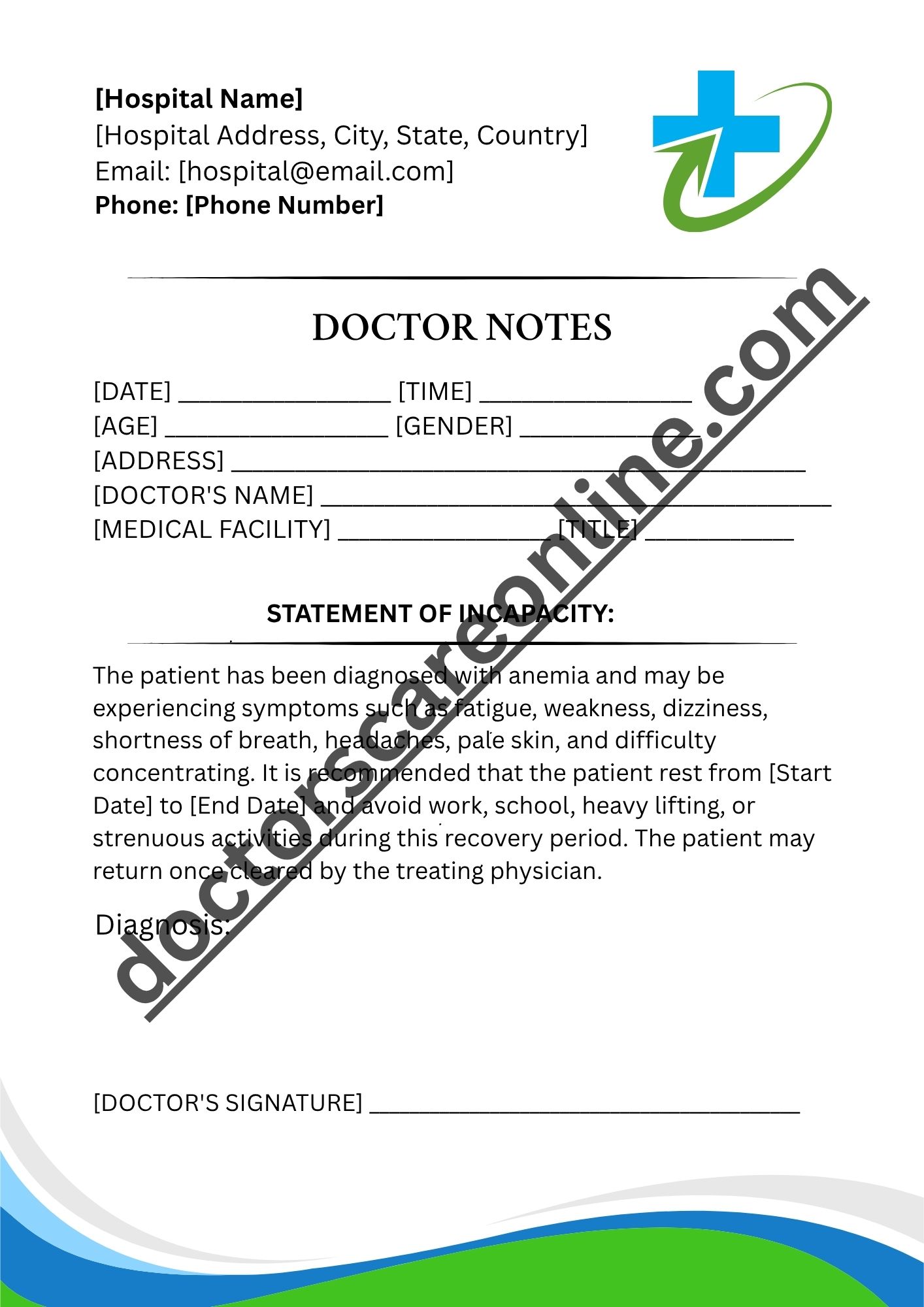
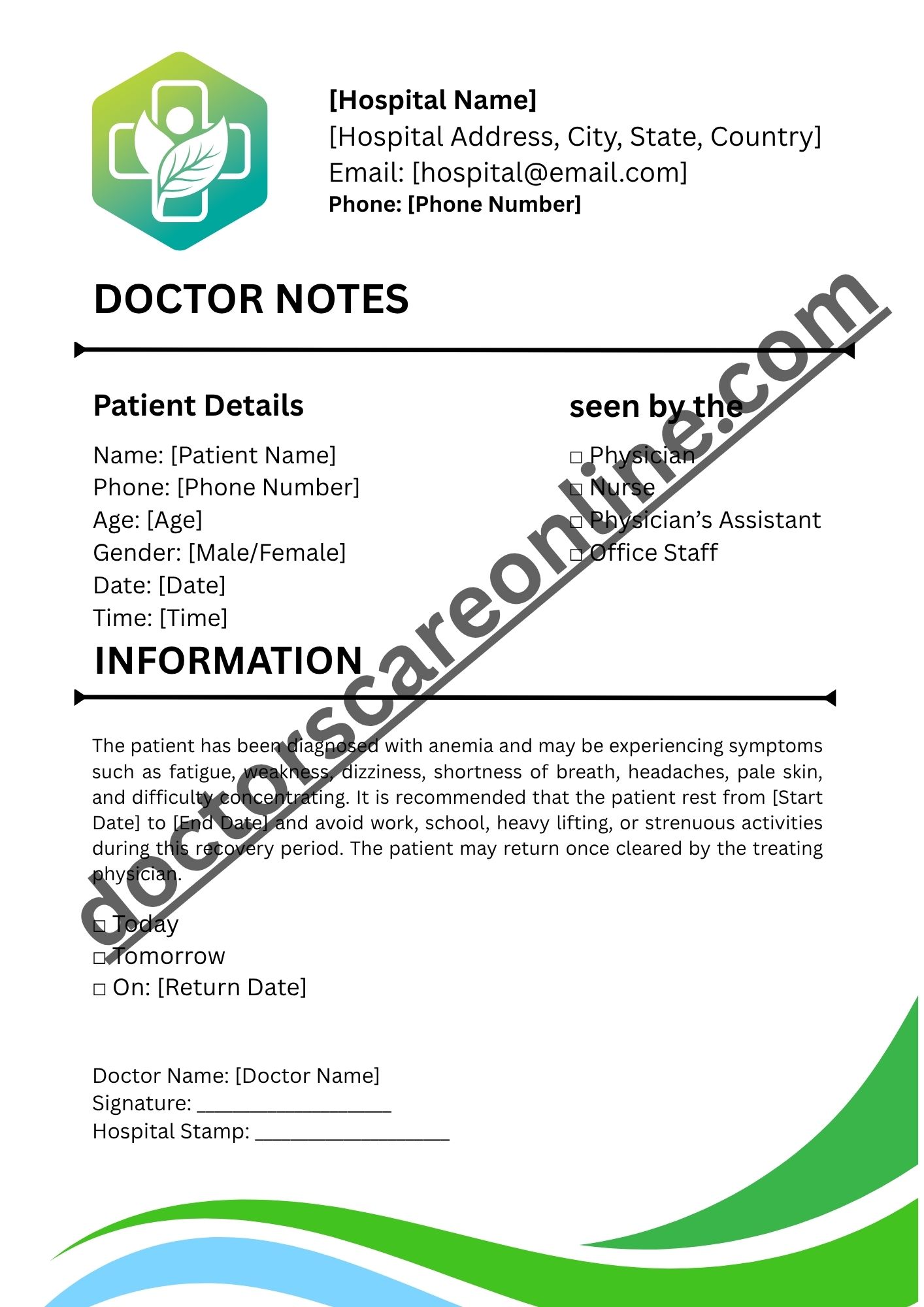
A Doctor’s Note for Anemia is an official medical document provided by a licensed healthcare professional after evaluating a patient with anemia. It confirms that the individual has been examined and may need time away from work, school, or other responsibilities because their condition is affecting their health or daily functioning.
The purpose of the note is to verify that the absence is medically justified while allowing the patient time to recover or complete recommended treatment. Depending on the situation, the note may also include temporary work restrictions, follow-up appointments, or a return-to-work or school date.
When Can You Get a Doctor’s Note for Anemia?
A doctor may provide a medical note when anemia symptoms become severe enough to affect your ability to work, attend school, or perform everyday activities safely. The decision is based on your symptoms, medical history, physical examination, laboratory results, and the type of work or studies you do.
You may receive a doctor’s note if you experience:
- Extreme tiredness that prevents you from completing routine tasks.
- Persistent weakness that limits physical activity.
- Shortness of breath, even during light activities.
- Frequent dizziness or fainting, making work or travel unsafe.
- Rapid heartbeat or chest discomfort related to anemia.
- Difficulty concentrating, affecting job performance or studies.
- Severe headaches caused by low oxygen levels.
- Recovery after hospitalization for anemia-related complications.
- Recovery after iron infusion or blood transfusion.
- Pregnancy-related anemia requiring rest or reduced workload.
Doctors also consider:
- Your hemoglobin level and other blood test results.
- Whether your symptoms are mild, moderate, or severe.
- The physical demands of your job or educational activities.
- Whether you need ongoing treatment or specialist care.
- Your overall health and any underlying medical conditions causing anemia.
Medical Conditions That May Require an Anemia Doctor’s Note
Several medical conditions can cause anemia, and some may require temporary leave from work or school. The length of leave depends on the severity of the condition and the treatment needed.
Common conditions include:
- Iron Deficiency Anemia – The most common type, often caused by low iron levels or blood loss.
- Vitamin B12 Deficiency Anemia – May cause fatigue, numbness, memory problems, and weakness.
- Folate Deficiency Anemia – Develops when the body lacks enough folate to produce healthy red blood cells.
- Aplastic Anemia – A rare condition where the bone marrow produces too few blood cells.
- Hemolytic Anemia – Happens when red blood cells are destroyed faster than they are replaced.
- Sickle Cell Disease – An inherited disorder that often causes chronic anemia and painful episodes.
- Thalassemia – A genetic blood disorder that may require lifelong monitoring and treatment.
- Anemia of Chronic Disease – Associated with conditions such as kidney disease, cancer, autoimmune disorders, or chronic infections.
Depending on the condition, a doctor may recommend:
- Temporary sick leave.
- Modified work duties.
- Reduced physical activity.
- Regular follow-up appointments.
- Additional blood tests.
- Ongoing treatment or specialist care.
Symptoms That May Prevent Someone From Working or Attending School
Anemia affects people differently depending on its severity and underlying cause. While some individuals experience only mild symptoms, others may struggle to complete everyday activities because their body is not getting enough oxygen. If these symptoms interfere with your ability to work, study, or perform tasks safely, a healthcare provider may recommend temporary leave and issue a doctor’s note.
Common symptoms that may require time off include:
- Extreme fatigue that makes it difficult to stay active throughout the day.
- Persistent weakness that reduces your ability to perform physical tasks.
- Shortness of breath, even during light activities like walking or climbing stairs.
- Frequent dizziness or lightheadedness, especially when standing up quickly.
- Fainting episodes that increase the risk of falls or workplace accidents.
- Rapid or irregular heartbeat caused by the heart working harder to supply oxygen.
- Difficulty concentrating, affecting productivity, learning, or decision-making.
- Frequent headaches that interfere with daily responsibilities.
- Pale skin, often accompanied by tiredness and weakness.
- Cold hands and feet due to reduced oxygen circulation.
- Reduced physical stamina, making physically demanding jobs more challenging.
- Feeling exhausted after minimal activity, even with adequate rest.
How Long Can a Doctor Excuse You for Anemia?
The amount of time a doctor recommends depends on the severity of your anemia, your symptoms, the treatment you receive, and the type of work or school activities you perform. Some people only need a day or two of rest, while others recovering from severe anemia or medical procedures may require a longer recovery period.
| Condition | Possible Leave Duration |
|---|---|
| Mild anemia with minimal symptoms | 1–2 days (if needed) |
| Moderate anemia causing fatigue | 2–5 days |
| Severe anemia requiring treatment | 1–2 weeks |
| Recovery after iron infusion | 1–3 days |
| Recovery after blood transfusion | Several days to 2 weeks |
| Hospitalization for anemia | As advised by the treating physician |
| Chronic anemia flare-up | Depends on the patient’s condition and treatment plan |
Remember: Recovery time varies from person to person. Always follow your healthcare provider’s advice rather than returning to work before you are medically ready.
What Information Is Included in a Doctor’s Note for Anemia?
A doctor’s note for anemia contains the essential medical information needed to confirm that you were evaluated by a licensed healthcare provider and that your absence from work or school is medically justified. The exact details may vary depending on the healthcare facility and your employer’s or school’s requirements.
A doctor’s note for anemia typically includes:
- Patient’s full name for identification purposes.
- Date of the medical examination or consultation.
- Date the note was issued by the healthcare provider.
- Confirmation that the patient was medically evaluated.
- Recommendation for rest or temporary leave, if necessary.
- Approved absence period or expected recovery time.
- Return-to-work or return-to-school date, if appropriate.
- Temporary work or activity restrictions, when required.
- Follow-up appointment details, if ongoing treatment is needed.
- Doctor’s name, credentials, and signature.
- Clinic or hospital name and contact information.
How Doctors Diagnose Anemia Before Issuing a Note
Before providing a doctor’s note, a healthcare provider will usually determine whether anemia is affecting your health enough to justify time away from work or school. This involves reviewing your symptoms, medical history, and laboratory test results.
The evaluation usually begins with:
- Asking about your current symptoms.
- Reviewing your medical history.
- Discussing your diet and lifestyle.
- Asking about recent illnesses or blood loss.
- Reviewing any medications you are taking.
- Performing a physical examination.
Common symptoms your doctor may ask about include:
- Persistent fatigue.
- Weakness.
- Dizziness.
- Shortness of breath.
- Chest discomfort.
- Headaches.
- Fainting episodes.
- Difficulty concentrating.
- Unusual cravings (such as ice or non-food items in iron deficiency).
Medical Treatments That May Require Time Off
Treatment for anemia depends on its underlying cause and severity. While some people recover with dietary changes and supplements, others may need more advanced medical care that requires temporary leave from work or school.
Common treatments include:
- Iron supplements to treat iron deficiency anemia.
- Vitamin B12 injections or tablets for B12 deficiency.
- Folic acid supplements for folate deficiency.
- Prescription medications to treat underlying medical conditions.
- Iron infusion therapy when oral supplements are not effective.
- Blood transfusion for severe anemia or significant blood loss.
- Treatment of chronic diseases contributing to anemia.
- Surgery or other procedures if bleeding is the underlying cause.
You may need time off during treatment if you are:
- Recovering from an iron infusion.
- Receiving a blood transfusion.
- Experiencing medication side effects.
- Feeling extremely weak or fatigued.
- Attending multiple follow-up appointments.
- Waiting for your hemoglobin levels to improve.
Can You Return to Work While Being Treated for Anemia?
Yes. Many people with mild or improving anemia can return to work or school while continuing treatment, provided their symptoms are under control and their healthcare provider believes it is safe.
The decision depends on how severe your anemia is, the type of work you do, and how well you are responding to treatment.
You may be able to return if:
- Your symptoms have improved.
- Fatigue is manageable.
- You are no longer experiencing dizziness or fainting.
- Your doctor confirms it is safe.
- Your job does not involve heavy physical activity.
- Your treatment is progressing as expected.
Can Pregnant Women Receive a Doctor’s Note for Anemia?
Yes. Pregnancy increases the body’s demand for iron and other nutrients, making anemia more common during pregnancy. If anemia causes significant symptoms or affects your ability to work safely, your healthcare provider may recommend temporary leave or modified work duties.
Pregnancy-related anemia may require a doctor’s note when:
- Fatigue becomes severe enough to interfere with daily activities.
- You experience dizziness or fainting.
- Blood tests show significantly low hemoglobin levels.
- Iron infusion treatment has been scheduled.
- Frequent prenatal monitoring is required.
- Your pregnancy is considered high-risk.
Chronic Anemia and Workplace Accommodations
Some people live with chronic anemia caused by long-term medical conditions such as kidney disease, sickle cell disease, thalassemia, or autoimmune disorders. These individuals may continue working or studying but occasionally need workplace adjustments to manage their symptoms.
Common workplace accommodations include:
- Flexible working hours.
- Hybrid or remote work options.
- Reduced physical workload.
- Scheduled rest breaks.
- Temporary light-duty assignments.
- Permission to attend medical appointments.
- Adjustable work schedules during treatment.
- Access to seating for jobs that normally require prolonged standing
How to Book a Doctor’s Appointment Online for Anemia
Booking an online appointment is quick and convenient if you’re experiencing symptoms of anemia or need a doctor’s note.
Follow these simple steps:
- Choose a trusted healthcare platform or your preferred hospital’s website/app.
- Search for a primary care doctor, family physician, or hematologist (blood specialist).
- Select an available date and time that fits your schedule.
- Enter your personal details and briefly describe your symptoms, such as fatigue, dizziness, or weakness.
- Confirm the appointment and complete any required payment, if applicable.
- Join the virtual consultation at the scheduled time using the provided link or app.
- Discuss your symptoms and medical history with the doctor. If medically appropriate, they may recommend tests, prescribe treatment, or provide a doctor’s note.
Tip: Keep any recent blood test reports or medical records ready before your online consultation, as they can help the doctor assess your condition more accurately.
Recovery Tips While You Are on Medical Leave for Anemia
Recovering from anemia takes time, and following your treatment plan can help improve your energy levels and overall health. Along with prescribed medication, healthy daily habits play an important role in supporting recovery.
Eat Iron-Rich Foods
Include foods that naturally support red blood cell production, such as:
- Lean red meat.
- Chicken and fish.
- Spinach and leafy green vegetables.
- Beans and lentils.
- Fortified cereals.
- Pumpkin seeds.
- Tofu.
- Dried fruits like raisins and apricots.
Increase Vitamin C Intake
Vitamin C helps your body absorb iron more effectively.
Good sources include:
- Oranges.
- Lemons.
- Strawberries.
- Kiwi.
- Bell peppers.
- Tomatoes.
- Broccoli.
Take Your Medication as Prescribed
- Do not skip iron supplements or vitamins.
- Follow the dosage recommended by your healthcare provider.
- Complete the full course of treatment.
Get Enough Rest
Allow your body time to recover by:
- Sleeping 7–9 hours each night.
- Taking short breaks during the day if needed.
- Avoiding overexertion.
When Should You Seek Immediate Medical Care?
Although many cases of anemia can be treated successfully, some symptoms may indicate a medical emergency and should never be ignored.
Seek immediate medical attention if you experience:
- Severe chest pain.
- Difficulty breathing while resting.
- Loss of consciousness or repeated fainting.
- Extremely rapid or irregular heartbeat.
- Heavy or uncontrolled bleeding.
- Severe dizziness that prevents standing.
- Confusion or difficulty staying awake.
- Sudden worsening of weakness.
- Symptoms that do not improve despite treatment.
Common Mistakes to Avoid When Using a Doctor’s Note for Anemia
Using a doctor’s note responsibly helps ensure that your medical leave is handled properly and avoids unnecessary problems with your employer or educational institution.
Avoid these common mistakes:
- Submitting a fake or altered doctor’s note.
- Changing the dates or medical information on the document.
- Returning to work before your doctor recommends it.
- Ignoring prescribed medications or treatment plans.
- Missing follow-up appointments or blood tests.
- Failing to inform your employer or school about approved work restrictions.
- Sharing unnecessary medical information if it is not required.
- Waiting too long to seek medical care when symptoms become severe.
- Ignoring worsening fatigue, dizziness, or fainting episodes.
- Assuming every employer accepts telehealth documentation without checking their policy first.
Final Tip: A doctor’s note should always reflect your actual medical condition. Honest communication with your healthcare provider and employer helps ensure you receive the appropriate support while recovering from anemia.
FAQs
1. Can low hemoglobin be a reason for taking medical leave?
Yes. If low hemoglobin levels cause symptoms such as extreme tiredness, dizziness, breathlessness, or poor concentration, your healthcare provider may recommend taking temporary leave until your condition improves.
2. Does every person with anemia need a doctor’s note?
No. Many people with mild anemia continue their normal routine without needing medical leave. A doctor’s note is generally required only when symptoms affect your ability to work, study, or perform daily activities safely.
3. Can anemia make it unsafe to perform physically demanding jobs?
Yes. Jobs that involve heavy lifting, climbing, operating machinery, driving, or standing for long hours may become unsafe if anemia causes weakness, dizziness, or reduced stamina. Your doctor may recommend temporary work restrictions.
4. Can I return to work before my hemoglobin becomes normal?
In many cases, yes. You may be able to return once your symptoms improve and your healthcare provider believes it is safe. Full recovery of hemoglobin levels can take weeks, but many people resume work earlier with appropriate precautions.
5. How long does it usually take to recover from anemia?
Recovery depends on the underlying cause and treatment. Some people notice improvement within a few weeks after starting iron or vitamin supplements, while others with chronic or severe anemia may require ongoing treatment and regular monitoring.
Related Post –



Reviews
There are no reviews yet.