
A doctor’s note for burnout leave is medical documentation that may be provided after a healthcare professional evaluates your symptoms and determines that time away from work, temporary restrictions, or another form of workplace support is medically appropriate.
Our online consultation service provides a convenient way to connect with a healthcare professional remotely where telehealth is available. During the consultation, you can discuss your symptoms, work-related concerns, and how they are affecting your daily functioning. Telehealth can provide access to healthcare without requiring a trip to a physical office, although an in-person evaluation may sometimes be necessary.
Work-related stress can affect energy, concentration, sleep, motivation, and overall well-being. When these difficulties become significant enough to interfere with your ability to work safely or function normally, speaking with a licensed healthcare professional can help determine what support may be appropriate.
What Is Burnout?
Burnout is commonly associated with prolonged or poorly managed workplace stress. It can involve emotional or physical exhaustion, reduced motivation, difficulty concentrating, and feeling detached or negative about work.
Importantly, burnout itself is classified by the World Health Organization as an occupational phenomenon rather than a medical condition or disease. However, symptoms associated with severe work-related stress can overlap with mental or physical health conditions that may require professional evaluation.
For this reason, a healthcare professional should assess your individual situation rather than assuming that every case of workplace exhaustion is burnout.
Related Doctor Note :——
You can also visit:
- Doctors Note for Stress
- Doctors Note for Stress and Anxiety
- Doctors Note for Stress Leave
- Doctors Note for Mental Health
- Unlimited Doctor’s Notes for 1 Year
Reasons Someone May Request Doctor’s Note for Burnout Leave
A person may seek professional documentation when work-related symptoms are making it difficult to maintain normal responsibilities.
Examples may include:
- Needing temporary time away from a demanding work environment
- Difficulty maintaining concentration during safety-sensitive duties
- Severe exhaustion affecting workplace performance
- Sleep disruption affecting daytime functioning
- Emotional distress interfering with normal responsibilities
- A healthcare professional recommending a period of recovery
- A need for temporary workplace adjustments
- Returning to work gradually after a period of significant stress
- A workplace requiring medical documentation for an absence
Whether leave is appropriate is determined by the healthcare professional based on the individual’s circumstances and applicable requirements.
When Might Burnout Affect Your Ability to Work?
Work-related exhaustion can affect people differently. Some individuals may continue working with adjustments, while others may temporarily struggle to perform their normal responsibilities.
A professional evaluation may be particularly relevant when you experience:
- Persistent exhaustion that interferes with normal activities
- Difficulty concentrating on routine tasks
- Significant problems with sleep
- Reduced motivation or inability to maintain normal productivity
- Feeling overwhelmed by ordinary work responsibilities
- Irritability or emotional distress affecting workplace interactions
- Difficulty making decisions or completing essential duties
- Physical symptoms associated with prolonged stress
- A noticeable decline in your ability to function at work or home
- A need to discuss temporary time away from work with a healthcare professional
The purpose of an evaluation is to understand your symptoms and determine whether medical care, workplace modifications, leave, or another form of support may be appropriate.
Burnout Symptoms That May Need Professional Evaluation
Symptoms can vary considerably from one person to another. Common experiences associated with work-related stress and burnout may include:
Emotional and Mental Symptoms
- Feeling emotionally exhausted
- Increased irritability
- Feeling overwhelmed
- Reduced motivation
- Detachment from work
- Difficulty concentrating
- Trouble making decisions
- Feeling helpless or unusually negative
Physical and Behavioral Symptoms
- Persistent tiredness
- Sleep difficulties
- Changes in appetite
- Headaches or other stress-related physical complaints
- Reduced interest in normal activities
- Difficulty maintaining regular routines
- Increased reliance on unhealthy coping behaviors
These symptoms are not specific to burnout. Anxiety, depression, sleep disorders, medication effects, and other health concerns can sometimes produce similar experiences. A qualified healthcare professional can determine whether further assessment or treatment is appropriate. CDC guidance also notes that work-related stress can affect well-being and may involve symptoms such as anxiety, low motivation, tiredness, sleep problems, and difficulty concentrating.
How an Online Consultation for Burnout Leave Works
An online medical consultation can provide a convenient starting point for discussing work-related stress and related symptoms. US telehealth guidance recognizes virtual care as an option for many behavioral-health services, although not every situation is appropriate for remote care.
The process generally involves:
1. Create or access your account: Register or log in using the information requested by the platform.
2. Choose an available consultation: Select an appropriate appointment option and provide the requested information.
3. Describe your concerns accurately: Explain your symptoms, when they began, how they affect your work, and any relevant medical or personal information.
4. Meet with the healthcare professional: Attend the scheduled virtual consultation from a private location with a suitable internet connection and device.
5. Discuss appropriate next steps: The provider may recommend self-care, further evaluation, treatment, workplace adjustments, an in-person appointment, or other appropriate care.
6. Receive documentation if medically appropriate: If the healthcare professional determines that medical documentation is justified, they may provide a doctor’s note or other documentation in accordance with applicable requirements.
Telehealth services are subject to state-specific rules, including professional licensing requirements and other regulations.
What Information Should You Share During the Consultation?
Providing complete and accurate information can help the healthcare professional understand your situation.
Consider discussing:
- Your main symptoms
- When the symptoms started
- Whether they are getting better or worse
- Your current workload and responsibilities
- Sleep patterns and energy levels
- Concentration or memory difficulties
- Emotional changes
- Physical symptoms
- Existing medical conditions
- Current medications or treatments
- Previous mental or behavioral health care
- How your symptoms affect work and daily activities
- Any workplace documentation requirements you have been given
You should answer questions honestly rather than trying to obtain a predetermined outcome. The healthcare professional decides what medical documentation, if any, is appropriate.
What Can a Burnout Leave Doctor’s Note Include?
The contents of medical documentation vary according to the provider, situation, and applicable requirements.
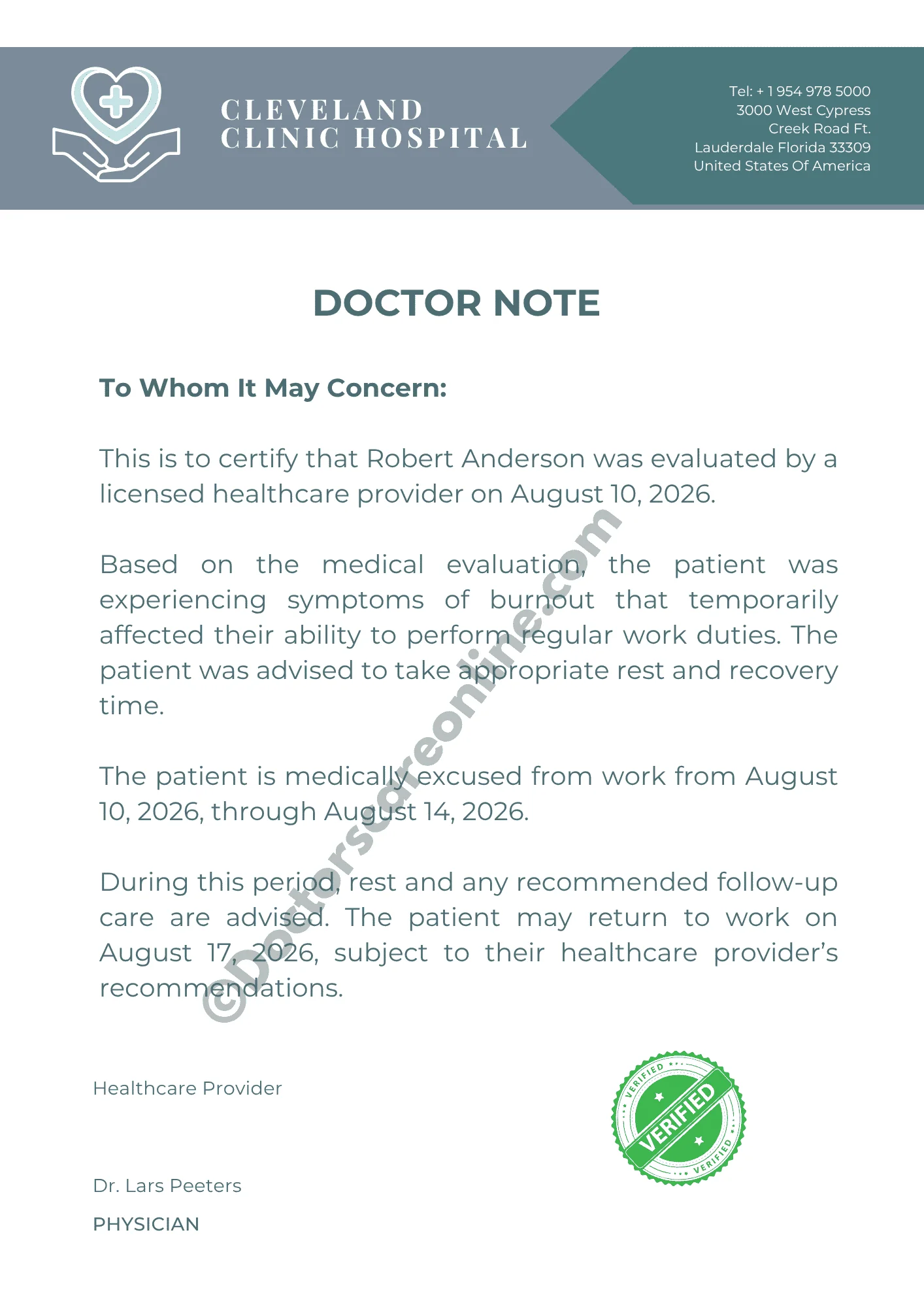
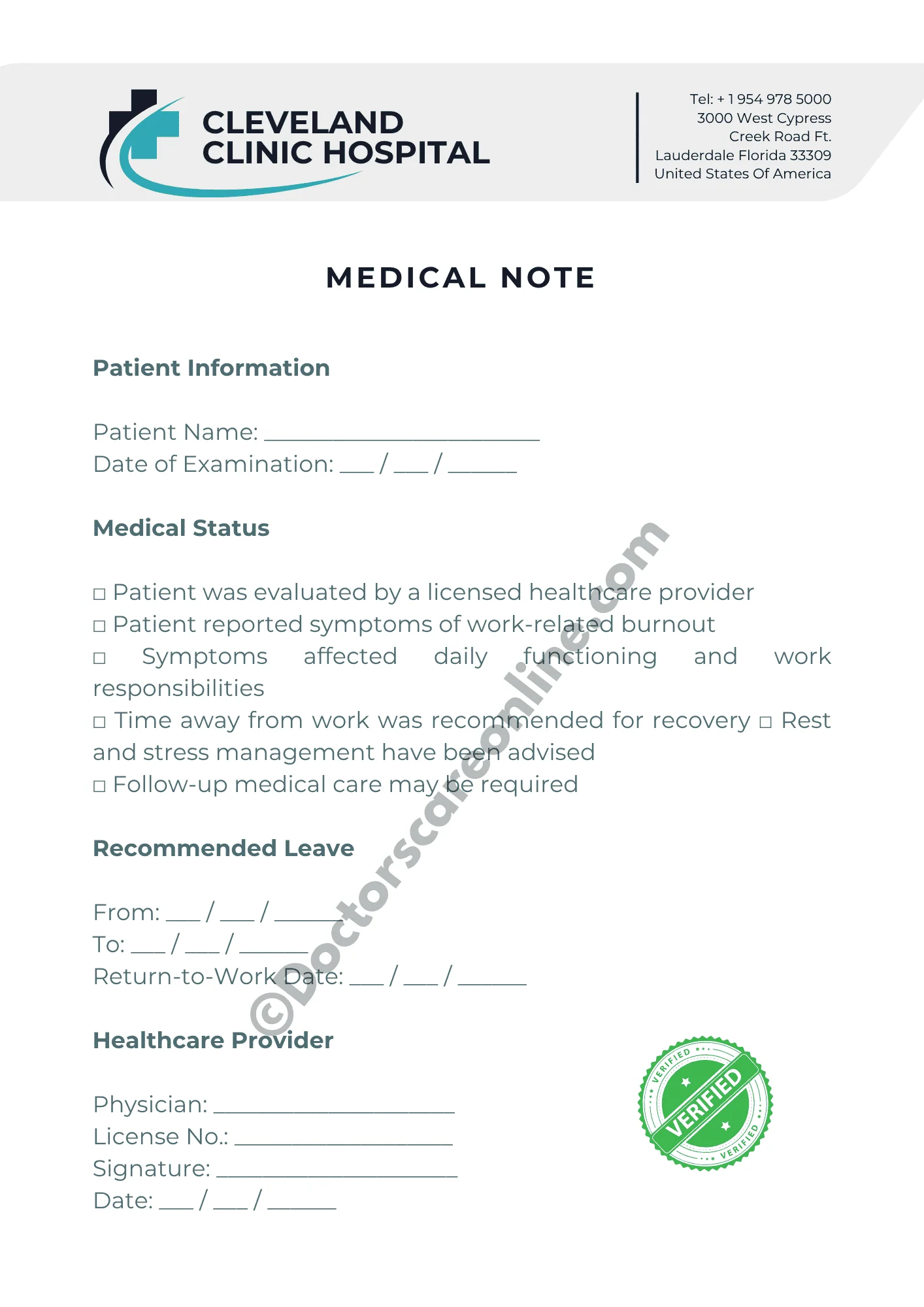
A note may include information such as:
- Patient identification
- Date of medical evaluation
- Confirmation that an evaluation occurred
- Recommended period away from work, when medically appropriate
- Temporary functional restrictions
- Recommended return-to-work date, when applicable
- Follow-up recommendations
- Healthcare professional’s identifying information and signature
A provider does not necessarily need to disclose every detail of a patient’s health information to an employer. The appropriate contents depend on the circumstances and applicable privacy and workplace requirements.
Can Burnout Leave Include Workplace Restrictions?
In some situations, a healthcare professional may recommend temporary workplace adjustments rather than complete absence from work.
Depending on the person’s circumstances, recommendations could involve:
- Reduced workload
- Modified scheduling
- Additional breaks
- Temporary changes to demanding duties
- Gradual return to regular responsibilities
- Temporary remote work where appropriate
- Follow-up evaluation before resuming unrestricted duties
These are not automatic entitlements. Any recommendation should be based on an individual healthcare assessment and the requirements applicable to the workplace.
How Long Can Burnout Leave Last?
There is no universal number of days that applies to everyone experiencing burnout or work-related stress.
The appropriate period, if leave is medically recommended, may depend on:
- Severity and duration of symptoms
- Effect on daily functioning
- Underlying health concerns
- Response to treatment or recovery measures
- Job responsibilities
- Need for additional evaluation
- Healthcare professional’s clinical judgment
- Applicable workplace and legal requirements
A healthcare professional may recommend follow-up care if symptoms continue or circumstances change.
Preparing for Your Online Medical Appointment
A few simple preparations can make a virtual healthcare appointment easier.
Before the consultation:
- Find a quiet and private location.
- Check your internet connection.
- Make sure your phone, tablet, or computer works properly.
- Keep a list of current medications available.
- Write down important symptoms and questions.
- Have relevant medical information available.
- Check whether your employer has specific documentation requirements.
- Join the appointment on time.
HHS telehealth guidance similarly recommends checking appointment details, testing your technology, choosing a private location, and preparing questions or relevant health information before a virtual visit.
How Our Online Consultation Service Helps Users
Our service is designed to make the process of seeking an appropriate healthcare evaluation more convenient.
Instead of navigating the process alone, users can:
- Access an online consultation option from a convenient location
- Explain their concerns directly to a healthcare professional
- Receive guidance based on their individual circumstances
- Avoid unnecessary travel when a virtual visit is clinically appropriate
- Ask questions about the consultation process
- Receive medical documentation only when the provider determines it is appropriate
The goal is to connect users with an appropriate healthcare evaluation—not to guarantee a doctor’s note. This distinction helps keep the process medically responsible and focused on the patient’s actual needs.
Telehealth can improve convenience and access to care, but healthcare professionals may determine that an in-person assessment is necessary.
Why Users Can Rely on Our Platform for Support
A trustworthy online healthcare experience should make it clear what the service provides and what users can expect.
- Our platform helps users by providing a structured online process for accessing a consultation, communicating their concerns, and understanding the next steps. Medical documentation is based on the healthcare professional’s assessment rather than a guaranteed outcome.
- Users can also get assistance with non-medical platform questions. If you have an issue with registration, logging in, payment, booking, accessing your account, or another website-related question, you can contact our chatbox support for assistance.
This means users do not have to navigate account or payment problems on their own while trying to arrange a consultation.
Privacy and Responsible Medical Documentation
Medical concerns related to burnout, stress, anxiety, or emotional well-being can be personal. During a consultation, users should provide accurate information while using a private environment whenever possible.
Healthcare providers are responsible for handling patient information according to applicable professional, privacy, and legal requirements. Telehealth also operates within state-specific rules, including requirements concerning provider licensure and the location of the patient.
A medical note should never be altered, fabricated, or presented as documentation that was not legitimately issued by a healthcare professional.
When Online Consultation May Not Be Enough
Telehealth is not suitable for every medical or behavioral-health situation. A healthcare professional may recommend an in-person evaluation when symptoms require physical examination, additional testing, or a level of care that cannot be safely provided remotely.
If you are experiencing an immediate mental health crisis, thoughts of suicide, or feel that you may harm yourself or someone else, seek emergency assistance immediately rather than relying on an online doctor’s-note service. In the United States, you can call or text 988 for the Suicide & Crisis Lifeline. CDC guidance identifies 988 as a confidential, free, 24/7/365 crisis resource.
For a medical emergency, call 911 or go to the nearest emergency department.
Returning to Work After Burnout Leave
Returning to work should be based on your healthcare professional’s recommendations and your ability to safely resume your responsibilities.
Depending on your circumstances, returning may involve:
- Following the recommended recovery plan
- Continuing appropriate treatment or counseling
- Gradually resuming responsibilities when advised
- Following temporary workplace restrictions
- Communicating necessary documentation to your employer
- Attending recommended follow-up appointments
- Reporting significant changes in symptoms to your healthcare professional
If your symptoms remain severe or interfere with normal functioning, discuss your situation with a qualified healthcare professional before resuming unrestricted duties.
Frequently Asked Questions
Q: Is burnout a medical diagnosis?
Burnout is classified as an occupational phenomenon rather than a medical disease in ICD-11. However, symptoms associated with burnout can overlap with other health conditions, so a healthcare professional may evaluate whether additional assessment or treatment is needed.
Q: Can I ask a doctor about stress-related symptoms during an online consultation?
Yes. An online consultation can be an appropriate way to discuss many behavioral-health concerns, depending on the situation and the provider’s assessment. The healthcare professional can determine whether telehealth is suitable or whether you should receive in-person care.
Q: Can my employer require specific information on a medical note?
Workplace documentation requirements can vary by employer, policy, and applicable law. Before your appointment, check what documentation your employer actually requires so you can discuss those requirements with your healthcare professional.
Q: What happens if the healthcare provider does not recommend leave?
The provider may recommend another form of care or support based on your symptoms, such as treatment, follow-up evaluation, workplace modifications, or an in-person assessment. A doctor’s note should reflect the provider’s professional judgment rather than a predetermined request.
Q: What if I have trouble registering, logging in, or paying for my consultation?
If you experience a registration, login, payment, booking, or other platform-related issue, contact our chatbox support team. They can help you with website and account-related questions and guide you through the appropriate next steps.
Medical Disclaimer: This content is provided for general educational and informational purposes only and does not replace professional medical advice, diagnosis, or treatment. Burnout is an occupational phenomenon and should not automatically be treated as a medical diagnosis. Symptoms such as exhaustion, sleep problems, anxiety, low mood, or difficulty concentrating can have different causes and should be discussed with an appropriate healthcare professional when they are persistent or interfere with daily life.
A doctor’s note is not guaranteed. Medical documentation should only be issued by an appropriately licensed healthcare professional after an evaluation and when medically appropriate. Telehealth availability, provider licensing, documentation requirements, workplace policies, and applicable laws can vary by state and individual circumstances.


Reviews
There are no reviews yet.