
A doctor’s note for stress and anxiety is medical documentation that may be provided by a qualified healthcare professional after evaluating a person’s symptoms and overall health. Depending on the individual’s condition, the provider may recommend time away from work or school, modified duties, reduced hours, additional rest, or other temporary accommodations.
Stress and anxiety can affect more than emotional well-being. Persistent or severe symptoms may interfere with concentration, sleep, energy levels, decision-making, physical comfort, work performance, academic responsibilities, and everyday activities. When these symptoms significantly affect daily functioning, consulting a healthcare provider can help determine whether medical treatment, leave, or workplace or academic accommodations are appropriate.
When Do You Need a Doctor’s Note for Stress and Anxiety?
Not every stressful situation requires medical documentation. Occasional stress caused by a busy schedule, deadline, examination, or temporary personal problem may improve with rest and healthy coping strategies.
A medical evaluation may be appropriate when stress or anxiety becomes persistent, severe, or disruptive enough to affect normal functioning. You may need medical documentation when:
- Work Leave: If anxiety, severe stress, panic symptoms, fatigue, or difficulty concentrating prevents you from performing your job safely or effectively, your employer may request medical documentation according to its leave policy.
- Mental Health Leave: Some people may require temporary time away from work to participate in therapy, counseling, medical treatment, medication management, or recovery.
- School or College Absence: Students experiencing significant anxiety or stress may need documentation to support an excused absence when required by their school’s attendance policy.
- Examination or Academic Accommodations: A healthcare provider may recommend appropriate temporary academic accommodations when symptoms interfere with examinations, coursework, attendance, or concentration.
- Workplace Accommodations: Medical documentation may support temporary adjustments such as modified duties, flexible scheduling, additional breaks, or other reasonable accommodations where applicable.
- Return-to-Work Clearance: Some employers may request medical clearance following an extended health-related absence. Requirements vary by employer, occupation, and applicable law.
Who Can Issue a Doctor’s Note for Stress and Anxiety?
Depending on local regulations and the circumstances, stress and anxiety may be evaluated by qualified healthcare professionals such as:
- Primary care physicians
- Family physicians
- General practitioners
- Psychiatrists
- Licensed telehealth physicians
- Nurse practitioners where permitted
- Physician assistants where permitted
- Other appropriately licensed healthcare professionals
The authority to issue medical documentation differs by jurisdiction and profession. Employers and schools may also have specific requirements regarding which healthcare professionals they accept.
If you need documentation for work, school, disability accommodations, or another formal purpose, check the relevant organization’s requirements before your appointment.
Common Symptoms of Stress and Anxiety
Stress and anxiety can produce both emotional and physical symptoms. Symptoms differ between individuals and can range from mild to severe.
Common symptoms may include:
- Persistent or excessive worry
- Feeling overwhelmed
- Nervousness or fear
- Panic attacks
- Restlessness
- Irritability
- Difficulty relaxing
- Trouble concentrating
- Difficulty making decisions
- Mental exhaustion
- Persistent fatigue
- Sleep problems or insomnia
- Headaches
- Muscle tension
- Body aches
- Racing heartbeat
- Sweating
- Chest discomfort
- Nausea
- Stomach discomfort
- Changes in appetite
- Reduced motivation
- Difficulty completing routine tasks
- Avoidance of work, school, or social situations
- Declining academic or workplace performance
Experiencing one or more symptoms does not automatically mean that medical leave is necessary. A healthcare provider evaluates the overall situation and determines whether treatment, leave, or accommodations are appropriate.
When Does Stress or Anxiety Affect Your Ability to Work?
Stress or anxiety may become a workplace concern when symptoms significantly interfere with essential job responsibilities.
Examples include:
- Difficulty concentrating on important tasks
- Repeated mistakes caused by impaired focus
- Inability to meet normal deadlines
- Frequent panic symptoms during work
- Severe sleep problems affecting daytime functioning
- Difficulty communicating with coworkers or customers
- Avoidance of important work responsibilities
- Physical symptoms that make normal duties difficult
- Feeling unable to work safely or effectively
If symptoms are persistent or worsening, discussing them with a qualified healthcare provider can help determine the appropriate next step.
How to Get an Online Doctor’s Note for Stress and Anxiety
Obtaining medical documentation involves an evaluation by an appropriately qualified healthcare professional.
Getting an online doctor’s note for stress and anxiety typically involves a telehealth consultation with a qualified healthcare provider. The provider reviews your symptoms and determines whether medical leave, work restrictions, school accommodations, or other documentation is appropriate.
Step 1: Choose an Online Doctor Consultation
Select a reputable telehealth service that connects you with a qualified healthcare professional. Depending on your location, you may be able to choose a general physician, family doctor, psychiatrist, or another eligible provider.
Step 2: Provide Your Basic Information
Complete the required registration or consultation form with accurate information. You may be asked about your age, location, medical history, current medications, and the reason for your consultation.
Step 3: Describe Your Stress and Anxiety Symptoms
Explain your symptoms honestly and clearly. Tell the healthcare provider when your symptoms started, how frequently they occur, and whether they affect your sleep, concentration, mood, physical health, work, school, or daily responsibilities.
Step 4: Attend the Online Medical Consultation
Meet with the healthcare provider through the available telehealth method, such as video, audio, or another approved communication method. The provider may ask questions about your symptoms, medical history, recent stressors, and overall functioning.
Step 5: Discuss Your Need for Medical Leave or Accommodations
Explain whether you need documentation for work, school, college, an examination, or temporary workplace accommodations. Your provider can discuss whether time away from work or school or modified responsibilities may be medically appropriate.
Step 6: Complete the Medical Evaluation
The healthcare provider will assess your condition and determine the appropriate next steps. They may recommend treatment, counseling, therapy, lifestyle changes, medication when appropriate, follow-up care, medical leave, or temporary restrictions.
Step 7: Receive the Doctor’s Note if Medically Appropriate
If the provider determines that documentation is medically justified, they may issue an online doctor’s note or other appropriate medical documentation. Depending on the service, the document may be delivered electronically or made available through your patient account.
Step 8: Submit the Note to Your Employer or School
Once you receive the documentation, submit it according to your employer’s, school’s, or college’s requirements. Keep a copy for your records in case additional documentation or follow-up is requested.
What Information Is Included in a Doctor’s Note?
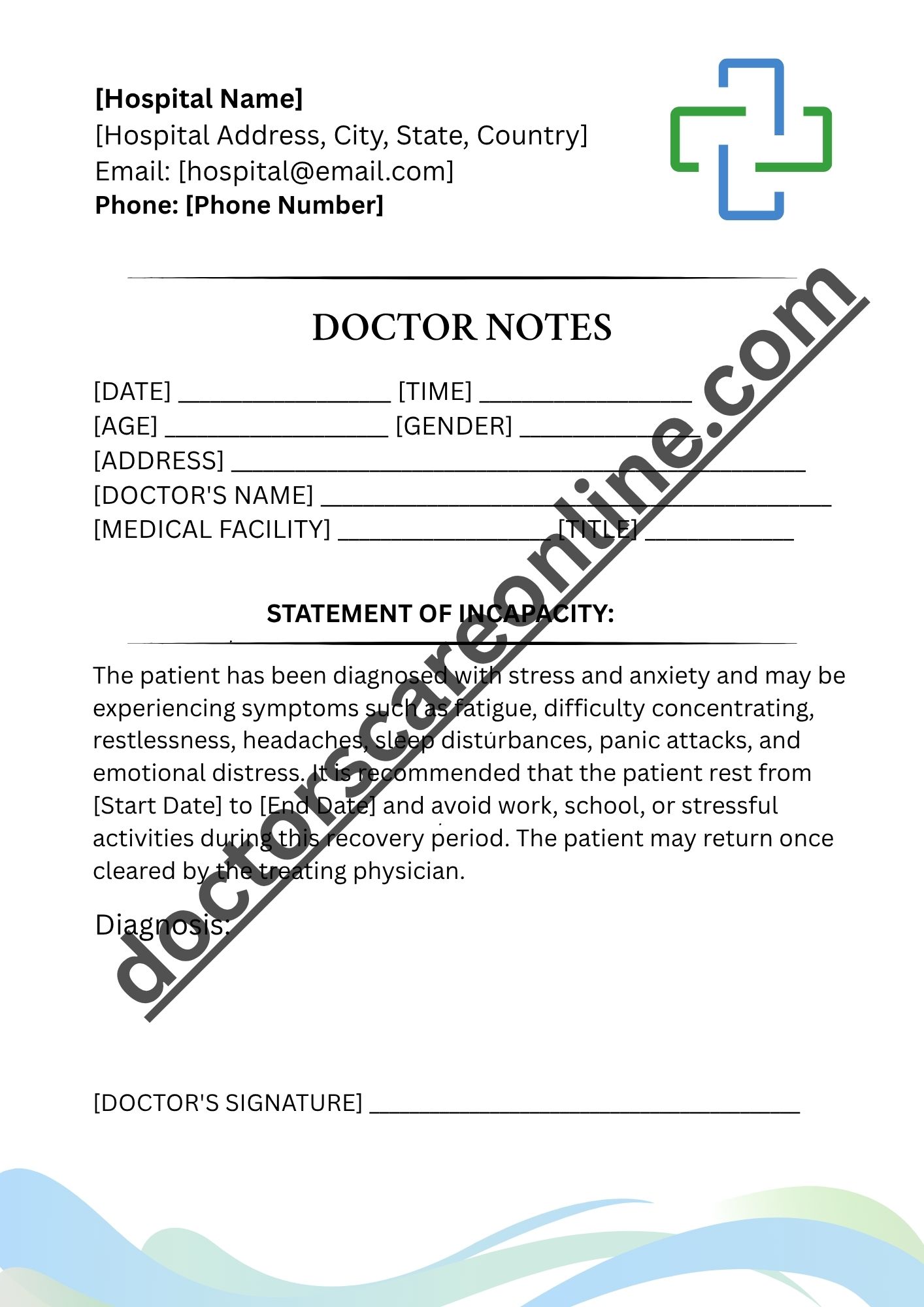
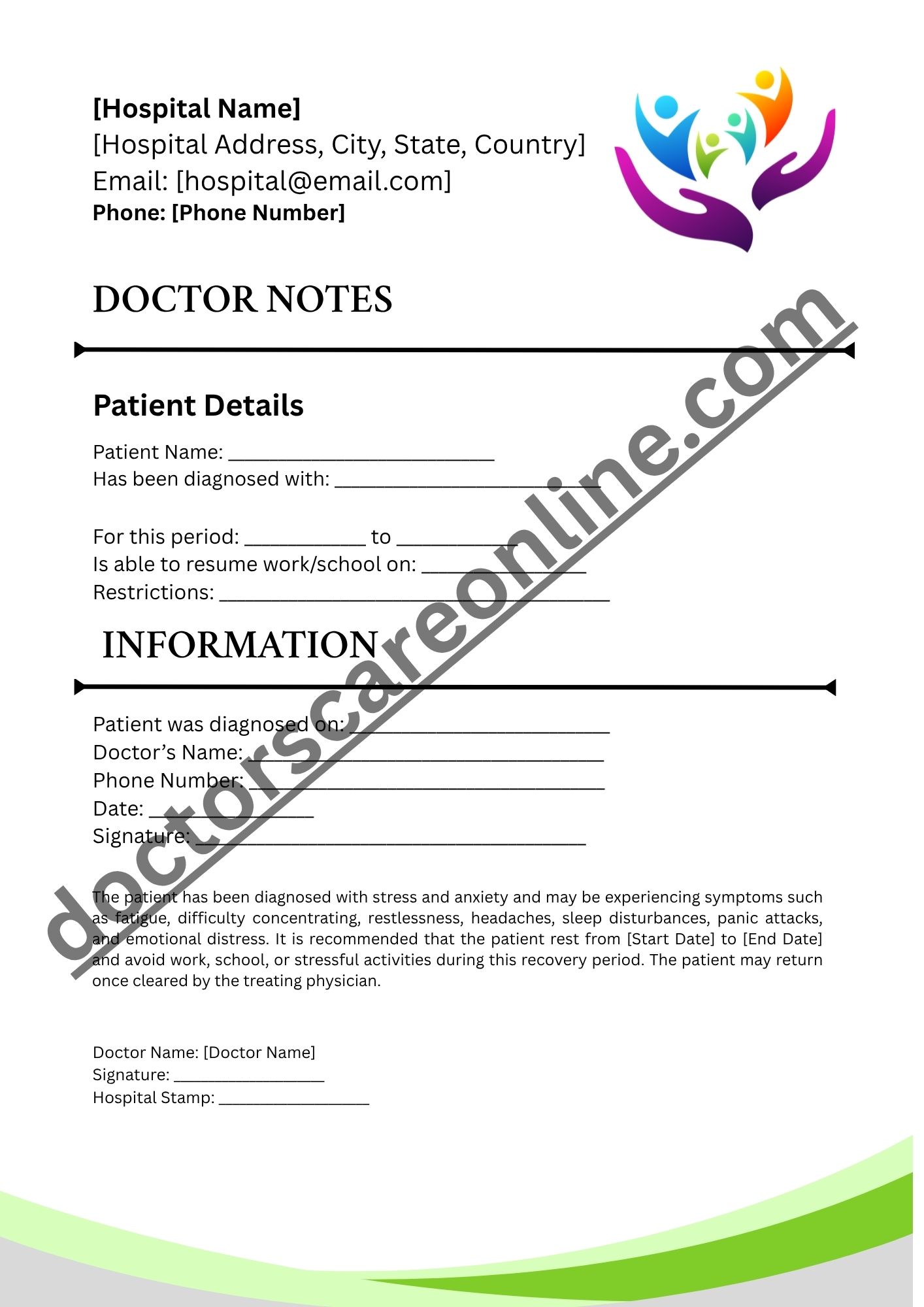
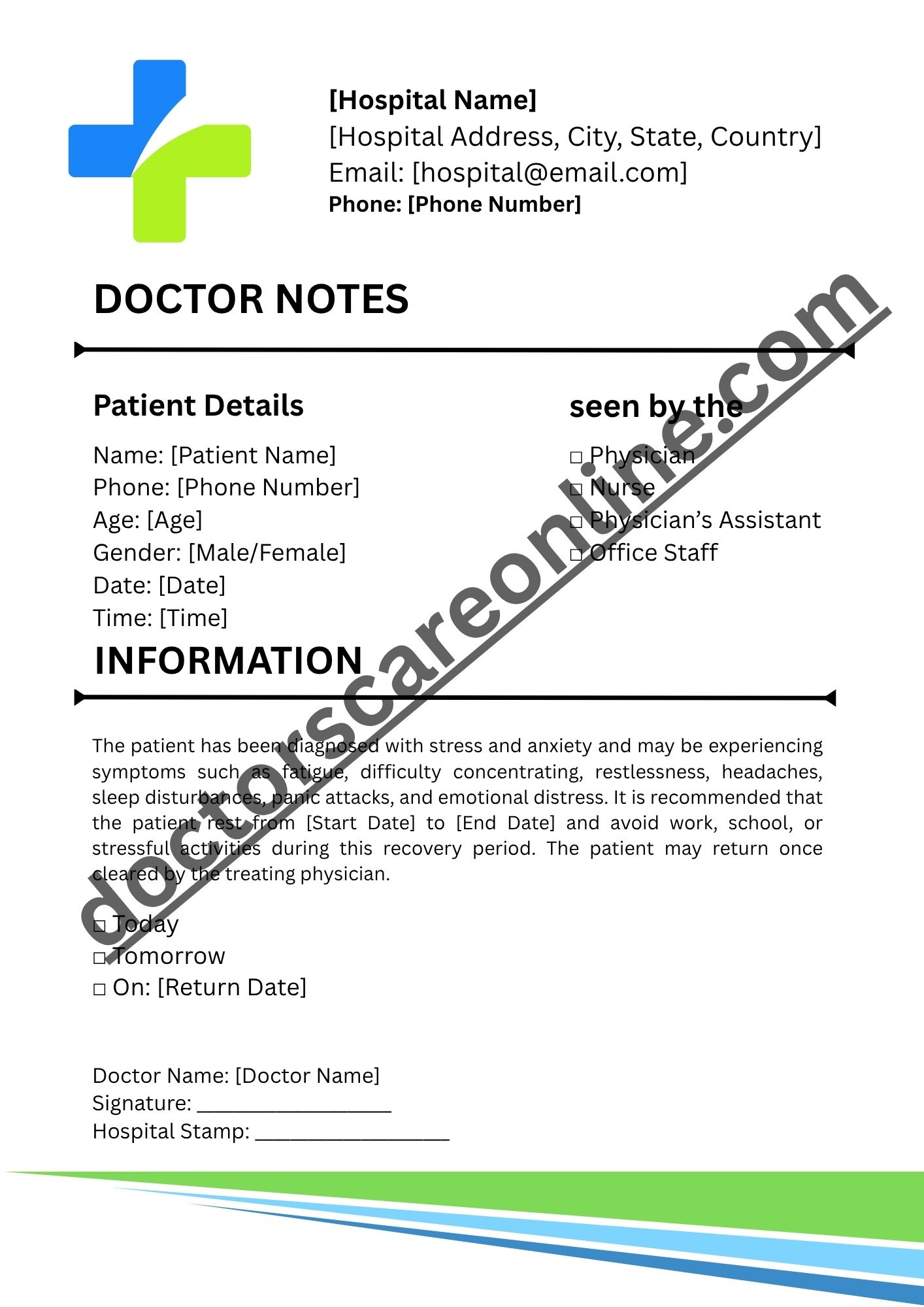
The exact format varies, but a medical note may include information such as:
| Information | Purpose |
|---|---|
| Date of evaluation | Confirms when the medical assessment occurred |
| Healthcare provider’s name | Identifies the issuing professional |
| Clinic or practice information | Identifies the healthcare facility |
| Recommended leave dates | Indicates the medically recommended absence period |
| Work or school restrictions | Describes temporary functional limitations |
| Expected return date | Helps with return-to-work or school planning |
| Provider’s signature | Authenticates the documentation |
| Contact information | Allows verification where appropriate |
A doctor’s note generally should contain only information that is necessary for its intended purpose.
How Long Can Stress Leave Last?
There is no universal duration for stress or anxiety leave.
The appropriate length of leave depends on factors such as:
- Severity of symptoms
- Effect on daily functioning
- Underlying health concerns
- Treatment plan
- Response to treatment
- Type of work or academic responsibilities
- Healthcare provider’s clinical assessment
- Applicable workplace or school policies
Some individuals may need a brief period away from work or school, while others may require longer-term treatment and follow-up.
Instead of relying on a fixed number of days, healthcare providers may reassess symptoms and functioning over time to determine whether returning to normal responsibilities, extending leave, or using temporary accommodations is appropriate.
What Happens If You Need More Time Off?
If symptoms continue after the original recommended leave period, schedule a follow-up appointment with your healthcare provider.
The provider may:
- Reassess your symptoms
- Review your recovery progress
- Adjust your treatment plan
- Recommend additional therapy or counseling
- Review medication when appropriate
- Extend medical leave when clinically justified
- Recommend temporary workplace accommodations
- Recommend a gradual return to work or school where appropriate
- Provide updated medical documentation
Do not assume that an original doctor’s note automatically covers additional days. Updated documentation may be required.
Workplace Accommodations for Stress and Anxiety
Medical leave is not always the only option.
Depending on the person’s condition, job, employer policies, and applicable laws, a healthcare provider may recommend temporary workplace adjustments.
Examples may include:
- Flexible working hours
- Modified schedules
- Additional rest breaks
- Temporary workload adjustments
- Reduced exposure to specific workplace triggers
- Modified duties
- Remote or hybrid work where feasible
- Gradual return-to-work arrangements
Not every accommodation is appropriate for every employee. The provider, employer, and applicable legal framework determine what documentation and accommodations may be available.
School and College Accommodations for Anxiety
Students may also experience anxiety that interferes with attendance, coursework, or examinations.
Depending on institutional policies, medical documentation may support requests involving:
- Excused absences
- Alternative examination arrangements
- Additional time for assignments
- Temporary attendance accommodations
- Reduced academic workload
- Counseling referrals
- Other disability or academic support services
Students should review their school’s or university’s requirements because documentation standards vary between institutions.
Stress vs Anxiety vs Burnout
Stress, anxiety, and burnout can overlap, but they are not identical.
| Factor | Stress | Anxiety | Burnout |
| Definition | Response to pressure or challenging circumstances | Persistent worry, fear, or nervousness that may occur even without an immediate stressor | Physical and emotional exhaustion associated with prolonged or chronic stress |
| Common triggers | Deadlines, exams, finances, family responsibilities, major life changes | Ongoing worry, anxiety disorders, traumatic experiences, or persistent stress | Long-term work, academic, or caregiving pressure |
| Duration | Often improves when the stressor is resolved | Can persist for weeks, months, or longer | Usually develops gradually after prolonged stress |
| Emotional symptoms | Frustration, overwhelm, irritability | Excessive worry, fear, panic, restlessness | Emotional exhaustion, detachment, reduced motivation |
| Physical symptoms | Headaches, muscle tension, fatigue, sleep problems | Racing heartbeat, sweating, nausea, panic symptoms, sleep problems | Exhaustion, headaches, sleep problems, physical fatigue |
| Effect on work/school | Temporary difficulty concentrating | Avoidance, reduced focus, absenteeism, lower productivity | Reduced motivation, declining performance, disengagement |
| Recovery | Often improves with rest and addressing the stressor | May require professional treatment and ongoing support | Often requires recovery time, reduced stress, lifestyle changes, and professional support when needed |
Stress and anxiety can occur together, and prolonged stress can contribute to emotional exhaustion. A healthcare professional can help determine what may be contributing to your symptoms.
Treatment Options Your Doctor May Recommend
Treatment depends on the individual’s symptoms, health history, severity, and personal circumstances.
A healthcare provider may recommend:
- Individual counseling
- Psychotherapy
- Cognitive Behavioral Therapy (CBT)
- Stress-management techniques
- Relaxation exercises
- Breathing exercises
- Mindfulness practices
- Regular physical activity
- Improved sleep habits
- Balanced nutrition
- Reducing caffeine when it worsens anxiety
- Limiting alcohol
- Prescription medication when medically appropriate
- Referral to a psychiatrist or mental health specialist
- Regular follow-up appointments
Treatment should be individualized. Do not start, stop, or change prescription medication without guidance from an appropriately qualified healthcare professional.
Common Mistakes to Avoid
Avoiding certain mistakes can help protect your health and prevent problems with medical documentation.
- Ignoring Persistent Symptoms: Do not dismiss symptoms that continue or interfere with daily functioning.
- Waiting Too Long to Seek Help: Early professional support may help identify appropriate treatment and coping strategies.
- Using Fake or Altered Medical Notes: Never create, modify, or submit fraudulent medical documentation. Doing so may violate workplace, school, professional, or legal requirements.
- Returning Too Soon: If you are still experiencing significant symptoms, discuss your readiness to return with your healthcare provider.
- Skipping Follow-Up Appointments: Follow-up care may be important when symptoms persist or treatment needs to be adjusted.
- Stopping Medication Without Medical Advice: Prescription medications should be changed only under the guidance of an appropriate healthcare professional.
- Hiding Worsening Symptoms: Tell your provider if symptoms become more severe, change significantly, or interfere further with your daily life.
- Ignoring Available Accommodations: If leave is not necessary but symptoms still affect your responsibilities, ask your healthcare provider whether temporary accommodations may be appropriate.
When to Seek Urgent Medical Help
Stress and anxiety can sometimes cause intense physical or emotional symptoms. Certain symptoms require urgent medical attention rather than simply requesting documentation.
Seek immediate medical help if you experience:
- Thoughts of suicide or self-harm
- Feeling unable to keep yourself safe
- Severe difficulty breathing
- Severe or unexplained chest pain
- Fainting or loss of consciousness
- Severe confusion
- A serious medical emergency
If you believe you are in immediate danger, contact your local emergency medical service or go to the nearest emergency department.
Medical Disclaimer: This article is provided for general educational and informational purposes only and is not a substitute for professional medical advice, diagnosis, or treatment. Stress and anxiety can have different causes and levels of severity, and only an appropriately qualified healthcare professional can evaluate an individual’s symptoms and determine whether medical treatment, leave, restrictions, or accommodations are appropriate.
FAQs
1. Can I get a doctor’s note for stress and anxiety?
Yes. If a licensed healthcare provider determines that your stress or anxiety is affecting your ability to work, study, or carry out daily activities, they may issue a doctor’s note. The decision is based on a medical evaluation, your symptoms, and the provider’s professional judgment rather than simply requesting documentation.
2. How do I ask my doctor for a stress leave note?
Be honest about your symptoms and explain how stress or anxiety is affecting your work, school, sleep, or daily life. Your doctor will ask questions, assess your condition, and determine whether medical leave or workplace accommodations are appropriate. If medically necessary, they can provide a doctor’s note outlining the recommended leave period or restrictions.
3. Is anxiety considered a valid reason to miss work?
Yes. Anxiety can be a valid medical reason for missing work if it significantly affects your ability to perform your job safely or effectively. Employers may require medical documentation, and approval of leave depends on workplace policies and applicable employment laws.
4. Can a doctor excuse me from work due to anxiety?
Yes. If your healthcare provider believes your anxiety symptoms require time away from work to support treatment and recovery, they may issue a doctor’s note recommending temporary leave or modified work duties. The duration of the leave depends on your individual medical condition and treatment plan.
5. How long can I take stress leave?
There is no fixed duration for stress leave. Some people may need only a few days, while others may require several weeks or longer. The length of leave depends on the severity of your symptoms, your recovery progress, and your healthcare provider’s recommendations. Follow-up appointments may be needed to determine whether additional leave is appropriate.
Related Post-




Reviews
There are no reviews yet.