
A Doctor’s Note for Child School Absence is medical documentation provided by a licensed healthcare professional after evaluating a child’s illness, injury, symptoms, or other health-related concern. Parents or legal guardians may need this documentation when a child misses school because of a medical condition and the school requires verification of the absence.
For parents looking for an online doctor’s note for a child, telehealth may be an option when the child’s condition can be appropriately evaluated remotely and online pediatric or healthcare services are available in the family’s location. A healthcare provider determines whether an online evaluation is suitable and whether medical documentation is medically appropriate.
Why Might a Child Need a Doctor’s Note for School?
Children may miss school for many health-related reasons, including short-term illnesses, injuries, medical appointments, or recovery from treatment.
A school may request medical documentation when:
- A child has missed one or more school days because of illness.
- The absence extends beyond the school’s permitted number of days without documentation.
- The child needs to remain home while recovering.
- The child has an injury that affects participation in school activities.
- The child requires temporary physical restrictions.
- The child needs academic or classroom accommodations related to a medical condition.
- The school requires documentation for a prolonged or recurring absence.
- The child needs a healthcare provider’s recommendation before returning to school.
School attendance requirements vary by school, district, state, and country, so parents should check the school’s attendance policy before requesting documentation.
Common Reasons for a Child’s School Absence
A healthcare provider may evaluate a child for many conditions that can interfere with school attendance.
- Fever and Viral Illness: Fever, viral infections, or flu-like symptoms may temporarily prevent a child from attending school safely or comfortably.
- Stomach Illness: Vomiting, diarrhea, abdominal pain, or gastroenteritis may require a child to remain home while recovering.
- Respiratory Symptoms: Cough, congestion, sore throat, influenza-like symptoms, or other respiratory illnesses may affect a child’s ability to participate in school.
- Ear Infection: An ear infection may cause pain, fever, hearing difficulties, or other symptoms that interfere with normal school activities.
- Migraine or Severe Headache: Children experiencing significant headaches or migraines may require medical assessment and temporary absence from school.
- Injury: A sprain, fracture, muscle injury, sports injury, or other accident may require time away from school or modified participation in physical activities.
- Recovery After Medical Treatment: Children recovering from a procedure, hospitalization, or other medical treatment may need additional time before returning to school.
- Chronic Health Conditions: Asthma, allergies, seizures, diabetes, or other chronic conditions may occasionally affect school attendance or require coordination between healthcare providers, parents, and school health personnel.
The American Academy of Pediatrics recommends collaboration among healthcare providers, families, and school personnel when children’s health conditions affect school attendance or require school-based health support.
What Information Is Included in a Child School Absence Note?
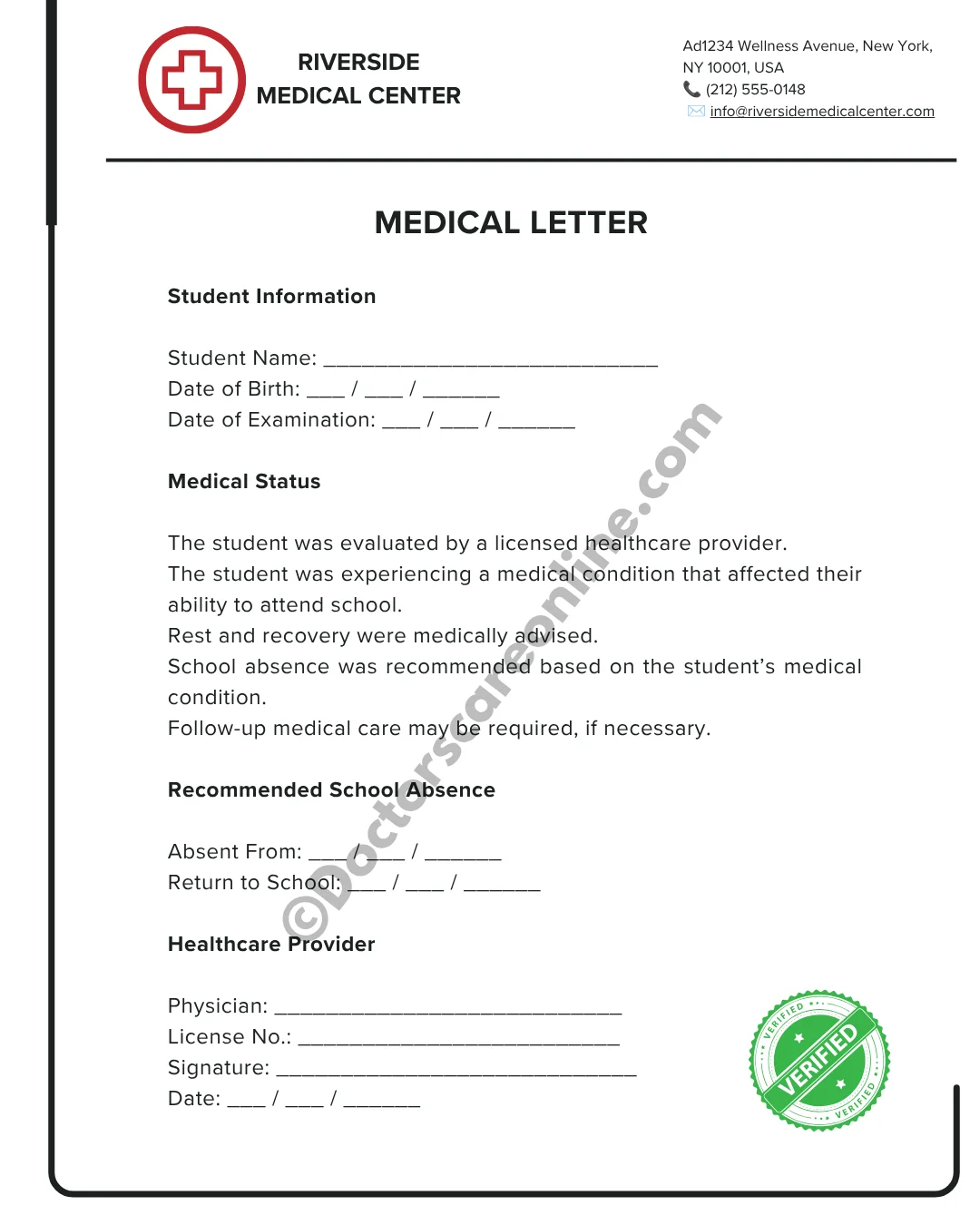
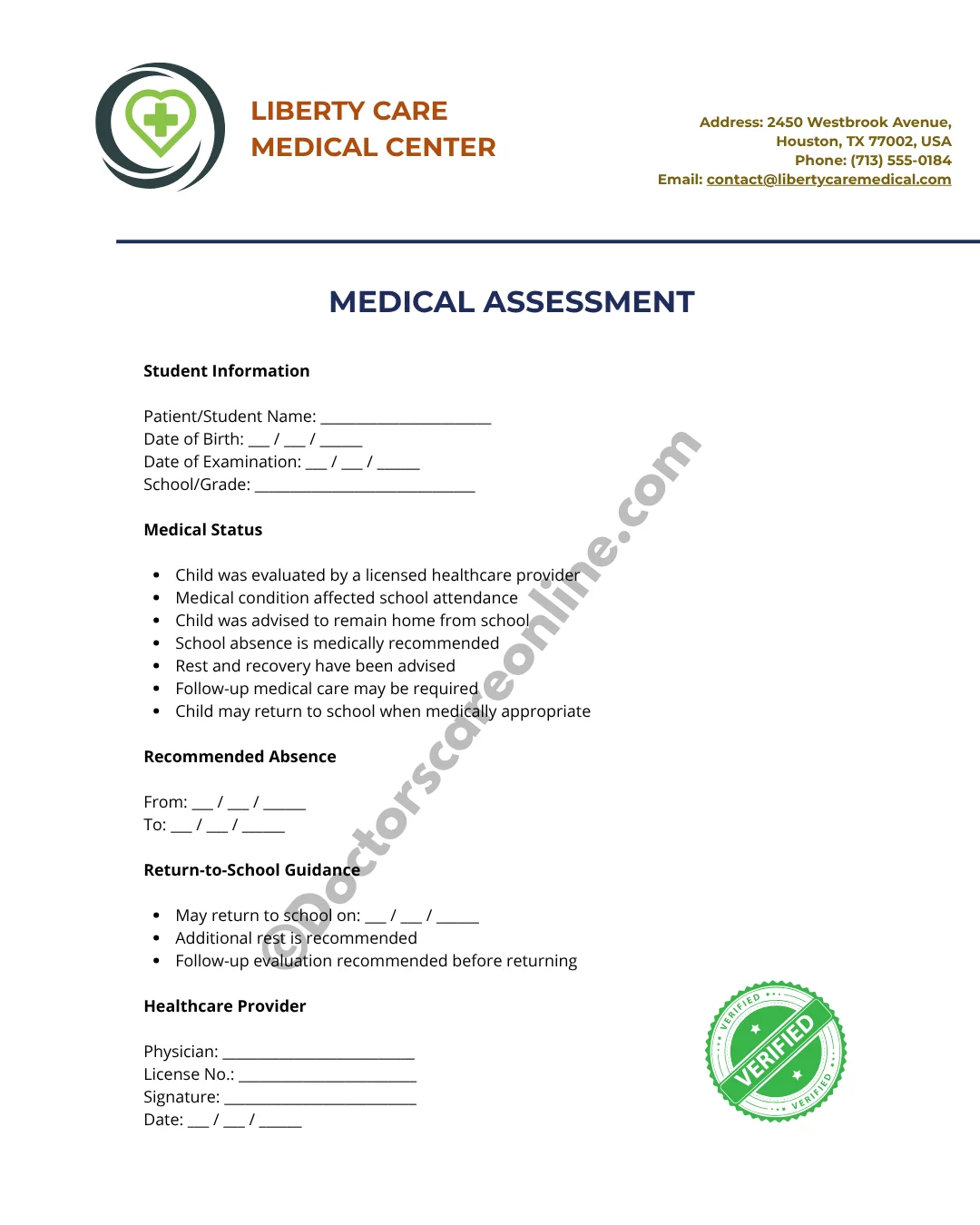
The exact format varies, but a medical excuse note for school may contain:
| Information | Purpose |
|---|---|
| Child’s name | Identifies the student |
| Date of evaluation | Confirms when the child was assessed |
| Absence dates | Documents the medically recommended absence |
| Return-to-school date | Indicates when the child may resume school |
| Activity restrictions | Communicates temporary limitations, if necessary |
| Follow-up recommendation | Indicates whether additional evaluation is needed |
| Healthcare provider details | Identifies the medical professional |
| Provider authentication | Helps verify the documentation |
Parents should check whether their child’s school has a specific form or required information before the medical appointment.
Does a School Doctor’s Note Need to Include the Diagnosis?
Not always.
A school absence note may simply confirm that the child was evaluated and provide the medically appropriate absence or return-to-school information. Whether a specific diagnosis must be included depends on the school’s requirements, the situation, applicable privacy rules, and the healthcare provider’s judgment.
Parents who are concerned about sharing sensitive health information can ask the healthcare provider what information is necessary for the school’s stated purpose.
The American Academy of Pediatrics notes that healthcare providers should be thoughtful about sharing children’s protected health information with schools and should avoid providing medical details that are not pertinent to the child’s needs.
How to Get an Online Doctor’s Note for Child School Absence
Parents or legal guardians can follow these steps when online pediatric or healthcare services are available:
1. Check the School’s Absence Policy
Before booking an appointment, check the school’s attendance policy to determine whether a medical excuse is required and what information the school expects.
2. Choose a Licensed Healthcare Provider
Select a qualified pediatrician, primary care provider, or licensed telehealth professional who is authorized to provide care in your location.
3. Book an Online Appointment
Choose an available virtual consultation and provide the required parent or guardian information.
4. Provide the Child’s Medical Information
Explain the child’s symptoms, when they began, how severe they are, and whether the child has received any previous treatment.
5. Explain the School Absence
Tell the healthcare provider which school days the child has missed or may need to miss and explain any relevant school requirements.
6. Complete the Medical Evaluation
The healthcare provider will determine whether the child’s condition can be appropriately evaluated through telehealth. Some conditions require an in-person examination or additional testing.
7. Follow the Healthcare Provider’s Recommendation
The provider may recommend home care, treatment, continued observation, an in-person visit, or a period away from school based on the child’s condition.
8. Receive Documentation When Medically Appropriate
If the healthcare provider determines that a medical note is appropriate, they may provide documentation stating the relevant absence or return-to-school information.
9. Submit the Note to the School
Provide the documentation through the school’s required process, such as an attendance office, parent portal, email, or school nurse.
Can You Get a Child School Absence Note Online?
In some situations, yes. A child may be evaluated through telehealth when the healthcare provider determines that the condition can be safely and appropriately assessed remotely.
Online pediatric or healthcare consultations can be useful for discussing symptoms such as mild respiratory illness, fever, certain rashes, gastrointestinal symptoms, or other concerns that may not always require an immediate physical examination.
However, an online appointment does not guarantee a doctor’s note. The healthcare provider must independently determine whether the child needs medical documentation after an appropriate evaluation.
If the child has symptoms that require a physical examination, testing, urgent treatment, or emergency care, the provider may recommend an in-person evaluation instead.
What Parents Should Prepare Before an Online Appointment
Having the following information ready can make the consultation easier:
- Child’s full name and date of birth
- Current symptoms
- Date symptoms started
- Temperature, if relevant
- Recent medications
- Known allergies
- Relevant medical history
- Previous diagnoses
- Recent medical visits
- School name
- Dates of missed school
- School’s documentation requirements
- Any specific restrictions requested by the school
Parents should provide accurate information about the child’s condition so the healthcare provider can make an appropriate clinical assessment.
When Should a Child Stay Home From School?
Whether a child should stay home depends on the child’s symptoms, overall condition, contagiousness, school policies, and healthcare guidance.
Parents should follow advice from the child’s healthcare provider and the school’s health policies. If a child is too unwell to participate normally, requires significant care during the school day, or has symptoms that may require exclusion under local school or public-health rules, medical or school-health guidance may be appropriate.
The goal is not simply to document an absence but to make sure the child receives appropriate care and returns to school safely when well enough to participate.
When Should a Child Return to School?
A child can generally return when they are medically ready to participate in normal school activities and meet any applicable school or public-health requirements.
Depending on the illness or medical condition, the healthcare provider may recommend:
- A specific return-to-school date
- Additional recovery time
- Temporary activity restrictions
- Avoiding physical education temporarily
- Follow-up evaluation
- School accommodations
The child’s healthcare provider and school should be contacted when there is uncertainty about the appropriate return date.
Doctor’s Note vs. Parent Excuse Note
A parent excuse note and a doctor’s note are not necessarily the same.
A parent or guardian may be allowed to explain a child’s absence directly to the school for certain short-term absences. A doctor’s note, however, is medical documentation issued by a healthcare professional after an appropriate evaluation.
Which type of documentation is required depends on the school’s attendance policy.
Parents should not request medical documentation simply because a school accepts it if the child was not medically evaluated. The American Academy of Pediatrics specifically advises clinicians to avoid writing excuses for absences that were not appropriate and to avoid backdating documentation to justify prior absences.
Can a Doctor’s Note Excuse a Child’s Previous Absence?
This depends on the circumstances and the healthcare provider’s assessment.
A healthcare provider should not simply backdate a medical excuse to justify an absence without an appropriate basis. If a child was actually evaluated or treated during the relevant period, the provider can determine what documentation accurately reflects the medical record.
Parents should provide truthful information about when the child became ill, when medical care was received, and which school days were missed.
What If the Child Needs More Than a Few Days Away From School?
A prolonged or recurring absence may require more than a simple absence note.
Depending on the child’s medical needs, parents may need to discuss:
- Follow-up medical appointments
- Updated medical documentation
- Temporary school accommodations
- Individualized health plans
- Communication with the school nurse
- Academic support
- Additional medical evaluation
For children with ongoing medical conditions, coordination between the family, healthcare provider, and school can help support both health and school participation.
Can a Doctor Recommend School Restrictions?
Yes. When medically appropriate, a healthcare provider may recommend temporary restrictions or accommodations.
Examples may include:
- No physical education
- Avoiding strenuous exercise
- Limiting outdoor activity
- Additional rest breaks
- Modified classroom activities
- Temporary restrictions following an injury
- Additional access to water or the restroom
- Medication-related school instructions when applicable
The provider should determine restrictions based on the child’s individual medical needs.
Privacy and Your Child’s Medical Information
Medical documentation for school should contain information relevant to the purpose of the request.
Parents should avoid sharing unnecessary medical details when the school only needs confirmation of a health-related absence or specific restrictions.
Healthcare providers should also consider privacy when communicating medical information to schools. The AAP recommends protecting health information and being sensitive to whether particular medical details are actually necessary for the school’s needs.
How an Online Medical Evaluation Can Help Parents
For eligible conditions, telehealth can offer parents a convenient way to discuss a child’s symptoms without immediately traveling to a clinic.
Depending on the provider and location, an online consultation may allow parents to:
- Speak with a licensed healthcare professional remotely
- Discuss the child’s symptoms
- Review relevant medical history
- Receive professional medical guidance
- Discuss whether the child should remain home
- Discuss return-to-school considerations
- Receive medical documentation when clinically appropriate
Telehealth is not appropriate for every situation. Children with severe symptoms or potential emergencies may require immediate in-person or emergency medical care.
When Should a Child Receive Urgent Medical Care?
A school absence note should never delay urgent medical treatment.
Seek prompt medical attention if a child has severe or rapidly worsening symptoms, difficulty breathing, significant dehydration, altered responsiveness, a serious injury, seizure activity, or another potentially serious medical problem.
For a suspected medical emergency, seek emergency medical care rather than waiting for an online appointment or school documentation.
How Our Online Doctor’s Note Process Works
If your child has a genuine health-related reason for missing school and you need medical documentation, the online process can be straightforward when telehealth is clinically appropriate.
Book → Consult → Evaluate → Receive Documentation if Appropriate
- Book an online consultation
- Discuss your child’s symptoms with a licensed healthcare professional
- Complete the medical evaluation
- Follow the provider’s recommendations
- Receive a school absence note if medically appropriate
- Submit the documentation according to your school’s requirements
A medical note is not automatically issued simply because it is requested. The healthcare provider makes the final clinical decision based on the child’s condition and the results of the evaluation.
Why Choose a Professional Online Medical Evaluation?
An online medical evaluation may be convenient for parents who need healthcare guidance for a child but cannot easily arrange an immediate in-person visit.
Depending on the provider and location, benefits may include:
- Convenient online scheduling
- Remote consultation
- Access to licensed healthcare professionals
- Less travel for appropriate conditions
- Discussion of school attendance concerns
- Digital documentation when medically appropriate
The primary purpose of the appointment is medical care and evaluation, not simply obtaining an excuse note.
Key Takeaways
A Doctor’s Note for Child School Absence can provide legitimate medical documentation when a child’s illness, injury, or other health condition affects school attendance.
The most important points are:
- Check the school’s attendance and documentation requirements.
- Use a licensed healthcare professional for medical evaluation.
- Provide accurate information about the child’s symptoms and absence.
- Online evaluation may be appropriate for some conditions.
- A medical note is not guaranteed after an online consultation.
- The healthcare provider determines what documentation is medically appropriate.
- Do not alter or backdate medical documentation.
- Protect the child’s private medical information.
- Seek in-person or emergency care when symptoms require it.
Frequently Asked Questions
1. Can I get a doctor’s note for my child’s school absence online?
In some situations, yes. If the child’s condition can be appropriately evaluated through telehealth, a licensed healthcare provider may provide medical documentation when it is clinically appropriate and permitted in the relevant location.
2. Can I get a same-day school absence note for my child?
A same-day online consultation may be available from some healthcare providers, but a note is not guaranteed. The healthcare professional must first evaluate the child and determine whether medical documentation is appropriate.
3. What should a doctor’s note for a child’s school absence include?
It may include the child’s name, date of evaluation, recommended absence period, return-to-school date, relevant restrictions, follow-up recommendations, and healthcare provider information. Exact requirements vary by school and situation.
4. Can a doctor excuse my child’s previous school absence?
A healthcare provider can document information supported by the child’s medical evaluation and records. Medical documentation should not be backdated simply to justify an absence that was not medically evaluated.
5. Does a child’s school doctor’s note need to include the diagnosis?
Not necessarily. A note may focus on the medical evaluation, absence dates, return-to-school information, or necessary restrictions. Whether a diagnosis is required depends on the school’s requirements, applicable rules, and the healthcare provider’s judgment.
Medical Disclaimer: This content is intended for general educational and informational purposes only and does not replace professional medical advice, diagnosis, or treatment. A Doctor’s Note for Child School Absence should only be issued by a qualified healthcare professional following an appropriate medical evaluation.
Medical documentation should accurately reflect a genuine healthcare evaluation. It should never be fabricated, altered, or backdated to justify an absence that was not medically evaluated.
School attendance rules and documentation requirements vary by school, district, state, and country. Parents and guardians should verify the specific requirements with their child’s school.
Related Post :——



Reviews
There are no reviews yet.