

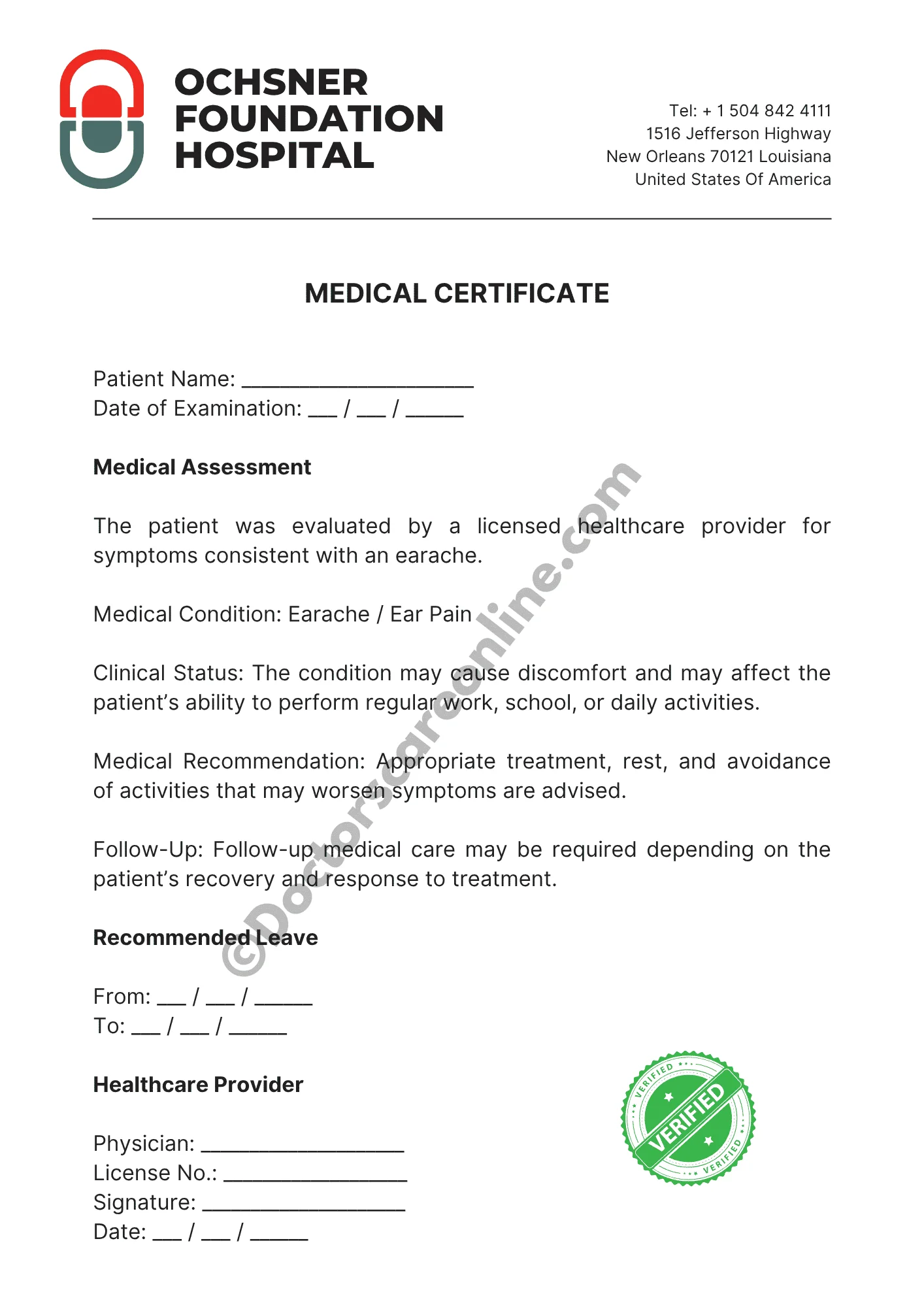
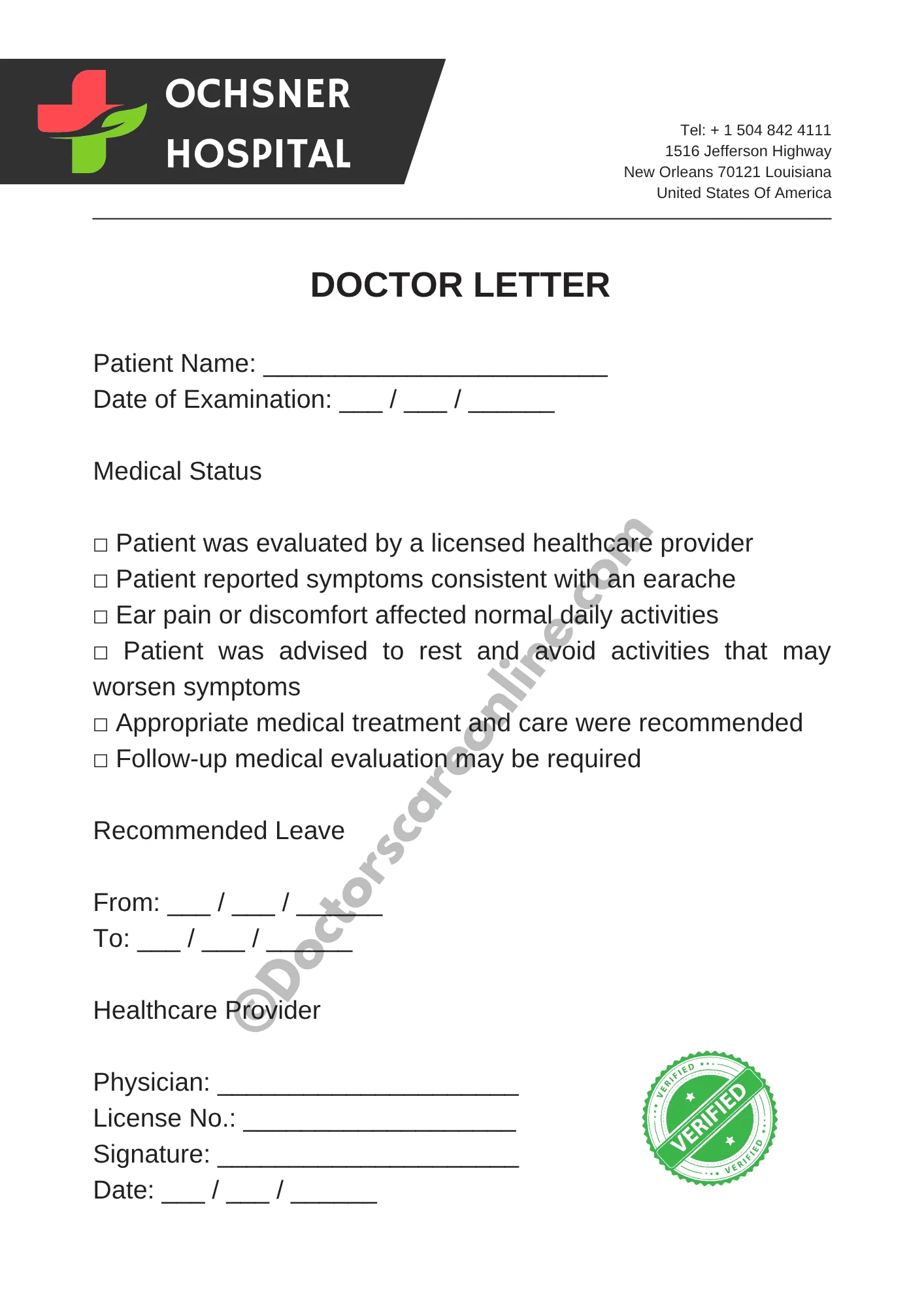
Earache can make it difficult to work, attend school, sleep, concentrate, or complete normal daily activities. A doctor’s note for earache is medical documentation that may be provided by a licensed healthcare professional after evaluating your symptoms and determining that time away from work or school, temporary activity restrictions, or other accommodations are medically appropriate.
Ear pain can have different causes, including ear infections, fluid or pressure changes, inflammation of the outer ear, and other conditions affecting the ear or nearby areas. Because similar symptoms can have different causes, a healthcare provider may need to assess your symptoms and, when necessary, examine the ear before making a diagnosis or recommending treatment.
For people who need convenient access to healthcare, an online doctor appointment for earache can provide an opportunity to discuss symptoms with a licensed healthcare provider. Depending on the symptoms and the provider’s clinical judgment, the provider may recommend home care, medication, an in-person examination, additional testing, or medical documentation when appropriate.
Related Doctor Note :——
You can also visit:
- Doctors Note for Limited Work
- Doctor’s Note for Inner Ear Vertigo
- Doctor’s Note for Work From Home
- Unlimited Doctor’s Notes for 1 Year
Why Might You Need a Doctor’s Note for Earache?
Ear pain can interfere with normal responsibilities, particularly when symptoms are accompanied by hearing difficulty, drainage, fever, dizziness, or significant discomfort. Ear infection symptoms can also develop quickly and may affect both adults and children differently.
You may need medical documentation when:
- Your employer requires documentation for a medical absence.
- Ear pain prevents you from safely completing your normal job duties.
- Your school or college requires an excuse for an absence.
- Symptoms make prolonged concentration or communication difficult.
- You need temporary work or activity restrictions.
- You are recovering from an ear-related medical condition.
- Your healthcare provider recommends staying home or limiting certain activities.
- You need documentation supporting a medically recommended recovery period.
The specific requirements for medical documentation vary by employer, school, organization, and location.
Common Causes and Conditions Associated With Earache
Earache is a symptom rather than a single diagnosis. Different conditions can cause similar discomfort, so an accurate assessment is important.
1. Middle Ear Infection: A middle ear infection, also called acute otitis media, affects the air-filled space behind the eardrum. Symptoms may include ear pain, pressure, fever, fluid drainage, and difficulty hearing. Children are more likely than adults to experience middle ear infections.
2. Swimmer’s Ear: Swimmer’s ear, or otitis externa, affects the outer ear canal. It is different from a middle ear infection and can cause ear pain, irritation, or inflammation.
3. Ear Pressure or Eustachian Tube Problems: Changes in pressure or swelling around the eustachian tubes can contribute to ear discomfort or a feeling of fullness. This may occur with colds, allergies, congestion, or changes in air pressure.
4. Earwax Buildup: Excessive earwax can sometimes contribute to discomfort, fullness, or hearing changes. A healthcare professional can determine whether earwax is contributing to the symptoms.
5. Cold or Respiratory Illness: Colds and other upper respiratory illnesses can contribute to swelling and congestion around the ear and eustachian tubes, potentially resulting in ear pressure or pain.
6. Other Possible Causes
Ear pain may also occur with:
- Sinus-related problems
- Dental problems
- Jaw or temporomandibular joint problems
- Ear injury
- Foreign objects in the ear
- Pressure changes during air travel
- Loud-noise exposure
- Inflammation or irritation around the ear
Because several conditions can produce similar symptoms, persistent or concerning ear pain should be evaluated by an appropriate healthcare professional.
Symptoms That May Occur With Earache
The symptoms associated with ear pain can vary depending on the underlying cause.
Common symptoms may include:
- Ear pain or aching
- Pressure or fullness in the ear
- Difficulty hearing
- Fluid or discharge from the ear
- Fever
- Headache
- Dizziness or balance problems
- Ringing or buzzing in the ear
- Irritability or trouble sleeping in children
- Ear pulling or rubbing in young children
- Pain associated with a recent cold or respiratory illness
Adults with middle ear infections commonly experience ear pain, fluid drainage, or hearing difficulty, while children may also show irritability, sleep problems, fever, or ear pulling.
When Should You See a Doctor for Ear Pain?
Some earaches are mild and temporary, while others require medical assessment. Consider contacting a healthcare provider when symptoms are persistent, severe, worsening, or accompanied by other concerning symptoms.
Medical evaluation may be appropriate when you have:
- Ear pain that does not improve
- Increasing or severe ear pain
- Fluid, pus, or blood coming from the ear
- Noticeable hearing loss
- Fever accompanying ear symptoms
- Significant dizziness or balance problems
- Repeated ear infections
- Symptoms following an injury
- Symptoms in a very young infant
- Symptoms that are becoming worse instead of improving
The CDC advises seeking medical care for concerning symptoms such as high fever, ear drainage, worsening symptoms, hearing loss, or middle-ear infection symptoms lasting more than two to three days.
Earache in Adults vs. Children
Ear-related symptoms can look different depending on age.
| Feature | Adults | Children |
|---|---|---|
| Common symptoms | Ear pain, pressure, drainage, hearing difficulty | Ear pain, pulling at ear, irritability, sleep problems, fever |
| Communication | Usually able to describe symptoms | Young children may show behavioral changes instead |
| Hearing changes | May report muffled or reduced hearing | May not respond consistently to sounds |
| Medical assessment | Based on symptoms and examination | May require assessment based on symptoms and observed behavior |
| Documentation | May be needed for work or other responsibilities | May be needed for school or childcare |
Children, particularly younger children, may not be able to explain their symptoms clearly. Parents or caregivers should report changes in sleep, behavior, hearing, fever, ear pulling, or drainage to the healthcare provider.
How Is an Earache Diagnosed?
A healthcare provider may begin by asking about your symptoms, medical history, recent illnesses, and the timing of the ear pain.
An evaluation may involve:
- Symptom review: The provider asks when the pain started and whether it is getting better or worse.
- Medical history: Recent colds, allergies, previous ear infections, injuries, and other relevant conditions may be discussed.
- Ear examination: A healthcare professional may examine the ear and eardrum using an otoscope.
- Hearing assessment: Hearing may be assessed when hearing changes are reported.
- Additional testing: Further testing or an in-person examination may be recommended when the diagnosis is uncertain or symptoms persist.
A physical ear examination can be important because different conditions may produce similar symptoms.
Can an Online Doctor Appointment Help With Earache?
An online doctor appointment for earache can be useful for discussing symptoms, medical history, and next steps with a licensed healthcare provider where telehealth is available.
During an online consultation, you may be asked about:
- When your ear pain began
- Which ear is affected
- Severity and type of pain
- Fever or other symptoms
- Hearing changes
- Ear drainage
- Recent cold, flu, or allergy symptoms
- Previous ear infections
- Recent travel or pressure changes
- Current medications or treatments
The provider can determine whether your symptoms can be appropriately managed through telehealth or whether you need an in-person ear examination.
An online appointment does not guarantee a diagnosis, prescription, or doctor’s note. These decisions depend on the provider’s clinical assessment and applicable requirements.
How to Book an Online Doctor Appointment for Earache
If your symptoms are suitable for telehealth, the process can generally be completed online.
Step 1: Choose an Available Healthcare Provider
- Select a healthcare service that connects patients with appropriately licensed healthcare professionals.
Step 2: Create or Access Your Account
- Register for an account or log in using the information requested by the platform.
Step 3: Select an Appointment
- Choose an available appointment time that works for your schedule.
Step 4: Provide Your Medical Information
- Enter accurate information about your ear pain, symptoms, medical history, and any relevant concerns.
Step 5: Complete Payment if Required
- If the service requires payment before the consultation, follow the secure payment instructions provided on the website.
Step 6: Attend the Online Consultation
- Join the appointment and answer the healthcare provider’s questions as accurately as possible.
Step 7: Follow the Provider’s Recommendations
- The provider may recommend treatment, monitoring, an in-person examination, testing, or other follow-up care.
Step 8: Receive Documentation When Medically Appropriate
- If the healthcare provider determines that a doctor’s note is appropriate after evaluating your situation, medical documentation may be provided in accordance with applicable requirements.
How Our Online Doctor Appointment Service Can Help
Our service is designed to make access to an online healthcare consultation more convenient for users who are experiencing symptoms such as earache and want to discuss their concerns with a healthcare provider.
1. Convenient Online Access: You can request an appointment online without needing to begin the process with an in-person visit, when telehealth is appropriate for your situation.
2. Licensed Healthcare Providers: Medical decisions and documentation should come from appropriately licensed healthcare professionals. Provider availability and licensing requirements may vary depending on the patient’s location.
3. Simple Appointment Process
The online process is designed to make it easier to:
- Register or log in
- Select an appointment
- Submit relevant information
- Complete payment when required
- Attend the online consultation
- Follow the provider’s medical recommendations
4. Medical Documentation When Appropriate: If the healthcare provider evaluates your symptoms and determines that documentation is medically appropriate, they may provide a doctor’s note based on their clinical judgment and applicable requirements.
5. Help When You Have Questions: If you experience an issue with registration, login, payment, appointment booking, or another website-related question, you can contact our support team through the website chatbox.
The chatbox can help with platform-related questions and guide you through the appropriate process. It does not replace medical advice from a healthcare provider.
Why Users Can Rely on Our Service
Choosing an online healthcare service involves more than convenience. Users should understand how the service works and what they can expect.
Our approach focuses on:
- Healthcare-provider evaluation: Medical documentation is connected to an appropriate healthcare consultation rather than simply being supplied on request.
- Clear process: Users can understand the steps involved in registration, appointment scheduling, consultation, and documentation.
- User support: Website-related questions can be directed to the support chatbox.
- Privacy-conscious communication: Users should provide only the information required for their healthcare consultation and account.
- Transparent expectations: A doctor’s note is not guaranteed because documentation depends on the healthcare provider’s assessment.
- Patient-centered access: Online consultations can provide a convenient option when telehealth is clinically appropriate.
Users should always review the service’s applicable terms, privacy information, provider availability, and documentation requirements before booking.
What May Be Included in a Doctor’s Note for Earache?
The contents of medical documentation vary according to the healthcare provider and the purpose of the note.
A note may include:
| Information | Possible Purpose |
|---|---|
| Patient name | Identifies the patient |
| Evaluation date | Confirms when the patient was assessed |
| Medical confirmation | Documents that an evaluation occurred |
| Recommended absence | Indicates medically recommended time away |
| Activity restrictions | Documents temporary limitations when appropriate |
| Return date | Provides a recommended return date when applicable |
| Follow-up instructions | Explains whether further evaluation is recommended |
| Provider information | Identifies the healthcare professional or practice |
A note does not necessarily need to disclose every detail of a patient’s medical condition. The appropriate content depends on the situation and applicable requirements.
Doctor’s Note for Earache and Work
Ear pain can interfere with work when symptoms affect hearing, concentration, sleep, balance, or the ability to perform specific job responsibilities.
Depending on the medical assessment, a healthcare provider may recommend:
- Temporary absence from work
- Modified duties
- Reduced exposure to certain workplace conditions
- Temporary activity restrictions
- A follow-up evaluation before returning to unrestricted duties
For example, someone experiencing significant dizziness or hearing difficulty may require different considerations from someone with mild, improving discomfort.
Your healthcare provider should determine whether time away or work restrictions are medically appropriate.
Doctor’s Note for Earache and School
Students may sometimes need medical documentation when ear pain or an ear-related condition interferes with attendance or school activities.
Depending on the student’s condition, documentation may address:
- School absence
- Recommended recovery period
- Temporary activity limitations
- Return-to-school date
- Follow-up requirements
Schools and colleges may have their own documentation policies, so students or parents should check the institution’s requirements.
How Long Is a Doctor’s Note for Earache Valid?
There is no universal validity period for every doctor’s note.
The relevant period generally depends on what the healthcare provider documents and the requirements of the organization receiving the note.
| Situation | What Determines the Relevant Period? |
|---|---|
| Work absence | Dates or recommendations documented by the provider and employer policy |
| School absence | Dates covered by the medical documentation and school requirements |
| Activity restrictions | Restriction period recommended by the provider |
| Extended symptoms | Follow-up assessment and updated documentation may be needed |
| Return to normal activities | Provider’s recommendations and organizational requirements |
If symptoms continue beyond the period documented, contact a healthcare provider rather than changing the medical document yourself.
Treatment and Management of Earache
Treatment depends on the underlying cause, age, severity, and clinical findings.
A healthcare provider may recommend:
- Pain management
- Observation or monitoring
- Treatment for an underlying infection when appropriate
- Treatment for allergies or congestion when relevant
- Ear-specific medication when medically indicated
- Follow-up evaluation
- Referral to an ear, nose, and throat specialist
- In-person examination or testing when needed
Not every ear infection requires antibiotics. Some infections can improve without antibiotics, while certain infections may require antibiotic treatment. The appropriate approach depends on factors such as age, severity, symptoms, and clinical assessment.
Do not start prescription antibiotics or use someone else’s medication based solely on an online description of symptoms.
Self-Care While Waiting for Medical Advice
For mild symptoms, general supportive measures may sometimes help with comfort while you arrange appropriate medical care.
Depending on your circumstances:
- Follow the healthcare provider’s recommendations.
- Use over-the-counter pain medicine only as directed on the label and when appropriate for you.
- Keep track of changes in symptoms.
- Avoid putting objects into the ear.
- Avoid using leftover prescription medication.
- Follow any prescribed treatment exactly as directed.
- Seek medical attention if symptoms become severe or worsen.
For children, medication choices and doses require particular care. Parents and caregivers should follow pediatric guidance and product instructions or ask a healthcare professional.
When Earache Requires Urgent Medical Attention
Some symptoms require prompt medical evaluation rather than waiting for a routine online appointment.
Seek appropriate urgent medical care if ear pain is accompanied by:
- Severe or rapidly worsening pain
- High fever
- Blood, pus, or significant fluid coming from the ear
- New or significant hearing loss
- Severe dizziness or balance problems
- Serious injury involving the ear or head
- Significant swelling around the ear
- Concerning symptoms in a very young infant
The CDC specifically identifies high fever, ear drainage, worsening symptoms, hearing loss, and persistent middle-ear infection symptoms as reasons to seek medical care.
If you believe you are experiencing a medical emergency, seek emergency medical care rather than relying on an online appointment.
Preventing Some Ear Problems
Not every cause of earache can be prevented, but some general measures may reduce the risk of certain ear-related problems.
Helpful habits can include:
- Wash your hands regularly.
- Avoid exposure to secondhand smoke.
- Keep recommended vaccinations up to date.
- Dry your ears after swimming.
- Avoid inserting cotton swabs or other objects deep into the ear canal.
- Follow appropriate treatment for respiratory illnesses and allergies.
- Seek medical care when recurring ear problems develop.
The CDC recommends measures such as hand hygiene, avoiding secondhand smoke, appropriate vaccination, and drying the ears after swimming as part of ear-infection prevention.
Common Mistakes to Avoid When Requesting a Doctor’s Note
Avoid these mistakes when seeking medical documentation:
- Requesting documentation without an evaluation: A doctor’s note should be based on appropriate medical assessment.
- Providing inaccurate medical information: Give the healthcare provider an honest description of your symptoms.
- Ignoring serious symptoms: Do not rely on documentation when urgent medical care is needed.
- Editing a medical document: Never change dates, restrictions, diagnoses, or other information after a provider issues the document.
- Assuming every organization has the same requirements: Confirm the documentation rules of your employer, school, or other organization.
- Delaying follow-up care: Contact a healthcare provider if symptoms persist or worsen.
What Makes Our Online Process User-Friendly?
We aim to make the administrative side of an online healthcare appointment straightforward while keeping medical decisions with qualified healthcare professionals.
Users can:
- Register for an account online.
- Log in to manage their appointment information.
- Select an available consultation.
- Submit relevant health information.
- Complete payment when required.
- Attend the scheduled online appointment.
- Communicate with the healthcare provider.
- Receive documentation when the provider determines it is medically appropriate.
- Contact the website’s chatbox for registration, login, payment, or other platform-related questions.
If you have a technical or account-related problem, the support chatbox is available to help guide you through the website process. For medical questions, symptoms, diagnosis, or treatment decisions, speak directly with a healthcare professional.
Frequently Asked Questions
1. Can I get a doctor’s note for an earache without an ear infection?
Possibly. A doctor’s note is based on the healthcare provider’s assessment of your symptoms and functional limitations, not solely on whether an ear infection is diagnosed. If medical documentation is justified, the provider determines what information is appropriate to include.
2. Can an earache affect my ability to work?
Yes. Depending on the cause and severity, ear pain may interfere with concentration, sleep, hearing, balance, communication, or specific job duties. Whether you need time away or modified duties should be determined by a healthcare provider.
3. Can an online doctor diagnose an earache?
A telehealth provider may evaluate your symptoms and determine whether your condition can be appropriately managed remotely. However, some ear conditions require an in-person examination of the ear, and the provider may recommend an office visit when necessary.
4. Can I get a doctor’s note for ear pain after traveling by plane?
You may discuss ear pain that developed after air travel with a healthcare provider. The provider can assess your symptoms and determine whether medical documentation or additional evaluation is appropriate.
5. What should I do if my earache continues after treatment?
Contact a healthcare provider for reassessment, particularly if symptoms are worsening, persistent, or accompanied by hearing loss, fever, or ear drainage. Further evaluation may be needed to determine the cause and appropriate treatment.
Medical Disclaimer: This content is provided for general educational and informational purposes only and is not a substitute for professional medical advice, diagnosis, or treatment.
Ear pain can have many possible causes, and symptoms alone may not establish a diagnosis. A licensed healthcare professional should determine whether an examination, testing, treatment, medical leave, work restriction, or doctor’s note is appropriate.





Reviews
There are no reviews yet.