
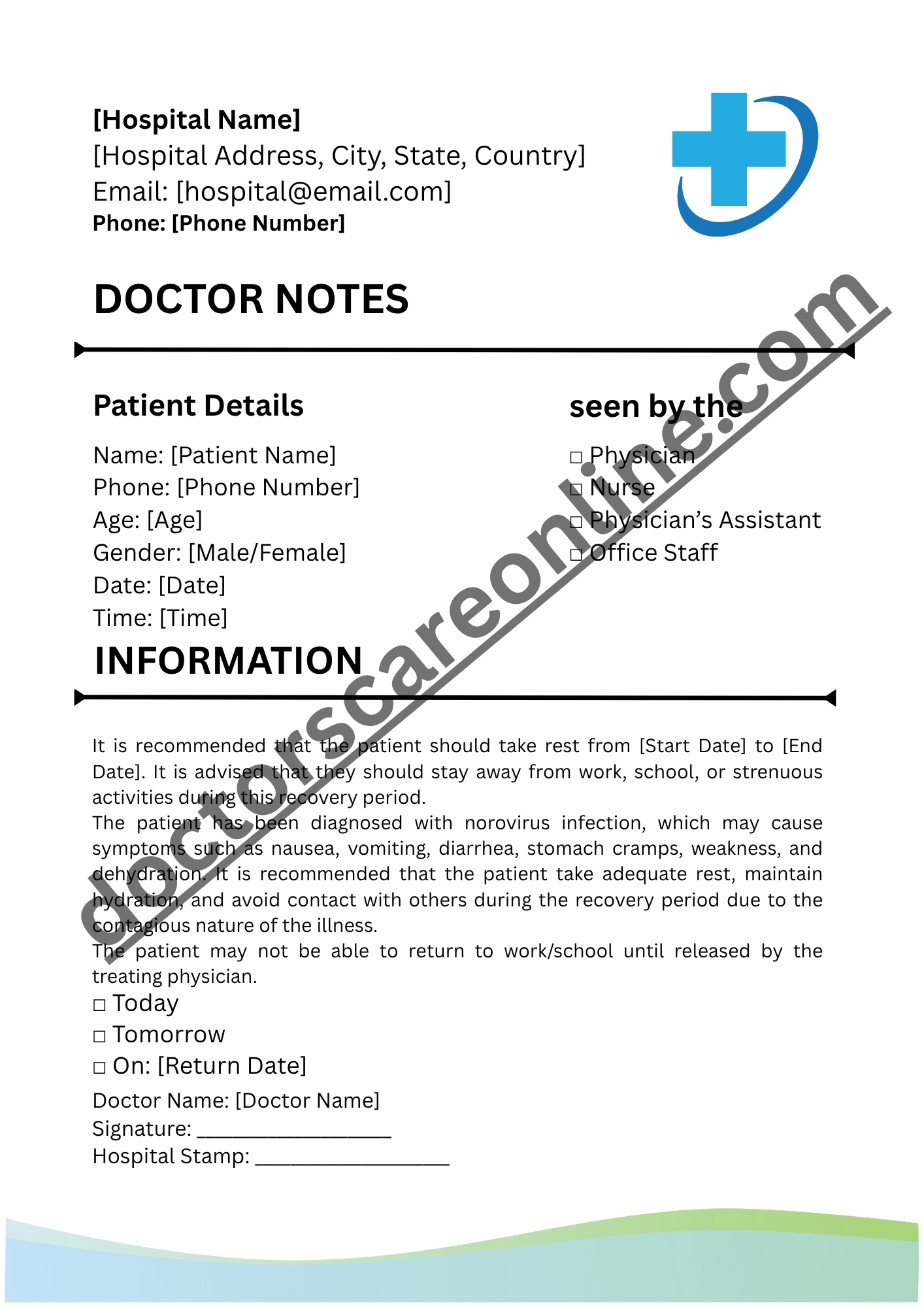
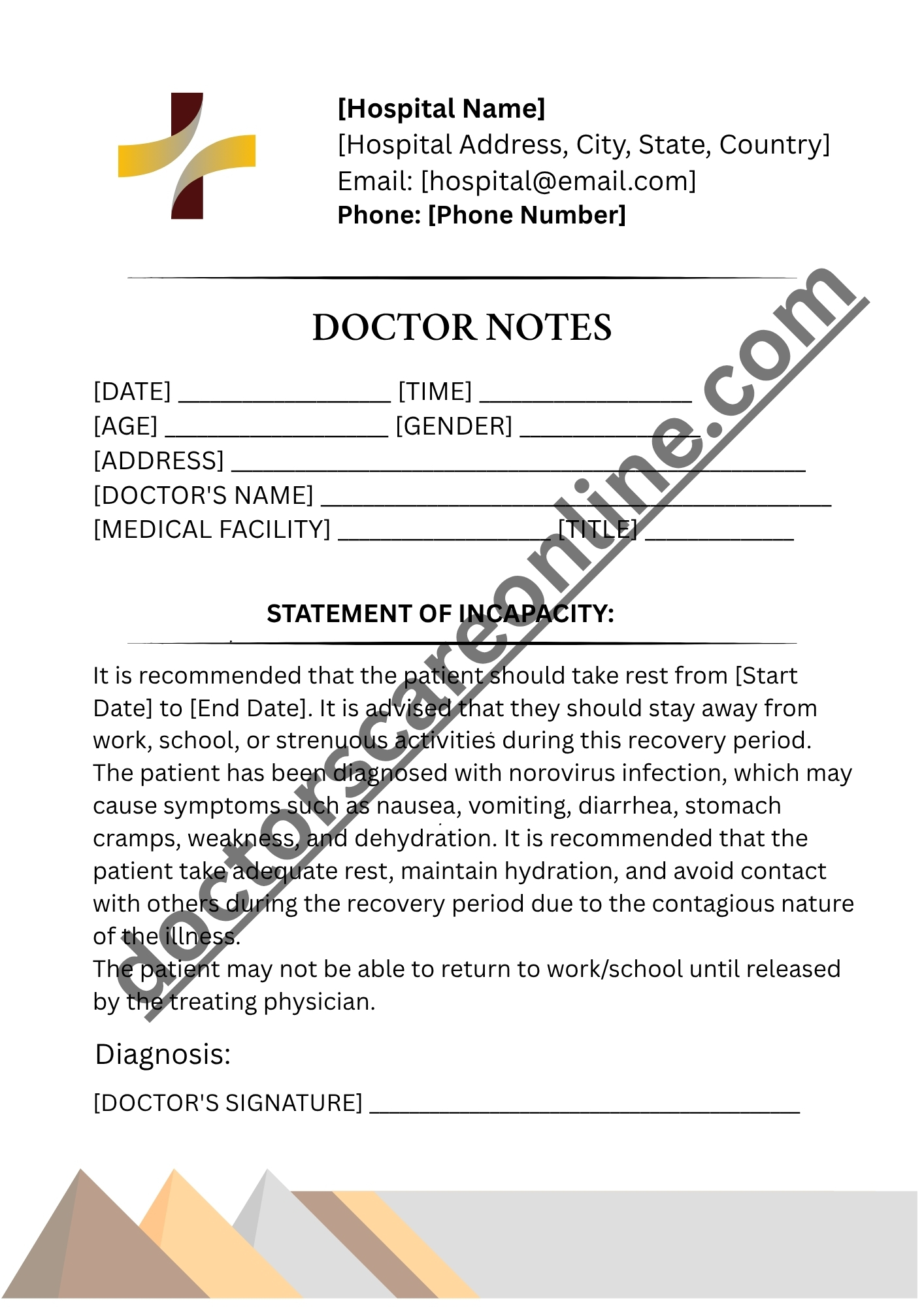
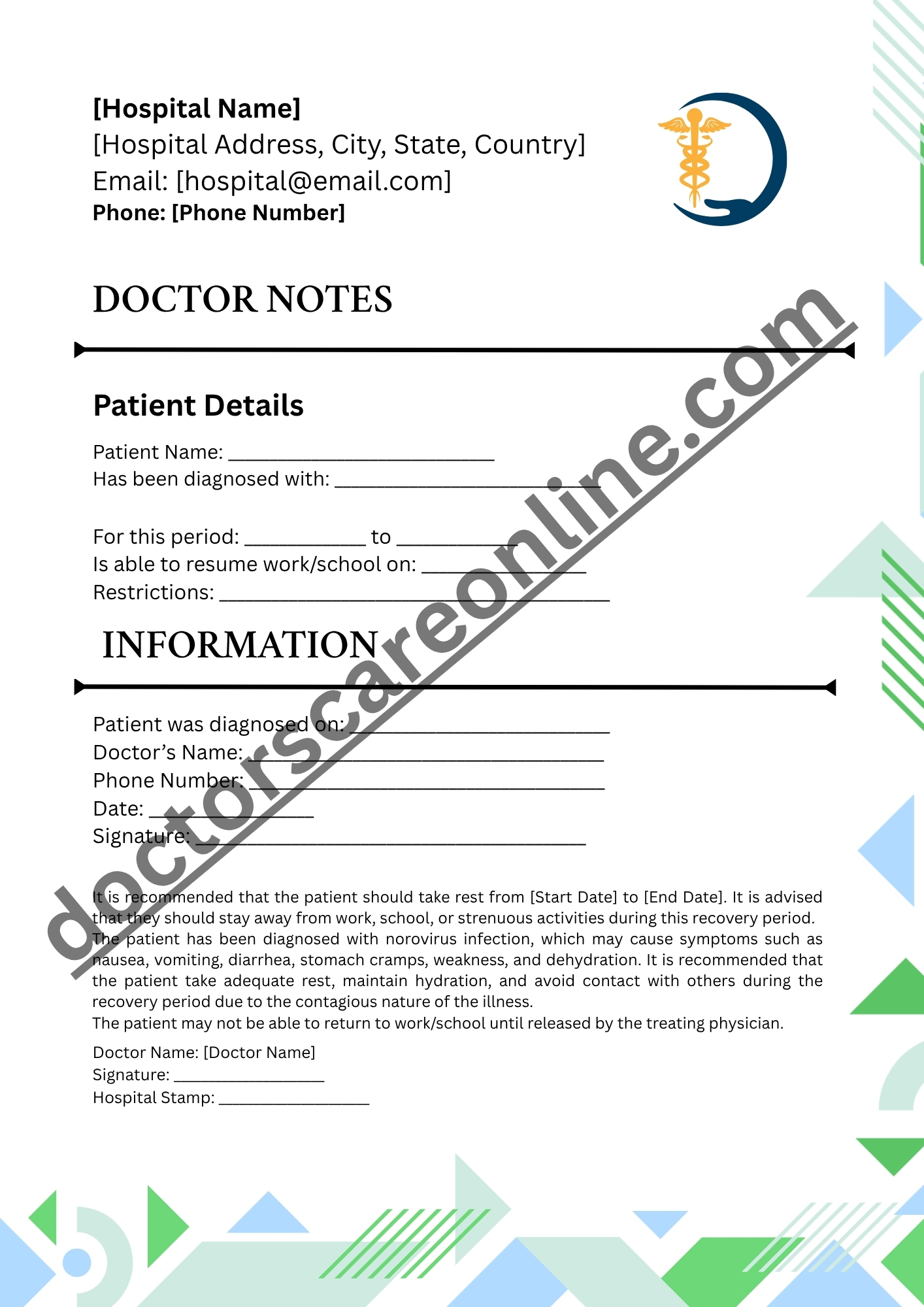
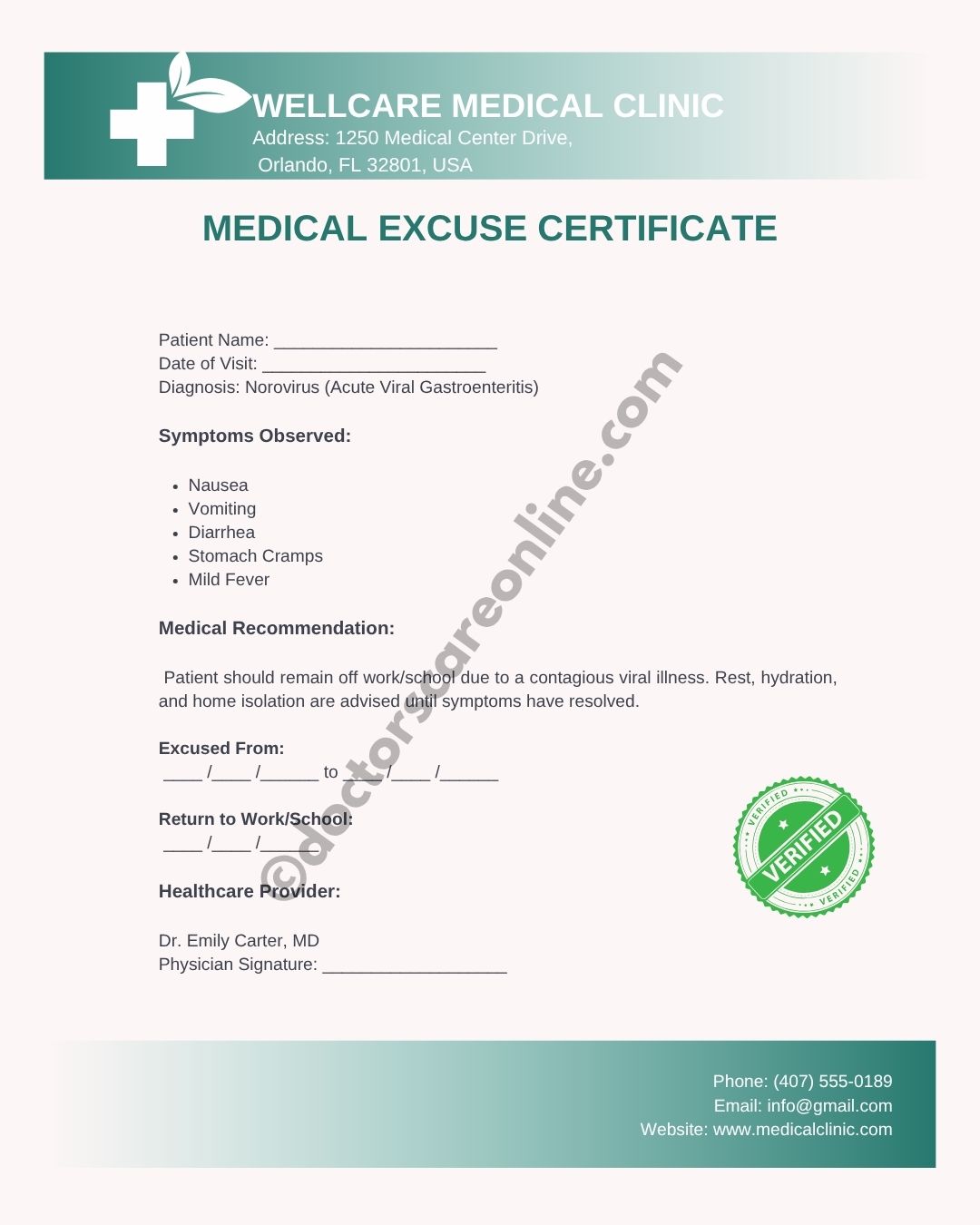
A doctor’s note for norovirus is a medical document provided by a healthcare professional that confirms you were evaluated for your illness and may need rest or temporary absence. This note can help support a sick leave request and provide official documentation when required by an employer, school, or other organization.
Norovirus is a highly contagious virus that affects the digestive system and commonly causes vomiting, diarrhea, nausea, and stomach discomfort. Due to sudden symptoms and weakness, many people may need to take time away from work, school, or daily activities.
A medical note does not always mention detailed health information. In most cases, it includes general details such as the date of consultation, recommended recovery period, and return-to-activity guidance.
What Is Norovirus Infection?
Norovirus is a viral infection that causes inflammation in the stomach and intestines, also known as viral gastroenteritis. It spreads easily through contaminated food, water, surfaces, or close contact with an infected person.
The virus can spread quickly in places like schools, workplaces, healthcare facilities, and households because only a small amount of the virus is needed to cause infection.
Common ways norovirus spreads include:
- Touching contaminated objects and then touching your mouth
- Eating food prepared by someone who is infected
- Direct contact with an infected person
- Improper hand hygiene after using the restroom
Unlike some illnesses, norovirus can continue spreading even after symptoms improve, which makes proper recovery and hygiene important.
Common Symptoms That May Require a Doctor’s Note for
Norovirus
Norovirus symptoms usually appear suddenly and can make normal activities difficult. While many cases improve with home care, some symptoms may require medical attention.
Common norovirus symptoms include:
- Frequent vomiting
- Watery diarrhea
- Stomach cramps or abdominal pain
- Nausea
- Mild fever
- Headache
- Body weakness and tiredness
- Loss of appetite
Signs that you may need medical advice include:
- Difficulty keeping fluids down
- Signs of dehydration
- Severe stomach pain
- Symptoms lasting longer than expected
- Extreme weakness or dizziness
A healthcare provider can evaluate your condition and determine whether a norovirus sick note or medical documentation is appropriate.
When Should You See a Doctor for Norovirus?
Most people recover from norovirus within a few days with proper hydration and rest. However, medical advice may be needed if symptoms become severe or recovery is delayed.
You should consider contacting a doctor if:
- Vomiting prevents you from drinking enough fluids
- Diarrhea continues for several days
- You notice dehydration symptoms such as dry mouth or reduced urination
- You have severe abdominal discomfort
- Symptoms affect your ability to work or attend school
People who may need extra care include young children, older adults, pregnant individuals, and people with weakened immune systems.
How to Get a Doctor’s Note for Norovirus
Getting medical documentation for norovirus usually involves a simple process. You can visit a healthcare provider in person or choose an online consultation if available.
Step 1: Monitor Your Symptoms
Keep track of important details such as:
- Date symptoms began
- Number of vomiting or diarrhea episodes
- Fever or stomach pain
- Ability to eat and drink fluids
This information helps the doctor understand your condition.
Step 2: Schedule a Medical Consultation
You can book an appointment through:
- A local doctor’s office
- Urgent care clinic
- Healthcare provider’s online platform
- Telehealth service
Step 3: Discuss Your Health Condition
During the appointment, explain your symptoms clearly and mention if you need documentation for:
- Workplace absence
- School absence
- College requirements
Step 4: Receive Medical Guidance
The doctor may recommend:
- Rest and hydration
- Symptom management
- Recovery instructions
- A suitable return date based on your condition
Step 5: Obtain the Doctor’s Note
If medically appropriate, the provider can issue a medical certificate for norovirus with the necessary details for your employer or school.
What Information Is Included in a Norovirus Doctor’s Note?
A doctor’s note for a stomach virus usually contains basic medical documentation rather than detailed health information.
It may include:
| Information | Details |
|---|---|
| Patient Details | Name and basic identification information |
| Consultation Date | Date you were evaluated by the healthcare provider |
| Medical Recommendation | Advice to rest or avoid regular activities |
| Recovery Period | Suggested time away from work or school |
| Return Date | When can you resume normal activities |
| Provider Information | Doctor or clinic details |
The exact format can vary depending on healthcare providers, workplaces, and educational institutions.
How Long Should You Stay Home With Norovirus?
Norovirus can spread easily, so staying home during the contagious period is important to protect others. Many people begin feeling better within 1 to 3 days, but the virus may still spread after symptoms improve.
General guidance includes:
- Stay home while experiencing vomiting or diarrhea
- Avoid returning to work or school immediately after symptoms stop
- Follow workplace or school health policies
- Maintain good hygiene after recovery
Many healthcare professionals recommend waiting until you have been free from vomiting and diarrhea for at least 48 hours before returning to shared environments.
This helps reduce the risk of spreading the infection to coworkers, classmates, or family members.
Norovirus Recovery Timeline
Recovery time can vary depending on age, overall health, and symptom severity.
|
Recovery Stage |
Typical Experience |
|
Exposure |
Virus enters the body |
|
12–48 Hours |
Symptoms usually begin |
|
Days 1–2 |
Vomiting and diarrhea are often most severe |
|
Days 2–3 |
Symptoms usually begin improving |
|
Days 3–7 |
Strength gradually returns |
| After Recovery |
Digestive function normalizes and energy improves |
Some people may feel tired for several days after the main symptoms disappear because the body needs time to recover from fluid loss and infection.
Treatment Options for Norovirus
There is no specific medicine that removes norovirus from the body. Treatment mainly focuses on controlling symptoms and preventing dehydration.
Common recovery measures include:
Fluid Replacement
- Drink water regularly
- Use oral rehydration solutions if needed
- Replace lost electrolytes after vomiting or diarrhea
Rest and Recovery
- Allow your body enough time to heal
- Avoid heavy physical activities during illness
Managing Symptoms
Doctors may suggest safe options based on your condition, but antibiotics are not effective because norovirus is caused by a virus, not bacteria.
Medical Support for Severe Cases
People with serious dehydration may require additional medical care to restore fluids and electrolytes.
Home Care Tips During Norovirus Recovery
Proper home care can help you recover comfortably and prevent the spread of the infection.
Helpful steps include:
- Drink small amounts of fluids frequently
- Get enough sleep and physical rest
- Wash your hands carefully with soap and water
- Clean frequently touched surfaces
- Wash contaminated clothing and bedding properly
- Avoid preparing food for others while sick
Unlike some germs, norovirus is not always removed effectively by regular hand sanitizers, so proper handwashing is especially important.
Preventing Norovirus Spread at Home and Workplace
Norovirus spreads very easily, especially in shared environments such as homes, offices, schools, and healthcare settings. Taking proper precautions can reduce the chances of infecting others.
Important prevention steps include:
- Wash your hands thoroughly with soap and water after using the restroom and before eating
- Avoid preparing food for others while you are sick and for some time after recovery
- Clean and disinfect surfaces that may have been contaminated
- Wash clothes, towels, and bedding exposed to vomit or diarrhea separately
- Keep personal items separate from infected family members
- Dispose of contaminated waste carefully
Following these hygiene practices helps prevent the spread of norovirus infection and protects people around you.
How Long Is a Norovirus Doctor’s Note Valid for Work, School, or College?
A norovirus doctor’s note is usually considered valid only for the period mentioned by the healthcare provider. The document supports your absence when your illness prevents you from attending work, school, or college.
- For Office/Workplace: The note generally applies to the recovery days recommended by the doctor. If you are still experiencing symptoms after that period, your employer may require further medical confirmation.
- For School or College: The note is usually accepted for the specific missed classes or attendance days mentioned by the healthcare provider.
- For Extended Illness: If recovery takes longer than expected, you may need a follow-up consultation and an updated medical note.
The acceptance period can vary depending on your employer’s rules, school or college policies, and the details provided on the medical document.
Doctor’s Note for Norovirus and Work Requirements
A doctor’s note for norovirus for work can help employees provide official documentation when they need time away because of illness. Since norovirus symptoms can be sudden and severe, many people are unable to perform their regular job duties during the infection.
A workplace may request medical documentation when:
- An employee takes multiple sick days
- Company policy requires a medical certificate
- The illness affects workplace safety
- The employee works in healthcare, food service, or childcare
A doctor’s note may confirm that you were evaluated and advised to rest. It generally does not need to include private medical details unless required by specific regulations or policies.
Before returning to work, consider:
- Being free from vomiting and diarrhea
- Feeling physically capable of completing work duties
- Following employer health guidelines
- Maintaining proper hygiene practices
Doctor’s Note for Norovirus for School or College
Students with norovirus may need to miss classes due to symptoms like vomiting, diarrhea, weakness, and dehydration. A norovirus doctor’s note for school can provide documentation for an absence when required.
Schools or colleges may request a medical note when:
- A student misses several days of classes
- Attendance requirements are strict
- Exams, assignments, or important activities are affected
The note may include:
- Date of medical evaluation
- Recommended absence period
- General return-to-school guidance
Students should avoid returning until symptoms have improved to reduce the risk of spreading the virus to classmates and staff.
Can You Get an Online Doctor’s Note for Norovirus?
Yes, in many cases, you may be able to request an online doctor’s note for norovirus through a telehealth consultation. Virtual healthcare services allow patients to discuss symptoms without visiting a clinic, which can also help reduce exposure to others.
During an online appointment, a healthcare provider may ask about:
- Your current symptoms
- How long have you been sick
- Fluid intake and dehydration signs
- Any health conditions
- The reason you need medical documentation
If the provider determines that a note is appropriate, they may provide documentation according to their medical assessment and local requirements.
Online consultation can be useful when:
- Symptoms are mild to moderate
- You need quick medical advice
- You are unable to travel due to illness
Norovirus vs Food Poisoning: What Is the Difference?
Norovirus and food poisoning can cause similar digestive symptoms, but they have different causes.
| Feature | Norovirus | Food Poisoning |
|---|---|---|
| Cause | Viral infection | Bacteria, toxins, or contaminated food |
| Spread | Easily spreads between people | Often linked to specific food sources |
| Common Symptoms | Vomiting, diarrhea, nausea, cramps | Stomach pain, vomiting, diarrhea |
| Contagious | Highly contagious | Depends on the cause |
| Recovery | Usually improves within a few days | Recovery time varies |
Understanding the difference can help determine whether you need medical advice or a doctor’s note for a stomach virus.
Returning to Normal Activities After Norovirus
After recovering from norovirus, it is important to gradually return to your routine. Even after symptoms stop, your body may still need time to regain energy.
Helpful tips include:
- Start with light daily activities
- Continue drinking enough fluids
- Eat balanced meals as your appetite returns
- Avoid strenuous exercise immediately
- Continue careful hand hygiene
If symptoms return or you experience ongoing weakness, consult a healthcare professional.
FAQs
1. Should I Stay Off Work With Norovirus?
Yes, you should stay away from work if you have norovirus symptoms like vomiting, diarrhea, or severe weakness. Returning too early can increase the risk of spreading the infection to coworkers. It is generally recommended to wait until symptoms have stopped before going back to work and following your workplace health guidelines.
2. How Do You Prove You Have Norovirus?
Norovirus is usually diagnosed based on symptoms and a doctor’s evaluation rather than a physical “proof” at home. In some cases, a healthcare provider may recommend a stool test to confirm the infection, especially during outbreaks or severe illness. A doctor’s note can provide medical documentation if you need proof for work or school absence.
3. What Doctors Wish You Knew About Norovirus?
Doctors often emphasize that norovirus is highly contagious and can spread quickly. Important things to know include:
- Staying hydrated is the key to recovery
- Symptoms can appear suddenly
- Good handwashing helps reduce the spread
- You may still spread the virus after feeling better
- Rest is important for a complete recovery
4. What Are 6 Signs of Norovirus?
Common signs of norovirus include:
- Sudden vomiting
- Watery diarrhea
- Nausea
- Stomach cramps
- Mild fever
- Tiredness or body weakness
Some people may also experience headache, chills, or loss of appetite.
5. What Is Mistaken for Norovirus?
Norovirus symptoms can look similar to several other stomach-related illnesses, including:
- Food poisoning: Often causes vomiting and diarrhea after eating contaminated food.
- Stomach flu (viral gastroenteritis): A general term for stomach infections that may have similar symptoms.
- Rotavirus infection: Can cause diarrhea and vomiting, especially in children.
- Food intolerance: Certain foods may trigger stomach discomfort and diarrhea.
- Bacterial infections: Some bacteria can cause symptoms similar to norovirus.
A healthcare provider can help identify the actual cause based on symptoms, timing, and medical history.
Medical Disclaimer
Medical Disclaimer: This article is intended for informational and educational purposes only and should not be considered medical advice, diagnosis, or treatment. Always consult a licensed healthcare professional regarding your symptoms, medical condition, or treatment options. If you experience severe dehydration, persistent vomiting, bloody diarrhea, difficulty breathing, or other emergency symptoms, seek immediate medical care.
Related Post –

Reviews
There are no reviews yet.