
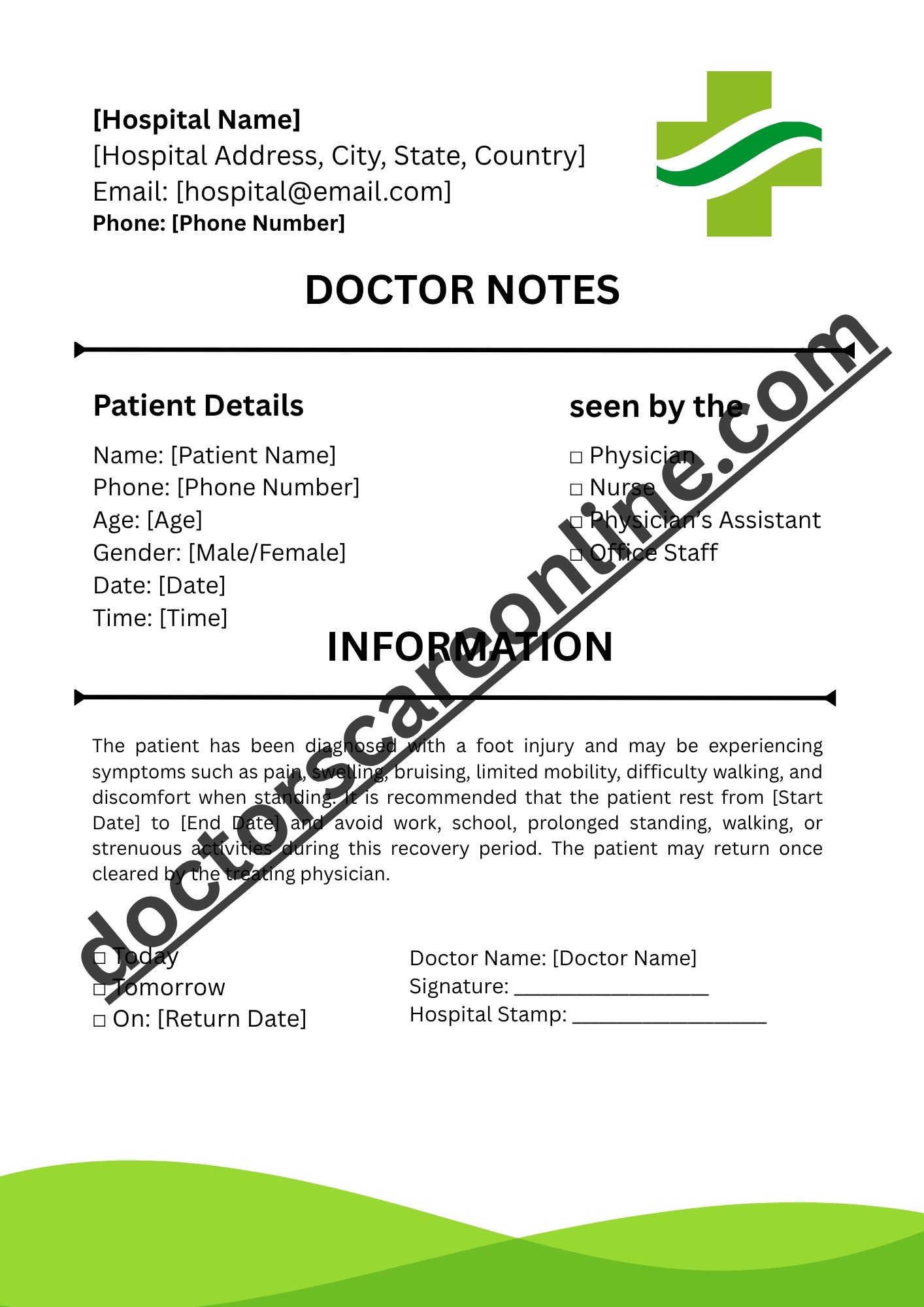
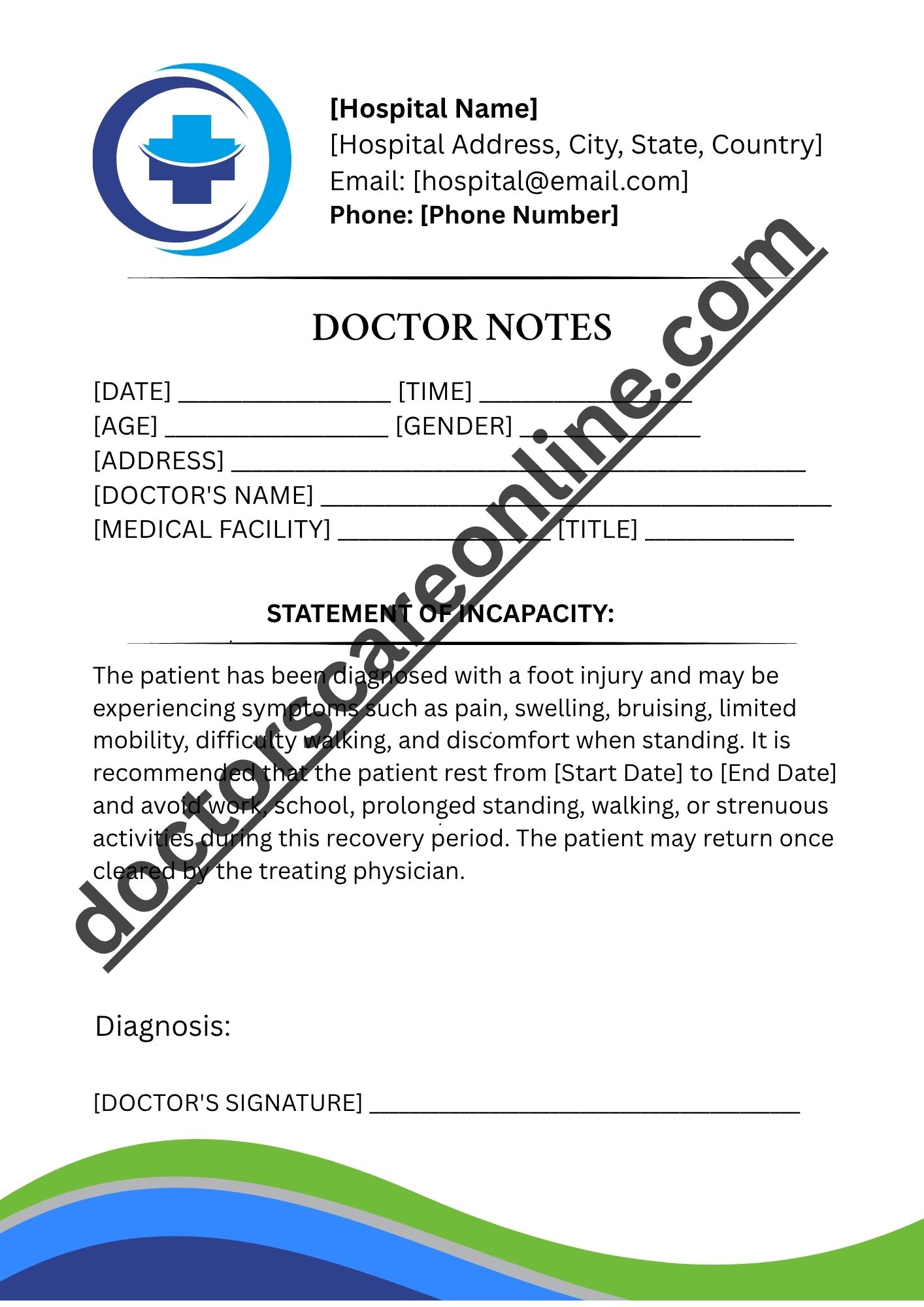
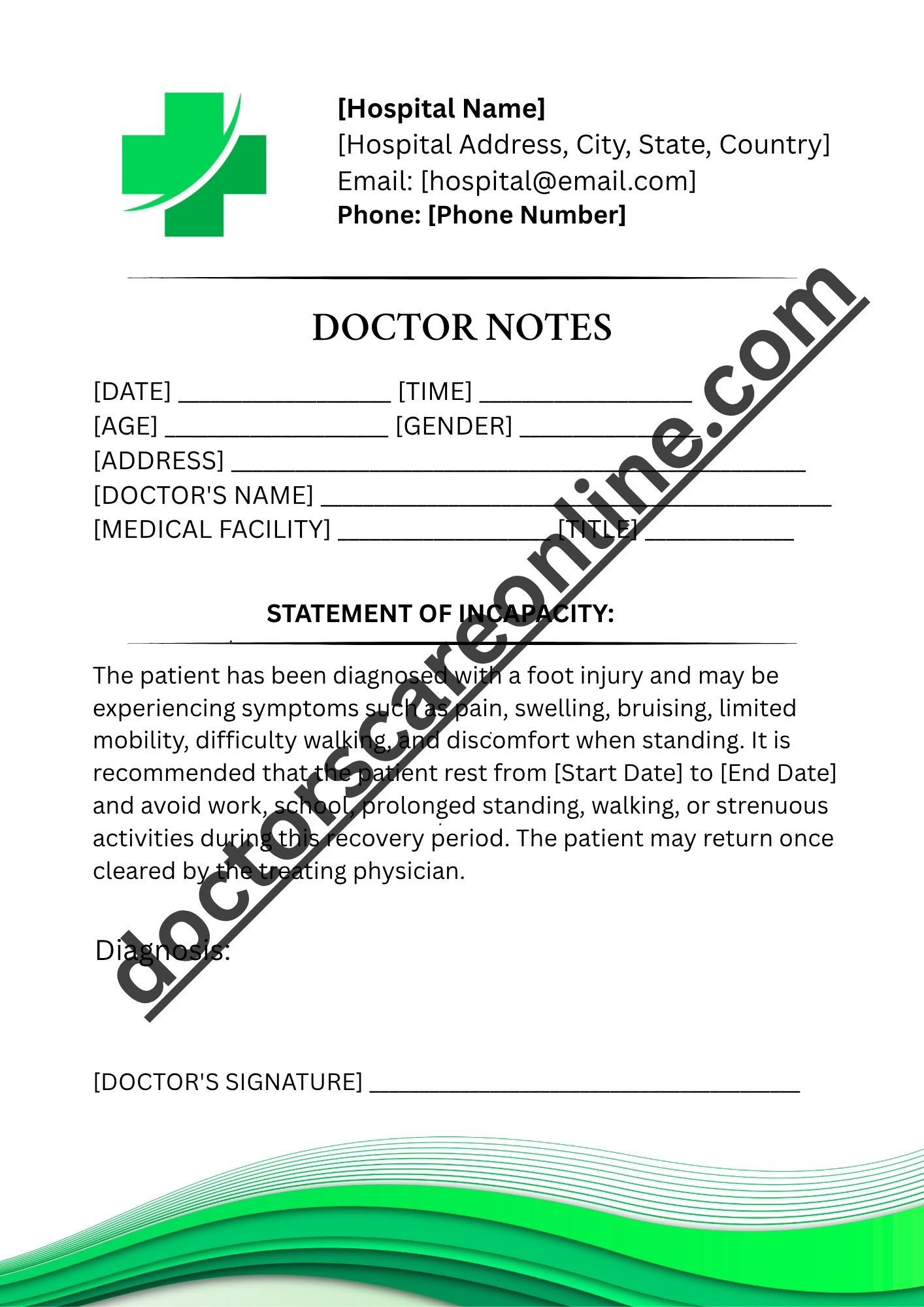
A Doctors Note for a Foot Injury is a medical document provided by a licensed healthcare professional after examining an injury affecting the foot. It verifies that the patient has a condition that may temporarily limit their ability to walk, stand, perform physical tasks, attend school, or work safely.
The note is commonly requested by employers, schools, colleges, or insurance providers when a foot injury results in missed responsibilities or requires temporary accommodations. Depending on the severity of the injury, the healthcare provider may recommend complete rest, modified duties, restricted physical activity, or a gradual return to normal routines.
A doctor’s note generally confirms that:
- The patient was evaluated by a healthcare provider.
- A foot injury is affecting normal activities.
- Medical leave or temporary restrictions are recommended, if necessary.
- A follow-up appointment or reassessment may be required before returning to regular activities.
When Might You Need a Doctor’s Note for a Foot Injury?
Not every foot injury requires medical documentation, but a doctor’s note becomes important when the injury prevents you from performing everyday responsibilities or when proof of a medical condition is required.
You may need a doctor’s note if:
- You are unable to stand or walk comfortably during work.
- Your employer requires documentation for sick leave.
- A school or college requests medical verification for missed classes.
- You need modified duties because of mobility limitations.
- You have been treated in an emergency room or urgent care clinic.
- Your injury occurred at work and requires official medical records.
- You are recovering after foot surgery.
- Your healthcare provider recommends staying home until your condition improves.
- You require medical clearance before returning to physically demanding activities.
Providing timely medical documentation can help avoid attendance issues while ensuring you have enough time to recover properly.
Common Foot Injuries That May Require Medical Documentation
Different foot injuries heal at different rates. Some may only require a few days of rest, while others can lead to several weeks or even months of recovery.
| Foot Injury | May Require a Doctor’s Note | Typical Recovery Time |
|---|---|---|
| Foot Sprain | Yes | 1–6 weeks |
| Foot Fracture | Yes | 6–12 weeks |
| Broken Toe | Sometimes | 4–8 weeks |
| Stress Fracture | Yes | 6–10 weeks |
| Achilles Tendon Injury | Yes | Several weeks to months |
| Plantar Fasciitis | Sometimes | Several weeks |
| Severe Foot Bruising | Sometimes | A few days to several weeks |
| Tendon or Ligament Tear | Yes | Varies depending on severity |
| Crush Injury | Yes | Weeks to months |
| Recovery After Foot Surgery | Yes | Depends on the procedure |
Signs That You Should See a Doctor for a Foot Injury
While minor soreness may improve with rest, certain symptoms indicate that professional medical evaluation is necessary. Seeking care early can help prevent complications and ensure appropriate treatment.
Consider seeing a healthcare provider if you experience:
- Severe pain that does not improve with rest.
- Difficulty standing or walking.
- Inability to put weight on the injured foot.
- Swelling that continues to increase after the first day.
- Significant bruising or discoloration.
- A visible deformity of the foot or toes.
- Persistent numbness or tingling.
- Pain following a fall, sports injury, or workplace accident.
- An open wound or deep cut on the foot.
- Symptoms that continue for several days without improvement.
A healthcare provider may recommend imaging tests, such as X-rays or other diagnostic evaluations, to determine whether the injury involves a fracture or significant soft tissue damage.
How to Book an Online Appointment for a Foot Injury
Booking an online appointment for a foot injury is usually quick and can be done through a hospital’s website, a healthcare provider’s patient portal, or a telehealth platform. Follow these simple steps:
1. Choose a Healthcare Provider
Select the type of healthcare professional based on your symptoms:
- Primary care physician (for mild to moderate injuries)
- Orthopedic specialist (for fractures or bone injuries)
- Podiatrist (foot and ankle specialist)
- Urgent care clinic (for same-day evaluation)
2. Visit the Official Website or App
Go to the healthcare provider’s official website or use their appointment booking app. Many hospitals and clinics offer online scheduling for new and existing patients.
3. Select “Book an Appointment”
Choose the option to schedule an appointment and select the department or specialist for foot injuries.
4. Choose Your Preferred Date and Time
Pick an available appointment slot that fits your schedule. If your injury is severe, choose the earliest available appointment or visit an emergency department if necessary.
5. Enter Your Information
You may be asked to provide:
- Full name
- Date of birth
- Contact number
- Email address
- Insurance details (if applicable)
- Reason for the visit (e.g., foot pain, sprain, fracture, swelling)
6. Confirm Your Appointment
Review the appointment details and submit your request. Most providers will send a confirmation by email or text message.
7. Prepare for Your Visit
Before your appointment:
- Bring a photo ID and insurance card (if applicable).
- Carry previous medical records or imaging reports related to your foot injury.
- Wear comfortable footwear that can be removed easily during the examination.
- Make a list of your symptoms and any medications you are currently taking.
When Should You Request a Doctor’s Note for a Foot Injury?
A doctor’s note should be requested when your foot injury prevents you from safely carrying out your usual responsibilities or when your employer, school, or another organization requires medical documentation. Getting evaluated as soon as possible after the injury also helps ensure you receive the appropriate treatment and recommendations for recovery.
You should consider requesting a doctor’s note in the following situations:
- You are unable to stand or walk without significant pain.
- Your foot injury causes you to miss work or school.
- Your employer requests medical proof for an excused absence.
- You visit an urgent care center, emergency room, or orthopedic clinic for treatment.
- Your healthcare provider advises rest or temporary work restrictions.
- You need accommodations such as seated work, reduced walking, or lifting restrictions.
- You are recovering from foot surgery and require extended leave.
- You need clearance before returning to physically demanding activities.
Obtaining a doctor’s note early can help avoid attendance disputes and ensures your recovery plan is supported by medical documentation.
What Information Is Usually Included in a Foot Injury Doctor’s Note?
A doctor’s note typically contains only the information necessary to verify your medical condition and recommended work or school limitations. It generally does not include detailed medical records unless you choose to authorize their release.
| Information Included | Why It Matters |
|---|---|
| Patient’s Name | Identifies the individual receiving medical care. |
| Date of Medical Visit | Confirms when the healthcare provider evaluated the injury. |
| Healthcare Provider’s Information | Verifies that the note was issued by a licensed medical professional. |
| General Medical Condition | Indicates that the patient has a foot injury requiring medical attention without revealing unnecessary personal health details. |
| Recommended Leave Period | States the dates the patient should remain away from work or school, if applicable. |
| Activity Restrictions | Lists temporary limitations such as avoiding prolonged standing, walking, lifting, or climbing. |
| Expected Return Date | Provides an estimated date for returning to normal activities or modified duties. |
| Follow-Up Recommendation | Indicates whether additional medical evaluation is needed before resuming regular activities. |
| Provider’s Signature | Confirms the authenticity of the medical documentation. |
Common Work Restrictions After a Foot Injury
The restrictions included in a doctor’s note depend on the type and severity of the injury, as well as the physical demands of your job. Temporary limitations are intended to protect the injured foot while it heals and reduce the risk of further damage.
A healthcare provider may recommend one or more of the following restrictions:
Avoid Prolonged Standing
Standing for extended periods can increase pain, swelling, and pressure on the injured foot. Employees whose jobs involve standing for most of the day may need modified duties or temporary leave.
Limit Walking
Walking long distances or moving frequently throughout the workplace may slow recovery. A doctor may advise minimizing walking whenever possible.
No Running or High-Impact Activities
Running, jumping, climbing stairs repeatedly, or participating in physically demanding tasks may be restricted until healing has progressed.
No Heavy Lifting
Lifting heavy objects places additional stress on the feet and may increase discomfort or delay recovery, particularly after fractures or tendon injuries.
Seated Work Only
For employees with office-based responsibilities, a healthcare provider may recommend performing duties while seated to reduce pressure on the injured foot.
Use of Mobility Aids
Patients may be instructed to use crutches, a walking boot, a cane, or other assistive devices to avoid placing excessive weight on the injured foot.
Elevate the Foot During Breaks
Keeping the foot elevated throughout the day may help reduce swelling and improve comfort during recovery.
Frequent Rest Periods
Short rest breaks allow the injured foot to recover from activity and may be recommended for individuals returning to work before complete healing.
School Accommodations for Students With a Foot Injury
A foot injury can make attending school more challenging, especially if students need to walk between classrooms, participate in physical education, or carry heavy school materials. A doctor’s note can help schools provide temporary accommodations during recovery.
Possible accommodations may include:
- Excused absences during the recovery period.
- Temporary exemption from physical education or sports activities.
- Additional time to travel between classrooms.
- Permission to use elevators where available.
- Access to mobility aids such as crutches or a walking boot.
- Modified participation in extracurricular activities.
- Temporary seating arrangements that reduce unnecessary walking.
- Extended assignment deadlines if mobility limitations affect attendance.
- Permission to leave class early to avoid crowded hallways.
- Temporary parking accommodations for eligible students.
The exact accommodations depend on school policies and the treating healthcare provider’s recommendations.
Can You Return to Work While Recovering From a Foot Injury?
Many people can return to work before their foot has completely healed, but the timing depends on the nature of the injury, the treatment plan, and the physical demands of the job. A healthcare provider will determine whether returning to work is appropriate and whether any restrictions are necessary.
Office and Desk Jobs
Individuals who primarily perform computer-based or administrative work may return sooner if they can remain seated for most of the day and avoid excessive walking.
Retail and Customer Service Jobs
Employees who spend long hours standing or walking may require additional recovery time or temporary modifications such as shorter shifts or seated responsibilities.
Construction and Manual Labor
Jobs involving climbing, lifting, carrying equipment, or working on uneven surfaces often require full medical clearance before returning due to the increased risk of re-injury.
Healthcare and Hospitality
Nurses, caregivers, restaurant staff, and hotel employees frequently spend most of their shift on their feet. Depending on the severity of the injury, they may need temporary work restrictions or medical leave until they can safely perform their duties.
Returning to work too early may delay healing and increase the risk of further injury, making it important to follow your healthcare provider’s recommendations.
How Long Is a Doctor’s Note Usually Valid for a Foot Injury?
There is no standard validity period for a doctor’s note because every foot injury heals differently. The duration depends on the diagnosis, treatment plan, and the healthcare provider’s assessment.
Typical recommendations may include:
| Type of Injury | Typical Duration of Medical Leave |
|---|---|
| Mild Foot Sprain | 1–3 days |
| Moderate Sprain | 1–3 weeks |
| Severe Sprain | 3–6 weeks |
| Broken Toe | 1–4 weeks (depending on job duties) |
| Foot Fracture | 6–12 weeks |
| Tendon or Ligament Injury | Several weeks to several months |
| Recovery After Foot Surgery | As recommended by the surgeon |
If recovery takes longer than expected, your healthcare provider may schedule a follow-up appointment to assess your progress and determine whether your medical leave or work restrictions should be extended.
Treatment Options for a Foot Injury
apy may be recommended to improve strength, flexibility, balance, and range of motion. Rehabilitation exercises can also reduce the risk of future injuries.
- Rest: Limit walking, standing, and other activities that put pressure on the injured foot to allow proper healing.
- Ice Therapy: Apply an ice pack for 15–20 minutes at a time, several times a day during the first 24–48 hours to reduce pain and swelling.
- Compression: Use an elastic bandage or compression wrap to help control swelling and provide gentle support to the injured area.
- Elevation: Keep your foot raised above heart level whenever possible to reduce swelling and improve circulation.
- Pain Relief Medications: Your healthcare provider may recommend over-the-counter or prescription medications to help manage pain and inflammation.
- Walking Boot or Supportive Footwear: A medical walking boot, rigid-sole shoe, or orthopedic footwear may be prescribed to stabilize and protect the injured foot during recovery.
- Crutches or Mobility Aids: Crutches, a cane, or a knee scooter may be recommended to reduce weight-bearing and prevent additional injury.
- Physical Therapy: Rehabilitation exercises can help restore strength, flexibility, balance, and range of motion once the injury begins to heal.
- Splint or Cast: Moderate to severe fractures or certain ligament injuries may require a splint or cast to keep the foot immobilized while it heals.
- Imaging Tests: X-rays, MRI scans, or CT scans may be performed to diagnose fractures, tendon injuries, or ligament damage and guide treatment.
- Orthopedic or Podiatry Referral: More complex injuries may require evaluation and treatment by an orthopedic specialist or podiatrist.
- Surgery (If Necessary): Severe fractures, torn tendons, or significant ligament injuries may require surgical repair followed by rehabilitation and follow-up care.
- Follow-Up Appointments: Regular medical checkups help monitor healing, adjust treatment if needed, and determine when it is safe to return to work, school, sports, or other activities.
Tips for Recovering From a Foot Injury
Recovering from a foot injury requires patience and consistent self-care. Following your healthcare provider’s instructions can improve healing and reduce the risk of long-term problems.
- Follow Your Treatment Plan – Take medications as directed, attend follow-up appointments, and follow any restrictions provided by your healthcare provider.
- Avoid Putting Weight on the Injured Foot Too Soon – Even if the pain begins to improve, returning to normal activities too quickly can delay healing or cause additional damage.
- Wear Supportive Footwear – Use the walking boot, orthopedic shoe, or supportive footwear recommended by your healthcare provider. Proper support helps protect the injured area during recovery.
- Keep Swelling Under Control – Continue elevating your foot and applying ice as recommended to reduce swelling and discomfort.
- Stay Active Safely – While strenuous activity should be avoided, your healthcare provider may recommend gentle movements or rehabilitation exercises to prevent stiffness.
- Attend Follow-Up Visits – Regular checkups allow your healthcare provider to monitor healing and adjust your treatment plan if needed.
- Return to Sports Gradually – Athletes should only resume sports after receiving medical clearance. Returning too early increases the likelihood of re-injury.
- Maintain Good Nutrition – Eating a balanced diet that includes adequate protein, calcium, vitamin D, and other essential nutrients can support bone and tissue healing.
- Watch for Changes – Contact your healthcare provider if pain, swelling, or redness worsens instead of improving.
Common Mistakes to Avoid During Recovery
Certain habits can slow the healing process or increase the risk of complications. Avoiding these common mistakes can improve your recovery.
- Ignoring persistent or worsening pain.
- Returning to work before receiving medical clearance.
- Walking without recommended support devices.
- Removing a walking boot or brace too early.
- Skipping follow-up appointments.
- Continuing sports before the injury has healed.
- Wearing unsupportive shoes during recovery.
- Failing to complete prescribed physical therapy.
- Ignoring signs of infection after surgery or an open wound.
- Attempting to diagnose or treat a serious injury without medical evaluation.
When Should You Seek Immediate Medical Care?
Although many foot injuries improve with conservative treatment, some symptoms require urgent medical attention.
Seek immediate medical care if you experience:
- Severe pain that prevents any weight-bearing.
- A visibly deformed foot or ankle.
- Bone protruding through the skin.
- Heavy bleeding that does not stop.
- Sudden numbness or loss of sensation.
- The foot becomes pale, cold, or bluish.
- Rapidly increasing swelling after a serious injury.
- Fever, warmth, redness, or drainage from an injured area.
- Severe pain following a motor vehicle accident or significant fall.
- Symptoms that worsen despite following treatment recommendations.
Prompt evaluation can help prevent complications and improve long-term recovery.
Employer and School Policies Regarding Doctor’s Notes
Requirements for doctor’s notes vary between employers, schools, colleges, and universities. Understanding these policies can help ensure that your absence is handled appropriately.
Many employers request a doctor’s note when:
- Sick leave extends beyond the organization’s attendance policy.
- Temporary work restrictions are needed.
- Medical leave is requested.
- An injury occurred in the workplace.
- Medical clearance is required before returning to physically demanding duties.
Schools and colleges may request documentation to:
- Excuse missed classes.
- Reschedule examinations.
- Provide temporary academic accommodations.
- Excuse participation in physical education classes.
- Support requests for additional recovery time.
Always review your organization’s attendance policy, as documentation requirements may differ.
Can Urgent Care Provide a Doctor’s Note for a Foot Injury?
Yes. Urgent care centers commonly evaluate foot injuries and can provide medical documentation when appropriate.
Depending on your condition, an urgent care provider may:
- Examine the injured foot.
- Recommend initial treatment.
- Order or perform X-rays if available.
- Provide a doctor’s note for work or school.
- Recommend temporary work restrictions.
- Refer you to an orthopedic specialist or podiatrist if additional care is needed.
- Schedule follow-up care when necessary.
For many non-life-threatening foot injuries, urgent care can be a convenient option when your primary healthcare provider is unavailable.
Legal and Ethical Considerations
A doctor’s note is an official medical document and should always be used honestly and responsibly.
Keep the following points in mind:
- Doctor’s notes should only be issued by licensed healthcare providers after evaluating the patient.
- Medical documentation should accurately reflect the provider’s findings and recommendations.
- Altering, falsifying, or using a fake doctor’s note may violate workplace, school, or legal policies and could result in disciplinary action.
- Employers and educational institutions generally have the right to verify that documentation was issued by a legitimate healthcare provider, while respecting applicable privacy laws.
- Patients should never request inaccurate information or attempt to modify an authentic medical document.
Using legitimate medical documentation protects both the patient and the organization requesting the information.
FAQs
1. Can I get a doctor’s note for a sprained foot?
Yes. If a sprained foot affects your ability to work, attend school, or safely perform daily activities, a licensed healthcare provider may issue a doctor’s note after evaluating your condition.
2. How long can a doctor excuse you from work for a broken foot?
The length of medical leave depends on the severity of the fracture, your treatment plan, and the physical demands of your job. Some people return within a few weeks, while others may require several weeks or longer to recover.
3. Will urgent care give me a doctor’s note for a foot injury?
Yes. Many urgent care centers provide doctor’s notes after evaluating foot injuries and determining whether time off or work restrictions are medically necessary.
4. Can I work while wearing a walking boot?
It depends on your job responsibilities. Desk-based employees may be able to work with temporary modifications, while jobs requiring prolonged standing, climbing, or heavy lifting may require additional recovery time.
5. What information is included in a doctor’s note for a foot injury?
A doctor’s note generally includes your visit date, confirmation that you were medically evaluated, recommended leave or activity restrictions, an estimated return date, and the healthcare provider’s signature.
Related Post-





Reviews
There are no reviews yet.