

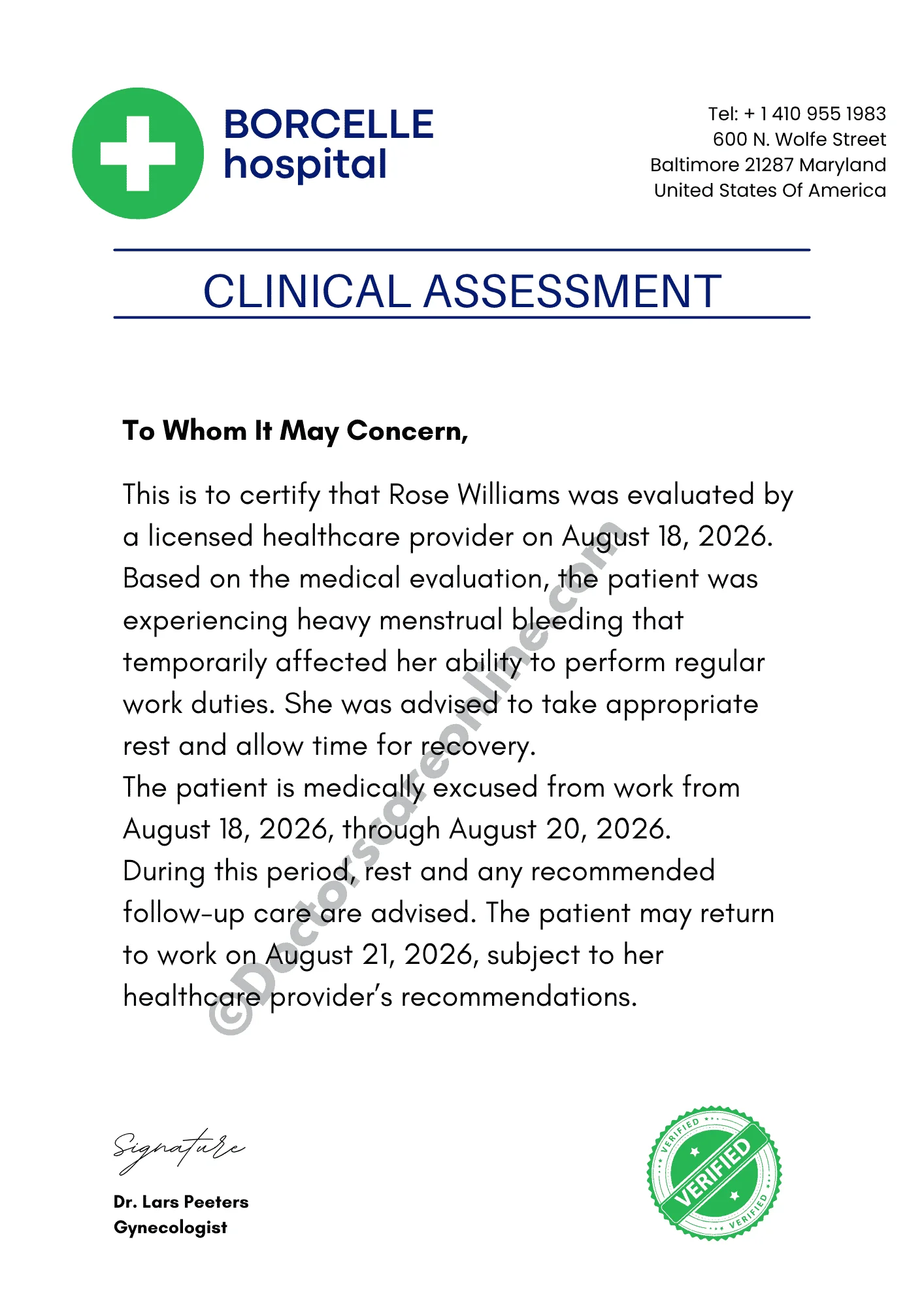
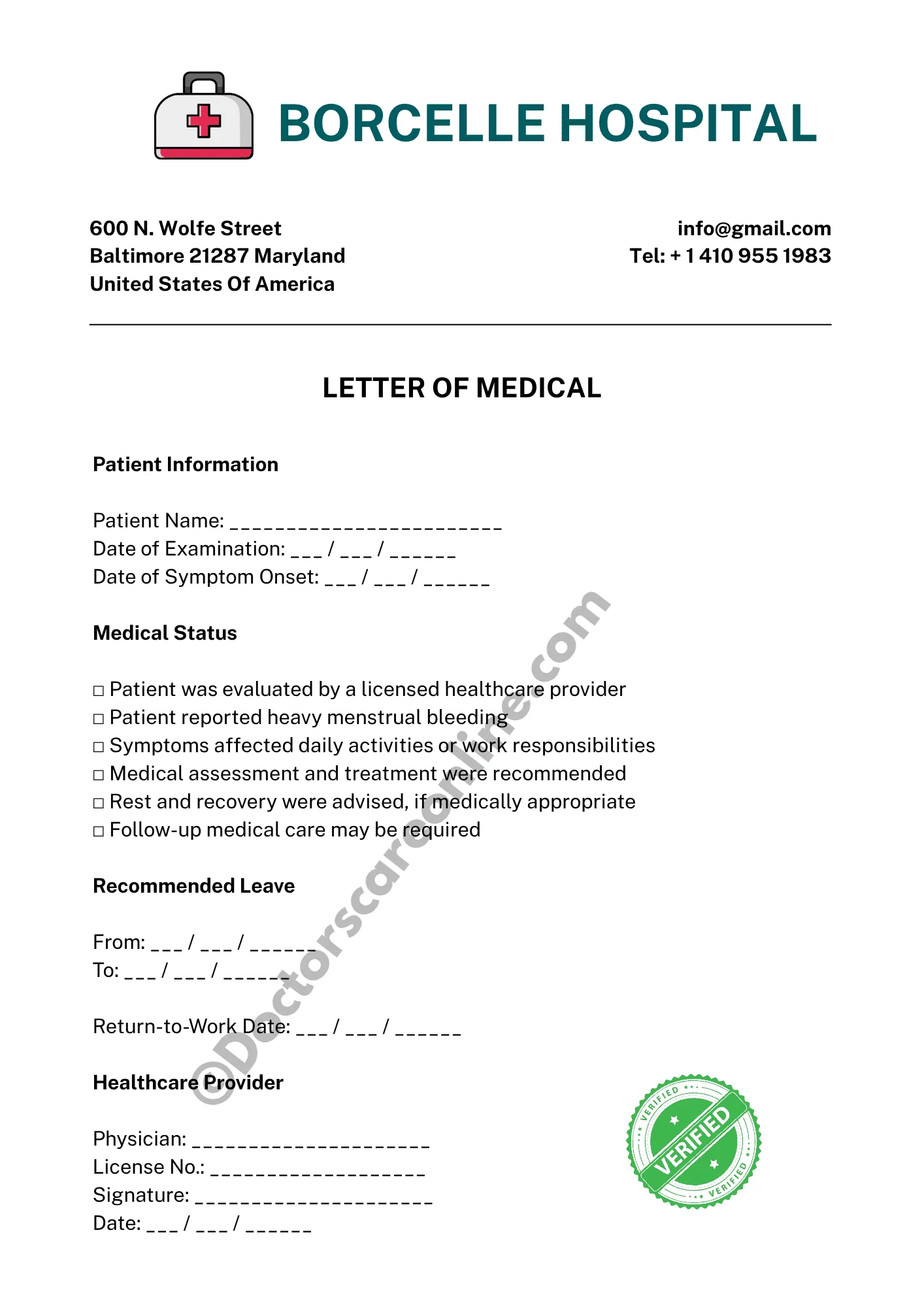
A doctor’s note for heavy periods is medical documentation provided by a licensed healthcare professional after an appropriate evaluation. Depending on the individual situation, the documentation may confirm that the patient was evaluated and may include recommended time away from work or school, activity limitations, or a return date.
Heavy menstrual bleeding is sometimes called menorrhagia. Signs can include bleeding for more than seven days, needing to change menstrual products very frequently, passing large clots, bleeding through clothing or bedding, or having periods that interfere with normal daily activities.
Related Doctor Note :—
You can also visit:
What Does a Doctor’s Note for Heavy Periods Include?
A doctor’s note for heavy periods is a written medical document issued by a healthcare provider following an evaluation. It may be used to explain a medically related absence or communicate temporary restrictions when menstrual symptoms interfere with normal responsibilities.
The content of a medical note depends on the provider’s clinical judgment and the requirements of the organization requesting the documentation. It may include:
- Patient’s name
- Date of medical evaluation
- Confirmation that the patient was evaluated
- Recommended absence period, when medically appropriate
- Temporary activity or workplace restrictions
- Recommended return date, when applicable
- Follow-up instructions
- Healthcare provider and practice information
A medical note does not necessarily need to disclose detailed private medical information. The information included depends on the clinical situation and applicable requirements.
When Heavy Periods May Interfere With Work or School
Heavy menstrual bleeding can affect daily life in several ways. Frequent trips to the restroom, fatigue, pelvic discomfort, unexpected bleeding, and difficulty concentrating may make normal responsibilities harder to manage.
You may consider seeking medical evaluation when your period:
- Causes you to miss work or school
- Makes prolonged standing or physical activity difficult
- Requires unusually frequent menstrual-product changes
- Causes bleeding through clothing or bedding
- Leaves you unusually tired or weak
- Interferes with exercise or normal routines
- Causes significant pelvic or menstrual pain
- Repeatedly disrupts your ability to complete daily activities
The NHS notes that heavy periods warrant medical attention when they affect daily life, and persistent heavy bleeding can sometimes be associated with anemia or an underlying condition.
Common Situations That May Lead to a Medical Evaluation
Heavy menstrual bleeding can happen for many different reasons, and sometimes no single cause is immediately identified. A healthcare professional considers your symptoms, medical history, age, medications, menstrual pattern, and other factors when determining what evaluation is appropriate.
Possible contributors include:
- Fibroids: Fibroids are noncancerous growths in or around the uterus that can contribute to heavy or prolonged menstrual bleeding.
- Adenomyosis: Adenomyosis occurs when tissue similar to the uterine lining grows into the muscular wall of the uterus. It can be associated with heavy bleeding and painful periods.
- Endometriosis: Endometriosis can cause pelvic pain and other menstrual symptoms. Some people also experience heavier or irregular bleeding.
- Hormonal Changes: Changes in reproductive hormones can affect ovulation and the menstrual cycle and may contribute to abnormal uterine bleeding.
- Bleeding Disorders: Certain blood-clotting disorders can make menstrual bleeding heavier than expected.
- Medications: Some medications, including certain blood-thinning medicines, can contribute to increased bleeding.
- Pregnancy-Related Causes: Bleeding during pregnancy is different from a typical menstrual period and should be medically evaluated rather than assumed to be a heavy period.
- Other Gynecological Conditions: Polyps, thyroid-related conditions, pelvic disorders, and other gynecological problems may contribute to abnormal uterine bleeding. A healthcare provider can determine which possibilities are relevant to your symptoms.
How Heavy Is Too Heavy for a Period?
There is no single amount of menstrual blood that determines whether a period is medically abnormal for every person. Healthcare professionals often consider the effect of bleeding on daily life as well as its duration and frequency.
Possible warning signs include:
- Bleeding for more than seven days
- Changing a pad or tampon every one to two hours
- Needing to use multiple menstrual products together
- Passing unusually large blood clots
- Bleeding through clothing or bedding
- Frequently missing work, school, or activities
- Persistent fatigue or shortness of breath
These symptoms can warrant medical evaluation, particularly when they are new, worsening, or recurring.
Symptoms to Tell Your Healthcare Provider About
During an appointment, give the provider as much accurate information as possible. Useful details include:
- The first day of your most recent period
- How many days your bleeding usually lasts
- Whether your bleeding has recently become heavier
- How frequently you change pads, tampons, or other products
- Whether you pass blood clots
- Whether bleeding occurs between periods
- Whether you experience bleeding after sex
- Pelvic or abdominal pain
- Dizziness, weakness, or unusual fatigue
- Shortness of breath
- Current medications
- Hormonal contraception or intrauterine device use
- Previous diagnoses or gynecological procedures
- Whether pregnancy is possible
Keeping track of your menstrual pattern can help provide your healthcare provider with useful information during an evaluation.
How a Healthcare Provider Evaluates Heavy Menstrual Bleeding
The evaluation depends on your symptoms and individual circumstances. A healthcare provider may begin by reviewing your medical and menstrual history and asking about medications, pregnancy possibility, pain, bleeding patterns, and other symptoms.
Depending on the situation, evaluation may include:
- Medical history
- Menstrual history
- Physical examination
- Blood tests
- Pregnancy testing when appropriate
- Testing for anemia or iron deficiency
- Assessment for bleeding disorders when indicated
- Pelvic ultrasound
- Additional gynecological testing when clinically necessary
ACOG educational material on abnormal uterine bleeding notes that evaluation can involve identifying possible causes and using appropriate laboratory and diagnostic testing.
Not every patient needs every test. The healthcare provider determines what is appropriate based on the individual’s symptoms and medical history.
Can Heavy Periods Cause Anemia?
Heavy menstrual bleeding can contribute to iron deficiency and anemia because repeated blood loss may reduce the body’s available iron and red blood cells.
Possible symptoms associated with anemia include:
- Persistent tiredness
- Weakness
- Dizziness
- Shortness of breath
- Reduced ability to exercise
- Difficulty concentrating
- Feeling unusually drained during or after a period
If you experience these symptoms along with heavy menstrual bleeding, tell your healthcare provider. Blood testing may be recommended when anemia or iron deficiency is suspected.
Treatment Options for Heavy Periods
Treatment depends on the underlying cause, symptoms, health history, pregnancy plans, and individual preferences. Some people may not require treatment, while others may benefit from medication or specialist care.
Depending on the situation, a healthcare professional may discuss:
- Medications that reduce menstrual bleeding
- Certain hormonal contraceptive options
- Anti-inflammatory medications when appropriate
- Treatment for iron deficiency or anemia
- Management of fibroids or other underlying conditions
- Specialist gynecological treatment
- Procedures or surgery when medically necessary
The NHS lists several treatment approaches for heavy periods, while specialist treatment may be considered when medication or initial management does not adequately control symptoms.
Do not start, stop, or change prescription medication based solely on online information. A healthcare professional should determine which treatment is appropriate for you.
Can You Get a Doctor’s Note for Heavy Periods for Work?
A healthcare provider may provide medical documentation when heavy menstrual bleeding or related symptoms medically interfere with your ability to work.
Depending on the assessment, documentation may address:
- A medically recommended absence
- Temporary activity restrictions
- Modified duties
- A recommended return date
- Follow-up care
For example, someone experiencing severe fatigue, significant pain, frequent bleeding, or another medically documented limitation may require temporary changes to normal work responsibilities.
Whether your employer accepts a particular type of documentation depends on company policy and applicable employment requirements. Always check your employer’s medical-leave or attendance policy.
Doctor’s Note for Heavy Periods for School or College
Students experiencing significant menstrual symptoms may sometimes need medical documentation when symptoms result in an absence or interfere with academic responsibilities.
Depending on the provider’s assessment, documentation may support:
- An excused absence
- A missed class
- A missed examination
- Temporary activity limitations
- A recommended recovery period
Schools and colleges can have different documentation policies, so students should check their institution’s requirements before submitting medical paperwork.
How to Book an Online Medical Appointment for Heavy Periods
If your symptoms are suitable for telehealth, an online consultation can provide a convenient way to discuss heavy menstrual bleeding with a licensed healthcare professional.
Step 1: Choose an Appropriate Provider
Select a healthcare service that offers appointments with appropriately licensed healthcare professionals in your location.
Step 2: Register or Log In
Create an account if you are a new patient or log in if you already have an account.
Step 3: Select Your Appointment
Choose an available appointment time that works for your schedule.
Step 4: Explain Your Symptoms
Provide accurate information about your menstrual bleeding, pain, duration, frequency, medications, and any other relevant symptoms.
Step 5: Complete the Consultation
Attend the scheduled video or online appointment and answer the provider’s questions honestly.
Step 6: Follow the Provider’s Recommendation
The provider may recommend treatment, additional testing, an in-person examination, or other medical care depending on your symptoms.
Step 7: Receive Documentation When Medically Appropriate
If the provider determines after evaluation that medical documentation is appropriate, they may issue a doctor’s note in accordance with applicable requirements and professional judgment.
An online appointment does not automatically guarantee a medical note. The healthcare provider must determine whether documentation is medically justified.
What Makes Our Online Medical Service Useful?
Our platform is designed to make the process of seeking an online medical evaluation more convenient for people who need professional guidance without unnecessarily complicated steps.
Depending on the service available in your location, you can use the platform to:
- Request an online medical appointment
- Explain your symptoms privately
- Connect with an appropriate healthcare professional
- Discuss how heavy periods are affecting your daily activities
- Receive medical guidance based on your individual situation
- Ask whether medical documentation may be appropriate
- Access documentation when a provider determines it is medically justified
The goal is to connect users with a healthcare evaluation rather than simply provide a document on request. Medical documentation should come from an appropriate healthcare professional after an evaluation.
Why Patients Can Use Our Platform With Confidence
A trustworthy online medical service should make the healthcare process clear rather than promise a medical outcome before an evaluation.
Our platform focuses on helping users navigate the appointment process, communicate their symptoms, and understand the next steps. Users should be able to review the healthcare provider’s information, understand the consultation process, and know that a doctor’s note is dependent on the provider’s medical assessment.
For your own protection, always provide truthful health information and review the documentation you receive before submitting it to an employer, school, insurer, or other organization.
Healthcare requirements can vary by state, employer, institution, and individual circumstances, so users should confirm any specific documentation requirements with the organization requesting the note.
Need Help With Registration, Login, Payment, or Your Order?
If you are having trouble registering or logging into your account, completing payment, accessing your appointment, or understanding the ordering process, you can contact our chatbox support for assistance.
You can use the chatbox to ask questions about:
- Account registration
- Login problems
- Payment-related issues
- Appointment-related questions
- Order or documentation questions
- Website navigation
- General service-related concerns
Our support team can help explain the platform process and guide you toward the appropriate next step. However, customer support cannot replace medical advice or determine whether you medically qualify for a doctor’s note. That decision belongs to the licensed healthcare professional evaluating your condition.
What to Have Ready Before an Online Appointment
Preparing information in advance can make your consultation more productive.
Consider having the following available:
- Your recent menstrual dates
- Approximate duration of bleeding
- Frequency of menstrual-product changes
- Description of blood clots, if present
- Pain symptoms
- Other symptoms such as fatigue or dizziness
- Current medications
- Birth control information
- Relevant medical history
- Previous test results, if available
- Information about how symptoms affect work or school
Accurate information helps the provider understand your situation and determine whether further evaluation is needed.
When Heavy Menstrual Bleeding Needs Urgent Medical Care
Heavy menstrual bleeding can sometimes require prompt or emergency evaluation.
Seek urgent medical care if you are experiencing very heavy bleeding together with symptoms such as:
- Fainting or near-fainting
- Severe dizziness or weakness
- Significant shortness of breath
- Severe or worsening pelvic or abdominal pain
- Symptoms suggesting substantial blood loss
- Bleeding during pregnancy
- Any rapidly worsening or concerning symptoms
If you believe you may be experiencing a medical emergency, contact emergency services or go to the nearest emergency department rather than waiting for an online appointment.
How Long Is a Doctor’s Note for Heavy Periods Valid?
There is no universal validity period for a doctor’s note. The relevant dates depend on what the healthcare provider recommends and what the receiving organization requires.
A note may specify:
- The date of medical evaluation
- A recommended absence period
- Temporary restrictions
- A return date
- A need for follow-up evaluation
If symptoms continue beyond the period covered by the documentation, you may need another medical evaluation rather than extending or changing the original note yourself.
Can a Doctor’s Note Include Work Restrictions?
When medically appropriate, a healthcare provider may recommend temporary restrictions based on symptoms and functional limitations.
Depending on the situation, restrictions could address:
- Physically demanding duties
- Prolonged standing
- Heavy lifting
- Extended shifts
- Other activities that may be difficult because of the patient’s symptoms
The provider determines whether restrictions are appropriate and how long they should apply.
Can You Get a Same-Day Medical Evaluation for Heavy Periods?
Some healthcare services offer same-day appointments, but availability depends on the provider, location, appointment schedule, and type of service.
A same-day appointment does not mean that a doctor’s note is automatically issued. The healthcare professional must first evaluate the patient’s symptoms and determine what medical documentation, if any, is appropriate.
What Should You Do After Receiving a Doctor’s Note?
Once you receive medical documentation, review it carefully to make sure the basic information is accurate.
Depending on why you requested the note, you may need to:
- Submit it through your employer’s required process.
- Provide it to your school or college according to its policy.
- Follow any restrictions or recovery recommendations.
- Attend recommended follow-up care.
- Contact your healthcare provider if your symptoms change or worsen.
Never modify the contents of a medical document yourself.
Frequently Asked Questions
Q: Can heavy periods be a sign of an underlying health problem?
Yes. Heavy menstrual bleeding can have several possible causes, including fibroids, adenomyosis, bleeding disorders, medication effects, hormonal problems, and other gynecological conditions. A healthcare provider can determine which causes should be considered based on your symptoms and history.
Q: Should I track my period before seeing a doctor?
Tracking your bleeding pattern can be useful. Record when bleeding starts and ends, how frequently you change menstrual products, whether you pass clots, and any associated symptoms. This information can give your healthcare provider a clearer picture of your menstrual pattern.
Q: Can heavy periods affect my ability to concentrate at work?
They can. Heavy bleeding may be accompanied by fatigue, weakness, pain, or other symptoms that make normal activities more difficult. If these symptoms are affecting your work performance, discuss them with a healthcare professional.
Q: Can I request a medical note without telling my employer my private medical details?
The amount of medical information required can vary depending on the employer and applicable requirements. Ask your employer or HR department what documentation is necessary, and discuss privacy concerns with your healthcare provider before requesting documentation.
Q: What if my heavy bleeding continues after my doctor’s recommended leave ends?
Contact your healthcare provider for reassessment rather than extending the original medical note yourself. Persistent or worsening heavy bleeding may require additional evaluation or a change in treatment.
Medical Disclaimer: This content is provided for general educational purposes and is not a substitute for professional medical advice, diagnosis, or treatment. Heavy menstrual bleeding can have different causes, and only an appropriately licensed healthcare professional can determine the appropriate evaluation, diagnosis, treatment, or need for medical documentation.





Reviews
There are no reviews yet.