
Doctor’s Note for Pregnancy Bed Rest is a formal medical document issued by a licensed healthcare provider to confirm that a pregnant individual has been advised strict or partial bed rest due to medical concerns. It helps ensure the safety and well-being of both the mother and the baby during pregnancy. A pregnancy bed-rest doctor’s note is written medical documentation that may describe a patient’s need for temporary leave, modified activities, or workplace restrictions during pregnancy.
Related Doctor Note :—
You can also visit:
- Doctors Note for Pregnancy
- Doctors Note for High Risk Pregnancy
- Doctor’s Note for Maternity Leave
- Unlimited Doctor’s Notes for 1 Year
Why Might You Need a Doctor’s Note for Pregnancy Bed Rest?
Pregnancy can sometimes make normal work or school responsibilities difficult, particularly when symptoms or complications affect physical functioning.
A healthcare provider may consider temporary leave or restrictions when pregnancy-related symptoms or medical concerns interfere with a patient’s ability to safely perform regular activities.
Examples may include:
- Significant pregnancy-related fatigue
- Persistent nausea or vomiting
- Pelvic or lower back discomfort
- Pregnancy-related bleeding requiring medical assessment
- Contractions or symptoms concerning for preterm labor
- High-risk pregnancy requiring closer monitoring
- Pregnancy complications affecting daily functioning
- Physically demanding employment
- Frequent medical appointments
- Recovery following a pregnancy-related procedure
- Restrictions recommended by an obstetric provider
- Difficulty safely performing essential job duties
The appropriate recommendation depends on the patient’s medical history, gestational age, symptoms, occupation, pregnancy status, and healthcare provider’s assessment.
Pregnancy Conditions That May Require Activity Modification
A pregnancy may require individualized activity recommendations when a healthcare provider identifies a medical concern that could affect the patient’s ability to work or perform certain activities.
Depending on the clinical situation, a provider may evaluate concerns involving:
- High-Risk Pregnancy: A pregnancy may be considered high risk because of maternal, fetal, placental, or other medical factors. High-risk status does not automatically mean bed rest is necessary. The healthcare provider determines what monitoring, treatment, or activity recommendations are appropriate.
- Pregnancy-Related Bleeding: Bleeding during pregnancy should be medically evaluated. Depending on the cause and severity, a provider may recommend temporary changes to normal activities while further evaluation or follow-up is completed.
- Preterm Labor Symptoms: Symptoms such as regular contractions, pelvic pressure, vaginal bleeding, or fluid leakage can require prompt medical assessment. Activity recommendations depend on the underlying clinical findings rather than the symptom alone.
- Placental Conditions: Certain placental conditions can require additional monitoring or specific precautions. The appropriate activity level should be determined by the obstetric provider.
- Fetal Growth Concerns: When fetal growth restriction is diagnosed, management may involve additional fetal surveillance and other medical decisions. SMFM guidance specifically recommends against using activity restriction as a treatment for fetal growth restriction.
- Multiple Pregnancy: Twin or higher-order pregnancies may require additional prenatal monitoring. However, a multiple pregnancy by itself does not automatically mean that strict bed rest is appropriate. Current SMFM guidance recommends against routine activity restriction solely to prevent preterm birth in multiple gestations.
When Should You Contact a Healthcare Provider During Pregnancy?
Pregnancy symptoms that are new, severe, persistent, or concerning should be discussed with a qualified healthcare professional.
Contact your maternity care provider promptly if you experience symptoms such as:
- Vaginal bleeding
- Fluid leaking from the vagina
- Regular or painful contractions
- Severe abdominal or pelvic pain
- Severe headache or vision changes
- Sudden swelling with other concerning symptoms
- Significant decrease in fetal movement when fetal movement is normally expected
- Severe vomiting with difficulty keeping fluids down
- Chest pain or difficulty breathing
- Severe weakness, fainting, or other concerning symptoms
Some pregnancy symptoms require urgent or emergency evaluation rather than an online appointment. If you believe you may be experiencing a medical emergency, seek immediate medical care.
Can an Online Provider Evaluate a Pregnancy Bed Rest Request?
In some circumstances, an online medical consultation may be appropriate for discussing pregnancy symptoms, work limitations, or documentation needs. Whether telehealth is suitable depends on the symptoms, pregnancy history, gestational age, available medical information, and provider’s clinical judgment.
During an online consultation, the provider may ask about:
- Current pregnancy stage
- Pregnancy history
- Current symptoms
- Symptom onset and severity
- Previous complications
- Current medications
- Recent medical visits
- Job responsibilities
- Physical activities that worsen symptoms
- Existing recommendations from an obstetric provider
If the situation cannot be safely assessed through telehealth, the provider may recommend an in-person appointment, urgent evaluation, testing, or other medical care.
How to Request a Doctor’s Note for Pregnancy Bed Rest Online
If you need documentation related to pregnancy leave or temporary activity restrictions, the process generally begins with a medical evaluation rather than a direct request for a predetermined note.
Step 1: Create or Access Your Account
- Register on the healthcare platform or log in if you already have an account.
Step 2: Choose an Appropriate Appointment
- Select an available consultation with a qualified healthcare provider who can evaluate your pregnancy-related concerns.
Step 3: Explain Your Situation
- Provide accurate information about your symptoms, pregnancy history, current limitations, and reason for requesting medical documentation.
Step 4: Complete the Medical Consultation
- Discuss your symptoms and daily responsibilities with the healthcare provider. Answer questions honestly so the provider can determine whether online evaluation is appropriate.
Step 5: Follow the Provider’s Recommendation
- The provider may recommend treatment, additional evaluation, activity modification, work restrictions, or another course of care.
Step 6: Receive Documentation When Medically Appropriate
- If the provider determines that medical documentation is justified, they may issue a doctor’s note describing the recommended leave or restrictions in accordance with applicable requirements.
A doctor’s note should never be guaranteed solely because a patient requests one. Medical documentation should reflect the provider’s professional assessment.
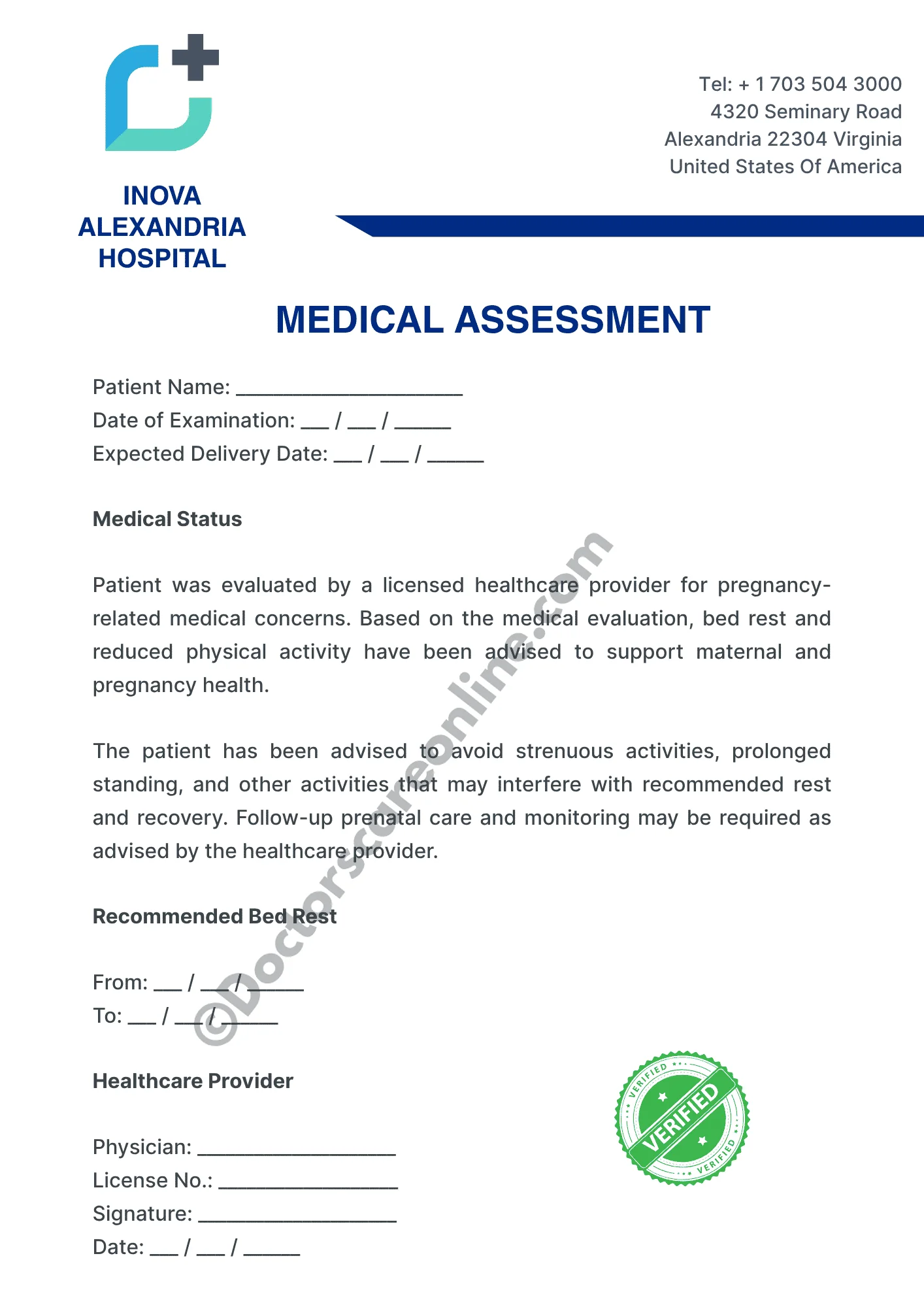
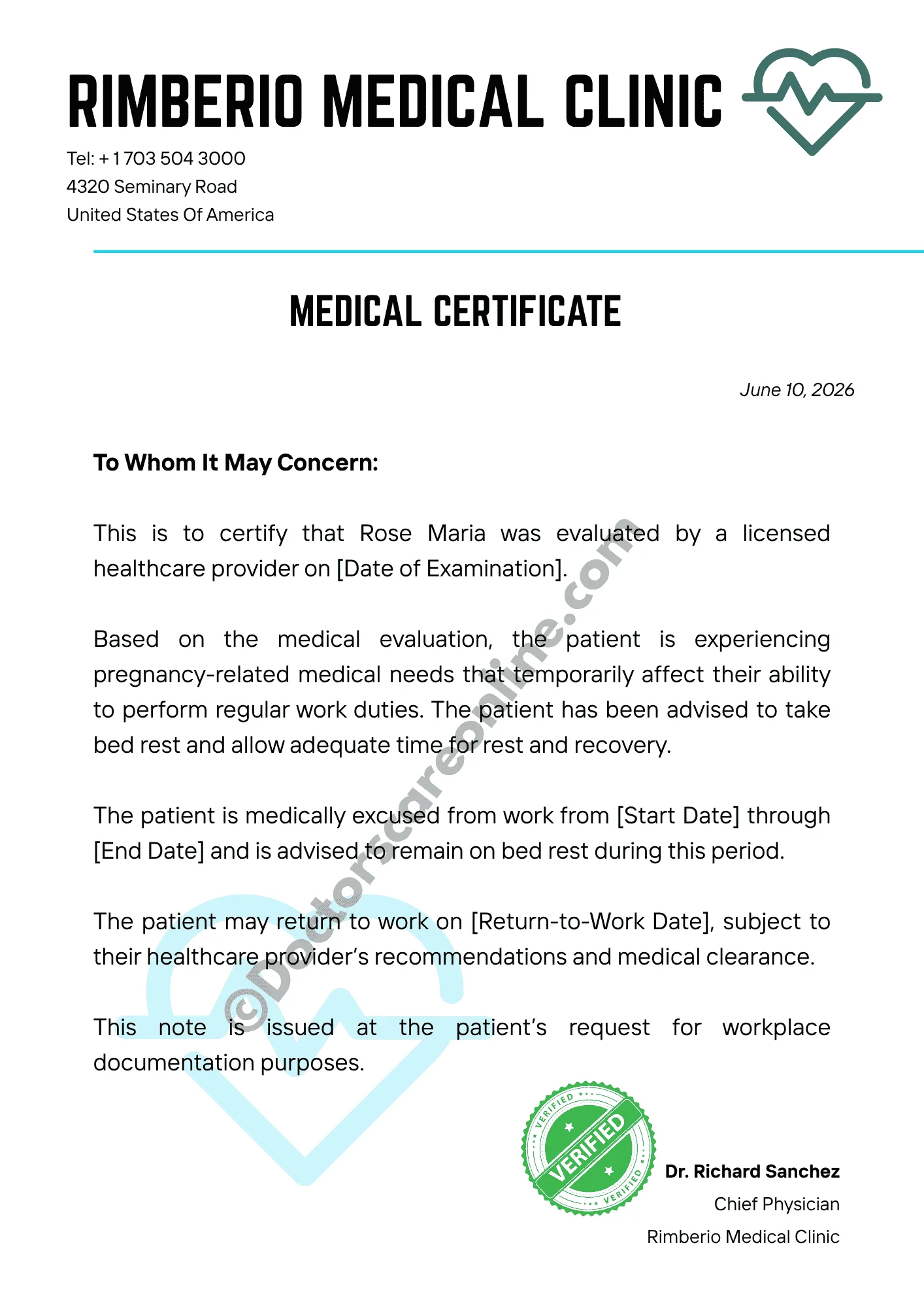
What Can a Pregnancy Doctor’s Note Include?
The information included in pregnancy-related medical documentation can vary according to the patient’s situation and the purpose of the note.
A provider may include:
- Patient’s name
- Date of medical evaluation
- Confirmation of medical assessment
- Recommended leave period
- Temporary activity restrictions
- Work limitations
- Recommended return date, when appropriate
- Follow-up instructions
- Healthcare provider information
- Provider signature or electronic authentication
The note does not necessarily need to disclose detailed medical information. The amount of information provided may depend on the requirements of the employer, school, insurer, or other organization and applicable privacy rules.
Pregnancy Work Restrictions and Modified Duties
A pregnant employee may sometimes be able to continue working with temporary modifications instead of taking complete leave.
Depending on the medical assessment and job requirements, restrictions may involve:
- Avoiding heavy lifting
- Reducing prolonged standing
- Limiting repetitive bending
- Limiting strenuous physical activity
- Taking appropriate breaks
- Adjusting work schedules
- Modifying physically demanding duties
- Temporarily performing lighter responsibilities
- Working remotely when appropriate
A healthcare provider should determine medically necessary restrictions. Employers may have separate processes for reviewing medical documentation and implementing workplace accommodations.
How Long Can Pregnancy Leave Be Recommended?
There is no universal number of days that applies to every pregnancy-related medical leave request.
The recommended duration may depend on:
- The reason for the restriction
- Severity and progression of symptoms
- Gestational age
- Pregnancy history
- Type of work performed
- Physical demands of the job
- Response to treatment
- Results of medical evaluation
- Need for follow-up care
Some patients may need only a short period of modified duties, while others may require longer leave or repeated medical evaluation.
If the recommended restriction expires but symptoms continue, the patient should contact the healthcare provider rather than extending or altering the medical document independently.
What Makes Our Website Useful for Pregnancy Documentation?
Our website is designed to make the process of connecting with healthcare services and understanding documentation requirements more convenient.
Instead of trying to determine on your own whether you need pregnancy leave or activity restrictions, you can use the platform to:
- Request an online medical consultation where available
- Provide information about your pregnancy-related concerns
- Discuss work or school limitations with a healthcare provider
- Receive medical guidance based on your individual situation
- Obtain documentation when a provider determines that it is medically appropriate
- Access your account and manage the consultation process online
The goal is to provide a convenient and straightforward pathway to legitimate medical evaluation and documentation, rather than promising a medical note without an assessment.
Why Patients Can Trust Our Process
Trust is especially important when healthcare and medical documentation are involved.
Our service is designed around a provider-led evaluation process. Information submitted during the consultation helps the healthcare professional understand the patient’s circumstances and determine what medical documentation, if any, is appropriate.
Patients should expect:
- A healthcare evaluation rather than an automatic note
- Clear communication about the consultation process
- Documentation based on clinical judgment
- Appropriate handling of personal information
- Transparent account and payment procedures
- Access to customer support for platform-related questions
Medical decisions remain the responsibility of the licensed healthcare professional conducting the evaluation. A patient should never feel pressured to request a specific diagnosis, restriction, or duration of leave.
Need Help With Registration, Login, Payment, or Your Order?
If you experience a problem while using our website, you do not have to figure it out alone.
For questions or technical issues involving registration, login, payment, appointment access, order status, or other website-related concerns, you can contact our support team through the chatbox on our website.
Our chat support can help you understand the platform process and troubleshoot account or payment-related issues. However, medical questions and clinical decisions should be discussed with the healthcare provider rather than customer support.
How to Prepare for a Pregnancy Consultation
Having relevant information ready can make your consultation more useful.
Consider preparing:
- Your current stage of pregnancy
- Expected due date, if known
- Main symptoms or concerns
- When symptoms began
- Any recent changes in symptoms
- Previous pregnancy complications
- Current medications or supplements
- Recent medical tests or appointments
- Current recommendations from your obstetric provider
- Your work or school responsibilities
- Physical tasks that are difficult to perform
- Any documentation requirements provided by your employer or school
Do not leave out important symptoms simply because they seem unrelated to your request for documentation.
Can a Pregnancy Doctor’s Note Be Used for Work or School?
A healthcare provider may provide documentation for work or school when medically appropriate.
For workplace purposes, the documentation may address temporary leave, modified duties, activity limitations, or a potential return date.
For school or college, documentation may support an absence or request for appropriate academic consideration.
However, acceptance of a medical note is determined by the employer, school, institution, insurer, or applicable policy. Patients should check the specific documentation requirements before submitting a note.
What If You Need More Time Than the Note Allows?
Do not change the dates or restrictions on an existing medical document.
If your symptoms continue or your condition changes, contact your healthcare provider for reassessment. The provider can determine whether additional leave, modified duties, further testing, or another treatment plan is appropriate.
An updated medical document should reflect a new clinical assessment when one is required.
Frequently Asked Questions
1. Does pregnancy automatically qualify someone for bed rest?
No. Pregnancy alone does not automatically mean that bed rest or activity restriction is medically necessary. A healthcare provider determines whether any activity modification is appropriate based on the individual’s pregnancy and clinical circumstances. Current specialist guidance recommends against routine activity restriction for several pregnancy-related situations.
2. Can I ask my doctor for a pregnancy leave note before my symptoms become severe?
You can discuss your work or school concerns with your healthcare provider at any stage. The provider can assess your circumstances and determine whether medical leave or modified duties are medically appropriate.
3. Can a pregnancy doctor’s note be used to request workplace accommodations?
It may help support a request for medically appropriate workplace modifications, depending on the information provided and the employer’s policies. Your employer may have additional documentation or accommodation procedures.
4. Is a pregnancy bed-rest note the same as disability documentation?
Not necessarily. A doctor’s note may document temporary medical restrictions or leave, while disability-related documentation can involve additional forms, eligibility requirements, and documentation requested by an employer, insurer, or government program.
5. What should I do if my employer asks for more information than my doctor’s note contains?
Ask your employer or HR department what specific documentation is required, then discuss those requirements with your healthcare provider. Do not add or alter medical information yourself. The provider can determine what additional documentation is medically appropriate.
Medical Disclaimer: This content is provided for general educational and informational purposes and is not a substitute for professional medical advice, diagnosis, or treatment.
A doctor’s note should only be issued by a licensed healthcare provider after an appropriate medical evaluation. The availability of telehealth, medical documentation, pregnancy leave, workplace accommodations, and accepted documentation may vary by location, employer, school, healthcare provider, and individual circumstances.



Reviews
There are no reviews yet.