
Post-traumatic stress disorder (PTSD) can affect concentration, sleep, mood, emotional well-being, and the ability to manage everyday responsibilities. When PTSD symptoms make it difficult to work, attend school, or safely perform normal activities, medical documentation may be needed to explain a temporary absence or request appropriate accommodations.
A doctor’s note for PTSD is medical documentation provided by a licensed healthcare professional after evaluating your symptoms and circumstances. When clinically appropriate, the provider may recommend time away from work or school, temporary activity restrictions, modified duties, or a follow-up evaluation.
Related Doctor Note : ——-
- Doctors Sick Note for Work
- Doctors Note for Stress and Anxiety
- Doctor’s Note for Vestibular Migraine
- Doctors Note for Stress Leave
- Doctors Note for Anxiety
If you need documentation for PTSD-related symptoms, you can book an online appointment with a licensed healthcare provider where telehealth services are available. The provider will determine whether your condition can be appropriately evaluated through an online consultation and whether a doctor’s note or other medical documentation is medically appropriate.
What Is a Doctor’s Note for PTSD?
A doctor’s note for PTSD confirms that you have been evaluated by a qualified healthcare provider and, when medically appropriate, may document recommended leave, temporary restrictions, or other accommodations.
Depending on your circumstances, documentation may be relevant when you need:
- Time away from work because PTSD symptoms interfere with your ability to perform your duties
- A school or college absence to allow time for treatment or recovery
- Temporary workplace accommodations
- Modified or light-duty responsibilities
- Reduced working hours
- A temporary change in work responsibilities
- A follow-up evaluation before returning to normal duties
- Documentation related to an ongoing treatment or recovery plan
The information included depends on the provider’s assessment and the requirements of the organization requesting documentation.
PTSD Symptoms That May Affect Work or School
PTSD can affect people differently. Symptoms may interfere with concentration, emotional regulation, sleep, communication, attendance, and the ability to complete everyday responsibilities.
Common PTSD symptoms can include:
- Intrusive memories or unwanted thoughts about a traumatic event
- Flashbacks or distressing reminders
- Nightmares or sleep difficulties
- Avoidance of people, places, or situations associated with trauma
- Anxiety, fear, or heightened alertness
- Irritability or emotional distress
- Difficulty concentrating
- Problems with memory or focus
- Social withdrawal
- Changes in mood or emotional responses
- Difficulty maintaining normal work or school routines
If these symptoms are significantly affecting your daily functioning, speaking with a qualified healthcare professional can help determine what type of support or treatment may be appropriate.
When Might You Need a Doctor’s Note for PTSD?
A doctor’s note may be useful when PTSD symptoms temporarily affect your ability to meet work, school, or other responsibilities and formal medical documentation is required.
Common situations include:
- PTSD-Related Work Absence: Severe symptoms may make it difficult to concentrate, communicate, travel to work, interact with others, or complete essential job responsibilities. A healthcare provider may recommend appropriate medical leave when clinically justified.
- School or College Absence: Students experiencing significant PTSD symptoms may need time away from classes, examinations, or other academic responsibilities while receiving appropriate care.
- Workplace Accommodations: Depending on the individual’s circumstances and applicable workplace policies, a healthcare provider may recommend reasonable temporary modifications that support continued participation at work.
- Reduced Workload or Modified Duties: Some people may benefit from temporary changes to their responsibilities, schedule, environment, or workload while they receive treatment.
- Follow-Up or Ongoing Treatment: A healthcare provider may recommend follow-up appointments to monitor symptoms and determine whether restrictions or leave should continue.
What Can an Online PTSD Consultation Help With?
An online medical appointment can provide a convenient way to discuss PTSD symptoms with a licensed healthcare provider where telehealth is available and clinically appropriate.
During a consultation, you may discuss:
- Your current symptoms
- When the symptoms began or changed
- How symptoms affect work, school, or daily activities
- Sleep and concentration difficulties
- Previous mental-health treatment
- Current medications, if applicable
- Any relevant medical history
- Your work or academic responsibilities
- Whether you are experiencing difficulties that require additional support
The healthcare provider will determine whether an online consultation is sufficient or whether an in-person evaluation or additional care is necessary.
If medical documentation is appropriate, the provider may issue a doctor’s note based on their professional judgment.
How to Get a Doctor’s Note for PTSD Online
Getting evaluated online can be straightforward when telehealth is available in your location.
1. Choose a Healthcare Provider
Select a legitimate healthcare service that connects patients with appropriately licensed healthcare professionals.
2. Register or Log In
Create an account or log in using the information requested by the service.
3. Book an Online Appointment
Select an available appointment time that works for you.
4. Describe Your Symptoms
Explain your PTSD symptoms honestly, including how they affect your ability to work, attend school, or perform normal activities.
5. Complete Your Medical Consultation
Speak with the healthcare provider and answer their questions about your symptoms, medical history, and current circumstances.
6. Follow the Provider’s Recommendations
The provider may recommend treatment, additional evaluation, follow-up care, time away from responsibilities, or temporary restrictions depending on your individual situation.
7. Receive Documentation If Medically Appropriate
If the healthcare provider determines that documentation is justified, they may issue a doctor’s note or other appropriate medical documentation in accordance with applicable requirements.
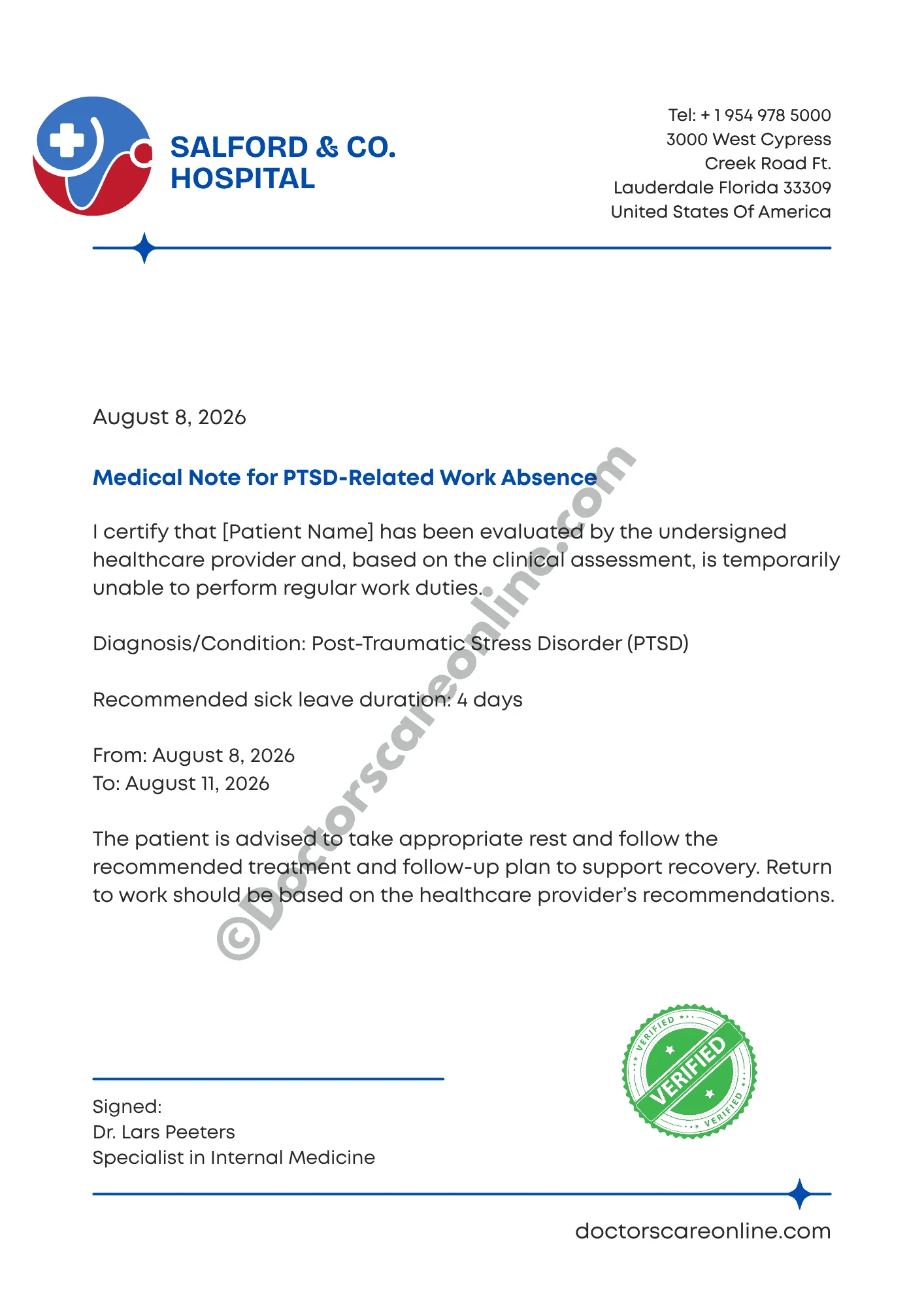
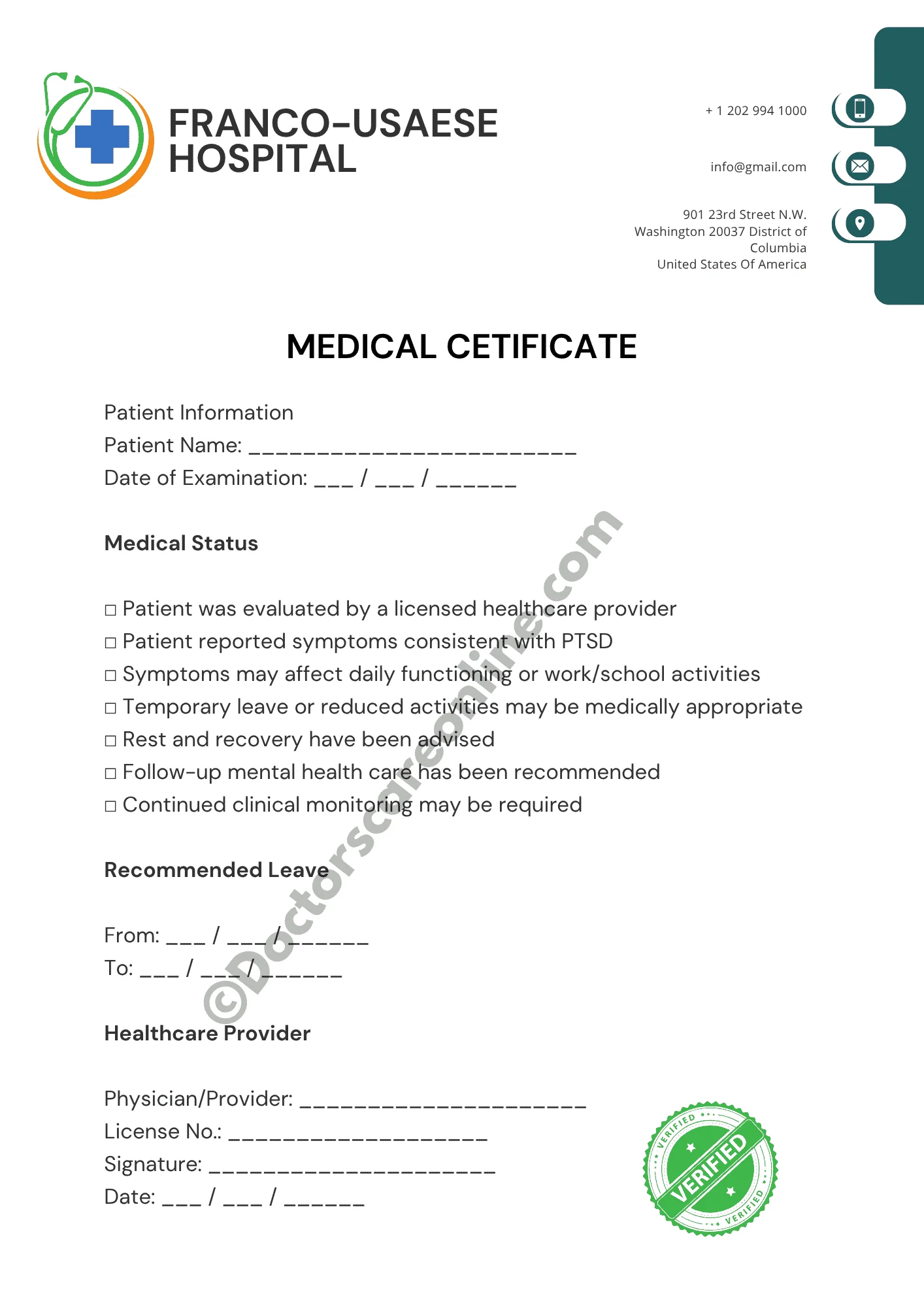
What Information May Be Included in a PTSD Doctor’s Note?
The exact format varies by healthcare provider and the requirements of the organization receiving the documentation.
A medical note may include:
- Patient’s name
- Date of medical evaluation
- Confirmation that the patient was evaluated
- Recommended period of leave, when applicable
- Temporary work or activity restrictions
- Recommended return-to-work or return-to-school date, when appropriate
- Follow-up recommendations
- Healthcare provider’s name and credentials
- Clinic or healthcare service information
- Provider’s signature or electronic authentication, where applicable
A doctor’s note does not necessarily need to disclose detailed mental-health information. The provider determines what information is appropriate to include while considering medical privacy and applicable requirements.
Can a PTSD Doctor’s Note Recommend Time Off Work?
Yes, a healthcare provider may recommend time away from work when PTSD symptoms significantly interfere with a person’s ability to safely or effectively perform their job.
The amount of time recommended is individualized. It may depend on:
- Severity of symptoms
- Functional limitations
- Treatment needs
- Type of job
- Workplace responsibilities
- Response to treatment
- Need for follow-up evaluation
There is no universal number of days that applies to everyone with PTSD.
Your healthcare provider determines whether medical leave is appropriate and how long it should last based on your individual circumstances.
Can a Doctor Recommend Workplace Accommodations for PTSD?
When medically appropriate, a healthcare provider may recommend temporary or ongoing workplace accommodations based on the person’s functional limitations.
Depending on the situation, recommendations could involve:
- Modified work schedules
- Additional breaks
- Reduced workload
- Temporary changes in responsibilities
- A quieter working environment
- Flexible scheduling
- Remote or hybrid work where feasible
- Temporary restrictions related to specific duties
The exact accommodations available depend on the individual’s circumstances, employer policies, and applicable laws.
Doctor’s Note for PTSD and School or College
PTSD symptoms can sometimes interfere with attendance, concentration, examinations, assignments, or participation in academic activities.
A healthcare provider may provide documentation when medically appropriate to support:
- An excused absence
- Additional recovery time
- Rescheduling of academic activities
- Temporary academic accommodations
- A return-to-school recommendation
Students should check their school’s or college’s documentation requirements before submitting a medical note.
Does a PTSD Doctor’s Note Reveal Your Diagnosis?
Not necessarily.
A medical note may confirm that you were evaluated and provide relevant information about leave, restrictions, or accommodations without including detailed information about your mental-health condition.
However, documentation requirements vary. Your healthcare provider determines what information is medically appropriate and what can be disclosed under applicable privacy and documentation rules.
You should also check whether your employer, school, insurer, or other organization has specific requirements for medical documentation.
How Long Is a PTSD Doctor’s Note Valid?
There is no universal validity period for a doctor’s note.
The applicable period generally depends on the dates or recommendations documented by the healthcare provider and the requirements of the organization receiving the note.
For example:
- Short-term absence: The note may cover the specific dates recommended by the provider.
- Temporary restrictions: Restrictions may apply until the date specified for reassessment.
- Extended recovery: A follow-up evaluation may be needed if symptoms continue.
- Return to work or school: The provider may recommend a return date or further evaluation before resuming normal responsibilities.
If your symptoms change or you need additional time, speak with your healthcare provider rather than modifying the original document.
How Our Online Doctor’s Note Service Can Help
Finding appropriate medical care and understanding documentation requirements can sometimes feel difficult, especially when you’re already dealing with PTSD symptoms.
Our online service is designed to make the process more convenient by helping users connect with healthcare professionals through an online consultation where available.
- Convenient Online Access: You can request an online medical consultation without having to arrange an unnecessary in-person visit when your situation is suitable for telehealth.
- Licensed Healthcare Evaluation: Medical documentation should come from an appropriately licensed healthcare provider following an evaluation. The provider—not the website—decides whether a doctor’s note is medically appropriate.
- Clear Documentation: When documentation is medically justified, the provider can determine what information should be included based on your circumstances and applicable requirements.
- Privacy-Conscious Process: Mental-health information is sensitive. Medical information should be handled according to applicable privacy and healthcare requirements.
- User Support: If you have a question about registration, login, booking, payment, accessing your account, or using the website, you can contact our support team through the website chatbox. Our chat support can help with service-related questions and guide you through the process.
Please do not share passwords, payment-card numbers, or other highly sensitive information through chat.
Why Choose Our Online Service?
We aim to make accessing appropriate online healthcare more convenient while keeping the medical evaluation at the center of the process.
Our service is useful for users who:
- Prefer the convenience of an online consultation
- Need to discuss symptoms from home
- Want to understand whether medical documentation may be appropriate
- Need help navigating the online appointment process
- Have questions about registration or account access
- Need assistance with payment or website-related issues
- Want customer support through the website chatbox
Most importantly, we do not replace the healthcare provider’s clinical judgment. A doctor’s note is provided only when the evaluating healthcare professional determines that it is medically appropriate.
What to Have Ready for Your Online PTSD Appointment
Preparing relevant information can make your consultation more productive.
Consider having the following available:
- A description of your current symptoms
- When your symptoms started or changed
- How symptoms affect work, school, or daily life
- Relevant medical or treatment history
- Current medications, if applicable
- Previous diagnoses or evaluations
- Information about your work or academic responsibilities
- Any documentation requirements provided by your employer or school
- Questions you want to ask the healthcare provider
Be honest and accurate when describing your symptoms. This allows the healthcare provider to make an appropriate assessment.
When Should You Seek Urgent Mental-Health Support?
A doctor’s note should never be the priority over immediate medical or mental-health care.
If you are experiencing a mental-health crisis, feel unable to keep yourself safe, have thoughts of suicide or self-harm, or believe you may be in immediate danger, seek emergency assistance or contact an appropriate crisis service in your location immediately.
If your symptoms are not an immediate emergency but are becoming significantly worse, contact a qualified mental-health or healthcare professional promptly.
Frequently Asked Questions
1. Can a therapist provide a doctor’s note for PTSD?
It depends on the professional’s credentials, local regulations, and the requirements of the organization requesting the documentation. A physician or other appropriately licensed healthcare professional may provide documentation when permitted and medically appropriate.
2. Can PTSD qualify for medical leave?
PTSD may affect a person’s ability to work or attend school, and medical leave may be appropriate in some circumstances. Eligibility and documentation requirements depend on the individual’s situation, workplace or school policies, and applicable laws.
3. Can I request a PTSD doctor’s note for an employer without disclosing personal details?
You can discuss your privacy concerns with your healthcare provider. The provider can determine what information is appropriate to include while meeting legitimate documentation requirements.
4. Can PTSD affect my ability to work even if I look physically healthy?
Yes. PTSD can affect concentration, sleep, emotional regulation, attendance, and the ability to manage workplace situations even when there are no visible physical symptoms.
5. What happens if an online provider says I need an in-person evaluation?
An online provider may determine that your symptoms require an in-person assessment or additional medical care. Following that recommendation is important because some conditions cannot be safely evaluated through telehealth alone.
Medical Disclaimer: This content is provided for general educational and informational purposes and is not a substitute for professional medical advice, diagnosis, or treatment.
A doctor’s note should only be issued by an appropriately licensed healthcare professional following an appropriate medical evaluation. Documentation, telehealth availability, medical leave, workplace accommodations, and privacy requirements can vary by location, employer, school, and individual circumstances.



Reviews
There are no reviews yet.