
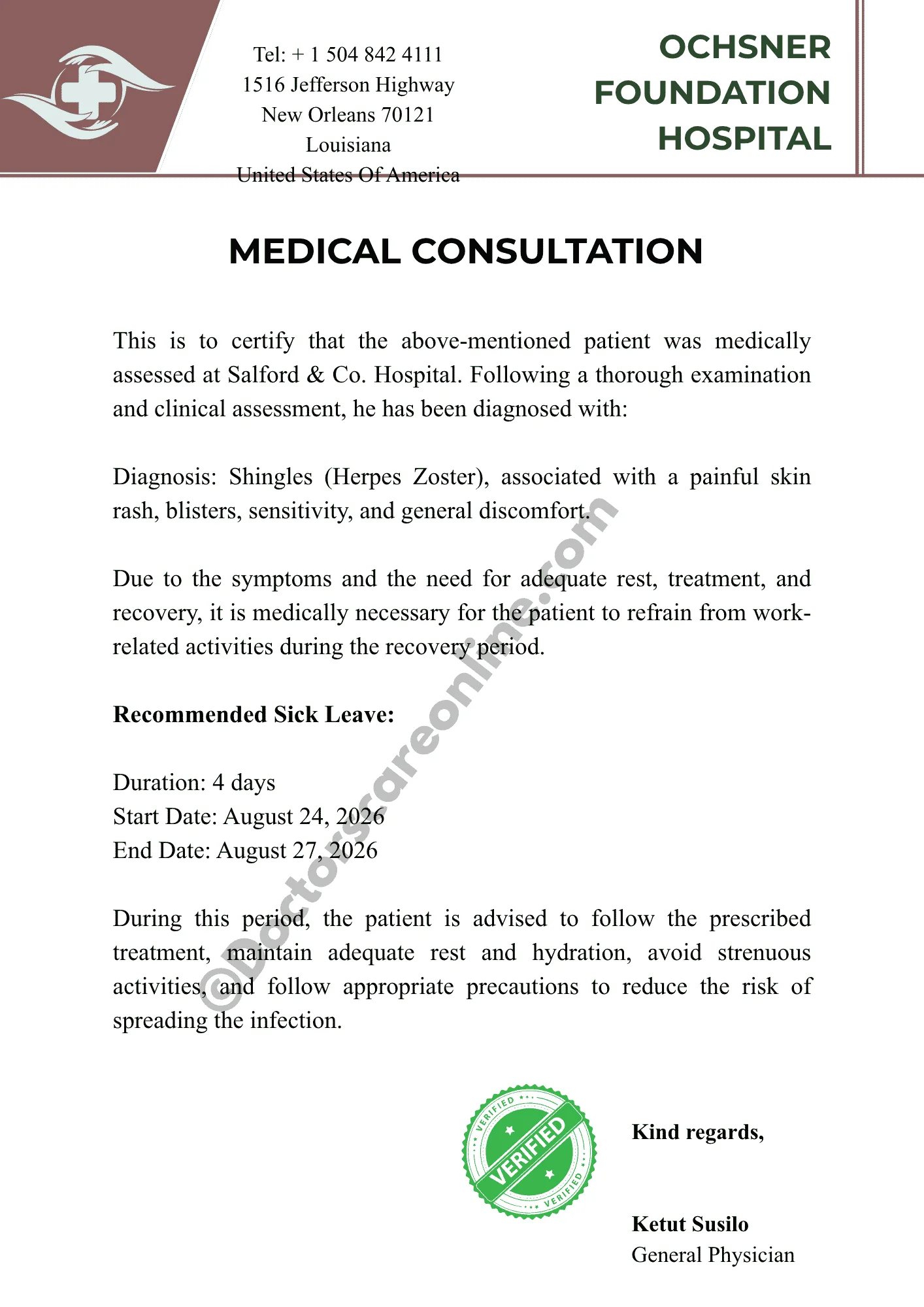
A doctor’s note for shingles is medical documentation issued by a licensed healthcare professional following an appropriate evaluation. Depending on the situation, it may confirm that you were medically assessed and provide information about recommended absence, temporary limitations, or a return date.
Shingles, also called herpes zoster, is a painful viral infection caused by reactivation of the varicella-zoster virus, the same virus that causes chickenpox. It commonly produces pain, burning, tingling, itching, and a blistering rash that usually appears on one side of the body or face.
Our online appointment service can help eligible users connect with a healthcare provider for a convenient medical consultation. The provider evaluates the information you provide and determines whether treatment, time away from work or school, restrictions, follow-up care, or medical documentation is appropriate. A doctor’s note is never guaranteed simply because it is requested.
Related Doctor Note :——
You can also visit:
- Doctors Note for Allergies
- Doctors Note for Chickenpox
- Doctor’s Note for Work From Home
- Unlimited Doctor’s Notes for 1 Year
What May Be Included in a Shingles Doctor’s Note?
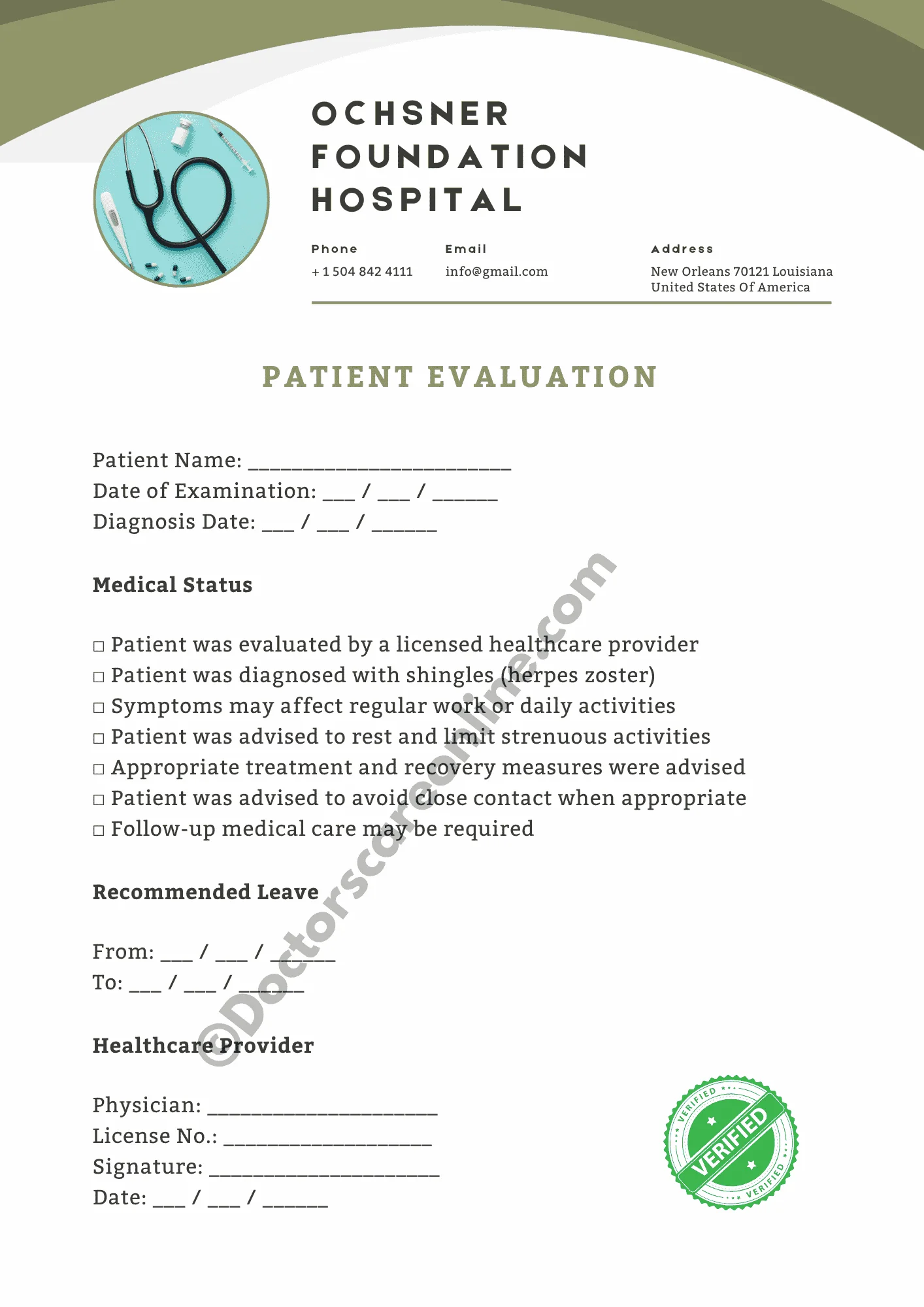
The contents depend on the healthcare provider and the purpose of the documentation. A medical note may include:
- Patient identification information
- Date of medical evaluation
- Confirmation of medical assessment
- Recommended absence period, when medically appropriate
- Temporary activity or workplace restrictions
- Expected return date, when clinically appropriate
- Follow-up recommendations
- Healthcare provider information
- Provider signature or authentication
The provider decides what medical information should be included. A patient should never alter, add to, or remove information from an issued medical document.
Why Shingles May Affect Work or School Attendance
Shingles can cause significant pain and a localized rash, while some people also experience fever, headache, chills, or an upset stomach. The rash can develop into fluid-filled blisters and usually heals over several weeks.
Depending on the location and severity of symptoms, a person may have difficulty performing regular responsibilities. For example, a job requiring physical activity may become uncomfortable when the rash or nerve pain is aggravated by movement or clothing.
People who work closely with others may also need guidance about avoiding exposure to individuals who have not had chickenpox or vaccination, particularly people who are pregnant, immunocompromised, or otherwise susceptible to varicella infection. Active shingles lesions can transmit varicella-zoster virus until the blisters dry and scab over.
Whether you need time away from work or school should be determined by a healthcare provider based on your symptoms and circumstances.
Common Situations in Which Shingles Documentation May Be Needed
A medical note may be relevant in several situations, including:
- Work Absence: Pain, fatigue, rash discomfort, or medical appointments may temporarily interfere with your normal work schedule.
- School or University Absence: Students may need documentation when shingles symptoms prevent them from attending classes, examinations, laboratories, or other academic activities.
- Temporary Workplace Restrictions: A healthcare provider may recommend temporary modifications when particular job duties could interfere with recovery or when the patient’s condition makes certain activities unsuitable.
- Customer-Facing or Close-Contact Work: People who have active lesions may need medical guidance about workplace exposure and infection-control precautions.
- Recovery After a Shingles Complication: Some people experience ongoing nerve pain after the rash clears, known as postherpetic neuralgia (PHN). PHN can interfere with sleep and daily activities and may require additional medical care.
Shingles Symptoms That Should Be Discussed With a Healthcare Provider
Shingles often begins with pain, itching, tingling, or burning before the characteristic rash appears. A painful or itchy rash with fluid-filled blisters commonly develops on one side of the face or body. Fever, headache, chills, and upset stomach can also occur.
Seek medical evaluation promptly if you notice:
- A new painful or burning rash
- Clusters of fluid-filled blisters
- Tingling or unusual sensitivity on one side of the body
- Significant nerve pain
- Rash accompanied by fever
- Symptoms that are becoming more severe
- A rash on the face, particularly around the eye
- Symptoms occurring while you have a weakened immune system
Shingles involving the eye can cause serious complications, including vision loss, so facial or eye-area symptoms should receive prompt medical attention.
Why Early Medical Evaluation Matters
If shingles is suspected, contacting a healthcare provider promptly is important because antiviral treatment works best when started early. CDC clinical guidance notes that treatment is most effective within 72 hours of symptom onset, although the appropriate treatment decision depends on the individual patient’s circumstances.
Common antiviral medicines used for shingles include:
- Acyclovir
- Valacyclovir
- Famciclovir
A healthcare provider determines whether antiviral medication is appropriate and selects the treatment based on the patient’s medical history, symptoms, timing, and other relevant factors.
Do not start, stop, or change prescription medication without guidance from a qualified healthcare professional.
How Shingles Can Affect Your Daily Activities
Shingles-related nerve pain can range from mild discomfort to intense pain. Symptoms may interfere with sleep, concentration, movement, clothing tolerance, exercise, and other routine activities.
For some people, the affected area is particularly sensitive to touch. Others may experience persistent nerve pain even after the visible rash has healed. This longer-lasting condition is called postherpetic neuralgia.
If your symptoms are interfering with your responsibilities, describe those functional limitations clearly during your medical appointment. This information can help the provider understand how the illness is affecting your ability to work or attend school.
How an Online Doctor Appointment for Shingles Works
An online consultation may be appropriate for some people, depending on their symptoms, medical history, location, and the healthcare provider’s assessment.
The general process is:
- Choose an appointment: Select an available online medical consultation.
- Create or access your account: Register with the information requested by the service or log in if you already have an account.
- Provide health information: Describe your symptoms, when they started, the location of the rash, pain level, and relevant medical history.
- Attend the consultation: Speak with the licensed healthcare professional at the scheduled time.
- Receive clinical guidance: The provider determines whether your symptoms can be appropriately managed through telehealth or whether an in-person examination is necessary.
- Discuss documentation needs: If your condition medically supports time away from work or school, ask the provider whether a doctor’s note is appropriate.
- Follow the treatment plan: Use medications and other recommendations only as directed by your healthcare provider.
Telehealth does not replace emergency care. A provider may recommend an in-person evaluation when an online consultation cannot adequately assess the condition.
What Information Should You Provide During the Consultation?
Accurate information helps a healthcare provider make an appropriate clinical assessment.
Before your appointment, consider preparing:
- The date your symptoms began
- When the rash first appeared
- Where the rash is located
- Whether the rash is spreading
- Pain, burning, itching, or tingling
- Fever or other symptoms
- Any previous episode of shingles
- Current medications
- Allergies
- Existing medical conditions
- Whether you are pregnant or immunocompromised, when applicable
- Whether you recently had contact with someone who had chickenpox or shingles
- How the symptoms affect your work, school, or daily activities
- Any documentation requirements provided by your employer or school
Do not intentionally leave out important medical information when speaking with a healthcare professional.
Can a Shingles Doctor’s Note Include Work Restrictions?
It can, when a healthcare provider determines that restrictions are medically appropriate.
Depending on the person’s symptoms and occupation, recommendations could address activities such as:
- Heavy physical work
- Close-contact responsibilities
- Prolonged standing
- Certain repetitive movements
- Other duties that may interfere with recovery
Restrictions should be individualized rather than based on a fixed number of days. The healthcare provider considers the patient’s symptoms, clinical findings, occupation, and progress when determining appropriate limitations.
Employers may have separate procedures for reviewing medical restrictions or arranging modified duties.
How Long Can Shingles Last?
The course varies between individuals. CDC and NIH information indicates that the shingles rash generally develops into blisters, then dries and scabs, with healing commonly occurring over approximately two to four weeks; the overall illness can last several weeks.
Some people may continue to experience nerve pain after the rash has cleared. Postherpetic neuralgia is the most common complication of shingles and may last for months or longer.
Because recovery differs from person to person, your healthcare provider should determine when you are ready to resume unrestricted activities.
Is Shingles Contagious?
Shingles itself is not spread from person to person in the same way as a typical respiratory infection. However, a person with active shingles lesions can transmit the varicella-zoster virus to someone who is susceptible, causing chickenpox rather than shingles.
Transmission can occur through direct contact with fluid from shingles blisters. CDC guidance recommends covering the rash, avoiding touching or scratching it, washing your hands regularly, and avoiding contact with susceptible individuals until the lesions have dried and scabbed.
People who may require particular caution include pregnant individuals who are not immune to chickenpox, premature or low-birth-weight infants, and people with weakened immune systems.
When Shingles Requires Urgent Medical Attention
Most shingles cases can be managed with appropriate medical care, but certain symptoms require prompt evaluation.
Seek urgent medical attention if:
- The rash is on or near the eye
- You develop vision changes or significant eye pain
- You have severe or rapidly worsening symptoms
- You develop significant neurological symptoms
- You have a weakened immune system and develop suspected shingles
- The rash becomes unusually widespread
- You develop signs of a serious infection or another medical emergency
Shingles involving the face or eye can result in serious complications, including vision loss, while people with weakened immune systems have a greater risk of severe complications.
If you believe you are experiencing an emergency, use emergency medical services or go to the nearest emergency department rather than waiting for an online appointment.
Shingles Prevention and Vaccination
Vaccination is an important way to reduce the risk of shingles and its complications. In the United States, CDC recommends two doses of recombinant zoster vaccine (Shingrix) for adults aged 50 and older and for adults aged 19 and older who are or will be immunocompromised or immunosuppressed because of disease or therapy.
Vaccination recommendations can depend on individual circumstances. Speak with a healthcare professional or pharmacist to determine whether vaccination is appropriate for you.
Having had shingles previously does not necessarily mean you are protected from experiencing it again. CDC states that eligible adults should receive Shingrix even if they have previously had shingles.
How Our Online Doctor Appointment Service Helps
Our website is designed to make the process of accessing an online medical consultation more convenient. Instead of searching for a clinic and coordinating an in-person visit immediately, eligible users can use the online appointment process to connect with a healthcare provider from a convenient location.
Our service can help users:
- Request an online medical consultation
- Explain their shingles symptoms and functional limitations
- Discuss whether telehealth is appropriate
- Receive professional medical guidance
- Ask whether medical documentation may be appropriate
- Understand recommended next steps
- Access the service through an online account
The healthcare provider—not the website or the patient—makes the medical decision about diagnosis, treatment, work restrictions, and whether documentation should be issued.
This approach helps keep the service focused on legitimate medical evaluation rather than simply selling a doctor’s note.
Having Trouble With Registration, Login, or Payment?
If you experience a technical or account-related problem while using our website, you can contact our support team through the website chatbox.
You can use the chatbox to ask questions about issues such as:
- Creating or accessing your account
- Registration problems
- Login difficulties
- Appointment-related questions
- Payment or checkout issues
- Questions about using the website
- General service-related concerns
Our support team can help with website and service questions, but customer support does not replace medical advice. Medical questions about symptoms, treatment, diagnosis, or whether a doctor’s note is medically appropriate should be addressed by a qualified healthcare provider.
Why Users Can Trust the Online Appointment Process
Trust is especially important when accessing healthcare online. Our service is designed around a medical consultation process rather than providing documentation without evaluation.
Users should expect:
- A healthcare-provider evaluation before medical documentation is issued
- Secure handling of information according to applicable privacy and security practices
- Clear appointment and payment information
- An opportunity to describe symptoms and relevant medical history
- Professional guidance based on the information available to the provider
- Support for account, registration, and payment-related issues through the website chatbox
Healthcare decisions remain with the licensed provider. Documentation is provided only when the provider determines that it is medically appropriate and permitted.
Users should also review the site’s current privacy policy, terms, pricing, refund policy, and provider information before completing an appointment.
Returning to Work or School After Shingles
Returning to normal activities depends on your symptoms, occupation, recovery, and healthcare provider’s recommendations.
Before resuming your usual responsibilities:
- Follow the medical instructions provided during your consultation.
- Keep any active rash covered when appropriate.
- Avoid contact with people who may be particularly vulnerable to varicella infection until the lesions have scabbed.
- Follow workplace or school documentation requirements.
- Ask your healthcare provider whether restrictions are still necessary if symptoms continue.
- Seek reassessment if symptoms worsen or new complications develop.
There is no single return-to-work date that applies to everyone with shingles.
Medical Privacy and Documentation
A doctor’s note generally focuses on the information necessary for its intended purpose. Depending on the circumstances, it may confirm that a healthcare evaluation occurred and describe recommended leave or restrictions without unnecessarily disclosing detailed medical information.
The amount of information required can vary by employer, school, insurer, jurisdiction, and the specific purpose of the documentation.
If an organization has specific documentation requirements, check those requirements before your appointment so you can discuss them with the healthcare provider.
Frequently Asked Questions
1. Can shingles cause you to miss work?
Yes. Shingles symptoms such as pain, itching, fatigue, and a localized rash can interfere with work for some people. Whether you should stay home or receive workplace restrictions depends on your medical condition and healthcare provider’s assessment.
2. Can I work from home with shingles?
Working from home may be possible for some people, but it depends on the severity of symptoms, the nature of the job, and whether the individual can safely and effectively perform their duties. Discuss your specific circumstances with your healthcare provider and employer.
3. Can shingles affect my ability to drive?
Pain, medication side effects, vision problems, or symptoms affecting concentration may make driving inappropriate in some circumstances. A healthcare provider can advise you based on your symptoms and treatment.
4. Can I get shingles more than once?
Yes. Although many people experience shingles only once, it is possible to develop shingles again. People who have had shingles should discuss vaccination eligibility with a healthcare professional.
5. Can shingles leave pain after the rash disappears?
Yes. Some people develop postherpetic neuralgia, a form of persistent nerve pain in the area affected by the shingles rash. It is the most common complication of shingles and can continue after the skin has healed.
Medical Disclaimer: This content is provided for general educational and informational purposes only and does not constitute medical advice, diagnosis, or treatment. A doctor’s note should only be issued by a licensed healthcare professional following an appropriate medical evaluation. Availability of telehealth services, medical documentation, prescriptions, work restrictions, and other healthcare services may vary by state, provider, clinical circumstances, and applicable laws.



Reviews
There are no reviews yet.