
Doctor’s Note for Allergies is a medical document provided by a healthcare professional to confirm that an individual is experiencing allergic reactions that may affect daily activities. Allergies occur when the immune system reacts to substances like pollen, dust, food, or pet dander. The note is often required for school or work to justify absence or request accommodations such as avoiding specific triggers or environments. It usually includes the condition, possible triggers, and recommended precautions or treatment to help manage symptoms effectively.
Allergies can cause symptoms such as sneezing, nasal congestion, itchy or watery eyes, skin rashes, hives, itching, coughing, and other reactions. Depending on the type and severity of the allergy, symptoms may interfere with work, school, exercise, sleep, travel, or everyday activities.
Related Doctor Note :——
You can also visit:
- Doctors Note for Ulcerative Colitis
- Doctor’s Note for 3 Days Off Work
- Online Doctor’s Note for Viral Fever
- Doctors Note for Tonsillitis
Printable Doctor’s Note for Allergies Templates
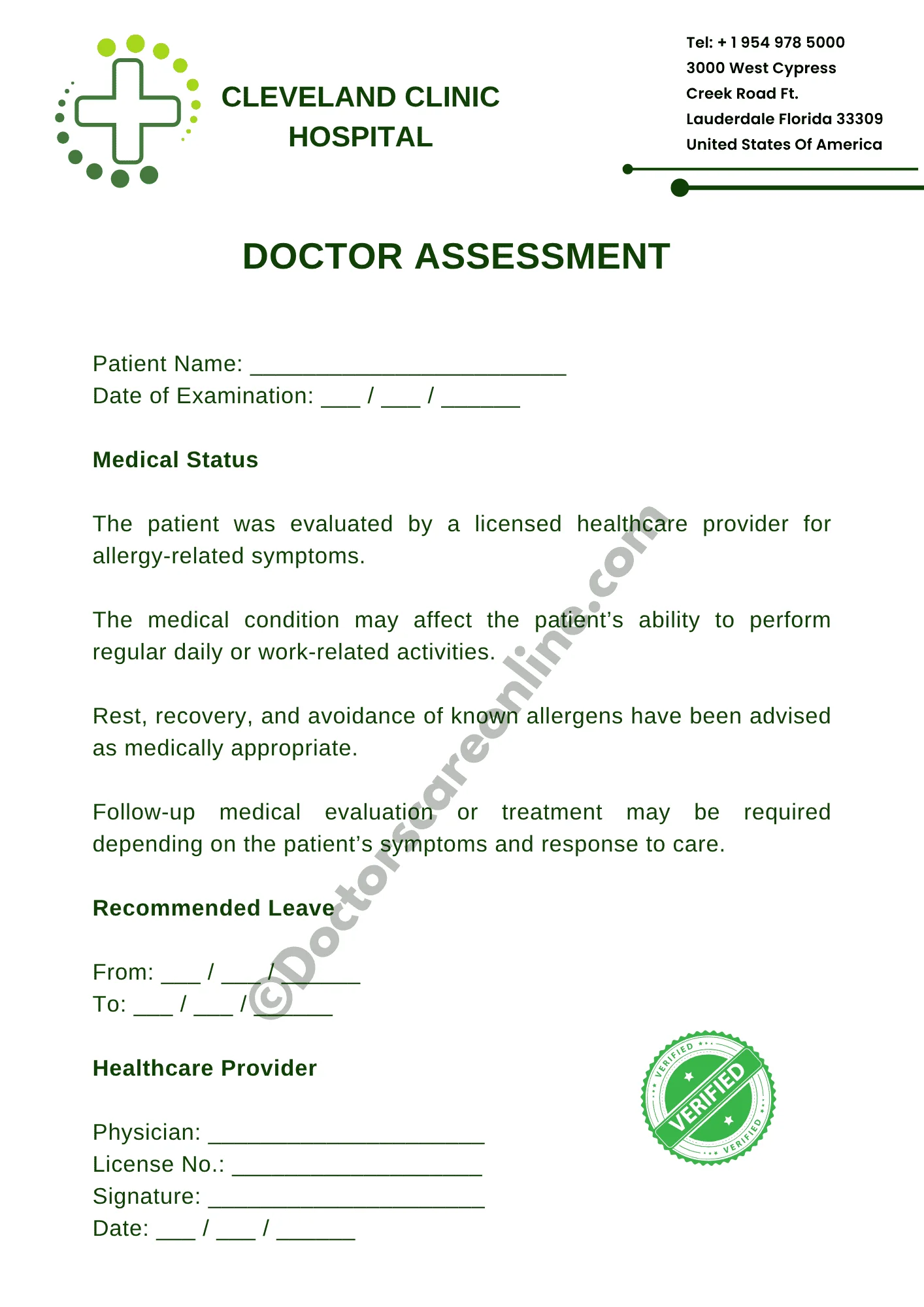
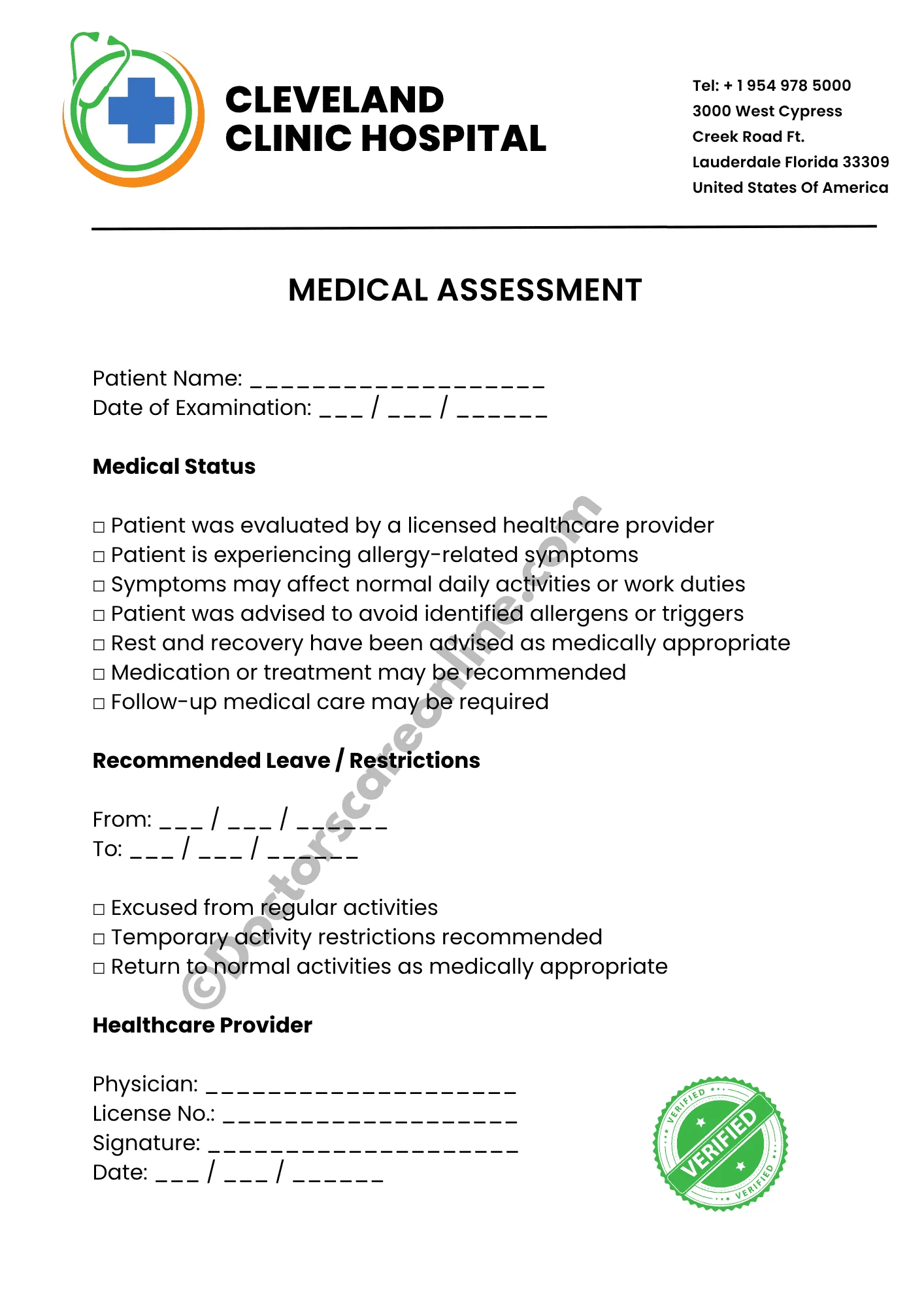
Printable doctor’s note for allergies templates can help organize important medical documentation related to allergy symptoms, recommended absence, temporary restrictions, and return-to-work or school instructions.
- Patient Information: Includes the patient’s name and relevant identification details.
- Date of Evaluation: Records when the patient was assessed by the healthcare provider.
- Medical Evaluation: Confirms that the patient was evaluated for allergy-related symptoms.
- Recommended Time Off: May specify the dates the patient should remain away from work or school, when medically appropriate.
- Work or School Restrictions: Can include temporary limitations based on the provider’s assessment.
- Return Date: May state the recommended date for returning to normal activities.
- Follow-Up Instructions: May include information about additional evaluation or follow-up care.
- Provider Information: Includes the healthcare provider’s name, credentials, signature, and clinic details when applicable.
- Professional Documentation: A completed note should reflect an actual medical evaluation and should not be altered or falsified.
- Privacy Considerations: Medical documentation should disclose only the information necessary for its intended purpose, subject to applicable requirements.
Why You Might Need a Doctor’s Note for Allergies
Allergy symptoms can sometimes make normal responsibilities difficult or unsafe. For example, severe nasal symptoms, persistent coughing, eye irritation, skin reactions, fatigue, or medication-related effects may interfere with concentration, physical activity, or workplace responsibilities.
You may need allergy documentation when:
- Your employer requires medical documentation for an absence.
- Your school or college requires an excused-absence note.
- Allergy symptoms interfere with your ability to perform normal duties.
- You need temporary workplace accommodations.
- Your healthcare provider recommends avoiding a particular exposure.
- You need additional time to recover after an allergic reaction.
- Your job involves exposure to a suspected allergy trigger.
- You need documentation for a return-to-work or return-to-school process.
The specific requirements for medical documentation vary between employers, schools, institutions, and locations.
Common Types of Allergies That May Affect Work or School
Allergies can occur in response to different substances and environmental triggers. Common examples include:
- Seasonal Allergies: Seasonal allergies may occur when the immune system reacts to environmental allergens such as pollen. Symptoms can include sneezing, runny or stuffy nose, itchy eyes, and throat irritation.
- Food Allergies: Food allergies may cause symptoms involving the skin, digestive system, respiratory system, or multiple parts of the body. Certain reactions can become severe and require emergency treatment.
- Medication Allergies: Some people experience allergic reactions after taking certain medications. Symptoms can range from skin reactions to serious reactions involving breathing difficulties or swelling.
- Pet Allergies: Exposure to animal dander and other allergens may contribute to sneezing, congestion, itchy eyes, coughing, or other allergy symptoms.
- Dust or Mold Allergies: Environmental allergens such as dust and mold may trigger respiratory or nasal symptoms in susceptible individuals.
- Insect Sting Allergies: Insect stings can cause localized reactions, while some people can experience a severe, potentially life-threatening allergic reaction.
- Skin Allergies: Contact with certain substances may cause itching, redness, rash, hives, or other skin reactions.
When Allergies May Interfere With Work or School
Allergy symptoms may affect your ability to concentrate, communicate, exercise, travel, operate equipment, or complete other responsibilities.
A healthcare provider may consider temporary restrictions when symptoms significantly interfere with normal functioning.
Depending on your circumstances, recommendations may involve:
- Temporary time away from work or school
- Avoiding a known allergen or exposure
- Temporary modification of duties
- Reduced exposure to environmental triggers
- Additional breaks when medically appropriate
- Follow-up evaluation
- A return-to-work or return-to-school date
The appropriate recommendation depends on the individual’s symptoms, medical history, occupation, and healthcare provider’s assessment.
Can You Get a Doctor’s Note for Allergies Online?
In many locations, some allergy-related concerns can be evaluated through telehealth. During an online consultation, a healthcare provider may ask about your symptoms, possible triggers, medical history, medications, and how the symptoms are affecting your normal activities.
If the provider determines that your condition can be appropriately assessed through telehealth and medical documentation is justified, they may provide a doctor’s note where permitted.
An online consultation does not guarantee a doctor’s note. The healthcare provider decides whether documentation is medically appropriate based on the evaluation.
For symptoms that require an examination, testing, emergency treatment, or other in-person care, the provider may recommend an in-person appointment instead.
How to Book an Online Allergy Consultation
Booking an online consultation can be a convenient option for people whose symptoms are appropriate for telehealth.
Step 1: Choose an Available Appointment
Select an available consultation with a healthcare provider who offers online medical appointments in your location.
Step 2: Create or Log In to Your Account
Enter the required information to register or access your account.
Step 3: Describe Your Allergy Symptoms
Provide accurate information about your symptoms, when they began, possible triggers, previous allergic reactions, and any treatments you have already tried.
Step 4: Attend Your Medical Consultation
Speak with the healthcare provider and answer their questions honestly. The provider will determine whether your symptoms can be appropriately evaluated online.
Step 5: Follow the Provider’s Recommendations
The provider may recommend treatment, avoiding a suspected trigger, follow-up care, an in-person examination, or other appropriate medical care.
Step 6: Receive Documentation When Medically Appropriate
If the provider determines that medical documentation is appropriate, a doctor’s note may be provided according to applicable requirements and regulations.
What Information Should You Have Ready for Your Appointment?
Preparing information before your consultation can help the healthcare provider understand your symptoms.
Consider having the following details available:
- When your symptoms started
- Possible allergy triggers
- Previous allergy history
- Current medications
- Previous allergic reactions
- Severity and duration of symptoms
- Any breathing problems
- Any swelling or hives
- Whether symptoms affect work or school
- Your job or school requirements
- Any documentation requirements from your employer or institution
Do not intentionally leave out important symptoms. Accurate information helps the healthcare provider make an appropriate medical assessment.
How Long Can a Doctor Excuse You From Work for Allergies?
There is no universal number of days that applies to everyone with allergies.
The recommended period may depend on:
- Severity of symptoms
- Type of allergic condition
- Response to treatment
- Workplace responsibilities
- Exposure to allergens at work
- Functional limitations
- Whether additional evaluation is necessary
- Healthcare provider’s clinical judgment
Your provider should determine the appropriate period based on your individual situation rather than relying on a standard number of days.
Can a Doctor Recommend Work Restrictions for Allergies?
Yes, when medically appropriate.
Depending on the individual’s condition and job responsibilities, a healthcare provider may recommend temporary restrictions related to an identified exposure or activity.
Examples may include:
- Avoiding a specific workplace allergen
- Temporary reassignment away from an exposure
- Limiting certain environmental exposures
- Modified duties
- Temporary absence from work
- Follow-up evaluation before returning to unrestricted duties
The specific restrictions should come from the healthcare provider’s assessment.
How Allergies Are Evaluated
A healthcare provider may begin by reviewing your symptoms, medical history, possible triggers, previous reactions, and current medications.
Depending on the situation, further evaluation or allergy testing may be recommended.
Possible evaluation methods can include:
- Medical history
- Symptom review
- Physical examination
- Review of possible allergens
- Allergy testing when appropriate
- Assessment of previous reactions
- Referral to an allergy specialist when necessary
The appropriate evaluation depends on the suspected allergy and the individual’s symptoms.
Allergy Treatment and Symptom Management
Treatment depends on the type and severity of the allergy.
Depending on the condition, a healthcare provider may recommend:
- Avoiding known allergens
- Antihistamines
- Nasal sprays
- Eye drops
- Other prescribed or recommended medications
- Skin treatments for certain allergic reactions
- Allergy specialist evaluation
- An emergency action plan for people at risk of severe reactions
Treatment should be based on your healthcare provider’s recommendations and individual medical circumstances.
When Is an Allergic Reaction a Medical Emergency?
Some allergic reactions can become life-threatening. Do not use an online doctor’s-note service as a substitute for emergency care.
Seek emergency medical attention immediately if an allergic reaction causes symptoms such as:
- Difficulty breathing
- Wheezing or severe breathing problems
- Swelling of the tongue, mouth, or throat
- Difficulty swallowing
- Severe dizziness or fainting
- Loss of consciousness
- Severe widespread allergic symptoms
- Other signs of anaphylaxis
Anaphylaxis can develop rapidly and requires immediate emergency treatment. In the United States, call 911 for a serious allergic reaction. If a prescribed epinephrine auto-injector is available, it should be used according to the person’s emergency treatment plan.
How Our Website Can Help You
Our website is designed to make the process of seeking medical documentation more convenient and straightforward.
Depending on availability in your location, you can use our platform to:
- Find an available online medical consultation.
- Provide information about your symptoms before your appointment.
- Connect with a healthcare provider for an appropriate evaluation.
- Receive medical guidance based on your individual situation.
- Request medical documentation when clinically appropriate.
- Access information about your consultation and documentation process.
We focus on making the process easy to understand so you know what to expect before, during, and after your online appointment.
Most importantly, a doctor’s note is not automatically provided simply because it is requested. A healthcare provider must determine whether documentation is medically appropriate after an evaluation.
Why Users Can Trust Our Service
Choosing an online healthcare service involves more than simply finding a convenient appointment. Users should understand how the process works and what they can expect.
Our service is designed around a medical evaluation-first approach. This means users provide information about their symptoms and concerns so a healthcare provider can determine what care or documentation may be appropriate.
Our website aims to provide:
- A straightforward online appointment process
- Clear information about what to expect
- Access to healthcare consultations where available
- A transparent documentation process
- Support for questions related to using the website
- A convenient online experience for eligible users
- Medical documentation only when determined appropriate by the healthcare provider
We also encourage users to provide complete and accurate health information during their consultation. This supports better communication between the patient and healthcare provider.
Need Help With Registration, Login, Payment, or Your Order?
If you experience an issue while using our website, you do not have to figure it out alone.
If you have a question or problem related to:
- Registration
- Login or account access
- Appointment booking
- Payment
- Checkout
- Order status
- Documentation
- Website navigation
- General service questions
you can contact our website chatbox for assistance.
Our chatbox provides a convenient way to ask questions and get help with website-related issues. For medical questions or symptoms, however, you should discuss your concerns directly with a qualified healthcare provider.
What to Do Before Using a Doctor’s Note
Before submitting medical documentation to your employer, school, or another organization:
- Check whether they have specific documentation requirements.
- Confirm the dates that need to be covered.
- Ask whether digital documentation is accepted.
- Follow any return-to-work or return-to-school requirements.
- Do not edit, alter, or falsify medical documentation.
- Contact the organization if you are unsure about its policies.
Requirements can differ between organizations, so confirming them in advance can help prevent unnecessary delays.
Frequently Asked Questions
1. Can allergies make you too sick to work?
Yes. Depending on their severity, allergy symptoms can interfere with concentration, physical activity, sleep, breathing, or other work responsibilities. A healthcare provider can evaluate your symptoms and determine whether time away from work or temporary restrictions are medically appropriate.
2. Can an employer require a doctor’s note for allergies?
An employer may have its own policies regarding medical documentation for absences or workplace restrictions. Check your company’s attendance or leave policy to understand when documentation is required.
3. Can a doctor’s note for allergies help with workplace accommodations?
It may, depending on your circumstances. If a healthcare provider determines that temporary restrictions or accommodations are medically appropriate, the documentation may describe relevant functional limitations without necessarily providing unnecessary medical details.
4. Can allergies cause you to miss school or college?
Yes. Allergy symptoms may interfere with attendance or participation when they are significant. If your educational institution requires documentation, a healthcare provider can determine whether a medical note is appropriate after evaluating your condition.
5. What is the difference between an allergy and an allergic reaction?
An allergy is an immune-system response to a substance that is normally harmless to most people, while an allergic reaction is the body’s response when someone encounters that trigger. Reactions can range from mild symptoms to severe anaphylaxis.
Medical Disclaimer: This content is provided for general educational and informational purposes only. It is not a substitute for professional medical advice, diagnosis, or treatment.
A doctor’s note should only be issued by a licensed healthcare provider after an appropriate medical evaluation. Availability of telehealth services, medical documentation, work restrictions, and leave recommendations may vary based on your location, medical circumstances, employer or school policies, and applicable laws or regulations.
Our website does not guarantee that a doctor’s note will be issued. The healthcare provider independently determines whether medical documentation is clinically appropriate.
Reviews
There are no reviews yet.