

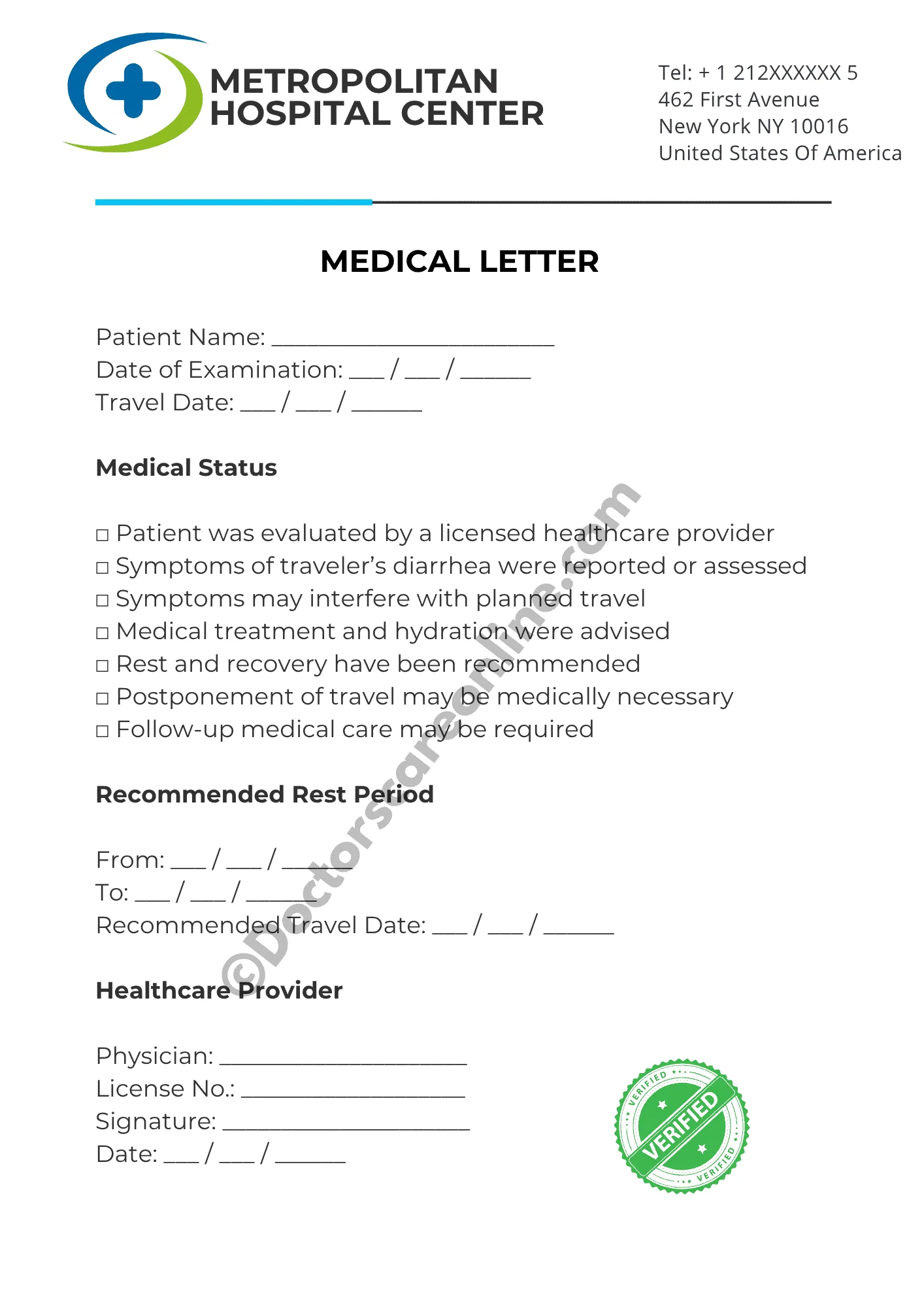
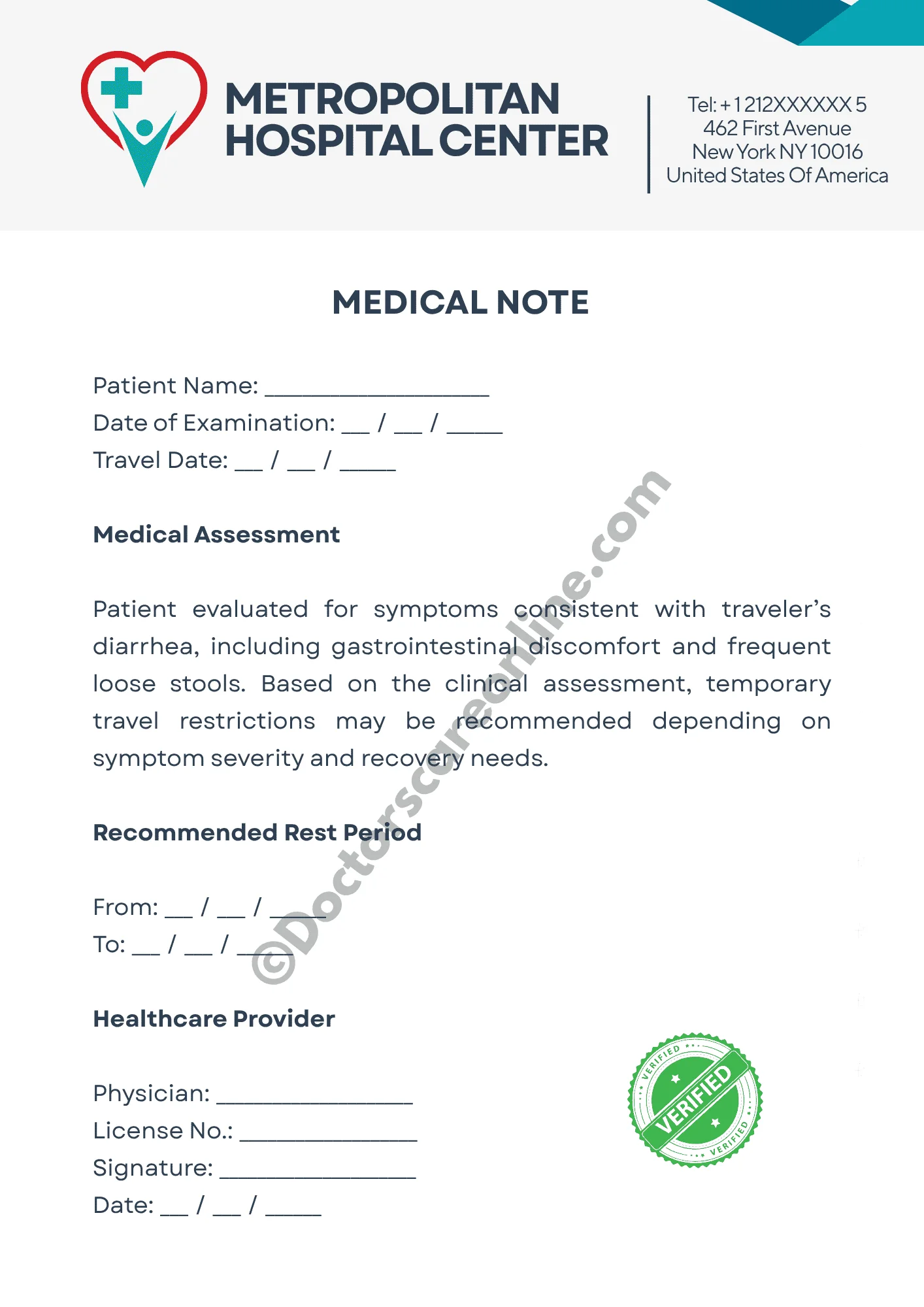
A doctor’s note for traveler’s diarrhea is medical documentation that may be provided after a healthcare professional evaluates your symptoms and determines that documentation is appropriate.
Depending on your circumstances, documentation may address:
- Medical evaluation for gastrointestinal symptoms
- Recommended time away from work or school
- Temporary activity limitations
- A suggested return date
- Follow-up recommendations
- Other medically appropriate restrictions
The exact information included depends on the healthcare provider’s clinical judgment and the requirements of the organization requesting the documentation.
A doctor’s note should be based on a legitimate medical evaluation. It should not be altered, fabricated, or obtained without appropriate healthcare assessment.
Travelers’ diarrhea can develop during or after a trip and may cause loose or watery stools, abdominal cramps, nausea, vomiting, urgency, and dehydration. For travelers, these symptoms can interfere with flights, sightseeing, work commitments, school, and other planned activities.
Related Doctor Note :——
You can also visit:
- Doctors Note for Upset Stomach
- Doctors Note for Stomach Virus
- 6 Months of Unlimited Doctor’s Notes
- Unlimited Doctor’s Notes for 1 Year
What a Doctor’s Note for Traveler’s Diarrhea May Include
If documentation is medically appropriate, the provider determines its content.
Depending on the situation, it may include:
- Patient identification
- Date of medical evaluation
- Confirmation of medical evaluation
- Recommended absence period, if applicable
- Activity or work restrictions, if appropriate
- Recommended return date
- Follow-up instructions
- Healthcare provider information and signature
The exact format can vary according to the provider, employer, educational institution, and applicable requirements.
Why Traveler’s Diarrhea May Affect Your Daily Activities
Traveler’s diarrhea can be particularly disruptive because symptoms may occur while you are away from your normal healthcare provider, workplace, or home environment.
Common difficulties can include:
- Frequent and urgent bathroom trips
- Abdominal cramping
- Nausea or vomiting
- Fatigue
- Difficulty maintaining hydration
- Difficulty sitting through meetings or classes
- Problems completing physically demanding work
- Disruption to flights or other travel plans
- Difficulty participating in scheduled activities
The CDC describes travelers’ diarrhea as the most common travel-related illness, and symptoms can vary considerably depending on the infectious cause and individual circumstances.
Common Symptoms of Traveler’s Diarrhea
Traveler’s diarrhea commonly involves digestive symptoms that can develop during travel or after exposure to contaminated food or water.
Common symptoms include:
- Loose or watery stools
- Increased bowel movements
- Sudden bowel urgency
- Abdominal cramps
- Stomach discomfort
- Nausea
- Vomiting
- Fatigue
- Fever in some cases
More concerning symptoms can include blood in the stool, severe abdominal pain, significant dehydration, or persistent vomiting.
What Causes Traveler’s Diarrhea?
Traveler’s diarrhea can be caused by exposure to infectious organisms through contaminated food or water. Bacteria are common causes, although viruses and parasites can also be responsible.
Potential exposure sources include:
- Contaminated drinking water
- Ice made from unsafe water
- Raw or undercooked food
- Improperly handled meals
- Unwashed fruits or vegetables
- Contaminated surfaces
- Poor sanitation
The specific cause cannot always be determined immediately, particularly when symptoms are short-lived.
Who May Need Medical Evaluation?
Many uncomplicated cases improve without extensive medical treatment, but certain people may benefit from prompt medical advice.
Consider contacting a healthcare provider if you have:
- Persistent or worsening diarrhea
- Significant vomiting
- Difficulty drinking enough fluids
- Signs of dehydration
- High fever
- Blood or pus in the stool
- Severe abdominal or rectal pain
- Frequent watery bowel movements
- Symptoms that interfere substantially with normal activities
- A medical condition or circumstance that increases your risk of complications
Adults with diarrhea lasting more than two days, high fever, six or more loose stools in a day, severe pain, bloody or black stools, or dehydration should seek medical advice.
Traveler’s Diarrhea and Dehydration
Diarrhea causes the body to lose fluids and electrolytes. Replacing these losses is an important part of managing the condition.
Signs of dehydration may include:
- Excessive thirst
- Dry mouth
- Dark-colored urine
- Urinating less frequently
- Tiredness
- Dizziness or lightheadedness
- Weakness
Oral rehydration solutions can help replace fluids and electrolytes, particularly when fluid loss is significant. The CDC recommends appropriate fluid replacement for travelers experiencing diarrhea.
If you cannot keep fluids down or have significant symptoms of dehydration, seek medical care promptly.
Can Traveler’s Diarrhea Require Time Off Work?
Yes, depending on the severity of symptoms and the type of work you perform.
For example, symptoms may make it difficult to safely perform jobs involving:
- Food preparation
- Healthcare services
- Driving
- Heavy physical activity
- Customer-facing duties
- Long periods away from restroom facilities
- Extended meetings or fixed work schedules
A healthcare provider can consider your symptoms, functional limitations, occupation, and overall health when determining whether medical leave or temporary restrictions are appropriate.
Doctor’s Note for School or College
Students experiencing significant traveler’s diarrhea may find it difficult to attend classes, take examinations, participate in practical sessions, or remain on campus for extended periods.
When medically appropriate, documentation may help explain:
- The date of medical evaluation
- Recommended absence
- Temporary activity limitations
- Expected return date
- Follow-up recommendations
Students should check their institution’s specific documentation and absence policies because requirements vary.
Doctor’s Note for Travel-Related Work Absence
Travel-related illness can sometimes occur immediately before a scheduled workday, during a business trip, or shortly after returning home.
If symptoms prevent you from performing your normal responsibilities, an online medical consultation may offer a convenient way to discuss your condition with a licensed healthcare provider.
The provider may determine whether:
- You need temporary time away from work
- Modified duties are appropriate
- Additional medical evaluation is necessary
- Follow-up care is recommended
- Medical documentation is clinically appropriate
A doctor’s note is not automatically issued simply because it is requested; the healthcare provider makes that determination after evaluation.
How an Online Doctor Visit for Traveler’s Diarrhea Works
An online consultation can provide a convenient option when your symptoms can be appropriately assessed through telehealth.
Typical process:
1. Select an online appointment
- Choose an available consultation with a licensed healthcare provider.
2. Provide your information
- Enter the requested personal and appointment details.
3. Describe your symptoms
- Tell the provider when your diarrhea began, how frequently it occurs, and whether you have symptoms such as vomiting, fever, abdominal pain, or dehydration.
4. Explain your travel history
- Share relevant information about where you traveled, when symptoms started, and potential food or water exposures.
5. Complete the medical consultation
- The healthcare provider reviews your symptoms and determines whether online evaluation is appropriate.
6. Follow the medical recommendation
- Depending on the assessment, the provider may recommend hydration, medication, testing, in-person evaluation, or other care.
7. Receive documentation if medically appropriate
- If the provider determines that a doctor’s note is justified, documentation may be issued according to applicable requirements and professional standards.
What Information Should You Tell the Online Doctor?
Providing complete and accurate information can help the healthcare provider understand your situation.
Before your appointment, consider having the following details available:
| Information | Examples |
|---|---|
| Symptom onset | When diarrhea started |
| Frequency | Approximate number of loose stools |
| Associated symptoms | Fever, vomiting, cramps, nausea |
| Hydration | Ability to drink and urination changes |
| Travel history | Destination and travel dates |
| Food or water exposure | Unusual meals, untreated water, etc. |
| Medical history | Existing conditions or recent illness |
| Medications | Current prescription and OTC medicines |
| Work or school impact | Why symptoms prevent normal activities |
| Documentation needs | Employer or school’s requirements |
Accurate information helps the provider determine the appropriate next step.
How Traveler’s Diarrhea Is Evaluated
The evaluation depends on the duration and severity of symptoms and the individual’s circumstances.
A healthcare provider may consider:
- Medical and travel history
- Symptom duration
- Stool frequency
- Fever or vomiting
- Abdominal symptoms
- Hydration status
- Existing medical conditions
- Recent medication or antibiotic use
- Potential infectious exposure
If additional investigation is necessary, healthcare professionals may use stool or blood testing depending on the circumstances.
Treatment and Recovery Considerations
Treatment depends on the suspected cause and severity of the illness.
Common supportive measures may include:
- Replacing lost fluids and electrolytes
- Oral rehydration solutions when appropriate
- Resting while recovering
- Eating as tolerated
- Following healthcare provider recommendations
Certain over-the-counter medicines can reduce diarrhea symptoms in some adults, but they are not appropriate for everyone. For example, CDC guidance advises against using antimotility medication alone when diarrhea is accompanied by bloody stools or fever.
Antibiotics are not automatically required for every case. A healthcare provider can determine whether medication is appropriate based on the severity and clinical circumstances.
When Traveler’s Diarrhea Needs Urgent Medical Attention
Do not rely solely on an online doctor’s visit when symptoms indicate a potentially serious condition.
Seek prompt medical care if you experience:
- Blood or pus in your stool
- Black, tarry stools
- Severe abdominal or rectal pain
- High fever
- Frequent vomiting
- Significant dehydration
- Confusion or unusual changes in mental alertness
- Inability to drink enough fluids
- Rapidly worsening symptoms
These warning signs can indicate dehydration, a more serious infection, or another condition requiring medical evaluation. NIDDK
If you are experiencing a medical emergency, seek emergency care rather than waiting for an online appointment.
Why Our Online Doctor Visit Service Can Be Useful
Our online doctor visit service is designed to make accessing healthcare more convenient when you need to discuss a health concern such as traveler’s diarrhea.
What users can expect:
- Convenient online access: Consult a healthcare provider without necessarily traveling to a physical clinic.
- Professional evaluation: Your symptoms are reviewed by a healthcare professional rather than relying on a self-diagnosis.
- Clear documentation process: If medical documentation is clinically appropriate, the provider determines what should be included.
- Privacy-conscious approach: You provide your health information directly as part of the medical consultation.
- Easy appointment process: Online scheduling can help you find an appointment that fits your availability.
- Transparent support: You can contact our support team when you need help with the website or ordering process.
Our service is intended to connect users with appropriate healthcare evaluation; a doctor’s note is never guaranteed solely because a user requests one. Any medical documentation depends on the provider’s assessment and applicable requirements.
Having Trouble With Registration, Login, or Payment?
If you experience a problem while using our website, you don’t have to figure it out alone.
You can contact us through the website chatbox if you have questions or problems related to:
- Creating an account
- Registering your information
- Logging into your account
- Booking an online appointment
- Understanding the appointment process
- Payment or checkout issues
- Questions about your order
- Website navigation
- Other service-related concerns
Our support team can help explain the next steps or direct you to the appropriate assistance.
Important: Customer support can help with website, account, appointment, and payment-related questions, but medical decisions—including whether medical documentation is appropriate—are made by the licensed healthcare provider.
How We Help Make the Process More Trustworthy
When choosing an online healthcare service, users should know what they are paying for and how the medical evaluation works.
A trustworthy process should include:
- A clear explanation of the online consultation process
- Evaluation by an appropriately licensed healthcare professional
- Transparent information about what the service provides
- Appropriate handling of personal and health information
- No promise that a doctor’s note will be issued regardless of medical findings
- Access to customer support for technical or account-related problems
- Clear instructions for seeking in-person or emergency care when telehealth is not appropriate
Users should always provide truthful information during a medical consultation. Accurate information allows the healthcare provider to make a more appropriate clinical assessment.
Can You Get a Doctor’s Note for Traveler’s Diarrhea Online?
In many circumstances, you can schedule a telehealth consultation to discuss traveler’s diarrhea with a licensed healthcare provider.
Whether you receive medical documentation depends on:
- Your symptoms
- The provider’s clinical assessment
- Whether your condition can be appropriately evaluated through telehealth
- Applicable state and federal requirements
- The documentation requirements of your employer or school
An online consultation provides an opportunity to discuss your condition with a healthcare professional. It does not guarantee that a doctor’s note, specific treatment, or medication will be provided.
FAQs
1. Can I get a doctor’s note for diarrhea after traveling?
A licensed healthcare provider may provide documentation after evaluating your symptoms and determining that medical leave or another restriction is appropriate. The decision depends on your individual circumstances.
2. Can I get a doctor’s note for food poisoning while traveling?
You can discuss suspected food poisoning with a healthcare provider through an appropriate medical consultation. If documentation is medically justified, the provider may issue it according to applicable requirements.
3. Can a doctor’s note help me cancel a trip because of diarrhea?
Medical documentation may help explain that you were evaluated for an illness, but whether an airline, hotel, insurer, or travel company accepts it for cancellation or reimbursement depends on that organization’s policy.
4. Can traveler’s diarrhea continue after I return home?
Yes. Some travelers develop symptoms after returning home, and persistent diarrhea may require further medical evaluation to determine the cause.
5. Is traveler’s diarrhea contagious?
Some causes of diarrhea can spread from person to person. Good hand hygiene, safe food handling, and avoiding contamination can reduce the risk of spreading infectious causes.
Medical Disclaimer: This content is provided for general educational and informational purposes and does not replace professional medical advice, diagnosis, or treatment. Traveler’s diarrhea can have different causes and levels of severity. A licensed healthcare provider should evaluate symptoms when medical advice or documentation is needed.
A doctor’s note should only be issued following an appropriate medical evaluation and when the healthcare provider determines that documentation is medically appropriate. Availability of telehealth services, medications, medical documentation, and specific requirements may vary by state and individual circumstances.





Reviews
There are no reviews yet.