
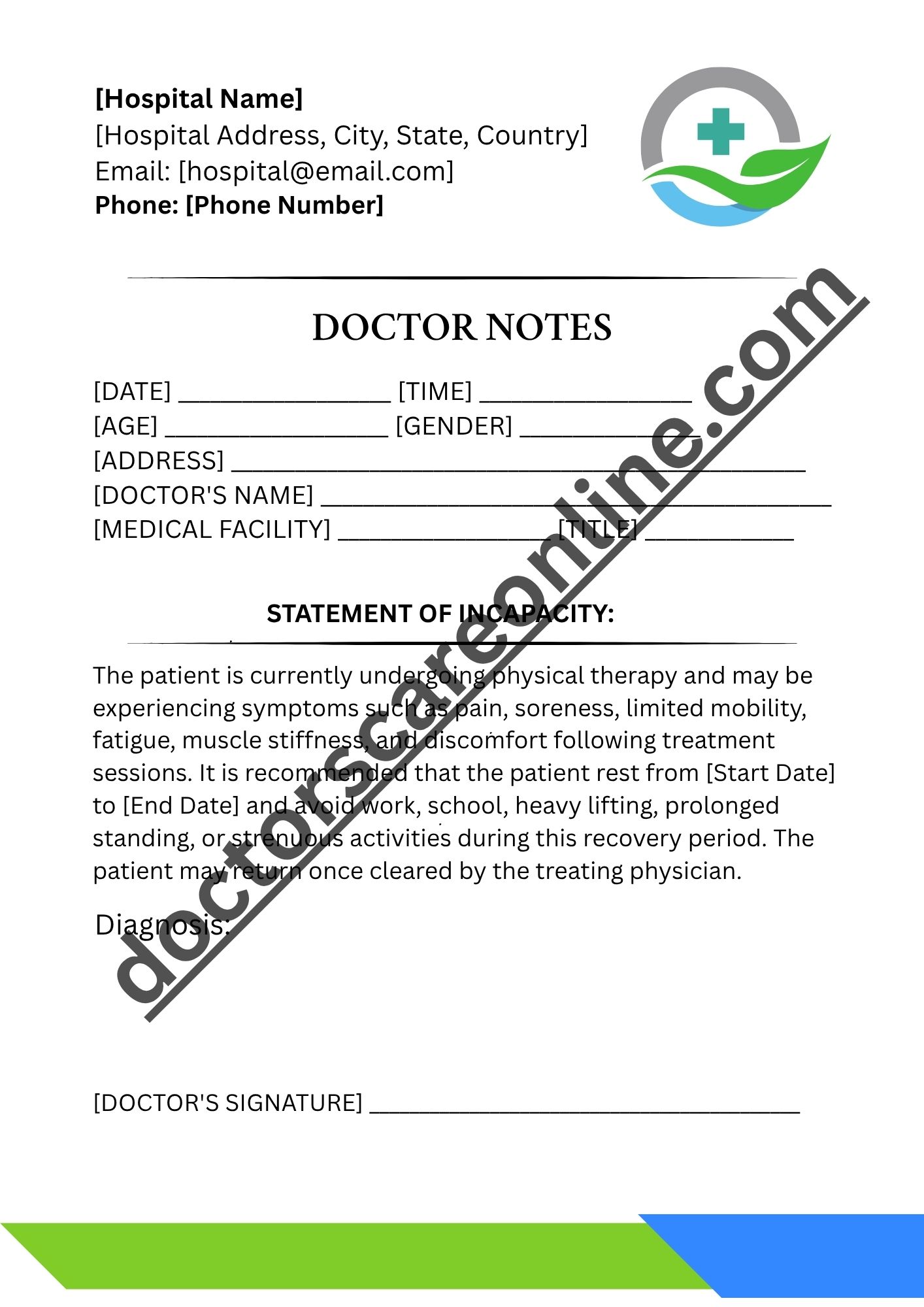
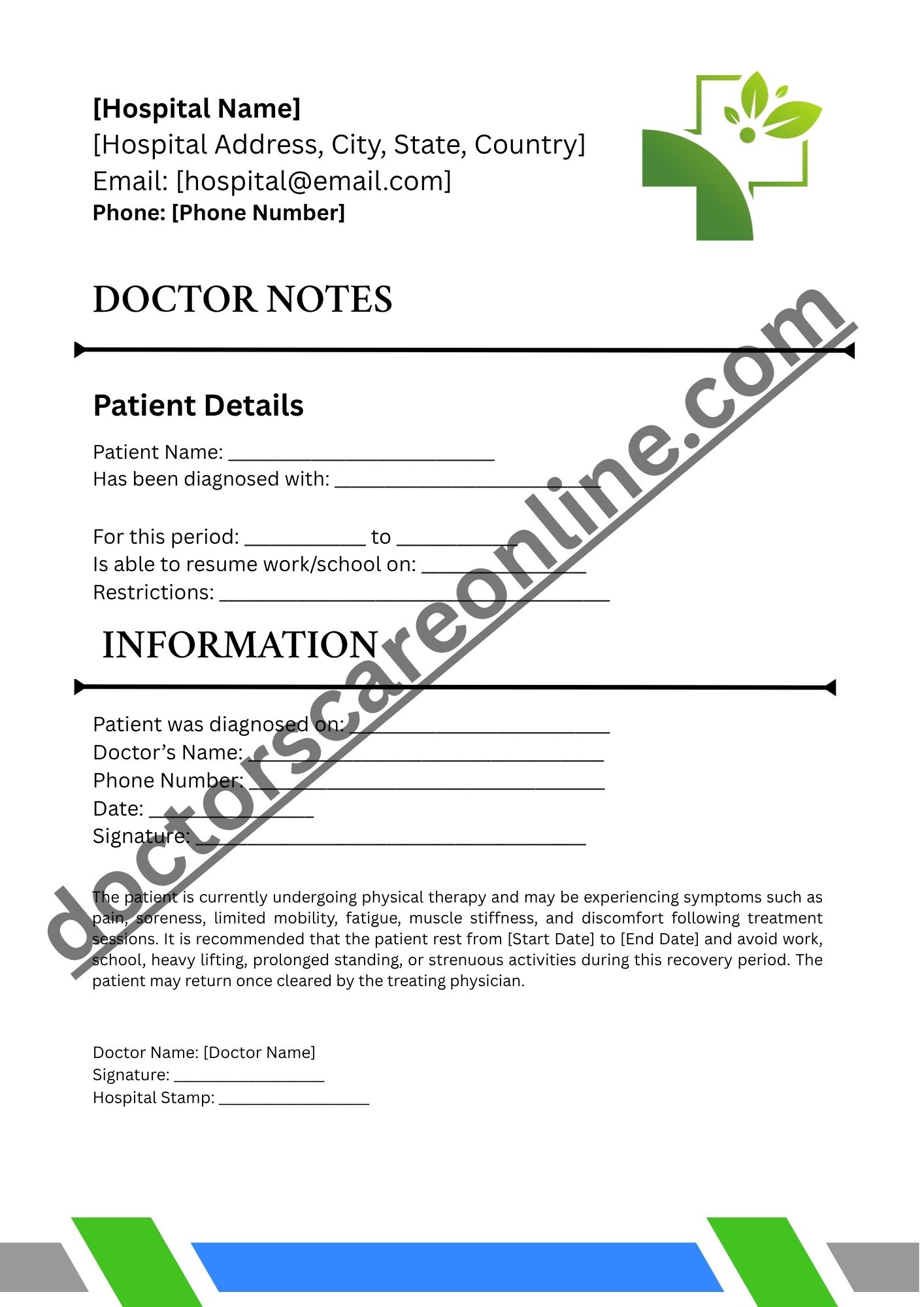
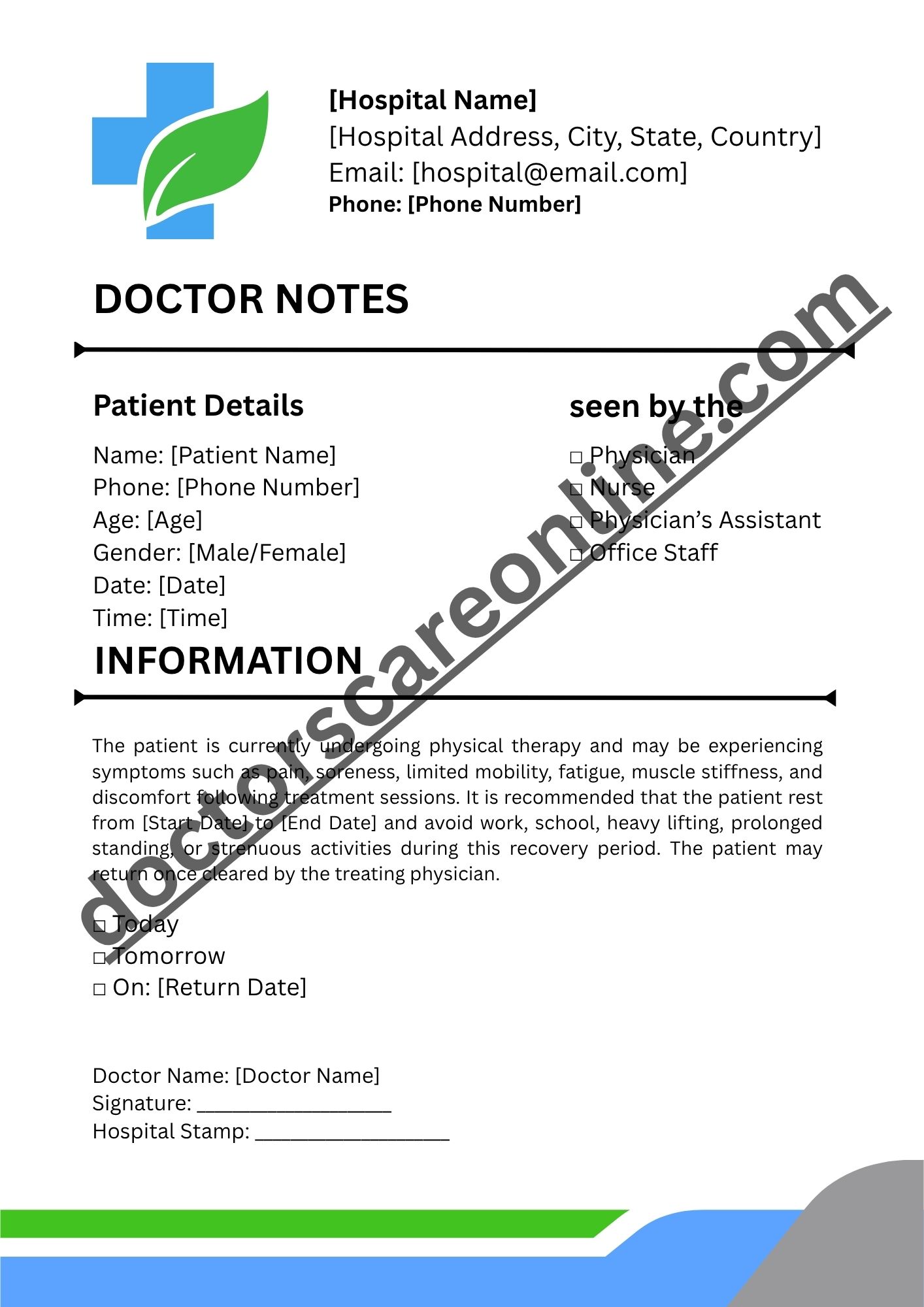
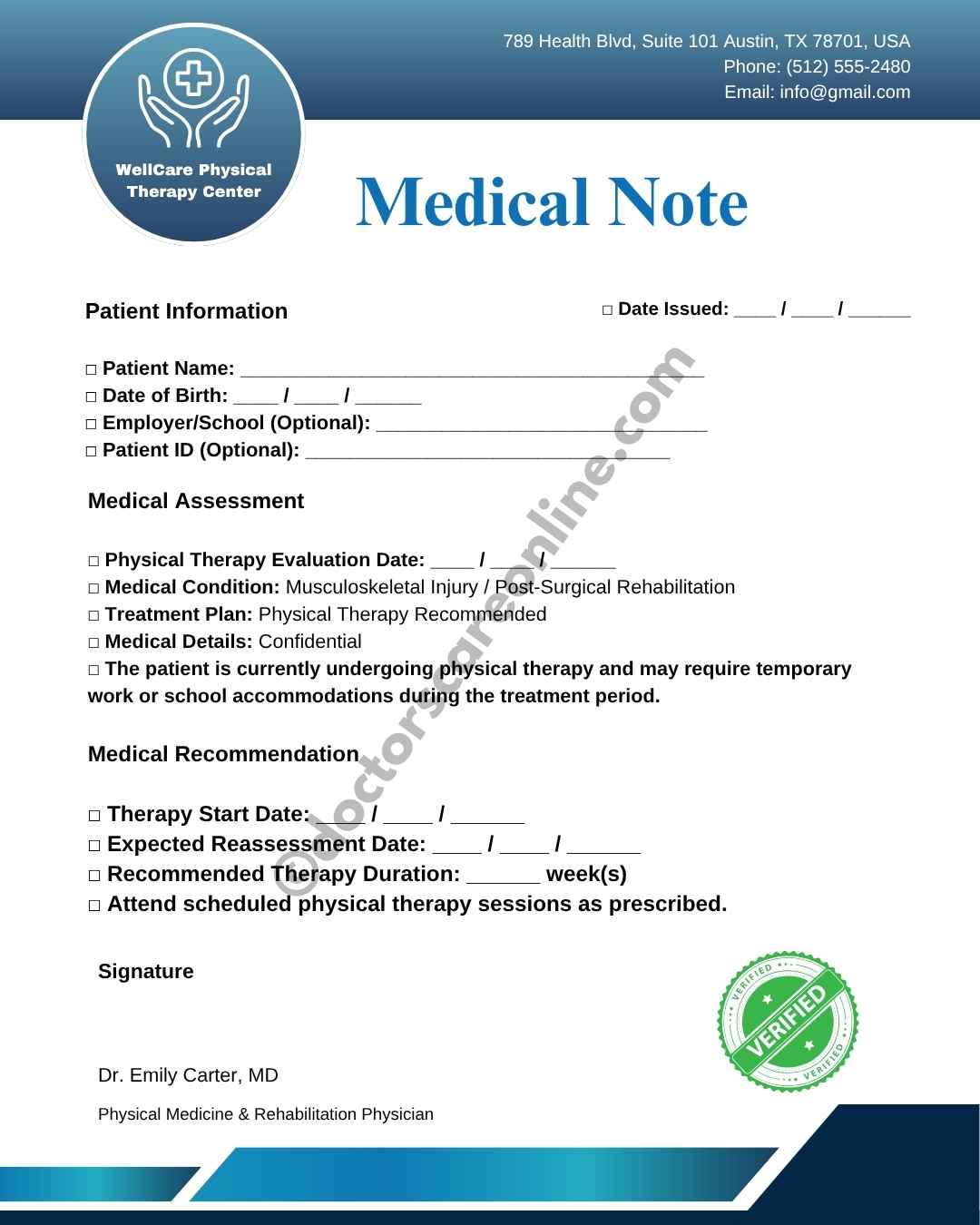
A Physical Therapy Excuse Note is a medical document that verifies a patient attended physical therapy or rehabilitation treatment for an injury, surgery recovery, or mobility-related condition. It may be accepted by employers, schools, colleges, or other organizations as evidence of medically necessary treatment when therapy appointments, recovery time, or temporary activity restrictions affect normal attendance or daily responsibilities.
Printable Physical Therapy Excuse Note
This physical therapy excuse note can be used to document attendance at rehabilitation sessions and explain medically necessary absences from work, school, or other obligations. Physical therapy is commonly prescribed to improve movement, reduce pain, restore strength, and support recovery following injuries, surgeries, orthopedic conditions, or neurological disorders.
A licensed physical therapist or physician may recommend temporary work restrictions, modified duties, or reduced physical activity while the patient progresses through rehabilitation. Depending on the condition being treated, the note may include the treatment dates, expected recovery period, activity limitations, and recommendations for returning to normal activities safely.
Many employers, educational institutions, and organizations accept a physical therapy medical certificate or rehabilitation excuse note as supporting medical documentation when rehabilitation appointments interfere with regular attendance.
When You May Need a Physical Therapy Excuse Note
A physical therapy medical excuse note may be required in situations such as:
- Recovery after orthopedic surgery
- Post-surgical rehabilitation
- Sports injury recovery
- Workplace injury rehabilitation
- Automobile accident recovery
- Muscle strain or ligament injury
- Joint pain management
- Fracture rehabilitation
- Back or neck pain treatment
- Shoulder or rotator cuff injuries
- Knee injuries or ACL reconstruction
- Hip replacement recovery
- Stroke rehabilitation
- Balance or mobility disorders
- Chronic pain management
- Neurological rehabilitation
- Tendon or ligament injuries
- Recovery following physician-recommended rehabilitation
Symptoms / Reasons
Patients may require physical therapy due to symptoms such as:
- Muscle pain or stiffness
- Joint discomfort
- Limited range of motion
- Reduced flexibility
- Difficulty walking
- Difficulty standing
- Difficulty climbing stairs
- Swelling around joints
- Weakness in muscles
- Loss of balance
- Reduced coordination
- Injury-related pain
- Persistent back pain
- Neck stiffness
- Shoulder pain
- Knee pain
- Hip discomfort
- Difficulty performing daily activities
- Post-surgery recovery needs
- Need for supervised rehabilitation sessions
Things to Avoid During Physical Therapy Recovery
To support safe healing and improve rehabilitation outcomes, patients should avoid:
- Skipping therapy appointments
- Missing follow-up evaluations
- Ignoring therapist instructions
- Performing exercises incorrectly
- Overexerting painful muscles or joints
- Returning to sports too early
- Heavy lifting before medical clearance
- Sudden twisting or jerking movements
- Poor posture during recovery
- Prolonged sitting without movement
- Standing for long periods if advised against it
- Stopping prescribed home exercises
- Driving when medically restricted
- Ignoring persistent or worsening pain
- Self-adjusting treatment without professional advice
- Comparing recovery progress with others
- Rushing the rehabilitation process
Recovery Tips
Patients can often improve recovery by following professional recommendations, including:
- Attend every scheduled therapy appointment.
- Complete home exercise programs consistently.
- Follow all therapist and physician instructions.
- Maintain proper posture throughout the day.
- Stay physically active within approved limits.
- Get adequate sleep and rest.
- Eat a balanced, nutrient-rich diet.
- Stay hydrated.
- Use ice or heat therapy if recommended.
- Take prescribed medications as directed.
- Wear supportive braces or assistive devices when instructed.
- Report new or worsening symptoms promptly.
Expected Recovery Time
Recovery varies depending on the injury, medical condition, overall health, and treatment plan.
| Condition | Typical Recovery Time* |
|---|---|
| Mild muscle strain | 2–4 weeks |
| Minor ligament sprain | 4–8 weeks |
| Tendon injury | 6–12 weeks |
| Fracture rehabilitation | Several weeks to several months |
| Joint replacement surgery | Several months |
| ACL reconstruction | 6–12 months |
| Rotator cuff repair | 4–8 months |
| Stroke rehabilitation | Varies by individual |
| Chronic pain management | Ongoing treatment may be recommended |
*Recovery timelines are approximate and vary based on the patient’s diagnosis and healthcare provider’s recommendations.
Benefits of Physical Therapy
Physical therapy may help patients:
- Reduce pain
- Improve mobility
- Restore flexibility
- Increase muscle strength
- Improve balance
- Enhance coordination
- Reduce swelling
- Prevent future injuries
- Improve independence
- Support safe return to work
- Improve athletic performance
- Promote long-term recovery
Who Can Issue a Physical Therapy Excuse Note?
A physical therapy excuse note may be issued or verified by qualified healthcare professionals, including:
- Licensed Physical Therapist (PT)
- Physician (MD or DO)
- Orthopedic Specialist
- Sports Medicine Physician
- Rehabilitation Medicine Physician (Physiatrist)
- Healthcare provider supervising rehabilitation
Requirements may vary depending on employer, school, insurance provider, healthcare facility, and local regulations.
Frequently Asked Questions
Q: Who provides a physical therapy excuse note?
A: A licensed physical therapist, physician, orthopedic specialist, or another authorized healthcare provider may issue or verify the documentation, depending on local regulations.
Q: Can physical therapy excuse work or school absences?
A: Yes. Many employers and educational institutions accept a physical therapy excuse note as documentation for medically necessary rehabilitation appointments or recovery periods.
Q: How long does physical therapy usually last?
A: Treatment length depends on the diagnosis, severity of the condition, treatment goals, and the patient’s progress. Some patients require only a few weeks of therapy, while others may continue rehabilitation for several months.
Q: Are physical therapy notes accepted by employers?
A: Many employers accept medically appropriate documentation supporting rehabilitation treatment, although workplace policies may differ.
Q: Can physical therapy notes be provided digitally?
A: Yes. Many hospitals, clinics, rehabilitation centers, and healthcare providers offer secure digital or electronic documentation.
Q: Can I return to work while attending physical therapy?
A: Many patients continue working with temporary restrictions or modified duties if approved by their healthcare provider.
Q: Can physical therapy notes include work restrictions?
A: Yes. Healthcare providers may recommend temporary restrictions such as limited lifting, reduced standing, modified schedules, or light-duty work.
Q: Can employers verify a physical therapy excuse note?
A: Some employers may verify documentation through appropriate procedures while respecting patient privacy and applicable healthcare privacy laws.
Q: Is a doctor’s signature always required?
A: Requirements vary by employer, educational institution, healthcare provider, and local regulations. Some situations may require physician authorization in addition to therapist documentation.
Medical Disclaimer
This information is provided for educational and informational purposes only and should not be considered medical, legal, or employment advice. A Physical Therapy Excuse Note should only be issued, completed, or authorized by a licensed healthcare professional acting within applicable laws, regulations, and professional standards. Acceptance of medical documentation varies by employer, educational institution, insurance provider, and jurisdiction. Patients should consult their healthcare provider for diagnosis, treatment recommendations, rehabilitation planning, and individualized medical advice.
Related Post


Reviews
There are no reviews yet.