
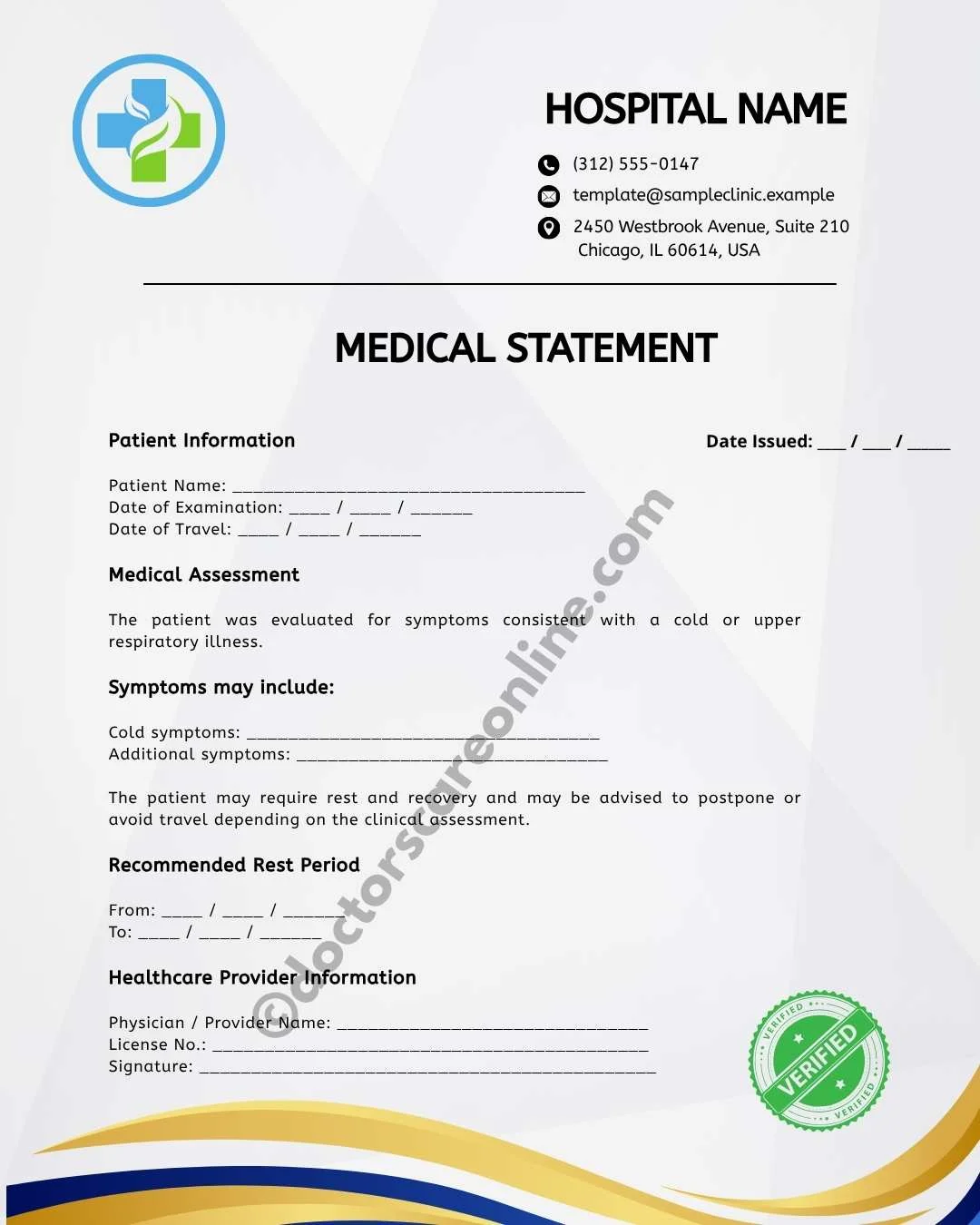
A common cold is one of the most frequent illnesses that can affect daily activities, work performance, and school attendance. Although most colds are mild and improve with rest and home care, some people may need time away from work or school to recover properly. In such cases, a doctor’s note for cold can help provide official medical documentation explaining the need for sick leave.
A doctor’s note (also called a sick note, medical certificate, or doctor’s excuse note) confirms that a healthcare provider evaluated your symptoms and may recommend rest or temporary absence from regular activities. Many employers, schools, and colleges may request this document when a person misses several days due to illness.
What Is a Doctor’s Note for a Cold?
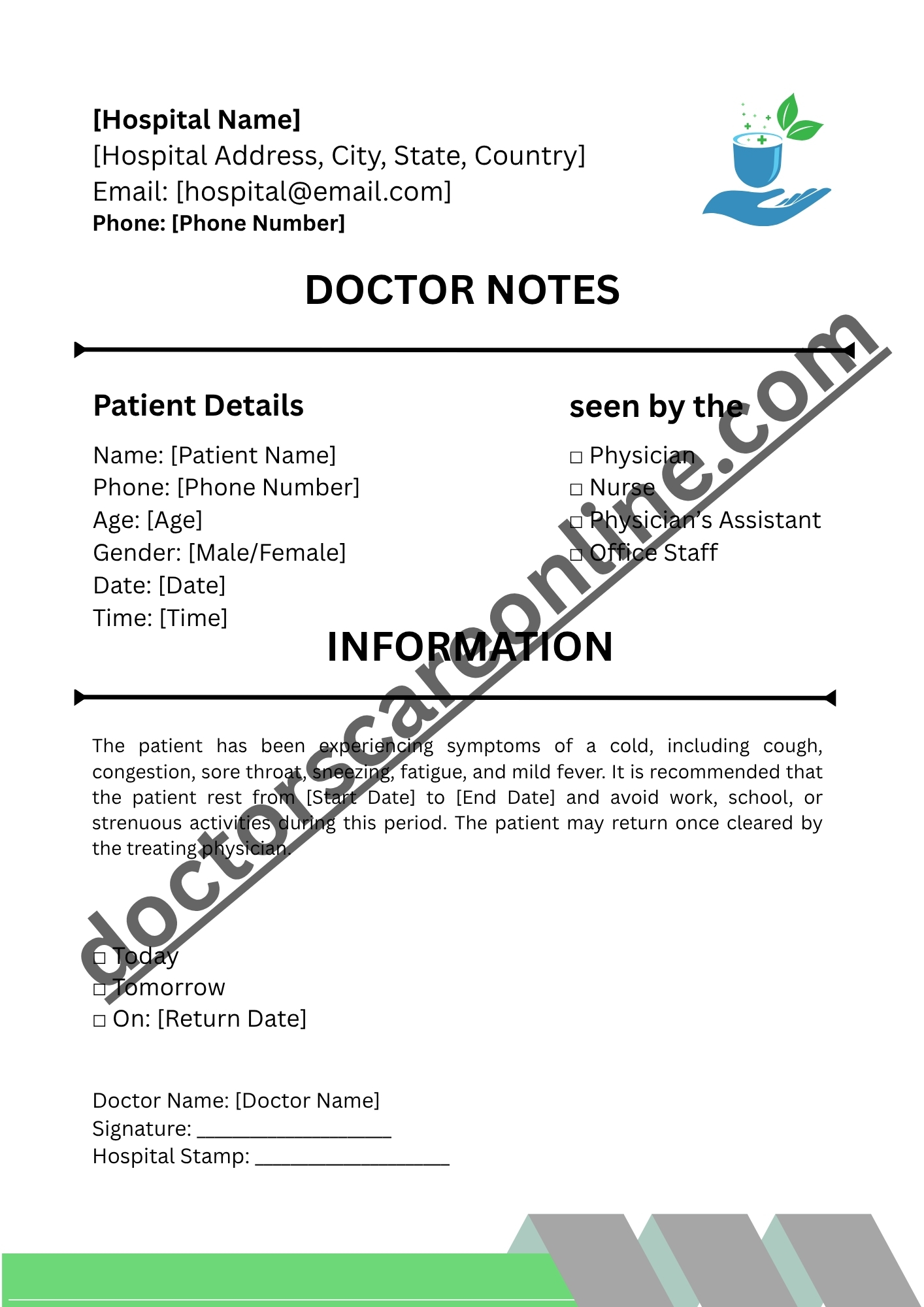
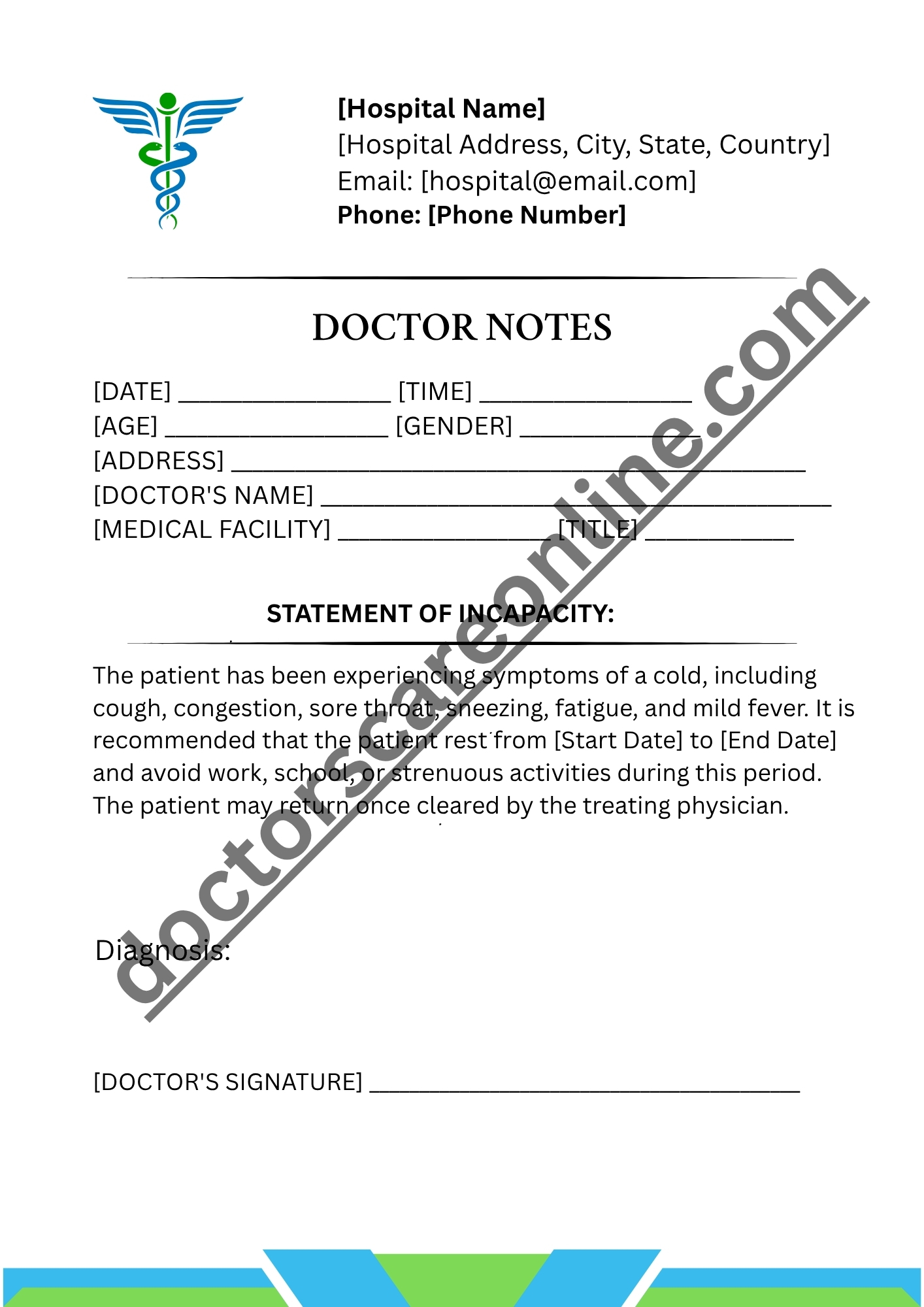
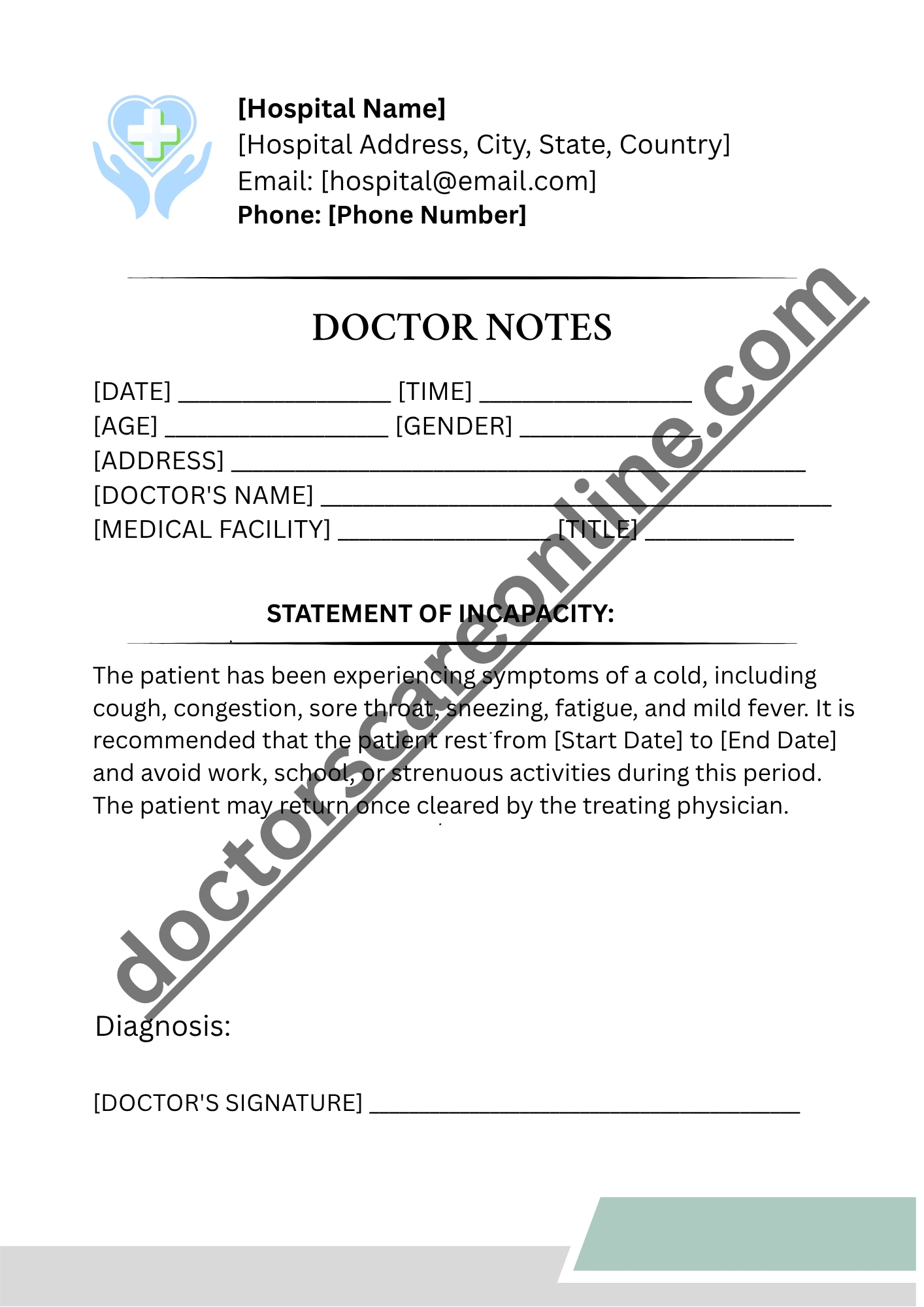
A doctor’s note for a cold is an official document provided by a licensed healthcare professional after evaluating symptoms related to a common cold or upper respiratory infection.
The note generally confirms:
- That the patient was medically evaluated
- The date of the medical consultation
- The reason for the visit (cold-related symptoms)
- Recommended recovery or rest period
- Expected return-to-work or return-to-school date (if applicable)
A doctor’s note does not always mention every medical detail due to privacy rules. It usually provides only the necessary information required by an employer, school, or organization.
Why Do People Need a Doctor’s Note for a Cold?
Although a common cold usually does not require medical treatment, a doctor’s note may be needed in certain situations, such as:
- Missing multiple days of work because of severe cold symptoms
- Returning to a workplace after an extended absence
- Meeting employer sick leave requirements
- Providing documentation for school or college attendance
- Working in healthcare, childcare, or food service environments
- Requesting medical leave approval
A medical excuse note helps employers or educational institutions understand that the absence was due to a legitimate health reason.
Common Cold Symptoms That May Require a Doctor’s Note
A mild cold can often be managed at home, but symptoms that interfere with normal activities may require medical evaluation.
Common symptoms include:
| Symptom | How It May Affect Daily Life |
|---|---|
| Runny nose | Difficulty concentrating or working |
| Nasal congestion | Trouble sleeping or breathing comfortably |
| Sneezing | Increased discomfort and spreading germs |
| Sore throat | Difficulty speaking or swallowing |
| Persistent cough | Disturbs sleep and workplace activities |
| Mild fever | May require rest and recovery time |
| Headache | Reduces productivity |
| Body fatigue | Makes normal activities difficult |
| Hoarse voice | Affects communication-based jobs |
If symptoms become severe or last longer than expected, consulting a healthcare provider is recommended.
When Do You Need a Doctor’s Note for a Cold?
Whether you need a doctor’s note depends on your workplace, school, or organization’s policy. Not every cold requires medical documentation.
| Situation | Need for Doctor’s Note |
|---|---|
| Taking one sick day | Usually not required |
| Missing several workdays | May be required |
| Severe cold symptoms | Recommended |
| High fever with cold | Often recommended |
| Returning after prolonged absence | May be required |
| School attendance requirements | Depends on school policy |
| Healthcare or food service jobs | Often required |
Always check your employer’s sick leave policy or school’s attendance guidelines before requesting a note.
Signs Your Cold May Need Medical Attention
Most common colds improve within a few days, but certain symptoms may indicate the need to visit a doctor.
Seek medical advice if you experience:
- Cold symptoms lasting more than 10 days
- High or persistent fever
- Difficulty breathing
- Chest pain
- Severe cough
- Wheezing
- Ear pain
- Severe sinus pressure
- Symptoms that improve and suddenly become worse
- Signs of dehydration
These symptoms may indicate complications such as sinus infection, bronchitis, or another respiratory condition.
Can You Get a Doctor’s Note Without Going to the Clinic?
Yes, you may be able to get a doctor’s note for a cold without visiting a clinic in person through telehealth or online medical consultations. A licensed healthcare provider can evaluate your symptoms through a virtual appointment and provide medical advice or documentation if appropriate.
The process usually includes:
- Booking an online appointment with a healthcare provider
- Describing your cold symptoms and medical history
- Completing a virtual health assessment
- Receiving treatment advice and recovery recommendations
- Getting a doctor’s note if the provider determines it is medically necessary
Online doctor’s notes can be convenient when cold symptoms make travel difficult, but acceptance depends on your employer’s, school’s, or organization’s policies.
How to Get a Doctor’s Note for a Cold
Getting a sick note for a cold usually involves a simple medical consultation.
Step 1: Schedule a Medical Appointment
You can visit:
- Primary care doctor
- Walk-in clinic
- Urgent care center
- Telehealth provider
- Online doctor consultation service
Step 2: Explain Your Symptoms
During the appointment, describe:
- When symptoms started
- Severity of symptoms
- Fever history
- Cough or throat problems
- Impact on work or school activities
Step 3: Medical Evaluation
The healthcare provider may check:
- Temperature
- Throat condition
- Breathing pattern
- Other symptoms
- Overall health condition
Step 4: Receive Medical Advice
The doctor may recommend:
- Rest period
- Home treatment
- Medication options
- Recovery timeline
Step 5: Get the Doctor’s Note
If medically appropriate, the provider will issue a doctor’s note containing necessary details for your employer or school.
What Information Is Included in a Doctor’s Note for Cold?
A doctor’s note for a cold usually contains basic medical and attendance-related information. The purpose of the note is to confirm that the patient was evaluated and may need time away from work, school, or other responsibilities.
A typical cold sick note may include:
| Information | Details |
|---|---|
| Patient Name | Full name of the person evaluated |
| Consultation Date | Date when the doctor examined the patient |
| Medical Reason | General reason such as cold symptoms or respiratory illness |
| Recommended Rest Period | Number of days the patient may need to recover |
| Return Date | Expected date to resume work or school (if applicable) |
| Doctor’s Details | Healthcare provider name and clinic information |
| Signature/Authorization | Doctor’s verification or official approval |
Note: Medical notes usually avoid unnecessary private health details and only include information required for leave verification.
How the Common Cold Spreads
The common cold spreads through respiratory droplets and contact with contaminated surfaces. It can pass from one person to another through:
- Coughing, sneezing, or talking
- Close contact with an infected person
- Touching contaminated objects and then touching the nose, mouth, or eyes
- Sharing personal items like cups or towels
Cold viruses spread easily in crowded places such as schools, workplaces, and public areas. Washing hands and avoiding close contact with sick people can help prevent infection.
Who Is More Likely to Catch a Cold?
Some people have a higher chance of catching a common cold due to increased exposure or a weaker immune response. Those at higher risk include:
- Young children, especially those in daycare or school
- Older adults with weaker immune systems
- People with weakened immunity due to certain health conditions or medications
- Healthcare workers who are frequently exposed to viruses
- People who spend time in crowded places like schools, offices, or public transport
- Individuals with poor sleep, high stress, or unhealthy habits that may affect immune function
Regular handwashing, good hygiene, and avoiding close contact with infected people can help reduce the risk of catching a cold.
Related Post-
Reviews
There are no reviews yet.