
Bright sunlight, glare, and intense light can be uncomfortable for people with certain medical conditions. For someone who experiences significant light sensitivity, driving can become particularly challenging when sunlight enters through the vehicle windows or reflects from surrounding surfaces.
A doctor’s note for tinted windows may be relevant when a licensed healthcare provider determines that reducing light or UV exposure is medically appropriate for a patient’s condition. Depending on the jurisdiction, medical documentation may support a request for a medical window tint exemption or another vehicle-related accommodation.
Related Doctor Note :—
You can also visit:
- Doctor’s Note for Dark Tint
- Doctor’s Note for Light Sensitivity
- Doctor’s Note for Tinted Windows
- 6 Months of Unlimited Doctor’s Notes
Light Sensitivity & Tinted Window: Understanding Medical Needs
Vehicle tint regulations, exemption requirements, permitted tint levels, and application procedures vary by state and may change over time. Anyone considering a medical tint exemption should verify the current rules with the appropriate state or local authority.
What Is Light Sensitivity?
Light sensitivity, medically known as photophobia, refers to discomfort or increased sensitivity when exposed to light. It can occur because of an eye condition, migraine or headache disorder, injury, infection, medication, or another underlying medical issue.
The experience can vary considerably from one person to another. Someone may notice discomfort in bright sunlight, while another person may experience symptoms from glare, strong indoor lighting, or reflected light.
Possible symptoms associated with light sensitivity can include:
- Eye discomfort in bright environments
- Squinting or difficulty keeping the eyes open
- Headache triggered or worsened by light
- Increased discomfort from sunlight or glare
- Watery or irritated eyes
- Difficulty tolerating prolonged exposure to bright light
- Reduced comfort while driving during bright conditions
Photophobia itself is a symptom rather than a diagnosis. Identifying the underlying cause is therefore an important part of determining appropriate treatment and protection.
How Can Tinted Windows Relate to Light Sensitivity?
Vehicle windows allow varying amounts of visible light to enter the cabin. For a person who experiences medically significant sensitivity to bright light or glare, reducing the amount of incoming light may be one consideration among several protective strategies.
The potential relevance of window tint depends on the person’s symptoms, diagnosis, driving circumstances, and applicable vehicle regulations.
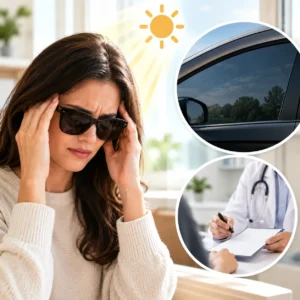
For example, a healthcare provider may consider:
- Whether sunlight consistently triggers symptoms
- Whether glare makes symptoms worse
- Whether symptoms interfere with normal driving activities
- Whether other light-protection methods have been recommended
- Whether reducing light exposure is medically appropriate
- Whether the requested accommodation is consistent with applicable regulations
Tint should not be viewed as a treatment for the underlying medical condition. It may simply be one potential environmental modification when medically appropriate.
Medical Conditions That Can Cause Light Sensitivity
Photophobia can have many different causes. MedlinePlus notes that light sensitivity may be associated with eye problems, certain headaches, medications, and other conditions.
Examples may include:
- Migraine: Migraine can be accompanied by sensitivity to light. Bright environments may aggravate discomfort during an episode.
- Eye Inflammation: Inflammatory conditions affecting parts of the eye can cause significant light sensitivity and discomfort.
- Corneal Problems: Corneal injuries, infections, abrasions, and other surface problems can cause pain and photophobia.
- Eye Injuries: An injury affecting the eye may temporarily increase sensitivity to light and require professional evaluation.
- Certain Neurological Conditions: Some headache and neurological conditions can involve increased sensitivity to light. The cause needs to be assessed rather than assumed.
- Medication-Related Photosensitivity: Certain medicines can contribute to increased sensitivity to light. A healthcare professional can determine whether a medication may be involved.
- Other Eye Conditions: Various eye disorders may cause light-related discomfort. Persistent or severe symptoms warrant appropriate medical assessment.
These examples do not mean that everyone with one of these conditions qualifies for a vehicle tint exemption. Eligibility depends on the person’s individual medical circumstances and the rules in the relevant jurisdiction.
When Might a Doctor Consider Medical Documentation?
A healthcare provider may consider medical documentation when a patient’s condition has been appropriately evaluated and there is a medically supported reason for reducing light exposure.
Factors that may be relevant include:
- Severity of light sensitivity
- Frequency of symptoms
- Underlying diagnosis
- Response to existing treatment
- Effect of sunlight or glare on symptoms
- Impact on driving or daily activities
- Previous recommendations for light protection
- Whether alternative measures are sufficient
The purpose of a medical evaluation is to determine what is appropriate for the individual rather than to guarantee a specific document or legal exemption.
What Does a Doctor Evaluate Before Recommending Light Protection?
During an appointment, the healthcare provider may ask about the patient’s symptoms and medical history.
The evaluation may include discussion of:
- When light sensitivity began
- Whether symptoms are constant or intermittent
- Specific light sources that trigger discomfort
- Headaches, eye pain, redness, or blurred vision
- Previous eye or neurological conditions
- Current medications
- Previous injuries or procedures
- Existing treatment
- How symptoms affect driving
- Other protective measures already being used
Depending on the symptoms, the provider may recommend an eye examination, specialist consultation, or additional testing.
This evaluation helps distinguish ordinary discomfort from symptoms that may indicate an underlying condition requiring treatment.
Does a Doctor’s Note Automatically Approve Dark Window Tint?
No.
A healthcare provider’s documentation and a government vehicle-tint exemption are two different things.
The healthcare provider evaluates the medical circumstances and may document a medically appropriate recommendation. The relevant state or local authority determines whether the person meets the legal requirements for a vehicle-window tint exemption.
Depending on the jurisdiction, the process may involve:
- Obtaining medical documentation
- Completing an official exemption application
- Providing vehicle information
- Meeting specific medical criteria
- Following permitted tint-level requirements
- Obtaining an approval, permit, certificate, or other authorization if required
Do not assume that having a doctor’s note permits installation of any tint level. Check the applicable regulations before modifying the vehicle.
Other Ways to Reduce Light Exposure While Driving
Window tint is not the only possible way to manage uncomfortable light exposure.
Depending on the underlying condition, a healthcare provider may discuss other options such as:
- Appropriate sunglasses
- UV-protective eyewear
- Reducing direct exposure to intense sunlight
- Using vehicle sun protection when safe and permitted
- Adjusting travel times when practical
- Treating the underlying condition
- Following an eye-care or migraine management plan
The most appropriate approach depends on why the person is experiencing light sensitivity.
For some conditions, treating the underlying cause is more important than simply reducing environmental light.
When Should Light Sensitivity Be Medically Evaluated?
New, severe, painful, or persistent photophobia should not simply be managed by making the vehicle darker.
Medical evaluation is particularly important when light sensitivity occurs with symptoms such as:
- Significant eye pain
- Redness of the eye
- Blurred or changed vision
- Severe headache
- Eye injury
- Symptoms that persist or worsen
- Sensitivity severe enough to require sunglasses indoors
MedlinePlus specifically recommends contacting a healthcare professional when light sensitivity is severe or painful, occurs with headache, red eye, or blurred vision, or does not resolve.
Sudden or severe eye symptoms may require prompt medical attention.
Understanding Your State’s Window Tint Requirements
Window-tint laws differ between jurisdictions. Requirements can address the percentage of visible light that must pass through the glass, which windows may be tinted, reflective properties, windshield restrictions, and medical exemptions.
A medical recommendation does not replace the legal approval process.
Before installing darker tint, check the current information provided by the relevant motor-vehicle or state authority. If an official medical exemption form is required, use the form and process specified by that authority.
This is particularly important if you travel across state lines because an exemption or permitted tint level may not automatically apply everywhere.
Why Medical Evaluation Matters
A medical note should be based on an actual assessment rather than a predetermined request for a specific document.
A qualified healthcare professional can help determine:
- Whether the symptoms are consistent with photophobia
- Whether an underlying condition may be involved
- Whether treatment is needed
- Whether light reduction is medically reasonable
- Whether additional evaluation is necessary
- Whether documentation is clinically appropriate
This patient-first approach helps ensure that medical documentation reflects an individual’s actual healthcare needs.
Frequently Asked Questions
1. Is photophobia the same as an eye disease?
No. Photophobia describes sensitivity or discomfort caused by light and can occur with different eye, neurological, headache-related, medication-related, or other conditions. The underlying cause needs to be evaluated rather than assumed.
2. Can a passenger’s medical condition be relevant to a vehicle tint request?
It depends on the specific rules in the applicable jurisdiction. Some exemption programs may have particular requirements concerning the person with the medical condition, the vehicle, or how the authorization is used. Check the relevant authority’s current rules.
3. Can sunglasses be used instead of requesting darker vehicle tint?
They may be an option for some people, but the appropriate choice depends on the underlying condition and individual circumstances. A healthcare professional can discuss suitable light-protection options.
4. Is a medical tint exemption transferable when buying another vehicle?
Not necessarily. Some jurisdictions may connect an exemption with a particular vehicle, permit, or registration. Before transferring tint or documentation to another vehicle, check the applicable rules.
5. What if my light sensitivity improves after treatment?
If your symptoms change, your healthcare needs may change as well. Follow-up with your healthcare provider can help determine whether continued light protection or medical documentation remains appropriate.
Medical Disclaimer: This article is provided for general educational purposes and does not replace professional medical advice, diagnosis, or treatment.
Vehicle-window tint laws and medical exemption procedures vary by jurisdiction and may change. Always verify current requirements with the appropriate state or local authority before installing or modifying window tint.