
Doctor’s Note for Claustrophobia is a formal medical document issued by a licensed healthcare professional to confirm that an individual experiences claustrophobia, an anxiety disorder triggered by confined or enclosed spaces. This condition can make it difficult to stay in elevators, crowded rooms, small offices, or restricted environments. The note is often used to request workplace or school accommodations, such as access to open spaces, flexible seating, or exemption from certain situations. It usually includes the condition, recommended adjustments, and any limitations to help the individual manage anxiety safely.
Our online medical consultation service can make it easier to connect with a licensed healthcare provider from home. During the consultation, you can explain your symptoms, triggers, how claustrophobia affects your daily activities, and any documentation requirements you need to meet.
If the provider determines that documentation is medically appropriate, they may issue a doctor’s note in accordance with their clinical judgment and applicable requirements.
Important: A doctor’s note is not automatically provided simply because it is requested. Medical documentation should be issued only after an appropriate healthcare evaluation and when medically justified.
Related Doctor Note :——
You can also visit:
- Doctors Note for Anxiety
- Doctors Note for Airline Refund
- Doctors Note to Cancel Flight
- Doctors Note for Medication on Flight
Why Might You Need a Doctor’s Note for Claustrophobia?
Claustrophobia can sometimes interfere with a person’s ability to safely or comfortably perform work, attend school, travel, participate in medical testing, or complete other responsibilities.
A healthcare provider may consider medical documentation when symptoms significantly affect your ability to function.
You may need documentation for situations such as:
- Missing work because of severe anxiety symptoms
- Requesting temporary workplace accommodations
- Avoiding certain work environments that involve confined spaces
- Missing school or college because symptoms interfere with attendance
- Requesting flexibility during recovery or treatment
- Difficulty completing required travel
- Difficulty undergoing an MRI or other enclosed medical procedure
- Requesting temporary changes to duties or activities
- Documenting a medically evaluated condition for an organization
Whether a doctor’s note is appropriate depends on your individual circumstances and the healthcare provider’s assessment.
What Is Claustrophobia and What Triggers It?
Claustrophobia is a type of specific phobia involving an intense or persistent fear of confined or enclosed spaces. A person may experience anxiety when entering a small or enclosed space or even when anticipating being in one. The severity can vary from mild discomfort to intense fear, panic-like symptoms, or avoidance that interferes with work, school, travel, medical appointments, or everyday activities.
Common claustrophobia triggers include:
- Elevators: Being inside a closed elevator or feeling unable to leave may trigger anxiety.
- Airplanes: Limited space, closed doors, and the inability to leave during a flight can cause distress.
- MRI Machines: The enclosed structure of some MRI scanners may be difficult for people with claustrophobia.
- Tunnels: Driving or traveling through long or enclosed tunnels may trigger fear.
- Small Rooms: Rooms with closed doors, limited windows, or restricted movement can increase anxiety.
- Crowded or Enclosed Spaces: Crowded areas may create a feeling of being trapped or unable to escape.
- Trains and Subway Systems: Enclosed public transportation can be a trigger for some individuals.
- Cars: Being inside a vehicle, particularly in heavy traffic or confined areas, may cause anxiety.
- Medical Procedures: Certain medical examinations or procedures involving enclosed equipment may trigger symptoms.
Identifying specific triggers can help a healthcare professional understand the severity of your symptoms and how claustrophobia affects your daily life. If fear of confined spaces is interfering with important responsibilities or necessary medical care, consider discussing your symptoms with a qualified healthcare professional.
When Claustrophobia May Affect Work or School
Claustrophobia does not affect every person’s ability to work or study. However, severe symptoms may make certain environments or responsibilities difficult.
For example, someone may struggle with:
- Working in elevators or underground areas
- Entering confined workspaces
- Traveling through tunnels as part of their job
- Using enclosed transportation
- Working in restricted rooms
- Attending classes in environments that trigger severe anxiety
- Completing required medical testing
- Traveling for work or school
If symptoms are interfering with normal responsibilities, speaking with a licensed healthcare professional can help determine appropriate next steps.
Can Claustrophobia Qualify for Temporary Work Restrictions?
In some situations, a healthcare provider may recommend temporary workplace restrictions if claustrophobia significantly interferes with specific job duties.
Depending on the person’s circumstances, a provider may consider recommendations such as:
- Avoiding specific confined work environments
- Temporarily modifying certain duties
- Allowing alternative work arrangements where appropriate
- Limiting exposure to specific triggers
- Taking medically recommended time away from work
- Scheduling follow-up care before resuming unrestricted duties
The exact recommendation depends on the individual’s symptoms, occupation, functional limitations, and clinical assessment.
A doctor’s note should accurately reflect the healthcare provider’s medical judgment rather than guarantee a particular workplace accommodation.
Claustrophobia and MRI Appointments
MRI scans can be difficult for people who experience claustrophobia because some MRI machines require the patient to remain inside a relatively enclosed space.
If you have claustrophobia and need an MRI, tell your healthcare provider and imaging team before the appointment. Depending on the type of scan and facility, possible options may include discussing alternative equipment or strategies to make the procedure more manageable.
A healthcare professional can determine whether additional support or medication is appropriate for your individual situation.
If claustrophobia is preventing you from completing an important medical test, seek professional advice rather than simply avoiding necessary medical care.
How Is Claustrophobia Diagnosed?
A healthcare provider or qualified mental health professional may evaluate:
- Your symptoms
- Specific triggers
- How frequently symptoms occur
- How long the symptoms have been present
- Situations you avoid
- How the fear affects work, school, relationships, or daily activities
- Relevant medical and mental health history
- Previous traumatic or stressful experiences
- Current medications or other health conditions
A formal diagnosis of a specific phobia generally considers whether the fear is persistent, disproportionate to the actual situation, associated with avoidance or intense anxiety, and significantly interferes with daily life.
There is no single blood test or imaging scan that confirms claustrophobia. Diagnosis generally relies on a clinical assessment and discussion of symptoms and their impact.
What Causes Claustrophobia?
There is no single cause of claustrophobia. It may develop after a frightening or traumatic experience involving confinement, such as being trapped in an elevator or experiencing distress in an enclosed environment.
Other possible contributing factors include:
- Childhood experiences
- Previous traumatic experiences
- Learned fear from observing another person’s anxiety
- Stressful experiences involving enclosed spaces
- Individual differences in anxiety responses
- Other anxiety-related conditions
The exact cause can vary from person to person.
Claustrophobia Treatment and Management
Claustrophobia is treatable, and treatment depends on symptom severity and individual needs.
Common approaches may include:
- Cognitive Behavioral Therapy: CBT can help people understand and change unhelpful thoughts and behavioral patterns associated with fear and anxiety.
- Exposure Therapy: Exposure-based therapy involves gradually working with feared situations in a structured way. It is commonly used for specific phobias.
- Relaxation Techniques: Healthcare professionals may recommend strategies such as controlled breathing, relaxation exercises, or mindfulness to help manage anxiety symptoms.
- Medication: In some circumstances, a healthcare provider may consider medication for anxiety symptoms. Medication decisions should always be made by a qualified healthcare professional based on the individual’s health history and needs.
Avoid starting, stopping, or changing medication without professional medical advice.
How to Book an Online Medical Appointment for Claustrophobia
If you need to discuss claustrophobia symptoms or possible medical documentation, an online consultation may be a convenient starting point where telehealth services are available.
Step 1: Choose an Online Medical Service
- Select a healthcare platform that connects patients with appropriately licensed healthcare professionals.
Step 2: Register or Log In
- Create your account or sign in using the information requested by the platform.
Step 3: Select an Appointment
- Choose an available appointment time that works for you.
Step 4: Explain Your Symptoms
- Tell the healthcare provider about your claustrophobia, common triggers, symptoms, and how they affect work, school, travel, medical appointments, or daily activities.
Step 5: Complete the Consultation
- The provider will evaluate whether your concerns can be appropriately addressed through telehealth or whether an in-person examination is necessary.
Step 6: Discuss Documentation
- If you need a doctor’s note, explain what documentation is required. If the provider determines that a note is medically appropriate, they may provide documentation according to their professional judgment and applicable requirements.
What Information Should You Have Ready for Your Online Appointment?
To make your appointment more useful, prepare information such as:
- When your symptoms started
- Your most common claustrophobia triggers
- How severe your symptoms become
- Whether you experience panic-like symptoms
- Situations you avoid because of your fear
- How symptoms affect work or school
- Any upcoming MRI, flight, travel, or medical procedure
- Previous treatment or counseling
- Current medications
- Relevant medical history
- Your employer’s or school’s documentation requirements, if applicable
Accurate information helps the provider make a more informed clinical assessment.
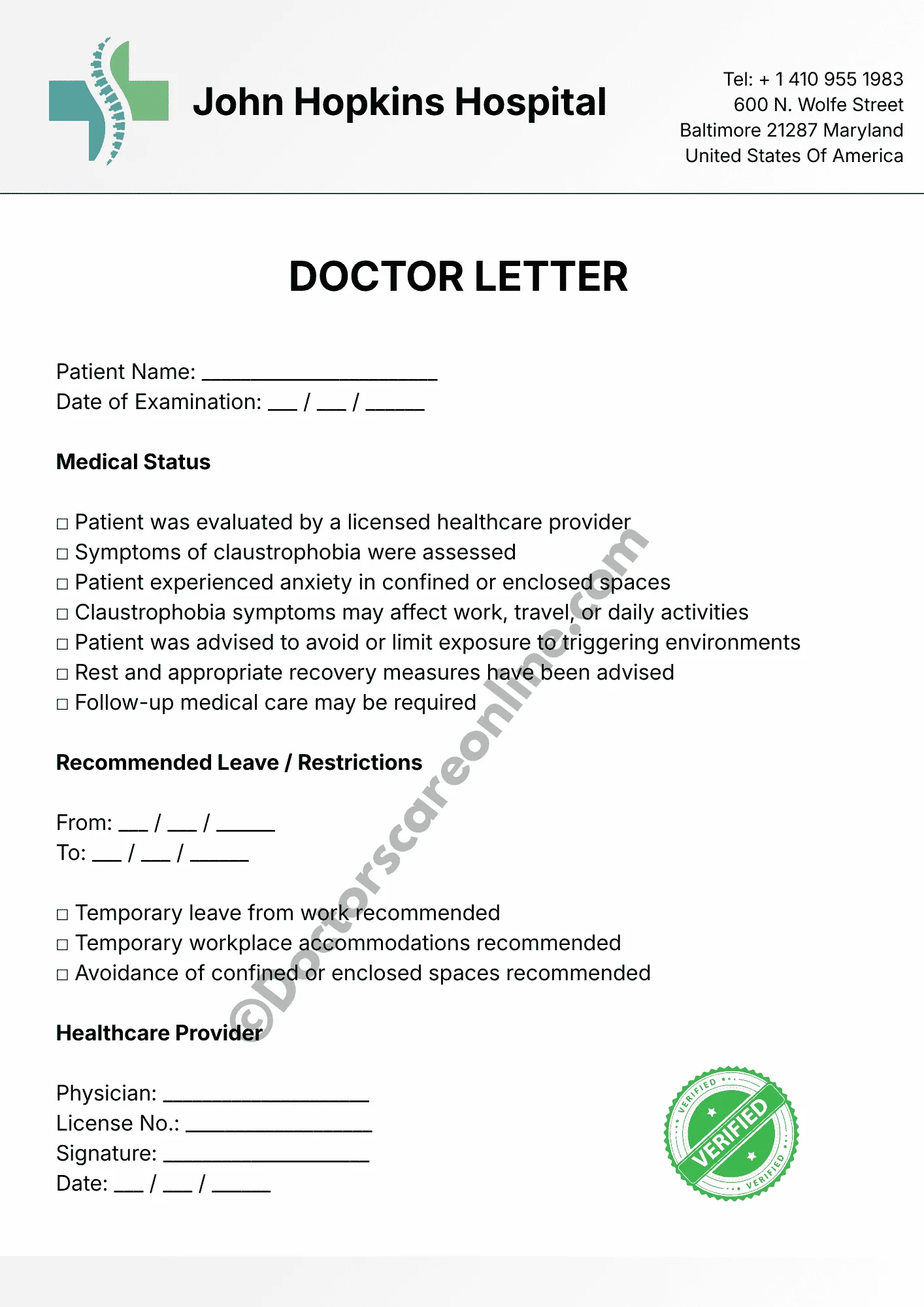
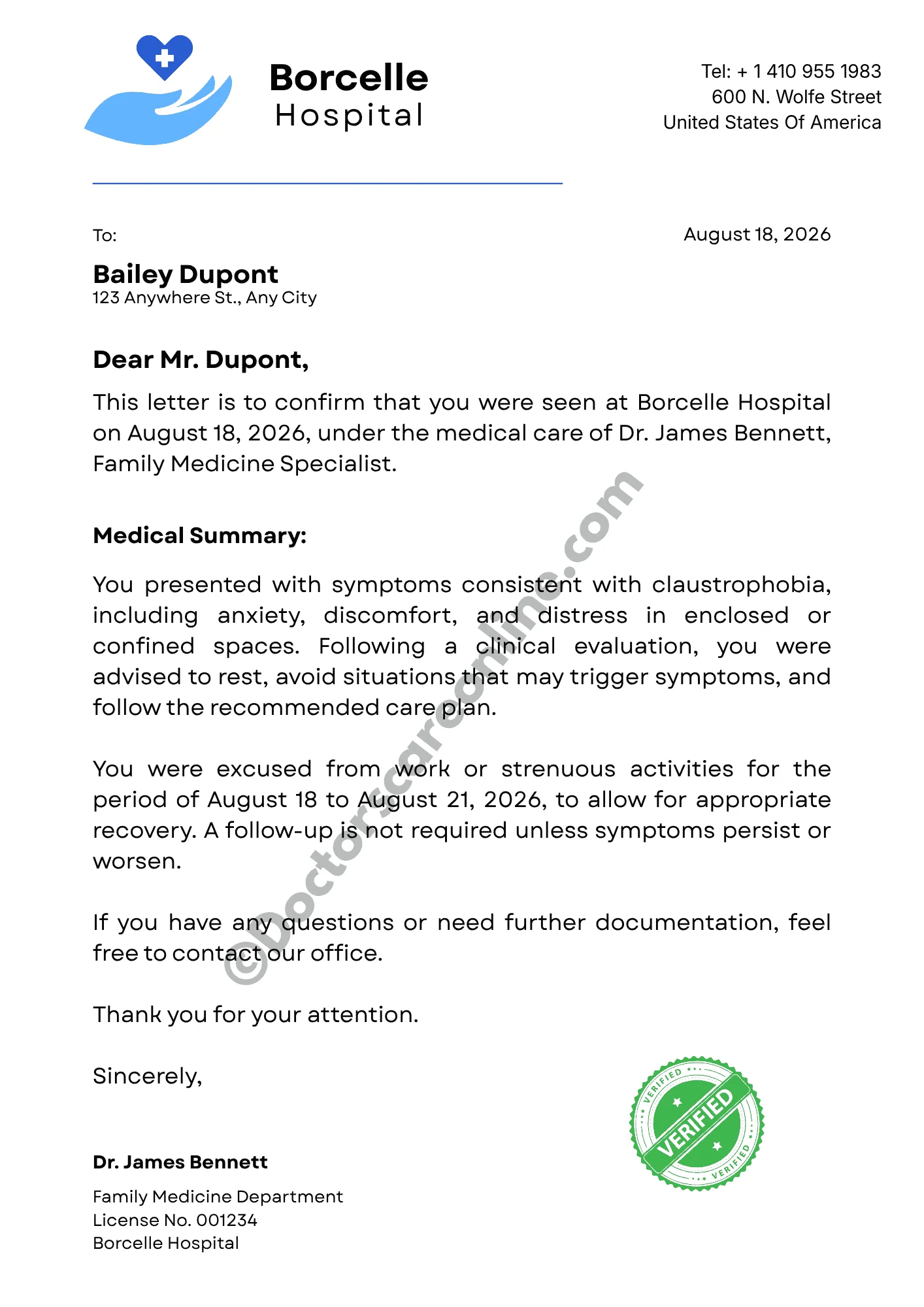
What May Be Included in a Doctor’s Note for Claustrophobia?
The contents of medical documentation vary according to the provider, clinical situation, and applicable requirements.
A doctor’s note may include:
- Patient’s name
- Date of evaluation
- Confirmation that a medical evaluation occurred
- Recommended absence period, when medically appropriate
- Temporary activity or work restrictions
- Recommended return date, when applicable
- Follow-up recommendations
- Healthcare provider’s name and credentials
- Clinic or practice information
- Provider’s signature or authentication
A provider may not need to disclose a detailed diagnosis when a simpler statement about medical restrictions or leave is sufficient, depending on applicable requirements.
Can You Get a Doctor’s Note for Claustrophobia Online?
In many locations, you may be able to discuss claustrophobia with a licensed healthcare provider through telehealth.
However, an online appointment does not guarantee that a doctor’s note will be issued.
The healthcare provider must first determine whether:
- Your symptoms can be appropriately evaluated through telehealth.
- Medical documentation is clinically appropriate.
- The requested restrictions or leave are medically justified.
- Any applicable telehealth and documentation requirements are satisfied.
If an in-person assessment is necessary, the provider may recommend that you visit a local healthcare professional.
How Our Online Medical Note Service Can Help
Our website is designed to make the process of connecting with a healthcare provider and discussing your medical documentation needs more convenient.
- Convenient Online Access: You can begin the process online without needing to arrange an initial in-person visit solely to request an evaluation.
- Clear Medical Evaluation Process: You can explain your symptoms, concerns, and documentation needs directly to a healthcare professional, who determines what is medically appropriate.
- Privacy-Focused Experience: Your health information should be handled according to applicable privacy and healthcare requirements. Only provide information that is relevant and accurate to your consultation.
- Documentation When Medically Appropriate: If the healthcare provider determines that a medical note is appropriate after evaluating your situation, documentation may be provided according to their professional judgment and applicable requirements.
- Support When You Need Help: If you have questions or experience an issue while using our website, you can contact our chatbox support for assistance. You can ask about:
- Registration problems
- Login issues
- Payment questions
- Appointment-related questions
- Website navigation
- General service questions
- Problems completing the online process
Our chatbox gives users a convenient way to ask questions when they need assistance instead of having to figure out the issue on their own.
Why Choose Our Online Medical Service?
When looking for an online medical note service, users should be able to understand who evaluates their symptoms, what the process involves, and when documentation may be provided.
Our service focuses on a straightforward patient experience:
- Online access to the consultation process
- Clear appointment steps
- Opportunity to discuss symptoms with a healthcare professional
- Medical evaluation before documentation is considered
- Convenient online communication
- Customer support through the website chatbox
- Assistance with registration and login issues
- Help with payment or technical questions
- Transparent expectations about medical documentation
We do not recommend choosing a service solely because it promises a note. A trustworthy medical service should prioritize appropriate evaluation, accurate information, patient privacy, and responsible medical decision-making.
When Should You Seek Professional Help for Claustrophobia?
Consider speaking with a healthcare professional if claustrophobia:
- Prevents you from attending work or school
- Causes you to avoid necessary medical tests
- Interferes with travel
- Causes frequent panic-like symptoms
- Makes everyday activities difficult
- Causes significant distress
- Is affecting your relationships or quality of life
- Leads you to avoid important situations
Phobias can interfere significantly with daily life, but effective treatments are available.
If you are experiencing severe symptoms or believe another medical condition may be causing your symptoms, seek appropriate medical care.
Doctor’s Note for Claustrophobia: What to Know Before Ordering
A doctor’s note is medical documentation, not a product that should be issued automatically upon purchase.
Before requesting documentation, make sure you:
- Provide truthful information about your symptoms.
- Complete the required medical evaluation.
- Explain how symptoms affect your normal activities.
- Tell the provider about relevant medical history.
- Provide accurate employer or school requirements.
- Follow the healthcare provider’s recommendations.
- Do not edit or alter medical documentation after it is issued.
This approach helps ensure that documentation reflects an actual medical evaluation and the provider’s clinical judgment.
FAQs
1. Can claustrophobia stop me from flying?
Yes, severe claustrophobia may make flying difficult for some people because an airplane is an enclosed environment. If fear of flying or confined spaces is significantly affecting your ability to travel, discuss your symptoms with a healthcare professional.
2. Can claustrophobia prevent me from having an MRI?
It can. Some people experience significant anxiety when entering an enclosed MRI scanner. Tell the imaging facility and your healthcare provider about your claustrophobia before the appointment so appropriate options can be discussed.
3. Can a doctor help if my claustrophobia causes panic attacks?
A healthcare provider can evaluate your symptoms and determine whether they are related to claustrophobia, panic, another anxiety condition, or another cause. They can then recommend appropriate treatment or referral when needed.
4. Can claustrophobia affect my ability to perform certain jobs?
Yes. If a job requires working in elevators, tunnels, confined rooms, enclosed equipment, or other triggering environments, significant claustrophobia may interfere with job duties. A healthcare provider can assess your functional limitations and determine whether temporary restrictions are medically appropriate.
5. Is claustrophobia a mental health condition?
Claustrophobia is generally classified as a specific phobia, which is an anxiety-related condition. A qualified healthcare or mental health professional can evaluate symptoms and determine whether they meet the criteria for a specific phobia.
Medical Disclaimer: This content is provided for general educational and informational purposes only and is not a substitute for professional medical advice, diagnosis, or treatment.
A Doctor’s Note for Claustrophobia should only be issued by an appropriately licensed healthcare professional after an appropriate medical evaluation. The availability of telehealth services, medical documentation, work restrictions, leave recommendations, and other accommodations may vary depending on your location, healthcare provider, employer, school, and individual circumstances.


Reviews
There are no reviews yet.