

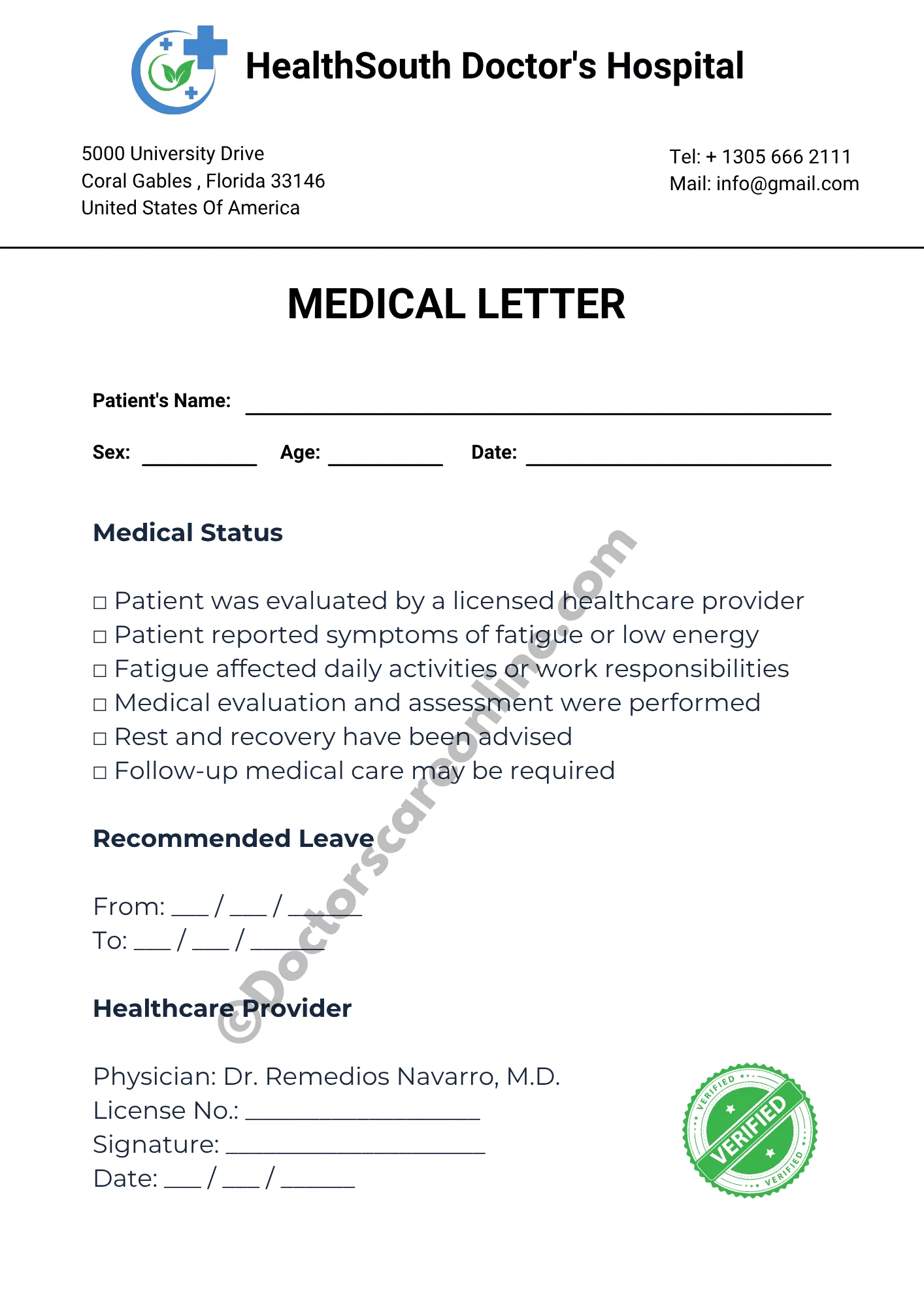
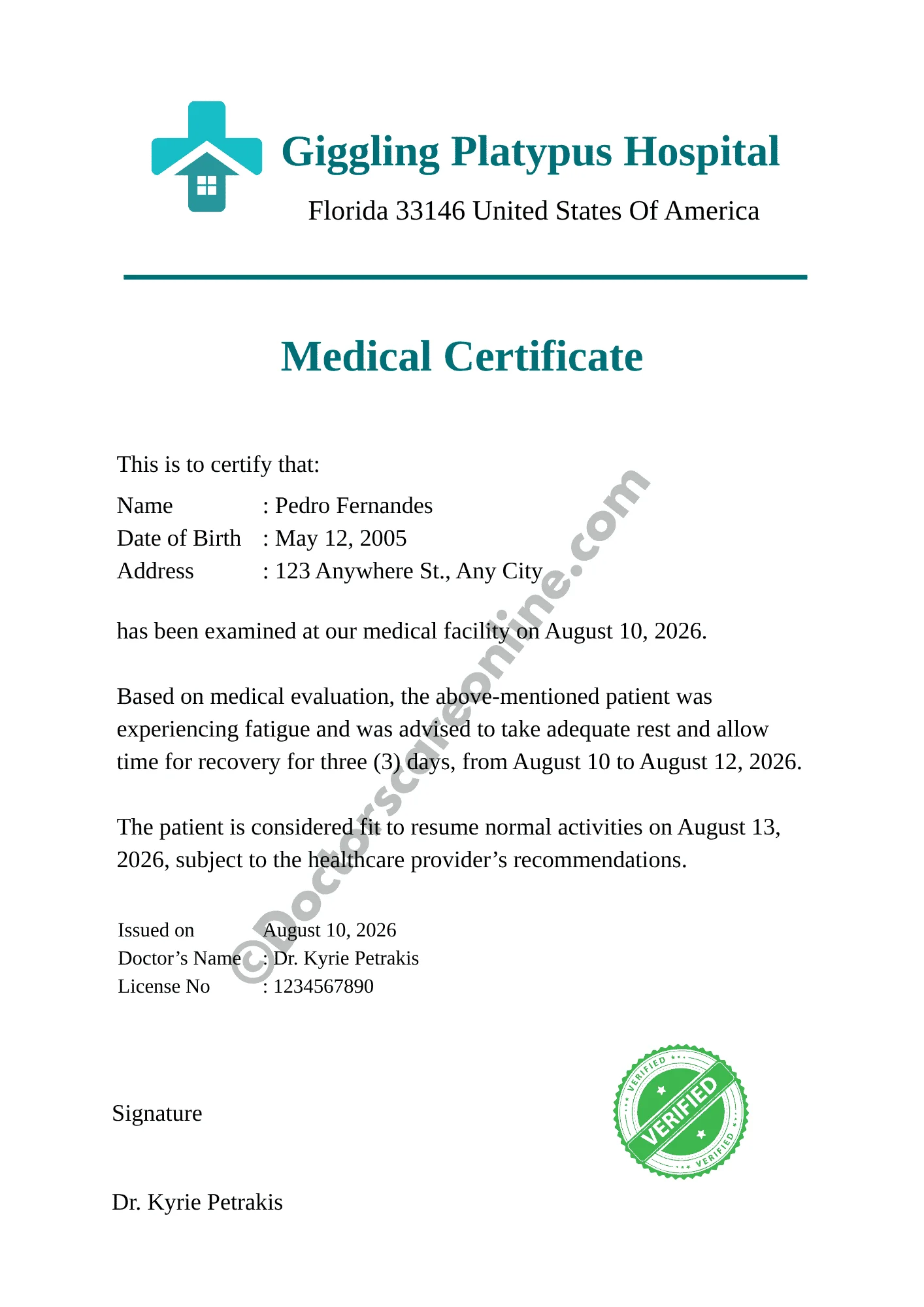
A doctor’s note for fatigue is medical documentation issued by a healthcare provider following an appropriate evaluation. When clinically justified, it may document a recommended period away from work or school, temporary activity limitations, or other functional recommendations.
Fatigue is more than simply feeling sleepy or needing a little extra rest. It can involve persistent tiredness, low energy, reduced motivation, difficulty concentrating, or feeling unable to complete normal work, school, or daily responsibilities. Fatigue can have many possible causes, including inadequate sleep, stress, certain medications, lifestyle factors, infections, anemia, thyroid problems, chronic medical conditions, and other health concerns.
Related Doctor Note :——
You can also visit:
- Doctors Note for Stress and Anxiety
- Doctors Note for Stress Leave
- Doctors Note for Mental Health
- Unlimited Doctor’s Notes for 1 Year
- Doctors Note for Insomnia
What a Doctor’s Note for Fatigue Is Used For
A medical note can provide formal documentation when a healthcare provider determines that fatigue has temporarily affected your ability to perform normal responsibilities.
Depending on the circumstances, documentation may be relevant for:
- Workplace sick leave
- School or college absences
- Temporary workplace accommodations
- Modified work responsibilities
- Reduced physical activity
- Return-to-work recommendations
- Follow-up medical care
The exact information included depends on the provider’s clinical judgment and the requirements of the organization requesting documentation. A medical note should reflect the provider’s actual evaluation and recommendations rather than information supplied solely for the purpose of obtaining an excuse.
When Fatigue May Affect Your Work or School Responsibilities
Fatigue can interfere with concentration, physical stamina, productivity, attendance, and the ability to safely perform certain responsibilities. The impact can vary considerably from one person to another.
You may consider speaking with a healthcare provider if fatigue is making it difficult to:
- Complete a normal work schedule
- Concentrate on work or academic tasks
- Remain physically active throughout the day
- Drive or perform safety-sensitive responsibilities safely
- Attend classes or examinations
- Maintain normal household activities
- Complete physically demanding job duties
- Maintain your usual level of productivity
- Follow your normal daily routine
A healthcare provider can assess whether your symptoms require medical attention and whether temporary leave, modified activities, or other recommendations are appropriate.
Common Causes and Contributors to Fatigue
Fatigue is a symptom rather than a single diagnosis. A healthcare professional may consider several possible contributors when evaluating persistent or unexplained tiredness.
Potential contributors can include:
- Sleep problems: Insufficient sleep, disrupted sleep, insomnia, or other sleep-related problems can contribute to daytime fatigue.
- Stress and emotional strain: Ongoing stress, grief, anxiety, or other emotional factors can affect energy and daily functioning.
- Anemia: Certain forms of anemia can be associated with tiredness and reduced energy.
- Thyroid disorders: Changes in thyroid function may contribute to fatigue along with other symptoms.
- Infections: Some infections can cause temporary exhaustion during or after illness.
- Chronic health conditions: Diabetes and certain heart, kidney, liver, respiratory, or other chronic conditions may be associated with fatigue.
- Medications or substances: Some prescription and non-prescription medicines can cause tiredness or drowsiness.
- Lifestyle factors: Changes in physical activity, nutrition, sleep habits, caffeine consumption, or other lifestyle factors may influence energy levels.
Because fatigue has many possible explanations, persistent or unexplained symptoms should be discussed with a healthcare professional rather than assuming there is one specific cause.
Fatigue vs. Sleepiness: What Is the Difference?
Fatigue and sleepiness are related but are not exactly the same.
Fatigue generally refers to a lack of energy, stamina, or motivation.
Sleepiness refers more specifically to feeling that you need to sleep or may fall asleep.
A person may experience one, the other, or both. Understanding the difference can help a healthcare provider ask more relevant questions during an evaluation.
Symptoms You Can Discuss During an Online Consultation
Before your appointment, think about how your symptoms affect your normal routine. Useful information may include:
- Persistent tiredness or low energy
- Difficulty concentrating
- Reduced motivation
- Physical weakness or reduced stamina
- Difficulty completing normal activities
- Changes in sleep
- Frequent headaches
- Changes in appetite
- Unexplained weight changes
- Fever or other signs of illness
- Dizziness
- Mood changes
- Fatigue that becomes worse with activity
- Symptoms that continue despite adequate rest
Your healthcare provider may also ask when the fatigue began, whether it is constant or intermittent, what makes it better or worse, and whether you have other symptoms. These details can help determine what type of evaluation may be appropriate.
When Fatigue Should Be Medically Evaluated
Fatigue that does not improve with adequate rest or continues for an extended period deserves medical attention, particularly when it interferes with everyday activities. MedlinePlus recommends contacting a healthcare provider when fatigue persists for weeks or occurs with concerning symptoms such as unexplained weakness, fever, unintentional weight loss, regular sweating, insomnia, frequent headaches, or other changes in health.
You should also tell the provider about any medications or substances that may contribute to tiredness or drowsiness.
The purpose of an evaluation is not simply to obtain documentation. It is to understand your symptoms, identify possible causes, and determine what care is appropriate.
What Happens During an Online Fatigue Consultation?
An online medical consultation typically begins with questions about your current symptoms and health history.
Depending on your circumstances, the provider may discuss:
- When your fatigue began
- How frequently it occurs
- Whether it is improving or worsening
- Your sleep pattern
- Current medications and supplements
- Recent illnesses or infections
- Relevant medical history
- Lifestyle and daily activities
- Other symptoms occurring with fatigue
- How the symptoms affect your work, school, or daily responsibilities
The provider may determine that telehealth is appropriate, recommend self-care or monitoring, suggest additional evaluation, or advise an in-person appointment or testing when necessary.
Some causes of fatigue require physical examination or laboratory testing, so an online consultation does not replace in-person care when that level of evaluation is medically necessary.
How to Prepare for Your Online Medical Consultation
Preparing relevant information before the appointment can make the consultation more efficient.
Have the following information available:
- The date your fatigue started
- Your typical sleep schedule
- Recent changes in your health
- Current medications and supplements
- Known allergies
- Previous medical conditions
- Recent infections or illnesses
- Changes in weight or appetite
- Other symptoms
- Your typical work or school schedule
- Any physical or cognitive tasks that have become difficult
If you need medical documentation for work or school, check the organization’s requirements beforehand so you can explain what type of documentation is being requested.
For a virtual appointment, use a reliable internet connection and a quiet, private location where you can speak openly with the provider. HHS also recommends checking your device and appointment details before the visit.
How to Request a Doctor’s Note for Fatigue Through an Online Consultation
The appropriate process is to request a medical evaluation first, rather than treating the doctor’s note as a standalone product.
Step 1: Choose an Available Online Consultation
- Select an available appointment with a licensed healthcare professional who provides telehealth services in your location.
Step 2: Complete Your Patient Information
- Enter the information requested during registration and complete any required medical intake forms.
Step 3: Explain Your Fatigue
Describe when your symptoms started, how severe they are, and how they affect your normal responsibilities.
Step 4: Participate in the Medical Evaluation
- Answer the provider’s questions honestly and provide relevant information about your health history, medications, sleep, and other symptoms.
Step 5: Follow the Provider’s Recommendation
- The provider may recommend treatment, monitoring, additional testing, an in-person examination, or another appropriate next step.
Step 6: Receive Documentation When Medically Appropriate
- If the provider determines that medical documentation is justified, they may issue a doctor’s note or other appropriate documentation in accordance with applicable requirements and their clinical judgment.
A doctor’s note is not automatically guaranteed simply because it is requested. It should be based on an appropriate medical evaluation.
What May Be Included in a Fatigue Doctor’s Note?
The exact contents depend on the healthcare provider and the purpose of the documentation.
A note may include:
- Patient identification information
- Date of medical evaluation
- Confirmation that the patient was evaluated
- Recommended absence period, when medically appropriate
- Functional or workplace restrictions, when applicable
- Recommended return date, when appropriate
- Follow-up recommendations
- Healthcare provider information and signature
The amount of medical information disclosed should depend on what is necessary and appropriate for the situation. Patients should check their employer’s or institution’s documentation requirements rather than assuming that every organization uses the same format.
Work Restrictions That May Be Considered
If fatigue affects the safe performance of particular duties, a healthcare provider may consider whether temporary modifications are appropriate.
Depending on the person’s circumstances and occupation, recommendations could involve:
- Temporary changes to physically demanding duties
- Modified scheduling
- Additional rest opportunities
- Reduced workload
- Temporary reassignment of certain responsibilities
- A recommended period away from work
Any restriction should be based on the individual’s medical circumstances and the provider’s professional judgment. Employers may have their own procedures for reviewing medical restrictions and workplace accommodations.
How an Online Consultation Can Help You
An online consultation can be useful when you need convenient access to a healthcare professional without immediately traveling to a clinic.
Our service is designed to make the process easier by giving users a structured way to connect with a healthcare professional online, explain their concerns, and understand what steps may be appropriate next.
This can be particularly helpful for people who:
- Have difficulty fitting an appointment into a busy schedule
- Prefer discussing symptoms from home
- Need guidance about whether further medical care is necessary
- Want to discuss how symptoms are affecting work or school
- Need to understand what documentation may be appropriate after an evaluation
However, convenience does not replace medical judgment. If the provider determines that your symptoms require an in-person examination, laboratory testing, imaging, urgent treatment, or emergency care, you should follow that recommendation.
Why Patients Can Use Our Online Consultation Service With Confidence
A trustworthy medical consultation process should be transparent about what the service can and cannot provide.
- Our approach focuses on medical evaluation rather than guaranteed documentation. Users can explain their symptoms to a healthcare professional, receive an assessment appropriate to the consultation, and receive documentation only when the provider determines that it is medically justified.
- The process also gives users an opportunity to understand their next steps instead of simply receiving a document without medical context.
- For online healthcare, privacy and secure handling of health information are important considerations. The U.S. Department of Health and Human Services notes that telehealth appointments are subject to privacy protections and recommends using secure communication, private environments, and trusted providers when sharing health information online.
Always review the website’s privacy policy and terms of service so you understand how your information is handled.
Need Help With Registration, Login, Payment, or Your Order?
If you have a question or experience a problem while using our website, you do not have to figure it out alone.
Our chatbox is available for users who need assistance with issues such as:
- Registering for an account
- Logging into an existing account
- Understanding the appointment process
- Payment or checkout questions
- Technical problems during registration
- Questions about appointment details
- Difficulties accessing account information
- General service or order-related questions
Simply use the chatbox on our website to contact our support team and explain the issue. Providing the relevant details about the problem can help the support team assist you more efficiently.
For medical emergencies or urgent symptoms, the website chatbox should not be used as a substitute for emergency medical care.
Privacy and Confidentiality During Online Care
Discussing fatigue may involve sharing personal health information, so choosing a private environment for your consultation is important.
- HHS recommends using a private location, protecting devices and accounts, avoiding unsecured public Wi-Fi when discussing sensitive health information, and confirming that you are communicating with a trusted healthcare provider.
- Your healthcare provider may also explain applicable consent and privacy procedures before the consultation. Telehealth privacy requirements can vary depending on the provider, service, and applicable federal or state rules.
What to Do After Your Consultation
After your appointment, follow the healthcare provider’s recommendations carefully.
Depending on the assessment, your next steps may include:
- Following a recommended sleep or activity routine
- Taking medication exactly as prescribed
- Completing recommended testing
- Scheduling an in-person evaluation
- Attending a follow-up appointment
- Monitoring changes in your symptoms
- Following any documented work or school restrictions
Do not stop prescription medication or make significant treatment changes without discussing them with your healthcare provider.
If your symptoms change significantly or become more severe, seek appropriate medical care rather than relying on previously issued documentation.
When Fatigue Requires Urgent or Emergency Care
Fatigue can sometimes occur alongside symptoms that require prompt medical attention.
Seek urgent medical advice for significant or unexplained symptoms such as severe dizziness, confusion, blurred vision, very low urine output, sudden or significant weakness, or other rapidly developing changes. MedlinePlus specifically recommends prompt medical attention for certain combinations of fatigue and concerning symptoms.
If you believe you are experiencing a medical emergency, call 911 or go to the nearest emergency department.
Do not wait for an online appointment when immediate emergency care is needed.
Frequently Asked Questions
1. Can fatigue be caused by a medical condition?
Yes. Fatigue can have many possible causes, including sleep problems, anemia, thyroid conditions, infections, chronic illnesses, medications, and lifestyle factors. A healthcare professional can help determine whether further evaluation is appropriate.
2. Can an online doctor diagnose the cause of fatigue?
An online provider may be able to evaluate your symptoms and medical history and determine appropriate next steps. However, some causes of fatigue require a physical examination, blood tests, or other in-person evaluation, so telehealth may not be sufficient in every case.
3. Can fatigue qualify for workplace accommodations?
It may, depending on the underlying medical situation, the functional limitations involved, the employer’s policies, and applicable law. A healthcare provider can document medically appropriate restrictions when supported by the evaluation.
4. What if my online consultation cannot be completed because of a technical problem?
If you have difficulty connecting, accessing your account, or completing the appointment, use the website’s support chatbox for assistance with registration, login, payment, or technical issues. For medical emergencies, seek appropriate emergency care instead of waiting for technical support.
5. Can I use a fatigue doctor’s note for both work and school?
Not necessarily. Whether documentation can be used for a particular purpose depends on the requirements of the employer, school, college, or other organization. Check the receiving organization’s rules before submitting a medical note.
Medical Disclaimer: This information is provided for general educational purposes and does not replace professional medical advice, diagnosis, or treatment. Fatigue can have many possible causes, and only a qualified healthcare professional can determine what evaluation or treatment may be appropriate for an individual.
A doctor’s note should only be issued by a licensed healthcare provider following an appropriate medical evaluation. Documentation, work restrictions, leave recommendations, telehealth availability, and other requirements may vary by state, employer, school, healthcare provider, and individual circumstances.




Reviews
There are no reviews yet.